
Puglia in Autumn: September, October, and What Each One Actually Gives You
Two different trips. One region. An honest look at Puglia in autumn — the weather, the olive harvest timing, and what the Salento landscape actually looks like now.
Puglia in autumn is a reasonable choice — but the version you get depends almost entirely on which month you go, and most guides don’t bother to say so. September and October are not the same trip. They share a region, a landscape, and a reputation for being uncrowded. Beyond that, they have different weather, different rhythms, and they suit different kinds of travelers.
This guide is about the distinction. It covers the honest numbers behind both months, what the olive harvest actually looks like and when it happens, the state of the Salento landscape after a decade of agricultural crisis, and the practical question of where to base yourself. It does not try to sell you on Puglia. If you are reading this, you have likely already decided Italy is the destination — the question is whether Puglia in autumn is the right fit.
01 — Is Puglia in Autumn a Good Time to Visit?
Yes — with the usual conditions that word carries. Puglia in autumn delivers genuine advantages: lower prices, fewer people at the coast, and a season that has its own character rather than being summer with the crowds reduced. However, autumn here is not uniform. September behaves like a warm extension of summer. October is something else — quieter, more changeable, better suited to the interior than the beach.
The strongest case for autumn in Puglia is, in fact, September. Sea temperatures run around 23°C, daytime highs settle around 26°C, and the August crowds have thinned considerably without the coastal infrastructure shutting down. For anyone who wants warm water, open restaurants, and a quieter rhythm than high summer, late September is a particularly good window.
October, however, changes the calculus. Days are still pleasant — highs around 21°C, roughly six hours of sun — but unsettled spells become more likely, particularly in the second half of the month. The beaches empty. Some coastal restaurants start closing. In return, the interior towns are at their most atmospheric, olive harvest season begins in earnest, and accommodation costs drop significantly. Additionally, Salento — the southern peninsula — tends to hold onto warmth longer than the rest of the region, which can extend what October offers if you pick your base carefully.
In short: autumn in Puglia is good. Which autumn matters.
02 — September and October in Puglia Are Not the Same Trip
The two months get collapsed into a single “shoulder season” bracket by most guides, and that framing obscures a real difference. On the ground they feel distinct — different weather, different crowd profiles, different reasons to go.
September — the beach-and-warmth month
September is Puglia’s strongest shoulder month. Sea temperatures average around 23°C, daytime highs sit at 26°C, and rainfall for the whole month totals under 10mm — meaning the weather behaves almost like August but without the density of visitors. Sunshine averages 8.5 hours a day, making it one of the sunniest months of the year.
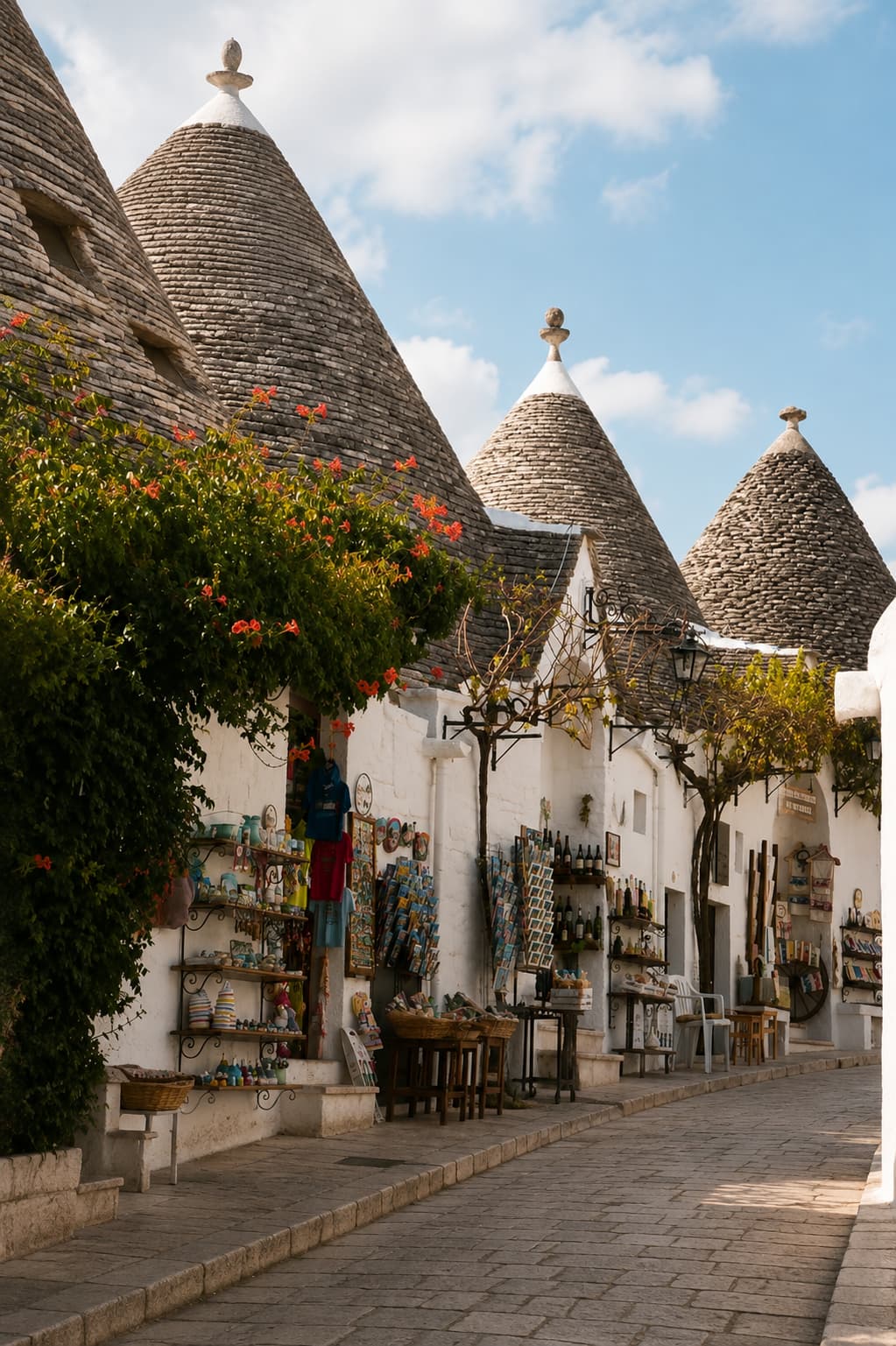
Practically speaking, September Puglia still functions like a beach destination. Coastal masserie are open, beach clubs are operating (usually into late September), and Salento’s remarkable coastline — particularly around Pescoluse and the area south of Lecce — is accessible without the shoulder-to-shoulder conditions that define August. Moreover, restaurants are fully open, local markets are running, and the vendemmia (grape harvest) adds its own low-key energy to the countryside.
Overall, September is the month to choose if your primary reason for going to Puglia involves the coast. It is also the easier introduction to the region for first-time visitors, because the infrastructure is still oriented toward tourists.
October — the harvest-and-culture month
October is a different proposition. Average highs drop to around 21°C. Sea temperatures fall to roughly 20°C. Sunshine averages about six hours a day, down from September’s 8.5. Rain becomes more likely — not constant, but present. Unsettled weather, including the brief but intense autumn storms that hit southern Italy, can punctuate an otherwise mild week.
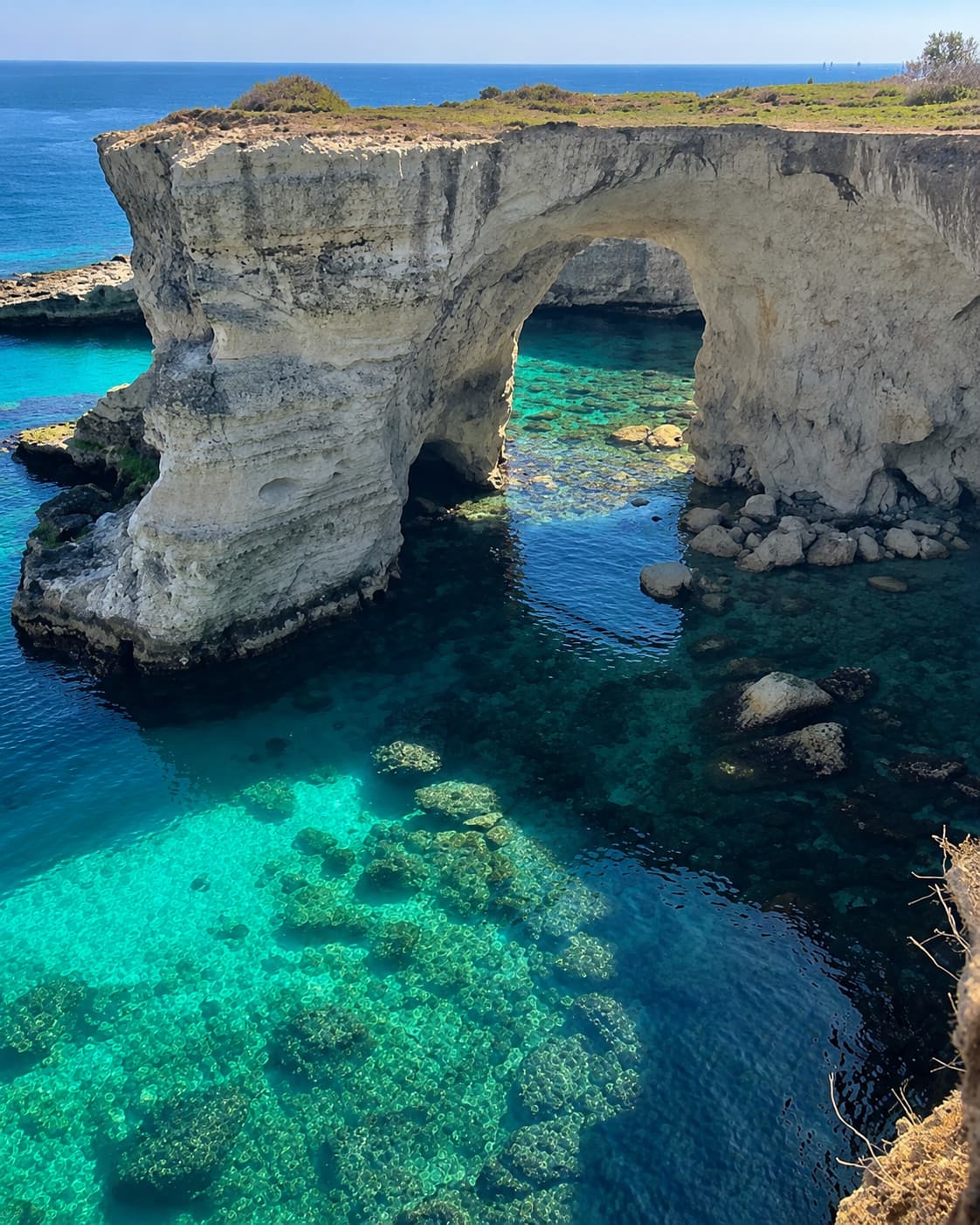
In exchange, October offers the interior at its best. Towns like Alberobello, Locorotondo, and Lecce are significantly quieter. The olive harvest — which, in Puglia in autumn, runs later than most visitors expect — has begun or is beginning. Prices for masserie and accommodation drop noticeably from September’s already-reduced peak. Furthermore, early October still carries enough warmth for a warm-weather holiday in the sense of comfortable outdoor evenings and short sleeves in the afternoon, even if the sea is no longer the draw.
Consequently, October suits travelers who want to experience Puglia as a place that exists independent of its tourist economy — its working landscape, its towns in ordinary function, its food culture rooted in the season rather than serving a summer menu.
03 — Can You Still Swim in Puglia in Autumn?
Yes, though the answer has layers. The Adriatic and Ionian coasts around Puglia carry the warmth of summer well into the autumn months — by early October, sea temperatures are typically around 22–23°C, which is comfortable for most swimmers. Swimming remains genuinely viable through early October and, in Salento, often into mid-month.
By late October, however, sea temperatures drop to around 20°C. For cold-water swimmers this is manageable. For most visitors, it registers as noticeably cool rather than warm — possible, but not the ambient pleasure it is in September. Swimming becomes more of a deliberate act than an obvious option.
The broader beach experience also shifts. Beach clubs close in October, and the infrastructure — sun beds, food stalls, changing facilities — is largely gone by mid-month on the coast north of Lecce. Salento holds out longer. The beaches south of Lecce, around Otranto and Santa Maria di Leuca, tend to stay accessible and mildly populated into late October thanks to Salento’s geography, which keeps it warmer than the Gargano or Valle d’Itria coasts. Furthermore, if swimming in October is important to your trip, base yourself in Salento and keep expectations calibrated: the water is there, but the summer beach scene is not.
04 — When Is the Puglia Olive Harvest in Autumn, Really?
Here is the important timing correction that most sources ignore: the Puglia olive harvest runs later than Tuscany’s, not earlier. Most harvest-experience content — the agriturismo marketing, the tour-operator roundups — does not distinguish between regions. The result is that visitors book October trips specifically to see the harvest and arrive to find the olives still hanging, unripe, on the branches.
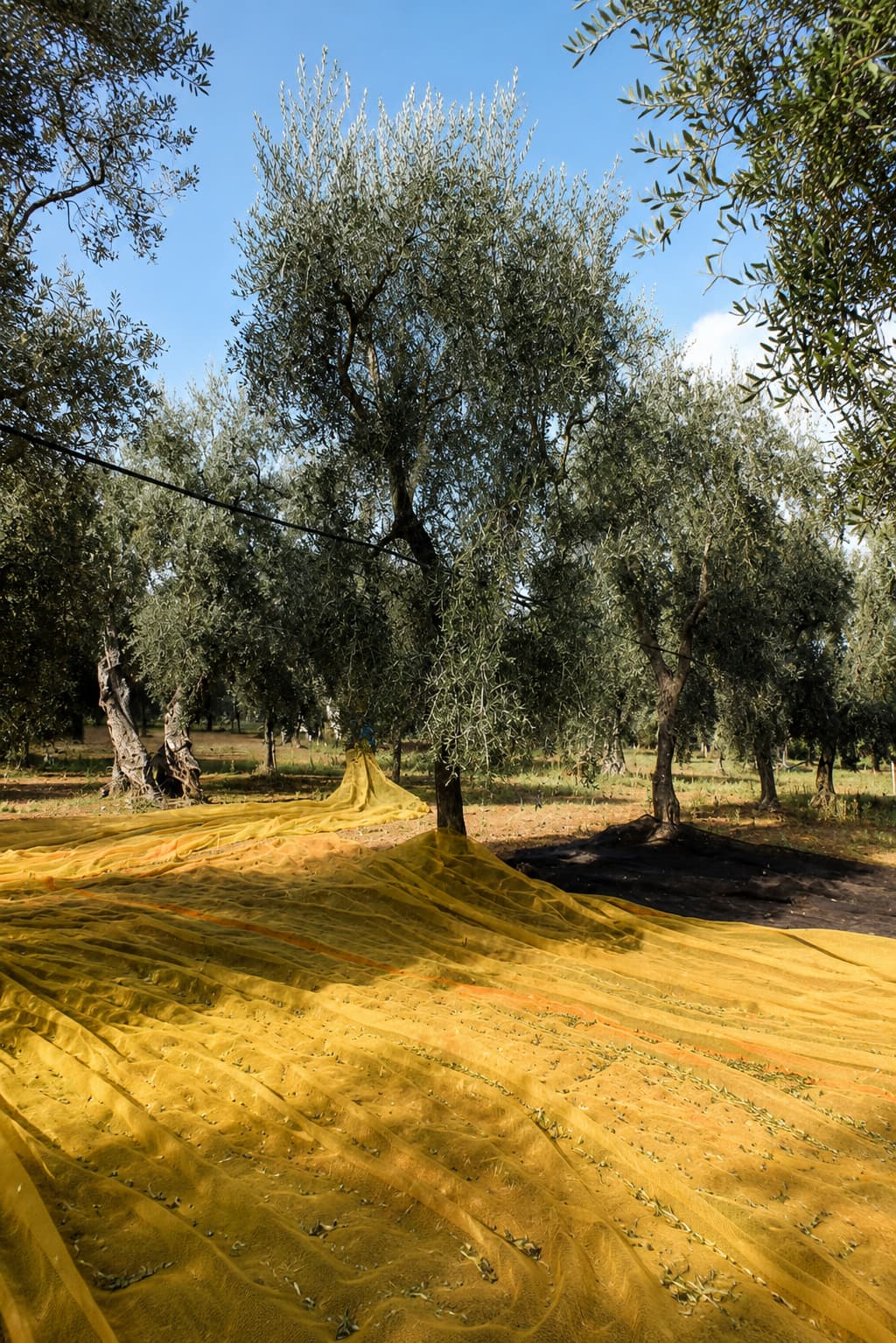
Specifically, the Puglian harvest window, across multiple producers and varietals, runs from around mid-October through December. The dominant cultivar in northern Puglia — the Coratina — is particularly late to ripen, producing the region’s most intensely polyphenol-rich oil and typically not reaching peak harvest until November. In Salento, some growers begin picking in October, but the full season runs well into December in many groves. By contrast, Tuscany and Umbria harvest in October to early November — a distinction the Slow Food network and regional producers are generally upfront about if you ask directly.
The practical implication for travelers
If your primary motivation is being present during active harvest — nets on the ground, tractors moving between rows, frantoio (olive press) operating — then November is a safer window than October. Early October may well deliver empty groves and a visit to a frantoio that isn’t yet pressing that season’s oil.
That said, late October can catch the early harvest in Salento if conditions align. The honest answer is that harvest timing in Puglia varies by cultivar, altitude, weather that year, and producer — it is not a single fixed event. Before booking a trip specifically around harvest, contact a specific agriturismo or frantoio you want to visit and ask when they expect to be pressing. Most will tell you. That question takes three minutes and can prevent a significant booking mistake.
Additionally, a frantoio visit is worth planning around even without a fixed harvest date. Watching olives pressed within hours of picking — the oil coming out bright green, intensely peppery, completely unlike anything sold in a supermarket — is one of the more visceral food experiences Italy offers. To arrange one, look for masserie or smaller agricultural estates near Monopoli, Fasano, or in the Valle d’Itria that offer visits in season; most require advance booking rather than walk-in.
05 — What the Puglia Olive Landscape Actually Looks Like Now
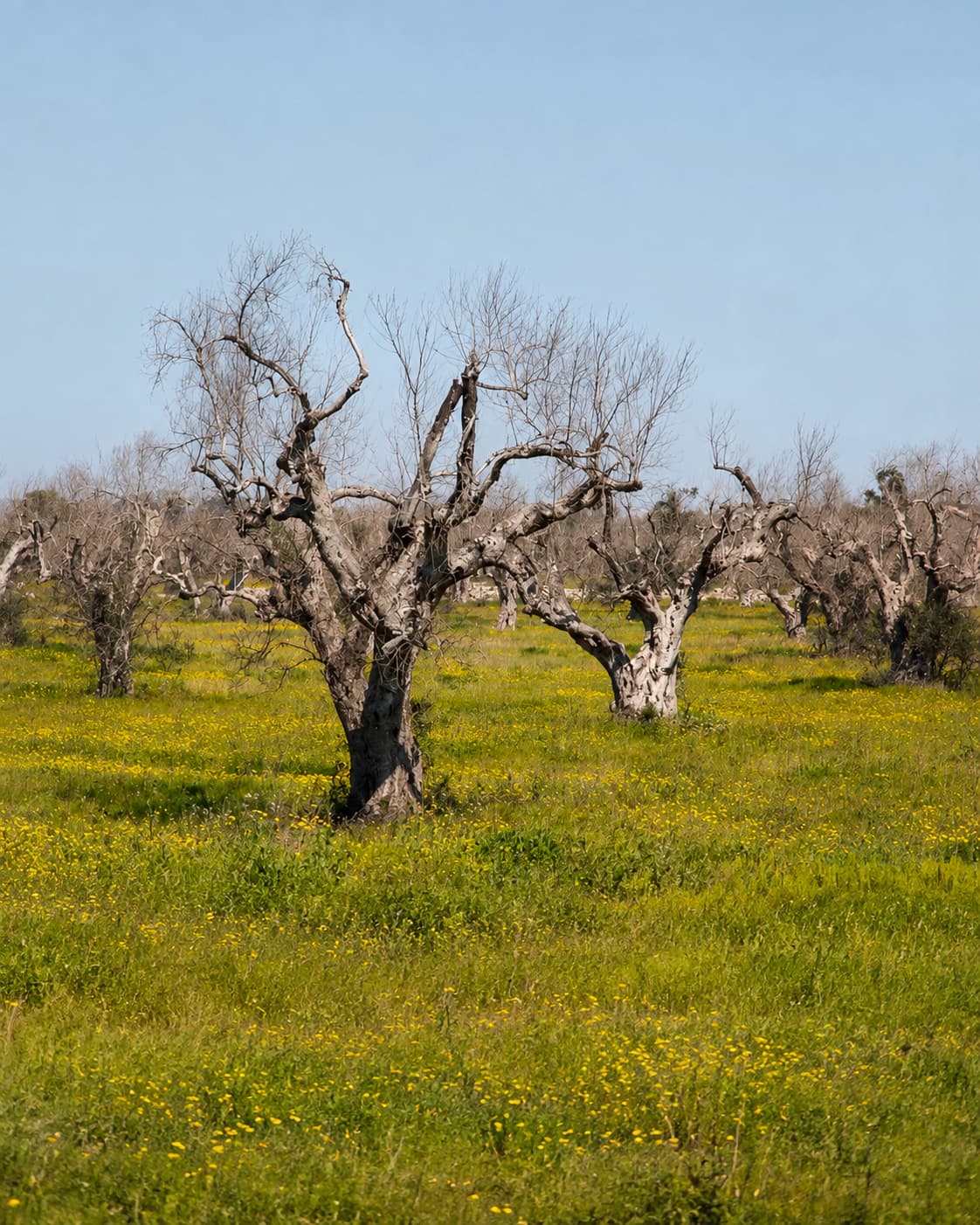
If you drive south from Bari toward Lecce and Otranto, the landscape changes somewhere around Brindisi. The classic Puglia olive grove — trees centuries old, silver-green canopy, nets waiting under the branches — starts to give way to something different: rows of bare, pale trunks without leaves, dead wood standing in fields that were planted and tended for generations. This is what Xylella fastidiosa looks like from a car window, and it is worth knowing about before you arrive.
Xylella fastidiosa, a bacterium transmitted by insects that feed on plant sap, was identified in Salento in 2013. Subsequently, it spread north through the province of Lecce, killing olive trees by blocking their internal water transport system. By 2024, the infected area covered approximately 8,000 square kilometres — roughly 40% of the entire region. More than 10 million trees had died in the demarcated zones, according to the European Food Safety Authority, which has monitored the outbreak since its discovery and describes it as the most significant plant disease event in European history.
What this means for visitors to Puglia in autumn
As a result, the dead groves are visible. Travelers driving between Lecce and Otranto will pass through them — stretches where the trees are uniformly bare, the soil pale and still, the landscape carrying the particular quietness of something gone wrong at scale. It does not look like a drought. Poor management doesn’t explain the pattern either. What you’re seeing is disease — because that is exactly what happened.
Including this in a travel guide is not doom-posting. It is basic preparation. Many visitors arrive having seen only the images Puglia’s tourism industry uses — trees that survived, groves in the north, the handful of ancient specimens around Fasano that remain healthy. The Salento landscape includes both: some working, living groves and sections of dead ones. Understanding what you are seeing makes the drive more meaningful rather than confusing.
There is, however, ongoing recovery. Hundreds of hectares in Salento have been replanted with resistant varieties — primarily Leccino and Favolosa — and some of these young groves are now producing. The crisis continues, but it is not static. A 2025 report from the Agromillora Group noted that the northward spread of the infection had slowed in recent years, and that regeneration is underway in parts of Salento. Puglia still produces olive oil. The harvest still happens. But the landscape that surrounds it has changed, and the region’s growers carry a context that was not there twenty years ago.
06 — Where to Base Yourself in Puglia in Autumn
Puglia is long — the region stretches from the Gargano promontory in the north, down the Adriatic coast, through the heel of the boot and into Salento in the south. Your base determines what kind of trip you have, and the autumn context shifts the calculus relative to summer.
Valle d’Itria
Salento (Lecce / Otranto)
Gargano (north)
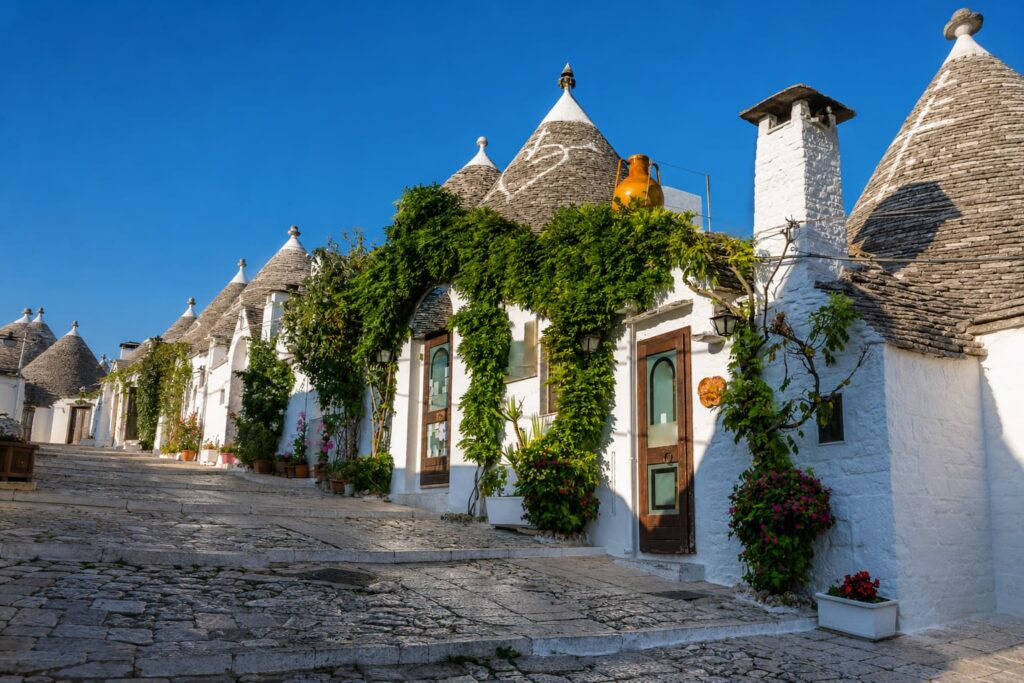
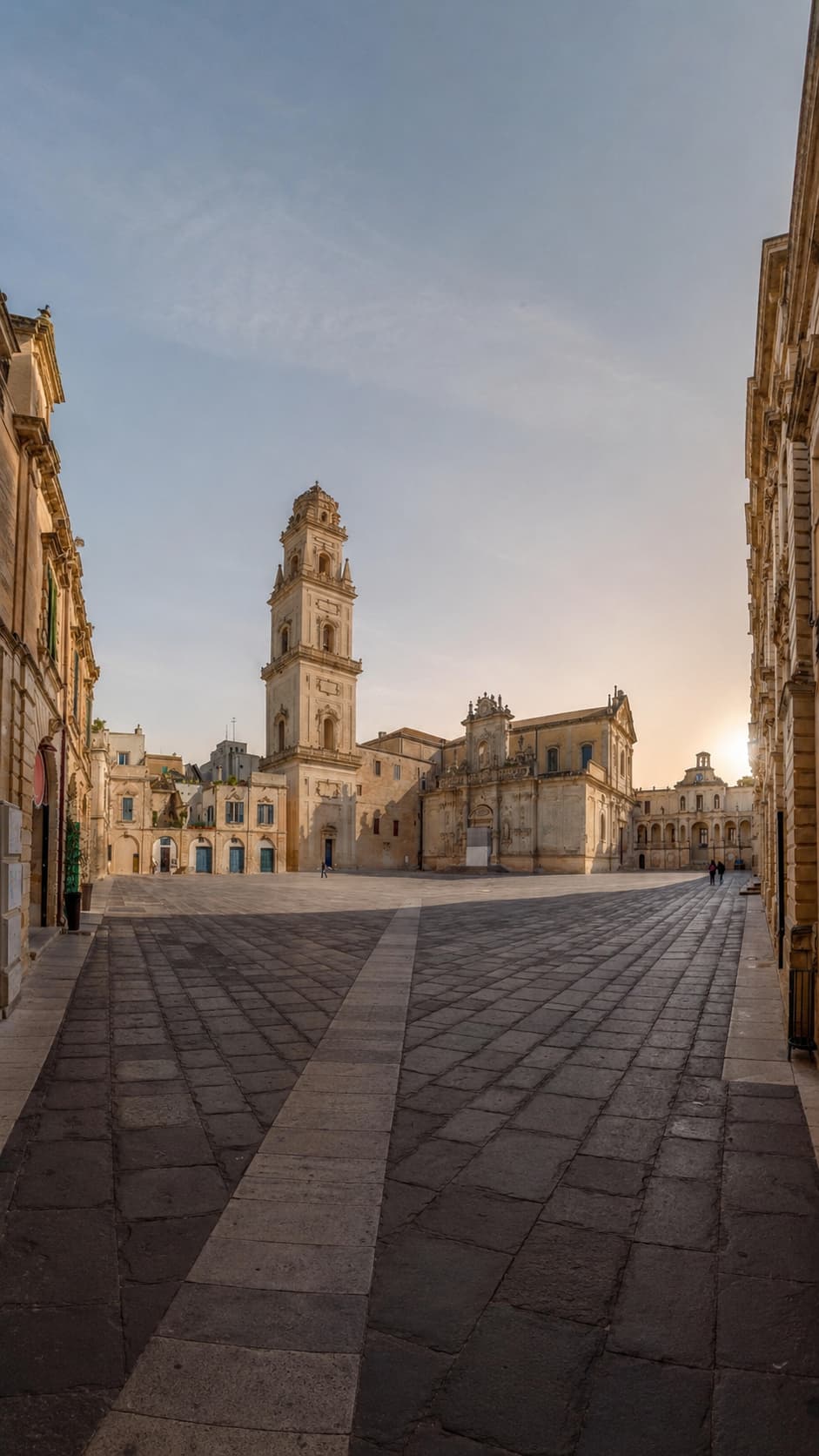
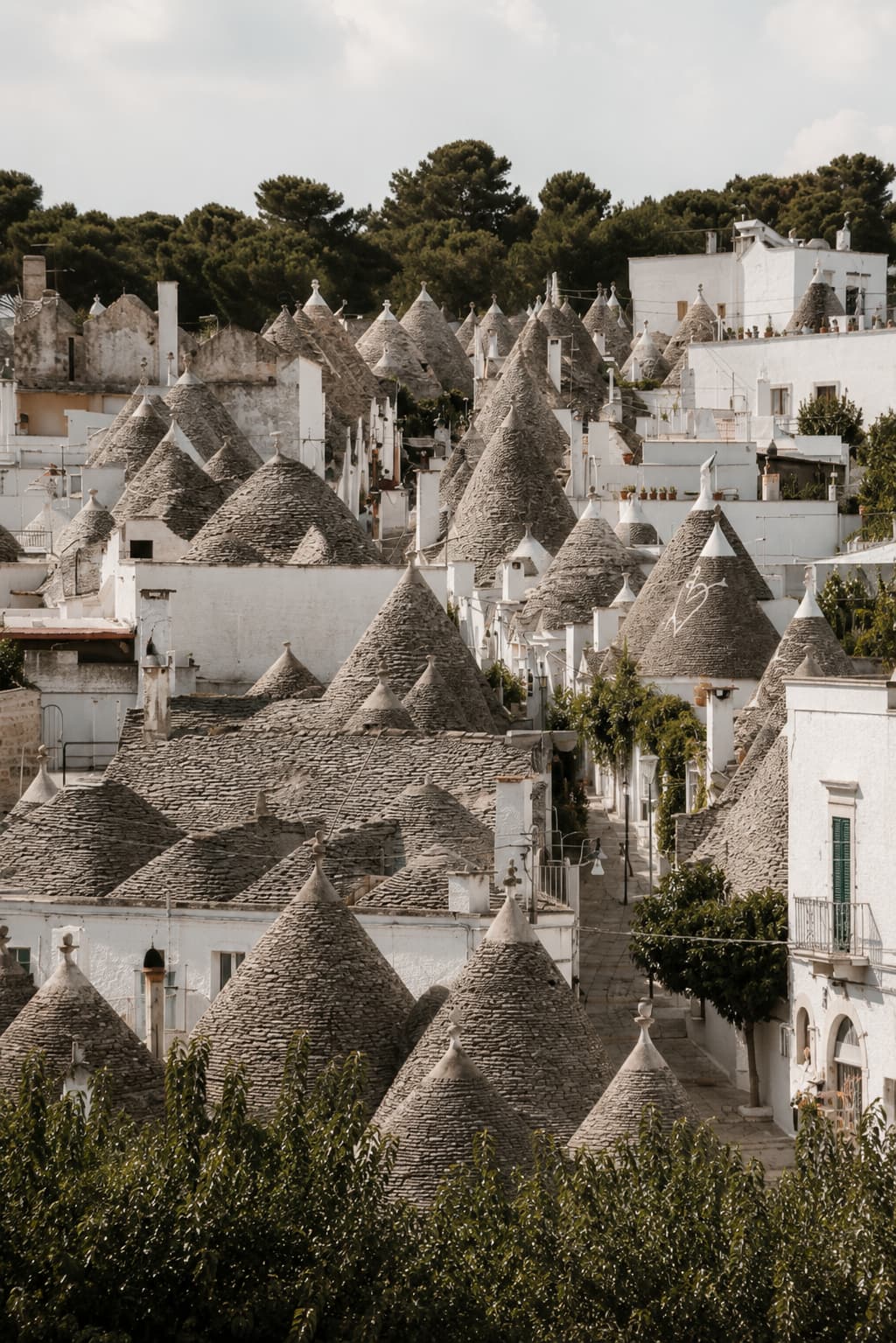
For most autumn travelers, the decision ultimately comes down to Valle d’Itria versus Salento. On one hand, Valle d’Itria offers the iconic trulli landscape and the most concentrated cluster of historic towns within a short drive of each other. Salento offers the longest season, the best late-autumn coast, and Lecce’s extraordinary city. If you can do both — basing in Lecce and driving north for a day or two — that combination covers the region’s most distinct experiences without the logistical overhead of multiple base changes. If you’re weighing other European destinations for the same window, the post on where to go in Europe in November covers the broader decision.
07 — Do You Need a Car in Puglia?
Yes. This is not a nuanced answer — a car is not a preference in Puglia, it is how the region works. The train connects Bari, Brindisi, Lecce, and Taranto on the main line, but the towns most travelers want to reach — Alberobello, Locorotondo, Ostuni, Otranto, Polignano a Mare, Monopoli — either have limited rail connections or require local buses that run on schedules oriented toward residents, not tourists.
In practice, traveling without a car means choosing between a single well-connected base (Lecce or Bari) and taking day tours, or spending significant time waiting for connections that may not run at the hour you need. Neither is disaster, but both limit the region considerably.
The financial case for renting in autumn is, furthermore, straightforward. Car hire prices in mid-October are substantially lower than August — sometimes less than half the peak-summer rate. Fuel costs are fixed. The roads in the interior, particularly the winding routes through Valle d’Itria, are genuinely pleasurable to drive. Combined with the fact that much of what makes Puglia worth visiting is spread across small towns 20–40km apart, a car transforms the trip from a constrained base-and-day-trip exercise to something closer to genuine slow travel. For a wider picture of how to approach driving in Italy, the Italy road trip guide covers the practical considerations in detail.
08 — What Closes in Puglia in Autumn, and When
Puglia’s season closes by geography and by date — and the two are not the same. Understanding the pattern, in turn, prevents arriving to find a ghost town when you expected a working restaurant.
Coastal restaurants and beach clubs
Along the Gargano and much of the northern Adriatic coast, beach clubs and seasonal restaurants close in October — some as early as early October, most by the end of the month. In Salento, coastal restaurants around Otranto and Santa Maria di Leuca stay open later, sometimes into November. The rule of thumb: anything in a purpose-built beach town closes with the beach season; anything in an established inland or mixed-use town stays open year-round.
Masserie and coastal hotels
Many of the masserie (rural estate hotels) that drive Puglia’s tourist economy close from November through March. In October, the majority remain open — but availability narrows in late October, particularly for properties that close for winter at the end of the month. Book in advance for late-October travel, as the remaining open properties fill quickly with the last-of-season crowd. Lecce and Bari, as cities, retain full hotel infrastructure year-round.
Historic sites and museums
Sites like Castel del Monte, the Sassi di Matera (day trip distance), and the archaeological museums in Taranto and Lecce maintain year-round hours, though reduced hours from November onward are common. Alberobello’s trulli zone is also year-round, though the shops and artisan stalls within it thin out considerably by late October. For major sites, check hours ahead of travel — autumn schedules differ from peak-season hours.
Town restaurants and markets
Established town restaurants — in Lecce, Locorotondo, Monopoli, Ostuni, Otranto — stay open through autumn and winter. Local markets run year-round. The food culture of the Puglia interior is not dependent on tourism in the same way the coast is, and October in these towns means dining in places that are serving their locals as much as their visitors. That is, in practice, a significant upgrade from August.
Weather and Trip Length in Puglia
Puglia vs Sicily and What to Pack
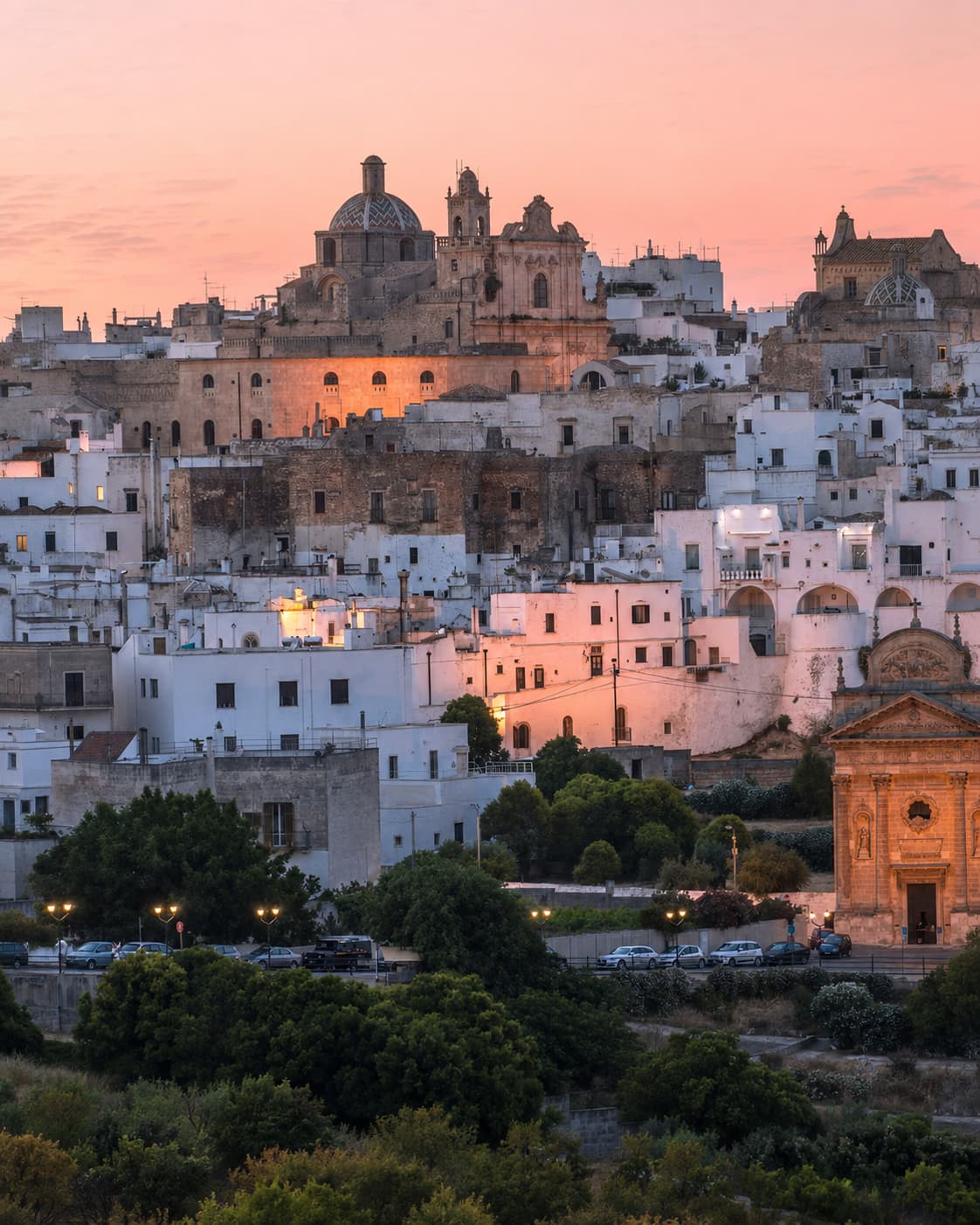
September gives you Puglia warm and still accessible. October gives you Puglia with its tourist layer peeled back — the olive groves beginning their season, the towns at their own pace, the light lower and more particular. Both are good. They are just not the same trip, and choosing between them is half the planning.