
Is the Mediterranean Too Hot in August? An Honest Guide
The heat is real, it’s getting worse, and some parts of the Mediterranean are now genuinely hard to recommend in August. Here’s a frank breakdown of what the temperatures actually mean on the ground, which destinations still work, and six alternatives worth considering instead.
Why August Mediterranean Heat Needs an Honest Answer
Is the Mediterranean too hot in August? For a growing number of destinations, the honest answer is yes — and the data now backs that up. This guide covers what the temperatures actually mean on the ground, which countries are the hardest cases, and where to go instead if the heat is a dealbreaker.
What Changed in Recent Summers
The Mediterranean in August is the Mediterranean too hot in August — at least in the places most people actually want to go. That sentence would have sounded melodramatic five years ago. It doesn’t anymore. Average summer temperatures across southern Europe have been climbing steadily for decades, and 2024 — the warmest summer on record for Europe according to the Copernicus Climate Change Service — made that concrete: southeastern Europe experienced 66 days of strong heat stress in a single summer, more than double the historical average of 29 days.
However, the honest answer isn’t that the whole Mediterranean is ruined. Some of it still works in August. Northern coastlines, islands with sea breezes, and altitude-adjusted destinations retain genuine appeal. The honest answer is that the standard August itinerary — Seville, Rome, Athens, inland Tuscany, southern Sicily — is a significantly harder sell than it was, and the reasons for that go beyond mere discomfort. This post is about how to think through that decision, country by country, before committing to either the heat or a pivot.
- Why August Mediterranean Heat Needs an Honest Answer
- How hot does the Mediterranean actually get in August?
- Which destinations are the hardest in August heat?
- Are there parts of the Mediterranean that still work?
- The real risks — beyond just discomfort
- The best coolcation alternatives to the Mediterranean
- Is it actually cheaper to go somewhere cooler?
- Should you just wait and go in September instead?
- FAQ
01 — How Hot Does the Mediterranean Actually Get in August?
The numbers matter here, because there’s a wide gap between what the average travel article says (“warm and sunny, perfect for the beach”) and what a tourist in Seville or Athens in mid-August actually encounters. Let’s close that gap.
The numbers by country: average August highs
Those ranges aren’t worst-case scenarios — they’re typical August highs. In 2024, southeastern Europe set a record it would rather forget: Copernicus confirmed 66 days of “strong heat stress” across the region in a single summer, where the daily maximum feels-like temperature reached at least 32°C. For reference, the long-term average for the same metric is around 29 days total — not 66. The region experienced more than double its historical heat-stress load in one season.
Additionally, the all-time continental European temperature record stands at 48.8°C, set in Floridia, Sicily, on 11 August 2021 — confirmed by the World Meteorological Organization. That’s not the new August average; it’s an extreme. But it illustrates that August in Sicily is a month that can now produce temperatures previously unthinkable on the European continent.
What the heat actually feels like on the ground
The air temperature isn’t the full story. Heat index — how the temperature feels when humidity is factored in — regularly pushes feels-like temperatures in Athens and southern Spain 5–8°C higher than the quoted figure. Consequently, a 37°C day in Athens can feel like 43–44°C in direct sun. Urban areas compound this: Rome, Seville, and Athens have significant urban heat island effects, where stored heat in concrete and asphalt raises overnight temperatures by several degrees.
So-called “tropical nights” — where temperatures never drop below 20°C overnight — are increasingly common across the Mediterranean in August. That means sleeping becomes difficult without air conditioning, and the standard recovery period between hot days is simply gone. In short, this isn’t the kind of heat you walk through and cool down from. For many visitors, it becomes the defining memory of the trip.
02 — Which Mediterranean Destinations Are Too Hot in August?
The inland cities: the honest case against Seville, Rome, and Athens
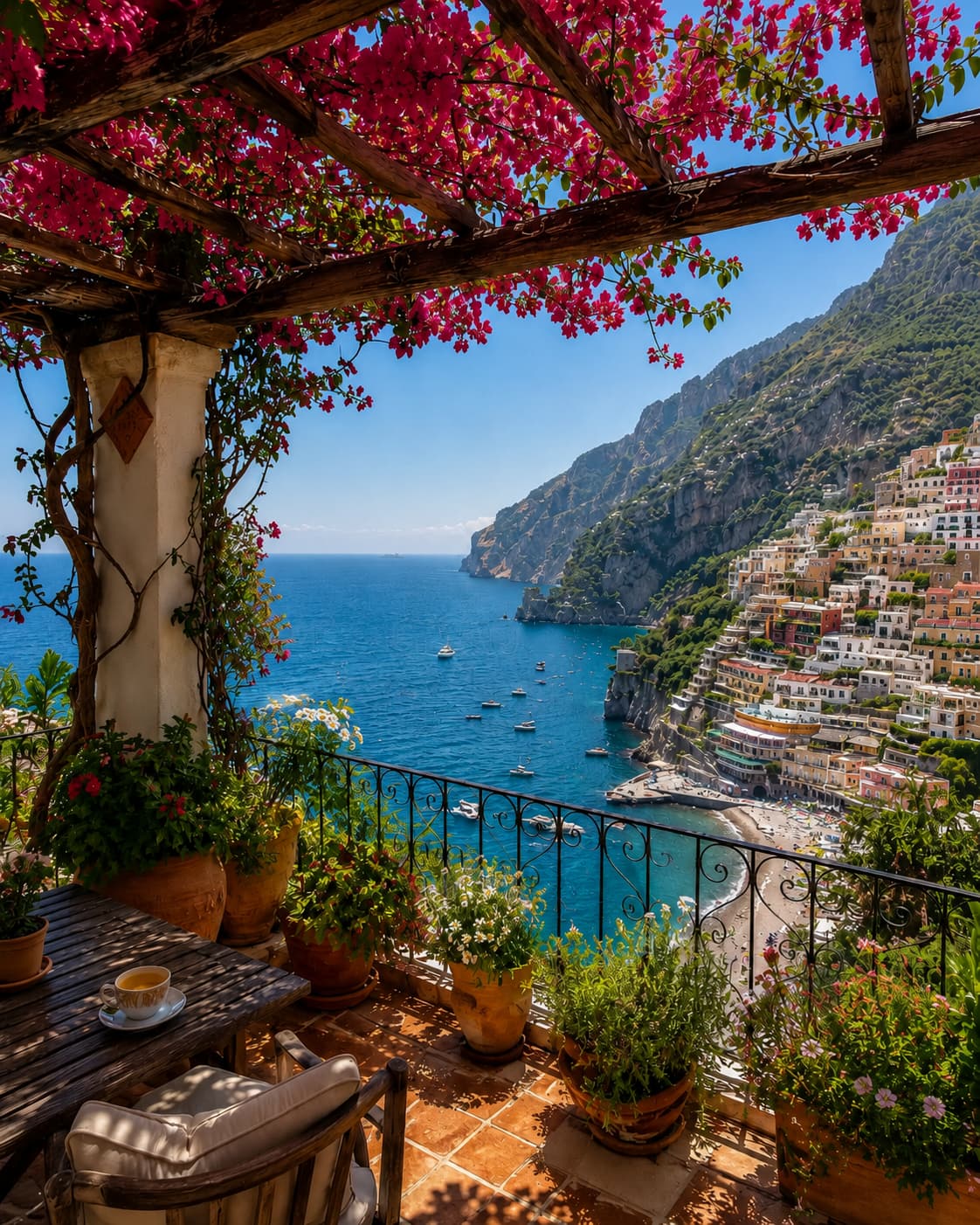
These three cities are, arguably, the hardest August cases in the Mediterranean. Each combines extreme heat with dense stone-and-concrete urban fabric that retains warmth overnight, a concentration of must-see sights that can’t be visited from a beach, and visitor numbers that remain near peak even as locals flee for the coast.
Rome and Athens: The Other Hard August Cases
Coastal versus inland: does being by the sea actually help?
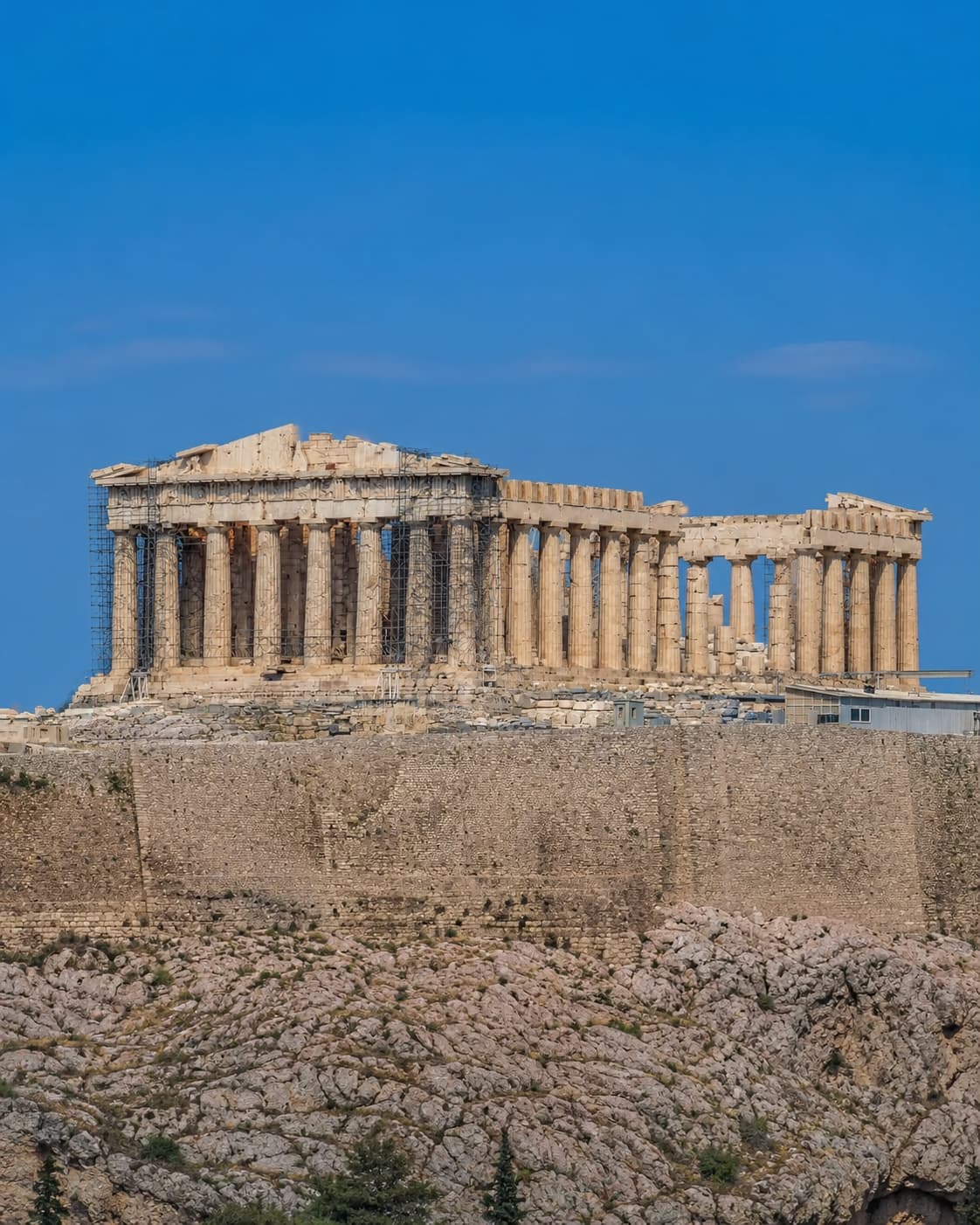
Meaningfully, yes — but only to a point. Coastal areas typically run 3–5°C cooler than inland equivalents at the same latitude. A sea breeze that kicks in by midday can make a beach town in Croatia or the Greek islands a genuinely different experience from Athens or inland Tuscany. However, this benefit applies primarily in the afternoon and evening; mornings and nights in coastal areas can still be hot enough to impair sleep. Moreover, the benefit depends heavily on exposure — a sheltered bay with high surrounding hills can trap heat as effectively as a city, while an open coastline with prevailing winds can be comfortable. The Adriatic Croatian coast, the Cyclades, and parts of western Sicily tend to benefit most.
03 — Are There Parts of the Mediterranean That Still Work in August?
Yes — and this point matters for the honest verdict. The Mediterranean is not a single climate zone. There are meaningful pockets where August remains a reasonable proposition — where the Mediterranean is not too hot in August, or at least not unmanageably so. Dismissing all of it is as inaccurate as defending all of it.
Where the Med still delivers in August
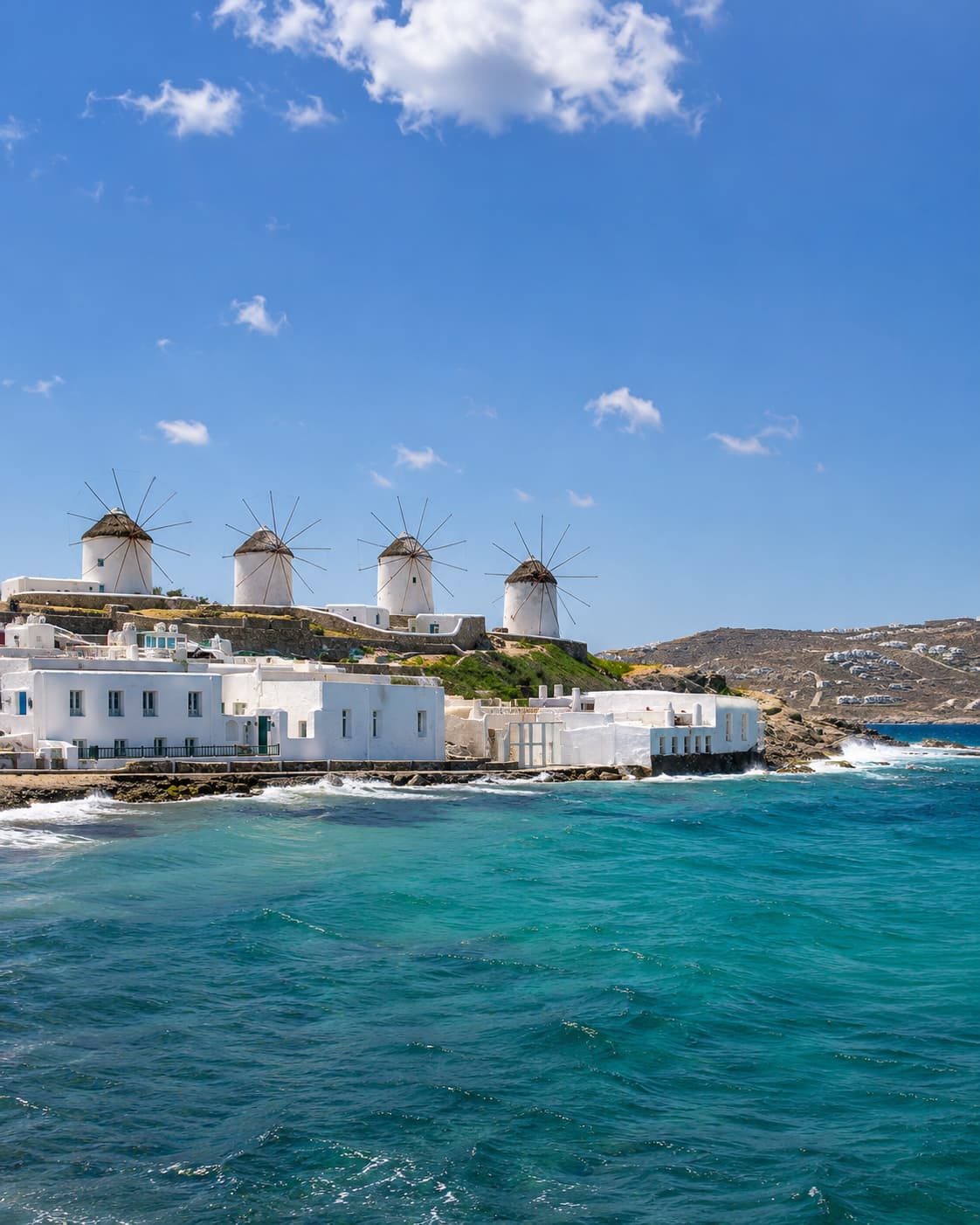
The Meltemi wind that blows across the Cyclades from July through September is a legitimate natural cooling system. Santorini and Mykonos remain busy and expensive in August, but the wind keeps temperatures more bearable than the mainland. The Ionian Islands (Corfu, Kefalonia, Zakynthos) have a slightly wetter microclimate and tend to run a few degrees cooler than Athens. Neither is cold, but both are meaningfully more manageable than the Greek mainland in mid-summer.
The northern Adriatic — particularly Croatia’s Istrian Peninsula and the coast around Trieste and the Slovenian coast — runs considerably cooler than the Dalmatian coast further south. Istria in August averages around 28–30°C rather than 34–36°C. Similarly, Mediterranean destinations with meaningful altitude (the hinterland of Montenegro, the mountains behind the Côte d’Azur, Corsica’s interior) offer conditions that the coast cannot. These aren’t the Mediterranean you might have booked, but they’re accessible from the same airports.
The first week of August and the final ten days (roughly August 21–31) are meaningfully cooler in most Mediterranean destinations than the peak mid-August period. Additionally, early morning travel — planning sightseeing between 6am and 10am, retreating to shade, water, or air conditioning by midday, and re-emerging after 5pm — remains a workable strategy in moderate-heat destinations. The visitor who plans around the heat rather than against it generally has a better trip than the one who fights it.
04 — The Real Risks of Mediterranean Heat — Beyond Discomfort
Most travel content stops at “it might be hot.” For travellers weighing whether the Mediterranean is too hot in August, there are additional risks worth naming plainly — not to alarm, but because informed travellers make better decisions.
Health, wildfire, and what your insurer may not cover
Heat exhaustion and heat stroke are genuine medical risks in extreme temperatures, particularly for older travellers, those with cardiovascular or respiratory conditions, and children. Symptoms of heat exhaustion — fatigue, dizziness, nausea, excessive sweating — can develop within hours of exposure and escalate rapidly. The European heatwaves of 2003, 2019, and 2022 each produced significant excess mortality, concentrated in the elderly and those without access to air conditioning. For most healthy adult travellers, the risk is manageable with discipline (hydration, shade, restricted midday activity). However, it is not zero, and the consequences of getting it wrong are severe.
Wildfires and Infrastructure Risks
August is peak wildfire season across southern Europe. Greece, southern Spain, Portugal, Corsica, Sardinia, and southern Italy have all experienced significant wildfire events in recent August months, some requiring tourist evacuations. The practical implications extend beyond the dramatic: smoke significantly degrades air quality across wide areas (not just in fire zones), wildfires can close roads and hiking trails, and the smell of smoke can persist for days across an affected region. Travel insurance rarely covers trip cancellation due to wildfires unless an official government advisory is in place — worth checking your policy wording before booking.
August is also when Mediterranean transport and accommodation infrastructure operates at maximum load. Train delays increase, ferries overbook, and air conditioning units in hotels and apartments — already working at capacity — fail more frequently. Power outages occur in parts of Greece and southern Italy during extreme heat events. None of this is guaranteed, but the margin for disruption is narrower in August than in any other month, and the cost of alternatives (last-minute hotels, replacement transport) is highest precisely when you need them most.
05 — The Best Coolcation Alternatives to the Mediterranean in August
The term “coolcation” — travelling specifically to escape summer heat — entered mainstream travel vocabulary around 2022 and has since become a recognisable planning framework for European summer trips. The alternatives below aren’t a consolation list. Each has a genuine case for being chosen ahead of the Mediterranean in August, not merely as a fallback.
The Azores — Atlantic temperance with volcanic drama
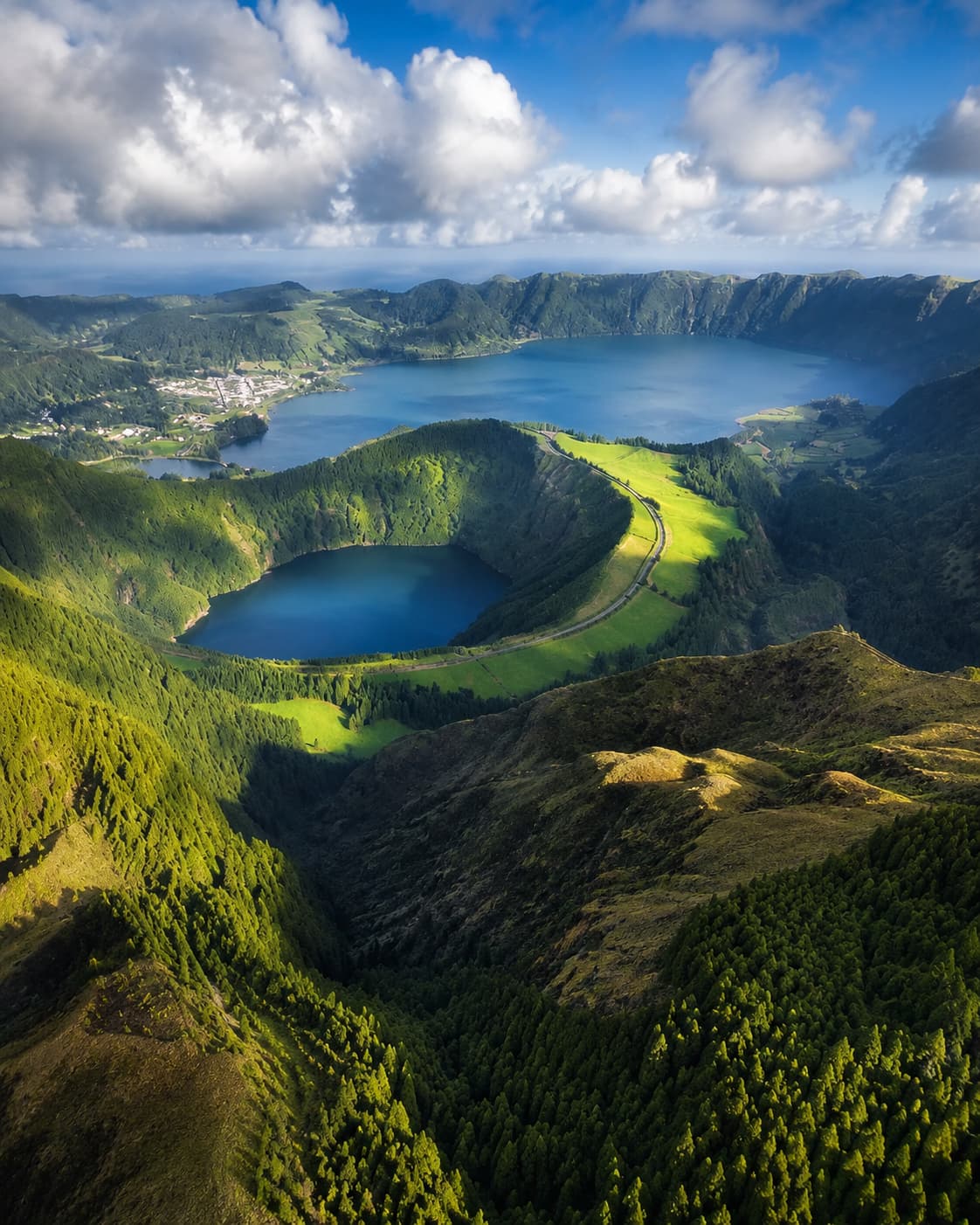
São Miguel, the main island of the Azores, sits in the mid-Atlantic at a latitude similar to Lisbon, but the ocean moderates its temperature to a degree that Lisbon itself never achieves. August highs on the island average 24–26°C — warm enough to swim, cool enough to hike all day, and consistent enough to plan around. The landscape is unlike anywhere else in Europe: crater lakes, hot springs, terraced hillsides, and an ocean that feels genuinely wild. The honest caveat is rainfall — the Azores can cloud over quickly, and the island’s microclimates mean the north can be drizzling while the south is sunny. For travellers who want a dramatic, cooler alternative with genuine natural substance, São Miguel is the most underrated August option in the Atlantic.
→ Full guide: Azores: São Miguel Travel Guide
The Scottish Highlands — the honest case for Scotland in summer
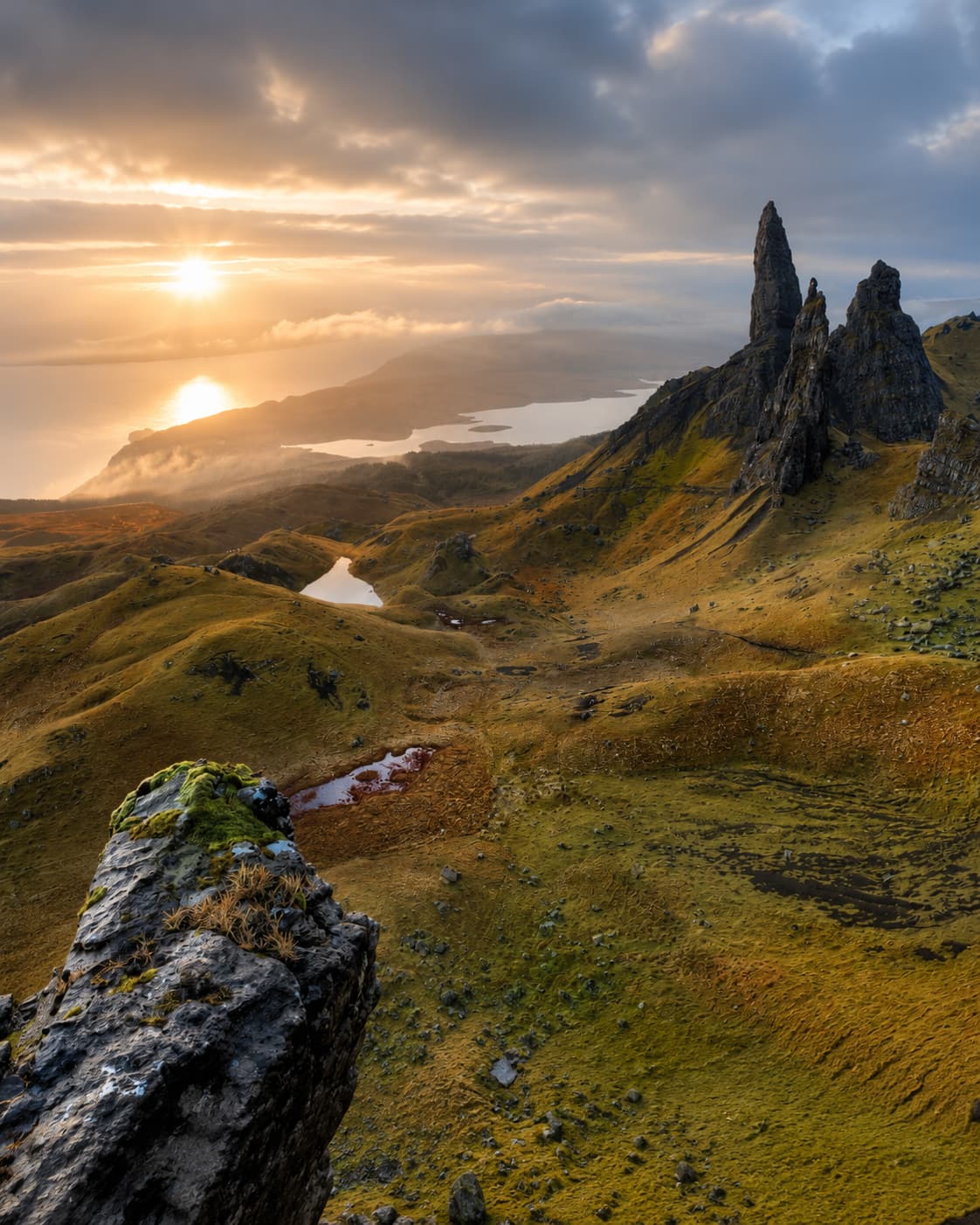
August is peak season in the Scottish Highlands for a reason: it’s the driest, most accessible, and most reliably light month of the year. Average temperatures run 15–20°C in the glens, cooler on the higher ground, and the quality of light — long golden evenings that stretch past 9pm — is something no Mediterranean summer can replicate. The honest caveats are midges (biting insects that emerge from June to September in still, wet conditions, particularly at dusk) and unpredictable weather. Neither of those is a dealbreaker with preparation — midges are manageable with repellent and wind — but they’re real enough to mention. Furthermore, the Highlands reward slow travel in a way that suits the August pace: long drives, empty roads, castles with no queues, lochs that look different every hour.
→ Full guide: The Scottish Highlands: An Honest Guide
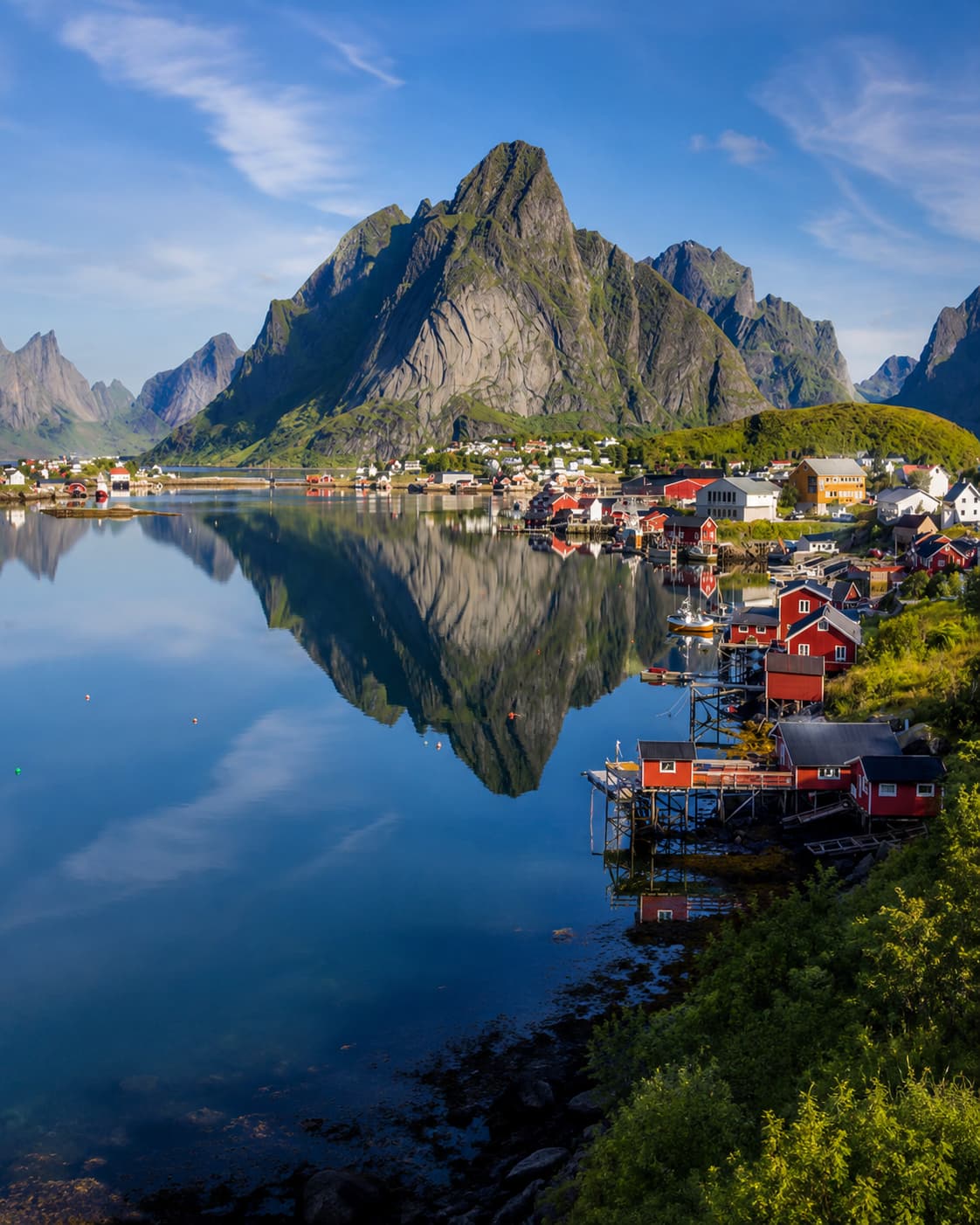
The Lofoten Islands, Norway — midnight sun without the heat
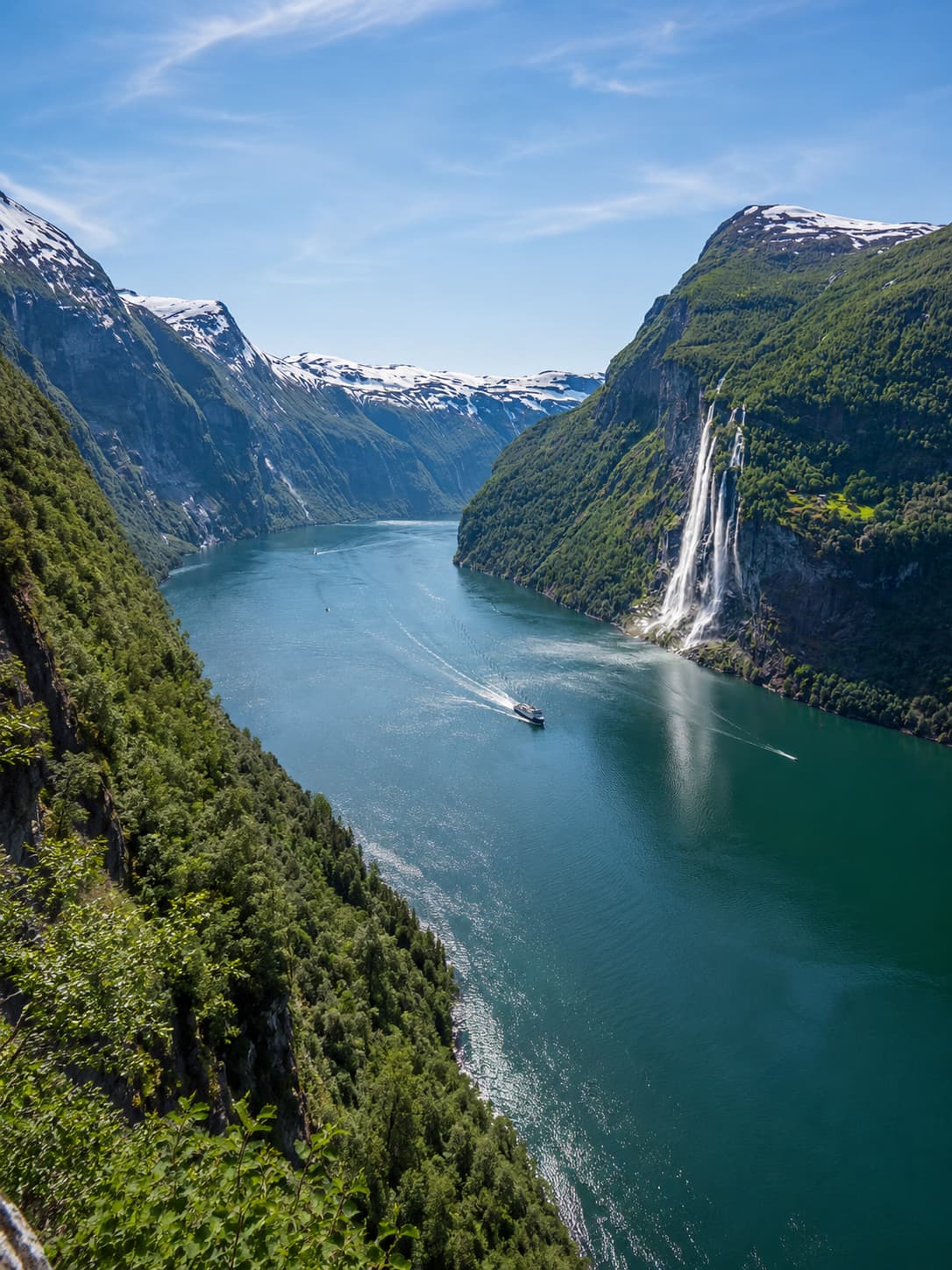
Lofoten in August sits at 68° north latitude — well above the Arctic Circle — which means the sun barely sets, the light is extraordinary, and the temperatures average 12–18°C. The islands offer dramatic mountain-and-fjord scenery that has made them one of the most photographed landscapes in Europe over the past decade, but August visitor numbers remain modest compared to the Mediterranean. Hiking, kayaking, and photography here benefit from conditions that are genuinely unique: clear Arctic air, mountains dropping straight into the sea, and a quality of silence that the Mediterranean can’t offer in summer. The trade-off is cost — Norway is expensive, and Lofoten requires commitment to reach. However, for travellers who value landscape over beach, the case is strong.
→ Full guide: Lofoten Islands, Norway
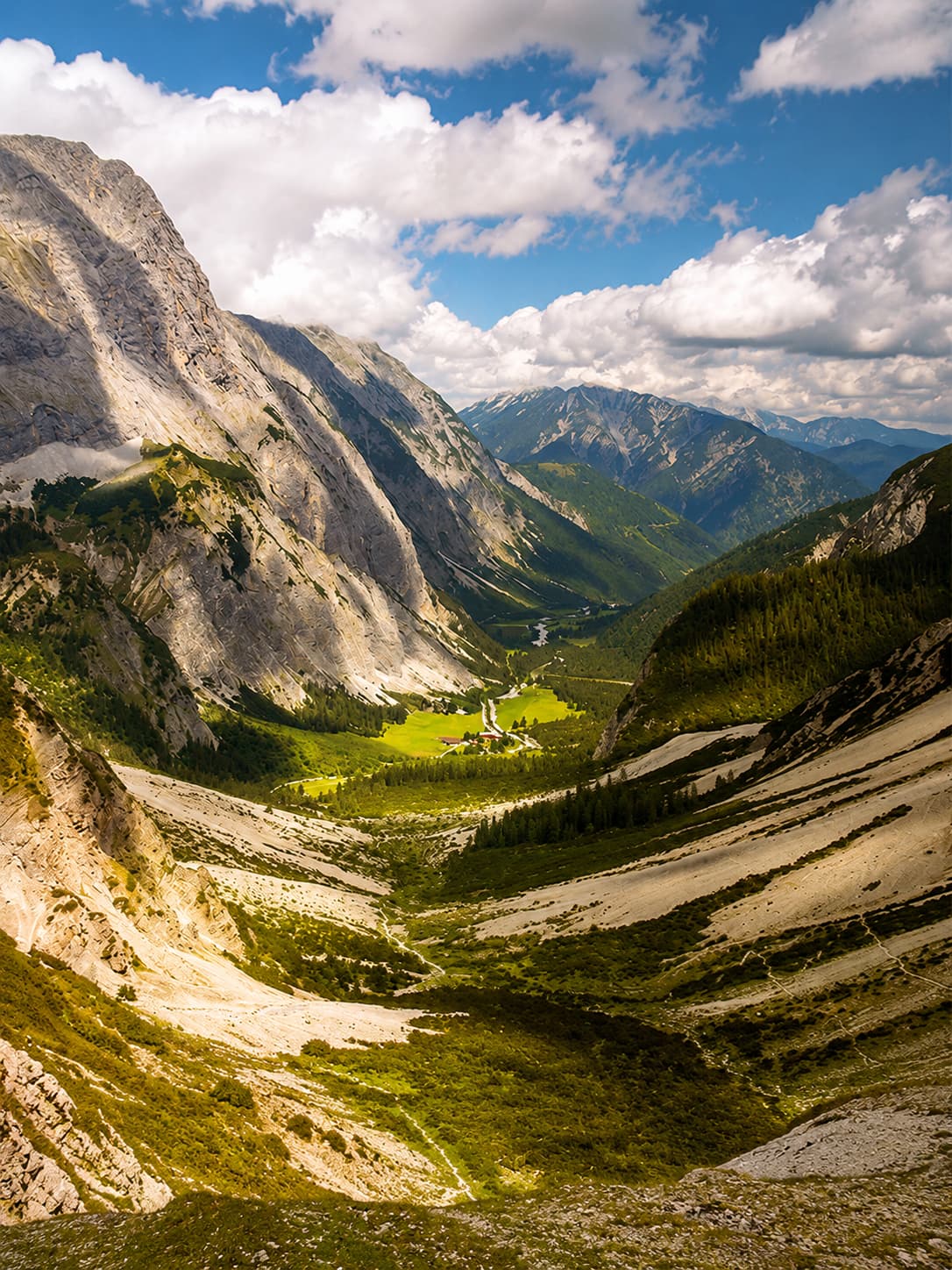
The Alps — altitude as natural air conditioning
Every 1,000 metres of altitude drops the ambient temperature by approximately 6.5°C. In practice, that means Alpine destinations above 1,500m — the Dolomites, the Austrian Tyrol, parts of Switzerland — are running at 19–22°C in August while Venice is at 31°C and Milan is at 34°C. The Alps aren’t a cold-weather compromise; they’re a physically beautiful landscape that happens to be the most accessible cool-air environment from central and western Europe. Hiking trails are at peak condition in August, mountain huts are open, and the light — sharp, high-altitude, unfiltered — is genuinely special. We’ve covered the best Alpine picks in detail separately.
→ Full guide: Coolcations: Alpine Destinations in Europe
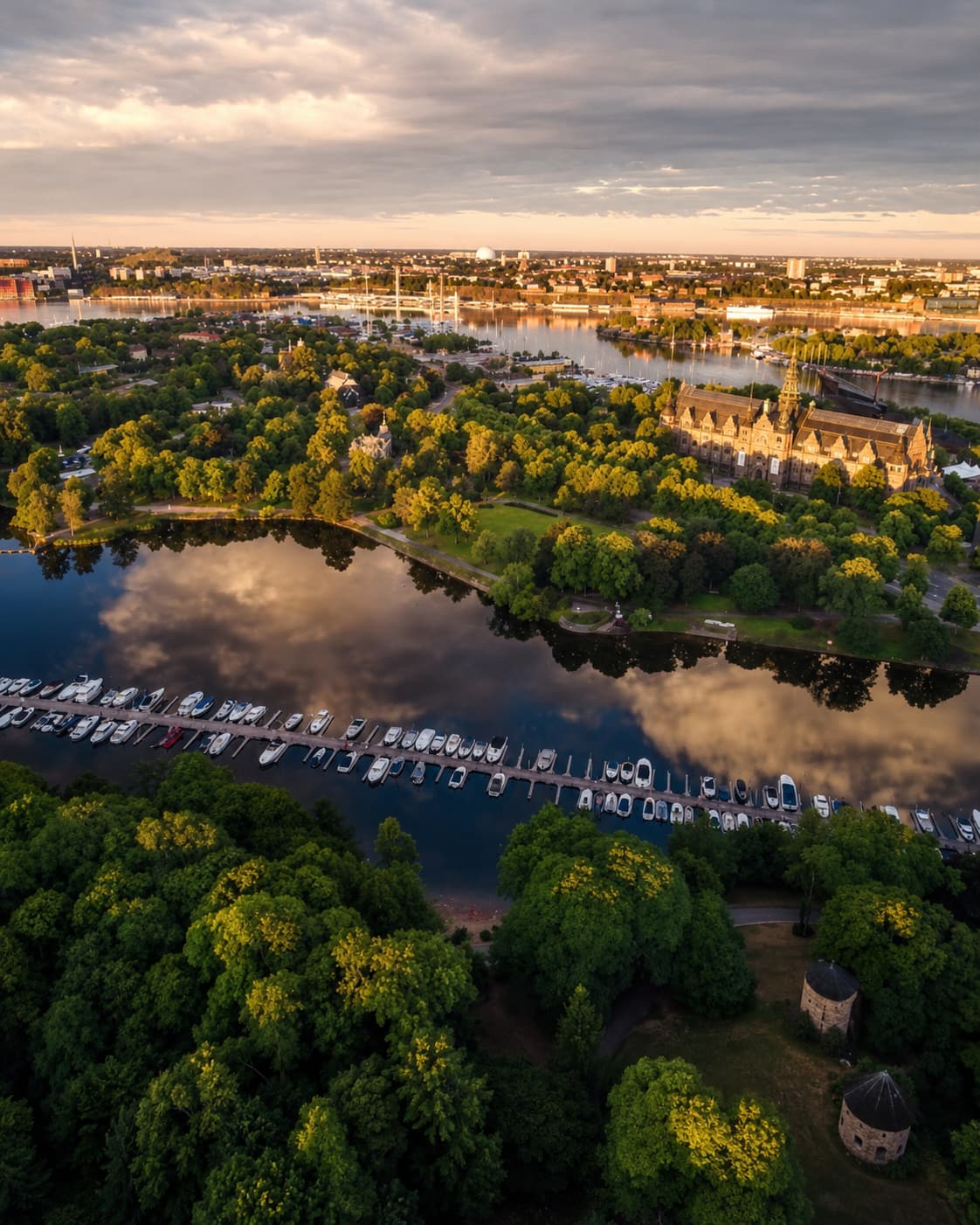
Stockholm and the Swedish archipelago — a city that improves in August
Stockholm is one of the few European capitals that genuinely gets better in August. The city warms to 20–23°C, the archipelago — 30,000 islands and islets extending east into the Baltic — fills with Swedes on boats and kayaks, and the long evening light turns the waterways golden. The crowds are domestic rather than international, which means the city operates at a particular kind of relaxed summer rhythm: outdoor restaurants at full capacity, museums emptier than usual (Swedes are outside), parks taken over for picnics that run until midnight. For a city break with a completely different energy from the Mediterranean tourist machine, Stockholm in August is quietly one of the best options in Europe.
→ Full guide: 3 Days in Stockholm
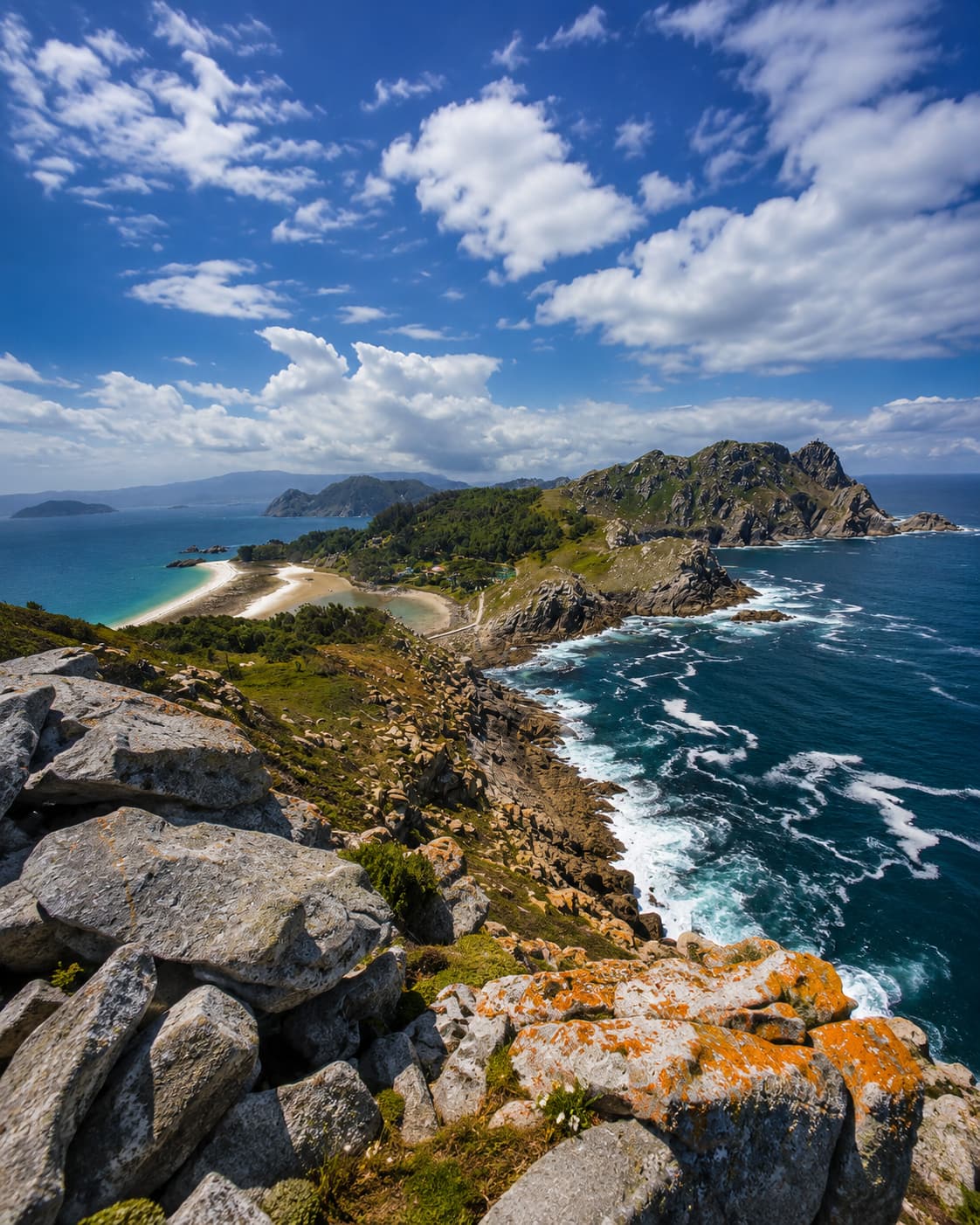
Northern Spain and Galicia — same country, entirely different climate
This option deserves more attention than it typically receives. While Seville is posting 40°C and attracting cautious headlines, the Atlantic coast of northern Spain — Galicia, Cantabria, the Basque Country — is sitting at 22–26°C with green landscapes and a seafood culture that rivals anything in the south. San Sebastián, in particular, is widely recognised as one of the best food cities in the world and runs 10–12°C cooler than Madrid or Seville in August. Galicia has its own language, its own architecture, its own fog — it feels like a different country, which is part of the point. Porto, just across the border in Portugal, typically averages 27–29°C in August — warmer than the north, but still dramatically cooler than the Algarve.
Also worth noting: the Faroe Islands — remote, dramatically cold, and operating at around 12–16°C in August — are for travellers who want to completely exit the European summer. Not everyone will, but for those who will, the Faroes in August are in a category of their own.
06 — Is It Actually Cheaper to Go Somewhere Cooler in August?
The honest answer is: sometimes, but not reliably. One reason travellers ask whether the Mediterranean is too hot in August is that it opens the question of whether cooler alternatives represent better value — and that’s worth examining honestly. The coolcation shift has pushed prices up in Norway, Scotland, and Iceland over the past three years as demand has increased. Meanwhile, the Mediterranean has not meaningfully reduced August prices despite its heat problem — tourism there remains supply-constrained in August, and operators know it.
Which Cooler Alternatives Actually Save Money?
In broad terms, for travellers who have decided the Mediterranean is too hot in August, the Azores and northern Spain offer genuine cost advantages over peak-season Mediterranean pricing — flights from major European hubs are competitive, and accommodation costs less than Santorini or the Amalfi coast in August. Norway and Scotland, in contrast, are not cheap destinations and should not be chosen on budget grounds; they’re chosen because the experience is worth the premium. Stockholm is a mid-range proposition — expensive for alcohol and restaurants, but not outrageously so for accommodation if you book ahead.
Additionally, the indirect costs of a Mediterranean August holiday are worth counting: midday hours become unusable, which means days are effectively shorter, which means you may need more nights to see the same amount; medical costs if heat exhaustion intervenes; and the psychological toll of fighting the heat rather than enjoying a trip. These aren’t line items on a budget spreadsheet, but they’re real.
07 — Should You Just Wait and Go to the Mediterranean in September Instead?
What September actually delivers versus August
September is genuinely better than August in most Mediterranean destinations — but the improvement is uneven, and it’s worth being honest about the limits. For travellers who originally asked whether the Mediterranean is too hot in August, September is a partial answer rather than a complete one.
In northern Mediterranean destinations — northern Croatia, northern Italy, the French Riviera — September marks a meaningful transition. Temperatures drop 4–6°C from their August peak, crowds thin considerably, and the sea remains warm from three months of summer accumulation. For these destinations, early-to-mid September is often the best combination of conditions the Mediterranean ever offers: the warmth without the extremes, the light without the crowds.
However, in southern Spain, southern Italy, and Greece, early September still frequently delivers temperatures in the mid-to-upper 30s. Documented heatwaves hit southern Europe in the first two weeks of September in both 2023 and 2024. Furthermore, the African anticyclones that drive Mediterranean summer heat don’t respect the calendar — late August cooldowns and early October warmth both occur regularly. Consequently, if you’re specifically fleeing the heat, September is a reduction rather than a solution for these southern latitudes. For Seville, Sicily, and Athens, late September (after the 20th) is the more reliable escape window.
The September Verdict: North vs South
To summarise: northern Med in early September is often excellent. Southern Med in early September is still a gamble. Late September across the whole Mediterranean is the safest bet for genuinely comfortable temperatures.
Greece, Croatia and Mediterranean Heat Questions
Cooler and Safer part of Mediterranean
Cooler Europe Alternatives in August
The Honest Verdict: What I’d Actually Do
Whether the Mediterranean is too hot in August is a real question — but “avoid the entire Mediterranean in August” isn’t the right conclusion. The honest framework is more granular: avoid Seville, Athens, Rome, and southern Sicily for anything more than a dawn-to-10am window. Choose the Greek islands over the Greek mainland. Consider Istria or northern Croatia over Dubrovnik if heat is a primary concern. Accept that September is better, while being realistic that it’s not uniformly cooler across the whole region.
Moreover, if the heat is a genuine dealbreaker rather than a manageable inconvenience, the alternatives above aren’t consolation prizes. The Azores in August is one of the most satisfying island experiences in Europe. The Scottish Highlands in August might be the best version of the Highlands all year. Lofoten exists at a frequency that no Mediterranean summer can match. These aren’t compromises — they’re different, and in August, they might simply be better.
The Mediterranean will still be there in October, in April, in any month that isn’t its worst one.
August, increasingly, belongs to the travellers who know where the heat stops.