
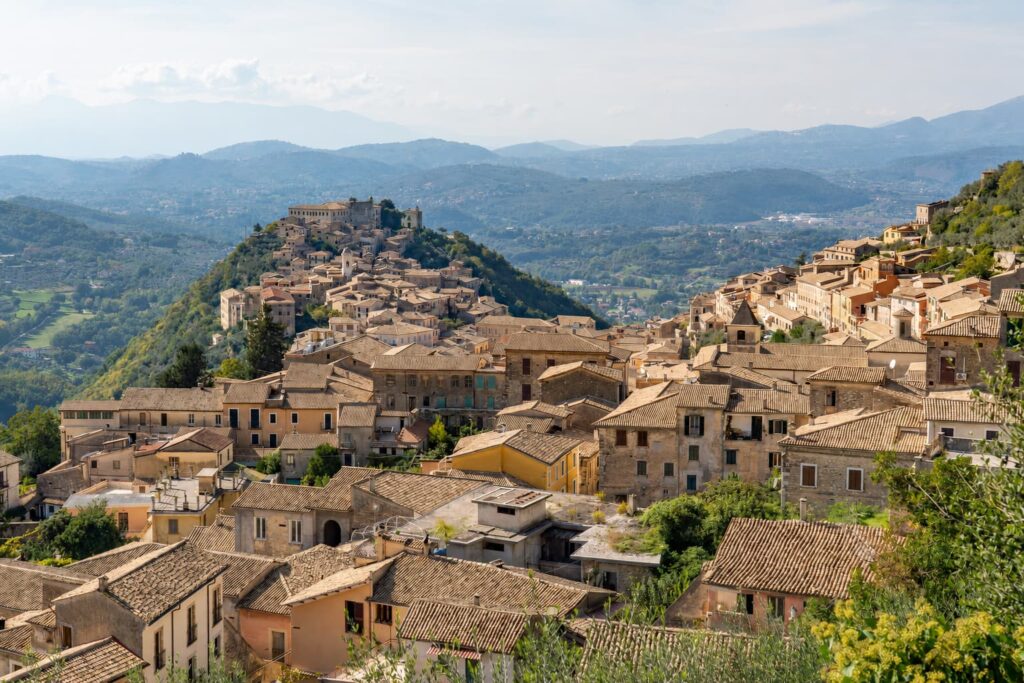
Slow Travel Italy: What Staying in One Place for a Month Actually Looks Like
Slow travel Italy is the most-searched travel phrase of 2026. Search interest literally doubled in a single month — not as a slow build, not as a trend, as a spike. And I get it. Because what people are actually searching for isn’t a concept. It’s permission.
Permission to stop treating Italy like a checklist. To not book the Rome-Florence-Venice triangle for the fourth time. To pick one place, unpack properly, and find out what it actually feels like to be somewhere rather than pass through it.
The aspirational version of slow travel Italy is everywhere — the long lunches, the piazza at golden hour, the whole dolce-far-niente fantasy. But there’s another version. The one where your landlord texts you in Italian at 11pm about something you don’t understand. Where week two is harder than week one. Where you have a favourite bar, a proper one, and the barista still hasn’t asked your name.
That’s the version this post is about. The numbers, the adjustment, the places, and the honest answer to whether it’s actually worth it.
01 — Planning a Month in Italy? Don’t Book Anything Until You Know These 5 Things
Most people planning slow travel Italy get the vibe right and the logistics wrong. They picture the market mornings and the long afternoons — and they’re not wrong to picture those things. But between that image and actually doing it, there are five things that will determine whether your month is what you imagined or a quietly stressful scramble.
The Five Logistics That Decide the Month
US, UK, Canadian and Australian passport holders can stay in the Schengen Area — which includes Italy — for up to 90 days in any 180-day period, no visa required. A single month is completely fine. But if you’ve been in France or Spain or Portugal earlier in the same six-month window, those days count. Know your number before you book. And one more thing: if you plan to work remotely for income during your stay, a tourist entry technically doesn’t cover that. Italy’s digital nomad visa exists for exactly this reason.
Airbnb works for this, but monthly discounts are inconsistent and availability gaps are real. For better value and more options, go to Idealista or Immobiliare.it — Italy’s actual rental platforms — and search Facebook groups for expats in whichever city you’re targeting. The listings are real, the prices are lower, and the landlords are usually more flexible. You will need to show ID and sign a basic contract. Some landlords are comfortable renting to tourists for a month; others aren’t. Factor in time to find one who is.
Don’t read the listing. Don’t assume “Wi-Fi included” means reliable internet. Ask the landlord directly: what’s the speed, is it fibre or shared building connection, what happens when it drops? Then check reviews specifically for mentions of connectivity. In older buildings, especially in smaller towns and southern Italy, this is real. If you’re working remotely, it’s a dealbreaker-level variable. If you’re not, it’s an annoyance — but still worth knowing about before you’re stuck with it for 30 days.
Budget, Wi-Fi and Week-Two Reality
The apartment is the biggest line item, but not the only one. A realistic month in Italy — rent, food, local transport, utilities, one or two day trips — runs €2,500–€4,000 depending on where you stay and how you live. Southern Italy and smaller cities are significantly more manageable than Tuscany or central Rome. The section below breaks this down region by region with actual numbers, not ranges pulled from nowhere.
This isn’t a warning, it’s a spoiler so you’re not blindsided. The first week feels like a very good holiday. The second week, the novelty fades and the friction surfaces — the apartment’s thin walls, the language barrier with the landlord, the realisation that you’ve seen the obvious things and haven’t yet found the non-obvious ones. Most people who bail on slow travel do it in week two. The ones who don’t discover that week three is where the whole thing finally makes sense.
02 — What Slow Travel Italy Actually Means (And What It Doesn’t)
Let’s get specific about this, because a lot of people think they want slow travel Italy when what they actually want is a better itinerary. And those are completely different trips.
A better itinerary means the same cities — Rome, Florence, Cinque Terre, maybe Amalfi — just with more time between stops. Two nights instead of one. A day where you don’t have to catch a train. That’s a good trip. Do that trip. But it’s not slow travel.
Slow travel in Italy means picking one place and staying in it long enough for it to stop being interesting in the tourist sense and start being interesting in the real sense. The question stops being where do I go next? and becomes what does this place look like when I stop treating it like a place I’m visiting? That question takes time to answer. Specifically: more time than most people budget for.
The adjustment curve works like this. During week one, you are still in holiday brain — everything is novel, the market is exciting, and walking the same streets you’d have rushed through in two days feels intentional and good. The second week is harder, and you should expect it to be. By week three, something shifts: you have a route to the market you actually prefer, you know which bar serves the better coffee, and you know which hours the piazza is yours. The place starts to feel less like a backdrop and more like somewhere you live, temporarily. That’s what the month is for.
03 — How Long Do You Actually Need to Stay?
Two weeks is the minimum. And I’ll be honest: it barely counts. Two weeks gives you one week of actual settling in and four or five days of what week three in a month would feel like — then you leave right as it gets good. Better than a week, nowhere near enough.
A month is the threshold where the shift happens. Not because 30 days is magic, but because it’s long enough to push through the disorientation and the restlessness and actually arrive in a place before you leave it. It’s also the unit that makes the budget work: monthly apartment rates are substantially cheaper per night than weekly or short-stay rates, which changes the calculation entirely.
Three months — the Schengen maximum on a tourist entry — is where slow travel genuinely opens up. Long enough to experience a shoulder season, to get through the awkward phase with the neighbourhood, to be the person who knows where the market moves when it rains. But a month is the right starting point. Get one month right, and you’ll understand immediately what three months offers.
04 — What a Typical Day in Slow Travel Italy Actually Looks Like
The version people imagine: long lunches, afternoon naps, a spontaneous drive to a village you’ve never heard of, aperitivo at sunset, the whole unhurried dreamscape.
The actual version: you wake up without an alarm, which is real and good. Coffee comes next — with the moka on the stove if the apartment has one, which it should. Then you do two or three hours of whatever you came here to do: work, write, read, nothing. After that, you walk to the market and buy tomatoes and something for lunch. Maybe you cook, or maybe you go to the trattoria round the corner where lunch is about €12 and nobody looks at you twice if you sit for an hour. Afternoon: a church you’ve been meaning to see, a drive half an hour away, laundry, a nap, nothing in particular. Aperitivo at seven — an actual Aperol Spritz in the actual piazza, which never gets boring, no matter what week it is. Dinner later than you’re used to. Sleep.
That’s a good day. And there will be a lot of good days. There will also be days when you’re bored in a way that makes you feel guilty. You are in Italy. How are you bored? You’re bored because you live here temporarily and real life is sometimes boring, even in Italy. There will be days when the Wi-Fi is down and the landlord isn’t answering. Days when you miss your own kitchen and your own bed and the complete frictionlessness of somewhere you know. These days are part of it. They’re usually followed by a day where something small and unexpectedly good happens — you find a bar that does the best spritz you’ve ever had in a back street you’d walked past three times — and you remember exactly why you stayed.
05 — Slow Travel Italy Budget: What a Month Actually Costs, by Region
The budget breaks into three main categories: accommodation, food, and everything else. Accommodation is the variable that controls the whole thing. Get that right and the rest is manageable.
The rent by region — what you actually pay
Monthly furnished apartment rates vary more than most guides admit. Here’s how it actually breaks down:
| Region / City Type | Monthly Rent | What you get |
|---|---|---|
| Southern Italy — smaller cities Puglia, Calabria, Molise, inland Sicily |
€800–€1,400 | Real apartment in a real neighbourhood. Slower pace, less English, much better food-to-price ratio. Molise is Italy’s most affordable region at around €560/month at the lower end. |
| Mid-sized northern cities Bologna, Turin, Verona |
€1,400–€2,000 | Better transport links, stronger English, good food cities. Bologna in particular is underrated for this — best food in Italy, genuinely manageable for a month-long base. |
| Florence / central Rome Tourist-facing neighbourhoods |
€1,600–€2,500 | Florence sits around €1,600/month for a one-bedroom. Rome follows closely, with prestige central areas hitting €2,500+. Both cities have had rents climb 8–10% since early 2025. |
| Peak Tuscany Siena, hill towns, premium rental stock |
€2,000–€2,800 | You’ll share your slow travel experience with a lot of other people doing the same thing. Real, but expensive. Shoulder season (April, October) drops both price and competition significantly. |
Food: the number most guides get wrong
People budget too much for food when they’re planning to eat out every night, and too little when they’re planning to cook. The actual approach that works: cook from the market four or five nights a week (€300–€400/month), hit the trattoria for lunch two or three times a week (€12–€18 a sitting, sometimes less), and save the proper restaurant spend for the evenings that actually deserve it. Total food budget at this pace: €400–€600/month, and you’ll eat well. Better than well.
Finding the apartment: where to actually look
Airbnb has monthly options, but the monthly discount is inconsistent and the selection is thinner than the short-stay inventory. For better value, Idealista and Immobiliare.it are Italy’s main rental platforms and worth searching first. Facebook groups for expats in your target city — search “[city] short term apartment rental” — surface landlords who aren’t on the platforms. You’ll need to show ID, sign a basic contract, sometimes show proof you can pay. Give yourself six to eight weeks to find the right one. A good landlord is worth more than a good location. Don’t underestimate this.
If you’re doing the research legwork — comparing neighbourhoods, building enquiry messages in Italian, calculating budgets by region — more and more slow travellers are using AI tools to front-load that planning. How that actually works in practice is worth knowing before you start: using AI to plan a trip.
The Schengen 90-day rule: what US and UK travellers need to know
US, UK, Canadian and Australian passport holders can stay in Italy — and across the entire Schengen Area — for up to 90 days in any 180-day rolling period without a visa. A single month is completely fine on a tourist passport. No registration, no paperwork beyond what your landlord handles.
Where it gets complicated: the 90 days is for the whole Schengen Area, not just Italy. If you spent three weeks in Spain earlier in the same six-month window, those count. Keep track. And if you plan to return to Schengen countries later in the year, factor in how many days you’ll have left. The second complication: remote work. Technically, working for income on a tourist entry isn’t permitted under the tourist visa waiver. Italy’s digital nomad visa exists for this; it’s not as complicated to get as it sounds and worth looking into if remote work is part of the plan.
06 — Where to Base Yourself (And Why the Obvious Answer Isn’t Always Right)
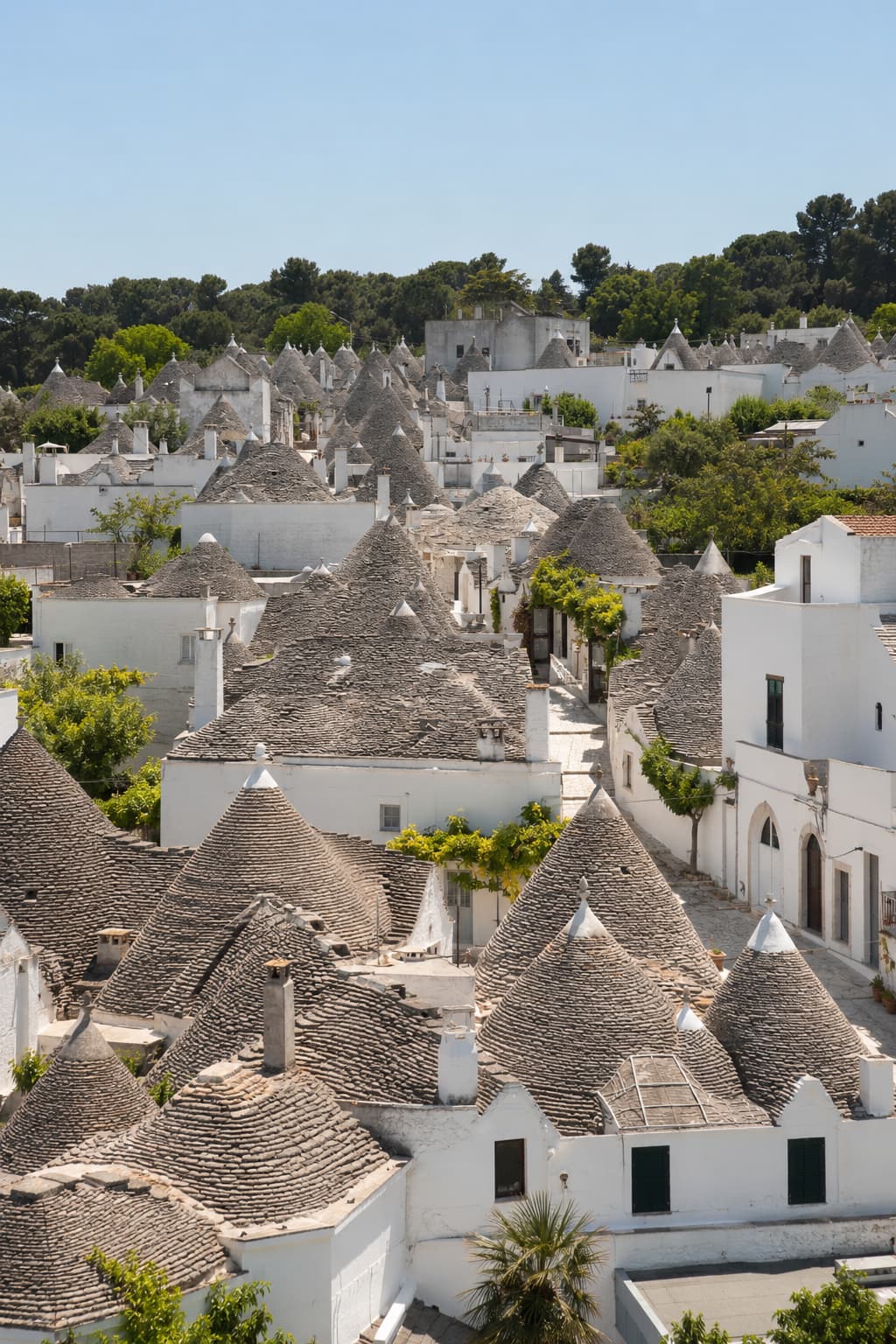
The default answer is Tuscany. And Tuscany is not wrong — the infrastructure is good, the food is real, the scenery earns its reputation. But Tuscany is also the most expensive and most visited part of rural Italy, which means your slow travel experience there comes with a lot of company.
Here’s how to actually pick your base — the honest criteria:
- Transport links matter more than you expect: even slow travellers leave their base sometimes. A train station or regular bus service changes your daily freedom dramatically. Picking a hilltop village with no car because “that’s the point” is a reasonable choice — just price in the rental car, which adds €400–€600/month to your budget.
- English fluency drops off fast outside tourist areas: this is part of the appeal and part of the difficulty. Landlord communication, market conversations, medical situations if they arise — all in Italian. A few months of Duolingo beforehand isn’t optional if you’re heading somewhere without a strong expat community.
- Shoulder season is a different Italy: April and October in peak tourist areas are a completely different proposition from July and August. Lower prices, thinner crowds, the rhythm of local life becoming visible again. If your dates are flexible, this is the lever worth pulling.
- Puglia is underrated for this: lower cost, genuine local culture, honest food, less polished-for-tourists feel than anywhere north of Naples. Getting there from northern Europe takes a connection; getting there from the US east coast is easier than most people realise.
- Bologna doesn’t get nearly enough credit: best food city in Italy, seriously, no argument. Well connected by train in every direction. Less of an expat-tourism infrastructure than Florence. Better English fluency than the south. If you want a city base that actually works for a month, Bologna is where I’d start the search.
07 — What Nobody Actually Tells You Before You Go
Here is the short list of things that will hit you that the Pinterest boards don’t show.
The guilt of not sightseeing is real and predictable. You are in Italy, sitting in the same piazza for the eleventh day. Somewhere in your head, you know people would pay significant money to be exactly where you are. Instead of sightseeing, you’re using that position to read a novel you’ve been meaning to finish since March. This feeling is coming. It passes. Let it.
The landlord variable will define your month. A landlord who responds quickly, fixes things, and doesn’t send cryptic 11pm texts in Italian makes a month in Italy easy. A landlord who doesn’t is a slow background stress that accumulates in ways a one-week holiday would never surface. Ask pointed questions before you book. Read recent reviews for specific mentions of host communication, not just “great location.”
Boredom is actually the product, not a bug. There will be afternoons with nothing planned and no particular desire to manufacture something. In a normal trip, that would feel like a failure. In a month-long stay, it’s the thing you came for — the capacity to sit with time and not fill it compulsively. Most people need a few weeks to actually arrive at that state. The slow travel isn’t the piazza at golden hour. It’s the Tuesday afternoon when you have nothing to do and you’re fine with it.
The small Italian you learn will repay itself disproportionately. Not fluency — 50 good phrases, used well, consistently. Market vendors start seeing you every week. At the bar, someone eventually recognises you. Even the landlord texts less cryptically once they know you’re making an effort. This is the difference between living somewhere briefly and passing through it.
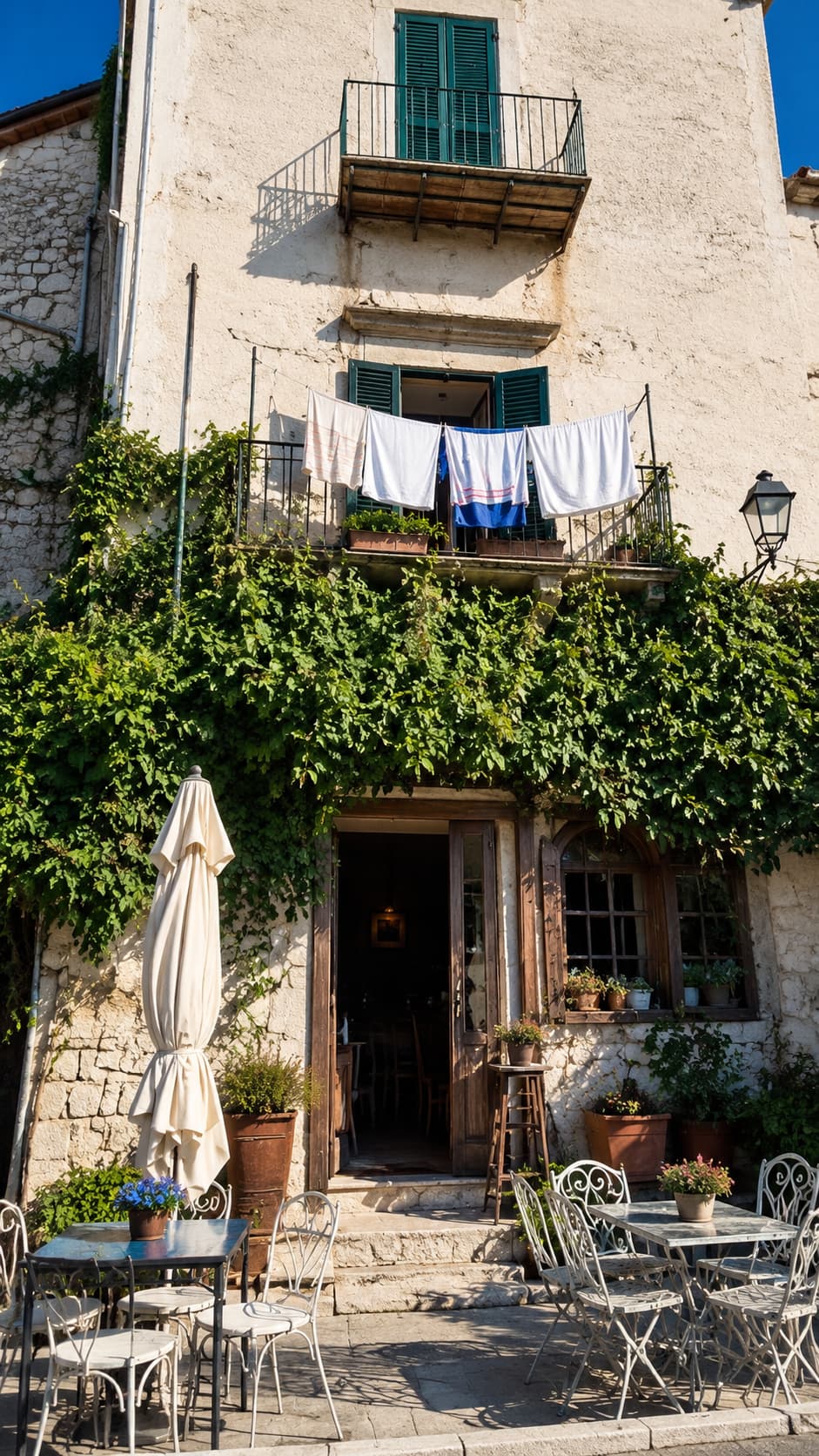
08 — Is Slow Travel Italy Worth It? Honest Verdict
Depends entirely on what you’re comparing it to.
Against the Rome-Florence-Venice sprint? Yes, comprehensively. You’ll know one place better than you’d know three places combined, you’ll come back with something that feels like actual experience rather than a camera roll, and you’ll spend less money doing it once you factor in the monthly apartment rate versus hotels and nightly Airbnb. The road trip version of Italy has its own appeal — if covering ground and variety is what you want, that version is the honest choice, and knowing which you’re actually after matters more than any itinerary advice.
Against staying home? It’s more complicated. A month abroad requires more planning, more tolerance for discomfort, a higher friction cost at the start. What it gives back is something most holidays can’t structurally offer: the experience of a place becoming ordinary. Of Italy becoming somewhere you live briefly, rather than somewhere you visit.
That’s a different thing from tourism. Whether it’s a better thing depends on the person and the moment. For someone ready to sit with the unglamorous Tuesday as readily as the golden Sunday — it’s a significantly better thing. For someone who needs the itinerary, the pace, the variety to feel like they’re getting their time’s worth — the friends vs solo version of Italy might be the more honest starting question.
When a Structured Slow Trip Makes More Sense
And if what you’re after is the slow pace with some structure built in — retreats, community, a programme — there’s a whole world of solo wellness retreats in Europe that do some of that work for you without requiring a self-managed month in an unfamiliar apartment.
Visa, Budget and Month-Long Stay Questions
Language, Meaning and Travel Style Questions
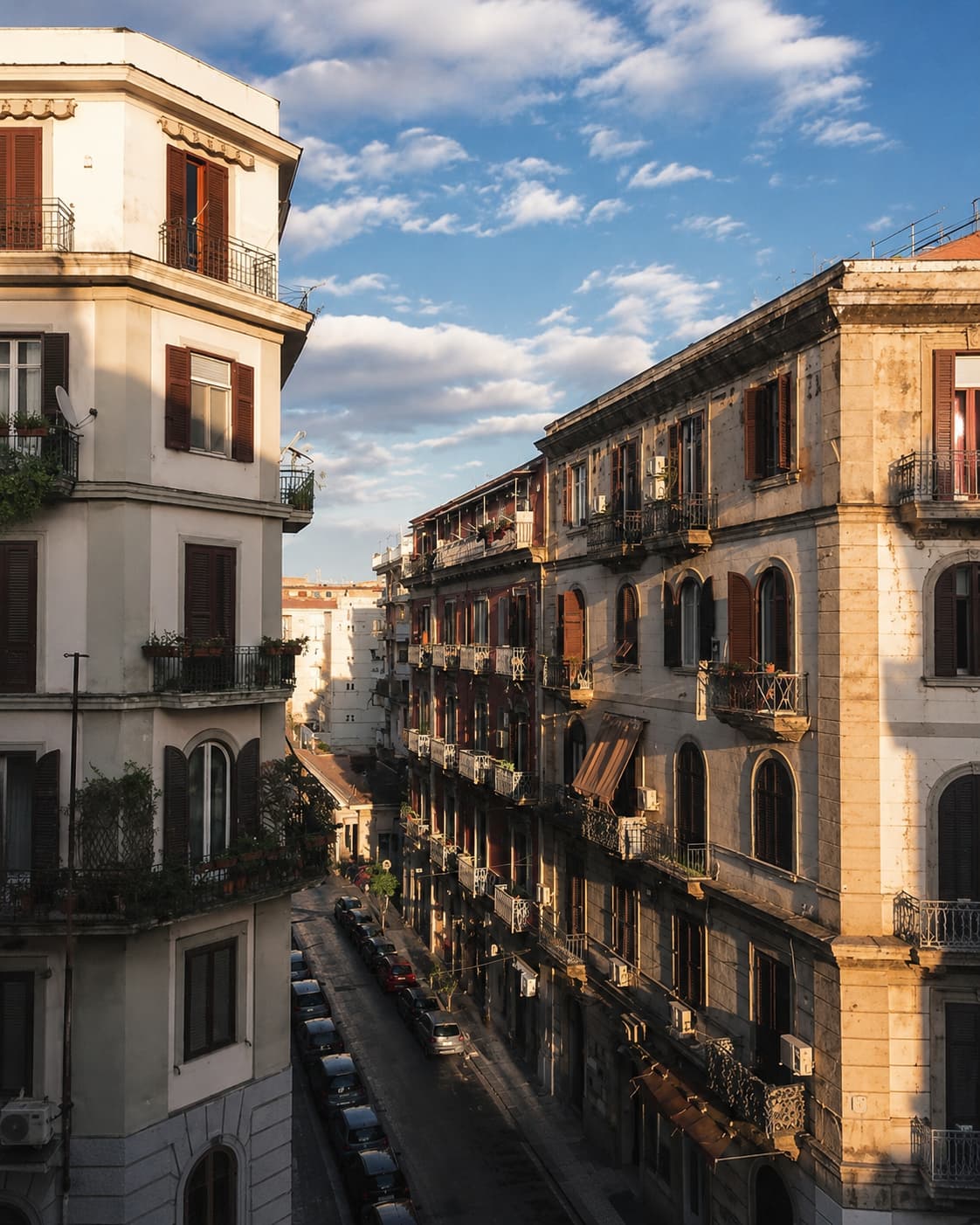
A month is long enough to stop being a tourist and start being somewhere.
Whether that’s enough — or whether it just makes you want three months — you’ll know by week three.