
The Best Castles in Scotland: An Honest Ranking of Which Are Worth Your Time
Scotland has more castles per square mile than almost anywhere in Europe — and most travel lists treat every single one as a fairytale must-see. Here’s a more honest read: which over-deliver, which to admire free from the outside, and which to skip entirely.
Why Scottish Castles Need a Shortlist
The best castles in Scotland number in the thousands — Scotland once had as many as 3,000 of them, roughly one for every hundred square miles. Aberdeenshire alone, nicknamed “Castle Country,” holds around 263. That abundance is the first thing to understand, because it shapes everything about how to approach a Scotland trip: the answer to which castles to actually visit is not a ranked list of twenty. It’s a decision about what you want — drama, history, interiors, or the visual jolt of stone rising from landscape — and then picking two or three that genuinely deliver it.
Most “best castles in Scotland” articles won’t tell you that Falkland Palace charges full price with most rooms shut, or that the most-photographed angle of Eilean Donan crops out a car park. They don’t mention that Stirling’s palace interiors have been fully restored in a way Edinburgh’s haven’t, or that some of the country’s most striking castle views are entirely free. This post tries something different: to tell you what each castle actually delivers, who it’s for, and which are best saved as a roadside stop rather than a ticketed visit.
- Why Scottish Castles Need a Shortlist
- How many castles are there in Scotland?
- The castles that genuinely over-deliver
- The most beautiful castle in Scotland
- Which Scottish castles can you actually go inside?
- The fairytale ones: Aberdeenshire’s Castle Country
- Castles best admired free from the outside
- The best castle near Edinburgh
- When to visit Scottish castles
- How to plan a castle route
- FAQ
01 — How Many Castles Are There in Scotland? (And Why You Should Only Pick a Few)
Estimates suggest Scotland once had around 3,000 castles — a figure that sounds mythical until you start driving and they keep appearing on hillsides, in lochs, and at the edge of cliffs. Historic Environment Scotland currently lists more than 2,000 surviving castle sites in varying states of preservation: some fully restored and ticketed, some preserved ruins open to visitors, many just a wall fragment in a field. Aberdeenshire alone holds around 263 of them, which is why the northeast has earned the nickname “Castle Country.”
That abundance, however, creates a trap. Most visitors arrive with a list of eight or ten castles culled from travel sites and consequently spend their Scotland trip in a car, rushing between them at the pace of a theme park. The resulting experience — a quick look, a photo, back in the car — does justice to none of them. A better approach is to pick two or three that match what you’re actually after and spend real time at each. The castles reward it. So, in turn, does the trip.
The sections below are organised by what each castle actually delivers, not by fame alone. Several well-known names appear under “best admired free from the outside.” That’s not a slight — it’s an honest read of what the paid experience gets you versus what’s visible from the road. In particular, a few famous names add less in person than their reputations suggest.
02 — The Castles That Genuinely Over-Deliver
These are the Scottish castles that earn their reputation in person, not just on a screen. Each delivers something distinct enough that visiting clearly beats not visiting. Moreover, none of them rely on a famous name alone to carry the experience.
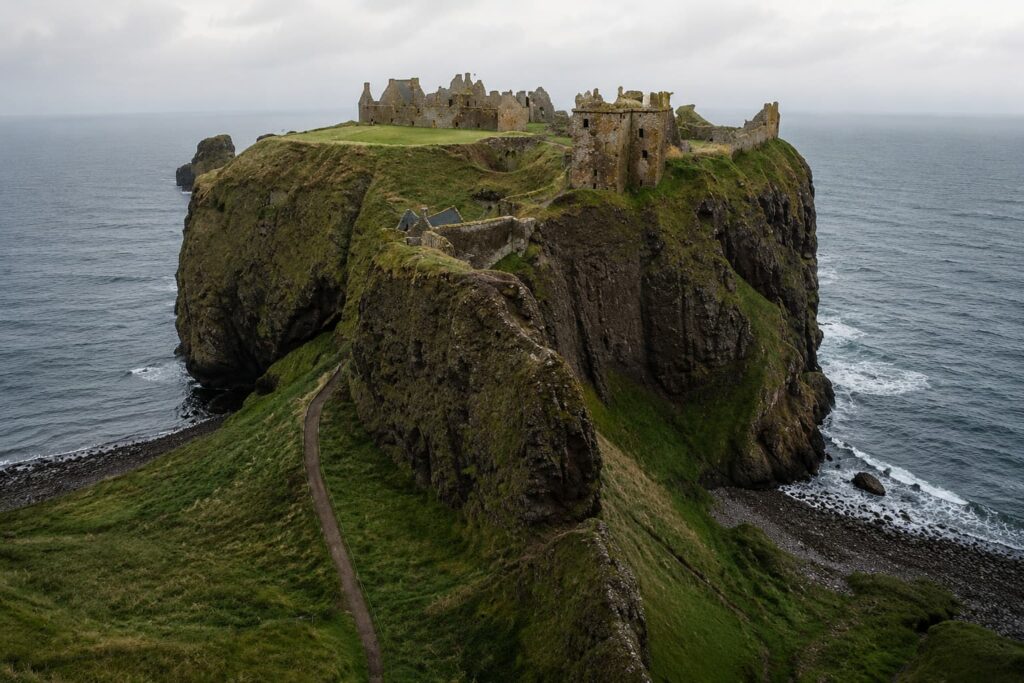
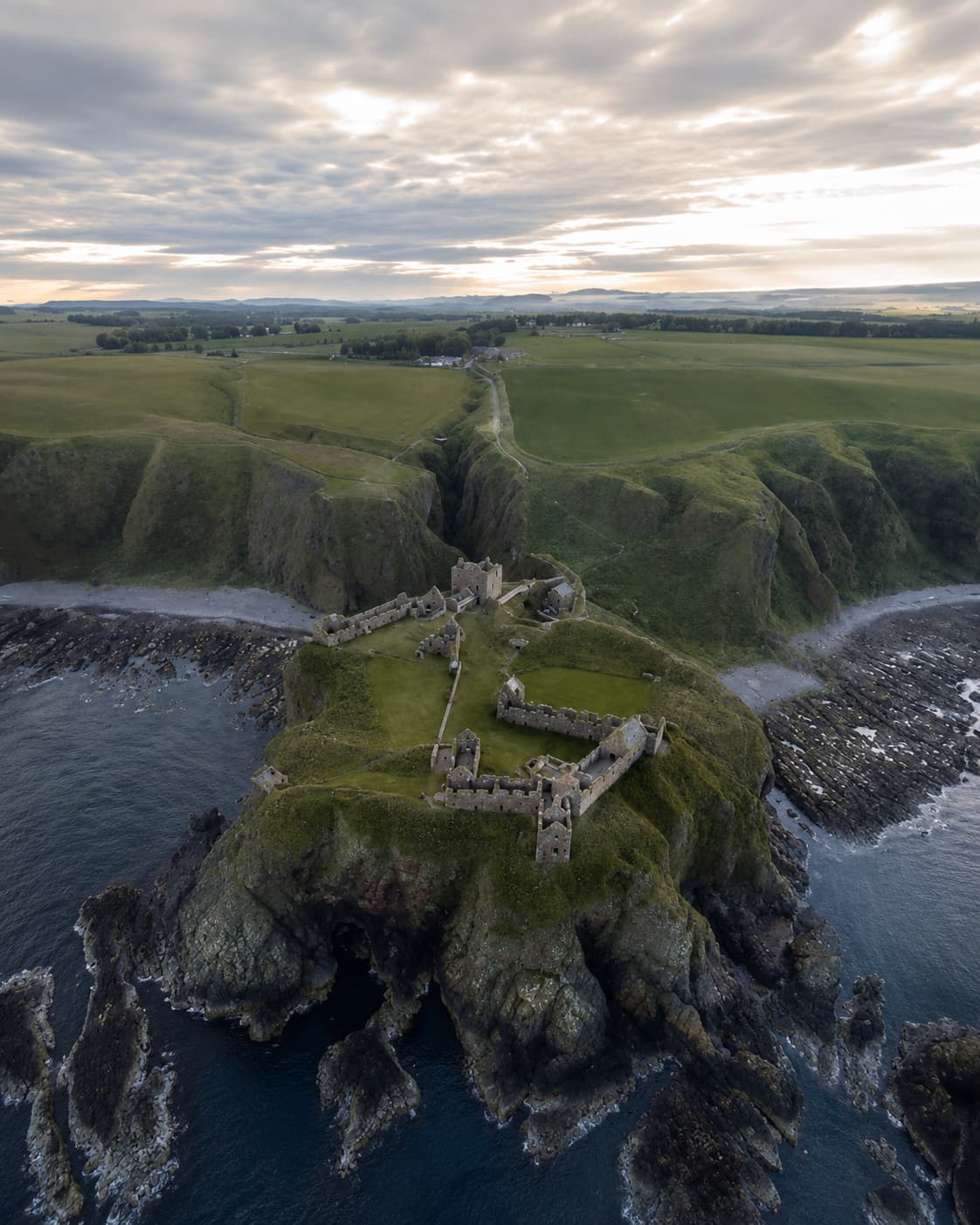
Dunnottar — The Clifftop Ruin That Earns Every Step
About two miles south of Stonehaven on the Aberdeenshire coast, Dunnottar sits on a 160-foot sea stack surrounded by the North Sea on three sides. Reaching it means descending a steep coastal path, crossing the narrow rock neck, then climbing back up through the gatehouse — over 200 steps in total. The payoff is substantial: a large complex of roofless ruins with enough substance to explore for an hour or more, and views that make the effort worthwhile from the first moment you clear the gatehouse arch.
The history here is specific and compelling. During an eight-month siege by Oliver Cromwell’s army in the 1650s, the Honours of Scotland — the Scottish Crown Jewels — were hidden at Dunnottar and subsequently smuggled out under the English soldiers’ noses by a local woman concealing them in a bundle of flax. That story lands differently when you’re standing on the rock where it happened. Additionally, the castle features in the Mel Gibson film Hamlet (1990) and has served as a backdrop for numerous productions since, which partly explains its outsized presence in Scottish travel imagery.
Admission is modest (around £8–9 for adults), the walk filters out casual visitors, and the ruin rewards unhurried exploration. Overall, of all Scotland’s castles, Dunnottar is the one most likely to exceed expectations in person.
The descent is steep and uneven — not wheelchair accessible. Wear shoes with grip. The path from the car park takes around 10–15 minutes each way. Arrive early in summer: the car park fills by mid-morning. No café on-site; Stonehaven village is a short drive away.
Edinburgh Castle — Worth It, With 2026 Context
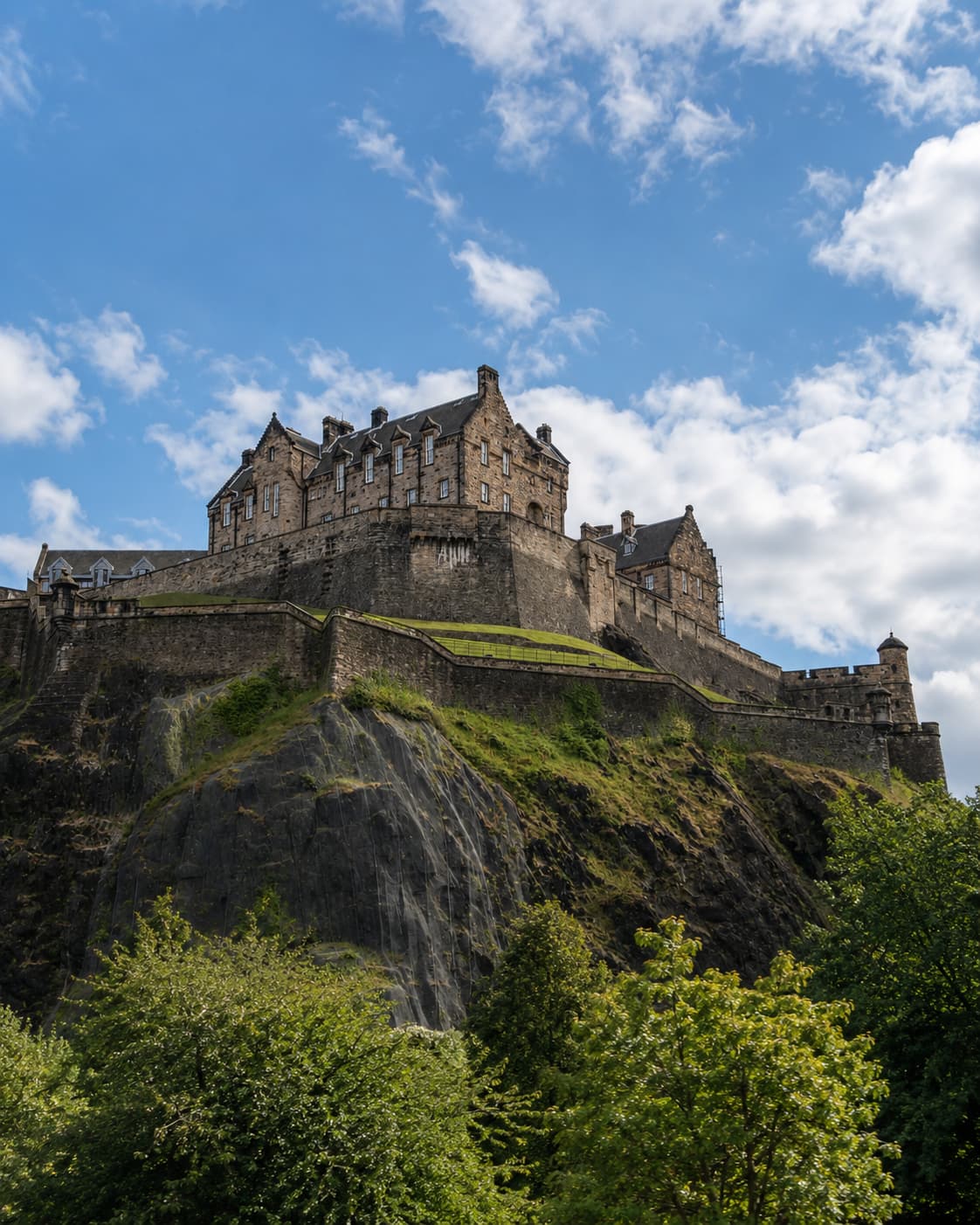
Edinburgh Castle draws over two million visitors a year — Scotland’s most-visited paid attraction, and by some margin its most debated. The admission price is high (£21.50 online for adults, £24 at the gate), summer queues are real, and the site has the managed quality of any attraction running at industrial scale. That said, it genuinely delivers what most people come for: extraordinary views over the city, St Margaret’s Chapel (Edinburgh’s oldest surviving building, dating from around 1130), the atmospheric Great Hall, the castle vaults, and Mons Meg — the giant 15th-century siege cannon.
The 2026 situation: the Crown Room reopened in April 2026 after vault refurbishment, so the Honours of Scotland — Crown, Sceptre, and Sword of State — are fully on display again. However, the Stone of Destiny has been permanently relocated to Perth Museum, a significant shift in how Scotland presents its national treasures. Consequently, if seeing the Stone specifically is part of the plan, Perth is now the place to go.
Furthermore, Edinburgh Castle sits on an extinct volcanic plug and has been besieged more times than any other castle in Europe — history the site communicates well. Book online well ahead in summer; the castle regularly sells out timed-entry slots. In particular, arriving at 9:30 AM sharp or coming after 2 PM when morning tour groups disperse makes a meaningful difference to the experience.
Stirling Castle — The Restored Interior That Beats Edinburgh for Some
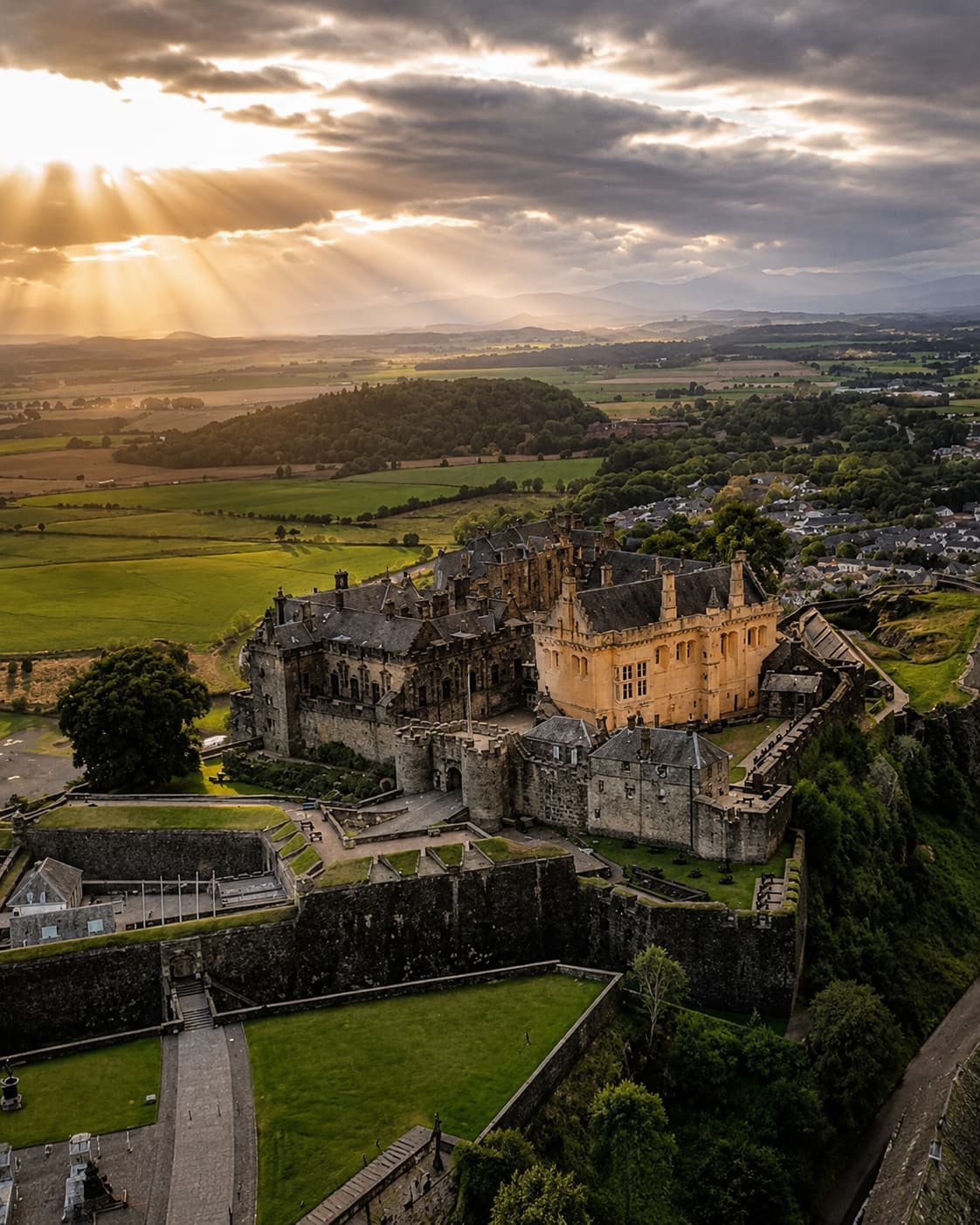
Stirling Castle consistently surprises visitors who arrive expecting Edinburgh’s smaller sibling. The Royal Palace at Stirling — fully restored after a major conservation project — is the most complete example of Renaissance royal apartments in Scotland. The painted ceiling reconstructions, carved stone figures, and detailed interior work reflect serious scholarship and genuine craft. Edinburgh’s interiors, in contrast, are largely stripped back and unrestored.
Strategically, Stirling makes its case clearly: positioned on another volcanic crag overlooking the upper Forth, it controlled the main crossing between the Scottish Highlands and Lowlands. Whoever held Stirling controlled Scotland. That history runs through the castle’s bones — from its role in the Wars of Independence (Robert the Bruce’s victory at Bannockburn in 1314 secured its return to Scottish control) to its use as a royal residence by James IV, James V, and the infant Mary Queen of Scots. As a result, the castle’s strategic logic is legible even before you read a single interpretive board.
Admission runs around £17.50 online for adults in 2026. Moreover, Stirling tends to have shorter queues than Edinburgh and allows more room to breathe inside the site. On balance, for visitors primarily interested in interiors rather than panoramic city views, Stirling is the stronger choice.
Eilean Donan — Iconic, But Temper the Photo
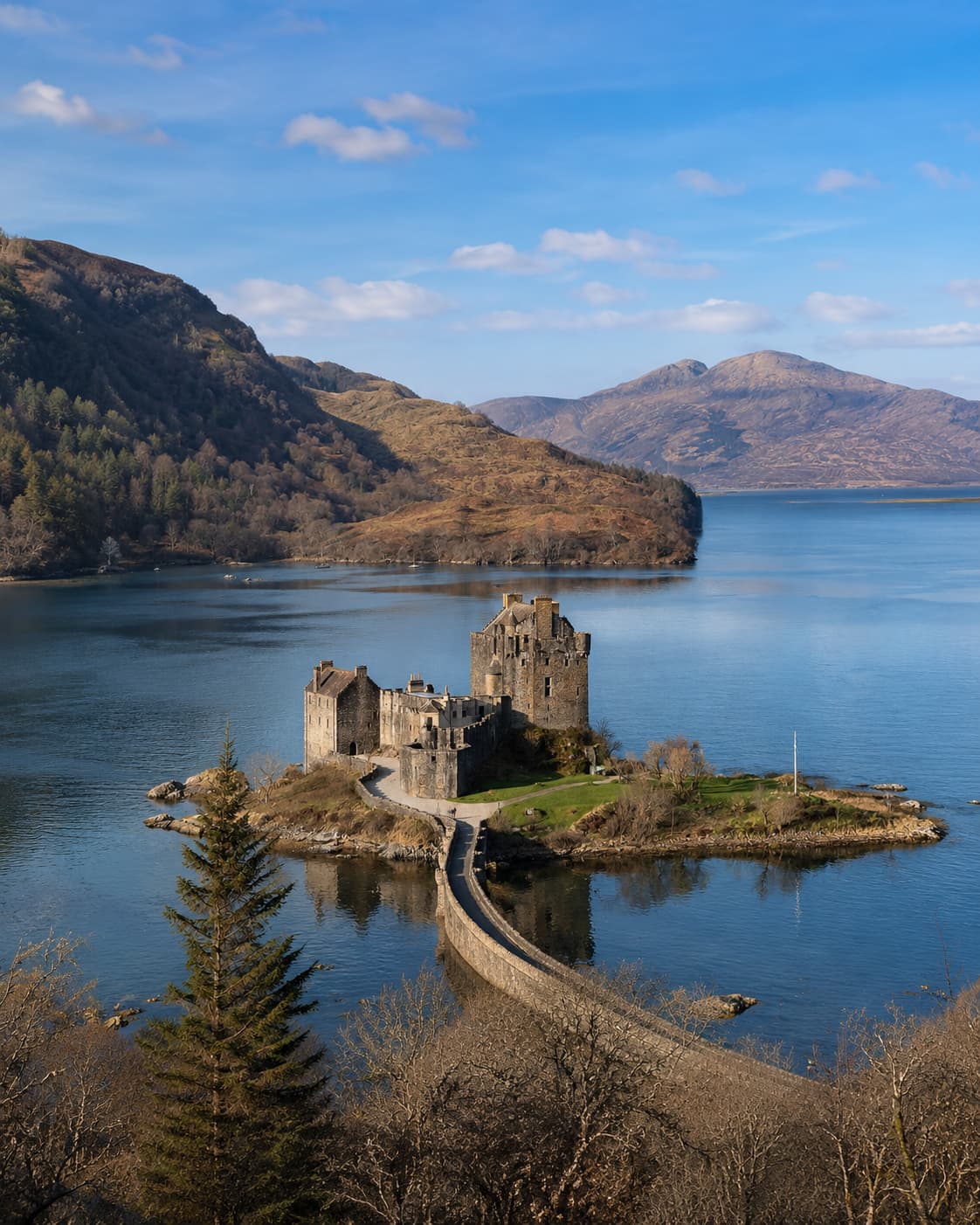
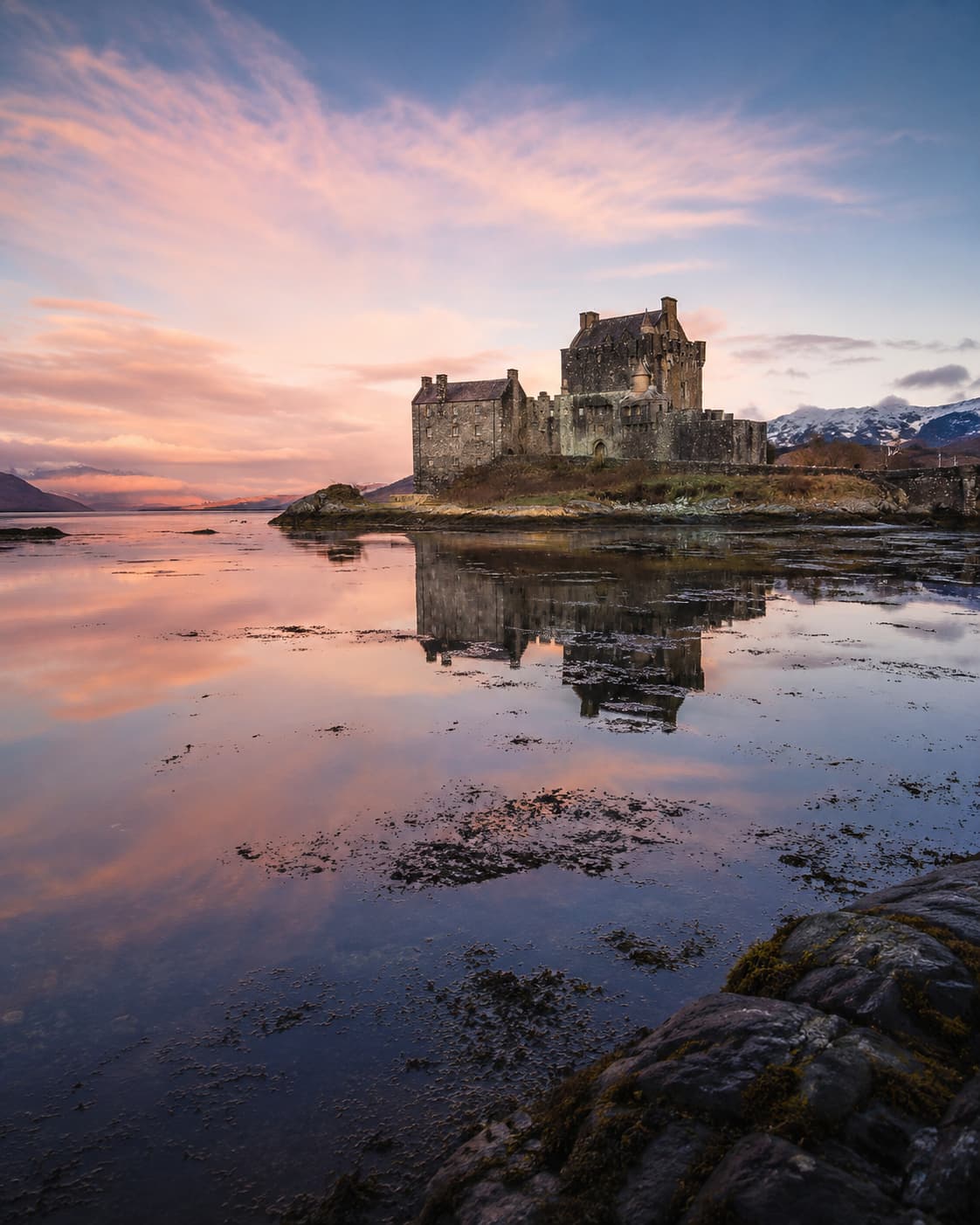
Eilean Donan is the most photographed castle in Scotland — the image of the arched stone bridge, the small tidal island, and the triple-loch meeting point appears on enough whisky bottles and shortbread tins to feel almost mythological. In person, it’s genuinely beautiful. The setting where Loch Duich, Loch Long, and Loch Alsh converge is dramatic, and on a clear day — particularly at golden hour — the view lives up to the image.
That said, the honest note: the famous camera angle crops out the A87 road that runs directly alongside and a substantial car park. The postcard shot requires deliberate positioning and early timing. Additionally, the present structure is not medieval in the way the exterior suggests — Eilean Donan was largely destroyed in 1719 during a Jacobite uprising and rebuilt comprehensively in the early 20th century by Lieutenant Colonel John MacRae-Gilstrap. The interior is well-appointed and interesting, but visitors expecting medieval stones should understand what they’re looking at.
Admission is around £9–10 for adults. The interiors are worth seeing if you’re passing through the Highlands on the road to Skye — which most visitors are. That said, plan for significant crowds from mid-morning throughout summer; in particular, arriving before 9:30 AM or after 4:30 PM changes the experience materially.
03 — The Most Beautiful Castle in Scotland (And Why “Beautiful” Depends on What You Want)
Ask ten people this question and you’ll get five different answers — which is, in itself, the first useful observation. “Most beautiful” in a Scottish castle context covers several distinct aesthetic categories, and picking one depends entirely on what kind of beauty you’re drawn to. Specifically, the word means very different things when applied to a clifftop ruin versus a loch-island icon versus a formal 18th-century house.
Four Different Ways a Scottish Castle Can Be Beautiful
No castle in Scotland sits more dramatically in its landscape. The visual impact of the ruins on the sea stack — surrounded on three sides by the North Sea — is immediate and striking. Furthermore, it photographs well from every angle and delivers more in person than any photo suggests.
The triple-loch meeting point, the arched bridge, the reflection on calm water — Eilean Donan is the castle that most consistently looks like a painting. Its beauty is real even if the structure is a 20th-century reconstruction rather than a medieval survival.
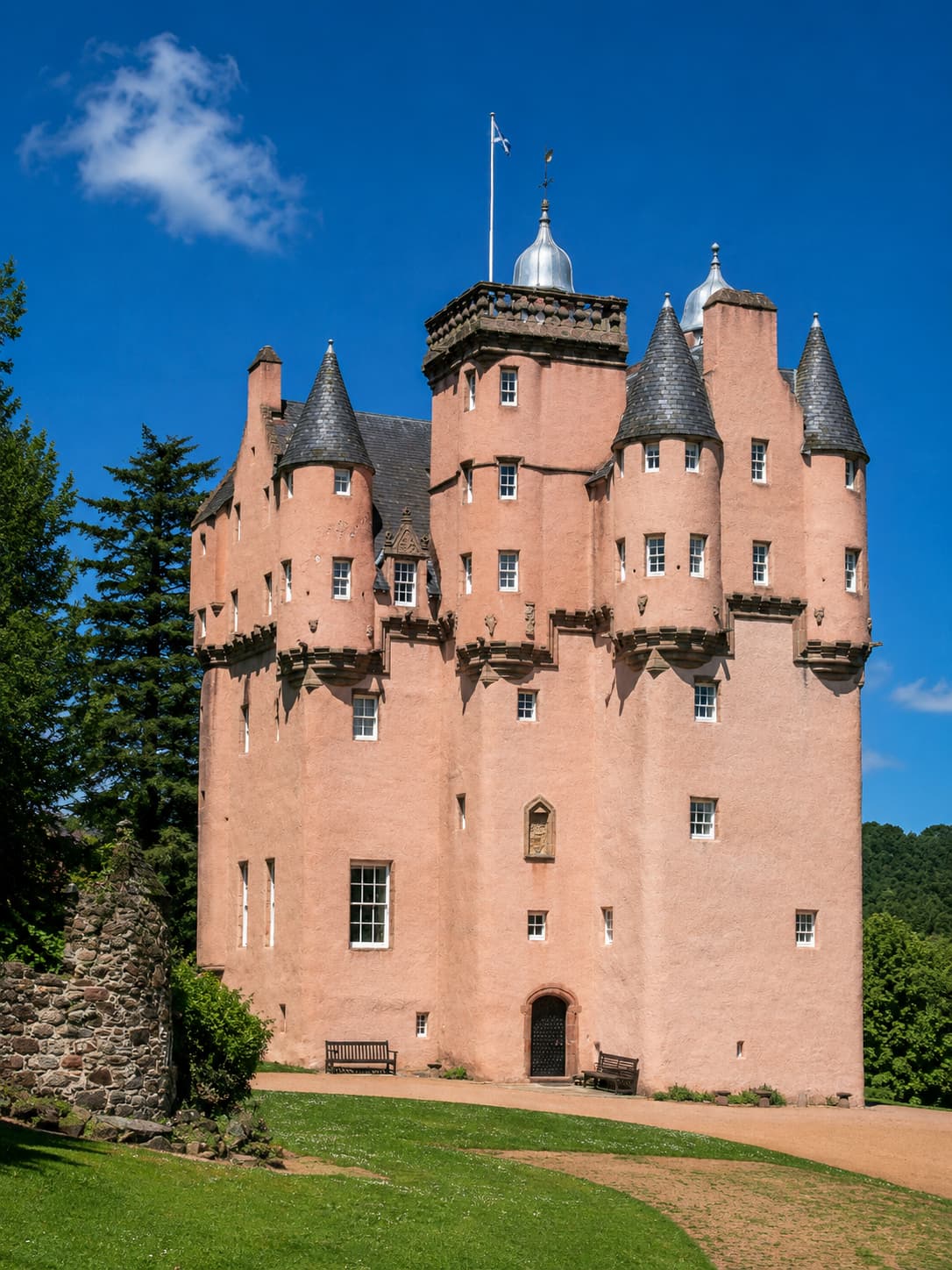
Aberdeenshire’s Craigievar — a seven-story pink harled tower house — is often cited as the castle that inspired Disney’s Sleeping Beauty design. The exterior is extraordinary: the colour unexpected, the proportions distinctive, the turrets genuinely fanciful. The interior is National Trust and requires timed booking.
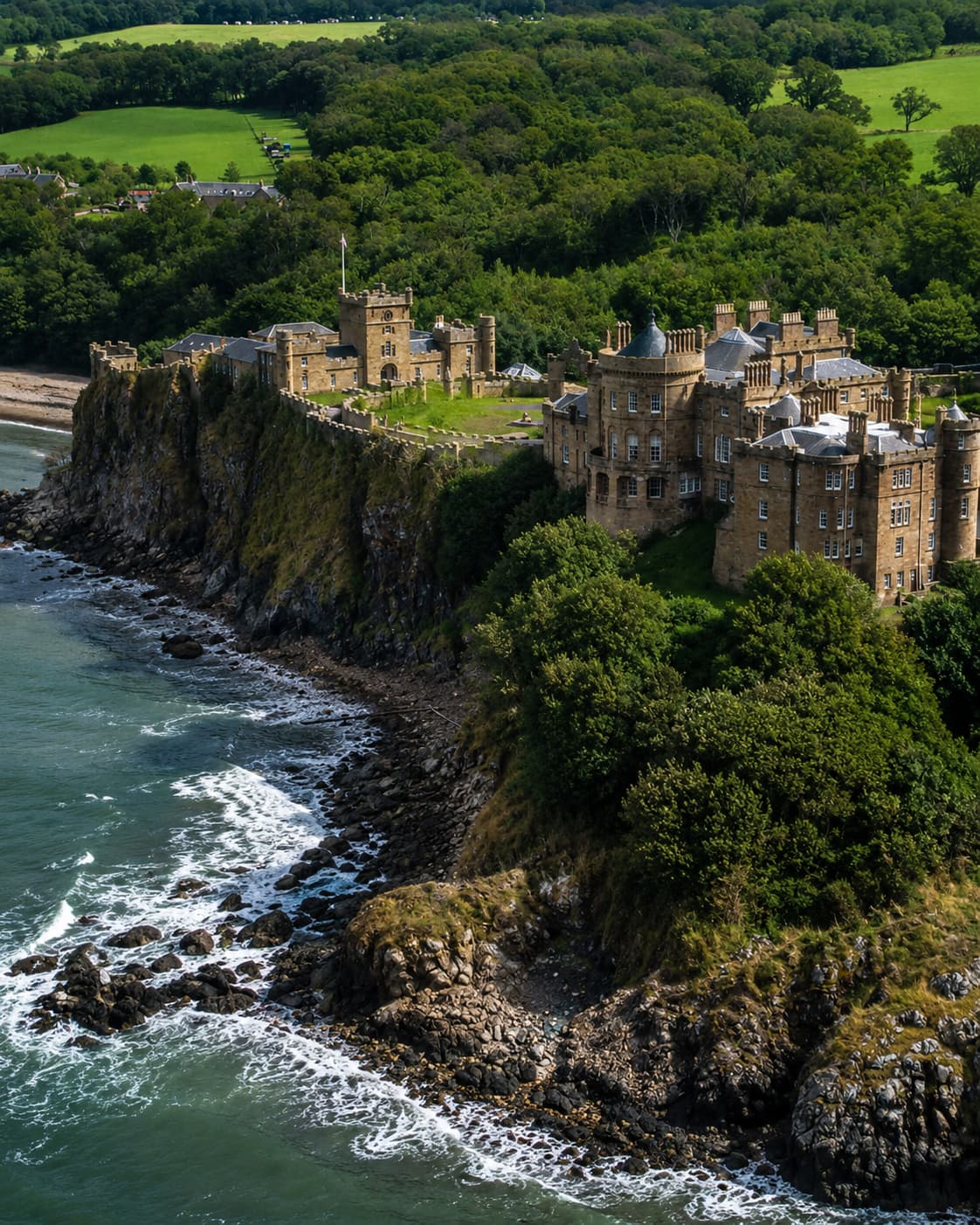
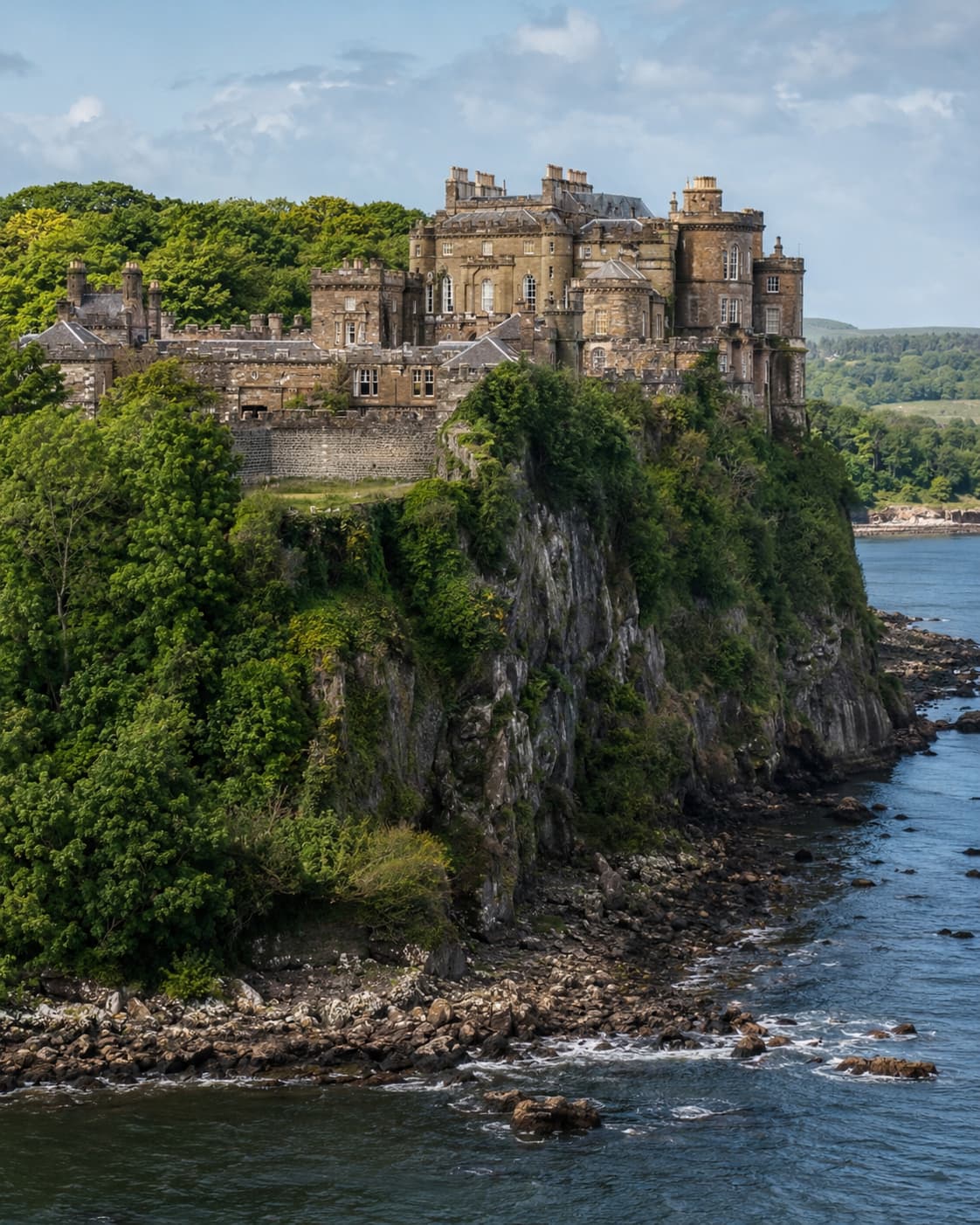
Robert Adam’s 18th-century masterpiece on the Ayrshire coast represents a completely different kind of beauty — formal, architectural, deliberate. The oval staircase inside is the most elegant interior in any Scottish castle open to visitors, and the clifftop position above the Firth of Clyde adds genuine drama to an otherwise supremely controlled design.
In short: among the best castles in Scotland, the most dramatic is Dunnottar. For the iconic loch setting, Eilean Donan wins. Architecturally, Culzean is the most refined. For a clear fairytale look, Craigievar is the strongest choice. None of these answers is wrong — they’re simply different things, and which one wins depends entirely on what you’re looking for.
04 — Which Scottish Castles Can You Actually Go Inside?
A common visitor frustration: paying to enter a “castle” and finding a largely empty shell, a few interpretive boards, and an honesty box at the gate. This section separates castles with genuine interior experiences from ruins better described as open-air archaeology. In other words, the question is not just whether you can go inside — but whether going inside actually changes the experience.
Best Interiors: Stirling, Dunvegan, Culzean
Stirling Castle has the best restored royal interiors in Scotland, as covered above. The palace apartments are the main draw and they deliver on the promise. Allow two to three hours to do the site properly, including the Great Hall and the surrounding fortifications.
Dunvegan Castle on the Isle of Skye is the oldest continuously inhabited castle in Scotland and has been the ancestral seat of the Chiefs of Clan MacLeod for around 800 years. The interior reflects that continuity — family portraits, historical artefacts including the Fairy Flag (a medieval silk relic the clan has held for centuries), and rooms that feel genuinely lived-in rather than museumified. Furthermore, the gardens, running along the lochside, are worth the entry price alone in late spring and summer. Admission is around £16–17 for adults.
Culzean Castle, managed by the National Trust for Scotland, is Robert Adam’s late 18th-century coastal masterpiece in Ayrshire. The circular saloon and oval staircase are the highlights — genuinely beautiful rooms in a way most Scottish castle interiors are not. Also worth knowing: Dwight Eisenhower was given use of the top-floor apartment after World War II in recognition of his leadership during the liberation of Europe, and it has remained a guest suite ever since. As a result, the apartment carries an unexpected layer of 20th-century history on top of the 18th-century architecture.
Best Ruins to Explore: Dunnottar, Urquhart, Kilchurn
Dunnottar offers the most substance of any Scottish ruin — multiple buildings survive to significant height, including a chapel, servants’ quarters, a drawing room, and a guardroom. Consequently, walking the site properly takes well over an hour, which is unusual for a ruin at this admission price point.
Urquhart Castle, on the western shore of Loch Ness, is one of Scotland’s most-visited ruins — partly for the location, partly for the Loch Ness association. The views across the loch are outstanding. That said, the site draws enormous crowds from June through August, and a significant portion of its draw is the monster connection rather than the castle itself, which is fragmentary. Going early makes an appreciable difference to the experience.
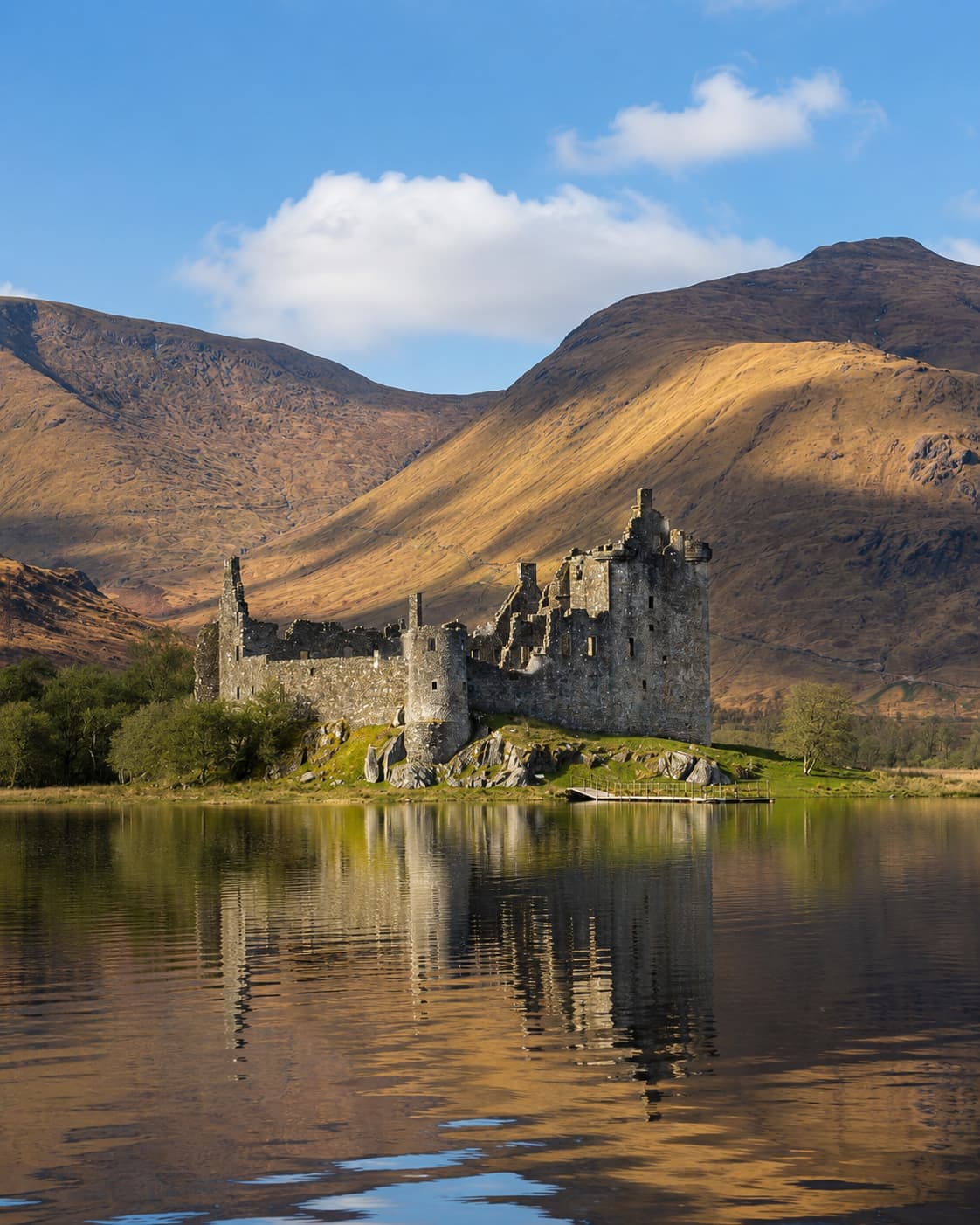
Kilchurn Castle at the northeastern end of Loch Awe is the most underrated ruin on this list. Reached via a short walk from a layby on the A819, entry is free (Historic Environment Scotland), the 15th-century tower is substantial, and the reflections in the loch on a calm morning are extraordinary. Moreover, visitor numbers stay low compared to Loch Ness sites, which means a weekday visit may feel almost private. On balance, Kilchurn delivers more per unit of effort than almost any other free castle in Scotland.
Kilchurn Castle — free entry, short walk from the A819, extraordinary Loch Awe reflections on a calm morning. One of the most photogenic castles in Scotland and among the least crowded. If your route takes you through Argyll, build in the stop.
05 — The Fairytale Ones: Aberdeenshire’s Castle Country
Aberdeenshire’s concentration of baronial tower houses — many harled in pink, white, or pale grey, with conical turrets and crow-stepped gables — produces a style of castle architecture found nowhere else in Britain. Several have become shorthand for “Scottish fairytale castle” in travel imagery. On the whole, they broadly deliver on that visual promise, though each has its own distinct character.
Craigievar — The Pink “Disney” Castle
Completed in 1626, Craigievar is a seven-story pink harled tower house sitting in Aberdeenshire woodland. The exterior is visually arresting — the colour, the height, the unexpected delicacy of the turrets against the surrounding green. National Trust for Scotland manages the castle with strictly timed-entry interior tours that must be booked in advance. The Great Hall retains its original plaster ceiling, which is genuinely exceptional among surviving Scottish interiors.
The Disney comparison is frequently made — Craigievar is often cited as an inspiration for Sleeping Beauty’s castle design, though Disney has never formally confirmed it. The visual similarity is obvious enough that the comparison has stuck regardless. In any case, for visitors specifically drawn to the fairytale aesthetic, Craigievar delivers the real thing: the image is the reality, not a cleaned-up version of something more complicated.
Dunrobin — The French-Château Turrets
Dunrobin Castle in Sutherland looks like something transported from the Loire Valley: formal French-château turrets, manicured parterre gardens, and a seaside position overlooking the Moray Firth. It has been the seat of the Earls and Dukes of Sutherland for centuries and remains the largest house in the Highlands. The scale and setting are genuinely impressive.
However, Dunrobin carries historical complexity that any honest visit should acknowledge. The Sutherland estate was central to some of the most brutal episodes of the Highland Clearances in the early 19th century, when tens of thousands of tenants were forcibly evicted to make way for sheep farming. Consequently, a statue of the first Duke of Sutherland — funded by the family responsible — still stands on the hilltop above the castle, a contested monument in a contested landscape. On balance, the beauty is real; so is the weight of that history.
06 — Scottish Castles Best Admired Free From the Outside
Some Scottish castles deliver a six-out-of-ten experience once you’ve paid and walked around — but an eight-out-of-ten experience from the road or lochside with no ticket required. Others have exterior views so complete that the interior adds relatively little. In these cases, the honest advice is to appreciate the view and keep moving rather than spend money on an experience the exterior already delivered.
A small keep on a tidal island in Loch Laich, visible from the A828 road. The view from the roadside layby is essentially the complete experience — the castle is tiny, the setting is perfect, and interior tours (privately arranged, expensive, irregular) add relatively little for most visitors. Stop for ten minutes, take the photo, continue.
The Gothic Revival seat of the Dukes of Argyll and a filming location for Downton Abbey. The exterior — grey-green stone, Gothic towers, formal grounds — is handsome from the roadside and viewable from outside the gates without paying. The interior is fine; however, the entry price (around £18 for adults) is steep relative to what’s on offer inside.
Listed above as a ruin worth entering, but the roadside loch reflection from the A819 layby also deserves mention here. Even visitors who don’t walk in see one of the best landscape compositions Scotland offers. Both approaches are valid depending on available time.
Falkland Palace in Fife also warrants honest mention: it charges full entry while significant sections remain closed for ongoing conservation. The exterior, the historic town, and the royal tennis court — one of the oldest in Britain, visible from the street — are rewarding without paying to enter a partially accessible interior.
07 — The Best Castle Near Edinburgh (For Limited Time)
Based in Edinburgh with time for one castle day-trip beyond the city? The answer depends on what you want from the visit — interiors, drama, or simple convenience. That said, all three options below are achievable in a day and involve no significant logistical complexity.
The most rewarding castle day-trip from Edinburgh for visitors who care about what’s inside the walls. Train from Edinburgh Waverley to Stirling takes around 50 minutes; the castle is a 20-minute uphill walk or short taxi from the station. Pair it with a walk through Stirling’s old town and the Wallace Monument viewpoint for a full day.
Further, but a genuinely different experience — a clifftop ruin, not a restored castle, and one of Scotland’s most visually arresting sites. Requires a car or a train to Stonehaven plus the coastal walk. Best done as a full day, ideally combined with Stonehaven harbour and, if driving, a return route through Royal Deeside.
For visitors with limited time, the East Lothian coastal castles are accessible by bus or car and offer genuine castle atmosphere without a full day commitment. Tantallon, a dramatic clifftop ruin above the Bass Rock, is the stronger visually. Neither reaches the heights of Stirling or Dunnottar, but both are solid half-day options from the city.
08 — When Is the Best Time to Visit Scottish Castles?
The timing question for Scottish castles is less about the castles themselves and more about the conditions around them. Most sites are open year-round or close only briefly in January and February for minor maintenance. In other words, the real variables are weather, crowd levels, and the midges — not access.
May and June: The Best Window
Late May and June offer the best overall balance: long daylight hours (sunset past 10 PM in late June), generally lower crowds than July and August, and the landscape at its greenest. Furthermore, midges — the tiny biting insects that make outdoor activities miserable in the Scottish Highlands from late June through August — are not yet at full intensity. For photography, the long golden-hour windows in late May and June are exceptional.
July and August: High Season with Trade-offs
Peak season brings the best chance of clear skies and the highest visitor numbers. Edinburgh Castle and Eilean Donan are genuinely packed in August — queue times of 45 minutes or more are realistic at peak hours. That said, the weather is warmest, the evenings are longest, and all sites are fully operational. Consequently, if July or August is the only window available, arriving early and booking online in advance are both essential.
September and October: Underrated
September is arguably Scotland’s second-best month for castle visits. Crowds drop sharply after the school holidays end, prices follow, and autumn colour in the Highlands and Aberdeenshire arrives from mid-October. Eilean Donan in autumn mist is a completely different experience from the summer crowds version. Additionally, midges mostly disappear by late September. The trade-off is shorter days and a higher chance of rain — though rain in Scotland rarely lasts an entire day. Furthermore, overcast skies often produce better castle photography than flat sunshine, particularly at clifftop and loch-side sites.
Open-air ruins — Kilchurn, Urquhart, Dunnottar — become midge-heavy from late June through August in calm, damp conditions. Morning visits before 9 AM and any breeze reduce the problem significantly. Carry repellent regardless, and avoid still overcast evenings at loch-side sites.
09 — How to Plan a Castle Route (Without Spending the Whole Trip Driving)
The geography of Scotland’s best castles means they rarely cluster conveniently. Dunnottar is in Aberdeenshire. Eilean Donan and Dunvegan are in the northwest Highlands and Skye. Stirling is in the Central Belt. Culzean is in Ayrshire. As a result, visiting all five in one trip means significant driving — which is fine if the drive is part of what you want, but worth acknowledging before building the itinerary.
For a focused castle trip, two logical routes emerge. The Highlands and Skye route (5–7 days) runs Edinburgh → Stirling → Highlands (Urquhart, Eilean Donan) → Isle of Skye (Dunvegan) → return via Inverness. This covers the most scenically dramatic territory, with Stirling anchoring the start and Skye adding an island dimension. Alternatively, the Eastern and Aberdeenshire route (4–5 days) covers Edinburgh → Stirling → Dunnottar → the Aberdeenshire Castle Trail (Craigievar, Crathes, Fyvie) → return via the coast. It’s more compact, lower mileage, and the Aberdeenshire concentration allows multiple castles per day without long drives between them.
In both cases, the practical advice is the same: pick two or three castles to visit properly, and treat any others as roadside stops. A full hour at Dunnottar beats ten minutes at five different ruins. For broader guidance on navigating the Highlands by car — road conditions, ferry timings, where to base yourself — the Scottish Highlands honest guide covers the logistics in more depth than this post. Meanwhile, the best castles in Scotland discussed above should slot into whichever route you choose rather than drive the route itself.
Famous Scottish Castles and Paid Entry
Tickets, Castle Numbers and First-Time Picks
10 — The Two or Three Castles to Actually Prioritise
Scotland has enough castles to fill a dozen trips. Most visitors don’t need a ranked list of twenty — they need a clear read on where to spend their limited castle time. Overall, here is the honest summary verdict on which of the best castles in Scotland to actually prioritise.
The one Scottish castle that most consistently over-delivers relative to expectations. Dramatic clifftop setting, substantial ruin with real historical depth, manageable crowds, modest admission. If you visit only one castle in Scotland, make it Dunnottar.
If interiors matter most, Stirling’s restored palace apartments are more complete and less rushed than Edinburgh’s. If city context, history, and panoramic views matter more, Edinburgh wins on all three. Visiting both in one trip is possible — they’re 45 minutes apart — but doing each justice means giving both combined a full day.
Heading to Skye and the Highlands: add Eilean Donan and Dunvegan. Staying in Aberdeenshire: add Craigievar and build the castle trail. Going through Ayrshire: Culzean on the coast. Driving through Argyll regardless: Kilchurn as a free stop. The third castle should slot into the route rather than drive it.
Scotland has enough castles to fill a dozen trips. The ones worth your time are the ones that put you somewhere specific — on a cliff above the North Sea, or in a room where someone made decisions that changed a country.
The others can stay on the postcard.