Caribbean Islands Worth It (and Which to Skip): An Honest Guide to Choosing the Right One
Not a ranking — a matching tool for the best Caribbean islands to visit. Which island actually fits how you travel, and which one to skip, and why.
Choosing the best Caribbean islands to visit is harder than any ranked list admits, because the Caribbean is not one place. It is more than 7,000 islands spread across a sea the size of a continent, and the gap between two of them — cost, ease, crowds, what you actually do all day — can be wider than the gap between Portugal and Norway. So when a listicle tells you the best Caribbean islands to visit start and end with Turks & Caicos, the honest question back is: best for whom?
That is the problem with ranking Caribbean islands. A place that is perfect for a honeymooning couple with a five-figure budget is a genuinely poor choice for a first-timer who wants an easy, forgiving week in the sun. Neither is better. They are answers to different questions.
This guide does something different. Instead of ranking, it matches. Each island gets an honest verdict — who it is genuinely right for, and who should skip it and why. The word “skip” here is not clickbait. An island is not bad because it is wrong for you; it is just wrong for you, and knowing that before you book is the whole point.
01 — How to Actually Choose a Caribbean Island
Forget best-of lists for a moment. Narrowing down the best Caribbean islands to visit comes down to four questions, and your answers narrow the field faster than any ranking can. Ask them in order, and most of the 7,000 islands fall away before you have opened a single booking site.
The four questions that decide it
How much friction can you tolerate? Some islands are a direct flight and a short transfer; others need a connection through San Juan and then a small propeller plane. For a first trip, friction matters more than people expect. Furthermore, a destination where you never need a passport or a currency exchange removes an entire layer of planning stress.
What is your real budget — per day, not per flight? The airfare is rarely the expensive part. On some islands your daily spend runs $60; on others it clears $400 before lunch. That daily number, not the headline flight deal, decides whether the trip feels relaxing or quietly stressful the whole way through.
How much do crowds bother you? The cruise-port islands and the resort corridors can feel like a theme-park version of the Caribbean. Others stay quiet even in high season. Neither is wrong, but knowing which one you want saves you from a week of feeling like you chose badly.
What do you actually want to do all day? This is the question most people skip, and it is the one that matters most. A flat, beach-flop island is paradise if that is the plan and a slow kind of boring if you wanted to hike a volcano or dive a reef. Match the island to the day you want, not to the photo you saw.
Before comparing islands, answer these in order: How much travel friction can I tolerate? What is my daily budget? How much do crowds bother me? What do I want to do all day? Your four answers describe one or two islands almost exactly — and rule out a dozen you might otherwise have booked by mistake.
02 — The Best Caribbean Islands to Visit for First-Time Visitors
If this is your first Caribbean trip, the honest advice is to optimise for ease over ambition. Save the remote, high-friction islands for later, once you know what you actually like. For most first-timers, three names rise above the rest — and they rise for different reasons.
Why Barbados, Punta Cana, and Puerto Rico top the shortlist
Each of these three lowers a different barrier. Barbados gives you a polished, English-speaking island with direct flights from the US, UK, and Canada, so the logistics almost disappear. The Dominican Republic’s Punta Cana, meanwhile, offers the densest cluster of all-inclusive resorts in the Caribbean, which keeps pricing competitive and makes the whole trip close to decision-free once you land. Puerto Rico, in turn, is the softest landing of all for US travellers, and it earns its own verdict below.
For the full picture on either of these two, the standalone posts go deeper than this hub does — start with the Barbados travel guide for the island in detail, and the Bora Bora vs Punta Cana comparison if you are weighing a Caribbean all-inclusive against a bucket-list splurge. If you want to sanity-check current entry rules for any island, the US State Department country pages are the authoritative source.
03 — The Islands Worth It, and Who Each One Is For
Here is the core of it — five islands worth your time, each with an honest verdict. The first two stay deliberately short, because they each have a full guide of their own; the rest get more room. Read the “skip it if” line as carefully as the “worth it if” one. That second line is where the matching actually happens.
The Best Caribbean Islands to Visit, Verdict by Verdict
Worth it if you want a forgiving first island: direct flights, English everywhere, a genuinely world-class food scene, and calm Caribbean-side beaches. Skip it if your budget is tight — it was recorded as one of the most expensive Caribbean destinations of 2025, at roughly $440 per person per day. The full story is in the Barbados travel guide.
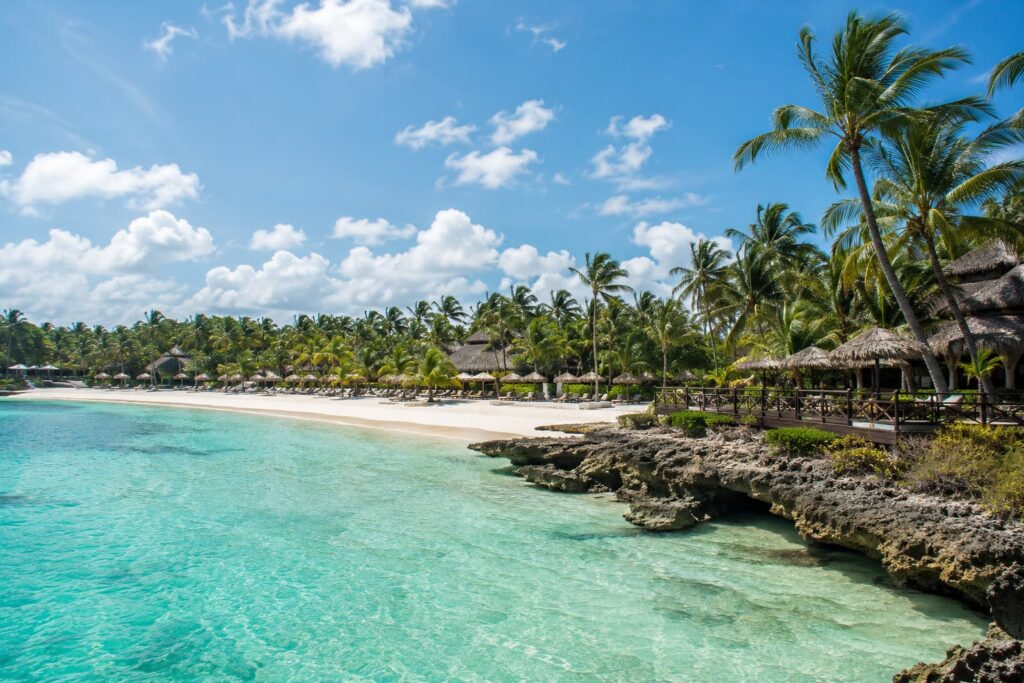
Worth it if you want the most resort for your money; the density of all-inclusives keeps nightly rates competitive, often landing well under $200. Skip it if you want to feel like you are in a country rather than a compound — the Punta Cana corridor can seal you off from the DR entirely. It sits opposite a very different splurge in the Bora Bora vs Punta Cana comparison.
Worth it if you are a US traveller who wants zero friction: no passport, the US dollar, direct flights from most major cities, and an island you can actually drive across. On top of that, it genuinely rewards curiosity — Old San Juan, El Yunque rainforest, a bioluminescent bay, surf on the west coast. Skip it if you only want to lie on one perfect beach for a week; Puerto Rico is happiest when you move around, and staying put in pricey San Juan wastes what makes it special.
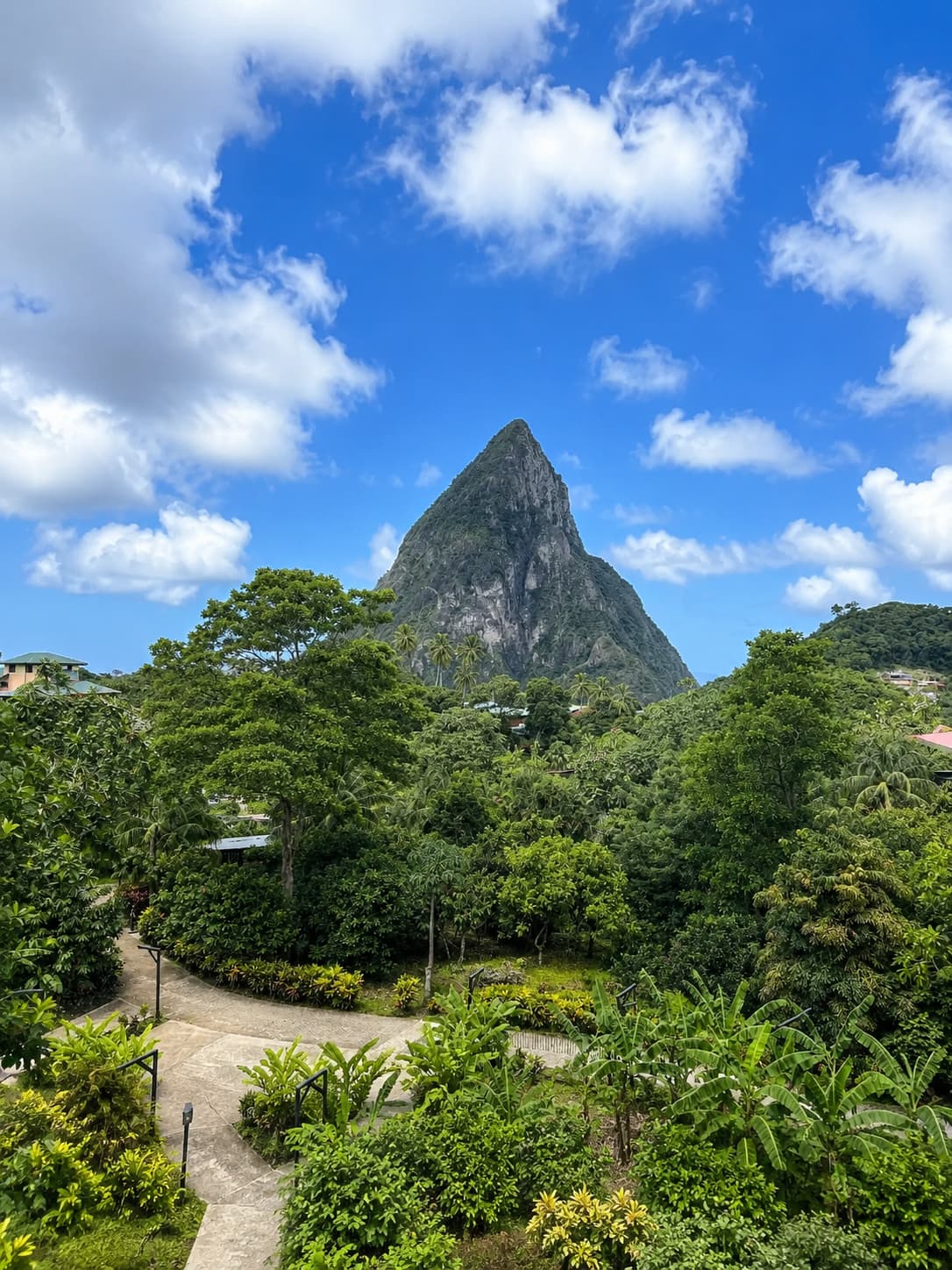
Worth it if you want scenery that does the heavy lifting: the Pitons rising straight out of the sea, rainforest hikes, sulphur springs, and some of the most photogenic couples’ resorts in the region. It is a strong honeymoon and special-occasion pick. Skip it if you want flat, easy beach days and cheap transport — the terrain is steep, getting around takes time, and the best of it sits behind resort pricing.
Worth it if you want colour, character, and calmer odds: Curaçao sits outside the main Atlantic hurricane belt, has some of the cheapest hotels in the southern Caribbean, and pairs easy shore diving with a genuinely walkable, Dutch-Caribbean capital in Willemstad. Skip it if you came for long, powder-soft beaches — its coves are small and rocky compared with the classic Caribbean postcard, and it trades that look for reef access and lower prices.
04 — Which Caribbean Islands Are Overrated or Not Worth the Price?
Here is where honesty earns its keep. None of the islands below are bad — several are objectively stunning. The problem is value: for what most travellers get out of them, the price is hard to justify, and the money would buy a better week almost anywhere else in the region. This is a price-and-value verdict, not an insult to the islands themselves.
The islands that cost far more than they give back
Ordered by real 2025 traveller spend, these are the places to think twice about. Admittedly, if money is genuinely no object, some of them are lovely — but for everyone else, the maths does not work.
The Caribbean’s single most expensive destination, with average traveller spending reaching roughly $1,850 per day. On top of that, there are no direct flights — you connect via a small aircraft from St. Martin, Guadeloupe, or Puerto Rico. Genuinely beautiful, genuinely exclusive, and genuinely wrong for anyone who is not a socialite. Most travellers are essentially priced out before the first cocktail.
At roughly $420 per person per day, Anguilla sits among the most expensive islands in the entire Caribbean. The beaches are legitimately world-class. However, flights are expensive, hotels are almost uniformly high-end, and there is little budget infrastructure to soften the bill. Worth it for a milestone splurge; a poor value pick for a standard week away.
Around $380 per person per day, and rising. Grace Bay genuinely is one of the great beaches. That said, you pay dearly for it, the island is built around high-end resorts, and once you have seen the beach there is comparatively little else to fill the days. Specifically, it rewards people who want to do nothing in a beautiful place and pay for the privilege.
Grand Cayman is one of the most visually striking places in the region, and Seven Mile Beach earns its reputation. Even so, prices run high across food, lodging, and activities, and the island’s polish can feel corporate rather than characterful. In short, you are paying resort-and-cruise prices for an experience that many cheaper islands match or beat.
Nassau is not expensive in the St. Barts sense, but it is arguably the weakest value for a different reason: on peak days the cruise crowds flood in and the experience thins out to duty-free shops and packed beaches. In particular, first-timers who book Nassau expecting the serene Bahamas of the brochures often find the opposite. The Out Islands deliver that; the Nassau cruise strip usually does not.
Every island above is beautiful. The verdict here is strictly about value for the average traveller — what you spend versus what you get back. If your budget genuinely has no ceiling, some of these become defensible splurges. For everyone else, the same money buys a longer, richer trip on a lower-cost island.

05 — What Is the Cheapest Caribbean Island to Visit?
The clearest answer is the Dominican Republic, and it is not particularly close. Among the best Caribbean islands to visit on a budget, the DR is consistently ranked the best value, driven by the region’s highest density of all-inclusive resorts — that competition keeps pricing down in a way no other island matches.
Where the value actually is
Off-resort, the DR gets even cheaper. Budget travellers routinely keep daily spend in the $50–$70 range including a room, local meals, and transport, especially outside the Punta Cana corridor in places like Puerto Plata, Cabarete, and Las Terrenas. As a result, it works for both the all-inclusive crowd and the guesthouse-and-guagua traveller — a rare combination.
Beyond the DR, a few other islands genuinely support a modest budget. Trinidad & Tobago and Jamaica both stretch a dollar well if you stay off the resort strips and eat where locals eat. Nevertheless, the DR remains the safest bet for the lowest all-in cost.
Across most of the Caribbean, mid-April to mid-June is the value sweet spot — winter crowds are gone, hurricane season has not started in earnest, and accommodation can drop 30–50%. September through November is cheaper still, but you accept real hurricane risk. For more shoulder-season logic, the spring destinations better than Cancún post applies the same thinking across a wider map.
06 — What Is the Safest Caribbean Island for Tourists?
“Safe” is two questions wearing one coat, and it helps to separate them. There is personal safety, and there is weather risk — and the honest answer depends on which one you are actually asking about.
Crime, and the calmer islands
On the personal-safety side, the islands that consistently feel low-stress for tourists tend to be the smaller, tourism-dependent ones — the southern trio of Aruba, Bonaire, and Curaçao among them — where the visitor economy is the whole economy. As with anywhere, the usual care applies: stick to known areas at night, do not flash valuables, and ask your host how locals get around. No island is a fortress, and none needs to be treated like a danger zone either.
The hurricane factor most lists ignore
Weather is the risk people underweight. The southern islands — Barbados, Trinidad & Tobago, Aruba, Bonaire, and Curaçao — sit outside the main Atlantic hurricane belt, which makes them a materially lower-risk choice during the June–November storm season. Consequently, if you can only travel in early autumn, pointing yourself south is the single most effective safety decision you can make. It beats any packing tip.
07 — Which Caribbean Island Is Easiest to Get Around?
Ease of movement is the axis most people only appreciate once they are stuck. Some islands hand you a whole country to explore; others quietly funnel you back to your resort because the alternative is too much hassle.
The islands you can actually roam
Puerto Rico is the clear winner for US travellers, and it is not only the no-passport convenience. You can rent a car and drive the entire island in a day — rainforest in the morning, old city by afternoon, west-coast surf by evening — on familiar road signage and US infrastructure. Barbados comes next: small, English-speaking, and threaded with cheap public ZR vans that locals actually use.
By contrast, islands like St. Lucia and St. Barts are harder work. Steep terrain, limited public transport, and resort-clustered layouts mean you either pay for transfers or stay put. That is fine if staying put was the plan — but if you like to roam, it quietly shrinks the trip to the grounds of your hotel.
08 — Final Verdict: Match, Don’t Rank
There is no single best Caribbean island in the abstract. The best Caribbean islands to visit are simply the ones that fit the trip you actually want — and now you have a way to find yours. Run your four answers against the shortlist, and one or two names should stand out clearly.
If you want the softest possible landing, go to Puerto Rico. For the best resort value, the Dominican Republic. If you want scenery that stops you mid-sentence and you are marking an occasion, St. Lucia. For low weather risk and honest prices, Curaçao. And if budget is no object and you want the postcard at any cost — well, St. Barts will happily take the money. The point was never to crown a winner. It was to stop you booking someone else’s perfect island by mistake.
The Caribbean does not owe you a single perfect island.
It offers a few thousand, and asks only that you choose the one that fits you.