
Fairytale Villages in Scotland: An Honest Guide to the Ones Worth Visiting
Scotland’s fairytale villages are real — and more complicated than the pins suggest. Here’s which ones actually reward a visit, and what the storybook images conveniently leave out.
Why Scottish Villages Need an Honest Guide
In practice, the phrase “fairytale villages in Scotland” generates an enormous amount of content. Specifically, you get listicles with eighteen entries, every one of them “enchanting,” “magical,” or “whimsical.” Often, the photos are taken from the same angle, in the same light. Rarely do the captions ask whether you should actually go there — or when, for how long, and what you’ll find when you do.
That’s not what this is. Below, the prettiest villages in Scotland are genuinely worth your time. However, they’re worth it in different ways, for different kinds of trips, and with different caveats that the storybook pins tend to leave out. Some reward a half-day stop; others reward an overnight. A few are at their best when crowds are thin and the light is low. And one requires you to park your car on a hill above the village and walk in, because the lane is too narrow for anything with four wheels.
So instead of a uniform ranking — where village eighteen gets the same breathless treatment as village one — this is a matching guide. Find the type of village that fits your trip, understand what you’re actually getting, and leave the rest for another time. Overall, a shorter list visited properly beats a longer list ticked off from a moving car.
- Why Scottish Villages Need an Honest Guide
- What makes a Scottish village feel like a fairytale
- Which Scottish village has the famous colourful houses?
- Prettiest coastal fishing villages
- Outlander and storybook-history villages
- Pretty villages near Edinburgh
- Best Highland villages
- Are Scotland’s fairytale villages worth visiting?
- How to visit respectfully
- When to go and how many villages to fit in
- FAQ
01 — What Makes a Scottish Village Feel Like a Fairytale (and Where the Photos Oversell It)
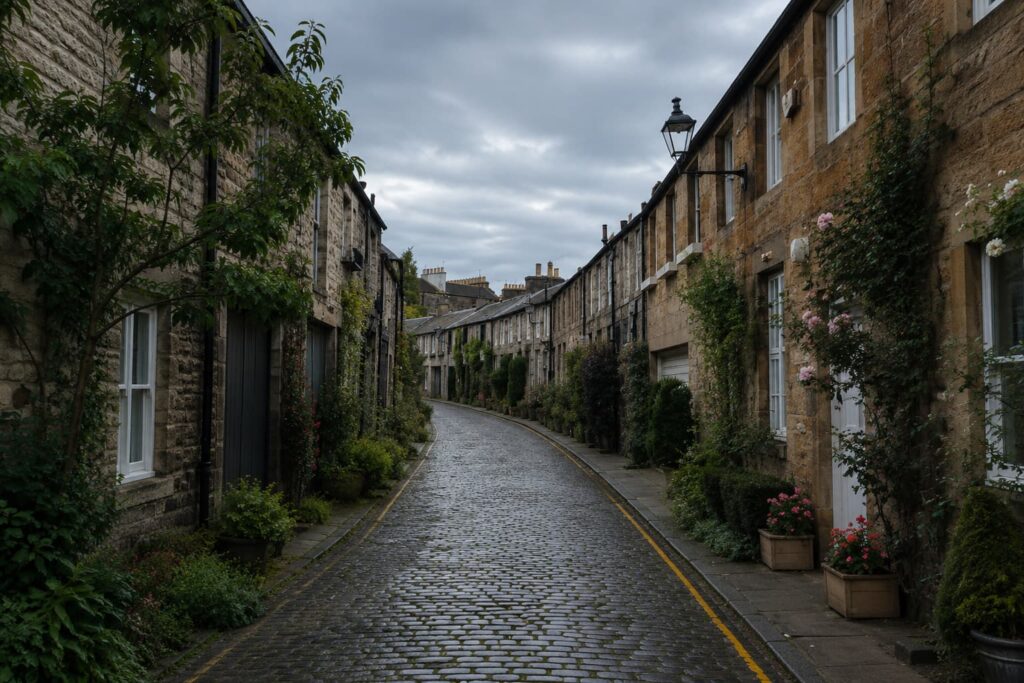
Most of the charming Scottish villages on this list earned their visual reputation honestly. Scotland’s vernacular architecture — white-harled stone walls, red pantile roofs, crow-stepped gables, cobbled lanes running down to harbours or lochs — was designed to survive the climate, not to be photographed. In fact, the reason it photographs exceptionally well is a byproduct of genuine craftsmanship built over centuries, not any deliberate appeal to aesthetic tourism.
That said, several honest realities tend to get cropped out of the images:
Reality Behind the Storybook Photos
Several villages — Culross especially — were partly dressed or repainted for filming. The village is genuinely historic and beautiful in its own right, but it doesn’t always look exactly as it does on screen. In particular, some buildings that appear to be period-accurate in the series were modified for production purposes and have since reverted.
Culross has around 400 residents. Crovie is even smaller. Behind every photogenic facade, people live their lives. As a result, the National Trust for Scotland and local communities have explicitly asked visitors to treat these villages as places rather than sets — park where directed, don’t block driveways, keep noise down.
Cafés and small shops in these villages frequently close by 3:30–4pm, or entirely on Sundays and Mondays. Consequently, arriving at 4pm expecting lunch and a browse will often disappoint. From November, the Culross Palace garden closes for the season, and the palace itself closes January through mid-March — so season matters as much as time of day.
Some villages on internet listicles are genuinely a car park, one good angle, and ten minutes. Others could absorb an afternoon easily. In short, this guide makes that distinction explicit — because arriving somewhere with two hours and leaving in fifteen is a different kind of disappointment.
02 — Which Scottish Village Has the Famous Colourful Houses?
If you’ve seen a photograph of brightly painted houses stacked along a Scottish harbour, you’ve almost certainly seen Tobermory — one of the most beautiful villages in Scotland by any measure — with Portree on Skye running a close second. These two own this specific visual register, and they’re very different experiences.
Tobermory, Isle of Mull — The Rainbow Harbour
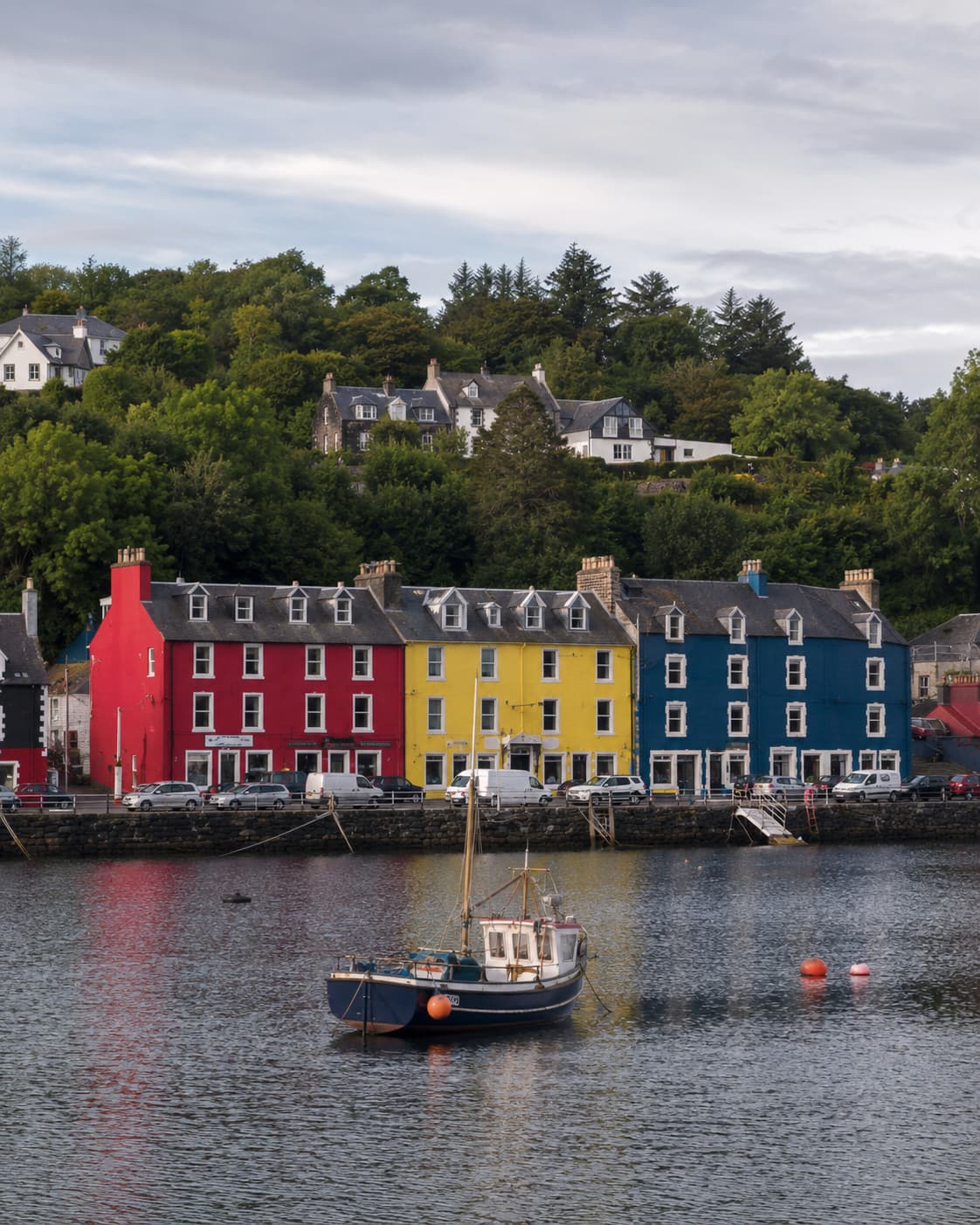
Tobermory is the capital of the Isle of Mull and home to Scotland’s most famous painted harbour row. Terracotta, mustard, teal, and blue houses line an 18th-century waterfront so distinctive it inspired the BBC children’s series Balamory. The colour is real and has been maintained for generations, which matters: this is not a tourist makeover. It’s a working fishing town that happens to look extraordinary.
Furthermore, Tobermory rewards actual time. The harbour area is the photo opportunity, but the town itself has good independent shops, a distillery producing single malt Scotch, and access to Mull’s extraordinary wildlife — including some of the best whale and dolphin watching in the UK. Moreover, the island sits on an Atlantic coast known for white-sand beaches that seem geographically improbable this far north.
The honest caveat is logistics. Getting to Tobermory requires a ferry from Oban to Craignure on Mull, then a 35-minute drive north. In peak summer, ferry spaces book up days in advance. Additionally, accommodation on Mull books out equally fast. This is not a day trip from Edinburgh; it’s a deliberate commitment to at least one overnight.
CalMac ferries run from Oban to Craignure. In July and August, book the car ferry weeks ahead — foot passenger space is easier to come by. An alternative entry point is Fishnish (shorter crossing from Lochaline), which avoids the Oban queues entirely.
Portree, Isle of Skye — The Pastel Cliffside Row
Portree is Skye’s main town rather than a village. Still, its harbour earns a place on any list of the prettiest villages in Scotland. A compact arc of pastel-painted houses sits above a sheltered bay. In contrast to Tobermory’s full-saturation colour, Portree reads softer: pinks, lilacs, off-whites, and the occasional sage green. Moreover, the usual photos are not misleading — it genuinely does look like that.
That said, Portree in peak summer is also Skye’s service hub — crowded, with parking that requires patience and a car park rather than a luck-based approach. As a result, it works best as a base for exploring the island rather than a destination in itself. If you’re already doing Skye (and the Highlands guide covers the full logistics of that), a walk around the harbour and dinner at one of the harbourside restaurants is exactly the right amount of Portree.
03 — Prettiest Coastal Fishing Villages in Scotland
Scotland’s fishing villages occupy a specific visual category — small, dense, pressed between cliff and sea, built for function first. Consequently, several of them are among the most striking settlements in the country. In other words, the beauty is incidental rather than designed, which is precisely why it tends to hold up.
Crovie, Aberdeenshire — And the Car-Free Reality
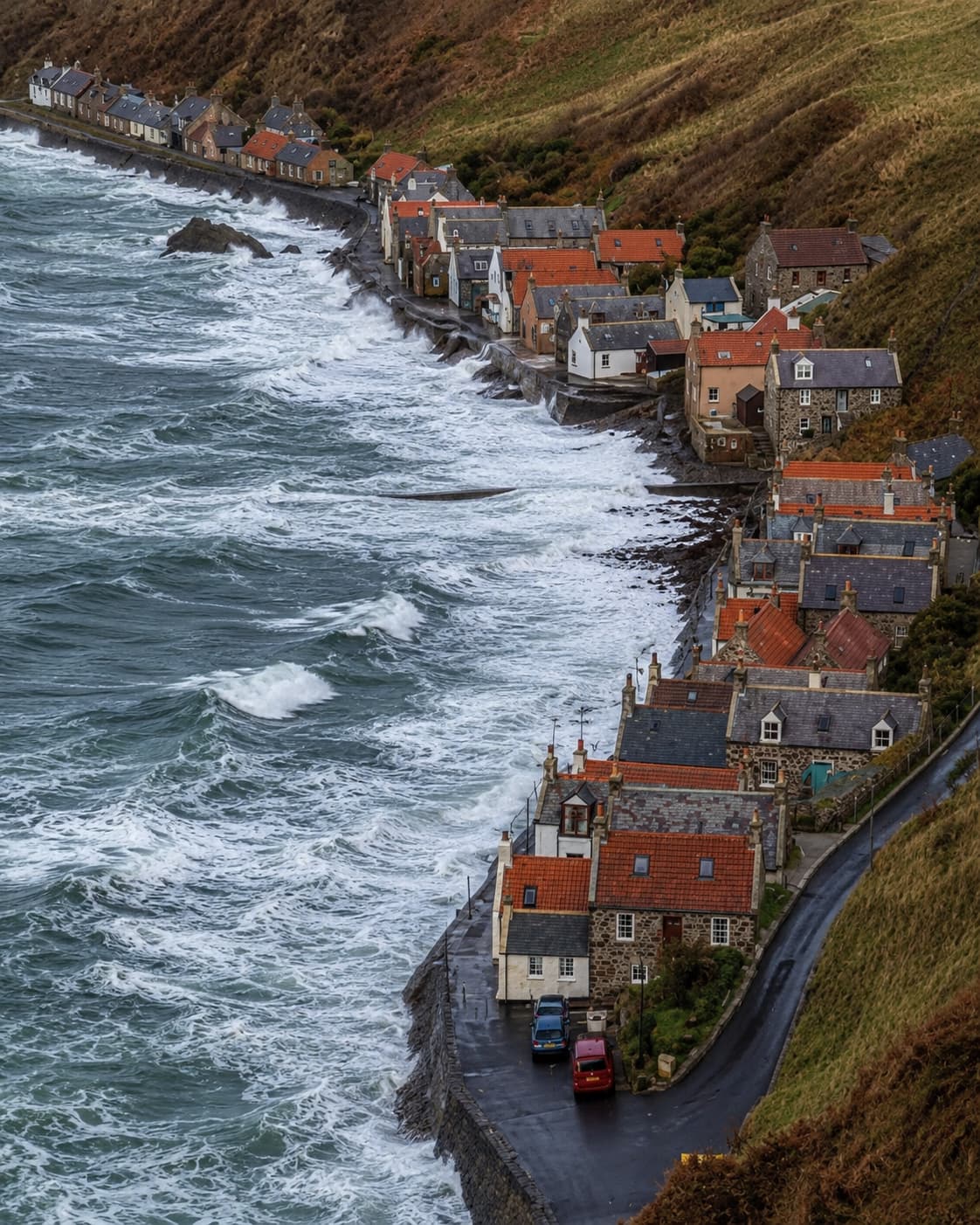
Crovie (pronounced “Crivvy”) is one of the most photographed villages in Scotland and also one of the most genuinely unusual. The entire settlement is a single row of 18th-century fishermen’s cottages pressed between cliff and sea. The lane is so narrow that no through-road exists. Visitors park in a small car park above the village and walk in. Residents have historically used wheelbarrows to move belongings along the lane — and still do.
In person, Crovie is both smaller and more affecting than photographs suggest. You’ll spend fifteen to twenty minutes walking the length of it, which sounds brief — but the scale is part of what makes it striking: the total impracticality of building here at all, and the fact that people still choose to live in it. Meanwhile, its neighbour Gardenstown sits on the hill above and offers the same dramatic bay views with actual facilities: a small shop, a car park, a church. As a result, the two are worth treating as a single stop rather than separate decisions.
Crail and the East Neuk of Fife
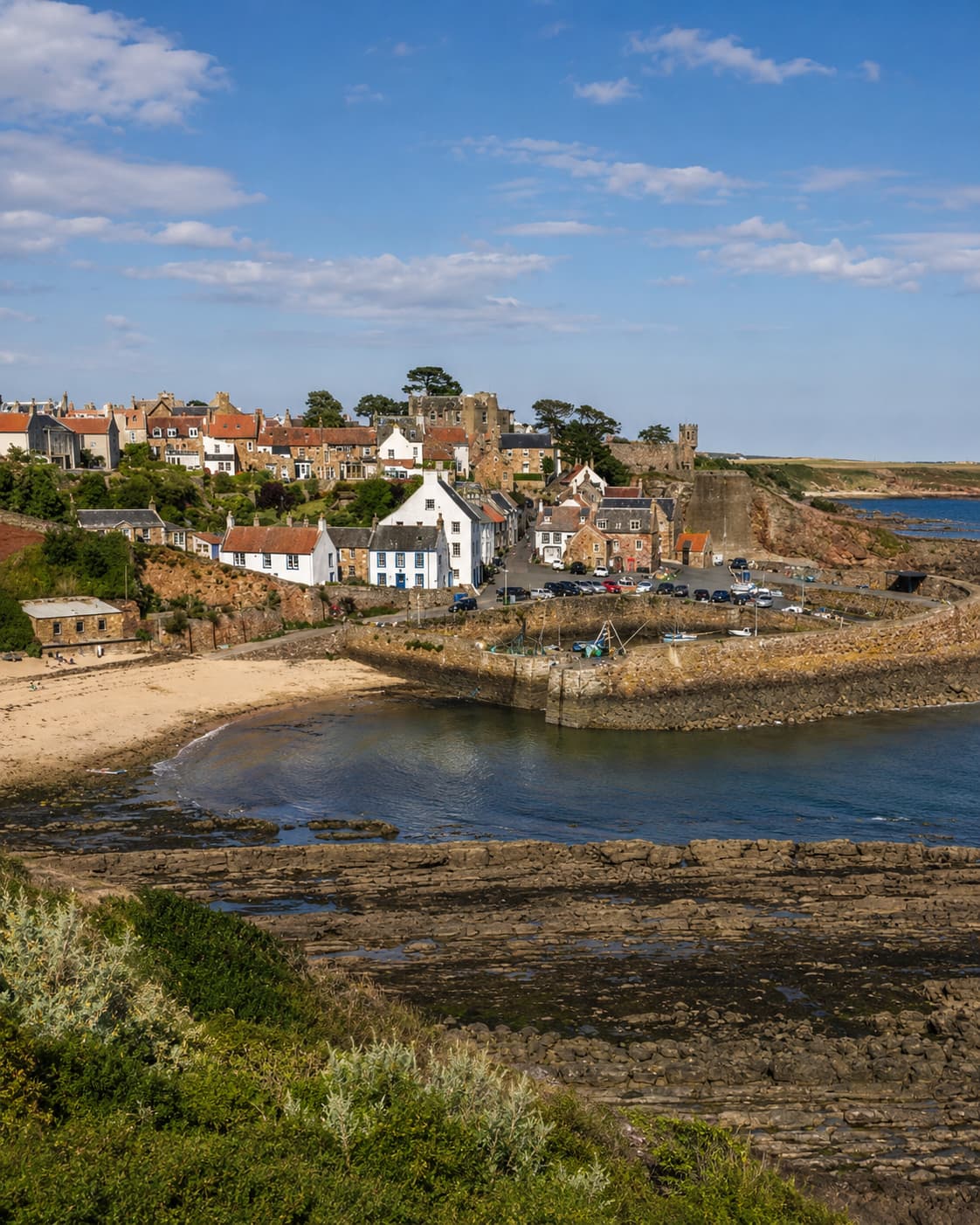
Crail is the easternmost village in the East Neuk of Fife — a stretch of coastline between St Andrews and Largo Bay that contains several small fishing villages worth a half-day. Crail itself has a 12th-century harbour, lobster creels stacked on the pier, and whitewashed cottages with red-tiled roofs that share the same architectural DNA as Culross. It’s unhurried and genuinely pretty without being precious about it.
The East Neuk works well as a loose driving route. In addition to Crail, the villages of Anstruther (home to one of Scotland’s most respected fish and chip shops), Pittenweem, and Elie sit within a short distance of each other along the A917. Overall, you could easily spend a full day moving between them — stopping for seafood in Anstruther, browsing the harbour at Pittenweem, finishing the afternoon at the beach in Elie. Alternatively, given that the East Neuk sits about 45 minutes south of St Andrews, it pairs naturally with a trip to that corner of Scotland.
04 — Outlander Villages and Storybook-History Scotland
Two villages in particular hold up as genuine historical time capsules — not staged attractions or working reconstructions, but places that simply look now much as they did in the 17th and 18th centuries, because history passed them by in the most fortunate possible way. That is to say, their preservation is largely accidental.
Culross — The Best-Preserved Scottish Village (and Cranesmuir in Outlander)
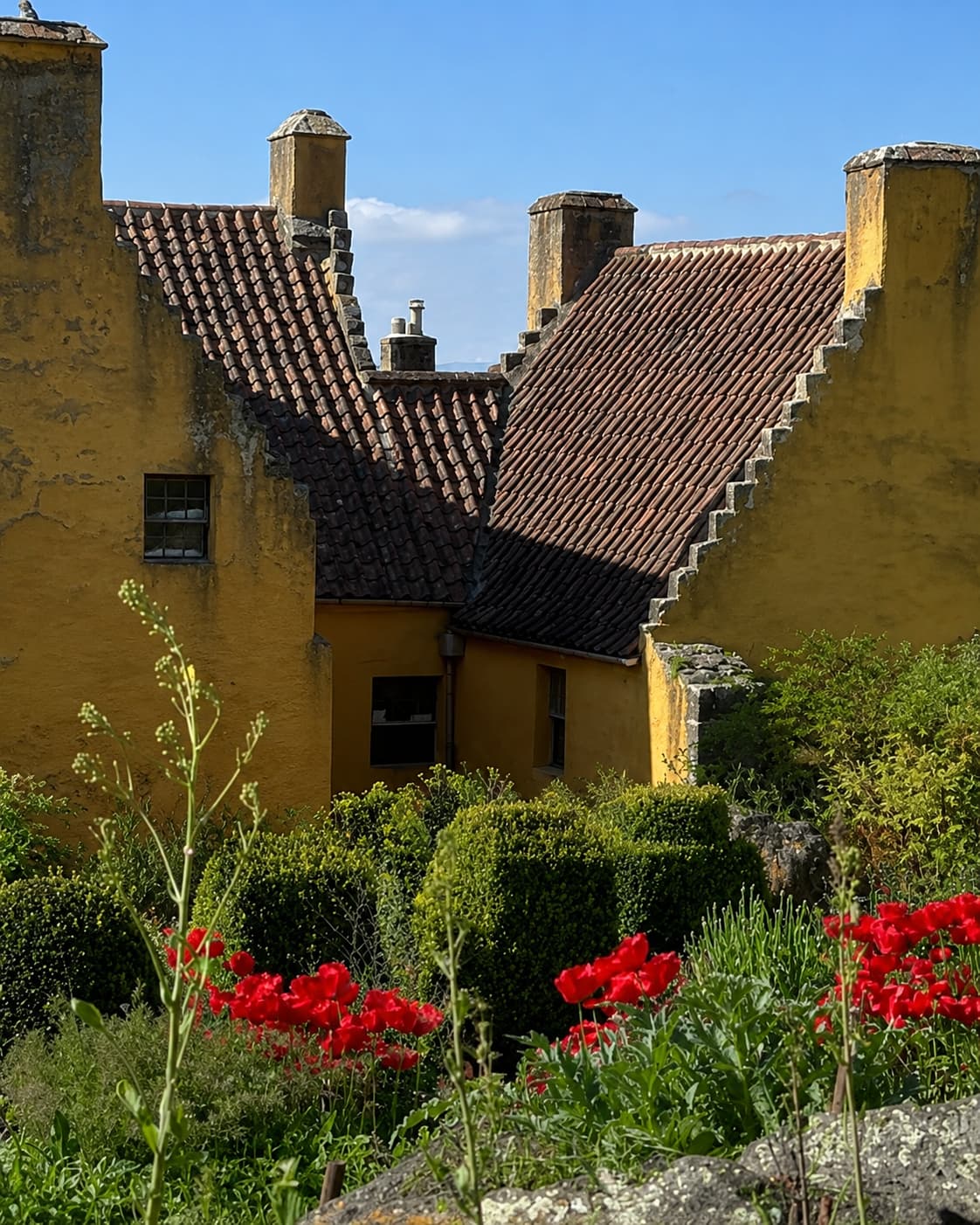
Culross, pronounced “Coo-russ,” sits on the Firth of Forth in Fife and is, by most accounts, the most complete surviving example of a 17th-century Scottish burgh anywhere in the country. The white-harled houses with red pantile roofs have been preserved largely unchanged since the village was economically bypassed by the industrial revolution — a piece of misfortune that turned into an accidental act of conservation.
In Outlander, Culross plays Cranesmuir, the fictional village near Castle Leoch. It appears in seasons 1, 2, 4, and 7, and the connection brings visitors who might not otherwise find their way here — which is worth knowing if you’re planning around crowd management. In particular, Outlander fans tend to concentrate around the palace and the main street; wander the quieter lanes above the town and you’ll find the same architecture with considerably fewer people.
What you actually visit in Culross
The ochre-coloured Culross Palace is the centrepiece. It was built for merchant Sir George Bruce between 1597 and 1611. Entry costs £13.50 for adults, verified with the National Trust for Scotland. The ticket includes the reconstructed garden, painted ceilings, original woodwork, and an Outlander dress display. Tickets are available on the day at the Townhouse shop. No advance booking is required, though entry is staggered in groups of eight every fifteen minutes to protect the old wooden beams.
However, the village itself is free and rewards wandering. The cobbled streets, the Mercat Cross, the Town House, the alley running up to the Abbey — none of these require a ticket. Spend two to three hours in Culross and you’ll still have things left to find. That makes it one of the few fairytale villages in Scotland where the “how long should I stay” question genuinely has an answer of “longer than you planned.”
The Palace is open April–October daily (10am–5pm, last entry 4pm) and mid-March to end of March daily with shorter hours. It’s closed January through mid-March. Bessie’s Café next door closes for the season similarly. Parking is in the designated car park — do not park on the village streets; this is an active community, and the NTS asks visitors to be explicit about this.
Falkland — The Cobbled Square That Plays Inverness
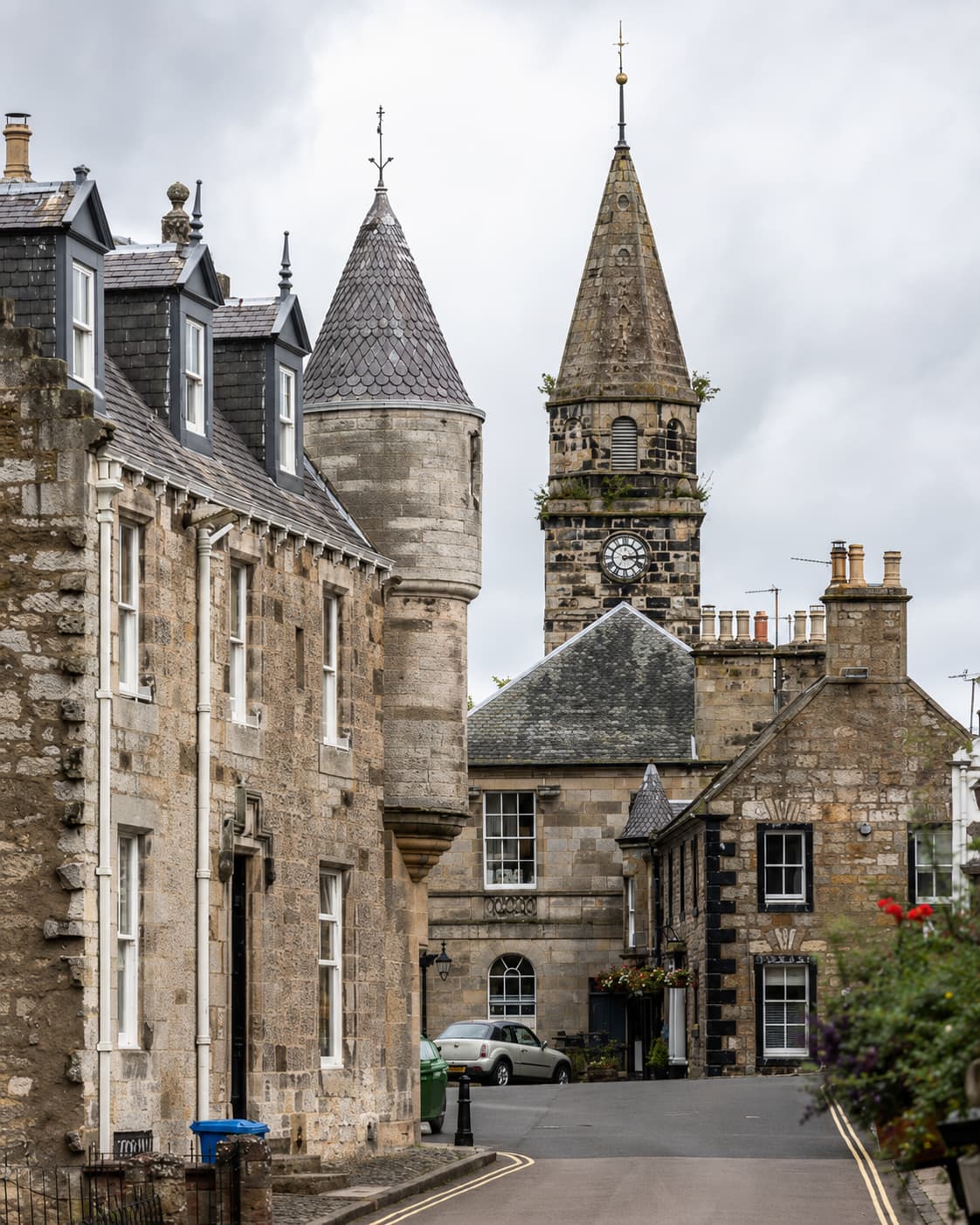
Falkland sits in the Howe of Fife, inland from the East Neuk, and its main street — cobbled, lined with Dutch-influenced 16th-century buildings, anchored by a royal palace — became Inverness in the 1940s in seasons 1 and 2 of Outlander. In practice, it required some dressing for filming and doesn’t look exactly as it does on screen, though the bones are genuinely there and the village is worth visiting independent of any television connection.
Furthermore, Falkland Palace (also managed by the NTS) is the more historically interesting site independent of any TV connection — a 16th-century royal hunting palace with a real tennis court that dates to 1539, the oldest in Britain still in use. It’s a quieter visit than Culross, sitting in a smaller village with fewer facilities. Additionally, it pairs neatly with a wider Fife day that takes in Culross and the East Neuk, though that requires an early start and realistic expectations about opening hours.
05 — Pretty Villages Near Edinburgh (For Limited Time)
If you’re based in Edinburgh and want a half-day excursion to a genuinely beautiful village, the realistic options are more limited than many lists suggest — but one stands out clearly.
Culross is the answer. It sits roughly 22 miles from Edinburgh, and the drive takes around 35–40 minutes. No village in Scotland of equivalent historic quality is closer to the capital — it is, in many ways, the most convenient of Scotland’s storybook villages for a city-based visitor. South Queensferry has its own appeal (the Forth bridges are extraordinary at close range), but for the preserved-burgh experience, Culross is the one worth prioritising.
Falkland is approximately 30 miles north of Edinburgh — about 50 minutes by car, more with traffic. That said, it makes a feasible standalone half-day trip, if less natural as a brief detour from a city base. Meanwhile, the East Neuk villages (Crail, Anstruther) sit 50–60 miles from Edinburgh, which is manageable but more committed as an excursion.
Leave Edinburgh by 9:30am. Arrive at Culross for 10am opening. Spend two to three hours in the village and palace. Have lunch at Bessie’s Café (closes 4pm; last orders 3:30pm). Return via South Queensferry for the Forth Bridge view. Back in Edinburgh by late afternoon. This is a full, unhurried day and doesn’t require a car if you’re willing to use public transport from Dunfermline.
06 — Best Highland Villages to Visit in Scotland
The Highland villages on this list sit within territory covered in more depth in the Scottish Highlands guide. That guide covers driving logistics, the best time to visit, and what the landscape actually feels like. This section focuses on the villages themselves and what they add to a Highland trip.
Glencoe — The Highland Village the Moody Photos Are Made Of
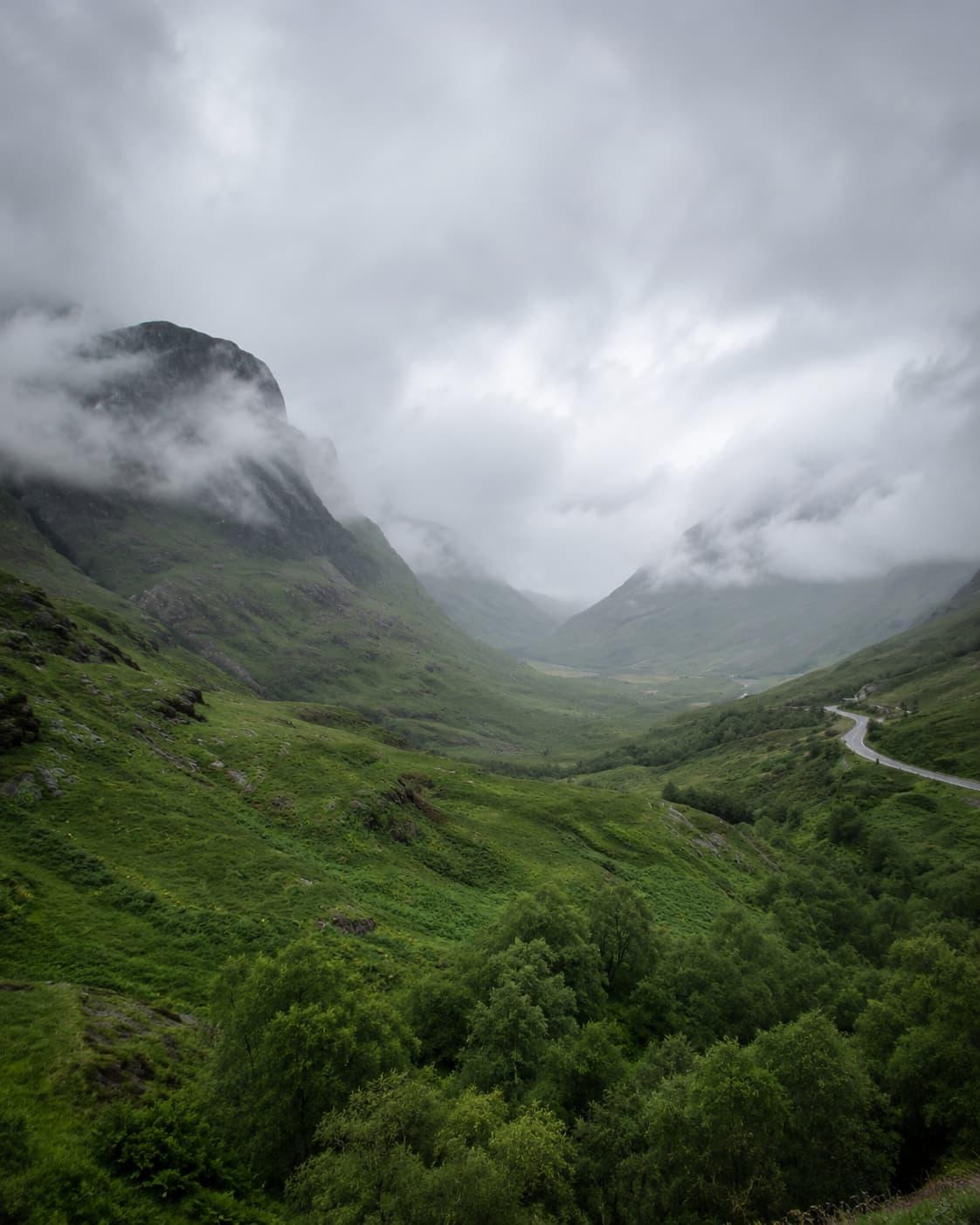
Glencoe is not a village in the usual sense. It is a valley with a small settlement inside one of Britain’s most dramatic landscapes. The photographs of brooding peaks, low cloud, and white cottages are not exaggerated. In contrast to many photogenic destinations, Glencoe is better under moody weather than in bright sunshine — the darkness is part of it.
The village of Glencoe itself has a small folk museum, a visitor centre for the national nature reserve, and enough in the way of accommodation that it works as a base for the surrounding mountains rather than just a drive-through. Moreover, given its position on the A82 between Glasgow and Fort William, it’s a natural stop on almost any Highland route — you’d have to actively avoid it to miss it. As a result, most people’s first encounter with Glencoe is through the windscreen, which is an honest introduction to a place that rewards slowing down.
Plockton — The Palm-Tree Village on Loch Carron
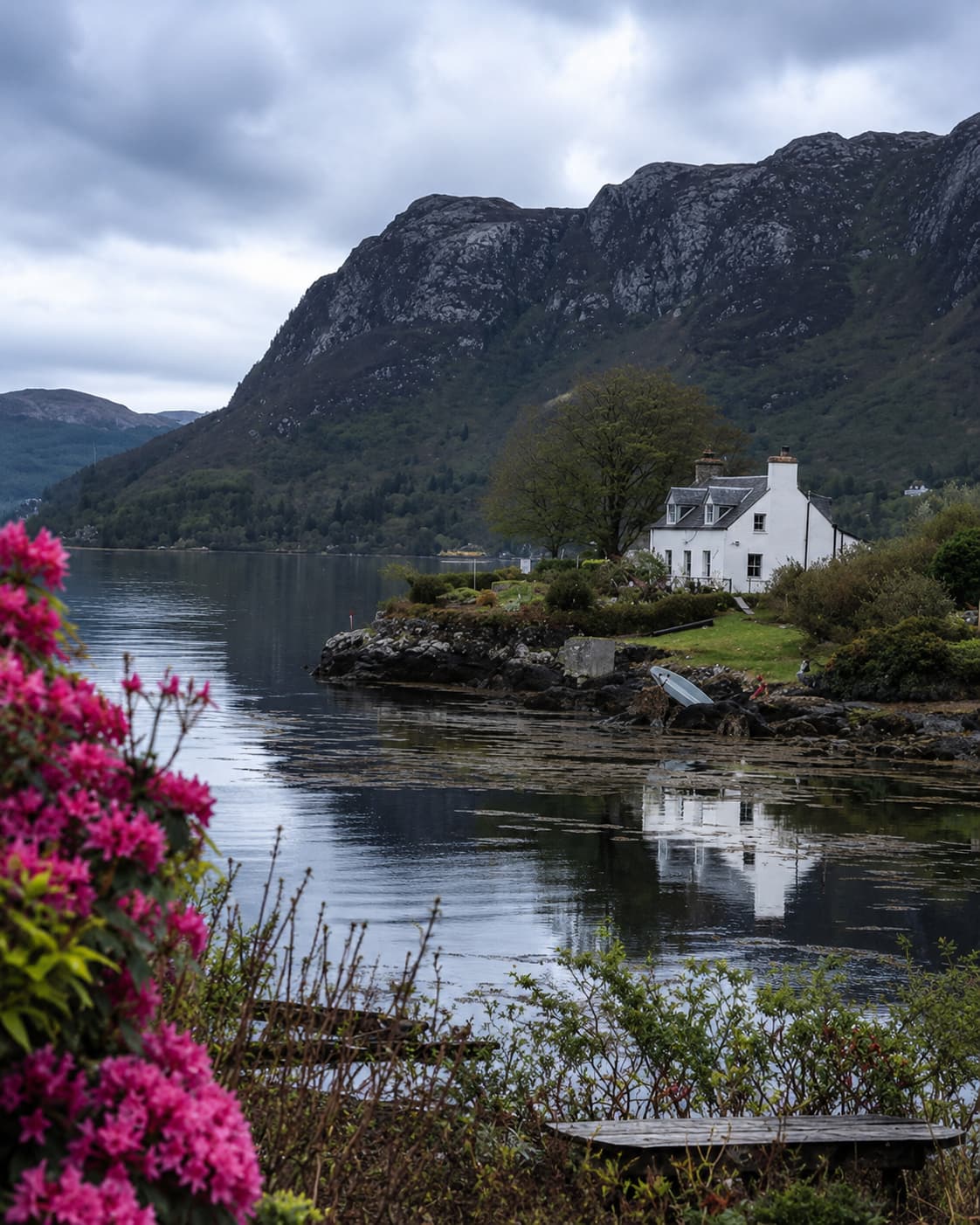
Plockton is on the shores of Loch Carron in Wester Ross and is the kind of place that makes people stop mid-sentence. The Gulf Stream keeps it mild enough that palm trees grow along the waterfront — genuine palm trees, in the Scottish Highlands — and its whitewashed cottages were the backdrop for the TV series Hamish Macbeth in the 1990s. Additionally, it has the quiet quality of a place that doesn’t know it’s beautiful, or at least doesn’t perform that beauty for visitors. In contrast to busier Scottish villages, Plockton feels like it belongs to the people who live there.
In practice, Plockton is worth building a detour around rather than just noting as a pass-through. It’s small — the main street, the harbour, a short waterfront walk — but the setting is genuinely among the best in the country. Furthermore, Plockton sits about 8 miles from Kyle of Lochalsh, making it an easy add-on to a journey that might already include Skye and the Eilean Donan Castle area. The Highland guide covers driving logistics for this part of the northwest coast in full.
07 — Are Scotland’s Fairytale Villages Worth Visiting?
On balance, yes — but with a more honest framework than most lists offer. The best fairytale villages in Scotland (Culross, Tobermory, Crovie, Plockton) are genuinely extraordinary in ways that photos actually understate. Here, the architecture is real, the settings are real, and the feeling of having arrived somewhere that doesn’t look like anywhere else is real. Moreover, that feeling tends to be more durable than the sensation produced by a list designed to maximise entries.
That said, some villages reward a longer visit and others don’t. Crovie is fifteen minutes on foot and then done — which is fine, as long as you arrive knowing that. Culross, by contrast, could absorb three hours comfortably. Tobermory is worth an overnight commitment because getting there is half the work. In the same way, Falkland and the East Neuk work best as part of a wider Fife day rather than standalone trips.
08 — How to Visit Respectfully
This point appears on every NTS page for these villages and bears repeating, because the combination of social media visibility and small residential populations creates genuine friction. Culross has approximately 400 residents; Crovie has fewer. In short, these are people’s homes, not film sets, and several communities have explicitly asked visitors to treat them as such — which is a fair ask that takes nothing away from the experience of being there.
Every village on this list has either a car park or a recommended parking area. Crovie’s is above the village on the hill. Culross’s is 200 metres from the palace at the west car park. Blocking a resident’s driveway for a photograph is not an acceptable trade-off, regardless of how good the angle is.
The NTS has noted that Culross occasionally receives visitors who treat it “like Disneyland” — walking into private gardens, peering through windows, climbing garden walls for better angles. This happens, and it’s worth naming directly as something not to do.
Many of these villages have very few commercial establishments left — often one café, one shop. Bessie’s Café in Culross, the seafood shack in Crail, the distillery in Tobermory. Using them matters, both practically and as a way of participating in the village rather than merely consuming it.
09 — When to Go and How Many Villages to Realistically Fit In
When to visit Scotland’s villages
May and September are the strongest months for visiting the prettiest villages in Scotland — good light, manageable crowds, and most facilities open without the July and August pressure. June can work, but peak-summer traffic on Highland roads requires building in extra time. Similarly, Tobermory ferry spaces need booking weeks ahead rather than days in July and August. October onwards, some cafés and the palace interiors begin closing for the season; notably, Culross Palace closes entirely from November through mid-March.
How many villages to fit in
In terms of realistic planning, three or four villages in a week is a comfortable pace if they’re on a logical route. Trying to tick off eight in five days produces a trip that’s mostly driving. At that point, you’re not really visiting anywhere. Moreover, several of these beautiful Scottish villages are hundreds of miles apart. Crovie to Plockton is a four-hour drive through exceptional scenery. Still, doing it in a single day means arriving exhausted at the destination you came to enjoy.
On balance, the sensible approach is to pick one cluster and do it well, rather than sampling everything briefly. The table below maps the natural groupings:
| Fife cluster | Culross + Falkland + East Neuk (Crail, Anstruther) — full day or overnight, works as Edinburgh base |
| Highland cluster | Glencoe + Plockton + Portree — 3–5 days, requires car, overlaps with NC500 south section |
| Island visit | Tobermory requires 1–2 nights on Mull minimum; add Portree if also doing Skye (separate ferry) |
| Northeast coast | Crovie + Gardenstown — standalone half-day on the Aberdeenshire coast, or part of a circular Highland route |
| Without a car | Culross (Dunfermline station + bus), Falkland (Markinch station + bus), Tobermory (foot passenger ferry from Oban); most Highland villages are car-only |
Further Scotland and Northern Europe Context
For context on driving Scotland more broadly — including roads, passes, and realistic daily distances — the Highlands guide is the more detailed reference. For a wider sense of how Scotland fits into European travel, the most beautiful places in Europe puts it in regional context.
If the appeal is specifically remote northern villages with dramatic settings, it’s also worth knowing that similar visual registers exist elsewhere — the Lofoten Islands in Norway and the Faroe Islands offer fishing-village aesthetics with an even more isolated quality, and both attract similar traveller types for similar reasons.
Staying Overnight and Getting Around
Outlander, Crowds and Best Village Picks
Best Village Picks and Trip Length
A better visit to any of these villages starts with knowing roughly what you’re getting into — and leaving with more than you expected.
In the end, that’s always been the honest deal Scotland offers, and it never really needs the word “fairytale” to make the case.