
Santorini vs Mykonos: An Honest 2026 Guide to Which Greek Island Is Actually Worth It
Santorini vs Mykonos, the honest 2026 take — what changed with the crowds, the costs, and the new cruise rules, and which island actually fits the trip you want.
01 — The Honest Short Answer
The Santorini vs Mykonos decision usually comes down to one question. If you only read three lines: choose Santorini for the caldera, the sunsets, and a slower, scenery-led trip — it suits first-timers and honeymooners best. Choose Mykonos for actual sand, beach clubs, and a place that doesn’t go quiet after dinner. It’s rarely about which island is “better” in the abstract — it’s about which one matches the trip you actually want, and in 2026 there’s a new layer to that decision that most guides haven’t bothered to update.
That new layer matters. Indeed, both islands now sit inside a changed set of rules — a hard cruise cap on Santorini, a tiered levy on both — and the shock that hit Santorini in early 2025 softened its prices in a way that’s still faintly visible. Below, I’ll earn each of those claims rather than just asserting them.
Santorini is the better looking island and the easier first trip; Mykonos is the better beach-and-night island — and most people who can swing it should do a short stretch of both rather than agonising over one.
02 — The Real Difference Between Santorini and Mykonos
Both are Cycladic islands in the Aegean, close enough that a high-speed ferry links them in roughly two to three hours. At first glance the Santorini vs Mykonos pairing looks interchangeable — they share the whitewashed-village, blue-shutter look people picture when they imagine Greece. That said, the overlap ends there, and the difference underneath the postcard is bigger than it first appears.
The look and feel of each
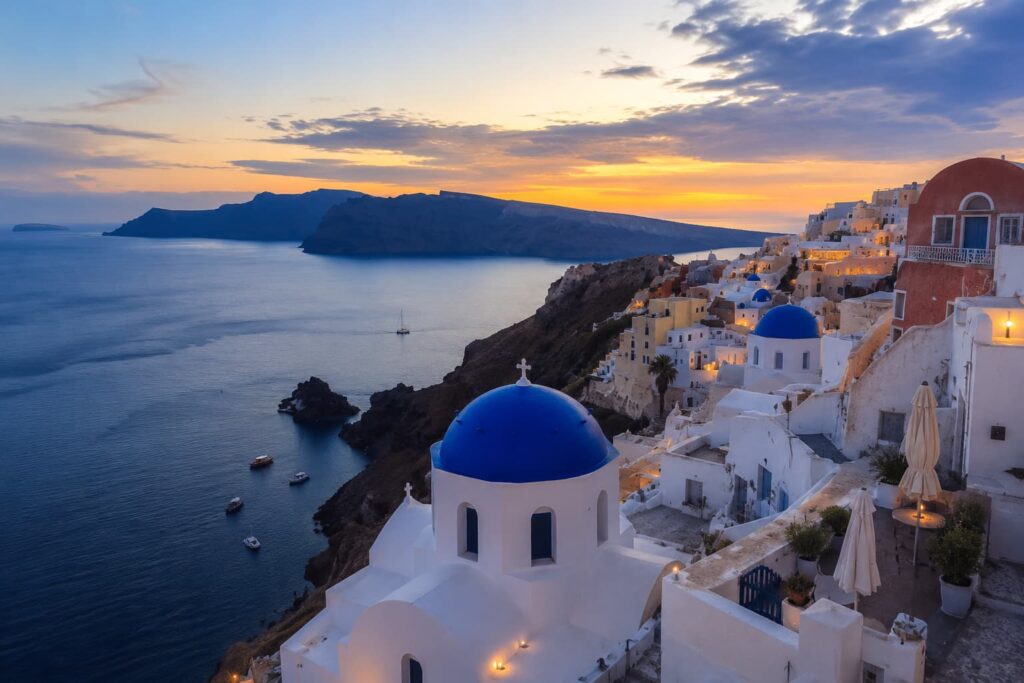
Santorini is vertical. It’s a half-drowned volcano, and the famous towns — Fira, Imerovigli, Oia — cling to the rim of a flooded crater, looking out over water that sits hundreds of metres below. The whole experience points outward and downward: at the caldera, at the sunset, at the cruise ships anchored far beneath you. As a result, the island rewards looking more than doing.
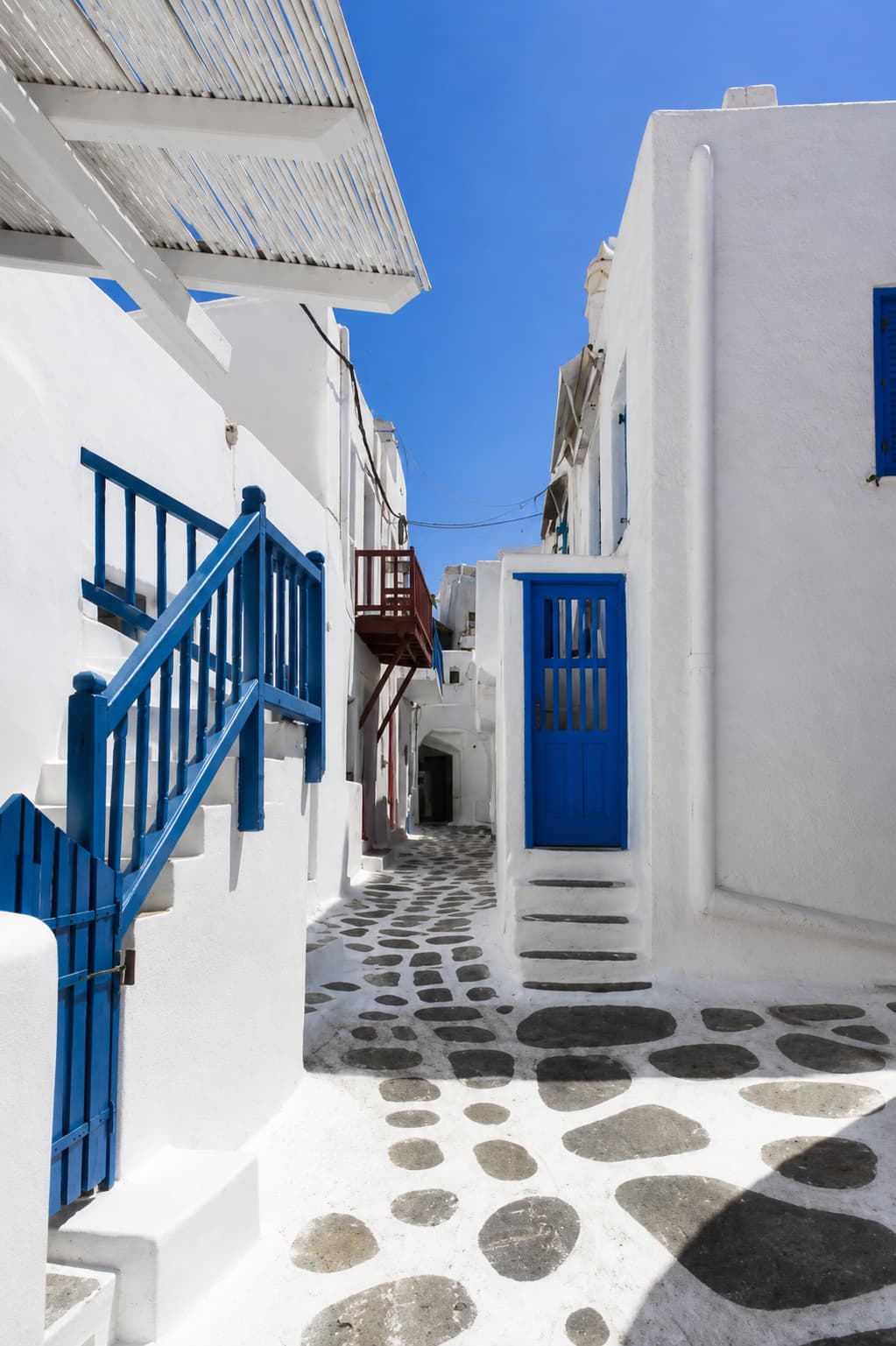
Mykonos is horizontal. The land is low, dry, and wind-scoured, and the energy gathers at sea level — in the maze of Chora town, along the beaches, and inside the clubs that run from afternoon into the early hours. Where Santorini asks you to sit still and watch, Mykonos pulls you into motion. Even so, neither approach is wrong; they’re simply built for different moods.
How they actually differ on the ground
Scale is part of it too. Santorini draws around 3.4 million visitors in a normal year, while Mykonos pulls closer to two million — so Santorini is the busier, more photographed of the two, with all the pressure that brings to its handful of viewpoints. Mykonos, in contrast, spreads its crowds across more beaches and a larger nightlife footprint, which can make it feel less concentrated even when the raw numbers are high.
03 — Santorini vs Mykonos for Couples and Honeymoons
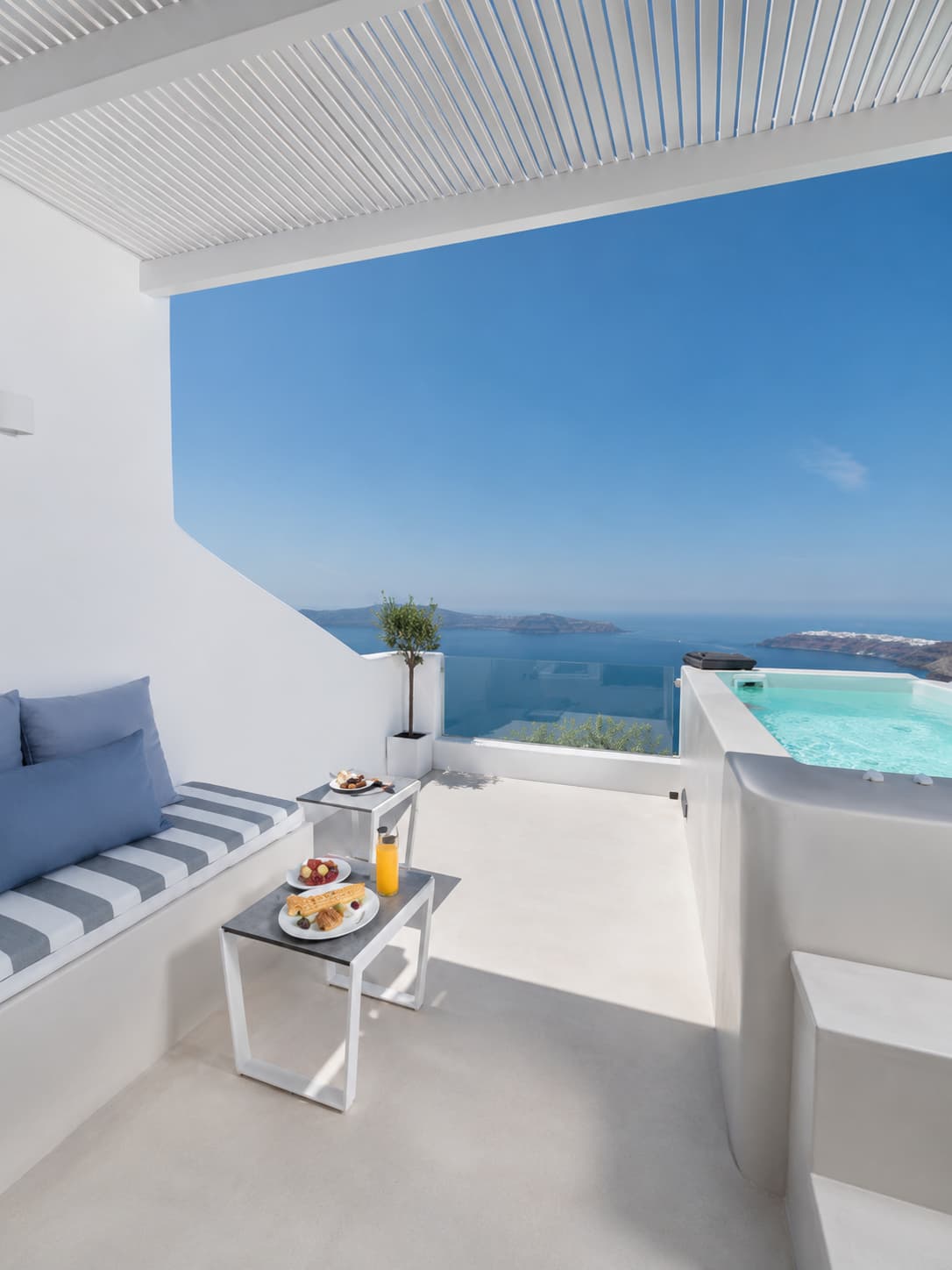
Honestly, Santorini — and it isn’t close. Admittedly, the caldera setting does most of the work: dinner on a terrace above the water, the long slow colour of the sunset, rooms carved into the cliff with private plunge pools. For a honeymoon or a milestone trip, the island delivers exactly the image people book it for. That much the glossy guides get right.
Here’s the part they tend to skip, though. The most famous sunset spot, Oia, becomes genuinely crushed in the hour before dusk in high season — narrow lanes packed tight, every wall lined with phones. Even so, the romance survives it — though it survives despite the crowd, not because of it. Specifically, to get the version you’re imagining, you’ll want to watch the sunset from your own terrace, or from Imerovigli, rather than fighting for a sliver of wall in Oia.
Book a caldera-view room in Imerovigli or Firostefani instead of Oia. You get the same sunset over the same volcano, with a fraction of the crowd — and you watch it with a glass of wine in your hand rather than an elbow in your ribs.
Mykonos can absolutely work for couples who want beach days and a night out together. That said, for the classic Greek-island honeymoon — the one with the white-and-blue and the sunset — Santorini is the island people mean.
04 — Santorini vs Mykonos for Beaches and Nightlife
Now the table turns. Mykonos wins both, and again it isn’t particularly close.
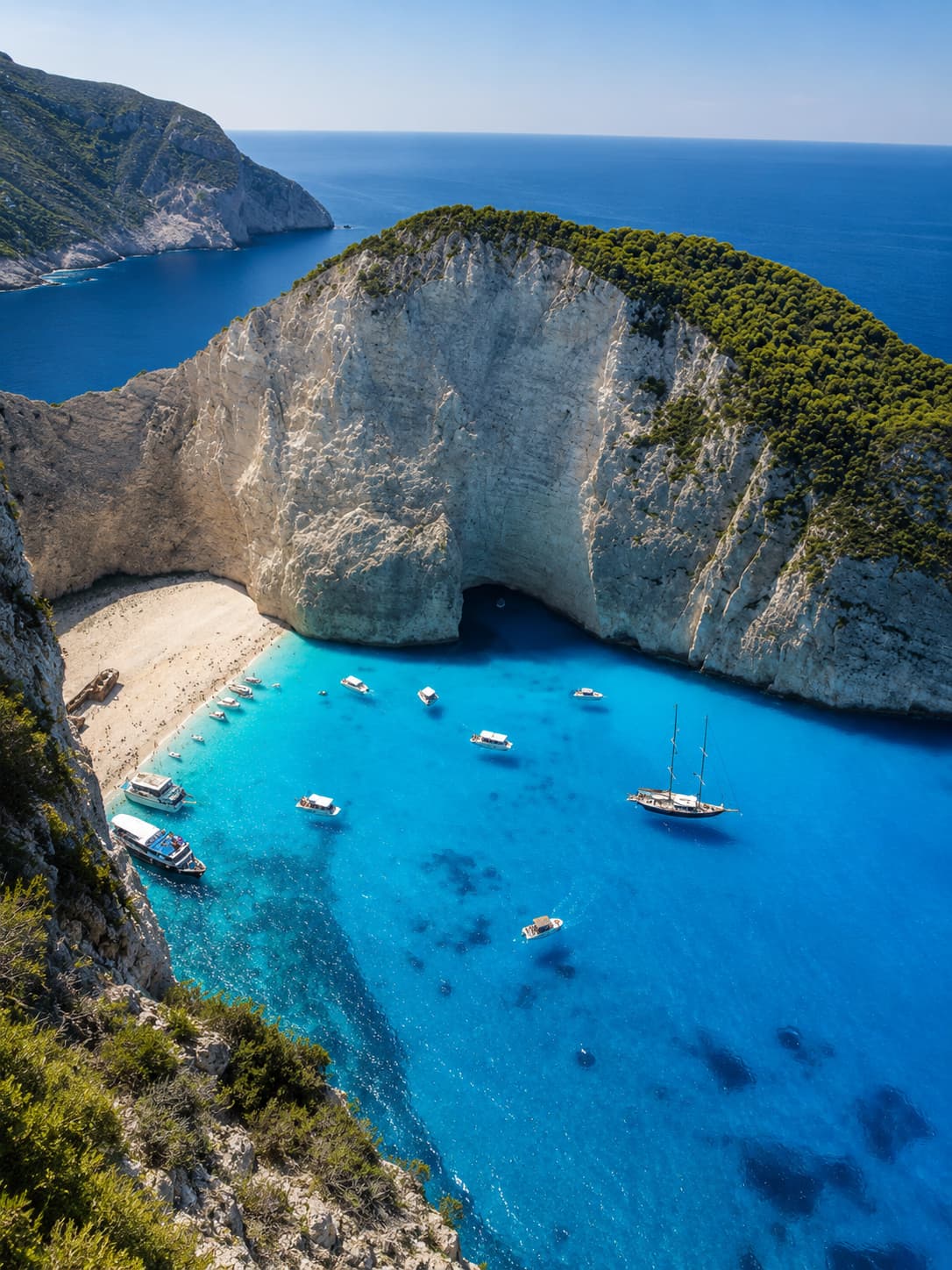
For beaches, the difference is physical, not a matter of taste. Specifically, Mykonos has the golden, soft-sand beaches most travellers picture — Paraga, Agios Sostis, Platis Gialos, Elia — the kind you can actually lie on and walk into the sea from. Some are organised beach clubs with music and loungers; others stay calmer and quieter. The point is that the choice exists.
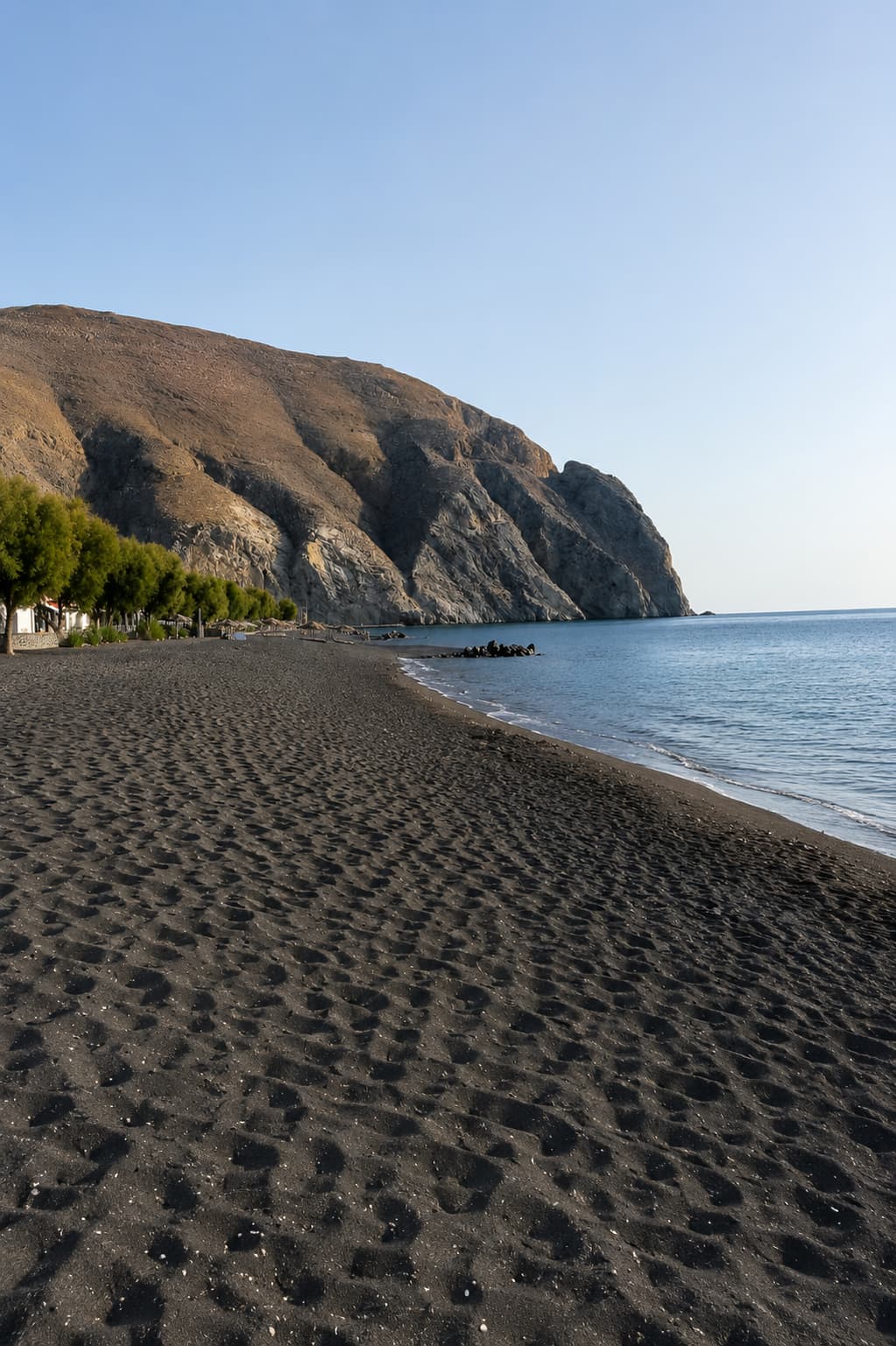
Santorini, by contrast, has no soft-sand beaches at all. Its shoreline is volcanic — black, red, and white pebble and coarse grit at places like Perissa and the Red Beach. Granted, they’re striking to look at and worth seeing once — yet they are emphatically not the lie-on-the-sand experience the Greek-island fantasy promises. If beach time is central to your trip, this single fact should weigh heavily.
Nightlife follows the same split. In particular, Mykonos is one of the Mediterranean’s genuine party islands, with a club scene that runs from beachside afternoons straight through the night. Santorini has bars and good restaurants, but it largely goes quiet after dinner — the island empties its energy into the sunset and then settles. For going out, there’s no contest.
05 — Santorini vs Mykonos: Which Is More Expensive?
Both islands are expensive by Greek standards; neither is a budget destination in summer. That said, the honest answer to which costs more depends on what you’re spending on, and 2026 adds a wrinkle worth understanding.
Where your money goes on each
Mykonos tends to run pricier for the things Mykonos is for — beach-club loungers, cocktails, and a night out can climb fast, and the island has leaned hard into a luxury-and-party market that prices accordingly. Santorini’s premium sits elsewhere: the caldera-view room is the splurge, and the gap between a room with the view and one without it is steep. For a couple prioritising one knockout hotel, Santorini concentrates the cost into the room. By contrast, a group chasing beaches and nightlife will find Mykonos spreads it across the days and the nights.
The 2026 pricing shift
This is where the current moment is genuinely different, and where I want to be careful not to oversell it. In early 2025 Santorini was hit by an intense earthquake swarm — more than 25,000 tremors over a few weeks — which, combined with the new cruise rules, spooked international visitors and pushed many hotels to discount heavily that year. By 2026, however, the island is clearly rebounding: early-year bookings bounced back, and visitor spending across Greece’s headline islands rose rather than fell.
So the accurate framing isn’t “the caldera is cheap now.” It’s softer than that, and more useful: the 2025 shock cooled some of Santorini’s frenzy, and that cooling is still faintly visible in 2026 availability and pricing, particularly outside the very top tier of caldera hotels, which mostly held their rates throughout. In other words, you may find slightly better value and breathing room than you would have at the 2023–2024 peak — but plan as though it’s a recovering premium destination, not a bargain.
Mykonos costs more in the bars and on the beach; Santorini costs more in the room. Neither is cheap in July. The most reliable way to spend less on either is to go in May or October rather than chasing a 2025-style discount that has largely passed.
06 — The 2026 Reality Check: Crowds, Cruise Caps, and the New Fees
This is the section most comparison posts simply haven’t updated, and it’s the part that actually changes the decision. Specifically, three things converged on these islands, and they matter for how your trip will feel.
What actually changed
First, the cruise cap. As of 2026 Santorini enforces a hard limit of 8,000 cruise passengers per day, managed through a ranked berth-allocation system that schedules ships months ahead. To put that in context, peak days before the policy saw surges of 11,000 to 17,000 cruise visitors pouring into Fira and Oia within a few hours. For 2026 the rule tightened further — ship loads are now counted at full capacity rather than the 80% assumed in 2025 — which squeezes the number of large vessels that can call on any single day.
Second, the levy. Greece introduced a tiered cruise-passenger fee that lands hardest on these two islands. At Santorini and Mykonos, cruise passengers pay €20 per person across peak summer (1 June to 30 September), €12 in the shoulder months of April, May, and October, and €4 from November through March — while other Greek ports charge far less. Importantly, this applies to cruise passengers only, charged to the onboard account on disembarkation. The full season-by-season tier structure is laid out in Euronews’ breakdown of the cruise fee if you want the fine print before booking a cruise.
Third, the drop. The combined effect is real and measurable: Santorini’s scheduled cruise arrivals fell about 18% for 2026, with roughly 595 ships booked to dock against 728 the year before.
What it means for your trip
Here’s the honest takeaway, because it cuts both ways. On balance, the cap genuinely reduces the worst of the midday cruise crush — fewer of those moments when several thousand people land at once and funnel toward the same two viewpoints. If you’ve avoided Santorini specifically because of the overtourism headlines, 2026 is a meaningfully better year to reconsider it.
That said, the cap covers cruise passengers and nothing else. Consequently, ferry and air arrivals remain entirely uncapped, so Oia at sunset in August will still be busy, and the island will still feel full in peak season — just less violently spiked during cruise hours. The realistic win is a calmer midday and a better-paced day, not a private island. Anyone promising you an empty caldera in high summer is selling a fantasy.
Check a Santorini cruise-schedule tool for your dates before you book, and aim for the zero-ship or low-ship days. Then see Oia early in the morning or after the day-trippers leave, rather than at the sunset peak. That combination does more for your experience than the cap alone ever will.
07 — Can You Visit Both Santorini and Mykonos in One Trip?
Yes, and it’s one of the easiest island pairings in Greece to combine — which is exactly why so many Santorini vs Mykonos debates end with “just do both.” Specifically, a high-speed ferry connects the two in roughly two to three hours, running frequently through the season, so you don’t need to backtrack through Athens to move between them. In practice, many people fly into one, ferry across, and fly out of the other.
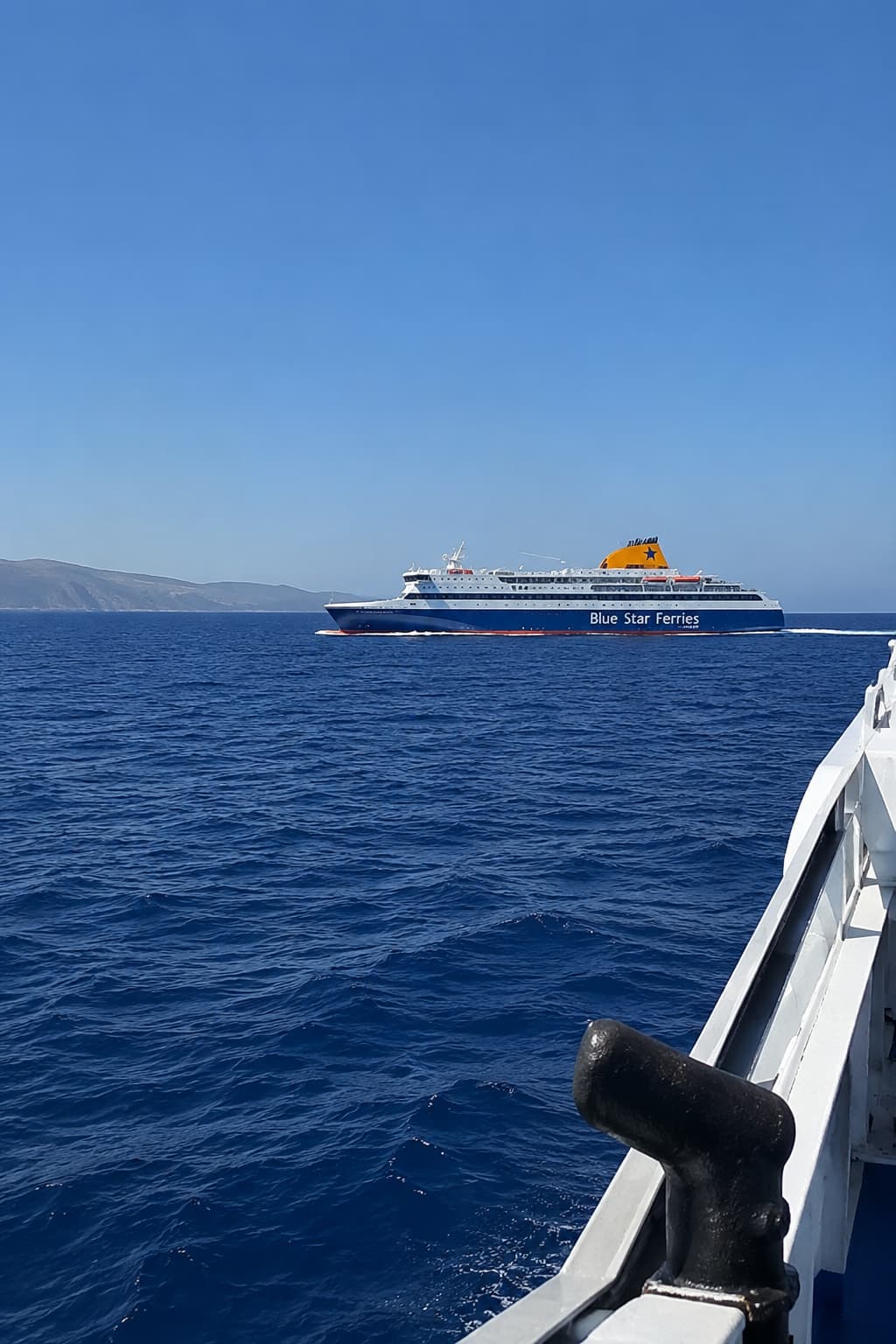
On pacing, my honest recommendation is two nights on each as a minimum, three if you can. Santorini’s draw is concentrated — the caldera towns and one or two viewpoints — so two full days covers it without rushing. Mykonos, meanwhile, rewards a little more time if beaches are the point, since you’ll want a day to move between them. Taken together, a five-to-six-night trip splitting the two works comfortably for most people.
If you want to end on calm, do Mykonos first and finish in Santorini — the sunsets make a natural closing note. Alternatively, reverse it if you’d rather wind up rather than down. There’s no wrong order; it’s a question of how you want the trip to end.
08 — When Is the Best Time to Visit Santorini and Mykonos?
The honest sweet spot for both islands is May and October, and the reasons stack up neatly. Specifically, the weather is warm enough to swim and sit out without the punishing July–August heat. Moreover, crowds thin noticeably on either side of peak, the cruise levy drops to its shoulder-season tier, and accommodation eases off its summer ceiling.
June and September are the next-best compromise — still warm, still busy, but a step down from the full peak. By contrast, July and August give you the hottest, liveliest, most expensive, and most crowded version of each island; if those weeks are your only option, lean harder on the early-morning and off-hour tactics above. Meanwhile, winter is quiet and atmospheric on Santorini but largely shut down on Mykonos, so the cold months suit only a specific kind of trip.
| May | Warm, swimmable, lighter crowds, lower levy tier. One of the two best windows. |
| June | Hot and busy but short of full peak. A solid compromise. |
| Jul–Aug | Peak everything — heat, crowds, prices, nightlife. Book early, time your viewpoints. |
| September | Still warm, sea at its warmest, crowds beginning to ease. |
| October | The other sweet spot — mild, quieter, cheaper, lower levy. Mykonos starts winding down late in the month. |
09 — So Which Should You Choose, Santorini or Mykonos?
Rather than crown one winner, here’s the version that actually helps — sorted by the kind of traveller you are.
The caldera, the sunsets, and the cliffside rooms are unmatched for a romantic or milestone trip. Stay in Imerovigli, not Oia, to get the version you’re picturing.
It has the actual sand and the only real club scene of the two. If lying on a beach and going out matter most, this is the obvious pick.
It delivers the iconic image most clearly, and 2026’s cruise cap makes it a calmer year to experience the famous viewpoints than the recent past.
More to do together across beaches and bars, and an energy that doesn’t fade after dinner. Better suited to a social trip.
They’re two to three hours apart and complement each other almost perfectly. Two nights each, and you stop having to choose.
And if, after all this, the crowds on either island still sound like more than you want, that’s a legitimate reason to look at the quieter Cyclades instead — the islands that trade the famous viewpoints for space. That’s a different post, and a different kind of trip, but worth knowing it exists before you commit.
Planning Both Islands Together
Choosing the Better Island for Your First Trip
Conclusion
The Santorini vs Mykonos decision was never really a contest between a better and a worse island. One is built for looking; the other for moving. What’s changed for 2026, however, isn’t the character of either place — it’s the rules around the edges, and a quieter midday on Santorini than the headlines of the last few years would suggest. Read honestly, that makes the choice easier, not harder: pick the trip you actually want, and the island sorts itself out.
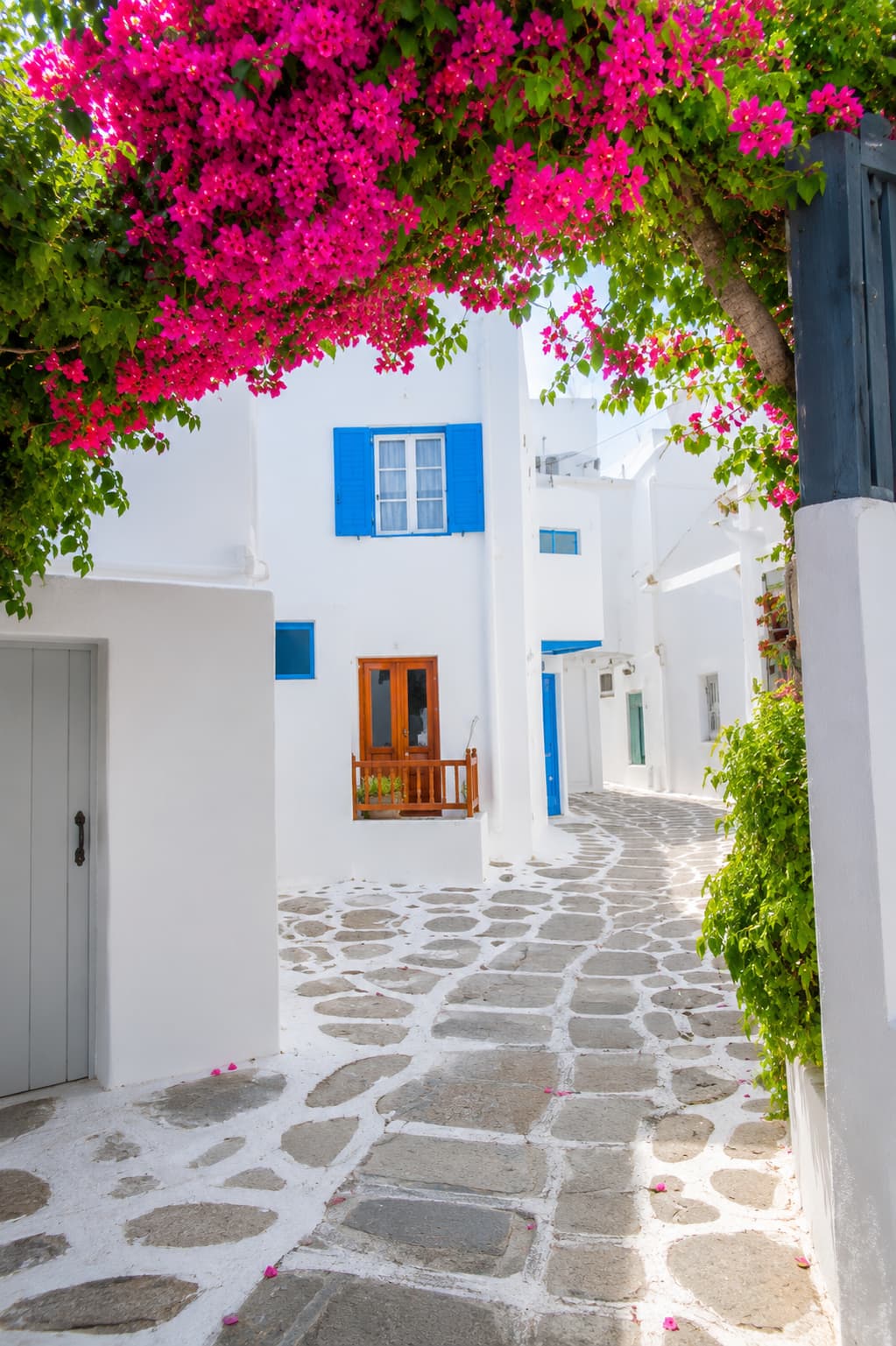
Two islands, two hours apart, asking you two different questions.
The honest answer is usually to let both of them ask.