

Paris by Season: An Honest Guide to When to Go
An honest, season-by-season breakdown of what Paris actually feels like — so you can find the best time to visit Paris for what you want from it.
The best time to visit Paris depends less on the calendar than on what you’re willing to trade. Summer delivers long evenings and a city at its most theatrical, alongside queues that eat entire mornings. January, on the other hand, empties the Louvre while draining the sky of color. After several trips spread across all four seasons, I’ve stopped pretending there’s one correct answer. There’s only the version of Paris you’re choosing, and what you’re giving up to get it. This guide breaks down what each season actually feels like on the ground, along with the 2026 transport and safety details that matter more than any list of monuments.
01 — The Short Answer: When Is the Best Time to Visit Paris?
If you only read one section, read this one. Spring and fall give you the best balance — mild temperatures, manageable crowds, and a city that still looks like itself in photos. Summer trades comfort for energy: it’s hot, it’s packed, and it’s also when Paris feels most alive, with river bars, open-air cinema, and terraces that stay full past midnight. Winter flips the equation entirely, with shorter lines, lower prices, and a hushed, almost private quality that summer never allows. However, winter also brings short daylight hours and weather that rarely cooperates. Overall, none of these seasons is objectively wrong — the honest answer is that “best” depends on whether you’re chasing warmth, value, or solitude, and the rest of this guide breaks down each option in detail.
02 — Is Spring the Best Time to Visit Paris? (March–May)
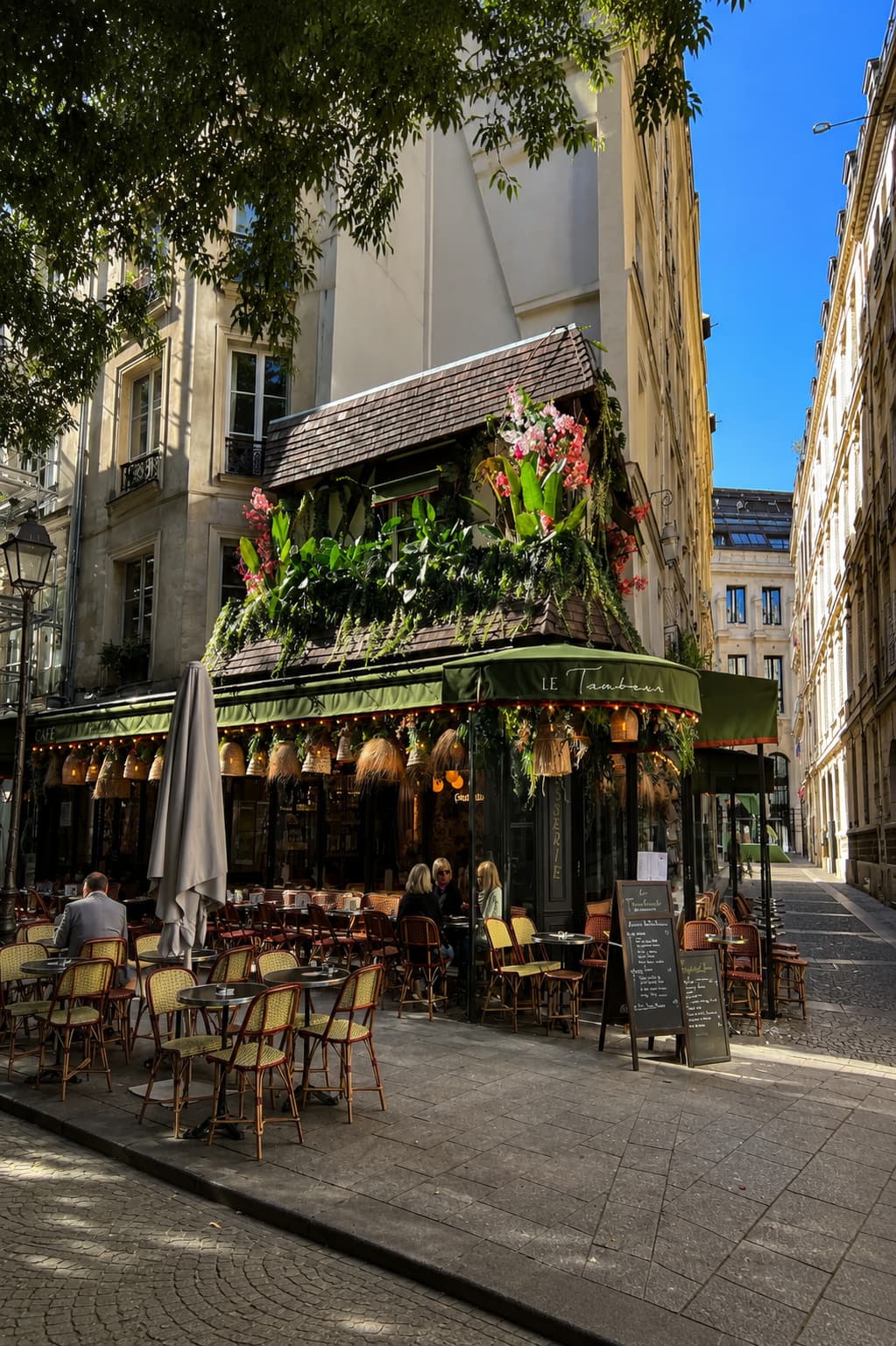
Spring in Paris starts cold and finishes warm, which means March can still feel like a continuation of winter. By April, the chestnut trees along the boulevards begin to leaf out, and by May, the city has fully shaken off its grey mood. Outdoor seating returns to cafés that spent four months pushed against the walls indoors. Meanwhile, the Tuileries fill back up with people picnicking on the gravel between the fountains — the first proper sign that the season has turned.
Crowds increase steadily through this window, especially around Easter and the entire month of May, when school holidays across Europe push family travel into the city. Prices climb too, particularly for flights and central hotels booked less than two months out. That said, spring rarely reaches the saturation point of summer — you can still get a same-day reservation at most mid-range restaurants, and the queue for the Musée d’Orsay, while real, moves. Pack for variability: a 15°C afternoon can turn into a cold, damp evening within a few hours, especially in March. If you’re choosing a single window for the best ratio of mild weather to manageable crowds, late April or early May edges out the rest of spring. For many travelers, that narrow window also makes late spring the best time to visit Paris outright.
03 — Paris in Summer (June–August)
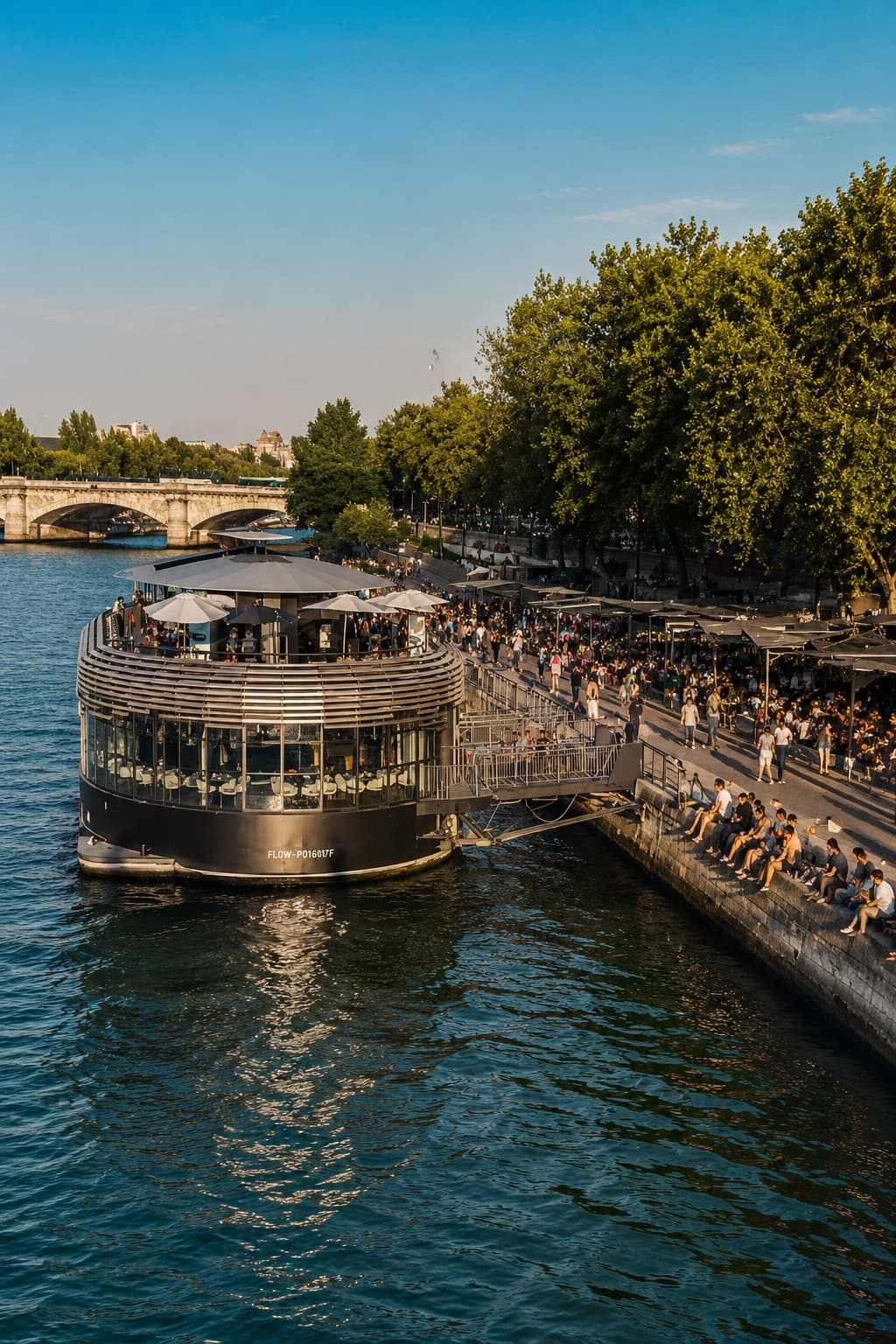
Summer is when Paris performs hardest for its visitors, and it knows it. Days stretch past 9:30pm at the solstice, giving you long stretches to wander after dinner without losing the light. Floating bars and temporary beaches appear along the Seine for Paris Plages, and rooftop terraces stay full well past midnight.
None of this comes without cost. The Louvre, the Eiffel Tower, and Sainte-Chapelle all require booking weeks ahead if you want to avoid a line that wraps the block. Heat is the other complication — late July and August regularly push past 30°C, and most older apartment buildings and budget hotels still don’t have air conditioning. Consequently, afternoons can feel less like sightseeing and more like an exercise in finding shade.
Adding to the strangeness, many Parisians leave the city entirely in August for their own holidays, so some smaller restaurants and family-run shops simply close for two or three weeks. The trade-off is real: you get the liveliest version of the city, at the highest prices, in the least comfortable weather. If you go in summer, book everything early and plan your days around the heat rather than against it. For travelers chasing energy over comfort, summer remains a strong contender for the best time to visit Paris — just not the easiest one.
04 — Paris in Fall (September–November)
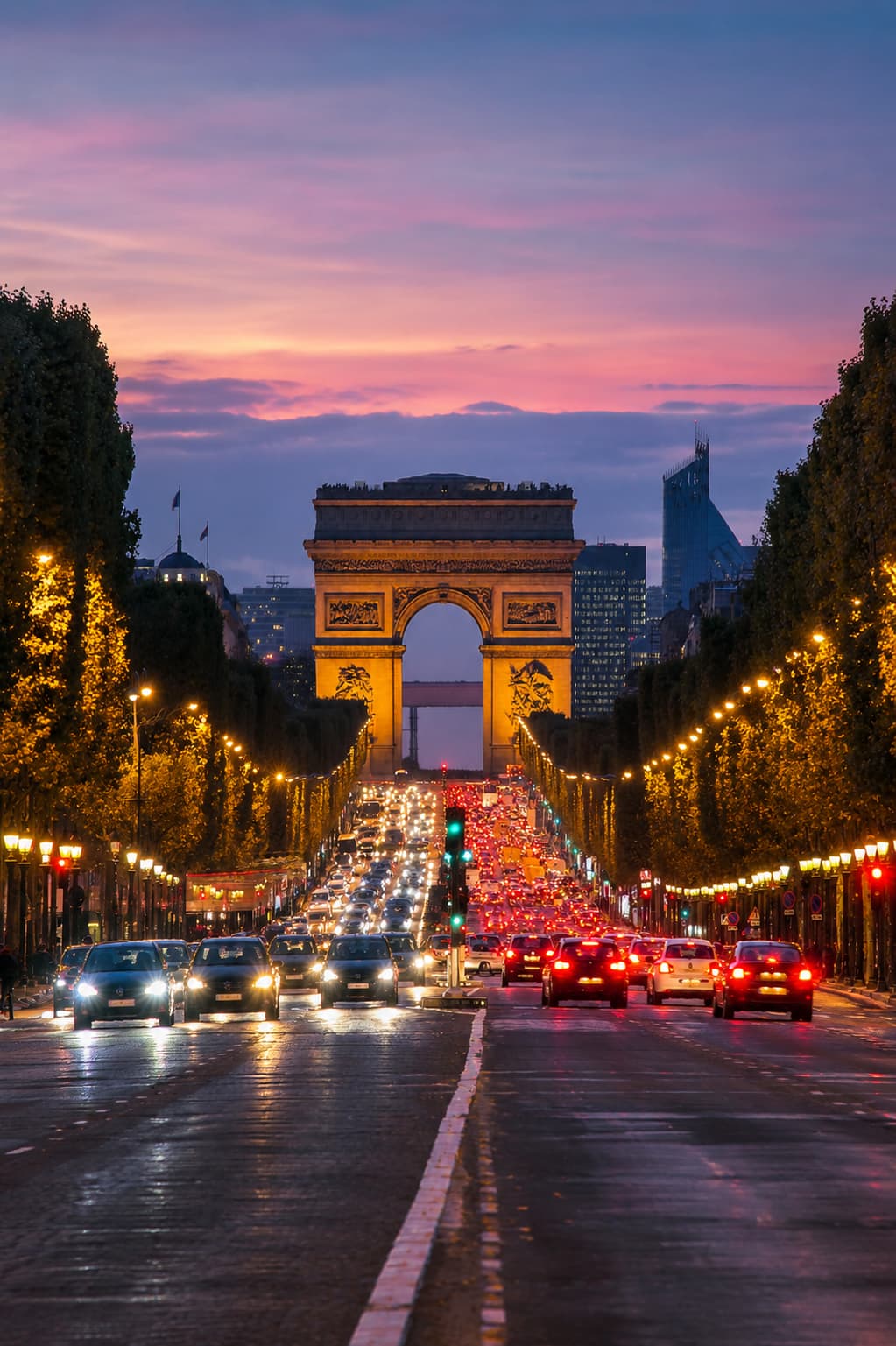
September often surprises first-time visitors, since it can still run warm enough for short sleeves through the first two weeks. The real shift happens in October, when temperatures settle into a comfortable range and the trees along the Champs-Élysées and in the Jardin du Luxembourg begin turning amber. This is the season I’d point a returning visitor toward, mostly because the chestnut walks through the Luxembourg Gardens in late October hit a quiet, unhurried mood that spring’s crowds don’t allow. If fall convinces you that Europe rewards an unhurried pace, it’s worth a look at some of the continent’s other quiet, beautiful corners. School holidays mostly end by mid-September, and the August exodus of locals reverses, so the city feels lived-in again rather than performed for tourists. Restaurants reopen after their summer closures, and reservations become easier to secure on short notice.
Is Fall the Best Time to Visit Paris to Avoid Crowds?
For crowd avoidance specifically, fall comes close to the strongest answer — but the month matters more than the season. September still carries momentum from summer, and the first half of the month can feel nearly as busy as August at the major sites. By contrast, late October through November sees a sharp drop-off, particularly on weekdays. The Louvre’s longest queues shrink to something manageable, and popular neighborhoods like Montmartre lose the shoulder-to-shoulder density that defines them in July. Granted, daylight shortens fast after the clocks change in late October, cutting your usable sightseeing hours by nearly two. Rain also becomes more frequent as November approaches. Even so, for travelers who prioritize a lower-crowd Paris over warm weather, the back half of fall delivers more reliably than any other shoulder-season window.

05 — Is Winter the Best Time to Visit Paris? (December–February)
Winter is the season Paris gets to itself. Hotel prices drop noticeably outside the two-week window around Christmas and New Year, and the major museums, while still busy on weekends, stop requiring the kind of advance planning summer demands. December brings the city’s holiday markets and the Champs-Élysées lights, which genuinely earn their reputation rather than relying on it. After the new year, January and February settle into the quietest stretch of the entire calendar — fewer tourists, shorter lines, and a kind of grey, low-light atmosphere that suits long museum afternoons better than outdoor sightseeing.
Is Paris Worth Visiting in Winter?
Whether winter is worth it depends almost entirely on what you came for. If your trip centers on parks, river walks, or rooftop views, the short, often overcast days will frustrate you — sunset before 5:30pm cuts deeply into sightseeing time. Travelers focused on museums, food, and securing a hotel room without competition, on the other hand, will find winter is arguably the smartest window on the calendar.
Snow is rare and rarely sticks, so don’t plan around it. Layering matters more here than in any other season, since damp cold off the Seine cuts through a single coat fast. On the practical side, this is also the cheapest time to fly into Paris and the easiest time to get a same-week reservation at restaurants that require booking months ahead in summer.
First-time visitors chasing warmth and outdoor wandering won’t find winter ideal. Return visitors focused on culture and value, though, will be hard-pressed to beat this season. It’s also a smart window for day trips — Versailles draws far thinner crowds in January than in July. For value-focused travelers, winter quietly makes the case for being the best time to visit Paris, even if it never gets the credit.
Weekend slots at the Louvre and Musée d’Orsay still sell out in December and around the February school holiday weeks. A timed-entry ticket booked a few days ahead, in turn, avoids the only real queue you’ll face all winter.

06 — What to Pack for Paris by Season
What you’ll need changes more by month than by season label — a March coat does nothing for you in May, and an August outfit is useless in December. The short version, season by season:
Paris is a walking city regardless of season — cobblestones and long museum floors, in particular, punish anything without real support.
Temperatures swing fast, especially in spring and fall; even so, a packable layer beats one heavy coat every time.
Rain is, of course, a year-round possibility in Paris, not a seasonal one — no month lets you safely leave this behind.
| Spring | Light layers, a waterproof jacket, and at least one warm layer for cool evenings — March can still dip close to freezing at night. |
| Summer | Breathable fabrics, sun protection, and a portable fan or cooling towel for apartments and older buildings without air conditioning. |
| Fall | A medium coat, a scarf, and waterproof shoes once rain picks up through October and November. |
| Winter | A proper wool coat, thermal layers, gloves, and waterproof boots — the damp cold is harder to dress for than the temperature alone suggests. |

07 — Getting Around: Paris Public Transport in 2026
Paris quietly retired paper metro tickets, and the change catches a lot of first-time visitors off guard. As of 2026, you’ll need either a reusable Navigo Easy card, which costs €2 and can be topped up at any station, or the official RATP smartphone app for digital tickets. A single metro ride costs €2.55, though multi-ride packs bring the per-trip cost down noticeably if you’re using the system more than a few times a day. Buying a paper ticket simply isn’t an option anymore, so plan to sort out your card or app within the first hour of arriving, ideally right at the airport or your first station.
- Navigo Easy card: €2 one-time cost, reloadable, works for metro, bus, and RER within Paris.
- RATP app: Digital tickets purchased and stored directly on your phone — no physical card needed.
- Single ride: €2.55, with discounted multi-trip packs available on both the card and the app.
Is the Paris Metro Safe for Tourists?
The Paris Metro is safe in the sense that matters most to visitors — violent crime against tourists on the system is rare. Pickpocketing is the real concern, and it’s concentrated rather than random. Specifically, Line 1, Line 6, and the Châtelet–Les Halles interchange see the heaviest tourist traffic, and with it, the heaviest pickpocketing activity, particularly during evening rush and around major stations near landmarks. Bags worn across the front, phones kept out of back pockets, and general awareness during crowded transfers cover most of the actual risk. Distraction techniques are more common than outright theft attempts — someone asking for directions or pointing at something on the platform while a second person works your bag. None of this should keep you off the system. Millions of residents use it daily without incident, and a little awareness on the lines mentioned above closes most of the gap.
Keep bags zipped and worn to the front during rush hour on Line 1 and Line 6, especially around Châtelet–Les Halles. It’s the single habit that prevents the most common tourist theft in the city.

08 — Mistakes and Scams to Avoid in Paris
Most problems tourists run into in Paris aren’t dangerous, just expensive or annoying. Overall, a handful of patterns repeat often enough that knowing them in advance saves both money and irritation.
Someone asks you to sign a petition or ties a “free” bracelet onto your wrist near major landmarks, then demands payment. Even so, the fix is simple: decline before any physical contact and keep walking.
Drivers approaching you inside the terminal before you reach the official taxi line are rarely legitimate. Therefore, use the marked taxi queue or a pre-booked ride.
RER and some bus routes require validating your Navigo or ticket at both ends of the journey, not just the start. As a result, skipping this can trigger a fine even with a valid ticket.
Cafés directly facing the Eiffel Tower or Notre-Dame charge a premium that has little to do with food quality. In short, walking two streets back usually cuts the price in half.
Paris looks compact on a map, but neighborhoods that look adjacent often take thirty to forty minutes on foot. For this reason, budget transit time between far-apart sights rather than assuming everything is a short stroll.
Weather, Budget and Trip Length
Packing for Paris by Season

There’s no version of Paris that gets it all — the warmth, the quiet, the low prices, and the long days don’t arrive in the same month.
Pick the trade-off that suits you, and the rest of the city will still be there when you come back for the other one.