
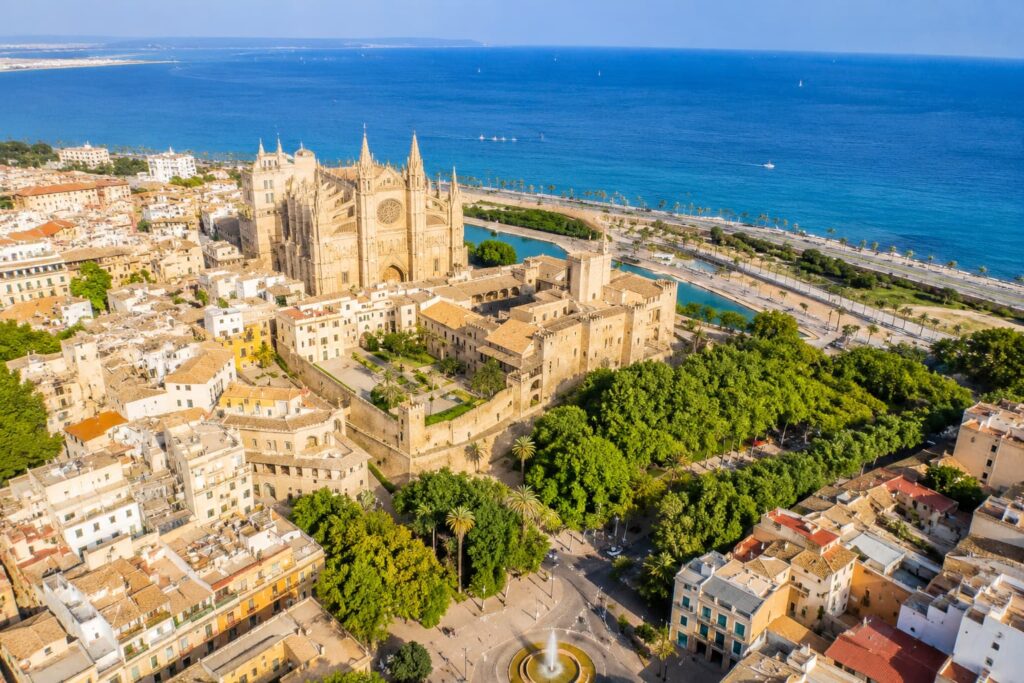
Palma de Mallorca Travel Guide: What the City Looks Like Beyond the Beach Clubs
A Gothic cathedral that took 400 years to build, 10th-century Arab baths, and one of Spain’s best food markets. Palma rewards the traveler who looks up.
Why This Mallorca Travel Guide Starts in Palma
Palma de Mallorca is the capital of the Balearic Islands — a working city of around 400,000 people with a 13th-century Gothic cathedral, 10th-century Arab ruins, and a food culture built around two public markets that have nothing to do with resort tourism. If you’re using this as a Mallorca travel guide, that distinction matters more than most travel writing lets on.
Most people who land on a Mallorca travel guide expect to be pointed toward a beach resort. Palma is what this guide is actually about — a logistics stop for some, but a proper city worth two or three days in its own right. A few hours between the airport and a rental car barely scratches the surface.
Why Palma Works as a City, Not Just a Stopover
Palma is a city that functions independently of the island’s resort infrastructure, and it does so in ways that a lot of Mediterranean cities at this scale no longer manage. It has a Gothic cathedral that remains, by almost any measure, one of the most extraordinary buildings in Spain. Its neighborhoods have their own logic and pace. Food culture here is rooted in local produce and weekly market rhythm — not the kind designed around tourist tables. If you’ve been to Córdoba or Andalusia and found yourself wanting more of that layered Mediterranean city experience, Palma belongs in the same conversation.
This guide covers what Palma de Mallorca actually looks like when you slow down inside it — the architecture, the neighborhoods worth walking, where to eat, and the honest answers to the practical questions that don’t appear in resort brochures.
- Why This Mallorca Travel Guide Starts in Palma
- Is Palma Worth Visiting Beyond the Beach?
- How Many Days Do You Actually Need?
- The Neighborhoods Worth Walking
- What to Do in Palma de Mallorca Without Going to the Beach
- What the Old Town Is Actually Like
- Where to Eat in Palma de Mallorca: Markets, Tapas, and Santa Catalina
- When to Visit Palma de Mallorca
- Day Trips Worth Taking from Palma
- Practical Notes for Visiting Palma de Mallorca
- FAQ
01 — Is Palma de Mallorca Worth Visiting Beyond the Beach?
The direct answer — for any Mallorca travel guide worth reading — is yes, and specifically because Palma de Mallorca doesn’t feel like it’s performing for visitors the way a lot of Mediterranean resort cities do. That separation matters. The beach towns along Mallorca’s coast exist almost entirely to serve summer tourism. Palma operates differently: it’s the island’s capital, a working city of around 400,000 people, and it functions year-round in ways that inform how it feels to walk through it.
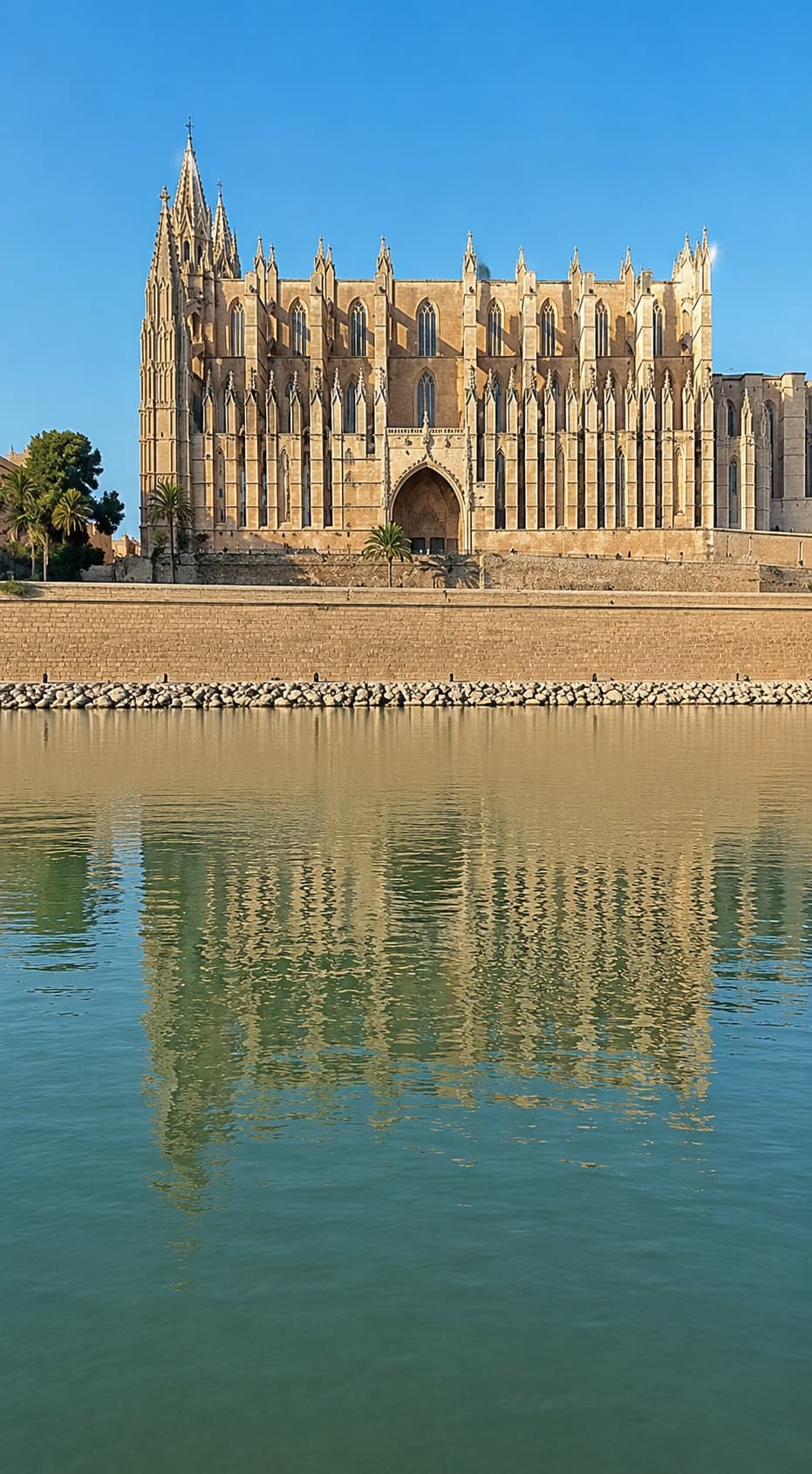
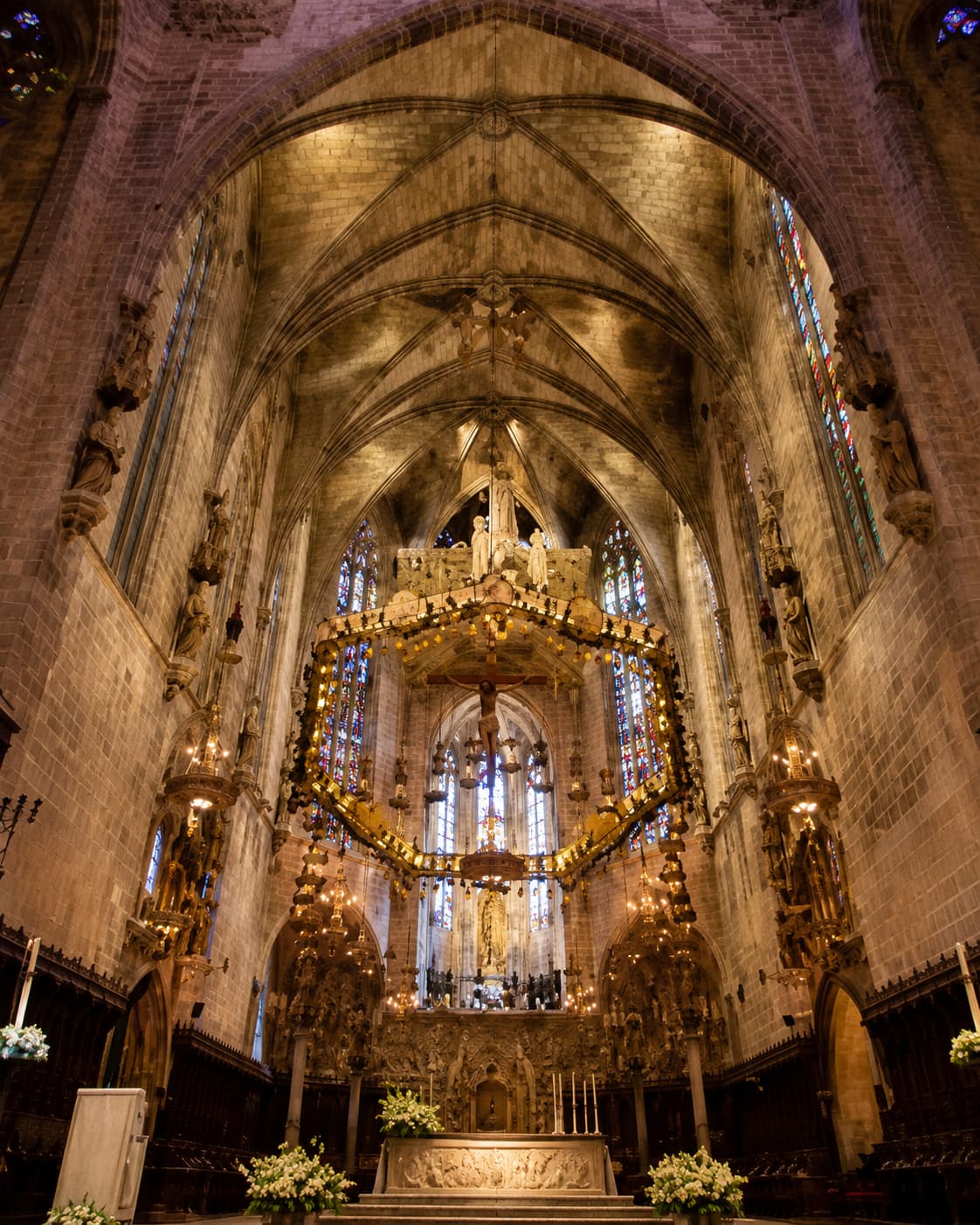
What makes Palma de Mallorca worth visiting on its own terms is a combination of architectural depth and everyday city texture that the standard Mallorca itinerary completely skips. La Seu Cathedral — formally the Cathedral of Santa Maria of Palma — is not an optional stop. It contains one of the largest stained-glass rose windows in the world at approximately 11.5 metres in diameter, and the building itself represents nearly four centuries of construction. Standing inside it, you understand immediately why Antoni Gaudí was brought in to renovate the interior in the early 20th century. It’s a building that earns attention.
The Cathedral, the Ruins and the City Texture
Beyond the cathedral, Palma offers Arab ruins dating to the 10th century, a hilltop medieval castle that is one of very few circular fortresses in Europe, two excellent public markets, and a restaurant scene that has quietly become one of the most interesting in the Balearics. In other words, you could spend two full days in Palma de Mallorca and never once reach for a beach towel.
That said, it’s also worth being honest about what Palma is. In July and August, the city absorbs large numbers of tourists — particularly around the waterfront and the central squares. The resort island effect does bleed in during peak season. However, the answer to that isn’t avoiding Palma de Mallorca; it’s timing the visit right and knowing which parts of the city reward slower attention. More on that below.
02 — How Many Days Do You Actually Need in Palma de Mallorca?
For the city itself: two to three days. That’s the honest answer this Mallorca travel guide will give you. That gives you enough time to walk the Old Town without rushing, visit the major cultural sites at a pace that lets them land, eat in the markets twice, and still have an afternoon to wander without any agenda. One day in Palma is genuinely not enough — not because the city is overwhelming in scale, but because it rewards the kind of slow walking that compresses badly into a tight schedule.
If you’re using Palma de Mallorca as a base for exploring the wider island — the Tramuntana mountains, Sóller, Valldemossa, or the quieter coves on the east coast — then five to seven days makes sense. Palma works well as a base in this regard. The island’s road network is generally manageable, and day trips from the city are practical without requiring a full resort hotel system.
Day 1: Old Town and La Seu in the morning (book tickets ahead); Arab Baths and Almudaina Palace in the afternoon; dinner in La Lonja. On day 2: Santa Catalina market in the morning; Bellver Castle after lunch; Es Baluard museum before it closes. For an optional third day: Portixol for a slow morning; Fundació Miró Mallorca; evening tapas on the streets behind Plaça de Santa Eulàlia.
Three days in Palma gives you an honest experience of the city. Two days gets you the highlights. One day gets you the cathedral and a market, which is still worthwhile but not the same thing.
03 — The Neighborhoods Worth Walking in Palma de Mallorca
Palma’s historic centre is compact enough that most of it is walkable in a single afternoon. However, the different neighborhoods within and adjacent to it have genuinely distinct characters — and knowing that distinction before you arrive saves time and sets expectations correctly.
Old Town (Casco Antiguo)
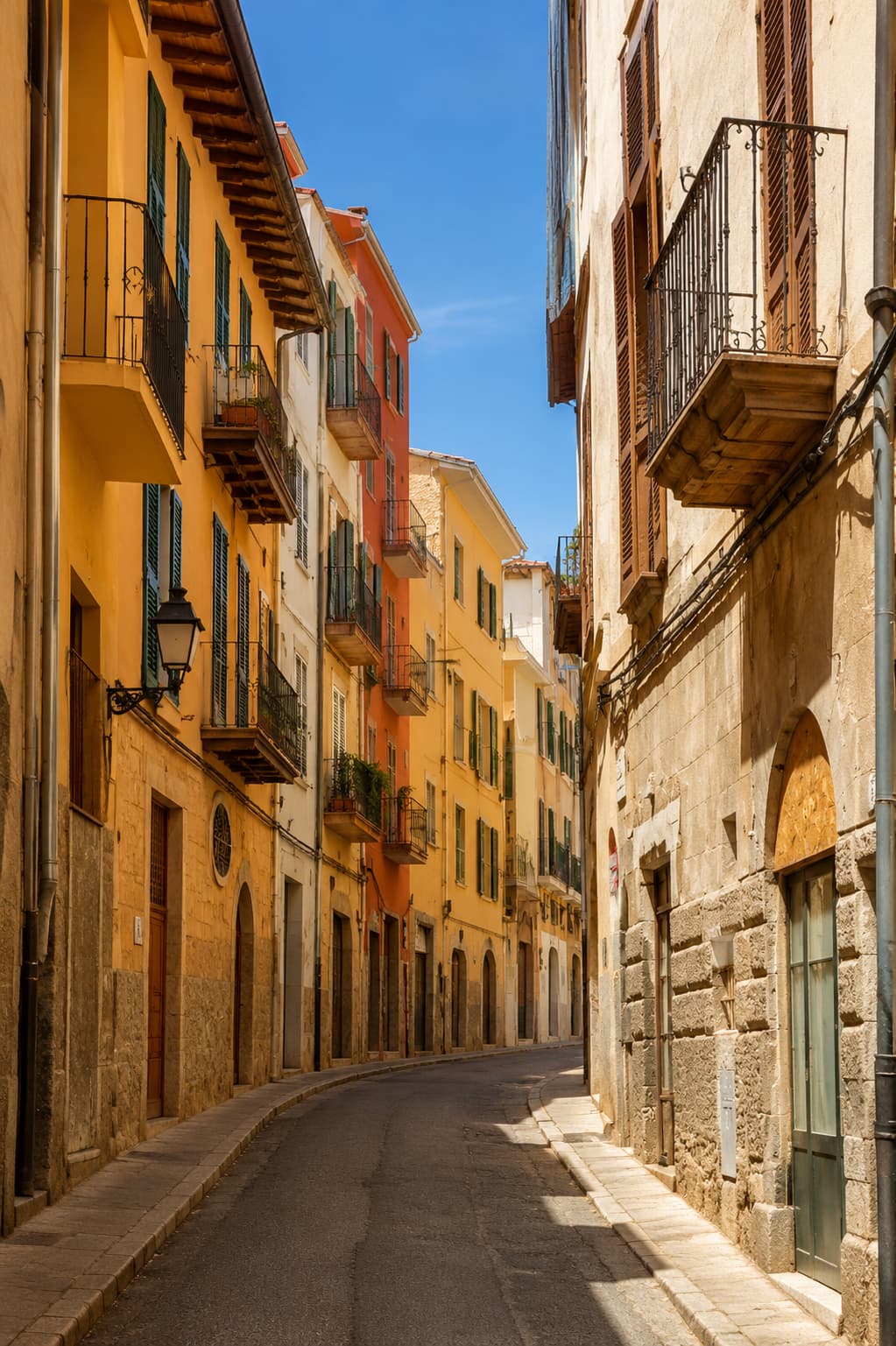
The historic centre is the densest part of Palma de Mallorca in terms of architectural layering — Roman foundations, Moorish streets, medieval Christian overlay, and Spanish Baroque on top of all of it. The streets around Carrer de l’Almudaina and the area between the cathedral and Plaça de Cort still follow the old Arab street plan, which means narrow, non-linear lanes that don’t resolve into logical grids. Several of the Old Town’s historic mansions have interior courtyards — patis — that are sometimes open during the day. Seeking those out is not a tourist activity exactly; it’s more like paying attention to doors.
Santa Catalina
Santa Catalina sits just west of the Old Town and operates at a noticeably different frequency. It’s primarily a residential neighbourhood with a strong local food identity built around its 1905 market. The surrounding streets have accumulated a small but serious dining and bar scene over the last decade — not the kind that puts menus in five languages outside, but the kind where you need to book ahead. If you’re spending multiple days in Palma, staying in Santa Catalina gives you faster access to both the market and the kind of evening that doesn’t involve navigating tourist crowds.
La Lonja and El Born
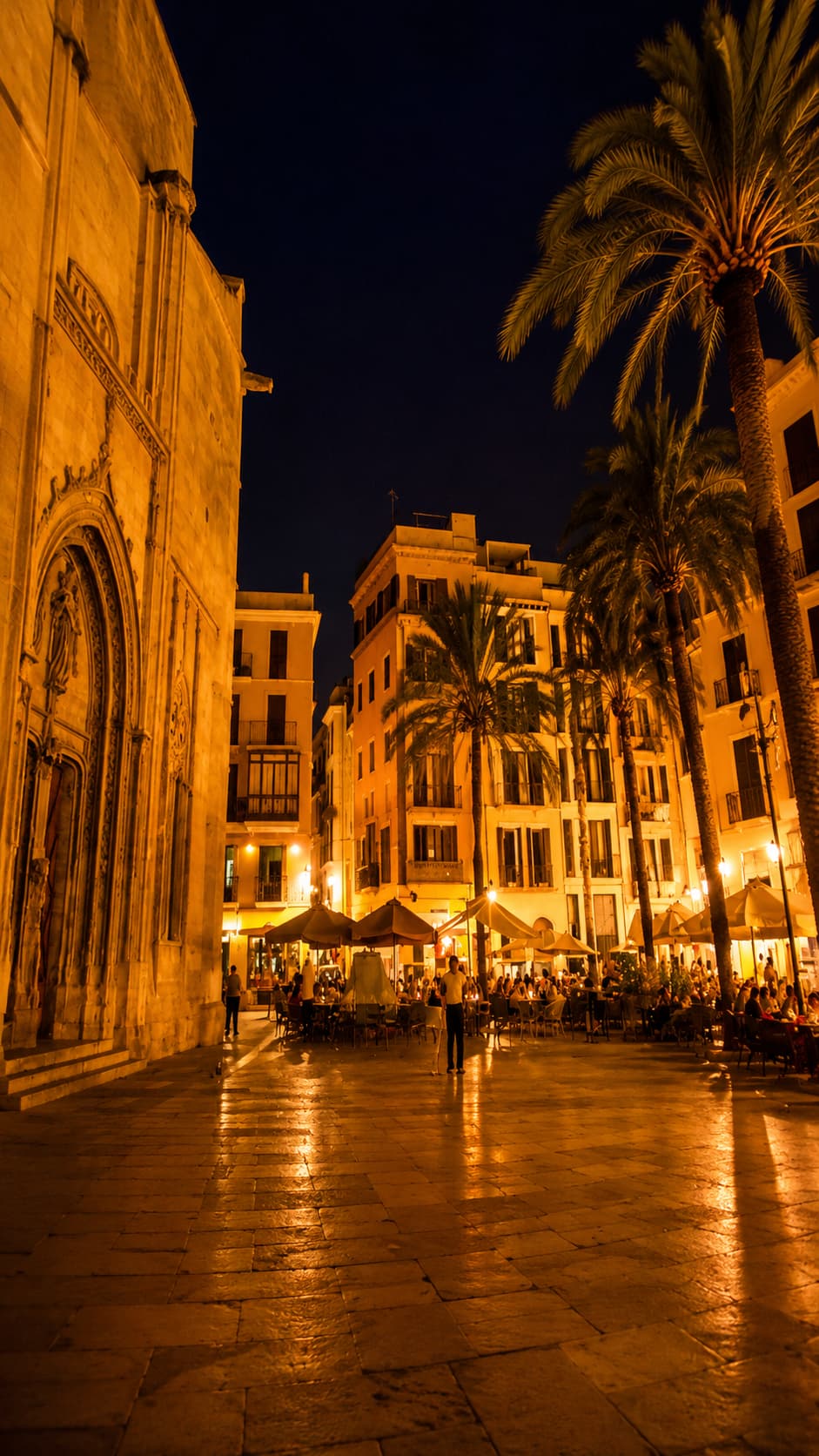
La Lonja takes its name from the 15th-century Gothic merchants’ exchange building — La Llotja — which still stands on the waterfront and is arguably Palma de Mallorca’s most underappreciated major building after the cathedral. The surrounding neighbourhood is where Palma’s bar scene tends to concentrate in the evening, particularly around Carrer de Apuntadors and Plaça de la Llotja. In contrast to Santa Catalina’s more neighborhood-focused atmosphere, La Lonja runs louder and later. It’s worth knowing which you’re in the mood for.
Portixol — The Former Fishing Village
Portixol sits about two kilometres east of the Old Town along the coastal road and was, until relatively recently, a working fishing village. That has changed — it’s now one of Palma’s quieter upscale enclaves — but it retains a pace and physical scale that feels genuinely different from the historic centre. The small harbour still has fishing boats in it alongside the leisure craft. A morning walk from the Old Town along the seafront to Portixol, with coffee there before walking back, is one of the best ways to get a sense of Palma de Mallorca’s different registers.
04 — What to Do in Palma de Mallorca Without Going to the Beach
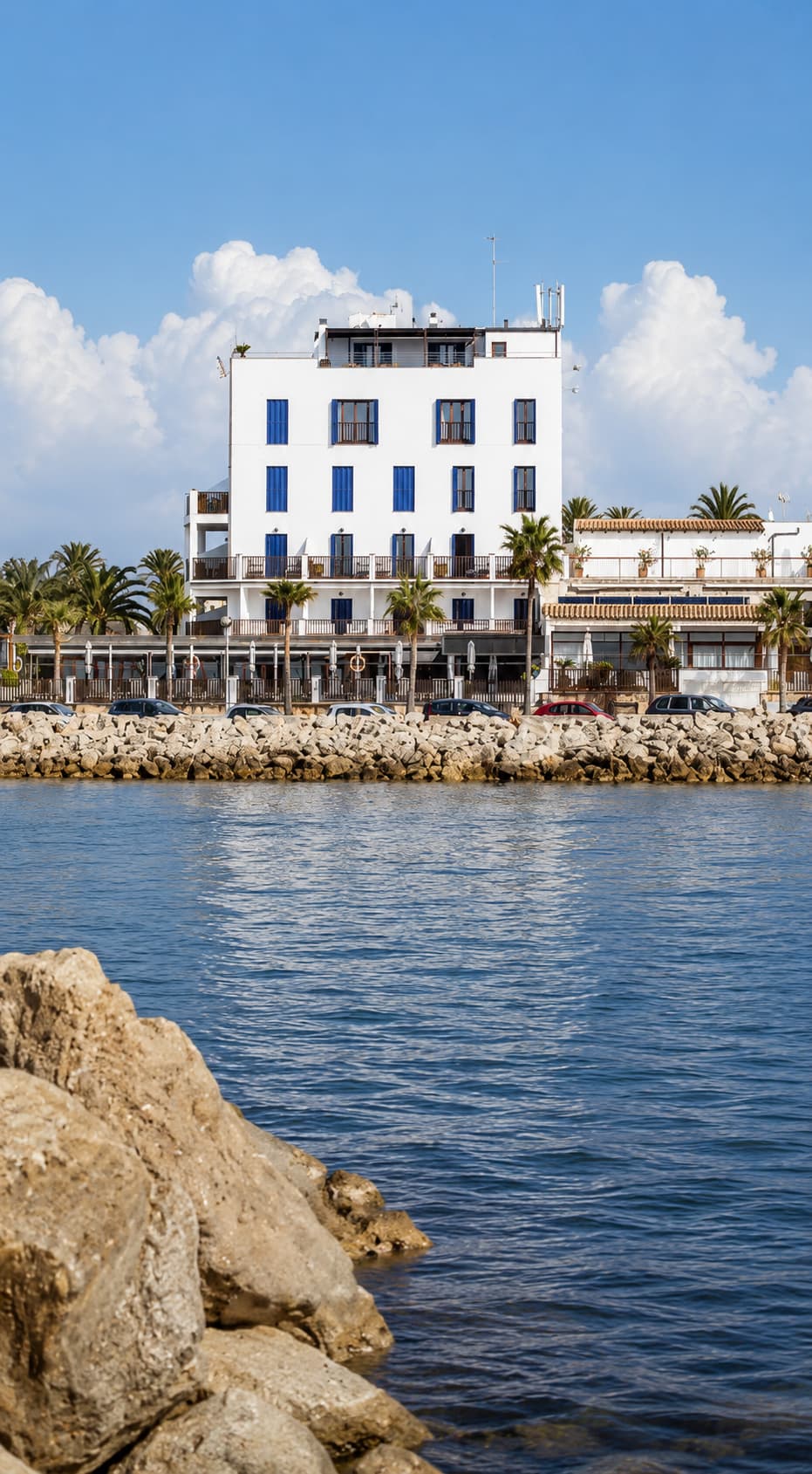
This is the section that most Palma guides — and most generic Mallorca travel guide content — handle as a checklist. The problem with that approach is that it makes La Seu and Bellver Castle sound like errands. They’re not — they’re the reason Palma de Mallorca is worth the trip. Here’s each one with the detail that actually matters for planning.
La Seu, Bellver Castle and the Arab Baths
Construction began in 1229 and concluded — in a very approximate sense — in 1601, though Antoni Gaudí’s early 20th-century renovation of the interior added another layer to the building’s timeline. The rose window above the main entrance measures approximately 11.5 metres in diameter, making it one of the largest Gothic rose windows in the world. Book tickets online — not because the queue is always long, but because walk-up availability disappears faster than you’d expect in peak season.
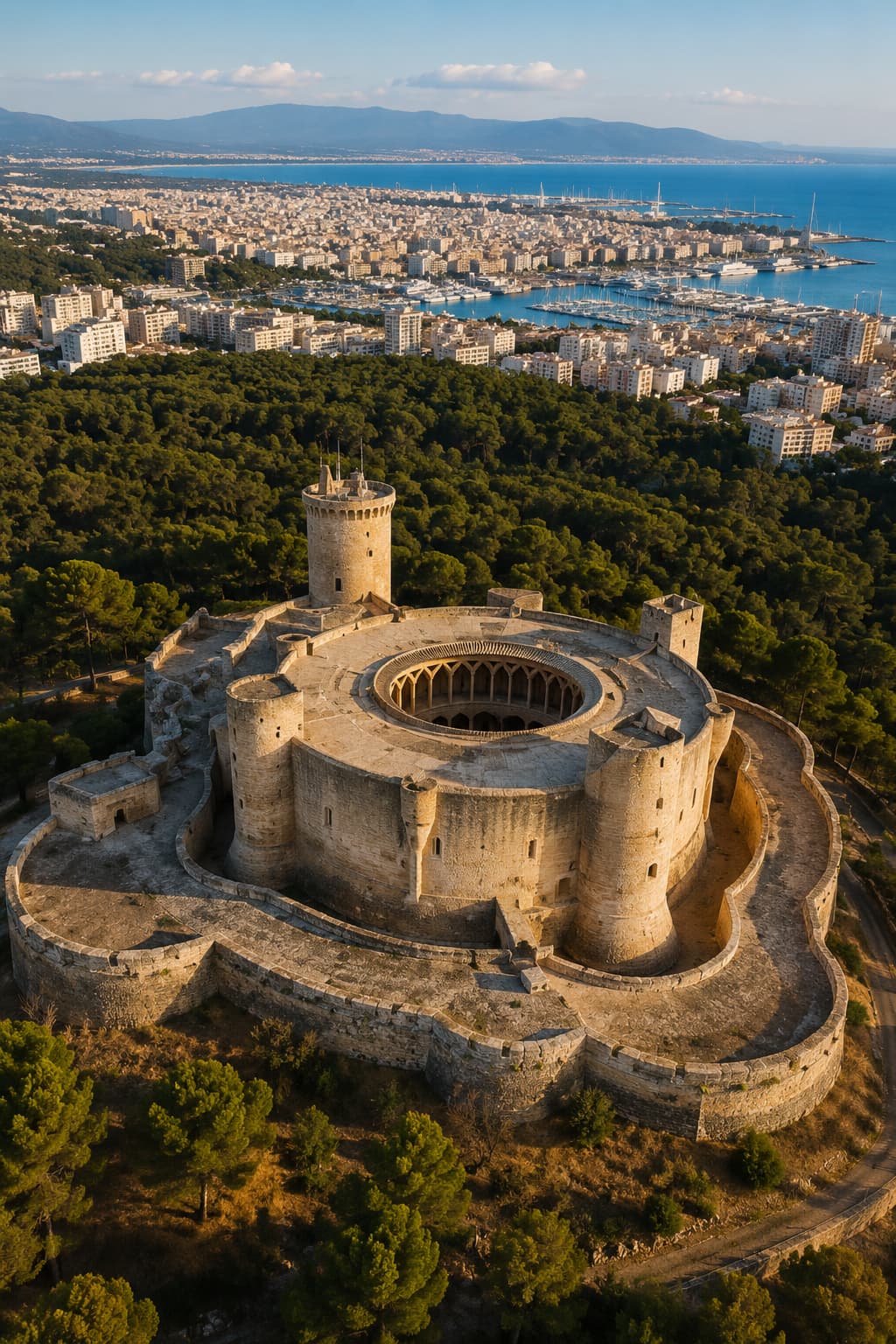
Built in the early 14th century during the short-lived Kingdom of Majorca, Bellver sits on a 113-metre hill about three kilometres from the historic centre and is one of the very few circular medieval castles in Europe. The museum inside covers Palma’s history reasonably well, but the main reason to go is the view — the city, the bay, and on clear days, the Tramuntana mountains to the northwest. A bus runs from the city centre; otherwise, it’s a steep but short walk up through pine forest.
On Carrer de Can Serra in the Old Town, the Arab Baths are considered the only surviving ruins of the original Arab city of Medina Mayurqa. Dating to the 10th century, they’re believed to have formed part of a wealthy nobleman’s estate. The site is small — a few chambers of intact Moorish arches and a small courtyard garden — but the specificity of what you’re looking at makes the visit worthwhile. It takes about thirty minutes, costs very little, and consistently goes unmentioned in the standard Palma de Mallorca guide.
Art, Miró and Modern Palma
Integrated into the 16th-century city walls at the western end of the seafront, Es Baluard has both a permanent collection and a rooftop terrace that puts the cathedral in one direction and the bay in the other. The permanent collection is solid — Miró, Picasso, and a well-chosen set of Balearic artists — but the building itself, and what it does with the wall it’s embedded in, is worth seeing regardless of the art.
Joan Miró spent the last forty years of his life in Mallorca, and the foundation he established near Palma holds his studio exactly as he left it — paint-stained floor, brushes, canvases mid-process. Even if Miró isn’t your particular interest, the studio itself is an unusually intimate encounter with how an artist actually worked. It’s about four kilometres from the centre by bus or taxi.
La Seu Cathedral tickets are available online at the cathedral’s official website. In July and August, morning entry slots — particularly the 10am–12pm window — sell out days in advance. Shoulder season is more forgiving, but booking two or three days ahead remains sensible practice.
05 — What the Old Town of Palma de Mallorca Is Actually Like
The Casco Antiguo is smaller than it looks on a map and larger than it feels when you’re inside it. The street grid — or more accurately the street non-grid — compresses distance into a series of turns that keep revealing new angles. You can walk from La Seu to Plaça Major in under ten minutes by the direct route, or take forty-five minutes getting there via the streets around the Almudaina Palace and still not feel like you’ve wasted time.
The Squares
Plaça Major is the most prominent and the most tourist-facing — large, arcaded, and lined with café tables that charge accordingly. It’s worth seeing as a piece of civic architecture, but it’s not where Palma de Mallorca’s daily life actually happens. In contrast, Plaça de Sant Francesc — a few streets east, in front of the 13th-century basilica — operates at a different speed. Local residents sit there in the early morning and the early evening. The pigeons outnumber the camera phones by a considerable margin.
The Courtyards and the Walls
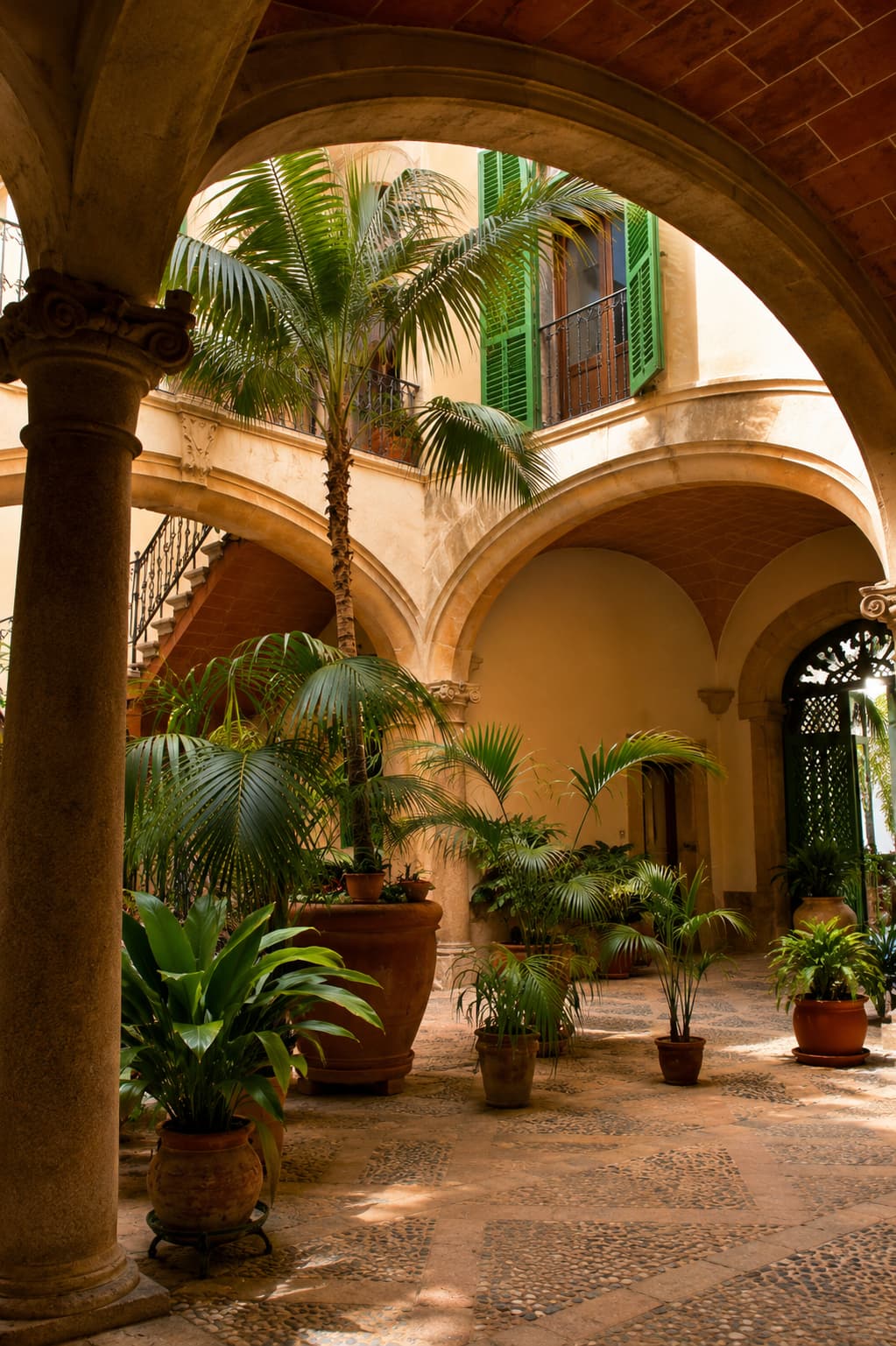
Several of Palma’s historic palaces and mansions open their ground-floor courtyards during daytime hours. These patis mallorquins — a vernacular architectural type specific to the island — typically feature broad stone staircases, arched ground floors, and an upper gallery of columns that lets light into the space from above. The area around Carrer de Can Savellà and Carrer de la Portella has a concentration of them. Some charge entry; others simply leave a door open.
The city walls themselves — or what remains of them — run along the seafront between the cathedral and Es Baluard. Walking that section gives you the clearest sense of how Palma de Mallorca was physically organized: the cathedral tower above, the bay below, and the old city pressed up behind the defensive line. From the Dalt Murada — the elevated walkway along the wall’s top — the scale of La Seu’s buttresses becomes fully apparent in a way it doesn’t from the ground.
06 — Where to Eat in Palma de Mallorca: Markets, Tapas, and Why Santa Catalina Matters
Palma de Mallorca has, by the standards of a city its size, an unusually strong food culture — and this is an area where most Mallorca travel guide content dramatically undersells the city. That’s partly geography — being an island means fresh fish is structurally non-negotiable — and partly a combination of local agricultural tradition and the economic pressure of feeding a city that also hosts a significant tourism industry. The result is a market system and a restaurant scene that hold up to honest comparison with any city in mainland Spain.
The Two Markets
Mercat de Santa Catalina — the oldest in Palma de Mallorca, founded in 1905 — has approximately 50 covered stalls selling fresh fish, local produce, charcuterie, and prepared food. It opens Monday through Saturday from 7am and is particularly lively on Saturday mornings, when locals gather for tapas alongside the weekly shop. It’s not purely a tourist attraction with a market bolted on. On a weekday morning, it functions as a working neighbourhood market. The prepared food stalls inside, and the bar counters around the covered section’s edges, serve honest food at honest prices.
Mercat de l’Olivar, closer to the centre near Plaça de l’Olivar, is larger and arguably even better stocked for fish. The upper level has a cluster of food stalls and bar counters where a glass of local wine and a plate of local charcuterie constitutes a perfectly acceptable late breakfast. Both markets are worth visiting in Palma de Mallorca; if you only have time for one, Santa Catalina tends to offer a more neighbourhood-feeling experience.
Where to Eat Beyond the Markets
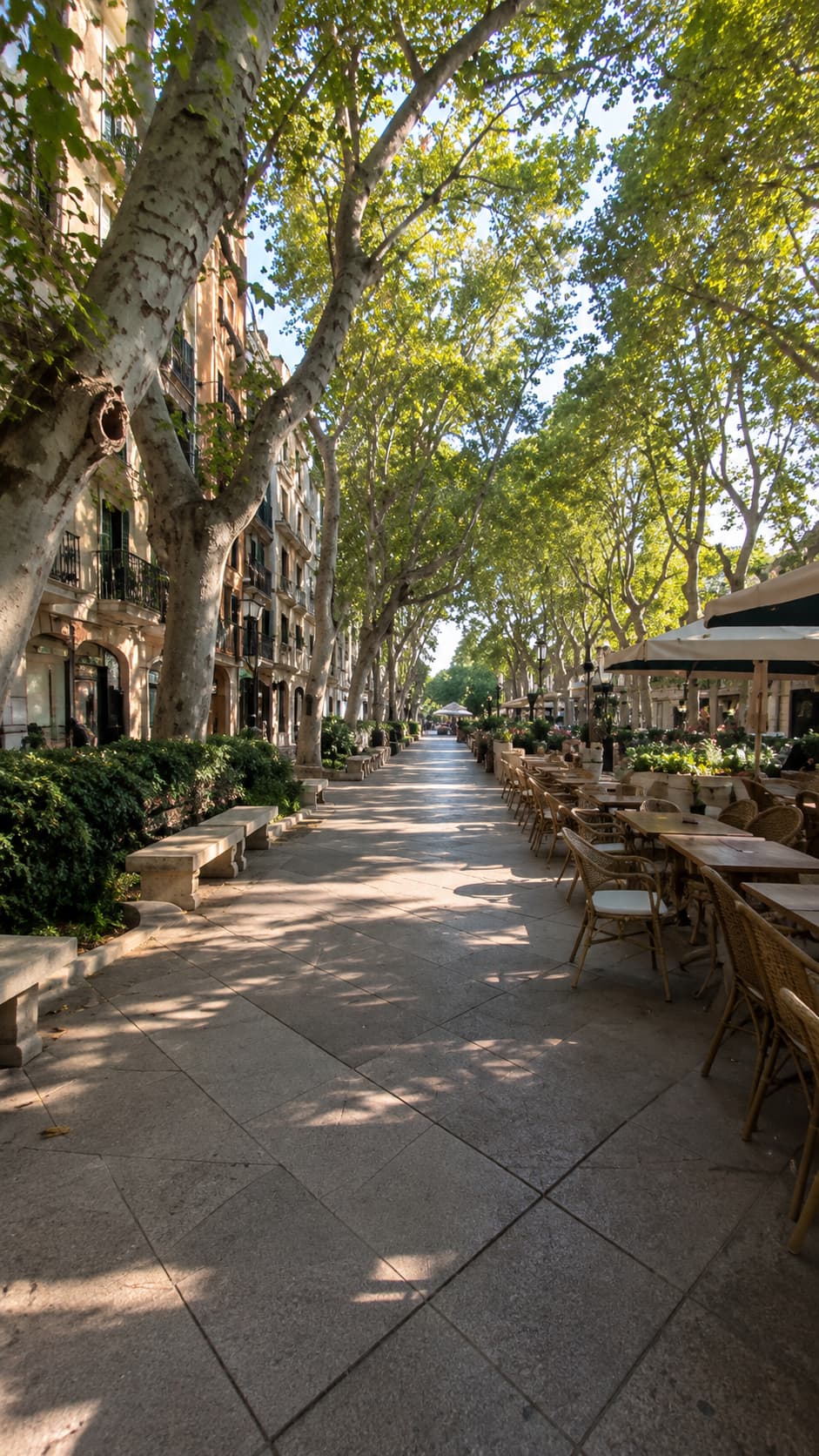
The streets immediately south of Mercat de Santa Catalina — particularly around Carrer de Fàbrica and Carrer de la Industria — have a concentration of restaurants that serve Mallorcan and contemporary Spanish food without the waterfront markup. The streets immediately around the cathedral and Plaça Major in Palma de Mallorca tend toward tourist pricing. The walk between them takes about twelve minutes.
Worth understanding: ensaïmada is the island’s signature pastry — a coiled, lard-enriched dough dusted with icing sugar, available plain or filled with various things. Any bakery in Palma sells them fresh in the morning. Sobrassada — a soft, cured sausage seasoned with paprika — is the island’s most exported food product and tastes considerably better when bought from a market stall than when found in an airport gift box.
Palma de Mallorca restaurants follow Spanish meal timing — lunch service typically runs 1:30–3:30pm, dinner from 8:30pm. Showing up at 7pm for dinner will frequently result in a restaurant that’s technically open but clearly not ready for you. Markets close in the early afternoon; Saturday mornings offer the best combination of product and atmosphere at Santa Catalina.
07 — When Is the Best Time to Visit Palma de Mallorca?
The honest answer has some nuance to it — more than most Mallorca travel guide posts allow. Palma de Mallorca is technically a year-round city — unlike Mallorca’s beach towns, which effectively close between November and March — but the seasons produce meaningfully different experiences.
Shoulder Season (April–June, September–October)
This is when Palma de Mallorca is most itself. Spring reduces the crowds significantly while keeping temperatures comfortable — typically 18–24°C in April and May, rising to the mid-20s by June. The cathedral, the markets, and the Old Town feel like a city rather than a throughway for package tourists. October holds that quality a little longer than most people expect; the water is still warm, the light is better than summer, and accommodation prices drop noticeably after school holidays end.
Summer (July–August)
Summer is when Palma de Mallorca absorbs the full weight of Mallorca’s tourist season. The city doesn’t shut down — it runs on considerably more energy than in spring — but the experience of walking the Old Town changes. The heat is also genuine: 30–32°C with humidity is not the same as the same temperature on a dry Spanish plateau. That said, summer evenings in Palma are genuinely good, particularly in La Lonja and along the waterfront after 9pm when the day’s heat has lifted slightly.
Winter (November–March)
Palma de Mallorca in winter is a city operating for itself. Prices are low, restaurants are un-crowded, and La Seu on a quiet morning in February is a different experience than La Seu in July. Temperatures rarely drop below 10°C. Some smaller attractions reduce their hours significantly, and the day-trip options across the island narrow considerably. Winter works well as a city visit; it works less well as an island exploration.
08 — Day Trips Worth Taking from Palma de Mallorca
If you have more than three days, Palma de Mallorca works well as a base for the wider island — and this is where a good Mallorca travel guide earns its keep. It’s worth being selective though — Mallorca is not short of tourist activity, and not all of it meets the same standard of honest interest.
The wooden train that runs from Palma to Sóller — a town in the Tramuntana foothills with an orange grove economy and a small port — has operated since 1912. The journey takes about an hour, passes through a mountain tunnel, and arrives in one of the most characterful small towns on the island. It’s genuine rather than manufactured, and the food in Sóller — particularly anything involving local oranges or the small restaurants around the square — is good by any measure.
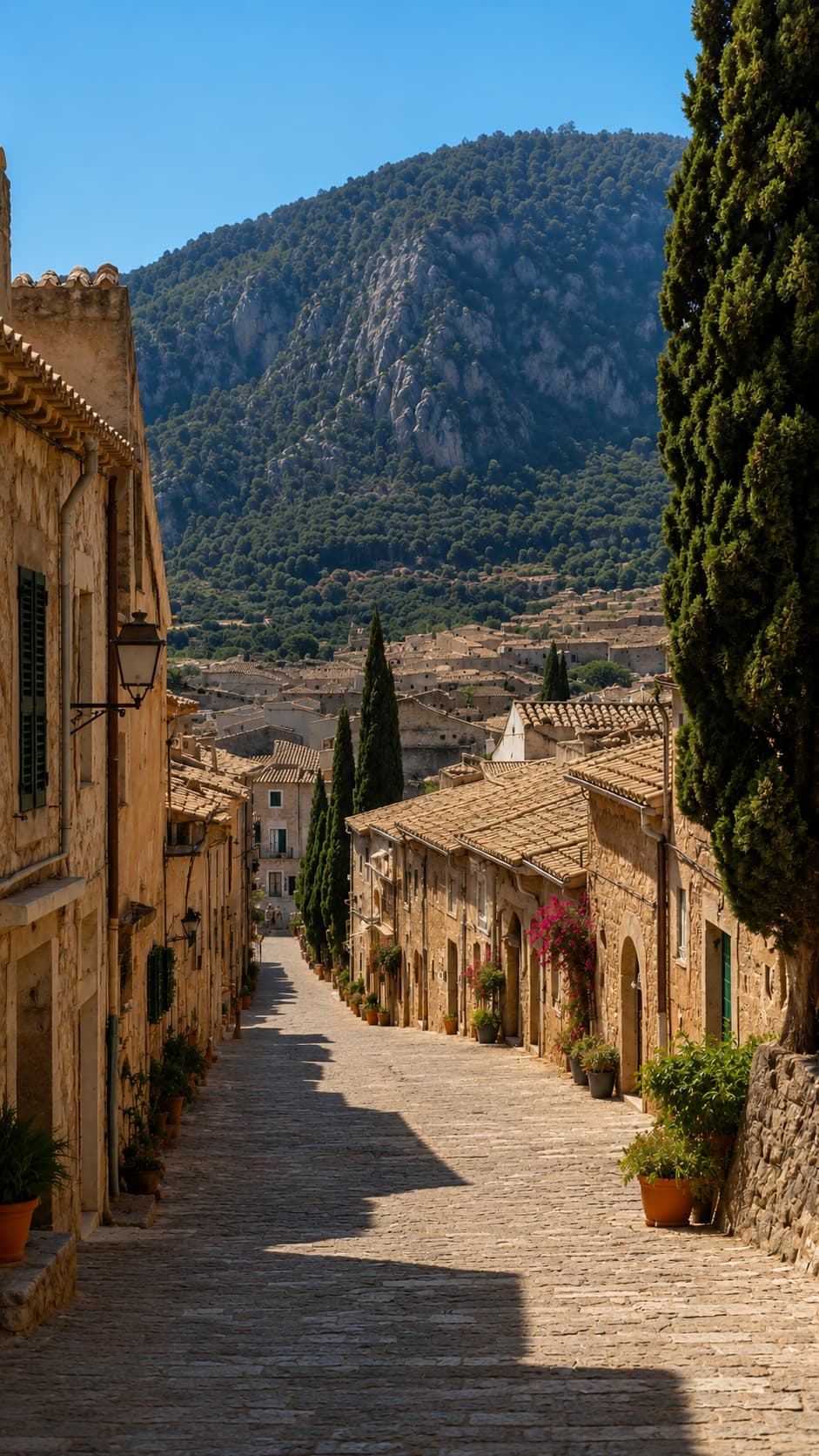
The mountain village where Frédéric Chopin and George Sand spent the winter of 1838–39 is about 17 kilometres north of Palma and receives a corresponding amount of tourist attention. In the mornings, before the day-trip coaches arrive, it earns the reputation. The Carthusian monastery where Chopin worked on his Preludes is open to visitors, and the village itself — stone lanes, terracotta rooftops, mountain views — is as attractive as its reputation suggests. Arrive early.
Mountains, Scenic Drives and the Northern Cape
The Serra de Tramuntana runs along Mallorca’s northwest coast and is listed as a UNESCO World Heritage Cultural Landscape. By European standards it is unusually well-preserved from intensive development. The GR 221 long-distance path runs its length; day sections are accessible without full hiking commitment. The road through it — the Ma-10 — is considered one of the most scenic drives in Spain. If you have a car and a free day from Palma de Mallorca, the Tramuntana alone justifies the trip.
The northernmost point of Mallorca is about 75 kilometres from Palma and involves a narrow cliff road that earns its reputation. The lighthouse at the cape sits at the end of a peninsula with sheer drops on both sides and views across the channel toward Menorca on clear days. It’s one of those places where the effort of getting there — the road is genuinely slow — is proportional to the payoff. Go early to avoid the worst of the summer traffic on the approach road, or take the ferry service from Port de Pollença.
09 — Practical Notes for Visiting Palma de Mallorca
Airport, Transport and Local Basics — Mallorca Travel Guide Essentials
| Getting to Palma de Mallorca | Palma de Mallorca Airport (PMI) handled over 32 million passengers in 2023, making it the third-busiest airport in Spain. It sits about 8km east of the city centre with direct connections from most major European cities. A bus (EMT line 1) connects the airport to the historic centre in approximately 30 minutes; taxis take 15–20 minutes and cost around €20–25. |
| Getting around the city | The Old Town, Santa Catalina, La Lonja, and the waterfront are all walkable from each other. Bellver Castle is served by a municipal bus (line 46 from Plaça Espanya). Fundació Miró Mallorca requires bus or taxi — about 15 minutes from the centre. Portixol is a 25-minute walk along the coast or a short taxi ride. |
| Car rental | Unnecessary for the city itself. Useful for island exploration — day trips to the Tramuntana, Cap de Formentor, the east coast coves, or smaller villages are significantly more flexible with a car. Rental prices fluctuate widely; booking early makes a considerable difference in July and August. |
| Language | Palma de Mallorca is officially bilingual — Spanish and Catalan (specifically Mallorquí, the local Balearic dialect). Most signs appear in Catalan first. Spanish is universally understood; English is widely spoken in tourist-facing contexts and increasingly in restaurants and hotels across the city. |
| What to skip | The tourist boat trips from the harbour are not worth the time or price unless you have specific interest in coastal caves. Palma Aquarium is a competent aquarium and nothing more. The strip of beach directly adjacent to the city centre — Platja de Can Pere Antoni — is functional but not a destination on its own. |
Getting Started with Palma de Mallorca
Safety, Transport and City Basics
Costs, Food and Day Trips
Island Distances and Day Trips
10 — Final Notes from This Mallorca Travel Guide
Palma de Mallorca doesn’t need defending. As a Mallorca travel guide destination, it stands on its own terms — a city with more to offer than most visitors give it credit for, partly because Mallorca’s beach resort identity is genuinely strong and partly because the standard itinerary doesn’t push back against it. But if you’re the kind of traveler who finds that architecture and food and the texture of a real city are sufficient justification for a trip, Palma qualifies.
The things that make it work are also the things that are easy to miss in a tight schedule. La Seu is extraordinary, and it’s extraordinary in a way that requires time inside it to register. The markets are good, but they’re morning institutions — you have to be there before noon for them to function as described. The Old Town’s best qualities emerge when you’re not trying to cover it efficiently.
In other words, Palma de Mallorca rewards the same thing that most Mediterranean cities reward: not rushing. Two days is enough to understand why the city is worth visiting. Three days is enough to actually experience it. The beach is there if you want it — but the city holds up just fine without it.
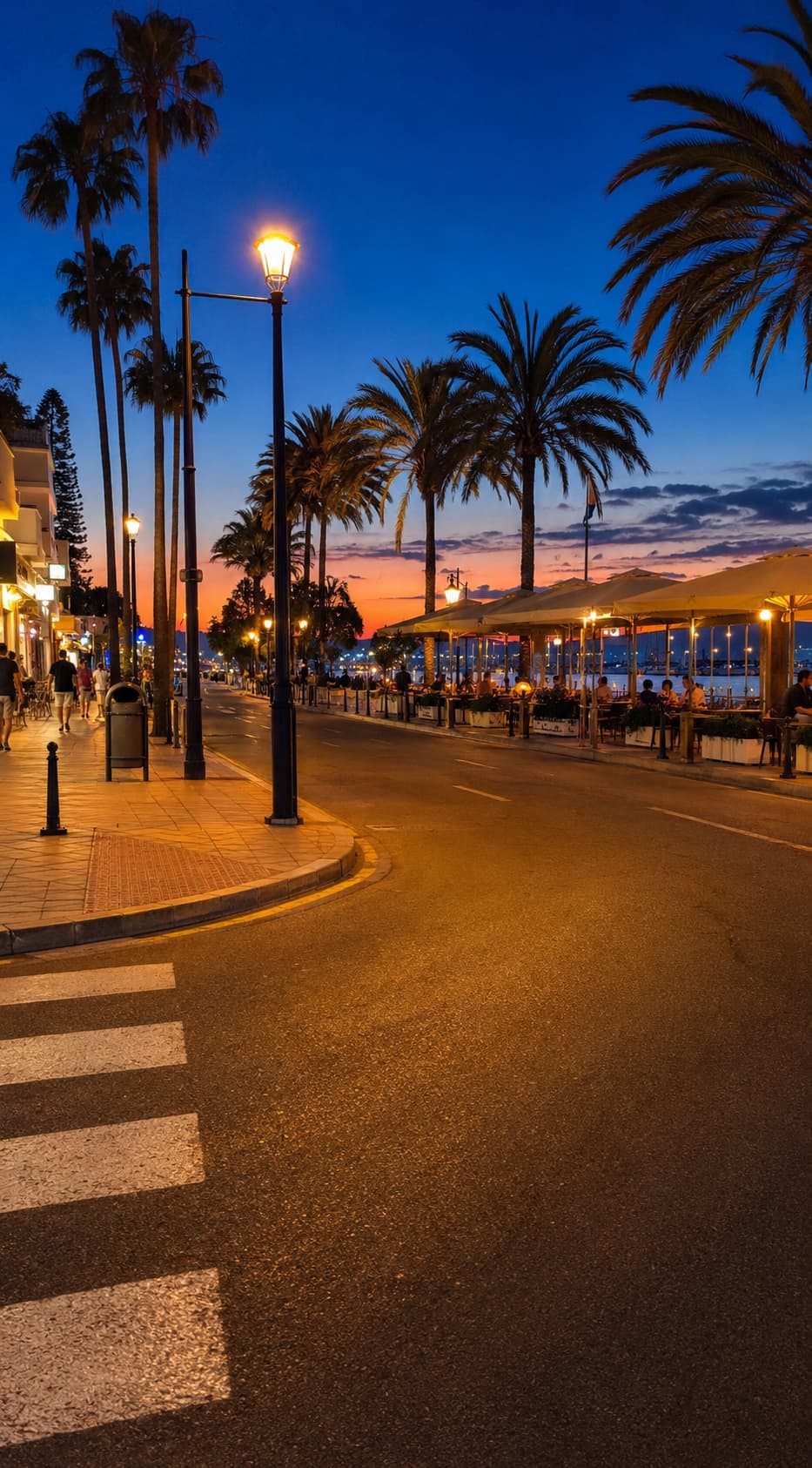
Palma is one of those cities that doesn’t announce itself.
You have to arrive willing to look — and then it’s hard to leave without wanting more time in it.