
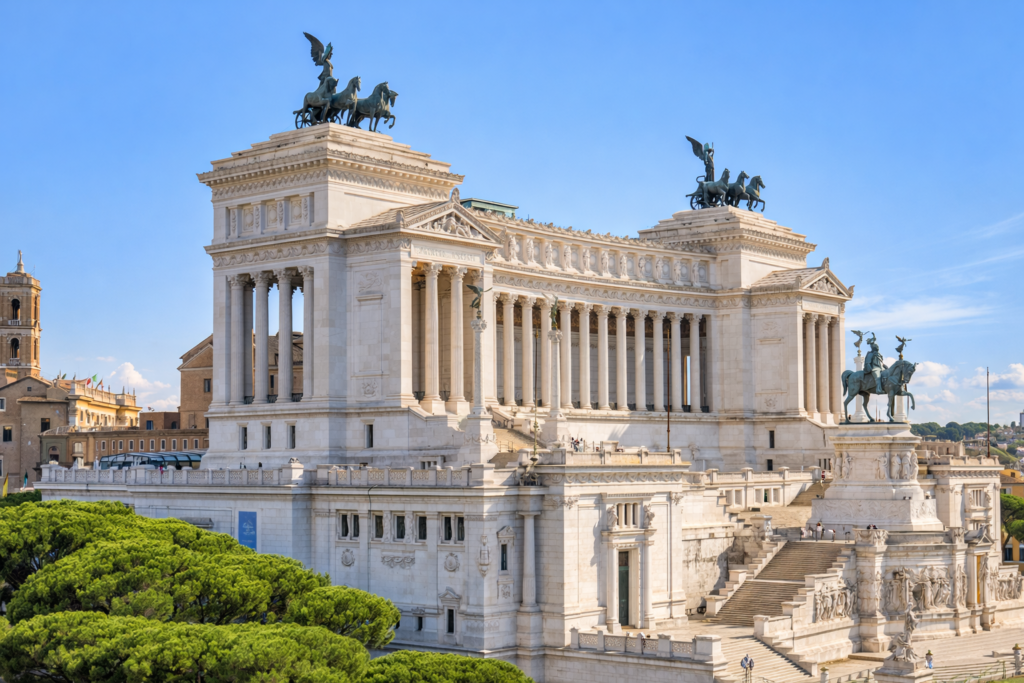
Rome in 2 Days: The Honest Itinerary (No Car Needed)
Two days, no car, no tour groups — the Colosseum, the Vatican dome, the Pantheon, the Trevi Fountain at midnight, and the old town that only appears after dark.
Two days in Rome is not enough. Anyone who has been will tell you this, and they are right. Rome rewards weeks, not days — the city has layers that only reveal themselves slowly, and the more time you spend, the more you find beneath what you thought you’d already seen.
That said, two days is what most people have. And two days, used well, is still Rome. It is still the Colosseum at first light. Still standing under the Pantheon’s oculus and looking up at a hole in the ceiling that has been open to the sky for two thousand years. Still finding yourself at Trevi Fountain at midnight, when the crowds have finally thinned and the water sounds loud in the empty piazza.
This itinerary is built around one principle: do fewer things properly rather than more things rushed. Consequently, it covers the major sites without trying to tick every box, and it leaves room for the version of Rome that only appears when you slow down — the neighbourhood bars, the evening streets, the ancient things you walk past between the famous ones.
01 — Before You Go: What to Book
Rome requires more advance planning than most European cities. Two of the most important sites — the Colosseum and the Vatican — sell out regularly in peak season. Attempting to queue on the day means losing two or three hours you simply don’t have. Book both before you arrive.
The three tickets worth sorting in advance
Book at coopculture.it. A combined ticket covers the Colosseum, Roman Forum, and Palatine Hill — all three are worth your time and sit immediately adjacent to each other. In July and August, book at least a week in advance. The first entry slot (9am) is the least crowded and the light is best for photographs.
Entry to St Peter’s Basilica itself is free — no booking required. The dome climb, however, costs €8 for stairs (551 steps) or €10 for the lift to the halfway point followed by stairs to the top. Neither requires advance booking, but arrive early — the queue builds quickly after 9am. Alternatively, book the Vatican Museums if you want the Sistine Chapel; that requires a separate ticket and ideally advance booking.
Entry is €5 and tickets are available at the door or online at pantheonroma.com. In practice, queues are manageable most mornings before 10am — booking online is worth it in summer to skip the line entirely. Note that the Pantheon is closed on certain religious days; check the calendar before visiting.
If you’re driving into Rome as part of a longer road trip, park the car and leave it for the duration of your stay. Rome’s ZTL (Zona a Traffico Limitato) restrictions cover most of the historic centre and issue automatic fines to non-residents — fines that arrive weeks later via your rental company. Park at a guarded garage in the Prati or Trastevere areas, where rates are €15–25 per day, and use public transport for everything else.
02 — Day 1: Old Rome on Foot
The first day deliberately avoids the big ticketed sites. Instead, it covers the older, quieter layer of Rome — the neighbourhood piazzas, the ancient buildings still standing in ordinary streets, and the parts of the city that work best before the afternoon crowds arrive. Save the Colosseum and Vatican for day two.
Morning: the Pantheon and the streets around it
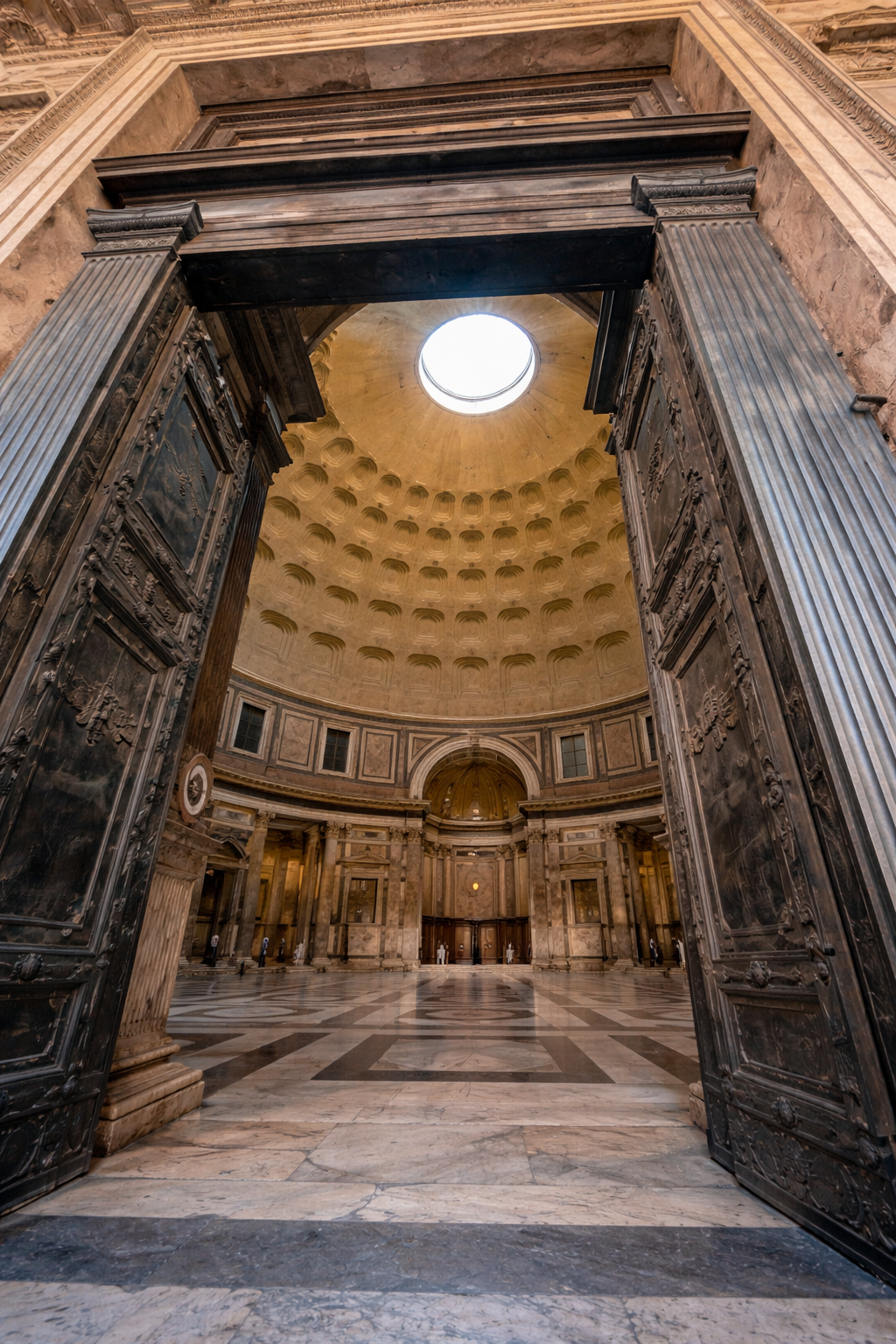
Start at the Pantheon, ideally when it opens at 9am. The building is best understood not as a ruin but as a complete and functioning structure — the concrete dome, poured in the 2nd century AD, remains the largest unreinforced concrete dome in the world. Stand in the centre of the floor and look up at the oculus: a circular opening nine metres across that lets in rain, sunlight, and occasionally pigeons. There is no glass. There has never been glass. The floor slopes slightly toward a drain in the centre, which has been handling Roman weather for two millennia.
After the Pantheon, walk rather than navigate. The streets immediately surrounding it reward slow movement and mild purposelessness — toward Campo de’ Fiori, through the Jewish Ghetto, across to Largo di Torre Argentina. That last stop is where the ruins of the temples where Julius Caesar was assassinated are visible from the street. Moreover, this part of Rome is densely layered: medieval buildings sit on Roman foundations, and Renaissance facades conceal ancient brickwork. It is worth looking up, and down, and sideways.
Midday: Spanish Steps and Piazza Navona
The Spanish Steps are worth visiting, though the experience is more atmospheric than monumental. In the morning, before the crowds settle in, the steps make a reasonable place to sit with coffee and watch the city begin. By midday, they are significantly busier. The surrounding streets — particularly Via Condotti below and Via Gregoriana above — are pleasant for walking regardless of the season.
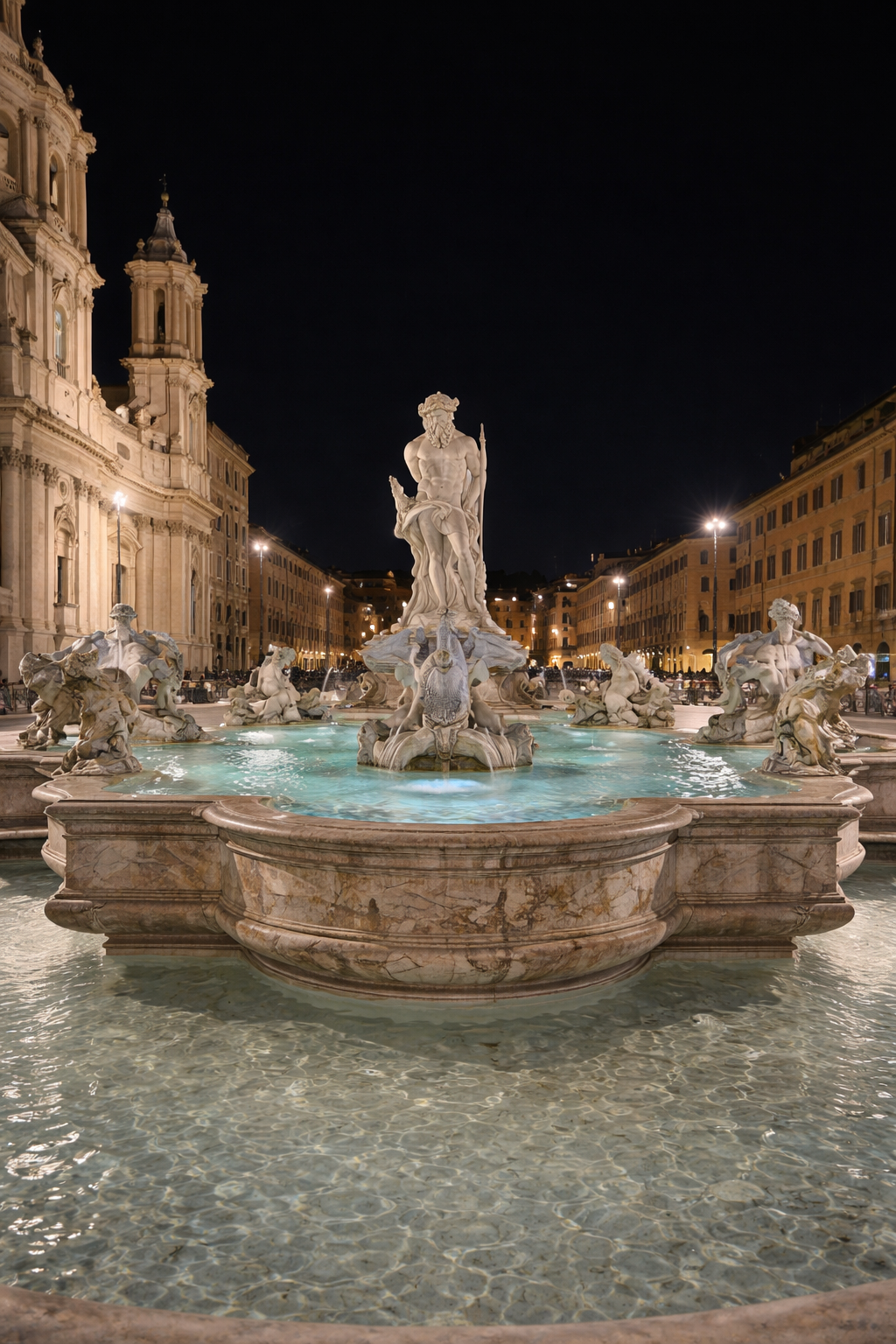
Piazza Navona is one of the more satisfying piazzas in Rome — it delivers what it promises. Three fountains, including Bernini’s Fountain of the Four Rivers at the centre. A long oval shape that traces the outline of the ancient stadium underneath it. As a result, it is consistently crowded, but the scale absorbs people well. Finding a seat at one of the cafes along the edge for a late lunch is entirely reasonable.
Afternoon: the Borghese or rest
Two options present themselves for the afternoon of day one. The first is the Galleria Borghese — a small but exceptional collection of Bernini sculptures and Caravaggio paintings housed in a villa at the edge of Villa Borghese park. It requires advance booking (the gallery limits entry strictly) but rewards it significantly. The second, simpler option is to walk northward through the park itself, which offers a quieter Rome than the historic centre and a chance to recover pace before the evening.
Most visitors walk past it. Largo di Torre Argentina is a sunken archaeological site in the middle of a busy traffic island, containing four Republican-era temples dating to the 4th–2nd centuries BC. It is also, famously, the site where Julius Caesar was assassinated in 44 BC. Entry is free. The ruins are viewable from street level or from a small museum at the edge of the site. It takes twenty minutes and offers one of those moments where Rome’s chronological depth becomes briefly comprehensible.
03 — Day 2: Colosseum, Forum & Vatican
Day two is the heavier day — the bigger sites, the longer queues without planning, and the more significant distances to cover. Start early. The Colosseum at 9am is noticeably quieter than the Colosseum at 11am, and the Vatican in the morning is cooler and calmer than the Vatican at midday in summer.
Morning: Colosseum and Roman Forum
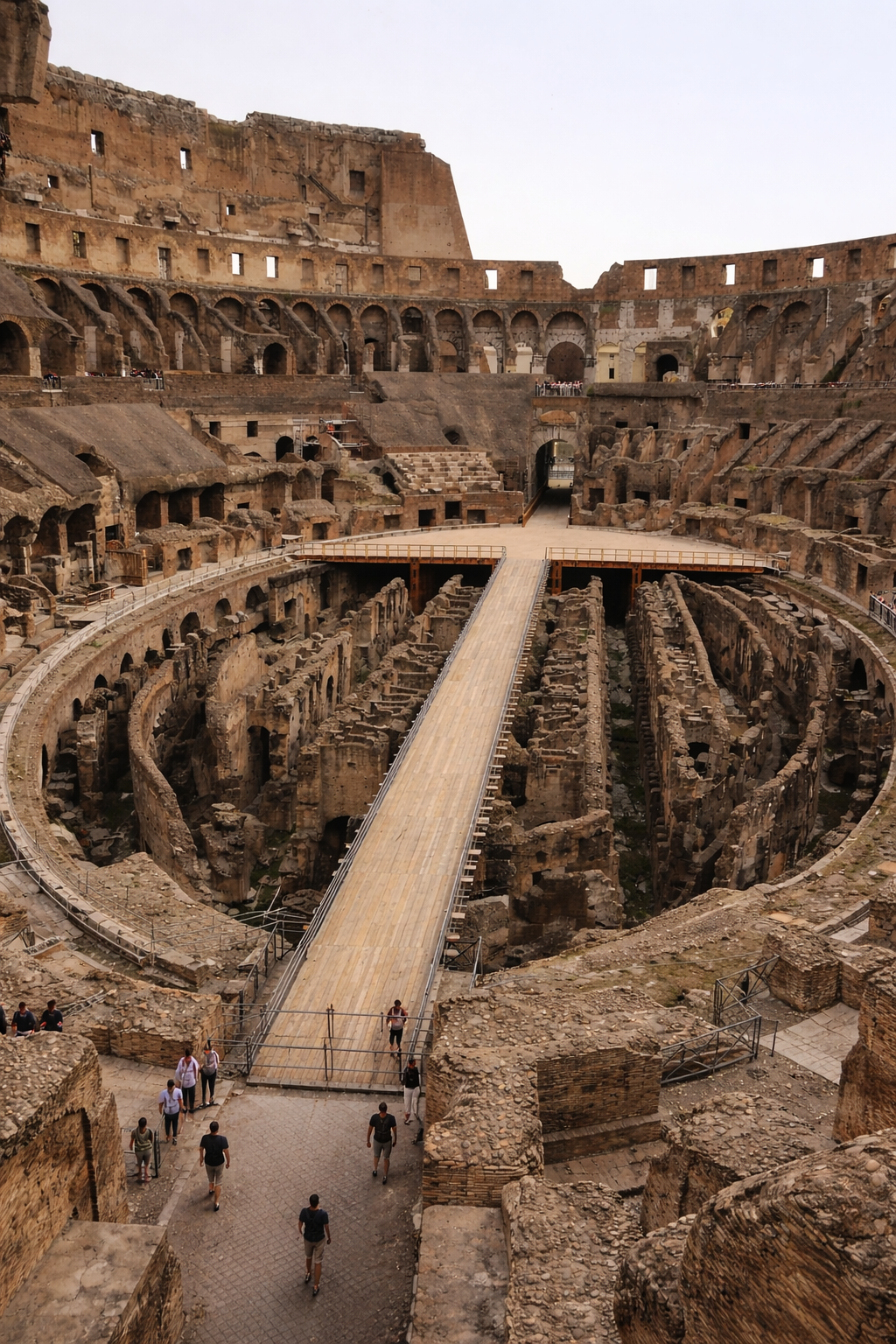
The Colosseum is larger than it photographs. Walking around the outside before going in establishes the scale — it held between 50,000 and 80,000 spectators. That is comparable to many modern football stadiums. Inside, the combination of the tiered seating, the exposed hypogeum beneath the arena floor, and the views down into the empty arena produce something that requires no context to be affecting. It is simply an extraordinary building. It has been standing for nineteen centuries.
The Roman Forum — same ticket, worth the hour
The Forum is immediately adjacent and covered by the same combined ticket. Allow at minimum an hour. The site is larger than it appears from the entrance. The combination of the Via Sacra, the Temple of Saturn, and the Arch of Titus gives enough context to make sense of what you’re looking at. An audio guide or app — Rick Steves’ free Rome audio tour is reliable — transforms the visit from a field of stones into a legible city.
Afternoon: Vatican Basilica and the dome
Cross the Tiber after lunch and allow the full afternoon for the Vatican. St Peter’s Basilica requires no ticket — simply join the queue at the main entrance and wait. Outside of summer weekends, the wait is rarely more than twenty minutes. The interior is enormous. The nave alone is longer than most cathedrals, and the scale only becomes apparent when you notice that the decorative cherubs near the base of the dome are each taller than a person.
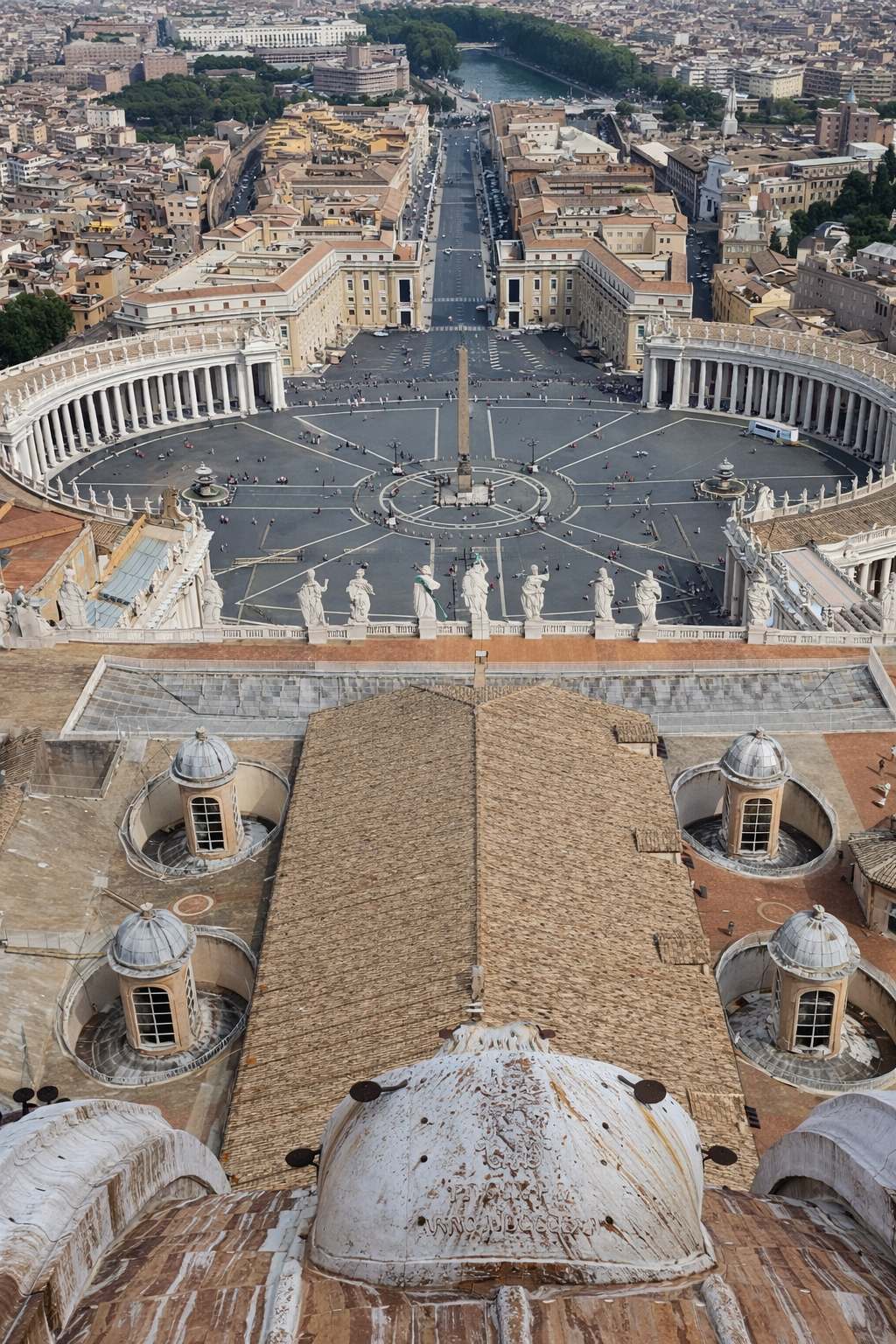
The dome climb is, specifically, the part worth doing. From the external balcony at the top, St Peter’s Square resolves into the perfect ellipse Bernini designed — something impossible to perceive from ground level. The climb takes fifteen to twenty minutes via the stairs from the halfway-lift level. It is narrow toward the top, and the curve of the dome means you lean slightly sideways for the final section. In return, the view is one of the more unusual perspectives Rome offers.
The Vatican Museums (which include the Sistine Chapel) are a separate visit from the Basilica and require a separate ticket. On a two-day Rome trip, a choice is usually necessary: the Museums take a full half-day and demand advance booking. If it is your first time in Rome, the Basilica and dome are the higher priority — the Sistine Chapel is extraordinary but requires context to fully appreciate, making it better suited to a return visit. If you are returning, book the Museums well in advance and allocate the full morning.
04 — Rome at Night
Both evenings should end in the same part of the city: the historic centre around the Pantheon, Campo de’ Fiori, and the streets between them. This is where Rome’s nighttime character — calmer, older, genuinely atmospheric — is most accessible.
Trevi Fountain after 10pm
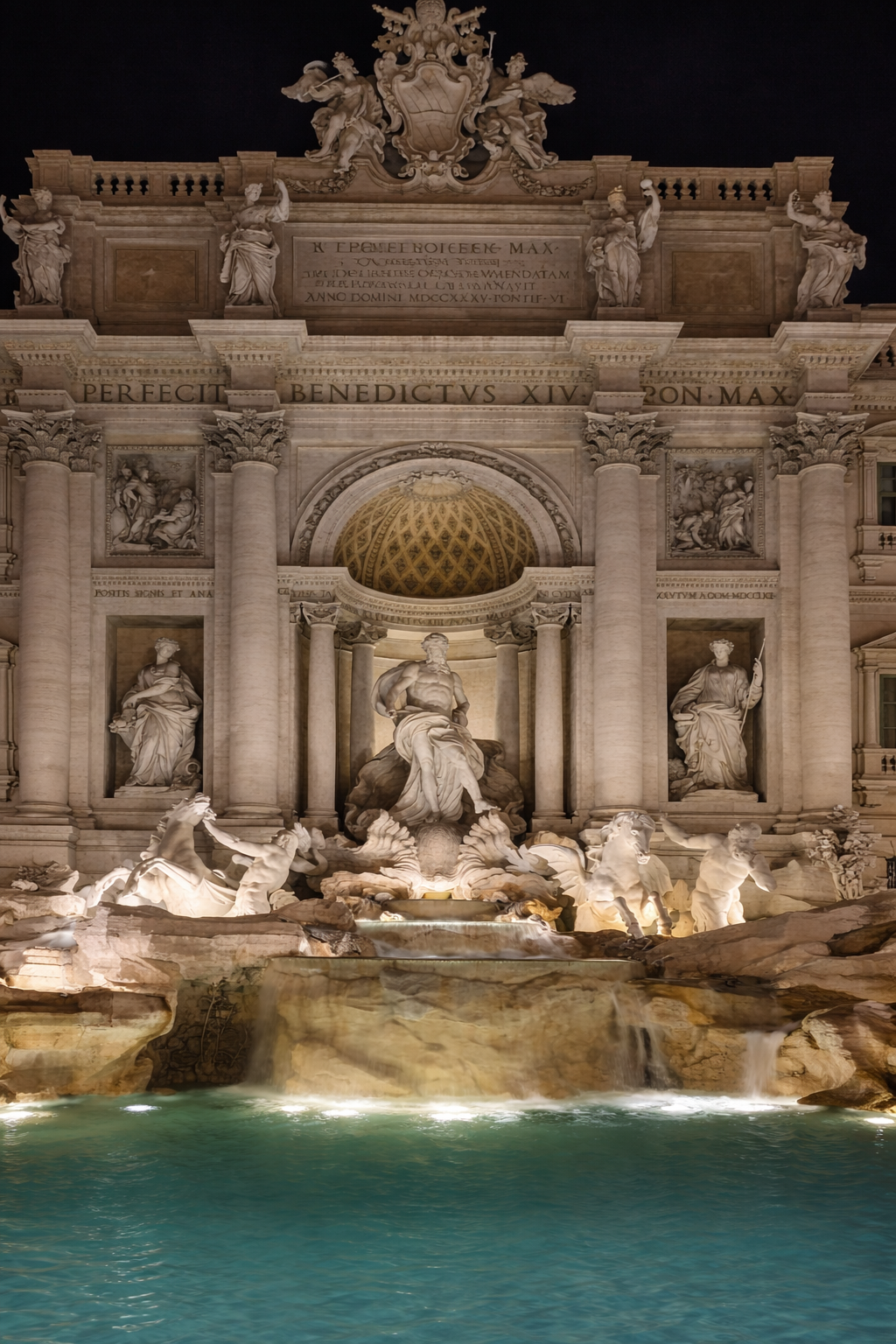
During the day, the Trevi Fountain is one of the most crowded places in Rome. Photographing it requires patience and positioning. The experience is compromised by the volume of people, the selfie sticks, and the noise. After 10pm on a weeknight, however, something shifts. The tour buses have returned to their hotels. The organised groups have dispersed. What remains is the fountain itself — the sound of water on stone, the theatrical carved figures, the building it’s built into — and a fraction of the daytime crowd.
It is worth walking to Trevi late on at least one evening. The detour takes twenty minutes from most of central Rome, and the contrast with the daytime version is significant enough that it feels like a different place.
The old town after dinner
The streets between Campo de’ Fiori and Piazza Navona are worth walking after dinner with no particular destination. Old town Rome after 9pm is quieter than almost any other European capital of comparable size. Restaurants are still full. Bars are open. People sit on steps and walls in the way Italians do in the evening. Meanwhile, the light on stone — amber streetlamps, occasional floodlit facades — has a warmth that daytime Rome doesn’t offer. This is not a sightseeing activity. It is simply what Rome feels like when you stop trying to see things.
05 — Getting Around & Practical Notes
Public transport
Rome’s public transport is not its strongest feature, but it is sufficient for a two-day trip. The metro has two main lines — A and B — covering the key areas: Termini station in the centre, Colosseo for the Colosseum, and Ottaviano for the Vatican. Buses cover the gaps, though they run unpredictably in the historic centre due to narrow streets. In practice, most key sites in this itinerary are walkable. Rome’s historic centre is compact — the metro is mainly needed for the Vatican and the Colosseum.
| Metro ticket | Single journey €1.50, valid 100 minutes. Day pass €7. Buy at machines in metro stations or at tabaccherie (tobacconists) throughout the city. |
| Taxis | Official taxis are white and metered. Ride-hailing apps (FREE NOW, itTaxi) are reliable and show fares in advance. Avoid unlicensed touts at Termini station. |
| Walking | From the Pantheon to Piazza Navona is 5 minutes. Pantheon to Trevi is 10 minutes. Colosseum to the nearest metro stop is 2 minutes. Much of this itinerary is walkable. |
| When to avoid driving | Always. ZTL zones cover the entire historic centre and issue automatic fines. Park outside the ZTL and leave the car for the duration. |
| Best areas to stay | Centro Storico (historic centre) or Trastevere for atmosphere. Prati (near the Vatican) for slightly lower prices and good access to both the Vatican and the centre. |
| Water | Rome’s nasoni — the small public drinking fountains found throughout the city — provide cold, drinkable water. Tap water is safe and good. Buying bottled water is unnecessary. |
Timing and crowds
May, June, and September are the best months for a Rome visit of this kind. The weather is warm without being extreme, the sites are busy but manageable, and the city functions normally. July and August are the hottest and most crowded months — the Colosseum in the midday heat of August is a significantly less pleasant experience than the same building in October. Spring and autumn, moreover, offer the additional benefit of lower accommodation prices and more available booking slots at the major sites.
Two days in Rome is never quite enough.
But two days done properly stays with you in a way that a rushed week rarely does.