
How Much a Trip to Japan Actually Costs in 2026
The honest, updated breakdown — new tourist taxes, the JR Pass arithmetic that most guides are still getting wrong, and what a real two-week itinerary comes out to.
What a Japan Trip Costs in 2026
The Japan trip cost question doesn’t have one clean answer — and that’s especially true in 2026, when the ground shifted under a pile of guides that haven’t caught up. Japan is genuinely more affordable for most Western travellers than it was five years ago, thanks to a yen that has weakened significantly against the dollar, euro, and pound. At the same time, a series of new taxes and fee changes since March 2026 have added real money to the bill, particularly if you’re sleeping in Kyoto or assuming the JR Pass is still an automatic purchase.
This guide works through what things actually cost and what to do about it. Every number has a date stamp — this post will decay, and I’d rather you know when the figures were verified than discover a stale conversion buried in the text. Exchange rates throughout are approximate mid-market rates for August 2026: roughly ¥155–160 to US$1, ¥195–200 to £1 GBP, and ¥170–175 to €1 EUR. Rates move; treat conversions as orientation, not precision.
- Is Japan expensive to visit?
- What’s new in 2026 — the taxes that changed everything
- Daily budget by travel style
- Is the JR Pass worth it in 2026?
- Accommodation and the Kyoto tax problem
- Food, and what you actually spend
- Getting around beyond the Shinkansen
- Japan trip cost example: two weeks, line by line
- Where people overspend
- FAQ
01 — Is Japan Expensive to Visit?
Less than its reputation suggests — but the gap is closing. For most visitors arriving from the US, UK, or Europe in 2026, Japan offers unusually good value per unit of experience: a bowl of ramen in a standing noodle bar costs less than a coffee in Paris, a capsule hotel in Tokyo runs cheaper than a budget hostel in London, and the Shinkansen — which feels genuinely futuristic the first time you ride it — costs a fraction of an equivalent high-speed train journey in France.
The yen has weakened substantially since 2022, handing international visitors roughly a 25–30% discount on ground costs compared to a pre-pandemic Japan trip priced at the old exchange rate. That advantage is real and ongoing — but it’s being trimmed, methodically, by a stack of new taxes and price adjustments introduced since late 2023. The JR Pass cost 70% more after October 2023. The departure tax tripled in July 2026. Kyoto restructured its accommodation levy in March 2026 in ways that bite hard at the mid-range. Dual pricing arrived at certain major attractions.
None of this should change your decision to go. Taken together, the new charges add perhaps ¥15,000–25,000 to the overall Japan trip cost compared to two years ago — meaningful, but not transformative. What matters is that you plan around the actual 2026 numbers, not the pre-2024 ones that most guides are still running.
02 — What’s New in 2026
Several changes landed in the first half of 2026 that older budget guides don’t reflect. If you’ve been reading Japan trip cost estimates from 2024 or early 2025, these are the gaps.
The departure tax tripled
Japan’s International Tourist Tax — sometimes called the Sayonara Tax — rose from ¥1,000 to ¥3,000 per person on 1 July 2026. It applies to everyone departing Japan by air or sea, regardless of nationality, and it’s collected automatically as part of the airline ticket price. Children under two are exempt; transit passengers who depart within 24 hours may also qualify for an exemption. If your flight booking was confirmed before 1 July 2026, check whether your ticket predates the change — the new rate only applies to tickets issued on or after that date. For everyone booking now, the ¥3,000 figure is already in your fare.
Kyoto’s accommodation tax was restructured — significantly
Since 1 March 2026, Kyoto operates a five-tier accommodation tax charged per person, per night. The tiers, as verified against official Kyoto City guidance, are:
Two-Week Japan Budget Breakdown
| Room rate per night | Tax per person per night (from March 2026) |
|---|---|
| Under ¥6,000 | ¥200 |
| ¥6,000 to under ¥20,000 | ¥400 |
| ¥20,000 to under ¥50,000 | ¥1,000 |
| ¥50,000 to under ¥100,000 | ¥4,000 |
| ¥100,000 and above | ¥10,000 |
This is charged per person, not per room. Two people sharing a ¥25,000 room each pay ¥1,000 — ¥2,000 in total, every night. The bracket cliffs matter: a room priced at ¥19,800 attracts ¥400 per person per night, while a ¥20,000 room attracts ¥1,000. At the luxury end, ¥99,999 means ¥4,000 — but ¥100,000 means ¥10,000. Per person. Per night. Worth asking a property whether they can adjust the rate a few yen below a threshold if you happen to be booking near one.
Dual pricing arrived at major attractions
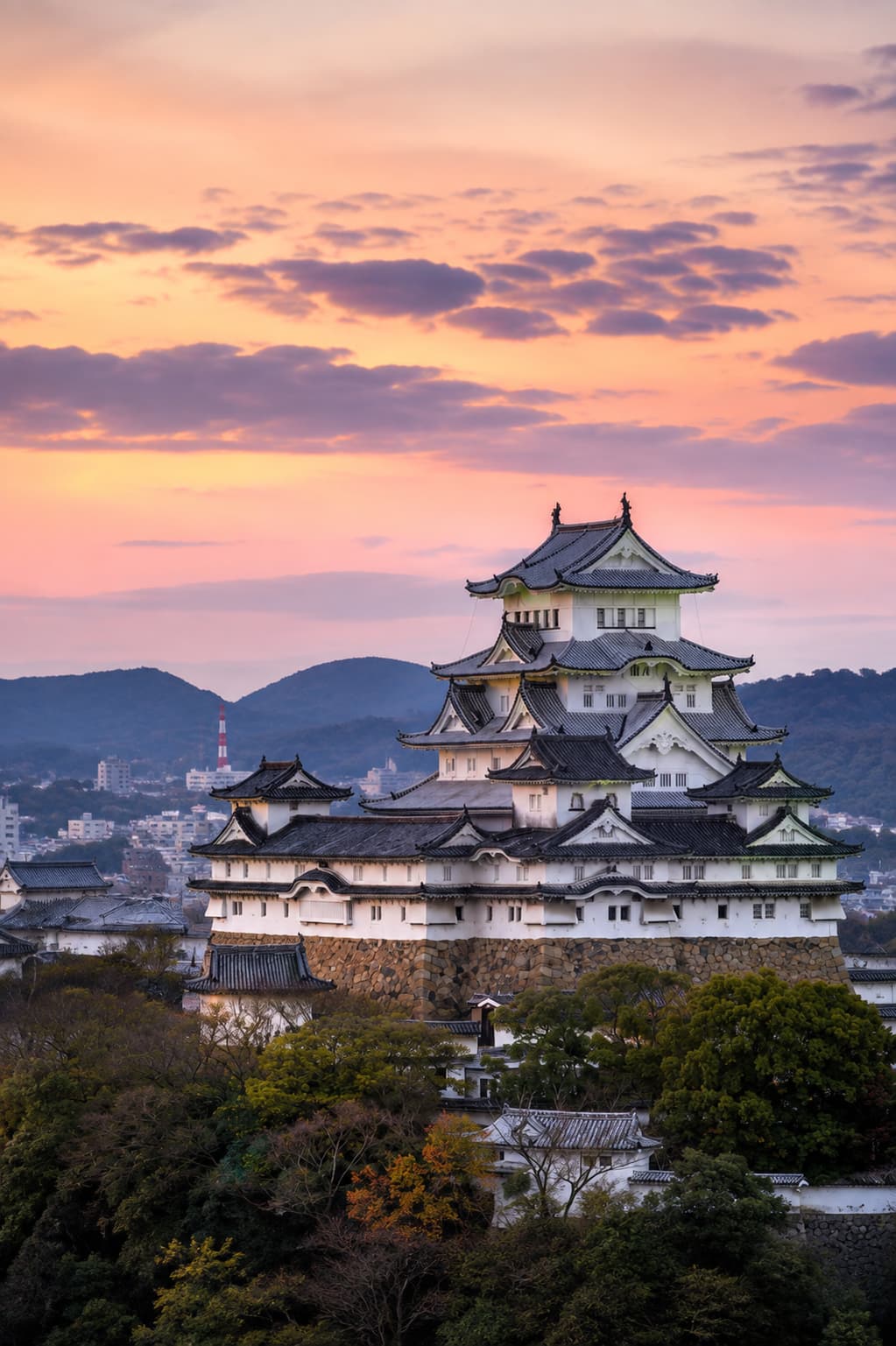
Himeji Castle became the clearest example: from 1 March 2026, non-residents pay ¥2,500 for entry, while Himeji City residents pay ¥1,000. Children under 18 enter free regardless of residency. The distinction is officially framed around residency rather than nationality — residents pay local taxes toward the castle’s upkeep — but in practice, if you’re a tourist, you pay ¥2,500. The Japan Tourism Agency convened an expert panel in April 2026 to develop broader guidelines for this model, so further sites may follow. For now, Himeji is the prominent example; mainstream tourist attractions in Tokyo and Kyoto have not broadly adopted it.
Tax-free shopping changes from November 2026
From 1 November 2026, Japan switches from an instant register discount to a refund-at-the-airport system. Until 31 October, eligible visitors pay no consumption tax at the register and walk out with the goods. From November onward, you pay the full tax-inclusive price at the till and claim your 10% refund when completing departure procedures at the airport. The minimum purchase amount (¥5,000 at the same store on the same day) stays unchanged. If you’re a significant shopper — electronics in Akihabara, cosmetics, high-end goods — and you’re visiting before November, the old system still applies; after November, allow extra airport time for the refund queue. The change doesn’t affect whether shopping is worthwhile, only the logistics of when you get the money back.
03 — Daily Budget by Travel Style
The Japan trip cost per day varies more widely than almost any other major destination, because Japan genuinely serves every budget with dignity. A capsule hotel and a konbini breakfast is not a compromise — it’s a legitimate way to experience the country. Equally, a traditional ryokan with kaiseki dinner is a different kind of trip, not a better one. Here’s what each tier actually buys as part of your Japan trip cost.
Budget — ¥8,000 to ¥12,000 per day (approx. $50–77 USD)
At this level, you’re sleeping in a dormitory or capsule hotel (¥2,500–4,500 per night is realistic), eating most meals at convenience stores or standing noodle bars, and sticking to local trains rather than Shinkansen for intercity travel. Accommodation eats 35–40% of the budget even here, so accommodation choice is the primary lever. Japan’s convenience store food — onigiri, sandwiches, hot ready meals, fresh salads — is genuinely good, not a grudge purchase, and a full day’s eating from a konbini runs ¥1,500–2,500. Many of Japan’s best experiences cost nothing: temple grounds, shrine precincts, city walking, parks during cherry blossom and autumn foliage season are free to enter or very cheap. This is a comfortable, full trip — not austerity.
Mid-range — ¥18,000 to ¥28,000 per day (approx. $115–180 USD)
This is the most common traveller range, and it’s where accommodation does the most work. A business hotel or clean guesthouse in central Tokyo or Kyoto runs ¥10,000–18,000 per night for a single room. Add a proper restaurant meal in the evening, convenience store breakfast, and a mix of paid attractions and free sites, and ¥20,000–25,000 per day is a realistic planning figure. Transportation within cities is cheap — IC card tap-in-tap-out fares on city subways run ¥170–300 per journey. The Shinkansen cost arrives as a distinct line item rather than a daily expense; the JR Pass decision (covered below) changes whether that’s a lump sum upfront or a pay-per-journey question.
Comfort and above — ¥35,000 to ¥60,000+ per day
Traditional ryokan with dinner and breakfast included typically run ¥20,000–50,000 per person per night and represent a fundamentally different trip: meals, hospitality, and the experience of staying in a tatami room with a yukata are the point. At this level, Kyoto’s accommodation tax brackets become significant. A ¥50,000 room in Kyoto means ¥4,000 per person per night in tax on top of the room rate; two people in a high-end ryokan at ¥100,000 per night pay ¥20,000 per night in accommodation tax alone. That’s not a trivial line item across a week.
04 — Is the JR Pass Worth It in 2026?
For most first-time itineraries, no — and that matters, because the reflexive “buy the JR Pass” advice appears in almost every Japan trip cost guide online, including ones published after the October 2023 price increase.
The 2023 increase changed the break-even arithmetic fundamentally. Before that, the seven-day nationwide pass cost ¥29,650. It now costs ¥50,000 — and from 1 October 2026, the price at overseas sales agents rises again to ¥53,000. (The official JR Pass online reservation service is keeping the ¥50,000 rate for a limited window after the October change; if you’re booking for late 2026 or 2027 travel, check the official site directly.)
The break-even calculation for common routes
A Tokyo–Kyoto one-way Shinkansen ticket costs approximately ¥13,320–14,000 in ordinary reserved class. A round trip is therefore roughly ¥27,000. At ¥50,000, the seven-day pass loses money on a simple Tokyo–Kyoto–Tokyo circuit before you factor in a single other journey.
The case for the pass improves on broader itineraries. A Tokyo–Kyoto–Osaka–Hiroshima–Kyoto–Tokyo circuit using the pass-eligible Shinkansen runs roughly ¥55,000–60,000 in individual tickets — marginally on the right side of the ¥50,000 pass price. Add an airport-to-city express that the pass covers (Narita Express is included; Kansai Airport Haruka to Osaka is partially included), and the arithmetic shifts slightly further toward the pass. Most first-time Japan itineraries, however, concentrate on two or three cities and include day trips from a single base. Those trips rarely justify the nationwide pass.
The regional pass alternative
For Kansai-focused trips — Kyoto, Osaka, Nara, Kobe, Himeji — the JR Kansai Wide Pass covers the Haruka airport express, the Kyoto–Osaka corridor, and the Kyoto–Hiroshima Shinkansen route at a fraction of the nationwide pass cost. Similarly, the JR East Pass covers Tokyo, Nikko, and the Tohoku region for travellers spending most of their time in eastern Japan. Regional passes are the better answer for most itineraries, particularly once you think about the pass in relation to the specific cities you’re actually visiting.
List every intercity journey you plan to make. Look up the individual fare for each on Hyperdia or the official JR route finder. Add those fares up, then compare to the relevant pass price. If your individual fares come out higher, the pass earns its cost. If not — and if your itinerary is concentrated in one or two cities — individual IC card journeys will save you money and give you more flexibility. The calculation takes fifteen minutes and is worth it.
05 — Accommodation and the Kyoto Tax Problem
Accommodation is the largest single variable in a Japan trip cost estimate — typically 35–40% of the total on-the-ground spend, before flights. The right choice depends less on price point than on understanding how the tax brackets work in Kyoto specifically, since that city now imposes significantly higher levies than anywhere else in Japan.
Understanding the bracket mechanics
Kyoto’s accommodation tax is calculated per person, per night, based on the room rate before consumption tax but including service charges. That last point matters: booking platforms often display room rates excluding service charges, so the on-site total can push you into a higher bracket than the headline price suggests. A room shown at ¥18,500 with a ¥1,500 service charge becomes a ¥20,000 taxable rate — which moves from ¥400 to ¥1,000 per person per night. For a couple staying five nights, that’s a ¥6,000 difference on the tax line alone.
The same cliff logic applies at ¥50,000 (¥1,000 to ¥4,000) and ¥100,000 (¥4,000 to ¥10,000). The ¥100,000 cliff is particularly steep: two people in a ¥100,000 Kyoto ryokan pay ¥20,000 per night in accommodation tax — not per room, per person. Over a week, that’s ¥140,000 in tax on top of the room rate. At this bracket, the tax is not an afterthought.
The Osaka day-trip trade-off
Staying in Osaka and day-tripping into Kyoto sidesteps the bracket entirely. Osaka charges a flat accommodation tax starting at ¥100–500 per person per night at most price points — considerably gentler than Kyoto’s structure. The Kyoto–Osaka Shinkansen takes about 15 minutes, and a standard fare is modest. Add a day-trip train ticket to your Kyoto spending, and for most mid-range travellers the net saving compared to sleeping in Kyoto is real.
The cost of this strategy is early-morning access. Fushimi Inari and Arashiyama are both most photogenic — and least crowded — in the first hour after dawn. Arriving from Osaka by Shinkansen, that window is difficult to hit. That’s a genuine trade-off, not a reason to dismiss Osaka-basing; it depends on what you want from those sites. A check-in post on the Kyoto itinerary can help you think through the pacing — see the Kyoto one-day solo itinerary for that detail.
For what it’s worth: mid-range accommodation in both cities now sits in the ¥10,000–18,000 range for a decent single room. Budget guesthouses run ¥3,000–6,000 for a private room, or ¥2,500–4,000 for a dormitory bed. At the budget end, Kyoto’s ¥200 tax on stays under ¥6,000 is unchanged and adds almost nothing.
06 — Food, and What You Actually Spend
Food is where the Japan trip cost estimate becomes genuinely surprising. Japan has three overlapping food economies — convenience stores, casual restaurant culture, and restaurant dining — and you can live extremely well across all three without significant expense.
Convenience stores
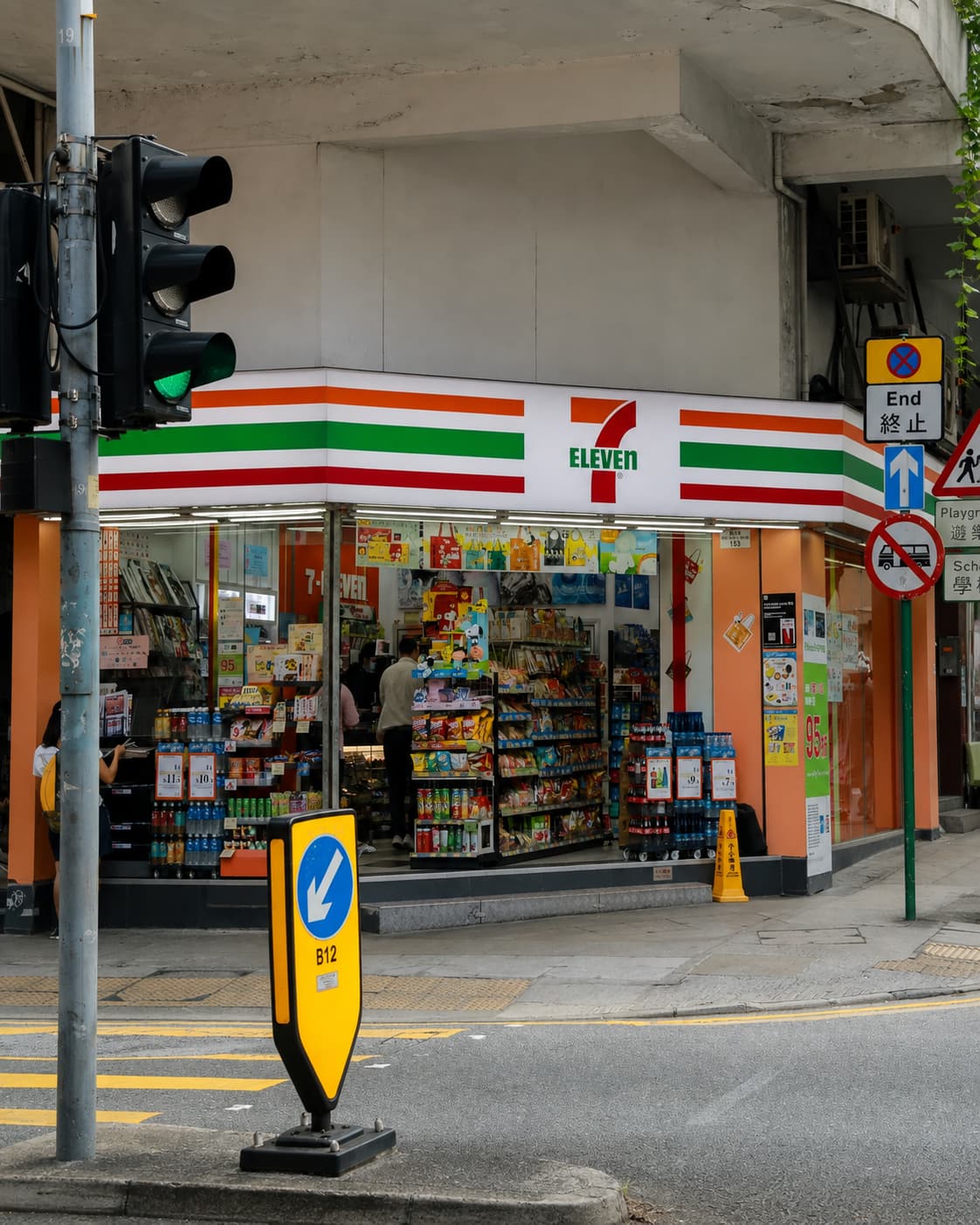
7-Eleven, FamilyMart, and Lawson are not emergency food stops. They are a legitimate part of Japanese food culture, stocked with freshly prepared onigiri (¥120–220 each), sandwiches, hot noodle dishes, packaged salads, and an astonishing range of snacks. A full breakfast runs ¥300–500; a complete meal ¥600–900. Convenience stores are open 24 hours, the quality is consistent, and they’re everywhere. Budget travellers use them for most meals without sacrificing anything.
Standing restaurants and local chains
Ramen at a standing noodle counter: ¥800–1,200. Gyudon (beef bowl) at Yoshinoya or Sukiya: ¥500–700. Soba or udon in a casual restaurant: ¥700–1,000. Curry rice at a local place: ¥800–1,200. Japan’s mid-budget restaurant culture is built around single dishes done very well, and lunch at a neighbourhood restaurant is often the cheapest proper sit-down meal of the day. Many restaurants offer a lunch set (teishoku) that includes rice, miso soup, and a main for considerably less than the evening equivalents.
Department store food halls and the otoshi charge
One item that consistently surprises visitors: the otoshi. This is a small appetiser or amuse-bouche that arrives automatically at many sit-down bars and traditional izakaya, charged to your bill whether you asked for it or not — typically ¥300–600 per person. It’s a table charge that functions as a cover fee, standard practice, and not negotiable. Factor it in when budgeting an evening at an izakaya.
Department store basement food halls (depachika) are worth mentioning in the opposite direction: an excellent, legitimate way to spend a meal budget on premium food at reasonable prices. Bento boxes, sushi assortments, prepared dishes, and high-end pastries sit alongside daily groceries in a setting that doubles as an attraction in its own right. A meal assembled from a depachika lunch counter runs ¥800–2,000 depending on ambition.
A realistic food budget
Budget travellers eating konbini and occasional casual restaurants: ¥1,500–2,500 per day. Mid-range — two sit-down meals plus convenience store snacks: ¥3,000–5,000 per day. Travellers eating properly at restaurants for every meal: ¥6,000–12,000 per day. Fine dining (kaiseki, tasting menus) sits on a different scale entirely, at ¥15,000–30,000 per person per sitting. No restaurant recommendations here — named places move between price brackets and between tax regimes; the category is what’s useful.
07 — Getting Around Beyond the Shinkansen
The Shinkansen is the biggest single transport line in a Japan trip cost, but most of the movement on a Japan trip happens on city subways, local JR lines, and buses — none of which require the nationwide pass and all of which are well-priced for what they are.
IC cards
An IC card — Suica or Pasmo are the most common — is the single most useful piece of transport infrastructure in Japan. You load money onto it, tap in and out at every turnstile, and it covers city subways, local trains, most buses, and conveniently doubles as payment at convenience stores. The card itself costs ¥500 as a deposit, fully refunded when you return it. Cards are available at major stations; an English-language machine interface is standard. Fares per journey on city transport run ¥170–350 depending on distance. This is your primary transport mode within any city.
Night buses
For budget intercity travel, overnight highway buses connect most major cities at a fraction of Shinkansen cost. A Tokyo–Osaka overnight bus runs ¥3,000–8,000 depending on the seat and operator; the same journey by Shinkansen costs ¥13,320+ in ordinary class. The trade-off is five to eight hours on a bus versus two and a half hours on the Shinkansen, plus a night of sleep rather than a hotel night. For budget travellers, the overnight bus is also a free night’s accommodation.
Domestic budget airlines
Peach, Jetstar Japan, and Zipair compete on domestic routes and regularly undercut Shinkansen fares significantly for longer journeys — particularly to Hokkaido, Kyushu, and Okinawa. A Tokyo–Sapporo or Tokyo–Fukuoka flight can come in at ¥5,000–12,000 booked ahead, compared to Shinkansen fares of ¥22,000–28,000. Worth checking when the JR Pass doesn’t cover the route you need.
City subway day passes
Most major cities offer one-day or two-day subway passes that represent genuine savings over per-journey fares on heavy-use sightseeing days. Tokyo’s Metro 24-hour pass costs ¥600 and covers unlimited journeys on the Tokyo Metro network (not all of Tokyo’s transit, but most of what central tourists need). Kyoto’s subway day pass runs ¥800. Osaka’s subway 1-day pass is ¥820. If you’re doing five or more subway rides in a day — common on a temple and shrine circuit — the maths usually work out in the pass’s favour.
08 — Japan Trip Cost Example: Two Weeks, Line by Line
This is a Japan trip cost breakdown for a mid-range solo traveller: Tokyo (5 nights), Kyoto (4 nights), Osaka (2 nights), Hiroshima/Miyajima day trip, Himeji day trip — 14 nights in total, arriving and departing Tokyo. All figures are in yen, as of August 2026, with approximate USD equivalents at ¥157/$1.
| Category | Notes | Estimated total (¥) |
|---|---|---|
| Flights (return, economy) | US–Tokyo range as of Aug 2026; varies significantly by origin and season | ¥90,000–180,000 |
| Departure tax | ¥3,000 × 1 person; bundled in airfare from July 2026 | ¥3,000 |
| Accommodation — Tokyo (5 nights) | Business hotel / guesthouse, ¥10,000–14,000/night | ¥60,000 |
| Tokyo accommodation tax | ¥200 per night at mid-range (under ¥10,000 exempt; modest rate above) | ¥1,000 |
| Accommodation — Kyoto (4 nights) | Mid-range hotel ~¥15,000/night | ¥60,000 |
| Kyoto accommodation tax | ¥1,000 per person per night (¥15,000 room = ¥20,000–50,000 bracket) | ¥4,000 |
| Accommodation — Osaka (2 nights) | Hotel ~¥10,000/night | ¥20,000 |
| Osaka accommodation tax | Modest; approx. ¥300/night at this price point | ¥600 |
| Intercity transport | Tokyo→Kyoto ¥14,000 + Kyoto→Osaka ¥2,850 + Osaka→Hiroshima day ¥9,000 + Osaka→Tokyo ¥14,000; no JR Pass at this itinerary scale | ¥42,000 |
| Airport transport (both ways) | Narita Express or Limousine Bus | ¥6,000 |
| City transport (IC card) | 14 days, ~¥700/day average | ¥9,800 |
| Himeji Castle entry | Non-resident rate ¥2,500 from March 2026 | ¥2,500 |
| Other attractions / entry fees | Temples, museums, gardens across 14 days; estimate ¥500/day average | ¥7,000 |
| Food | Roughly ¥3,000/day mid-range (mix of restaurants and konbini) | ¥42,000 |
| Incidentals | SIM card, luggage forwarding, gifts | ¥10,000 |
What the Two-Week Japan Trip Total Comes To
Ground total (excluding flights): approx. ¥204,900 — roughly $1,300 USD at Aug 2026 rates. Add flights at ¥90,000–180,000 for a total of ¥295,000–385,000 for two weeks from the US, or roughly $1,900–2,450 USD.
A budget version of this itinerary — hostels, konbini most meals, night buses for two intercity legs — cuts the ground total to roughly ¥130,000–150,000 ($830–955 USD), with flights in addition. The yen’s current weakness is doing real work here; these numbers are considerably lower in USD terms than a pre-2022 equivalent trip would have been.
09 — Where People Overspend
A few categories consistently account for unnecessary Japan trip costs. Most are structural rather than individual bad decisions — they happen because the advice people find online hasn’t updated.
The JR Pass bought by default
As established above: on an itinerary covering two or three cities, the seven-day pass at ¥50,000 (¥53,000 from October 2026 at overseas agents) rarely justifies its cost. Run the Japan trip cost calculation before buying. If the individual fares come out lower, skip the pass and pay as you go with the IC card for local transport and individual Shinkansen tickets for intercity legs.
Kyoto’s upper accommodation brackets
A ¥45,000 Kyoto ryokan looks like a reasonable luxury; at ¥50,000 it triggers a ¥4,000-per-person-per-night tax bracket. The step is invisible in many booking platforms, which display pre-service-charge, pre-tax rates. Verify the taxable rate before confirming any Kyoto booking in the ¥45,000–55,000 range, and at the ¥95,000–105,000 range, where the difference between the fourth and fifth bracket is ¥6,000 per person per night.
Airport express when local trains work
The Narita Express to central Tokyo costs ¥3,070 one-way. The Keisei Skyliner is ¥2,570. The Keisei Airport Line (not the Skyliner) runs ¥1,270 and takes about 70 minutes to Ueno — slower but not dramatically so given Tokyo traffic. Haneda Airport is even more accessible by local train: ¥360–800 to most central stations on the Keikyu or Tokyo Monorail lines. Airport taxis are ¥20,000–30,000 from Narita, which has no rational justification unless you’re travelling in a group or with serious luggage.
Tax-free shopping timing
If you plan significant purchases and you’re visiting after 1 November 2026, factor in the airport refund procedure into your departure timing. The refund is still worth claiming — 10% back on ¥50,000+ of eligible purchases is meaningful — but it requires presenting goods and receipts at the airport before departure. Allow extra time, don’t pack receipts in checked luggage, and keep purchased goods accessible for inspection. The change doesn’t make tax-free shopping unviable; it makes it a logistical task rather than a register transaction.
Daily Costs, JR Pass, and New Japan Tourist Taxes
Cash, Cards, and Tipping in Japan
Peak Seasons and the Cheapest Time to Visit Japan
The Japan trip cost rewards the traveller who does the maths. The new taxes are real, the JR Pass is no longer an automatic purchase, and Kyoto’s accommodation brackets deserve attention before you book. None of that is a reason to hesitate — the arithmetic still comes out in your favour on a trip that, for the right person, has few equals anywhere.