
Solo Travel in Japan in Spring: Cherry Blossom Guide (2026)
A calm, practical guide to solo travel in Japan during cherry blossom season — with Tokyo, Kyoto, Osaka, timing advice, and a 7-day itinerary built for first-time solo travelers.
Why Japan in Spring Is Perfect for Solo Travel
There are places you visit. And then there are places that stay with you.
Japan in spring feels like the second kind.
Soft pink petals drifting through the air. Quiet temple paths lined with ancient stone. Trains arriving exactly on time. A kind of calm that doesn’t ask for anything from you — just your attention. Japan in cherry blossom season is one of those rare travel experiences that earns every word written about it.
And if you’ve been thinking about traveling alone — really alone, no group, no tour, just you and a map — there is arguably no better place to begin than Japan in spring.
01 — Why Spring Is the Best Time to Visit Japan
Japan is worth visiting in any season. But spring — especially late March through the first half of April — is when the country shifts into something genuinely extraordinary.
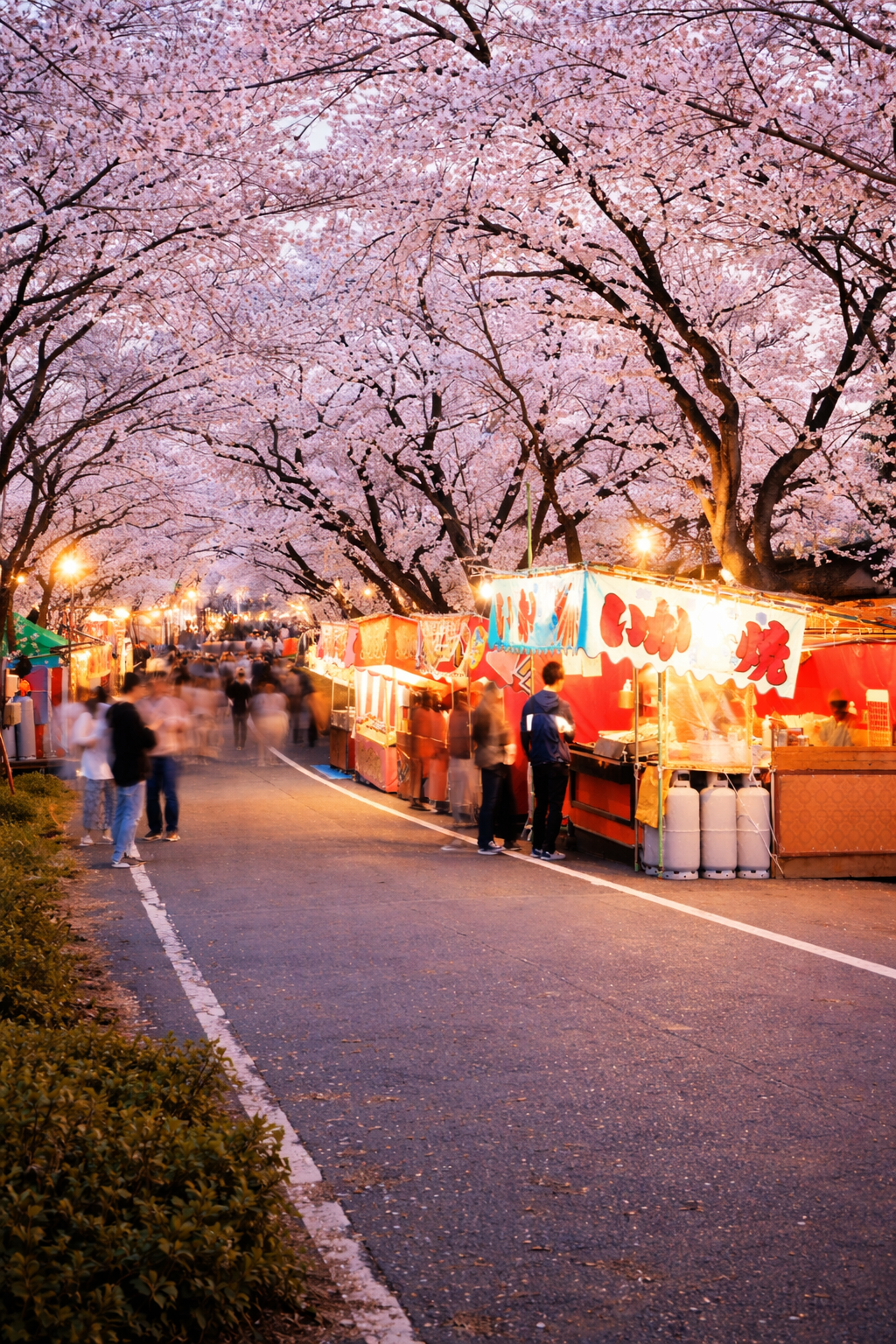
Cherry blossoms, known as sakura, bloom across the country in a wave that moves north as temperatures rise. Parks fill with families and friends gathering beneath the trees for hanami, the centuries-old tradition of flower-viewing. Rivers catch the reflection of pale pink branches overhead. Castle grounds seem to change overnight.
What makes this season especially good for solo travel is not just the beauty. It is the mood. Spring in Japan is not a loud season. It is a contemplative one. People pause. Walk slowly. Notice details. It suits the kind of attention solo travel makes possible.
The blossoms do more than make the cities look beautiful. They soften the pace of daily life and make ordinary streets feel ceremonial.
Spring temperatures are mild enough for long walks, temple visits, and evenings outside without the fatigue of summer heat.
Convenience stores, cafés, and department store food halls all shift into spring mode — sakura sweets, strawberry desserts, and seasonal bento appear everywhere.
Moving between Tokyo, Kyoto, and Osaka is unusually easy for a solo traveler. The rail network removes much of the friction that makes multi-city trips tiring elsewhere.
Solo travel is often best in places where beauty is not performative. Japan in spring gives you reasons to pause without requiring a plan. A quiet temple garden, a canal lined with blossom, a train ride taken in silence — all of it feels complete even when experienced alone.
02 — When Exactly to Visit
Cherry blossom timing shifts slightly year to year depending on winter temperatures, but the general pattern is stable enough to plan around.
Tokyo: usually late March. Kyoto: late March into early April. Osaka: broadly similar to Kyoto. Best overall window: the last week of March through the first week of April.
If you can only choose one week, choose the overlap period between the end of March and the first days of April. That gives you the best chance of catching bloom across Tokyo, Kyoto, and Osaka on the same trip.
Kyoto fills first. Accommodation during cherry blossom season disappears much faster than many first-time visitors expect. If you’re traveling in the main bloom window, try to sort hotels at least 2–3 months ahead.
| Best week | Last week of March through the first week of April |
| Peak bloom | Usually about one week in each city, with slight overlap between Tokyo, Kyoto, and Osaka |
| What to book first | Kyoto accommodation, then Tokyo, then intercity train planning |
| Risk to avoid | Leaving hotels until the last minute and ending up far from the areas you actually want to walk |
03 — Tokyo: The First Impression
Most solo trips to Japan begin in Tokyo, and for good reason. It is one of the easiest large cities in the world for a first-time visitor to understand. It is huge, but unusually legible. Metro signs are clear. Convenience stores solve half your practical problems. The city runs with a quiet efficiency that steadies anxious travelers almost immediately.
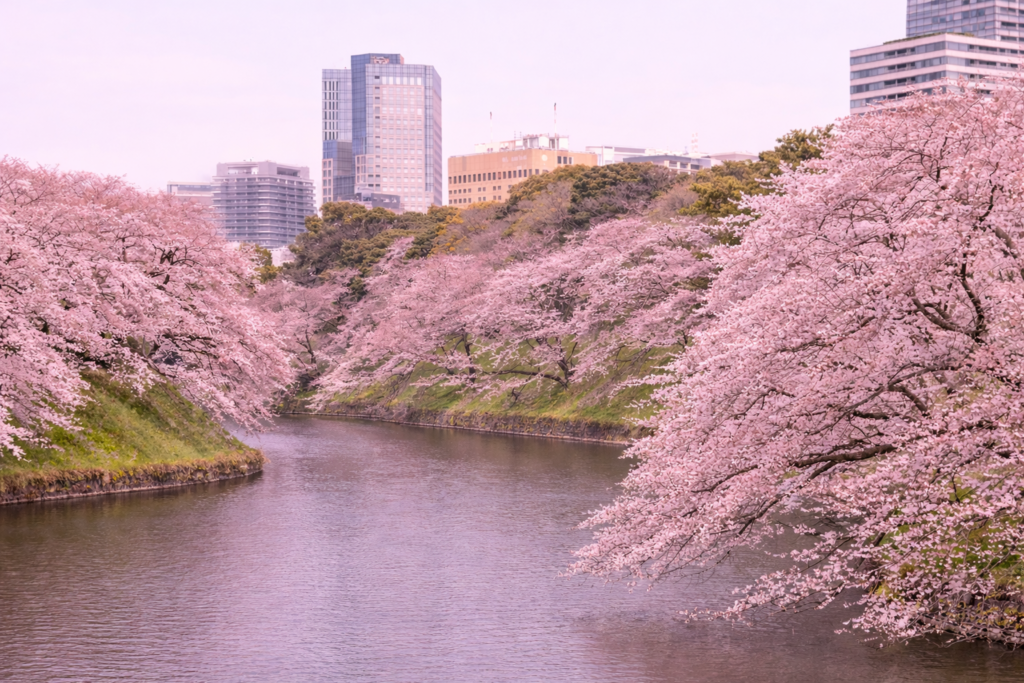
Tokyo in spring has a particular softness to it. The neon and speed remain, but the season pulls people outside. Parks fill with blossom-viewers. Canals catch the pink of branches overhead. Neighborhoods that are already good to walk through become even better.
A large, ordered garden and one of the calmest places to see blossom in Tokyo. The entrance fee helps keep it from feeling chaotic.
Livelier, more social, and closer to the classic hanami atmosphere. It works well if you want to feel the season as something shared.
The most photogenic of the main Tokyo blossom walks. Best in the late afternoon when the water catches the light.
A moat-side sakura view near the Imperial Palace. The rowboats beneath overhanging blossoms are famous for a reason.
Tokyo is a good city to arrive in alone because it asks very little of you socially. You can eat alone, move alone, spend half a day walking, and none of it feels unusual.
04 — Kyoto: The Soul of Japan
If Tokyo is energy, Kyoto is stillness.
Japan’s old imperial capital carries its history lightly but unmistakably. Temple grounds, narrow stone lanes, wooden machiya houses, small gardens arranged with more care than seems possible. Kyoto doesn’t need to announce itself. It lets texture do the work.
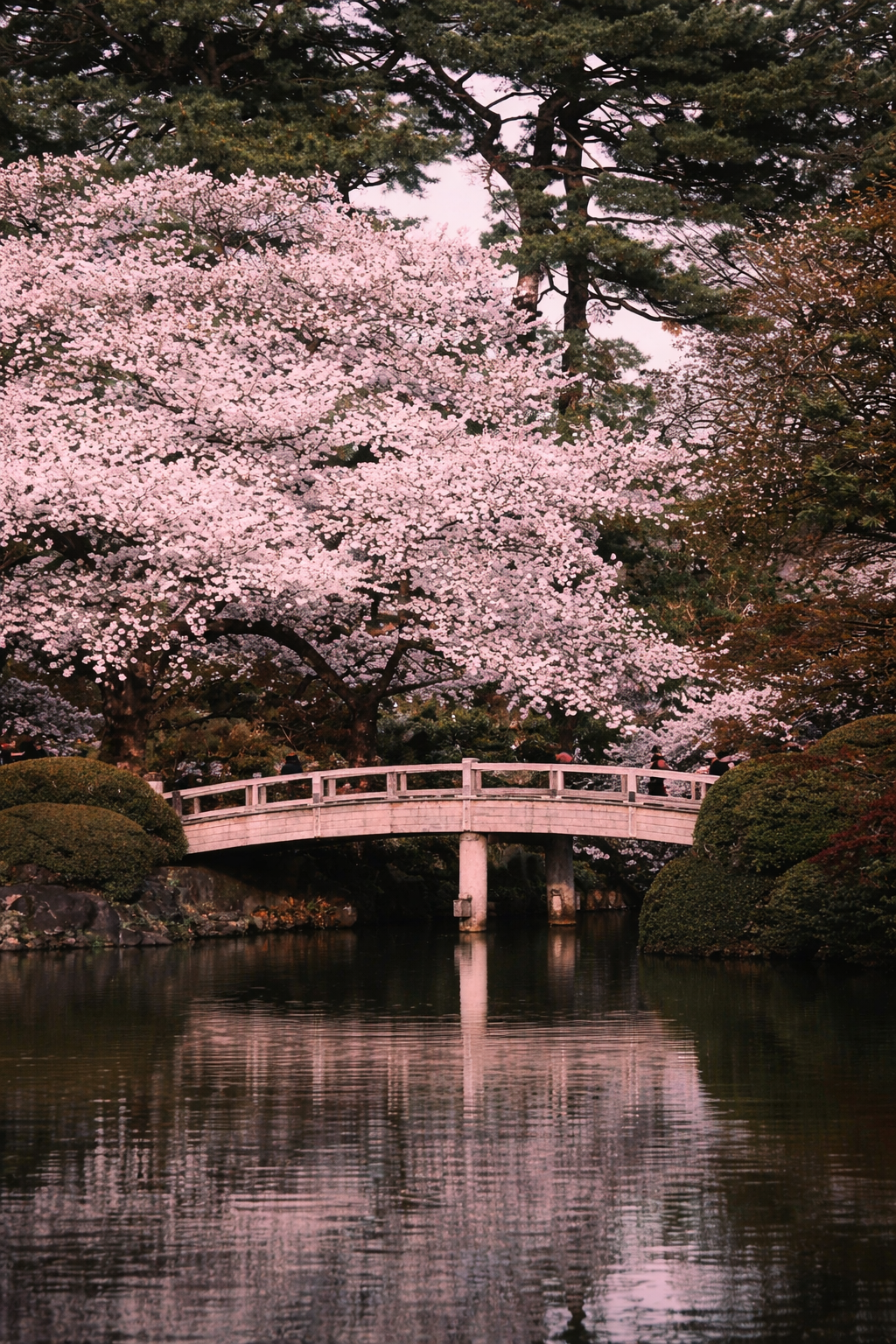
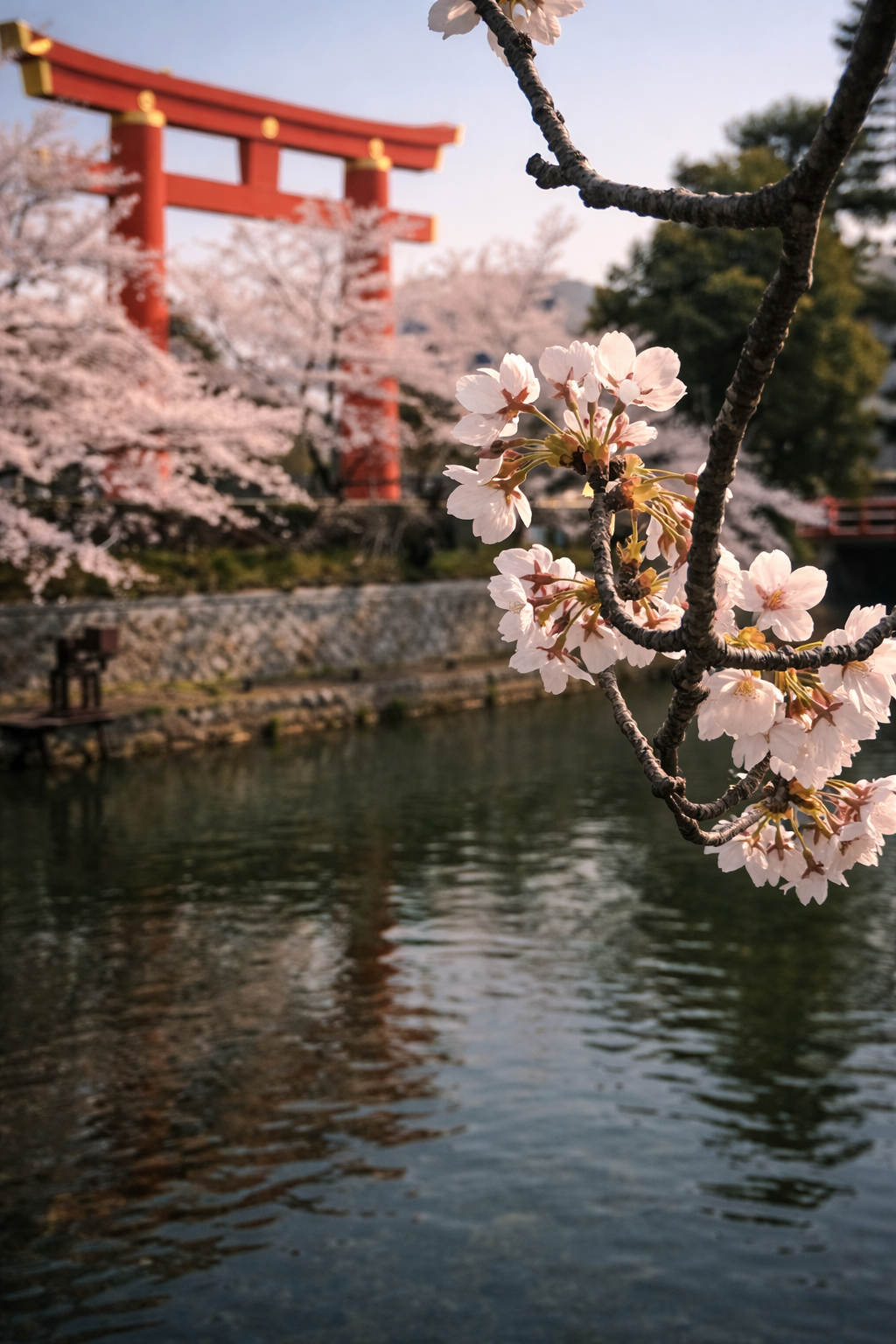
In spring, the city becomes almost too beautiful to process properly. The Philosopher’s Path, lined with cherry trees beside a narrow canal, is one of those places that feels nearly fictional at dawn. The right way to experience Kyoto is not to rush through it, but to meet it early.
The essential Kyoto blossom walk. Go as early as possible. This is one of the few famous places that still feels private if you reach it at dawn.
Known for its famous weeping cherry tree and evening atmosphere. Best later in the day rather than early morning.
Works best when treated as more than the bamboo grove. The riverside, bridges, and surrounding paths give the area its real atmosphere.
Not a sakura site in the same way, but spring light makes the whole mountain walk feel quieter and sharper. Go before breakfast.
05 — Osaka: Food, Energy, and Atmosphere
After Kyoto, Osaka feels like an exhale.
It is warmer in tone, more informal, more openly welcoming. Food stalls spill into narrow streets. People speak more directly. Eating alone here does not feel like a fallback plan — it feels embedded in the city’s design.
Osaka is useful in a Japan spring itinerary because it changes the emotional register of the trip. Kyoto can be quiet to the point of intensity. Osaka lets you come back into noise, appetite, and movement.
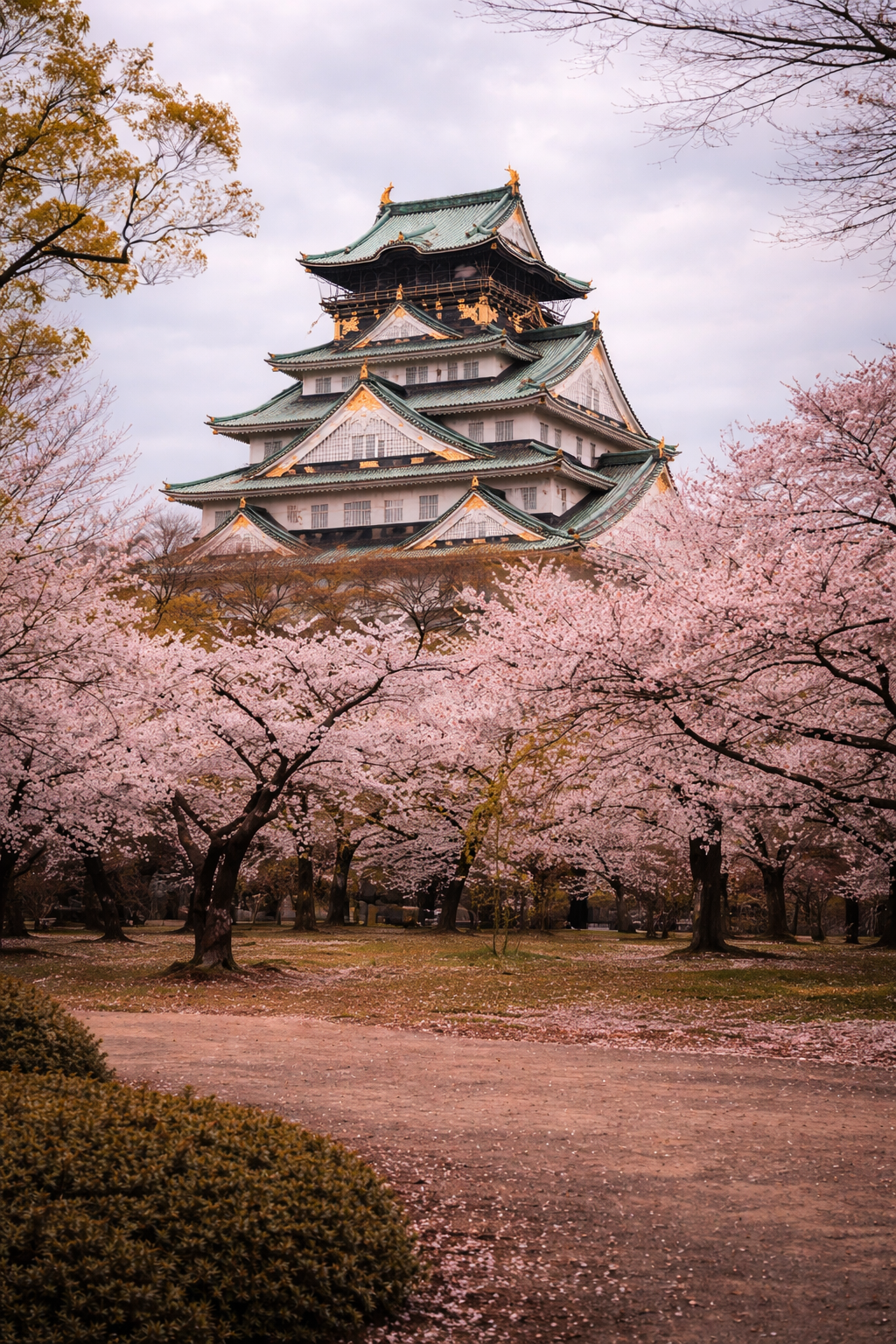
One of the most dramatic sakura settings in the city, with the contrast of historic architecture and spring blossom doing most of the work.
A long riverside stretch with a more local, less staged feeling. Good if you want blossom without quite as much structure.
Not a blossom stop, but the right place to end the day — neon, canal reflections, counter dining, and the kind of meal that makes Osaka memorable.
Tokyo gives you structure. Kyoto gives you atmosphere. Osaka gives you ease. It is the city in this route where solo dining feels most effortless and evenings feel least scripted.
06 — A 7-Day Solo Japan Itinerary
This itinerary is designed for a first-time solo trip during cherry blossom season. It moves quickly enough to cover the essentials, but not so quickly that everything turns into transit and checklists.
Land, settle in, and keep the first day light. An evening walk in Shinjuku or along the Meguro River is enough. The goal is to arrive gently rather than try to recover time immediately.
Tokyo arrival
Start with Shinjuku Gyoen, then spend the afternoon in a slower neighborhood like Yanaka. Finish with a more energetic side of the city at night if you want it.
Blossom + city rhythm
Ueno Park in the morning, Asakusa later, and Chidorigafuchi around golden hour if you want one of the most memorable blossom views in the city.
Tokyo full day
Take the bullet train south and keep the afternoon open for your first Kyoto walk. The Philosopher’s Path at dusk followed by Maruyama Park at night is a very good way to enter the city.
Tokyo → Kyoto
Do Fushimi Inari as early as you can, then spend the rest of the day between Arashiyama, temple grounds, and slower neighborhoods rather than trying to cover everything.
Early start
Head to Osaka Castle Park or Kema Sakuranomiya, then leave the evening for Dotonbori and the city’s food culture.
Kyoto → Osaka
Either do a Nara day trip or keep the final morning intentionally slow before departure. A slower ending often suits Japan better than one last rushed stop.
Nara or departure
This is not an itinerary designed to “cover” Japan. It is designed to let a first solo traveler understand the rhythm of three cities without turning the week into a checklist.
07 — Why Japan Works So Well for Solo Travel
Japan is one of the rare destinations where traveling alone feels not merely acceptable, but structurally supported.
There is a cultural ease around solitude here. Ramen counters are built for one person. Capsule hotels make sense for one person. Temple grounds, train journeys, coffee shops, convenience store breakfasts — much of the experience is already scaled to an individual traveler.
This matters more than safety rankings or logistics alone. It means the trip rarely asks you to explain yourself. You can move through the country quietly, at your own pace, without the social friction that can make solo travel tiring elsewhere.
Japan feels unusually secure, even late at night in big cities. That matters when you are managing everything on your own.
Transport systems are structured, signs are often bilingual, and the country is easier to read than many first-time visitors expect.
Eating alone is normal here. In some places it feels like the default rather than an exception.
Trains run when they say they will. That removes a surprising amount of low-level travel stress.
08 — Practical Things to Know Before You Go
Money and payments
Japan still rewards carrying cash. Cards work in many hotels, department stores, and larger chains, but smaller restaurants, temple counters, and older businesses can still be cash-first. It is worth withdrawing yen early rather than assuming every payment will be digital.
Transport
-
Shinkansen: Tokyo to Kyoto is fast, smooth, and one of the easiest long-distance rail journeys in the world. -
Suica or Pasmo: A rechargeable IC card makes local movement much easier and also works for many everyday purchases. -
Maps: Google Maps is unusually reliable in Japan for train routes, platforms, and timing.
Accommodation
- Book accommodation early — especially in Kyoto during cherry blossom season
- Carry cash — not everywhere will take cards
- Check onsen tattoo rules — many baths still restrict entry
- Use luggage forwarding if needed — sending bags between cities is often easier than hauling them onto intercity trains
| Currency | Japanese yen (JPY) |
| Best first stop | Tokyo, because it is the easiest arrival city for a first-time solo traveler |
| Best pace | Three cities in one week is enough. More than that starts to flatten the experience. |
| Most important booking | Kyoto hotel during sakura season |
| Most useful habit | Start early. Japan’s most beautiful hours are often before 8am. |
Japan Solo Travel and Cherry Blossom Timing
Tokyo, Kyoto, Osaka and Solo Travel Logistics
Tokyo, Kyoto, Osaka and Solo Travel Logistics
Japan in spring stays with you.
It is one of those places that feels most complete when you stop trying to cover everything and simply move through it slowly.