
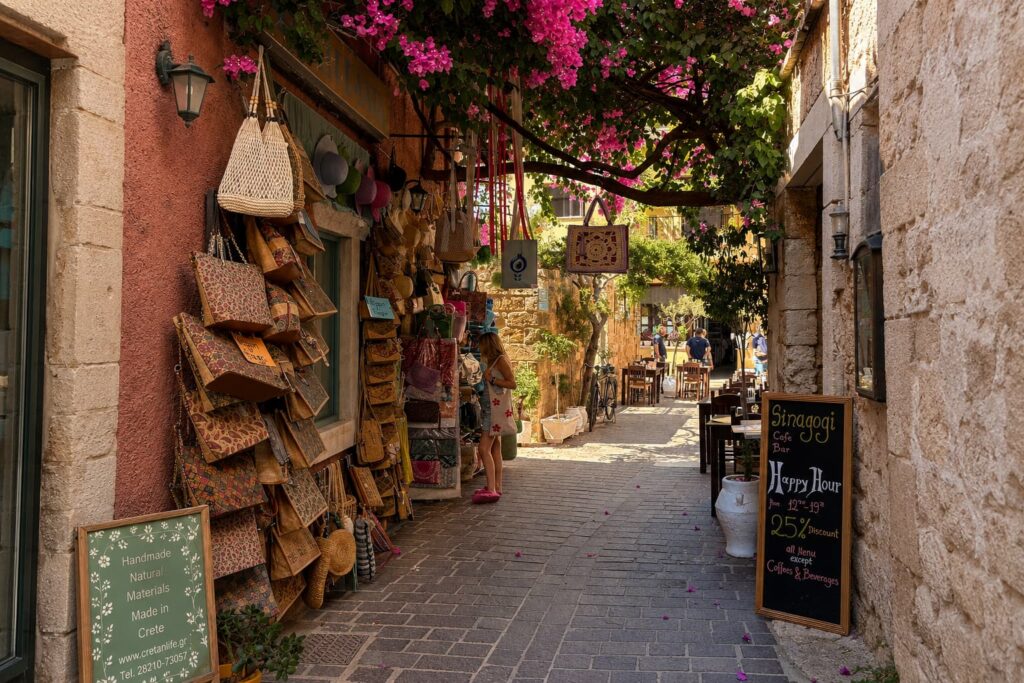
Crete in October: Early and Late Are Two Different Holidays
Visiting Crete in October means one of two very different trips — and which one you get depends more on where you stay than when your flight lands.
Crete in October is worth visiting — but that answer only tells you half the story. The month operates as two distinct experiences, and the difference between them is more about where you stay than when your flight lands. Book into a resort town for the last week of the month without knowing this, and you may find yourself staring at a lot of locked gates. Stay in a working town, and October is one of the quietest and most comfortable times you can visit the island.
That fortnight-and-location question is what this guide is actually about. Not a blanket yes or no — a decision framework, because the honest answer to “is Crete good in October” is: it depends on which October, and where you are on the island.
01 — Is October a Good Time to Visit Crete?
Yes — but the honest answer has a conditional attached to it. Crete in October is genuinely excellent if you’re going in the first two weeks, and it remains a solid trip in the second half of the month provided you stay in a town rather than a resort. What it isn’t, for anyone in a closed-down beach resort in the final days of October, is the holiday that brochures promise.
The case for October is strong on paper and in practice. Crowds have thinned substantially after the August peak, and even relative to September there’s a noticeable drop in visitors. Prices follow. Car hire in early October runs 30–50% below its summer peak, hotels discount significantly, and the kind of taverna table that was impossible to get in August is suddenly yours for the evening. The heat has eased from the oppressive to the comfortable — daytime highs in the low-to-mid twenties rather than the mid-thirties — and the sea is still warm enough to swim in without any hesitation.
The case for Crete in October also includes something that can’t be planned around in summer: the ability to actually see things. The Palace of Knossos, the old city of Chania, the Heraklion Archaeological Museum — all of them are more enjoyable in October than in July simply because the queues are shorter and the temperature isn’t punishing you for walking slowly. Archaeological sites in particular reward the October visitor.
The catch — and it’s a specific one — arrives around the third week. Resort tourism in Crete runs on a seasonal contract, and that contract begins to expire. That shift is manageable and doesn’t rule October out. It does, however, require knowing what to expect.
02 — Crete in October Weather: What Actually Happens
October in Crete averages 23–24°C by day and 15–17°C overnight, with 6–8 hours of sunshine and roughly six rain days spread across the month. Framed that way, it sounds consistent — but the month isn’t flat. It has distinct phases.
The first fortnight
Early October is the most straightforwardly good. Daytime temperatures sit in that ideal range of 22–25°C where warmth is pleasant rather than exhausting, evenings cool to something comfortable rather than stifling, and most days bring reliable sunshine. Rain in this period is possible — Crete is not a desert — but it typically arrives as brief afternoon showers rather than the sustained grey weather that northern European visitors associate with autumn.
Daylight shortens as the month progresses. Sunset at the start of October falls around 6:30–7:00pm. By month’s end it’s closer to 5:30–6:00pm. That loss of evening light is gradual, and for most visitors it’s barely noticeable until the last week. Outdoor dinners remain entirely comfortable in early October.
The second fortnight
Mid-to-late October is where variability enters. The island sees its first genuine unsettled spells — a day or two of cloud and drizzle, occasionally a more significant rainstorm, particularly in the north and the mountains. Overall it’s still mostly fine weather, but the pattern is less reliable. The south coast, protected by the White Mountains, weathers these spells better than the north. Temperatures drop a few degrees by the final week, evenings cool more noticeably, and the character of the light changes — still beautiful, but undeniably autumnal rather than summery.
Oxi Day on 28 October is a national public holiday. Towns hold parades and commemorations, which is genuinely interesting to witness and worth noting in your plans. Additionally, some tourist-facing businesses are closed for the day.
03 — Early October vs Late October in Crete
The line isn’t a cliff edge — it’s a gradual slope — but if you’re trying to identify where early October ends and late October begins in practical terms, the mid-month marker is around the 15th to 17th, and the felt turning point, when resorts begin to feel genuinely quiet, falls around the 24th.
The first two weeks
Early October is, in some respects, the island’s most comfortable month. The summer visitors have left, the autumn weather is settled, the sea is warm, and the infrastructure is still fully running. Hotels are open, restaurants are staffed, beach clubs haven’t yet packed up, and Samaria Gorge — covered separately below — is reliably accessible. You get the island at full operational capacity without the summer’s noise or its prices.
Moreover, the quality of light in early October is exceptional. Photographers who know Crete often prefer this period precisely because the harsh midday flatness of summer has given way to something more textured and dimensional. The light is golden rather than bleaching.
The practical trade-off is that some services already begin thinning. Large all-inclusive resort hotels start processing their last bookings. Beach clubs in the most touristy parts of Elounda, western Chania coast, and Malia begin winding down toward mid-month. But the island’s towns — Chania, Rethymno, Agios Nikolaos, Heraklion — are still fully alive.
The last week, and half-term
Late October — roughly the final ten days — requires more deliberate planning. By around the 24th, resort areas have crossed a threshold that’s noticeable: the concentration of closed signs increases, beach clubs are mostly gone, and larger resort hotels begin shutting. The result isn’t a ghost town exactly, but it’s a different kind of trip — quieter, more local, oriented around towns and landscapes rather than beach infrastructure.
British half-term (late October) coincides with this period, which creates an interesting counterpoint: demand from UK families with school-aged children briefly pushes back against the seasonal wind-down. In popular destinations like Chania and Heraklion, this keeps some businesses open that might otherwise be closing. In resort-only areas, though, half-term demand isn’t sufficient to hold the season open.
04 — What Closes in Crete in October, and When
The most useful section in any Crete-in-October guide isn’t the weather data. It’s this one: what actually closes, and what stays open. The answer is more nuanced than most sources acknowledge.
Resort areas close first
Beach clubs and sunbed operations in resort areas — Elounda, parts of the Chania coast, Rethymno’s resort strip, Malia, the eastern end of the island around Hersonissos — begin shutting from mid-month. By the final week, most of these are done for the season. Large all-inclusive resort hotels follow a similar arc: they reduce capacity and close sequentially through October, with the final stragglers typically gone by month’s end.
The practical consequence is a location decision that matters enormously if you’re going late. Resort areas close down in late October while towns keep their shops, restaurants, and bars running. This single piece of information is the most useful thing anyone can tell a traveller weighing a late-October Crete booking.
What stays open
Towns are not resorts. Chania, Rethymno, Agios Nikolaos, and Heraklion retain their independent businesses — local restaurants, kafeneions, shops, wine bars — through October and well beyond. Archaeological sites and museums stay open year-round and are excellent in October specifically because of the reduced visitor numbers. The Palace of Knossos, the Heraklion Archaeological Museum, the Venetian fortresses at Chania and Rethymno — all open, and all more enjoyable without summer’s crowds. Boat trips and day excursions continue operating through mid-to-late October, though schedules thin out as the month goes on.
Some accommodation platforms do not update closure dates in real time. If you’re booking late October, verify directly with the property — particularly for resort hotels — that they’re actually open your dates. A booking made months in advance on a property that has since closed its season is harder to resolve than a confirmation email makes it look.
Where to stay if you’re going late
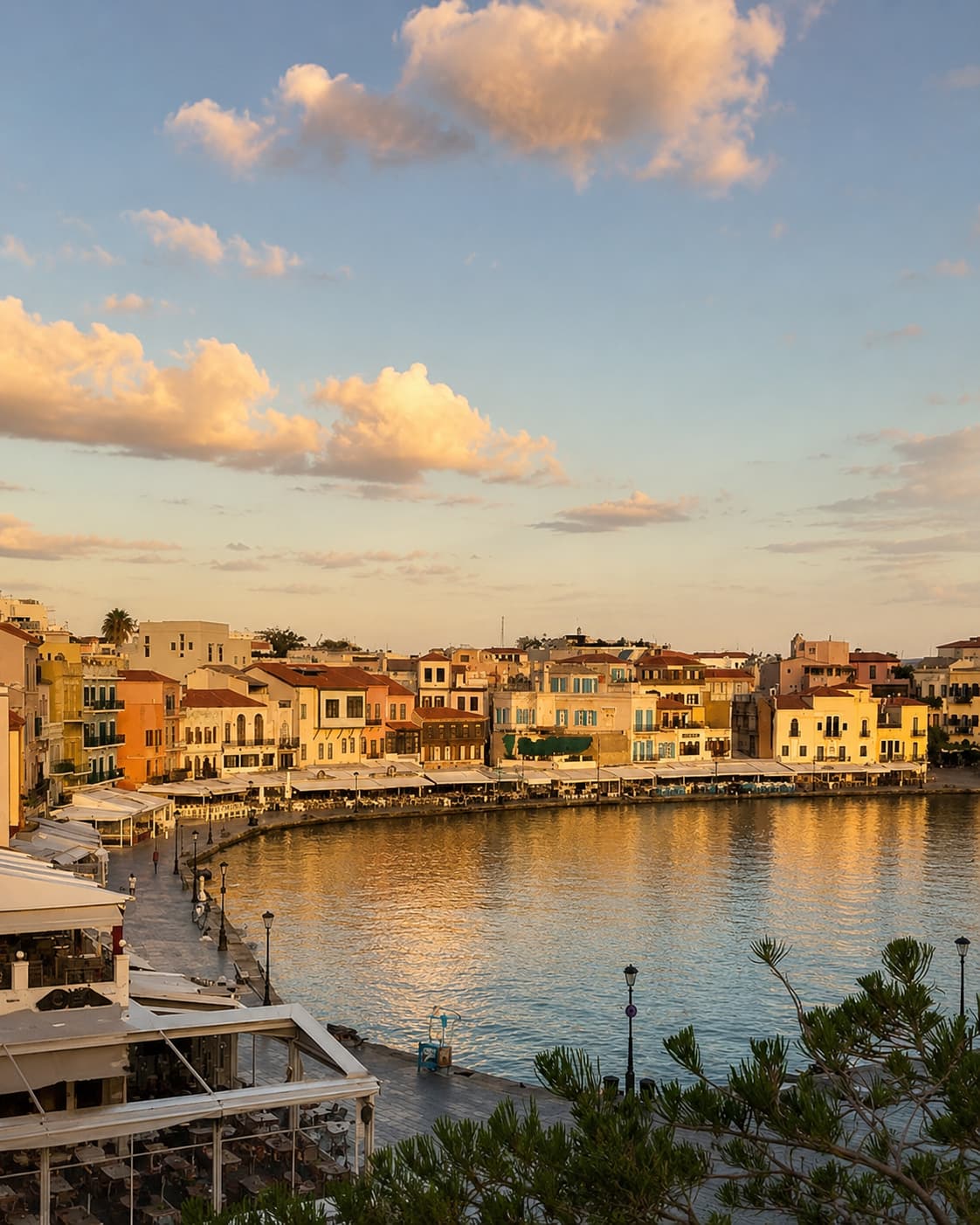
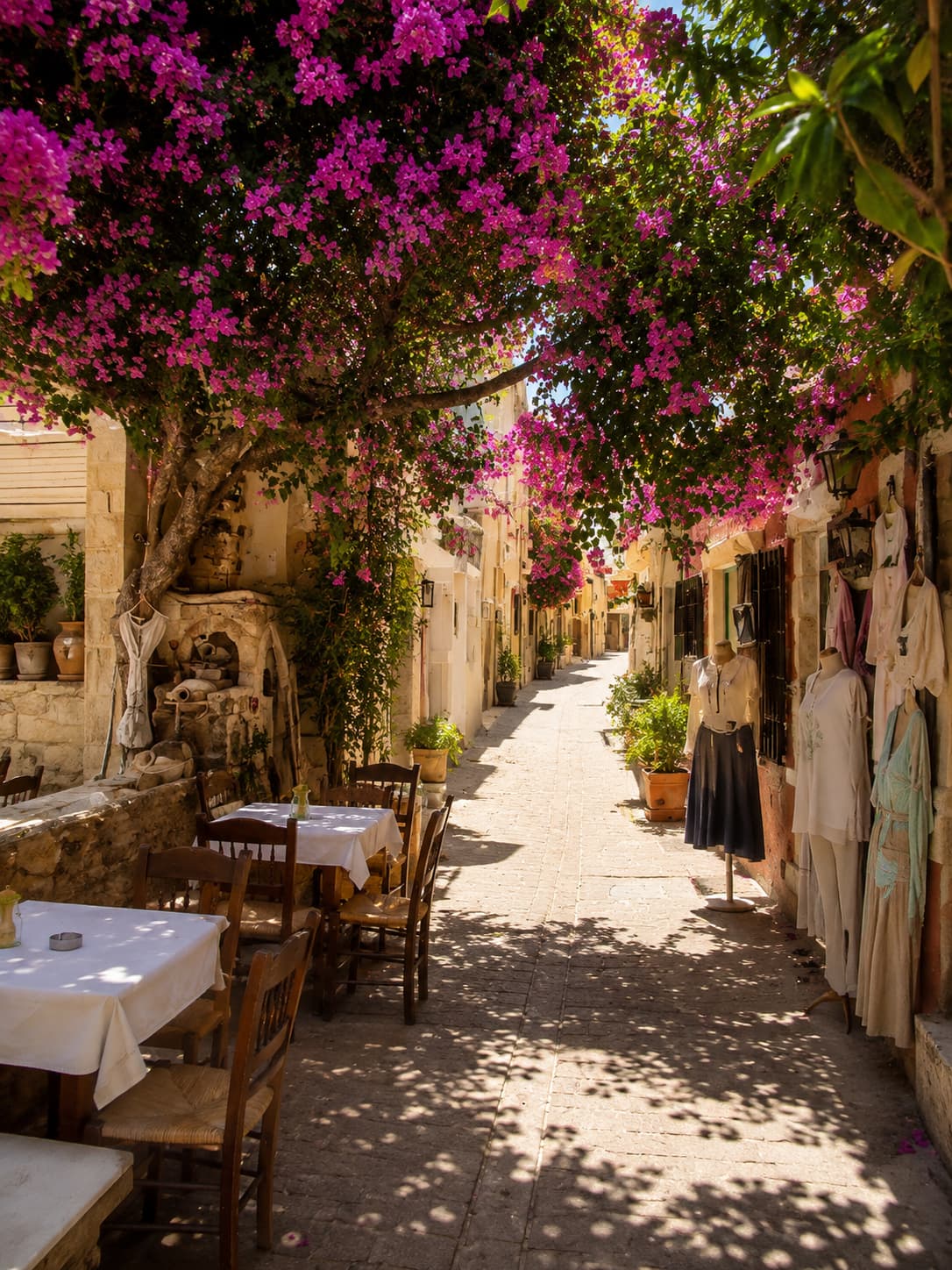
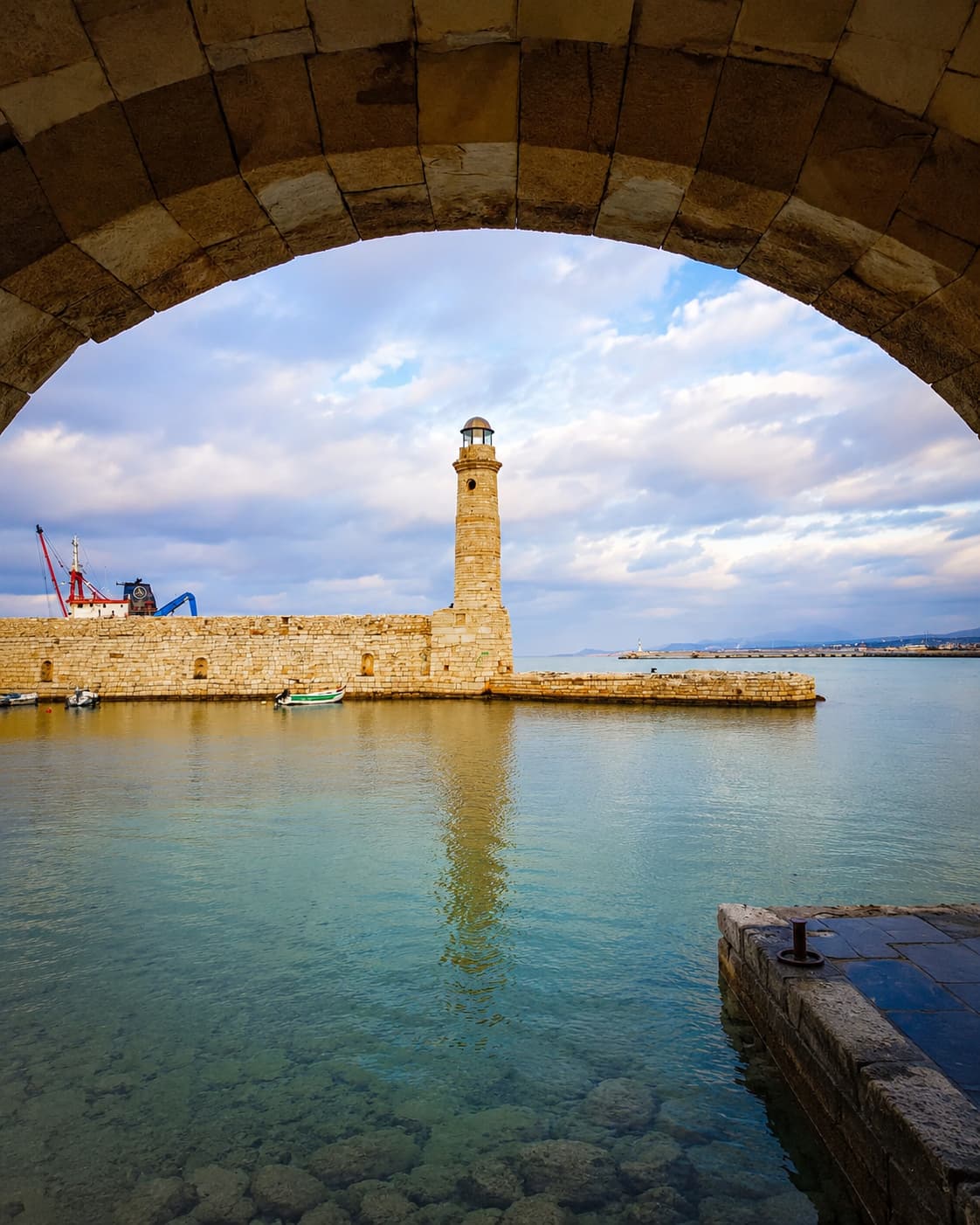
The answer is a working town, not a resort beach. Chania is the strongest late-October base: a city with a proper year-round economy, a beautiful Venetian harbour, enough restaurants and bars to fill an evening without having to drive anywhere, and access to both the western beaches and the south-coast villages. Rethymno works similarly — atmospheric old town, independent tavernas, and a local population that keeps things alive.
Agios Nikolaos, further east, is a smaller town that handles the shoulder season reasonably well, with a real town centre that retains life after the resort crowd has left. Heraklion is the least romantic option but the most practical — the capital never really closes — and it’s a strong base for archaeological tourism.
The area to approach with most caution in late October is the self-contained resort hotel in an otherwise resort-only coastal zone. If the neighbouring businesses are all seasonal, your hotel being open doesn’t guarantee that your experience will be what you imagined.
05 — Can You Still Swim in Crete in October?
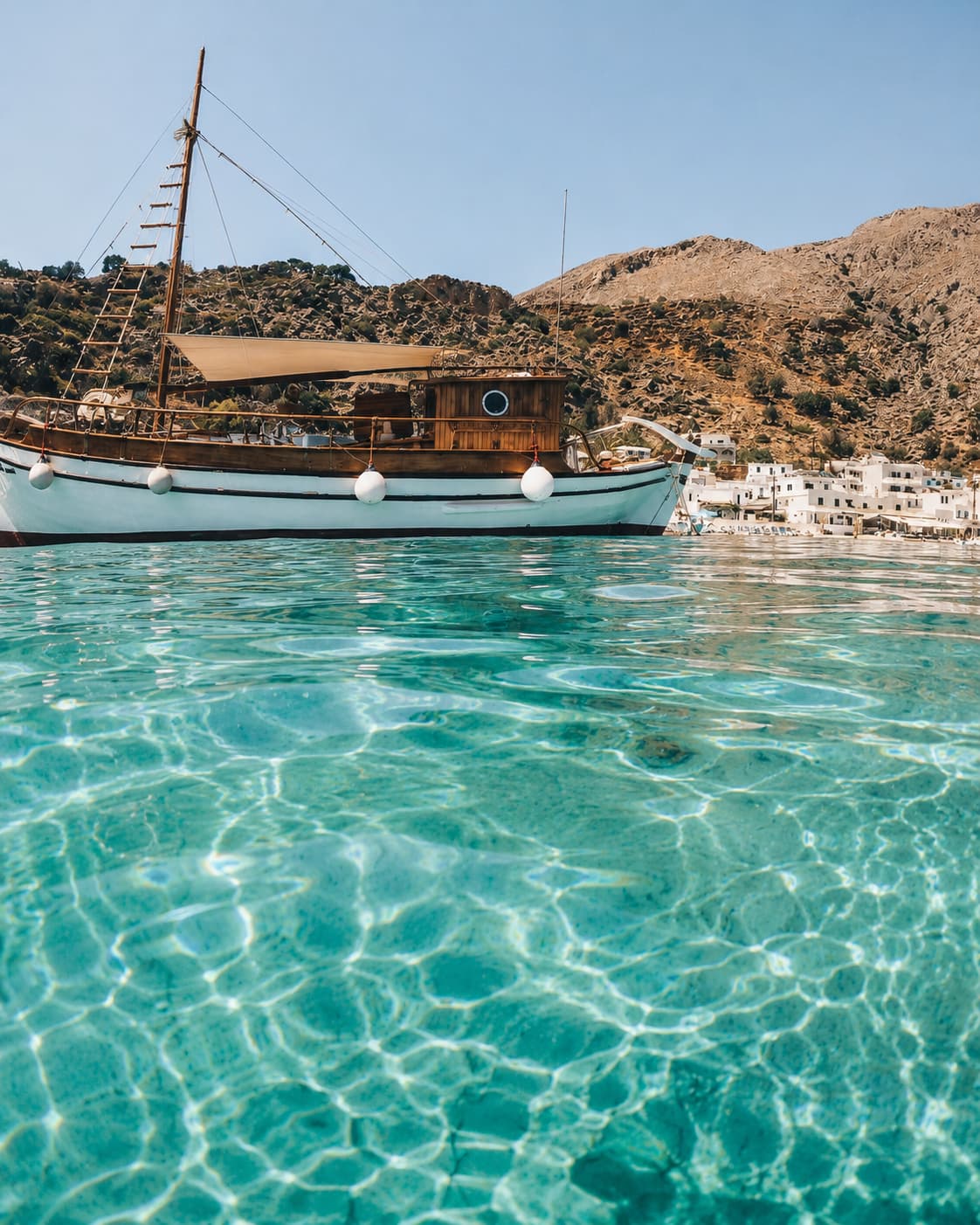
Yes — and October’s sea temperature is one of the genuinely pleasant surprises for first-time late-season visitors. Sea temperature in Crete holds around 23°C through early October — roughly 2°C below the annual peak but well above the threshold most swimmers consider comfortable. By late October, the northern coast cools to around 21–22°C, which is still warm enough for confident swimming, if not quite the bath-temperature sea of August.
The south coast, however, behaves differently. Sheltered south-coast bays — particularly around Paleochora, Loutro, Frangokastello, and the wider area between Agia Roumeli and Chora Sfakion — retain heat longer. During late-October warm spells, south-coast water can reach 25–26°C, making for swimming conditions that would be considered excellent even in high summer. The orientation of the coastline, facing the Libyan Sea rather than the open Mediterranean, and the protection offered by the White Mountains against northern systems, keeps these bays significantly warmer than the northern coast in late season.
There’s a practical caveat, though. As the season winds down, beach clubs close and lifeguard services end at many beaches. Remote swimming spots — and there are many beautiful ones on the south coast — lose what minimal safety infrastructure they had. Swimming is still available and still worth doing; just be more attentive to conditions than you would be in the height of summer.
06 — The Island Is Not One Climate
This point deserves its own section because most October guides treat Crete as climatically uniform. It isn’t. The White Mountains run east-west across the western half of the island and create a significant divide between the north and south coasts — not just in weather patterns but in the entire character of the late-season experience.
The north coast — where Chania, Rethymno, and Heraklion sit — faces the Aegean and the prevailing northern winds. It’s more exposed, cools faster in autumn, and catches the unsettled spells that arrive in mid-to-late October more readily than the south. It’s still excellent in October, but its autumn arrives earlier.
The south-west coast — Paleochora, Loutro, Agia Roumeli, Sougia, Chora Sfakion, Frangokastello — records more than 320 days of sunshine annually, making it the island’s most reliable late-season region. Protected from northern systems by the mountains, these villages face the Libyan Sea, and the climate here is closer to North African in character. October on the south coast can genuinely feel like summer elsewhere — warm days, warm water, light evening breezes, local fishing boats rather than tourist parasols. The Visit Crete regional tourism authority offers current practical information on south-coast ferry connections and seasonal access routes.
Getting Around Crete’s South Coast in October
The trade-off is accessibility. The south coast is remote. Agia Roumeli is accessible only on foot or by ferry; Loutro has no road at all. Paleochora and Chora Sfakion have roads, but they’re mountain routes. A car is essential for south-coast exploration, and accommodation options thin out significantly compared to the north. What you get in exchange for that inconvenience is the version of Crete that the season hasn’t touched.
If the south coast appeals and you’re thinking about other warm autumn alternatives elsewhere in the Mediterranean, the post on Puglia in autumn covers a comparable shoulder-season dynamic on the Italian side of the sea.
07 — Is Samaria Gorge Open in October?
The official season for Samaria Gorge runs from 1 May to 31 October. In 2025, the gorge remained open until the official closing date of 31 October, with 119,138 visitors recorded across the season. That’s the formal picture.
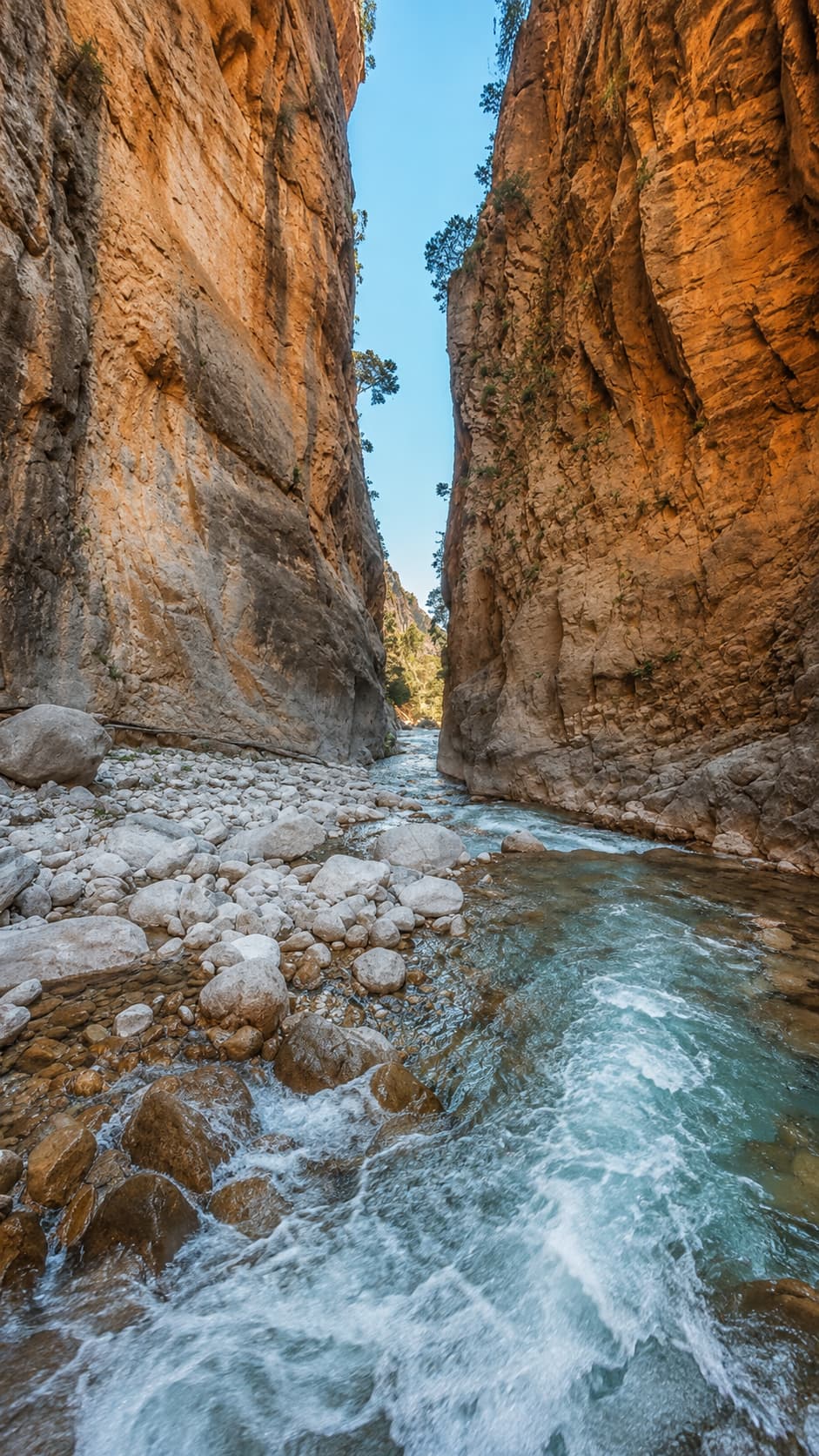
The practical picture is more conditional, and this distinction matters. Rangers can close the gorge at any point during October if rainfall makes the riverbed dangerous — flash floods and rockfall are genuine hazards, not theoretical ones. In some years, early autumn rains arrive by mid-October and prompt closures before the calendar end of the season. In others, the gorge runs all the way to 31 October without disruption. There is no reliable way to know in advance which October yours will be.
The right approach is to treat Samaria as a realistic plan rather than a guaranteed one, particularly after the 20th. Check the official Samaria Gorge website the day before you intend to go, or call the park directly. If the gorge is closed when you arrive, the Imbros Gorge — shorter, easier, and nearby — is a genuinely good alternative that many experienced hikers prefer.
Official season: 1 May – 31 October, subject to weather. Entry fee: €10 per person (2025/26). Last entry: around 14:00 — after that, you’re restricted to the first quarter of the trail and must return. The hike takes 4–7 hours depending on pace. It’s one-way: you exit at Agia Roumeli and return by ferry, then bus or car. Check samaria-gorge.gr the morning you intend to go. Don’t assume it’s open because the calendar says it should be.
More Greece and Autumn Travel Guides
Weather, Swimming, and What Stays Open
Closures and Visiting Crete in Late October
Crete vs Other Greek Islands in Autumn
Driving and Packing for Crete in October
October in Crete rewards the traveller who does a little research before booking. The island genuinely offers something good in this month — warm light, warm water, uncrowded archaeology, and prices that justify the off-season timing. The only people who come back disappointed are the ones who booked a resort beach without knowing that the resort beach may not be there when they arrive.
Go early in the month and almost nothing is closed. Go late and stay in a town, and you get a Crete that many return visitors prefer to the one they visited in August. The fortnight makes all the difference, and so does the map.
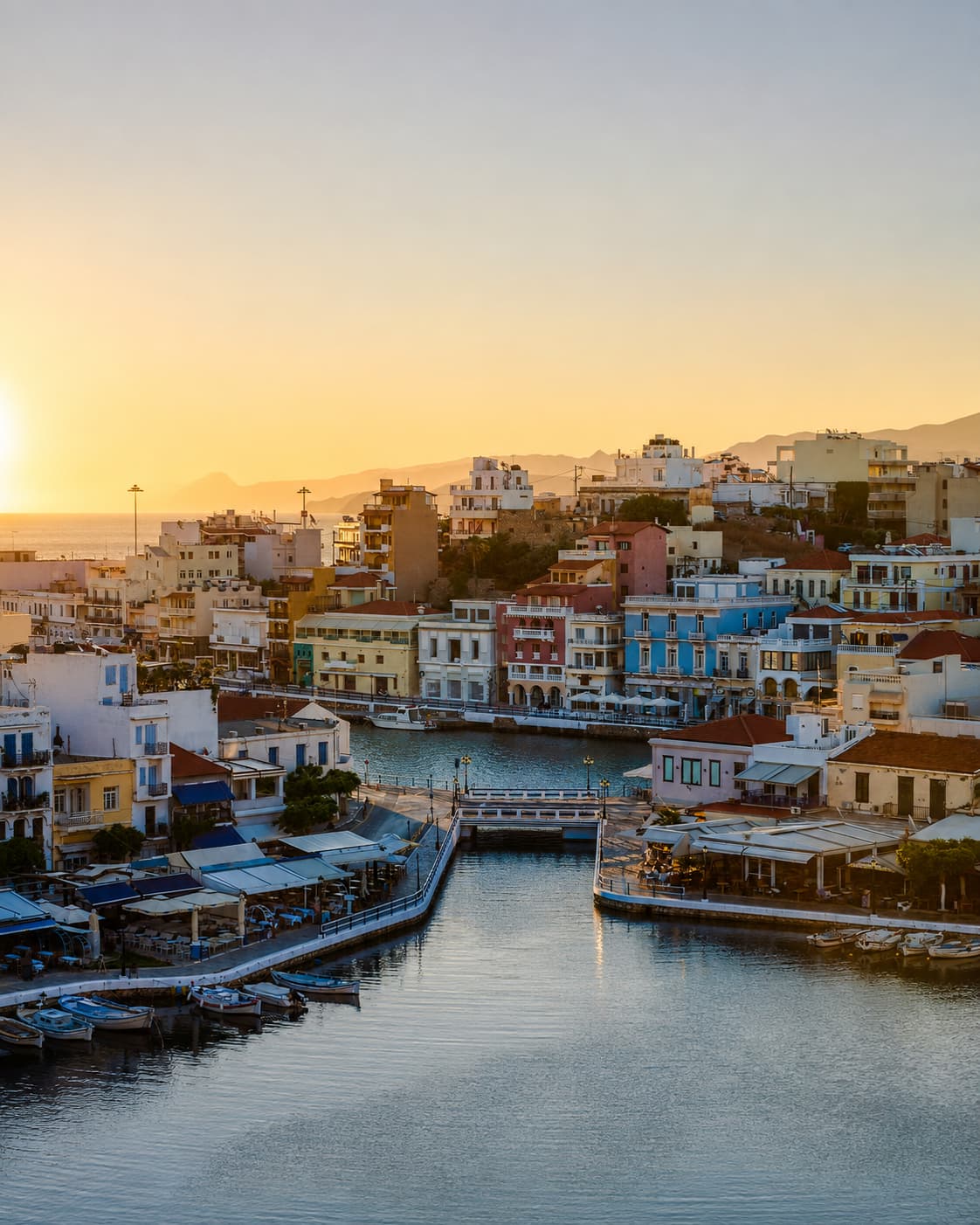
Crete in October isn’t one answer — it’s a series of smaller decisions stacked together.
Make the right ones, and the island rewards you with something the summer crowds never get.