
Oktoberfest Without a Reservation: What It Costs and When to Go
This Oktoberfest guide covers the 2026 Wiesn honestly: real costs, timing that actually matters, and why the day you choose outweighs anything you could book.
Every Oktoberfest guide opens with the same promise: secrets, insider access, tips the tourists don’t know. Most of them are selling something — tours, reservations, curated packages — and the advice bends accordingly. This one isn’t. The most useful thing in any honest Oktoberfest guide is also the simplest: you don’t need a reservation, and the day you pick will determine more about your experience than anything else you could plan.
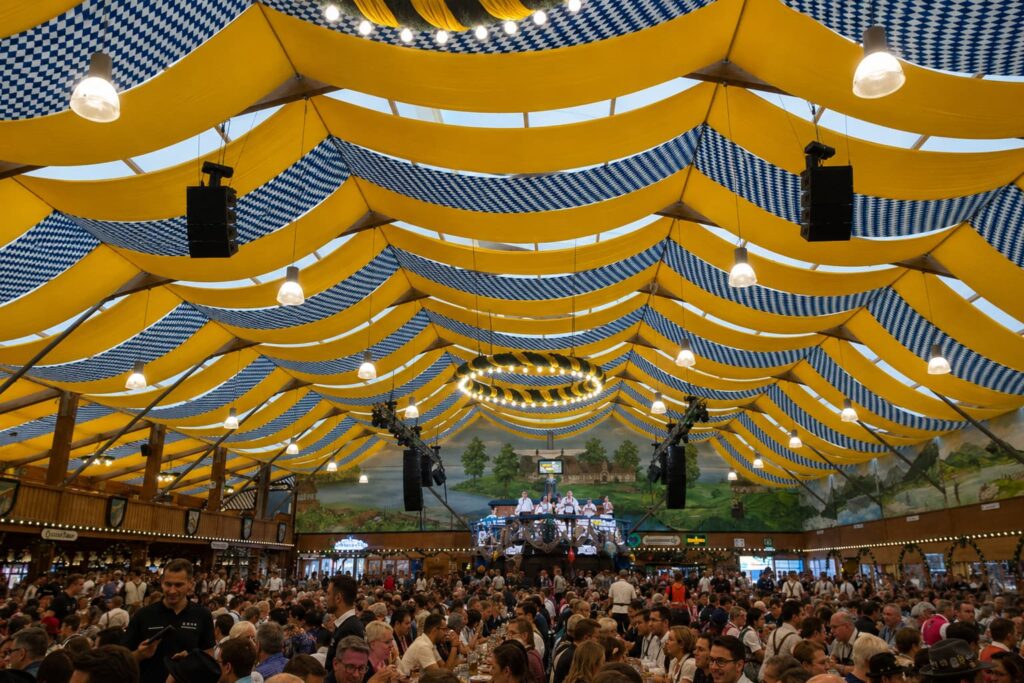
The festival runs 16 days. At one end, you have peak Saturday crowds with queue barriers at tent doors before noon. At the other, a Monday afternoon in late September where you walk straight in, find a table, and stay as long as you like. Both are technically “Oktoberfest.” They are not, however, the same experience.
01 — Oktoberfest Guide: 2026 Dates and Why They Move
The 2026 festival runs from Saturday 19 September to Sunday 4 October — sixteen days at the Theresienwiese in Munich. Nothing pours until the mayor taps the first keg at the Schottenhamel tent at noon on the opening Saturday; until that moment, the world’s largest beer festival serves no beer at all.
The end date follows a rule rather than a fixed calendar slot: the festival always closes on the first Sunday of October, extending through 3 October if that Sunday falls on the 1st or 2nd, so that German Unity Day is covered. This cycle, the first Sunday in October lands on the 4th, so the 4th it is.
The original event — a horse race celebrating the 1810 wedding of Crown Prince Ludwig — took place in October. Subsequently, it migrated to September in the nineteenth century to take advantage of milder autumn weather. For planning purposes, that means the festival is almost entirely a September event. The first weekend and the last few days of the run are the only ones with genuine October framing. If you are reading this having already booked flights for the first week of October and hoping to catch Oktoberfest: the festival ends on 4 October this year, so you have a narrow window — check your arrival date carefully. If you’re still deciding which European city to visit that month, see the guide to the best European cities in October.
Opening keg tap: noon, Saturday 19 September at the Schottenhamel tent. Last day: Sunday 4 October. If you are coming for a weekend, the middle weekends of the festival (late September) tend to offer the best balance of atmosphere and manageability.
02 — Do You Need Tickets or a Reservation?
The first thing any useful Oktoberfest guide needs to establish: entry to the grounds and to every beer tent is free. There is no ticket, no wristband system, and no obligation to have a reservation. Furthermore, the tents cannot legally refuse you entry purely on capacity grounds while unreserved floor space exists — the festival conditions require twelve of the fourteen large tents to maintain substantial walk-in areas throughout the day.
How Reservations Actually Work
A standard Oktoberfest reservation is a full table of ten, booked for one sitting (either the afternoon session or the evening session), with food and drink vouchers included in the price. Those vouchers typically cover two Maß and half a roast chicken per person — roughly €40–50 worth of consumption bundled into the booking cost. There is no central booking system; each tent runs its own reservations directly through its website, and most popular slots for weekends fill within days of opening in January or February. Smaller groups cannot reserve fewer than a full table.
The upshot: if you didn’t book in January, the practical weekend option is walk-in. That is not a consolation prize — it is how the majority of visitors experience Oktoberfest, and it works well if you time it correctly.
Never buy a reservation from a third-party broker or resale site. The official Munich festival position is that such resales are invalid, and tent staff can and do refuse entry on resold table bookings. The only legitimate source is each tent’s own official website — linked from the official Oktoberfest site at oktoberfest.de.
03 — Oktoberfest Guide to the Best Day: Weekdays vs Weekends
This is where the real planning happens. The festival’s 16 days do not all look alike, and the difference between a relaxed Tuesday and a peak Saturday is not a matter of degree — it’s a qualitatively different event.
Weekdays vs Weekends
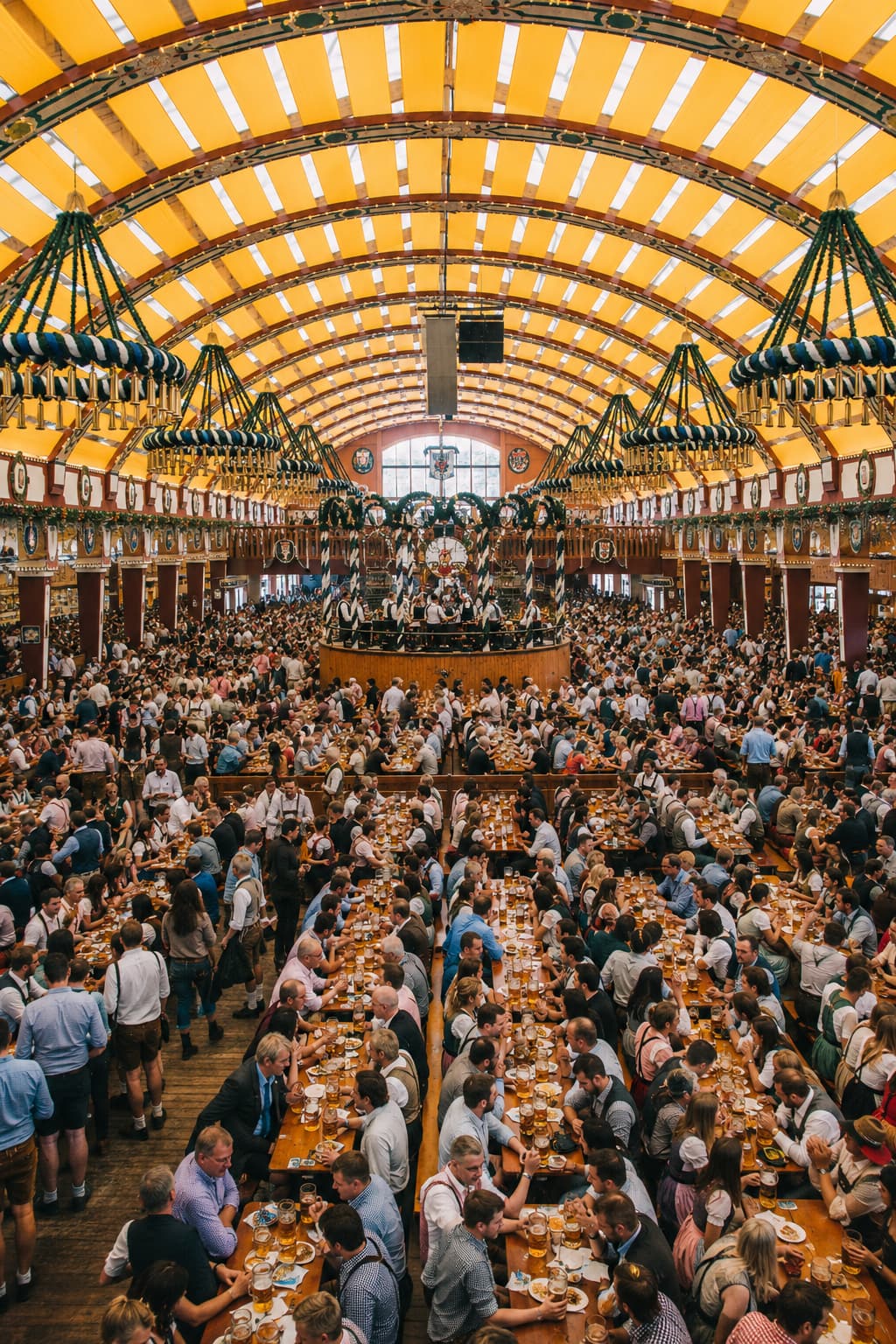
Weekends — Friday evening through Sunday — are when the festival runs at full pressure. Tents reach capacity by early afternoon on peak Saturdays. Queue barriers appear at tent doors before noon. Reserved sections fill from opening and stay reserved all day. The atmosphere is loud, dense, and charged — some people find this exactly what they came for; others find it exhausting before they’ve had a drink.
Weekdays are different in kind. In particular, Tuesday and Wednesday are the sweet spot: manageable crowds, walk-in access without early-morning queuing, and a crowd mix that skews local rather than international tourist. Mondays are underrated — bachelor groups thin out considerably compared to the weekend, and the tent atmosphere is more community-style than performance-mode.
Avoiding Saturday is the single most valuable piece of planning advice in this Oktoberfest guide. If you can only attend on a weekend, Sunday mornings — before noon — offer significantly better walk-in odds than Saturday at any hour.
Afternoon vs Evening
The festival runs two informal sessions. Before roughly 5pm — particularly on weekdays — the mood is unhurried. Families with children move through the grounds, the fairground half of the site is busy, and unreserved tables are findable without a sprint. This is also when the beer is, objectively, more enjoyable: you can hear the brass band, hold a conversation, and actually look at the tent you’re sitting in.
The evening atmosphere — peak hours roughly 6–9pm — is what most people imagine when they think of Oktoberfest. Louder, denser, and by that point considerably more expensive in the practical sense that getting any service takes time. It is, additionally, when tents hit capacity most reliably and when the reserved/unreserved split becomes most rigid.
Both are worth experiencing. For a first visit, the honest recommendation is to arrive during the afternoon session, establish yourself inside before the shift happens, and let the transition happen around you — rather than arriving mid-evening and wondering where to stand.
What Time to Arrive Without a Reservation
On weekdays, arriving between 10–11am gives you strong odds of walking straight to an unreserved table in your first or second tent attempt. By 1–2pm on the busier mid-festival days, some popular tents begin reaching capacity and management may one-in-one-out the entrance.
On weekends, push that window earlier: 9–10am is the target. The gates open before the taps, so you can position yourself at unreserved tables before service begins. For a weekday evening visit without a reservation, being inside a tent by 4:30–5pm is the safe line — after that point, the reserved evening sections activate and walk-in floor space compresses fast.
04 — Oktoberfest Guide to Costs: What You’ll Actually Spend
The entry-level figure most guides give — “just the cost of a beer” — is accurate as far as it goes and also not the number you should plan around. A realistic day at Oktoberfest, including transport from the city centre, one full meal, and two or three Maß, runs approximately €80–120 per person. Here is what makes up that figure.
The Line-Item Breakdown
| Item | 2026 Cost | Notes |
|---|---|---|
| Maß (1 litre beer) | €14.80–€15.90 | Augustiner Festhalle is cheapest at €14.90. Most large tents charge €15.80. |
| Tip per Maß | €1–€2 | Bavarian standard — not optional in practice. Tipping directly to your server at the table. |
| Hendl (half roast chicken) | €17–€20 | The standard tent meal. Prices vary slightly by tent. |
| Pretzel (Brezn) | €5–€8 | Carried by roaming vendors inside tents — cash only. |
| S-Bahn from city centre | €3.70 each way | Line U4/U5 to Theresienwiese or tram 18/19. The closest stop is walkable from the main train station. |
| Oide Wiesn entry | €4 | The separate historic section — this is the only paid entry at the festival. |
| Realistic daily total | €80–€120 | Two Maß + one full meal + transport + tips. No Tracht rental, no souvenirs. |
How to Spend Less
Eat before you arrive. Food inside the tents is good — properly good — but it is also priced at festival rates. A meal in the Maxvorstadt or Schwabing neighbourhoods beforehand cuts €20–25 from the day. In addition, the fairground half of the Wiesn has food stalls where prices are more varied; not all of them are inside the main beer tents.
Go on a weekday and go early. Beyond the crowd benefit, early-week daytime visits mean slower servers who can actually spend time at your table — the rushed peak-hour dynamic costs you in tipping pressure without adding anything to the experience. Moreover, the Oide Wiesn (the historic section with traditional tent architecture and older brass bands) charges €4 entry but consistently runs at lower intensity than the main grounds, offers an excellent alternative for the first drink of the day, and has genuinely atmospheric beer service from wooden barrels.
One practical note on payment: most tents operate cash-only for walk-in service. Some accept cards for pre-booked reservations, but that is not your situation. Withdraw euros before you arrive — ATMs on the grounds charge significant fees, and there are queues. If Munich is one stop on a wider autumn trip, the Alps in October are within easy reach — the region changes completely once the Wiesn closes.
05 — What to Wear to Oktoberfest: Tracht or Not?
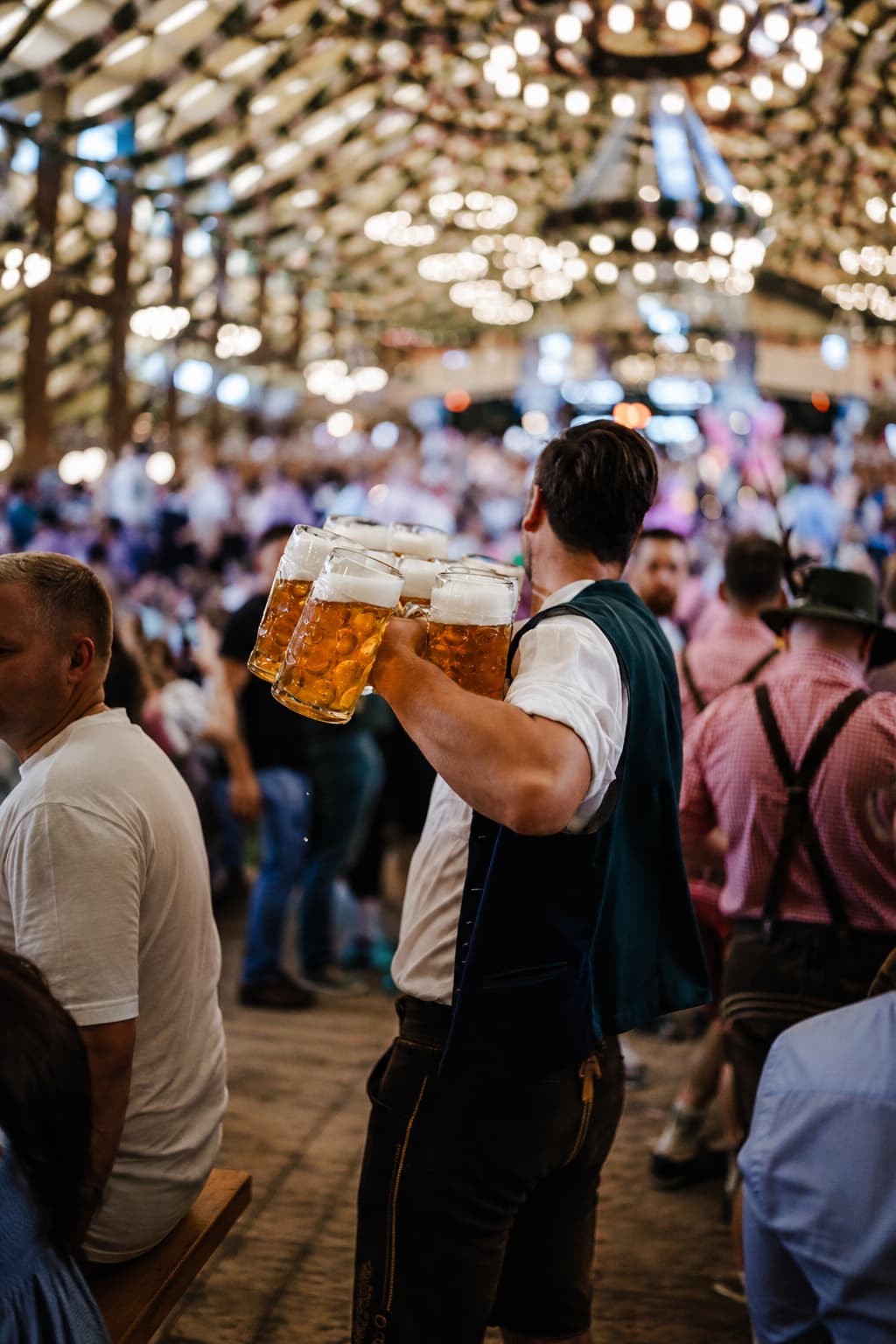
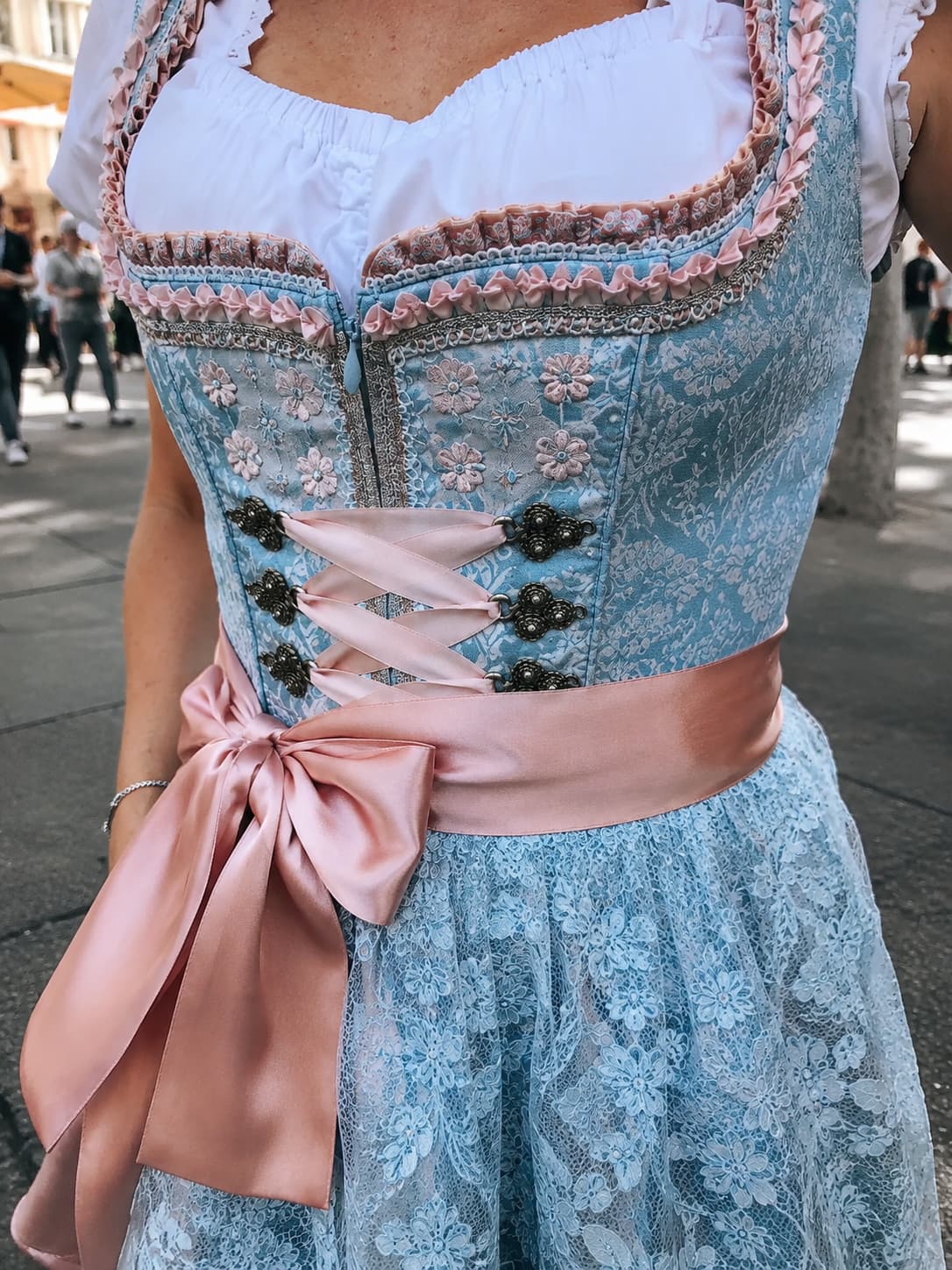
Traditional dress — a Dirndl for women, Lederhosen for men — is not mandatory, but it is the social norm at a level that goes beyond “nice to have.” At a busy tent, particularly on a weekend, you will be in a significant minority without one, and this matters more than it sounds: traditional dress is how locals signal genuine engagement with the festival versus tourism. That said, plenty of visitors attend in ordinary clothes without issue, and no tent enforces a dress code.
If you are buying or renting Tracht, buy from a Trachten shop rather than a costume supplier. The distinction is visible: the costumes sold as “Oktoberfest outfits” at souvenir shops and tourist markets are made to look like Dirndl and Lederhosen without actually being them — different fabric, different cut, different construction, and immediately recognisable to anyone at the festival. Counterfeit Tracht is a known enough problem that Munich tourist boards address it directly. A real Dirndl starts around €150 and rises from there; a quality pair of Lederhosen is a similar entry point.
One practical clothing note that most Oktoberfest guides skip entirely: the festival involves a lot of standing, climbing over benches, and navigating crowds. Comfortable shoes — genuinely flat, with grip — matter more than completing the outfit. The ground around tents after rain, or in high-traffic areas, can be uneven and wet. For broader packing decisions around a European autumn trip, the Europe packing list covers the layering question in full.
06 — Tent Basics: What This Oktoberfest Guide Won’t Rank
Fourteen large tents operate on the main Theresienwiese grounds, alongside 21 smaller ones, with an additional three tents in the separate Oide Wiesn section. Each large tent is associated with one of the six Munich breweries — Augustiner, Hacker-Pschorr, Hofbräu, Löwenbräu, Paulaner, and Spaten — and only beer from those six may be served at the festival. Notably, all six operate within the old Munich city limits; the rules on this have been firm since the nineteenth century. The official Oktoberfest site lists each tent with direct links to reservation pages.
In terms of character, the tents differ considerably more than in beer quality. Some are newer structures with modern facilities and balcony galleries; others retain the older interior architecture and feel closer to what the event looked like before the mass tourist era. The Schottenhamel tent is where the mayor taps the opening keg — the most historically significant moment of the festival — and it tends to draw a crowd that skews Munich resident and student. The Hofbräu tent, by contrast, draws a more international crowd, particularly Australians and Americans, as a result of the Hofbräuhaus’s global name recognition. Neither is better or worse; they attract different audiences.
The Oide Wiesn: the Reliable Fallback for Any Oktoberfest Visit
The Oide Wiesn — “Old Oktoberfest” in Bavarian dialect — is a separate ticketed section (€4) within the grounds that runs a historically-framed version of the event: older tent formats, traditional brass bands playing the older programme, fairground rides from earlier eras, and a noticeably calmer atmosphere. For visitors who find the main grounds overwhelming, or who want their first drink in a setting where conversation is actually possible, this is consistently the best starting point. The beer comes from genuine wooden barrels in some of the Oide Wiesn tents — a distinction that matters to about half the people I mention it to and absolutely nothing to the other half.
In terms of walk-in odds, the Oide Wiesn runs at lower occupancy than the main tents on most days. Therefore, if you arrive at the grounds on a weekend morning and find the first large tent already past capacity at the entrance, the Oide Wiesn gives you a guaranteed entry point and a genuine experience rather than a compromise one.
07 — Is Oktoberfest Suitable for Families?
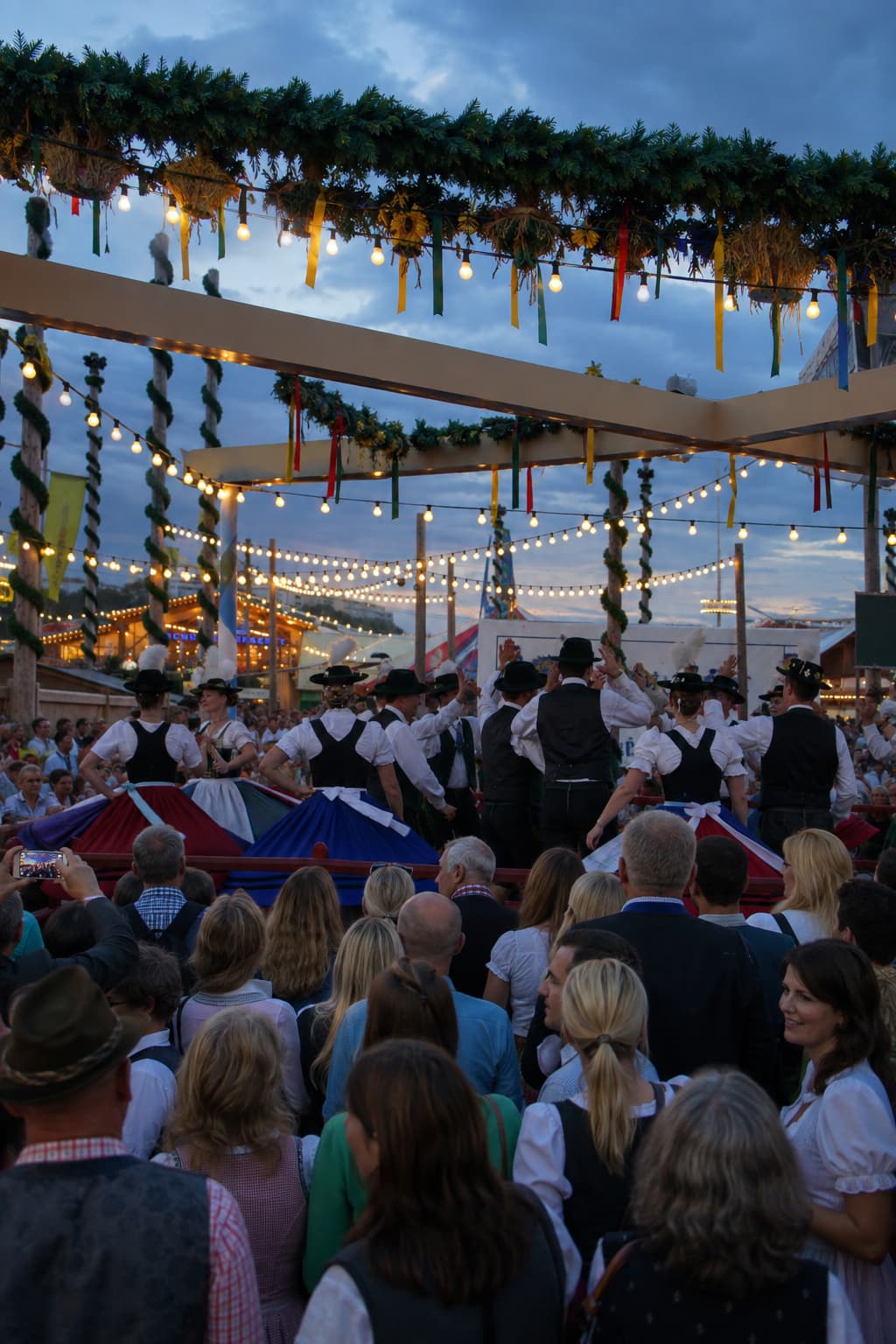
In its daytime hours, yes — more so than the festival’s reputation suggests. Children are permitted inside the tents during the day (the evening cut-off is typically 8pm for under-18s), and the afternoon session in particular has a distinctly mixed-age atmosphere. Families with prams are, in fact, a normal sight at mid-week daytime visits.
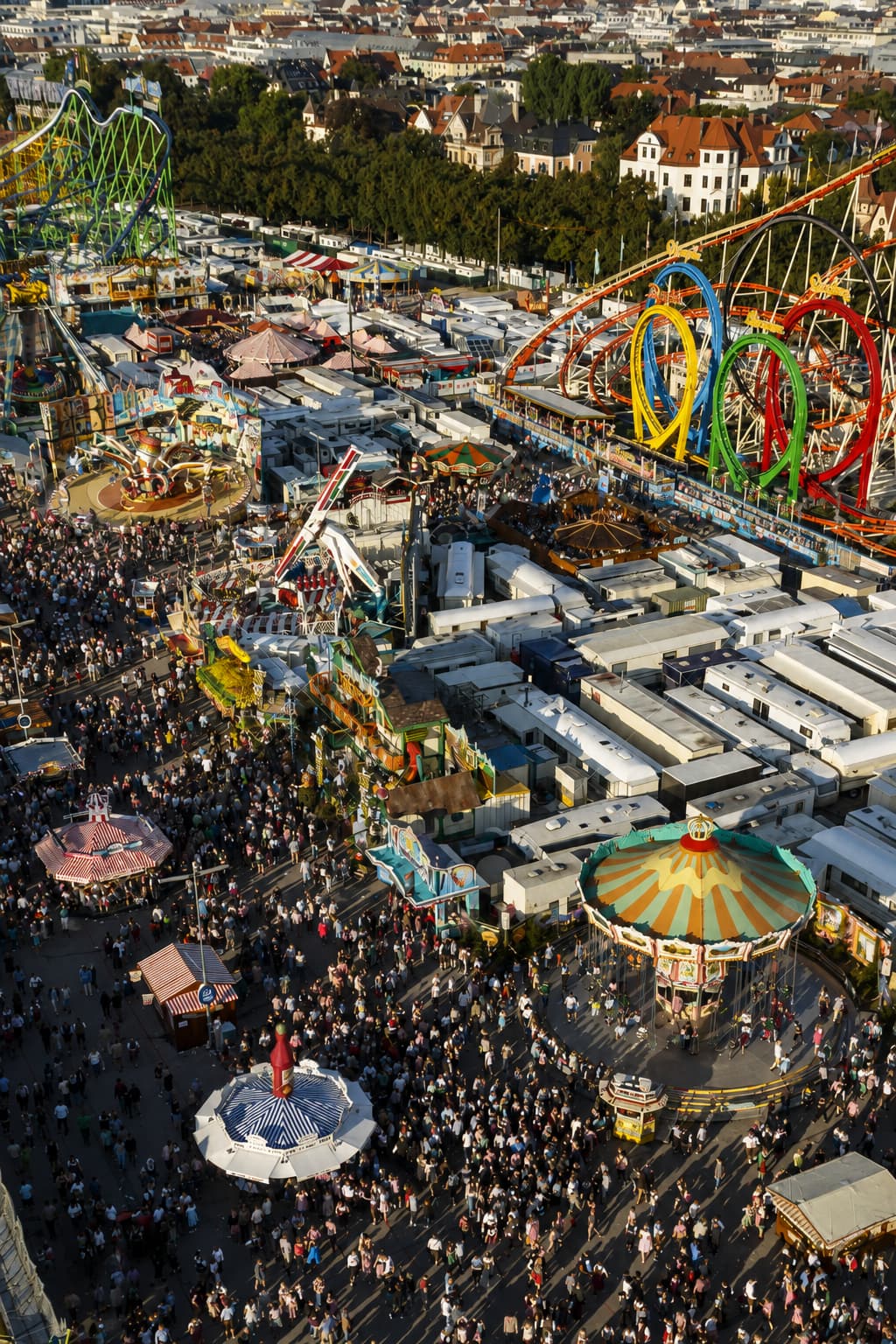
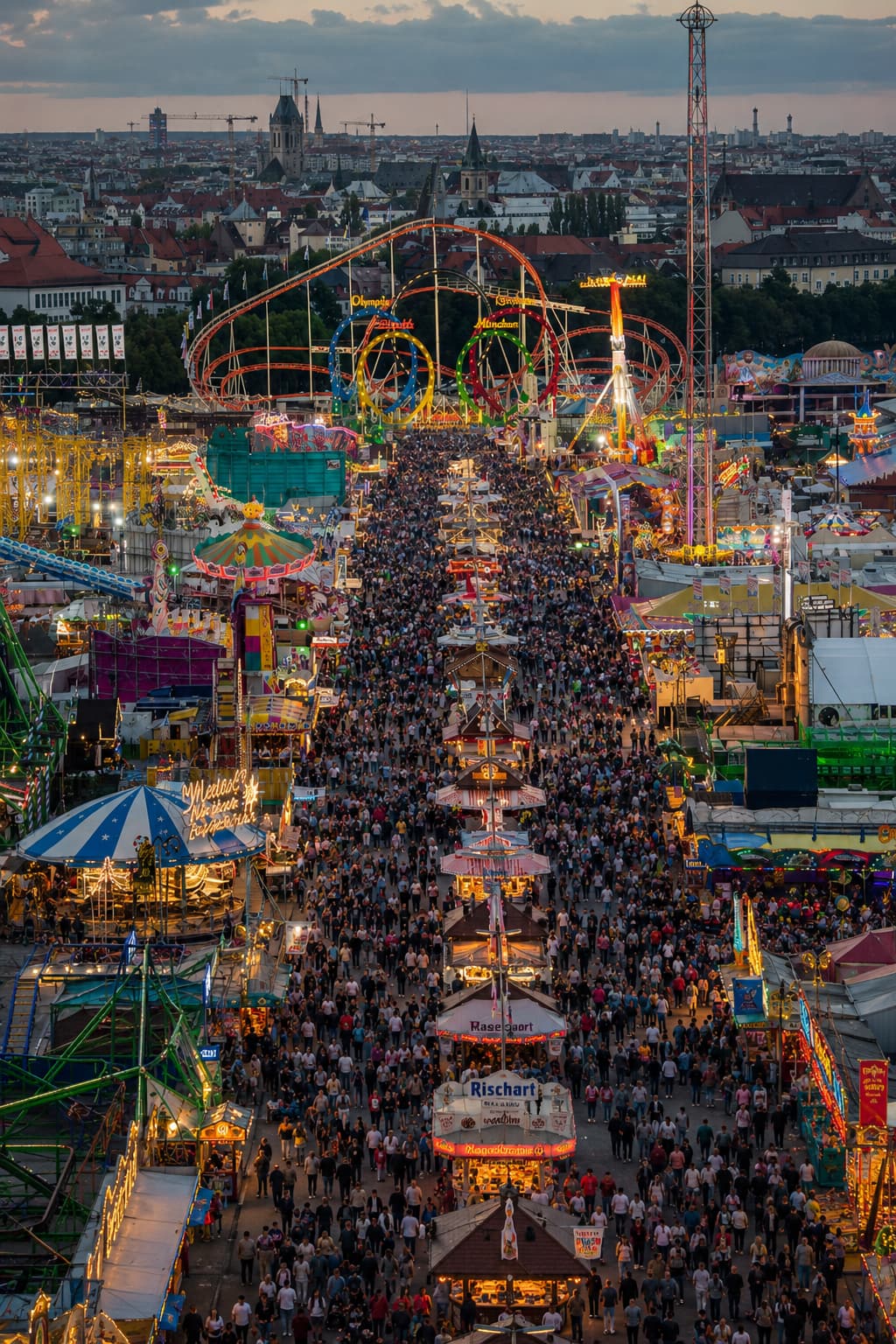
That said, the fairground half of the Wiesn is the part most guides neglect entirely, and it is also the part that makes Oktoberfest genuinely suitable for families. The main Theresienwiese is a fully-functional funfair alongside the beer tents: rollercoasters, historic carousels, roasting stalls, sweet vendors, and rides that run for the full sixteen days. For visitors who want a Germany-in-September experience rather than a beer-in-September experience, this half of the grounds is substantial and entirely separable from the tent circuit.
The Oide Wiesn, additionally, charges a €4 entry fee specifically because it runs children’s rides, traditional games, and folk music at a more manageable scale than the main grounds. Consequently, it is the pragmatic family choice — lower noise floor, slower crowd movement, and the historical tent programme for adults who want beer alongside the children’s programme.
One honest note: Oktoberfest by late evening on a peak weekend is not a family environment. The combination of density, noise level, and the cumulative effect of several million litres of beer over sixteen days produces an atmosphere that is, charitably, not calibrated for children. Daytime visits — specifically weekday daytimes — are, in contrast, a different proposition entirely. If you are planning an autumn trip around European events more broadly, the fall foliage in Europe guide pairs well with a Munich visit in late September.
More Autumn Travel Guides From Munich
Is Oktoberfest Worth It and How Long Should You Go?
Tent Capacity and Visiting Munich During Oktoberfest
Oktoberfest Beer Prices and Getting to the Festival
Most coverage of the Wiesn sells you a version of the festival — this Oktoberfest guide tries to describe the actual one. It is louder, more expensive, and — on the right day — considerably more worth it than anything the tour packages manage to convey.
Go on a Tuesday. Get there before noon. Let the afternoon happen.