
Japan Solo Travel: An Honest 10-Day First-Timer’s Guide
Your honest guide to japan solo travel — where to go, what to know, and what most guides won’t tell you, built around a 10-day route that actually works.
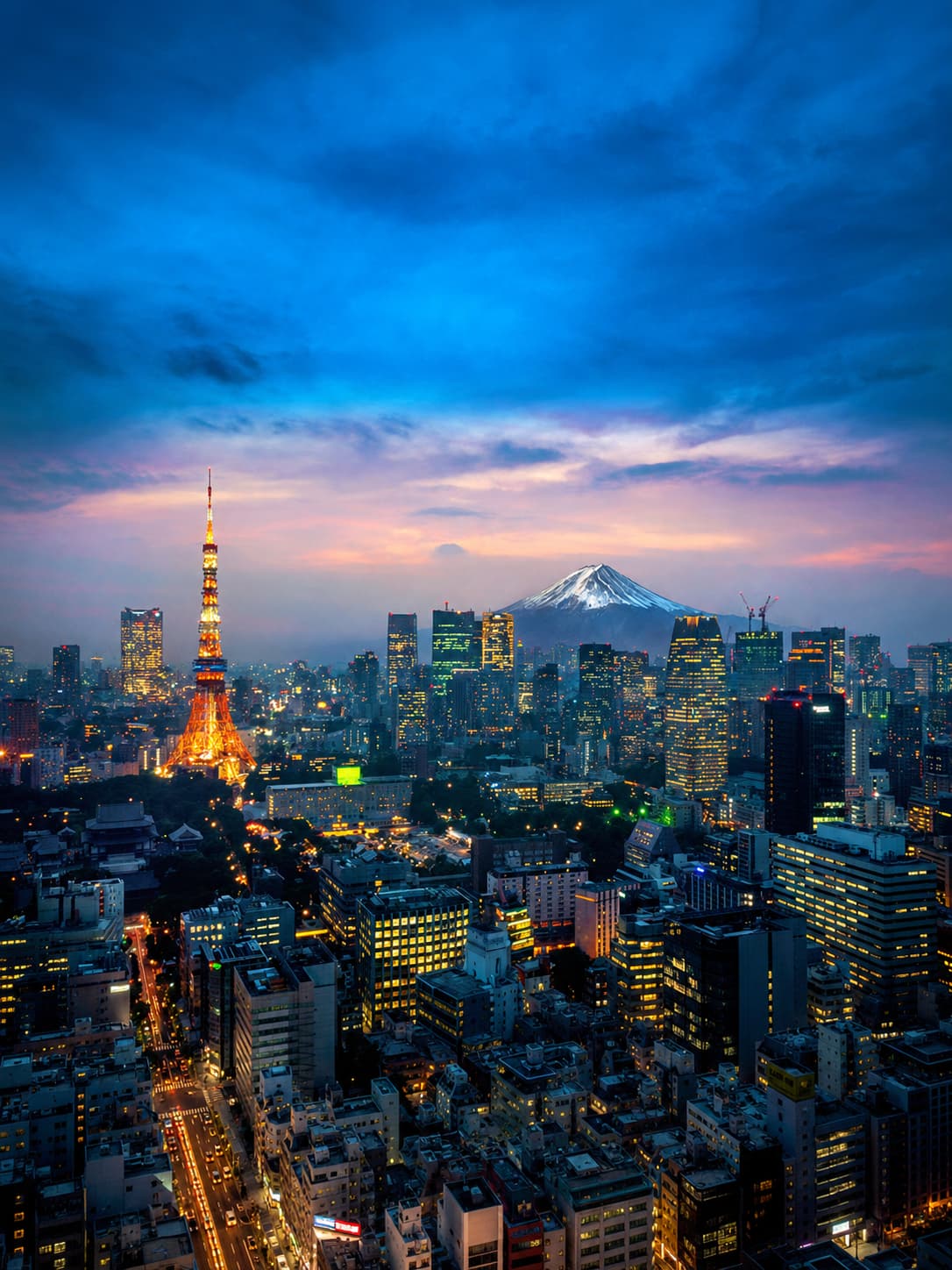
Japan solo travel topped the FTLO Travel 2026 Travel Dreams Survey — the number one solo destination on earth by country, ahead of Australia, New Zealand, and everything else. The reasons aren’t hard to find: a train network that makes navigation effortless, a food culture that treats eating alone as entirely normal, accommodation built for single occupancy, and a social atmosphere that doesn’t pressure you into interaction you’re not looking for. It is, structurally, one of the best-designed countries in the world for traveling alone.
This guide is built around a 10-day solo route — flexible enough to compress into 7 if you’re short on time, expandable if you have more. It starts in Tokyo and moves south through Kyoto and Osaka, with an optional extension into Hiroshima and the islands. The PAA questions — cost, safety, language, JR Pass — are answered below the itinerary, where they belong: as supporting context, not the main event.
01 — The 10-Day Solo Route
The route below follows Japan’s Golden Route — Tokyo to Kyoto to Osaka — which exists for a reason. These three cities are genuinely extraordinary and they reward solo travelers in different ways. Tokyo is overwhelming at first and then becomes intuitive surprisingly fast. Kyoto is the cultural heart, better experienced early in the morning than at any other time. Osaka is looser, louder, and good for the end of a trip when you’ve found your footing and just want to eat well and wander.
→
→
→
The Hiroshima leg is optional — and genuinely optional, not a politeness. If 8 days is your limit, Tokyo–Kyoto–Osaka is complete and satisfying on its own. Hiroshima and Miyajima, when you have the time, add a depth the Golden Route alone doesn’t offer: a different register, a different pace, one of the most quietly powerful sites in the world.
7-day version: Cut Tokyo to 2 days, Kyoto to 2 days, Osaka to 2 days, skip the Hiroshima extension. It’s tighter but doable if you prioritise ruthlessly. The jet lag problem is worse at 7 days — your first full day in Tokyo you will feel it.
02 — Tokyo (Days 1–3)
How to arrive and where to base yourself
Land at Narita or Haneda, get your IC card at the airport (Suica from a JR machine, Pasmo from a metro machine — either works), and take the train into the city. Skip the pocket wifi desk at the airport — an eSIM bought before departure is cheaper and works immediately. Try not to plan anything meaningful on day one beyond getting to your accommodation and eating something close by. The jet lag from Europe or the Americas is significant. Accept it.
Train in from the airport, check in, walk the neighbourhood, eat at a ramen counter or convenience store. Shinjuku suits solo travelers who want proximity to nightlife and transit. Asakusa is quieter and more atmospheric — good if your pace is slower. Don’t plan sightseeing on day one. The jet lag will beat you.
Arrival
Start at Meiji Shrine early (genuinely quiet before 9am, genuinely crowded after). Walk south through Harajuku and Omotesandō — good coffee, good architecture, no obligation to buy anything. Shibuya crossing in the afternoon rather than evening. End in Shinjuku: Golden Gai for a drink if you want the closest thing Tokyo has to a social scene for solo travelers — tiny bars, no pretension, regulars and tourists mixed.
City exploration
Sensō-ji temple at 7am before the stalls open — this is the version worth seeing. Ueno Park and museum district mid-morning. Walk or subway to Akihabara in the afternoon if you’re curious; skip it if you’re not. End the day in Yanaka — an old neighbourhood that survived the firebombing, feels genuinely Tokyo rather than tourist-Tokyo, and has good cheap izakayas.
Temples + neighbourhoods
Where to stay in Tokyo
Capsule hotels in Shinjuku or Asakusa reduce the solo premium significantly — ¥3,000–¥6,000 per night for a clean pod with storage and showers. Business hotels (Dormy Inn, APA, Toyoko Inn) give you a private room from ¥10,000–¥15,000. Both work. The capsule is the better value; the business hotel is the better sleep if you’re a light sleeper.
03 — Kyoto (Days 4–6)
Getting there and the golden rule
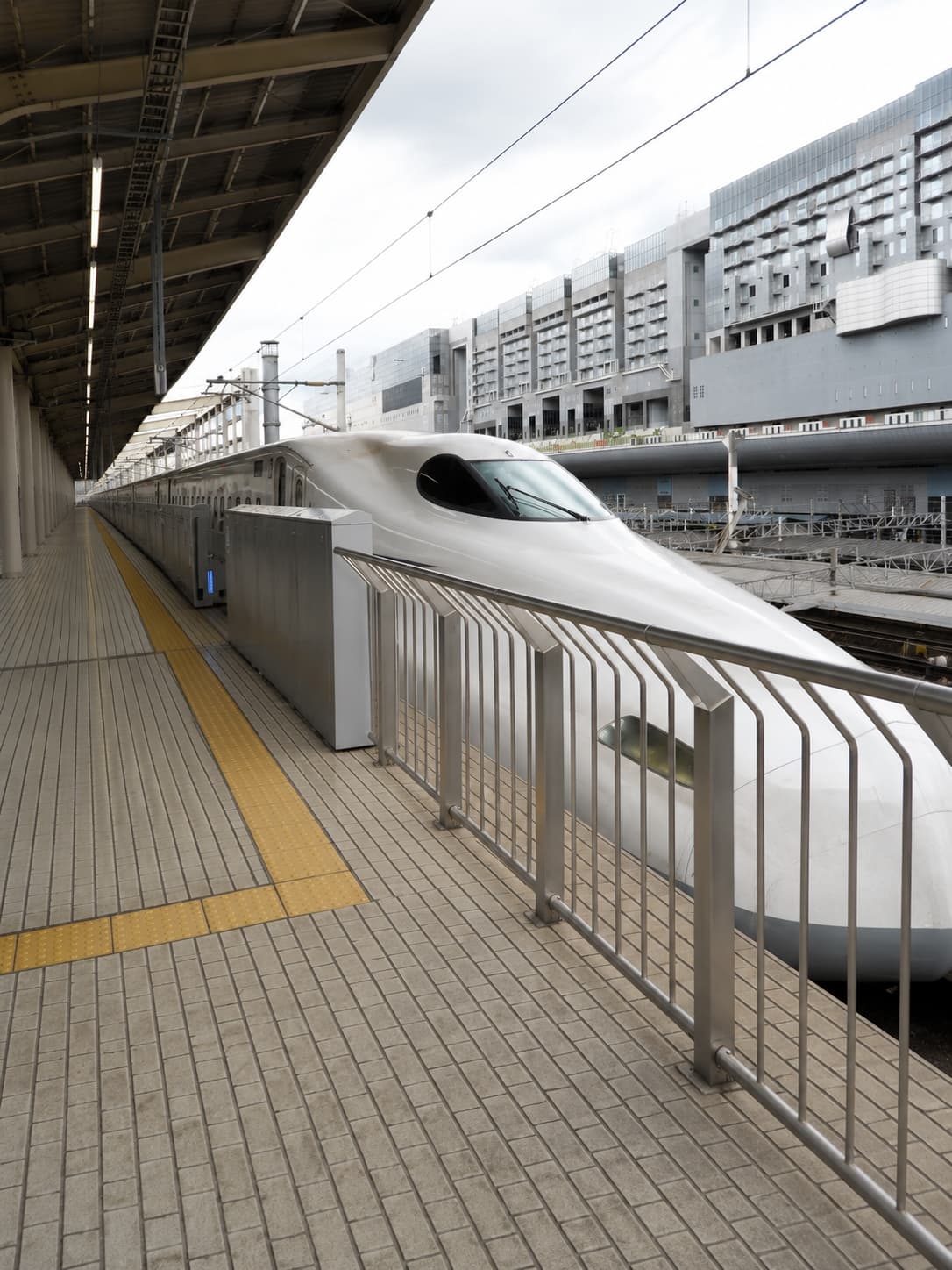
Shinkansen from Tokyo to Kyoto is 2h15 on the Hikari (covered by JR Pass) or 2h10 on the Nozomi (supplement required if using the pass). Either way, buy a reserved seat — the unreserved carriages fill fast on busy travel days. Arrive mid-morning, check in, walk to wherever you’re staying. Kyoto is easily navigated on a day IC card bus pass or by bicycle rental.
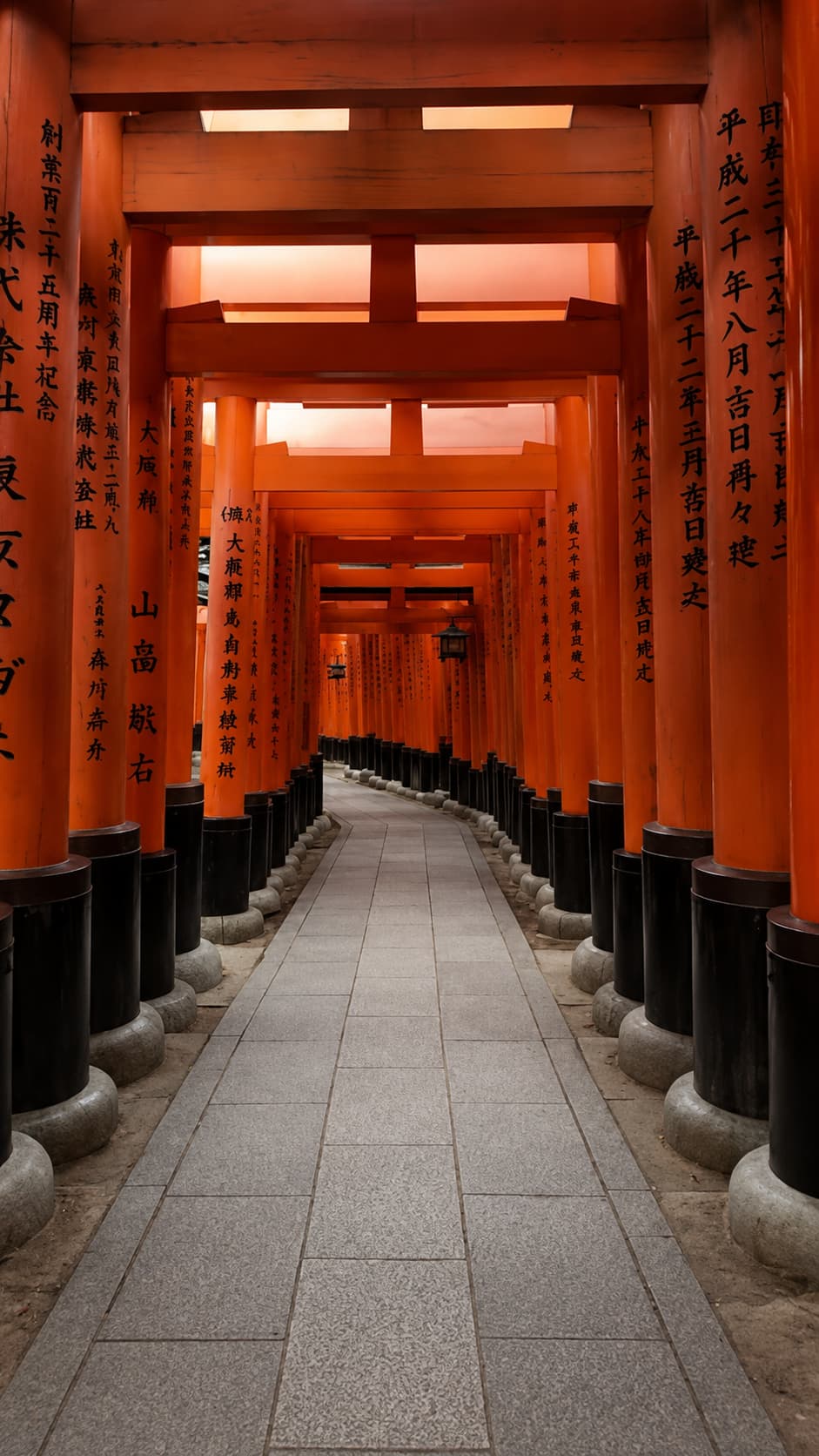
The thing nobody tells you about Kyoto: the city rewards early risers with an absurd generosity. Fushimi Inari before 8am is a genuinely spiritual experience. The same spot at 11am is a crowd management problem. Every famous site has this split personality, and the split is entirely determined by what time you arrive.
Fushimi Inari at 7am — non-negotiable early start. Walk the full trail to the upper torii gates, not just the famous lower corridor. Takes 90 minutes and most people turn back after 20. Then Nishiki Market for lunch (the narrow covered street, not the tourist shops flanking it). Afternoon in Gion — the old geisha district is best on foot late afternoon when the light hits the machiya townhouses right. Don’t expect to see a geisha; do expect to see a neighbourhood that has somehow survived largely intact.
Temples + old city
Arashiyama bamboo grove at sunrise — same logic as Fushimi Inari, same crowd problem if you arrive late. The bamboo grove is genuinely remarkable and genuinely takes about eight minutes. The surrounding area (Tenryū-ji temple garden, the river, the monkey park above) is worth the full morning. Kinkaku-ji (the Golden Pavilion) in the early afternoon — it’s as impressive as advertised, briefly. Plan 45 minutes, not two hours.
Arashiyama day
Nara is 45 minutes from Kyoto by Kintetsu train and often skipped by 7-day travelers who should include it. The deer are genuinely wild and genuinely everywhere — around the temples, in the park, outside convenience stores. Tōdai-ji houses the largest bronze Buddha in Japan and is worth an hour. Back in Kyoto by 4pm: walk the Philosopher’s Path from Nanzen-ji to Ginkaku-ji, which is quieter than most Kyoto sites and best in late afternoon light. For the deeper Kyoto solo day, our Kyoto one-day solo itinerary builds the full dawn-to-dusk version.
Day trip + slow afternoon
Where to stay in Kyoto
Central Kyoto (near Kyoto Station or Gion) is the most practical base. Capsule hotels here run ¥4,000–¥7,000. The new Kyoto accommodation levy (effective March 2026) adds ¥400–¥1,000 per person per night for most mid-range stays — budget for it, it’s not large but it is real.
04 — Osaka (Days 7–8)
Osaka to Kyoto is 15 minutes by Shinkansen or 30 minutes by regular express — cheap and frequent. Check in somewhere near Namba or Shinsaibashi. Osaka rewards a different mode than Kyoto: less early-morning temple discipline, more wandering, more eating, more letting the city find you rather than the other way around. It is also significantly more relaxed about solo travelers than Kyoto — this is not a city that takes itself seriously in the way the old capital does.
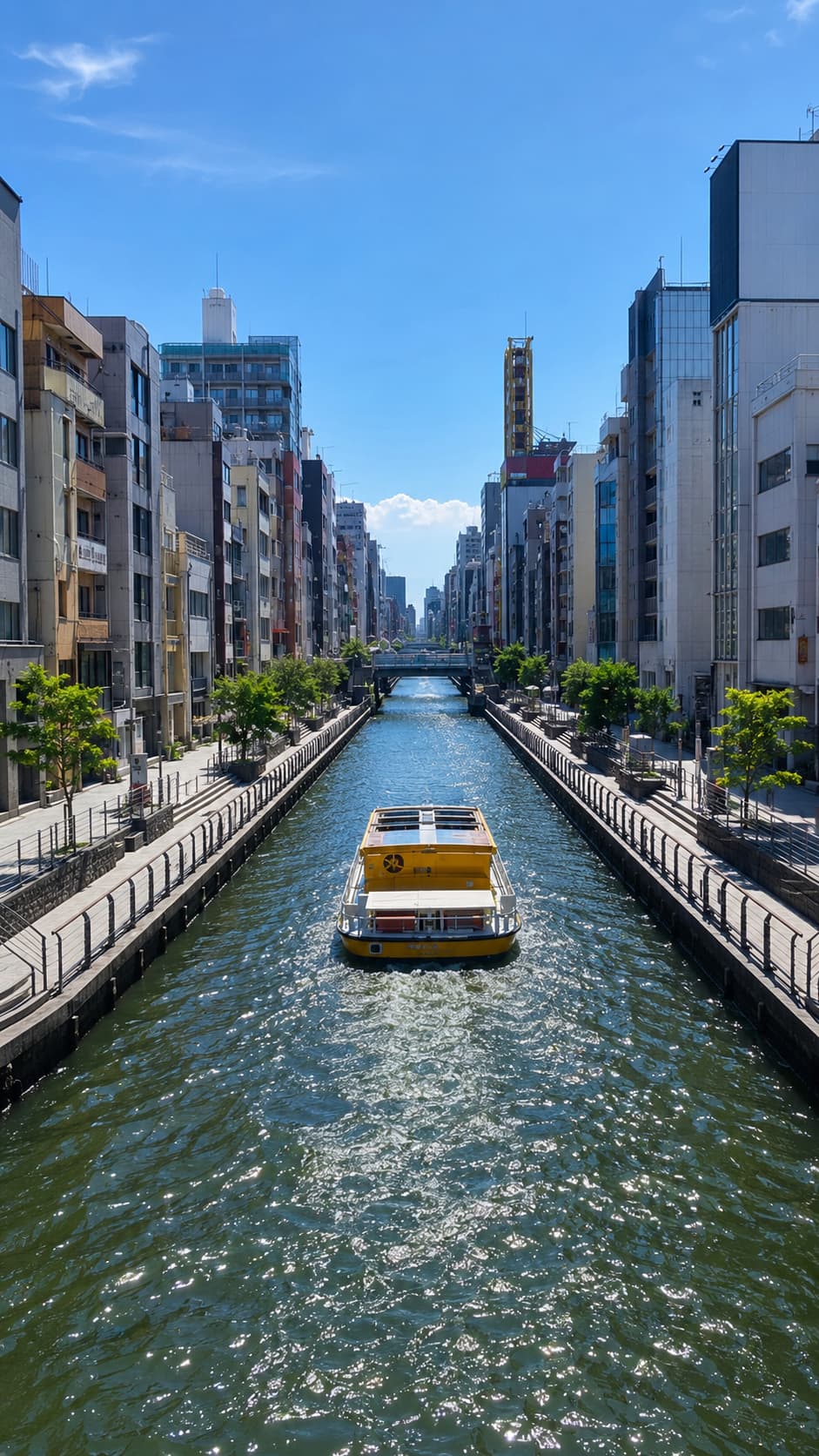
Osaka Castle in the morning — the grounds are beautiful, the castle itself is a 1930s concrete reconstruction, worth knowing before you pay the entrance fee. The museum inside is actually good. Walk south to Shinsekai for lunch — a working-class neighbourhood that has kept its postwar atmosphere and serves kushikatsu (deep-fried skewers) at counters built for one. Dōtonbori in the evening for the full neon chaos experience, which is exactly what it looks like in photos and somehow still worth seeing in person.
Castle + food streets
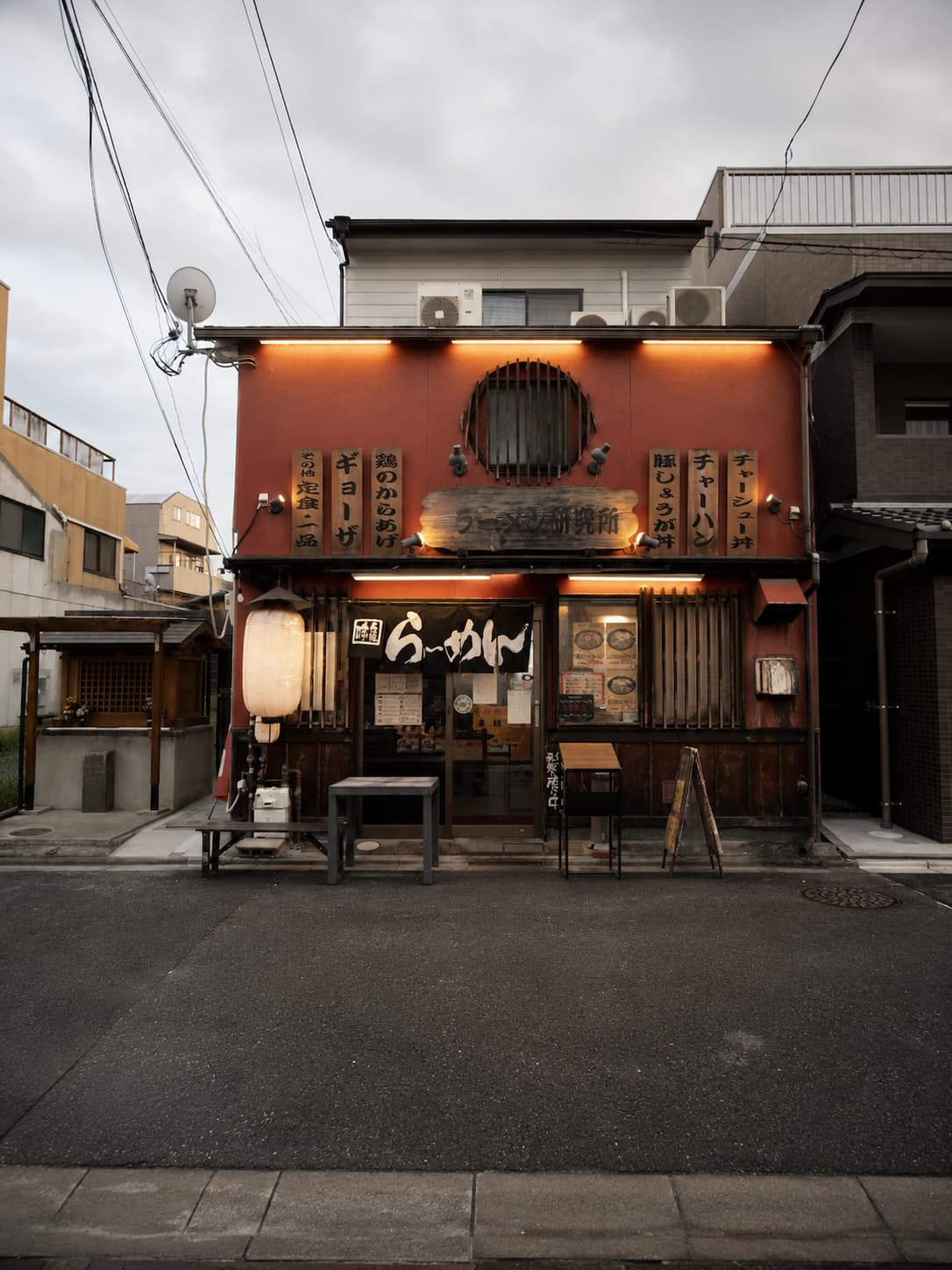
Kuromon Market at 9am for breakfast eaten standing at market stalls — fresh seafood, tamagoyaki, whatever looks good. This is not a tourist market performance; it is where Osaka restaurants actually shop. Tennōji Zoo and Abeno Harukas (the tallest building in Japan) for an optional afternoon above the city. The Namba walk — aimless, no agenda, ending at whichever ramen shop looks best — is the correct way to spend the evening before moving on.
Market morning + slow afternoon
05 — Optional Extension: Hiroshima + Miyajima (Days 9–10)
Hiroshima is 90 minutes from Osaka by Shinkansen (Nozomi or Sakura). If you’re using a JR Pass, the Sakura is covered without supplement. Go.
The Peace Memorial Museum is not a comfortable experience and it is not supposed to be. Plan two to three hours and don’t rush it. The A-Bomb Dome (the skeletal ruin left standing as a memorial) is seen from outside for free. The park surrounding it is quiet, sobering, and well-designed. Hiroshima the city is lively, completely rebuilt, and worth an evening — okonomiyaki cooked on a teppan in front of you at a counter table is the local food, better here than anywhere else.
Memorial + city evening
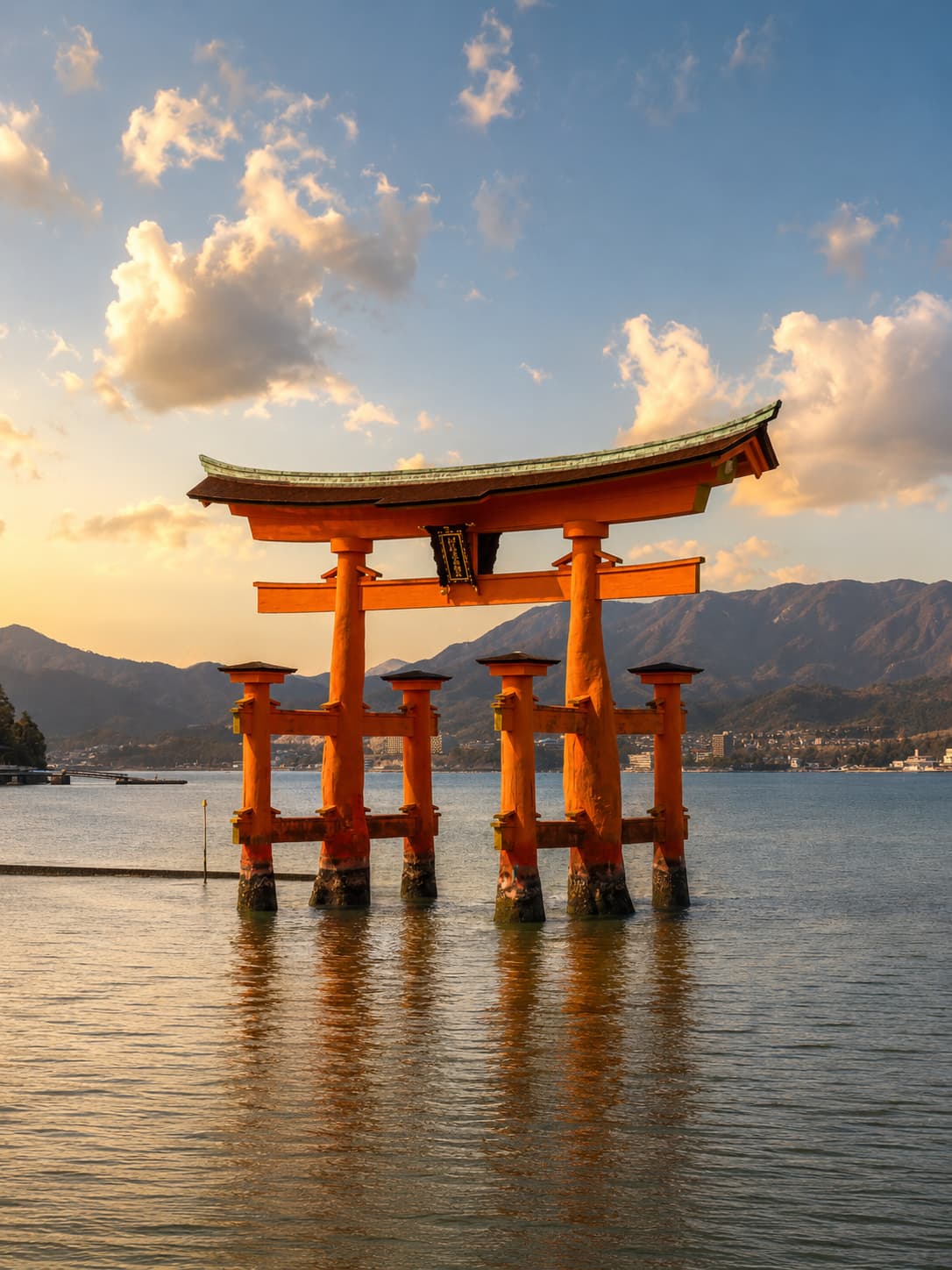
Ferry from Hiroshima to Miyajima takes 10 minutes from the JR ferry terminal (covered by JR Pass). The Itsukushima torii gate standing in the water at high tide is one of those images that turns out to be better in person than in photographs. Check the tide tables before you go — high tide is when the gate appears to float, low tide you can walk to it. Both are worth seeing. Deer roam the island freely, same as Nara — they will attempt to eat your map. Stay the night on the island if budget allows; the tourists leave by 5pm and you’ll have the shrine paths almost to yourself.
Island day
06 — Before You Go: The Practical Stuff
Is japan solo travel safe — including for women?
Exceptionally safe by any global standard. Violent crime is rare, street harassment is uncommon in a way that is notable to most visitors, and public transport is reliable at all hours. Solo female travelers consistently report Japan as one of the most comfortable countries in the world to navigate alone. Women-only train carriages exist on many metro lines during peak hours; using them is sensible and normal. The genuine safety considerations are environmental rather than interpersonal: Japan sits in a seismically active zone, and typhoon season (June–October) brings weather events worth tracking. Download the Japan Meteorological Agency’s warnings app or a local emergency alert app before you arrive.
How much does a solo trip to Japan cost?
Quick answers before you book
The honest number that most guides bury: solo travelers pay 20–40% more per person than couples, almost entirely because hotel rooms cost the same whether one or two people sleep in them. Capsule hotels solve this — they’re priced per person, not per room, and run ¥3,000–¥6,000 per night in Tokyo and Kyoto. Business hotels give you a private room from ¥10,000–¥15,000. Daily budget for a mid-range solo trip runs ¥13,000–¥20,000 including accommodation, food, transport, and entry fees. The weak yen still makes Japan better value in dollars and euros than it looks from the outside.
Two 2026 changes worth building into your budget: Japan’s departure tax tripled from ¥1,000 to ¥3,000 per person on July 1, 2026 — already included in your airline ticket price, nothing to pay at the airport. Kyoto’s accommodation levy was restructured in March 2026 into five tiers; most mid-range stays add ¥400–¥1,000 per person per night. Neither is a dealbreaker; both are real.
Is the JR Pass worth it?
Not automatically, which is a change from a few years ago. The 7-day Ordinary JR Pass currently costs ¥50,000 — nearly double its pre-2023 price after a 70% increase. For a straight Tokyo–Kyoto–Osaka trip, individual Shinkansen tickets frequently add up to less than ¥50,000. The pass makes clear financial sense if you’re adding Hiroshima, Kyushu, or multiple northern cities in the same window. Run your actual planned routes through the Japan Guide JR Pass calculator before buying. Regional passes (JR Kansai, JR East, JR Hiroshima-Nagasaki) are often better value for focused itineraries.
Do you need to speak Japanese?
No — but download Google Translate with the Japanese language pack saved offline before you land. Tokyo, Kyoto, Osaka, and Hiroshima have English signage where it matters: train platforms, major tourist sites, airport immigration. Outside the main cities it drops sharply. The camera mode on Translate handles menus and signs well enough to eat at a local izakaya in a small town without drama. For a rural ryokan booking, check their English communication policy in advance — some handle it well, some don’t, and arriving unable to discuss dinner arrangements is avoidable stress.
Entry requirements for 2026
Citizens of 71 countries including the US, UK, EU nations, and Australia can enter Japan visa-free for up to 90 days with a valid passport — no pre-authorisation required. JESTA (Japan’s planned ESTA-style electronic travel authorization) is in development but is not expected to launch before end of fiscal year 2028. Check the Japanese Ministry of Foreign Affairs for your specific country before booking, as bilateral arrangements can change.
Is Japan good for introverts and solo travelers without experience?
Unusually, specifically yes. Counter-seat ramen bars, ticket-machine restaurants where you order without speaking, a cultural norm against unsolicited interaction, silent train culture — Japan has built solitude into its design in a way that makes solo travel feel like a natural mode rather than a logistical inconvenience. If your idea of a good day is moving through a city at your own pace without anyone requiring anything of you, Japan operationalises that better than almost anywhere. The one honest caveat: if you’re traveling solo specifically hoping to meet people, it requires more deliberate effort here than in more outwardly social travel cultures.
07 — Worth It?
Ten days of japan solo travel is one of the most satisfying trips you can plan. The country rewards the solo traveler in ways that aren’t incidental — they’re structural. You move at your own pace, eat when and what you want, spend three hours at a temple or twenty minutes, take the slow train through the mountains or the fast one through the city. Nobody needs your group consensus. No one slows you down.
The honest caveats: budget a little more carefully in 2026 than you might have a year ago. Check the JR Pass math before you buy it. Go to Fushimi Inari before 8am. Arrive in Kyoto knowing it will be more crowded than you expect at the famous sites, and better than you expected everywhere else.
Japan for solo travel in 2026: yes. Just go informed rather than enchanted.
The best solo trips are the ones where you spend a week surprised by how comfortable you are alone.
Japan has a gift for making that happen faster than anywhere else.