
Merzouga vs Zagora vs Erg Chigaga: Where to Actually Stay in the Sahara
Almost every comparison ranking for this search is written by a tour operator. This one isn’t — just the honest three-way verdict on Morocco’s desert options, and what the brochures consistently leave out.
Why This Morocco Desert Comparison Is Honest
The Merzouga vs Zagora question is the one Morocco decision that most commonly ends in regret — and the reason is simple: almost everything ranking for this comparison is written by a tour operator. Some are well-written. Some are genuinely informative. All of them are selling you something. That conflict of interest shapes what they say and, more importantly, what they leave out — particularly around Zagora, where the gap between what the standard tour delivers and what “Sahara” implies is wide enough that many travelers arrive disappointed.
This post exists to close that gap. The three deserts covered here — Erg Chebbi near Merzouga, the Zagora area, and Erg Chigaga near M’Hamid — are genuinely different experiences requiring genuinely different commitments. Merzouga is the postcard. Zagora is the compromise that works if you understand what it is. Erg Chigaga is the answer for the traveler who wants solitude more than convenience. For the routing and transit logistics of fitting any of these into a full Morocco trip, the Morocco travel planning hub has the itinerary math — this post handles the desert decision itself.
01 — Merzouga vs Zagora: The Short Answer
The Merzouga vs Zagora comparison is slightly off-frame from the start, because the three options aren’t competing for the same traveler. Here is the honest three-way verdict:
Then there is a third option the comparison tables almost never include properly: Erg Chigaga, reached via M’Hamid. It has dunes comparable in scale to Erg Chebbi, a fraction of the camp density, and no shared-tour infrastructure — which means you will pay more and organise differently, but the solitude is genuine.
The short answer most people need: if you have 3 days or more, Merzouga — it is the experience that looks like the photos. If you genuinely only have 2 days, Zagora is not a disappointment, but only if you book it knowing exactly what it is. If you want Merzouga’s dune scale without its crowds, and you are willing to spend more, Erg Chigaga is your answer.
02 — Are the Dunes at Zagora as Impressive as Merzouga?
No. And that answer deserves more than a single word, because the terminology doing the most work in Zagora’s marketing is precisely the word “Sahara.”
What “Sahara desert tour” actually covers at Zagora
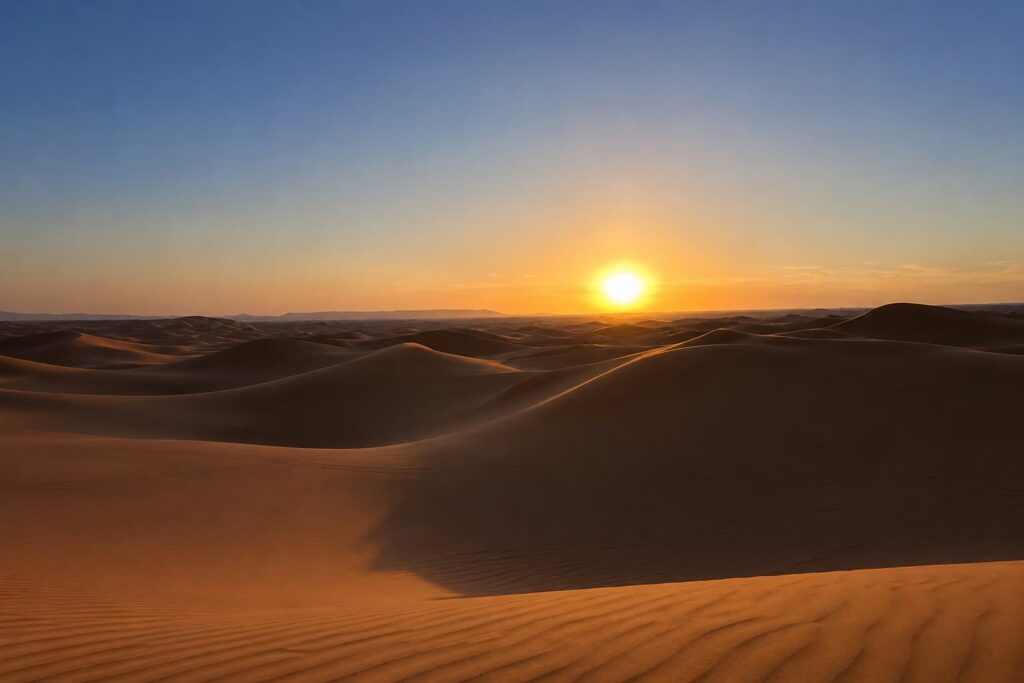
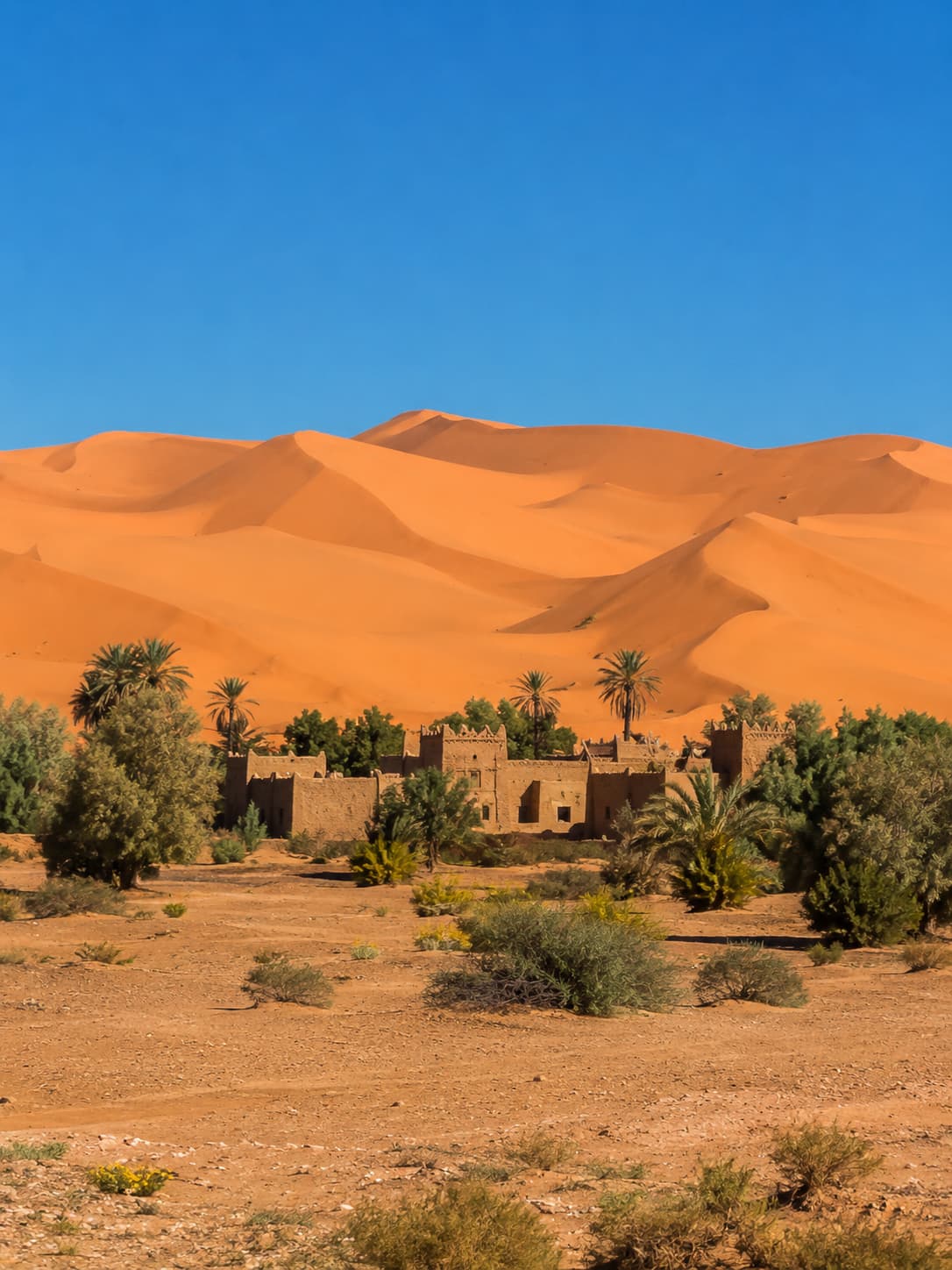
The Erg Chebbi dunes near Merzouga rise to approximately 150 metres — the tallest in Morocco. The terrain around the standard Zagora-area camps tops out at around 30–50 metres, and the surrounding landscape is primarily rocky pre-Saharan steppe: flat, gravelly, the colour of pale clay. This is not a trick — it is technically Saharan terrain. However, it is not an erg: the seas of sculptural orange dunes that most people picture when they say “the Sahara.” A short dune ridge exists near the camps, and it is genuinely beautiful at dawn. It is not Erg Chebbi.
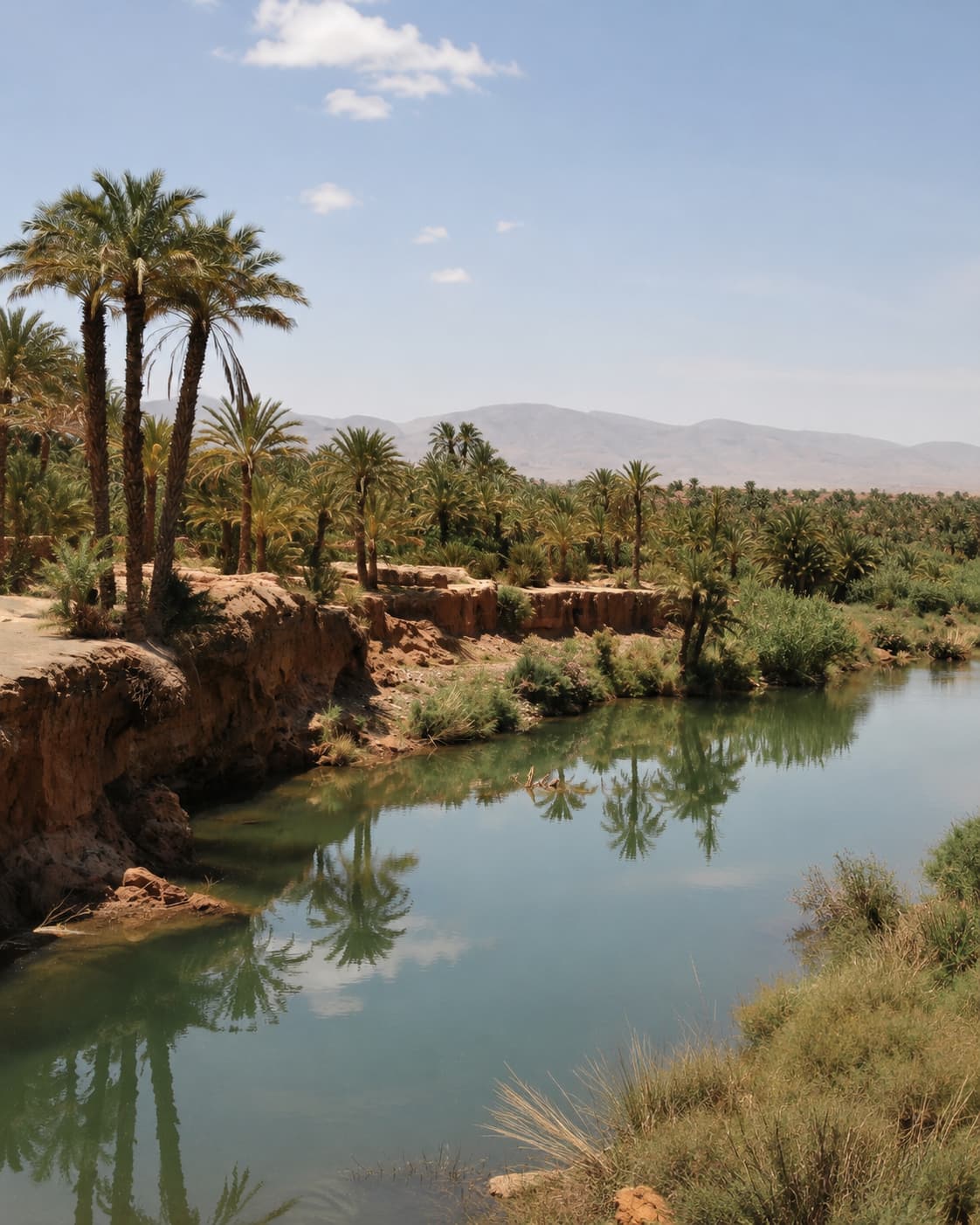
Several Zagora tours from Marrakech pass through the Draa Valley — a long ribbon of palm oases with real desert atmosphere and fortified kasbahs every few kilometres — before reaching a camp in the rocky desert. That journey is genuinely worthwhile. What it is not is the same experience as waking up at the base of a 150-metre dune field, and most travelers who arrive without that context feel the gap between expectation and reality.
The honest Zagora vs Merzouga recommendation
Book Zagora if two days is genuinely all your itinerary allows, you understand that the dunes are modest, and the broader valley experience is what you are there for. Do not book it because it is cheaper or closer and tell yourself you will get “basically the same thing.” You will not — and for the right traveler, Zagora’s version of Morocco is worth it on its own terms.
03 — Erg Chebbi vs Erg Chigaga: What’s the Difference?
This is the comparison almost nobody makes properly — partly because Erg Chigaga sits outside the shared-tour economy entirely, which means operators have no incentive to discuss it.
Erg Chebbi is the dune field directly adjacent to Merzouga town, accessible on foot or by camel from any camp in the area. It is Morocco’s most photographed desert landscape. It is also shared, at sunset, by every tour operator’s clients simultaneously — which, during peak months, means several hundred people gathered on the same dune ridge to watch the sun go down. The landscape does not disappoint. The crowd is a variable that scales with season.
What Erg Chigaga actually offers
Erg Chigaga’s dunes near M’Hamid are comparable in scale to Erg Chebbi — genuine, sweeping, 100-metre-plus sand seas — but require an additional roughly 1.5-hour 4×4 leg beyond the last paved road. There are no shared group tours to Erg Chigaga, only private arrangements through locally-based operators. As a result, the camp density is dramatically lower and the likelihood of having a dune ridge to yourself — particularly at dawn — is high.
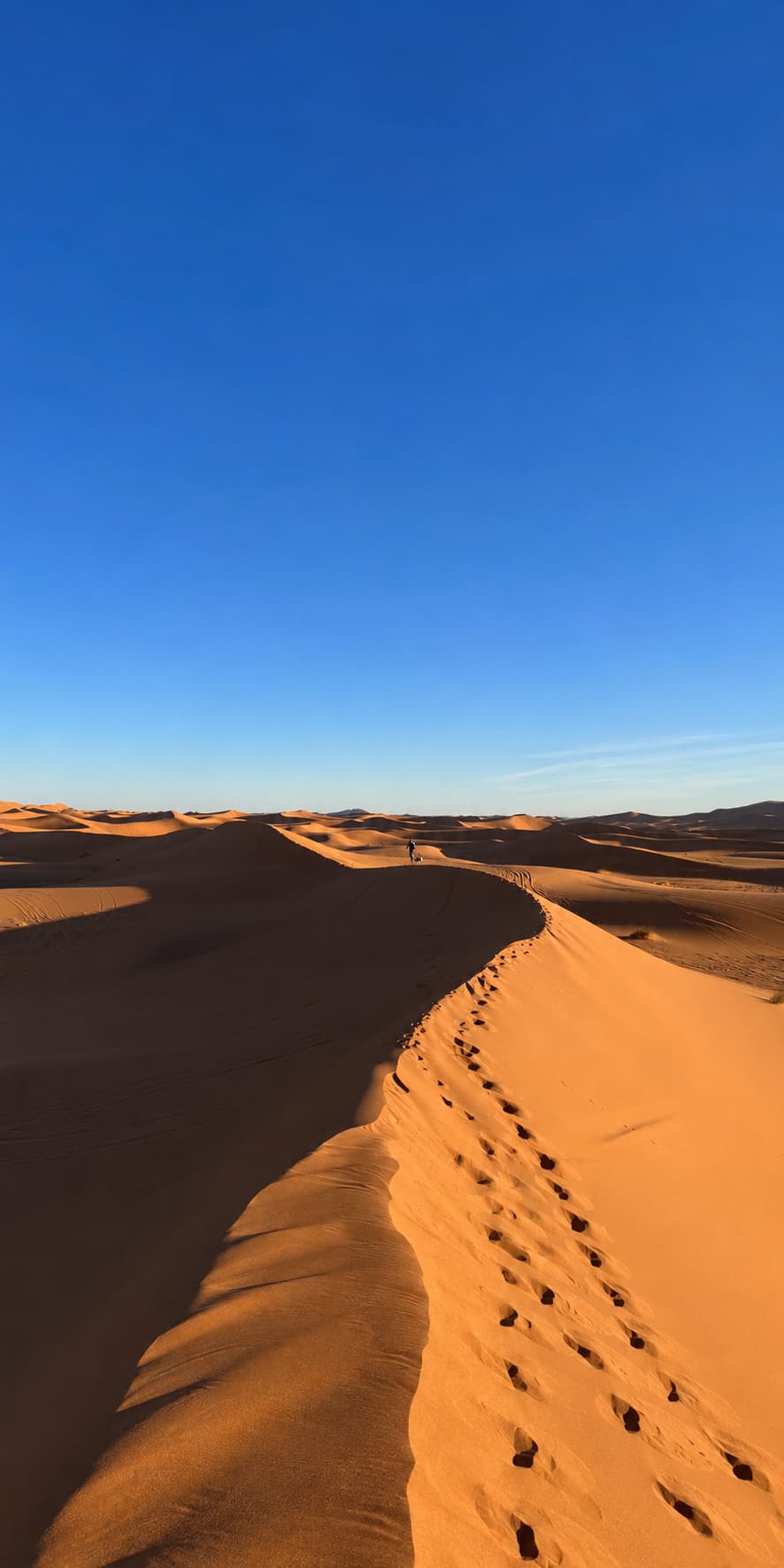
The cost is real: a private Erg Chigaga arrangement runs several times the price of a Merzouga group tour. For the traveler who wants the Sahara at scale without sharing it with a bus tour, it is the correct answer. For most first-time visitors on a moderate budget, Merzouga is the more practical choice — and planning around dawn rather than sunset is the better way to reclaim the solitude that Chigaga offers by default.
04 — How Many Days Do You Need for the Merzouga or Zagora Desert Trip?
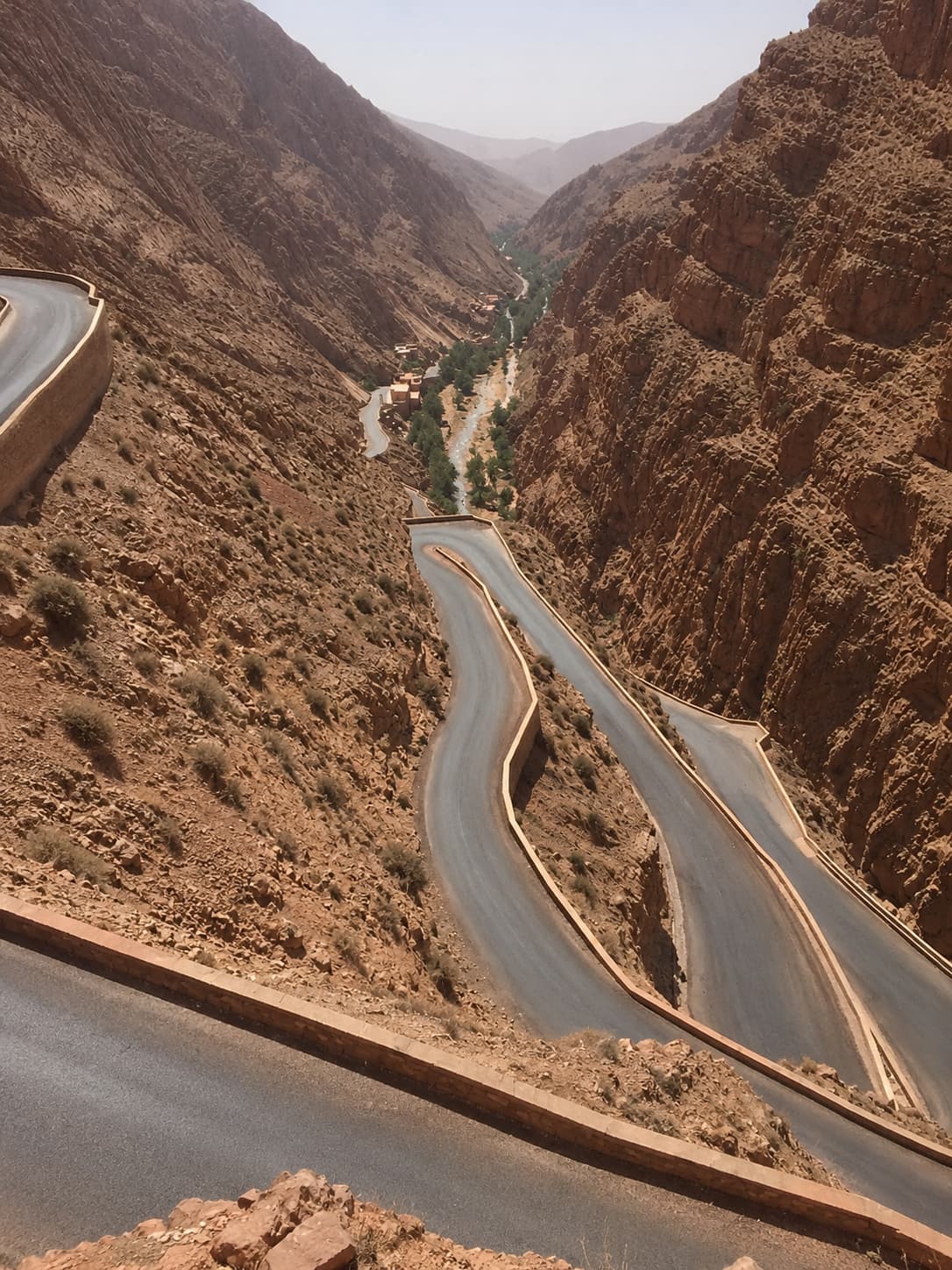
The transit math is the single most commonly underestimated factor in Morocco desert planning. Marrakech to Zagora is approximately 350 km (6–7 hours); Marrakech to Merzouga is approximately 560 km (9–10 hours). These figures do not compress — the roads through the Atlas passes are slow and require careful driving.
The minimum viable breakdown by desert
| Merzouga — minimum | 3 full days: Day 1 drive south, Day 2 in the desert (dawn and sunset, one night in camp), Day 3 return. Anything less means 18+ hours of driving for a single short night. |
| Merzouga — comfortable | 4 days, with one night at a kasbah en route — Aït Benhaddou or Ouarzazate — so the transit becomes part of the experience rather than just its cost. |
| Zagora — minimum | 2 full days: Day 1 drive and night in camp, Day 2 return. Tight but logistically viable — which is its entire advantage over Merzouga. |
| Erg Chigaga | 4 days minimum from Marrakech, accounting for the 4×4 leg from M’Hamid. Flying into or out of Errachidia or Ouarzazate is worth considering if time is the constraint. |
Is a 2-day Merzouga tour from Marrakech worth it?
No — and this is the version to avoid. The driving alone accounts for 18+ hours round-trip, leaving a single short night in the desert as the return on that investment. The 2-day Zagora tour is a different calculation: shorter in distance, tighter but viable, and able to deliver an atmospheric desert overnight in the Draa Valley. It simply requires accepting that the dunes will not look like the photos of Erg Chebbi. The Morocco 7 vs 10 day itinerary guide covers how to sequence either option inside a complete loop.
05 — What a “Luxury Merzouga Desert Camp” Actually Means
This is the section most tour operator content softens — because the gap between what the marketing implies and what “luxury” delivers in practice is where the most disappointed reviews originate.
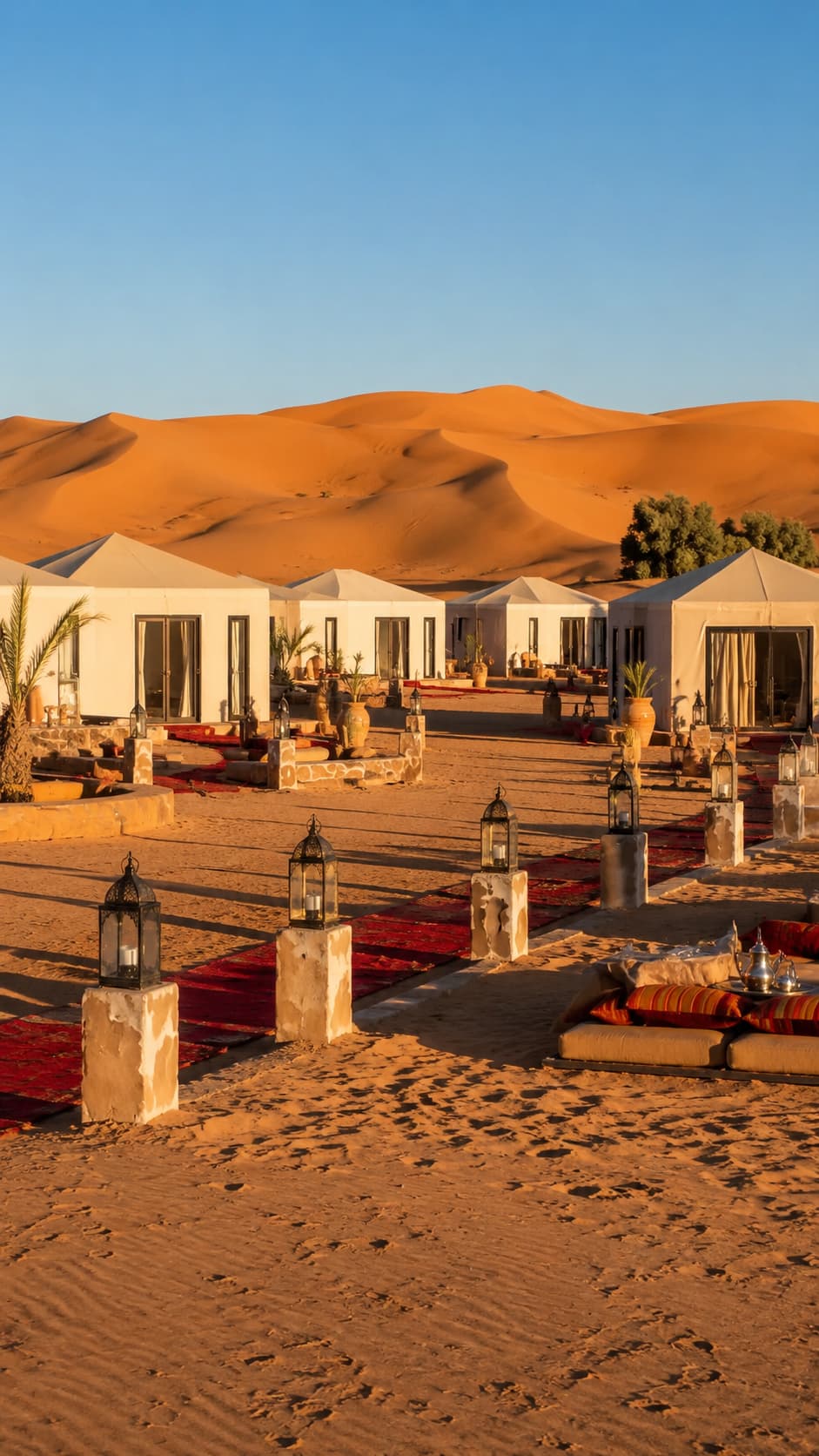
The camp cluster reality at Erg Chebbi
At Erg Chebbi’s edge, the camps are adjacent. Not near each other — adjacent. From the dune crest above a well-positioned camp, you can see the rooftops of several others. During peak season (October, March–April), the dune ridge at sunset is shared by the clients of every camp within camel-distance. Several hundred people on the same ridge is not an exaggeration. It is still beautiful. It is not solitary.
What the Merzouga camp tiers actually deliver
| Budget camp (€50–100/night) | Shared facilities, basic Berber tent, mattress on a low frame. Meals included and generally good. Tents are close together. No heating — cold nights in Jan/Feb are serious. |
| Mid-range camp (€100–200/night) | Private en-suite or semi-private facilities, better mattress, more space between tents. Sometimes a small terrace facing the dune. Still in the camp cluster, but quieter within it. |
| “Luxury” camp (€200–400+/night) | Individual tent with actual bathroom, often a standalone structure. Hot water, solar or generator power. Still shares the same dune environment — the luxury is the tent, not the location. |
How to vet a Merzouga or Zagora camp before booking
The most reliable vetting process combines signals operators cannot fake in aggregate. Check reviews from the last 12 months specifically — camps change quickly. Look for mentions of group size in actual guest reviews, not listing descriptions. Search the camp name on Google Maps to see adjacent structures, which tells you something about cluster density. For solo female travelers: look specifically for reviews from other solo women rather than couples — the experience differs and honest signal lives there. Finally, ask before booking: what is the maximum number of guests on the night I am staying? A refusal to answer is itself an answer.
06 — Is the Agafay Desert the Real Sahara?
No — and this is worth stating directly because the Instagram ecosystem around the Agafay has become effective enough that many travelers arrive genuinely confused about what they booked.
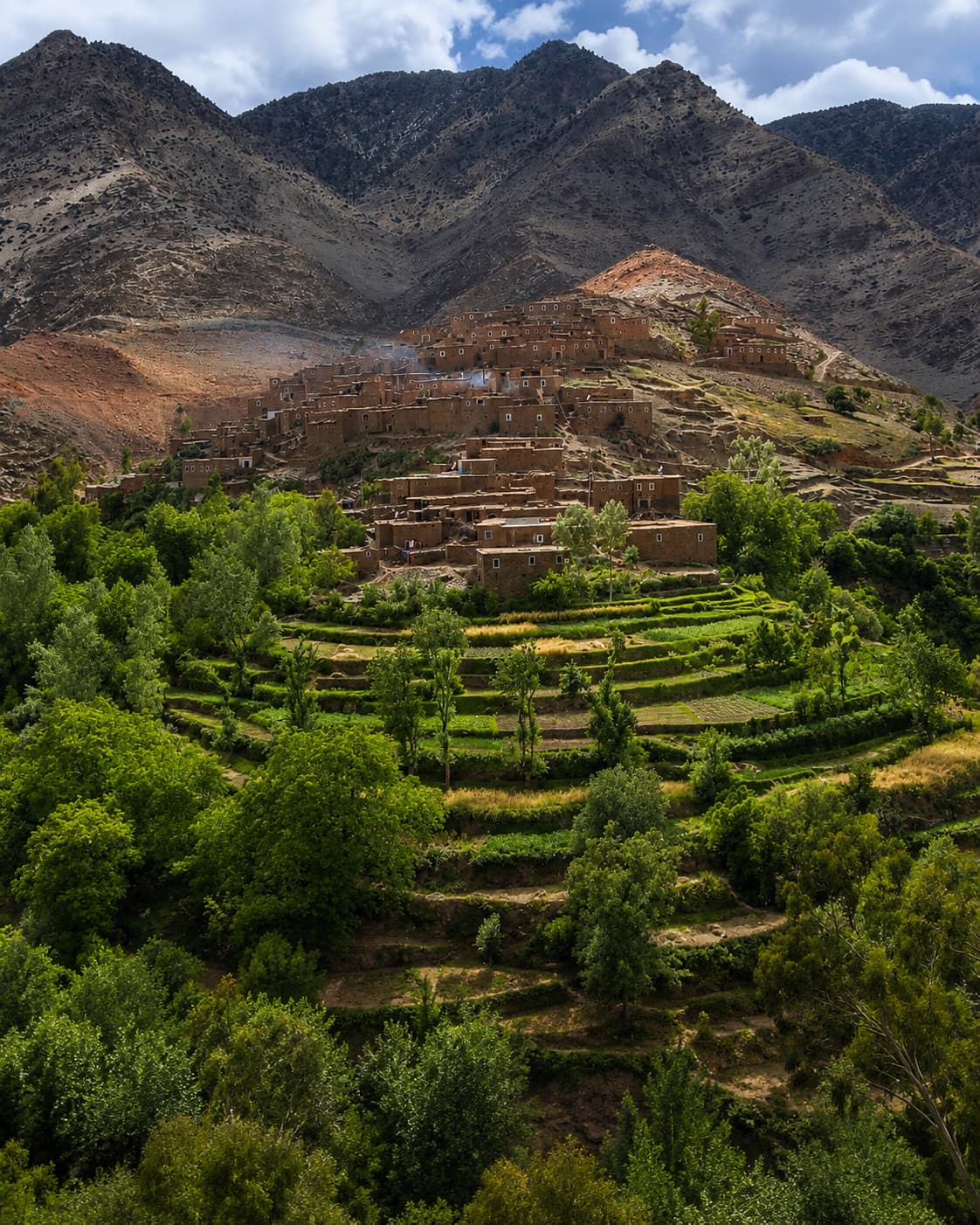
The Agafay is a stone desert (rocky plateau) roughly an hour’s drive from Marrakech. It has no sand dunes. It is not the Sahara by geography, terrain type, or aesthetic — it is the Jbilet plateau, a pre-Saharan limestone plain with a dramatic palette of grey and ochre rock, Atlas Mountain views on clear days, and a growing cluster of boutique camps oriented around quad bikes, camel rides on flat ground, and sunset dinners in nomadic-style tents. Photographed from the right angle, in the right light, it reads as “desert” in the way that travel content uses the word loosely.
As a one-night atmospheric trip from Marrakech — for travelers with limited time, or visiting as part of a city-focused itinerary — the Agafay delivers something genuine: space, quiet, a dramatic sky, and the visual experience of being outside the city in a landscape that feels elemental. That is a legitimate thing to want.
Where the Agafay fails its visitors is when it is sold as a Merzouga or Zagora equivalent. It is not. The terrain is different, the scale is different, and the experience of waking up inside an erg — with 150 metres of sculptural sand in every direction and the particular silence a sand desert has — is categorically different from a stone plateau outside Marrakech. Book it for what it is. Before deciding, the things to know before visiting Morocco guide has more on managing expectations across the trip, not just the desert.
Timing, Transport and Desert Camp Questions
Booking and Tour Operator Questions
The desert is the highlight of a Morocco trip when the logistics are respected — when you have allocated the days the driving requires and arrived at a camp knowing what it will actually be. It is the most commonly cited letdown when those conditions are not met: when the itinerary tried to fit a 9-hour drive into a 2-day window, or when the Merzouga vs Zagora decision was made on price alone without understanding the difference.
Choose the desert that fits your days. Merzouga for the postcard, with three days and honest camp research. Zagora for the 2-day window, with adjusted expectations and a genuine appreciation for the Draa Valley beyond it. Erg Chigaga for the traveler who has already been and wants the dunes without the company. Any of the three, approached correctly, is worth the drive.
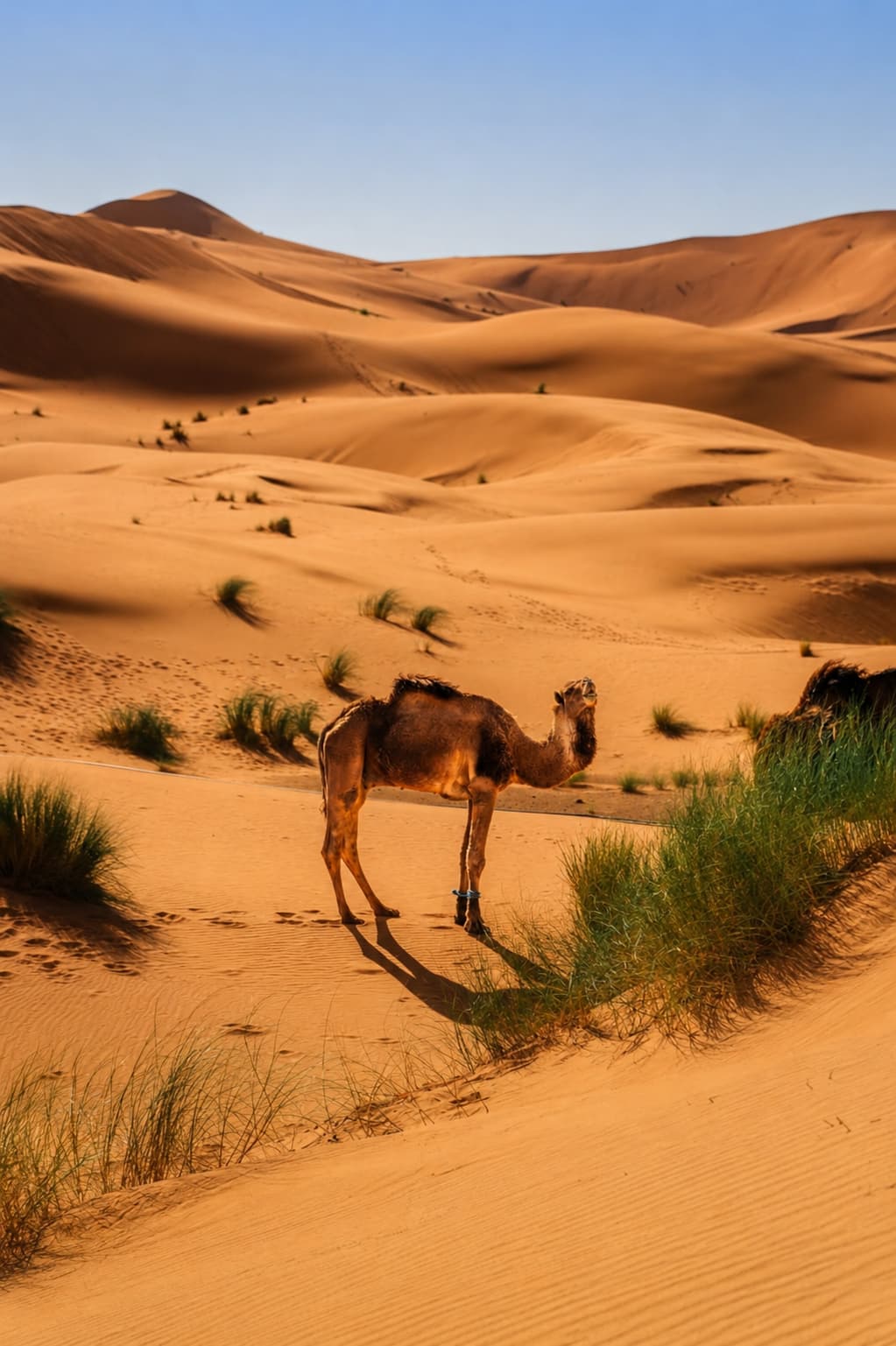
The Sahara is one of the few places that lives up to what people expect of it — when they have given it the time and the honesty the planning requires.
Get those two things right and it will be the part of Morocco you talk about longest.