
20 Most Beautiful Castles in Europe You Need to Visit in 2026
From a Bavarian fairytale perched above the Alps to a medieval fortress built into a cliff face, these are the 20 most extraordinary castle experiences in Europe — ranked, honest, and worth every kilometre of the detour.
Europe has more castles than any traveler could reasonably visit in a lifetime. Germany alone has over 20,000. So the useful question is not “which castles exist?” but “which castles are worth rearranging an itinerary for?” In short, this list answers that question directly. Additionally, each entry has a specific reason for being here — whether that is visual impact, historical depth, uniqueness of setting, or some combination of all three. Notably, not every castle on this list is famous. Several of the best ones are not.
The ranking reflects a mix of factors: the scale of the experience, the difficulty of visiting, the quality of what you actually get once you’re there, and — honestly — how the castle makes you feel standing in front of it. That last part is harder to quantify, but it is ultimately the only thing that matters.
01–05 — The Icons
These are the castles that define the category — the ones that appear on travel lists, inspire architecture worldwide, and still manage to justify the crowds. However, each one earns its reputation, though several require careful planning to see them at their best.
Neuschwanstein & Alhambra — The Two That Need Booking First
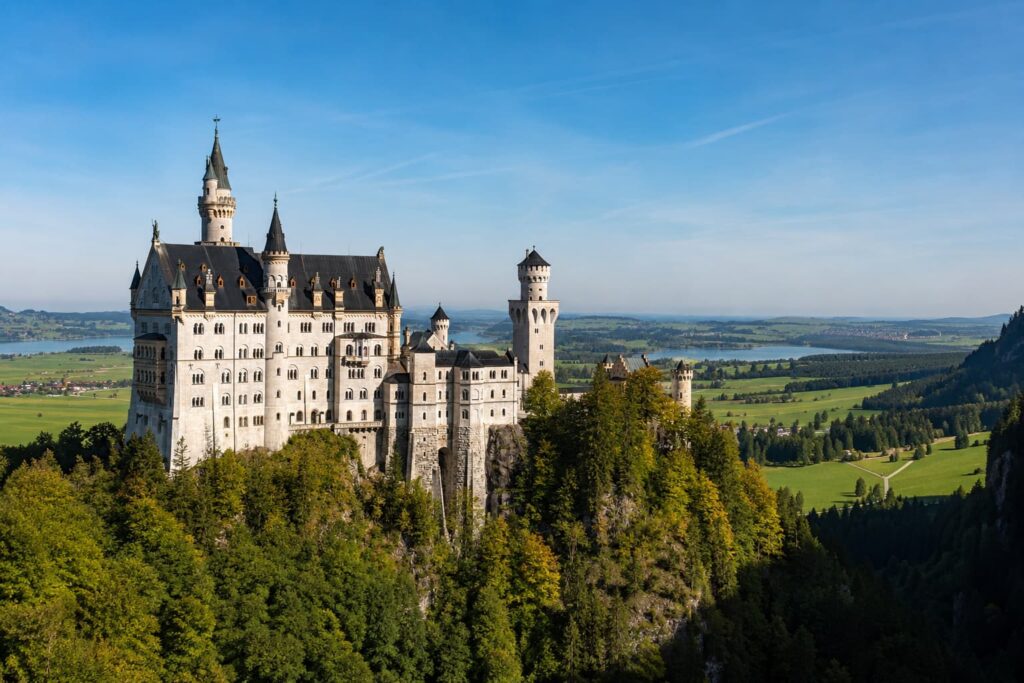
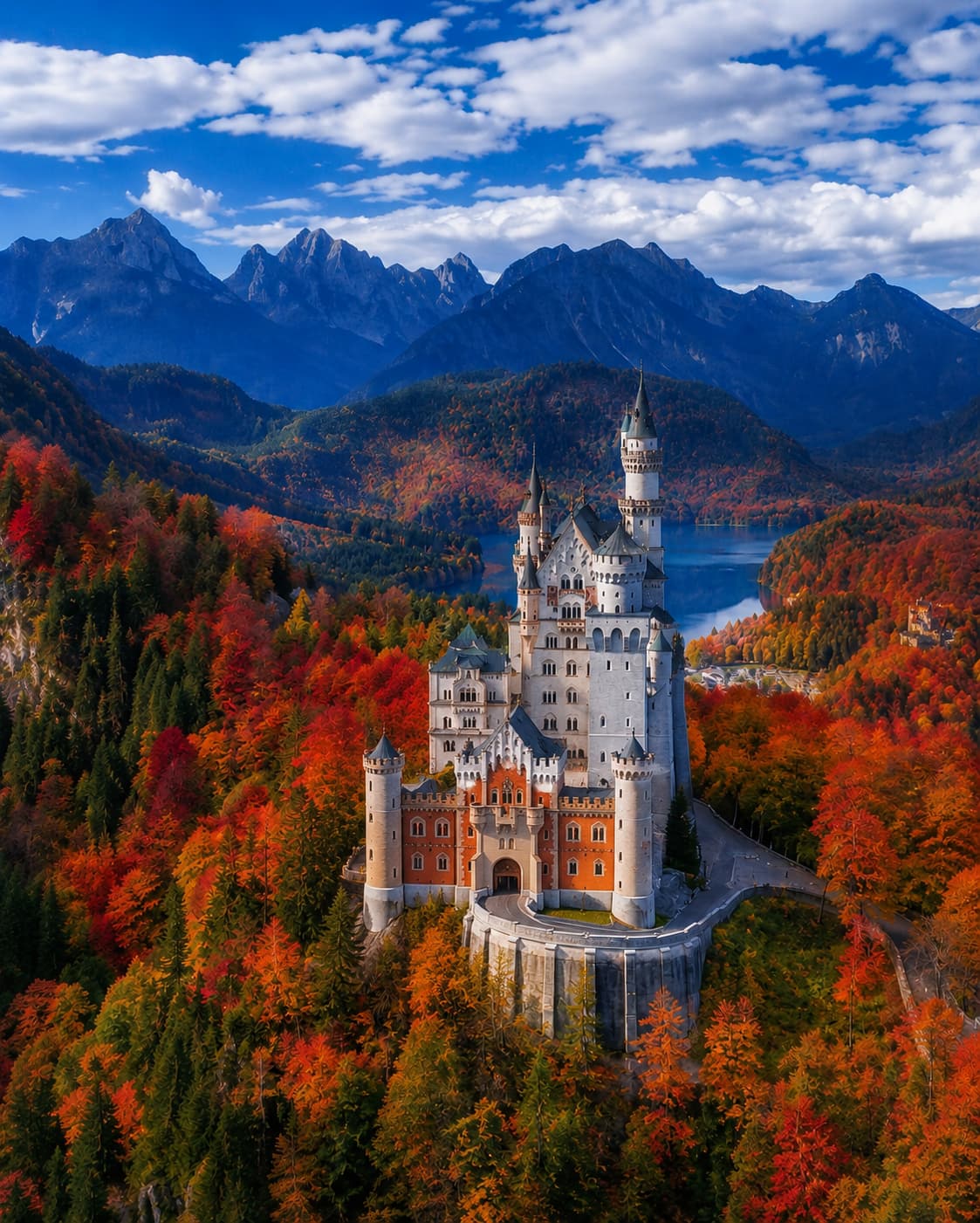
The most searched castle on earth, and the most recognisable palace in Europe. Neuschwanstein sits above the Bavarian countryside on a jagged ridge, its white limestone towers rising out of evergreen forest in a way that genuinely seems designed to stop rational thought. Walt Disney studied it when creating Sleeping Beauty Castle — the inspiration is unmistakable. In 2026 it operates on strict timed entry, with tickets selling out days or weeks ahead depending on the season. Currently, adult tickets cost €17.50; a combo with nearby Hohenschwangau runs €31. Therefore, book in advance, arrive early, and aim for the Marienbrücke bridge above the castle for the most photographed view in Germany.
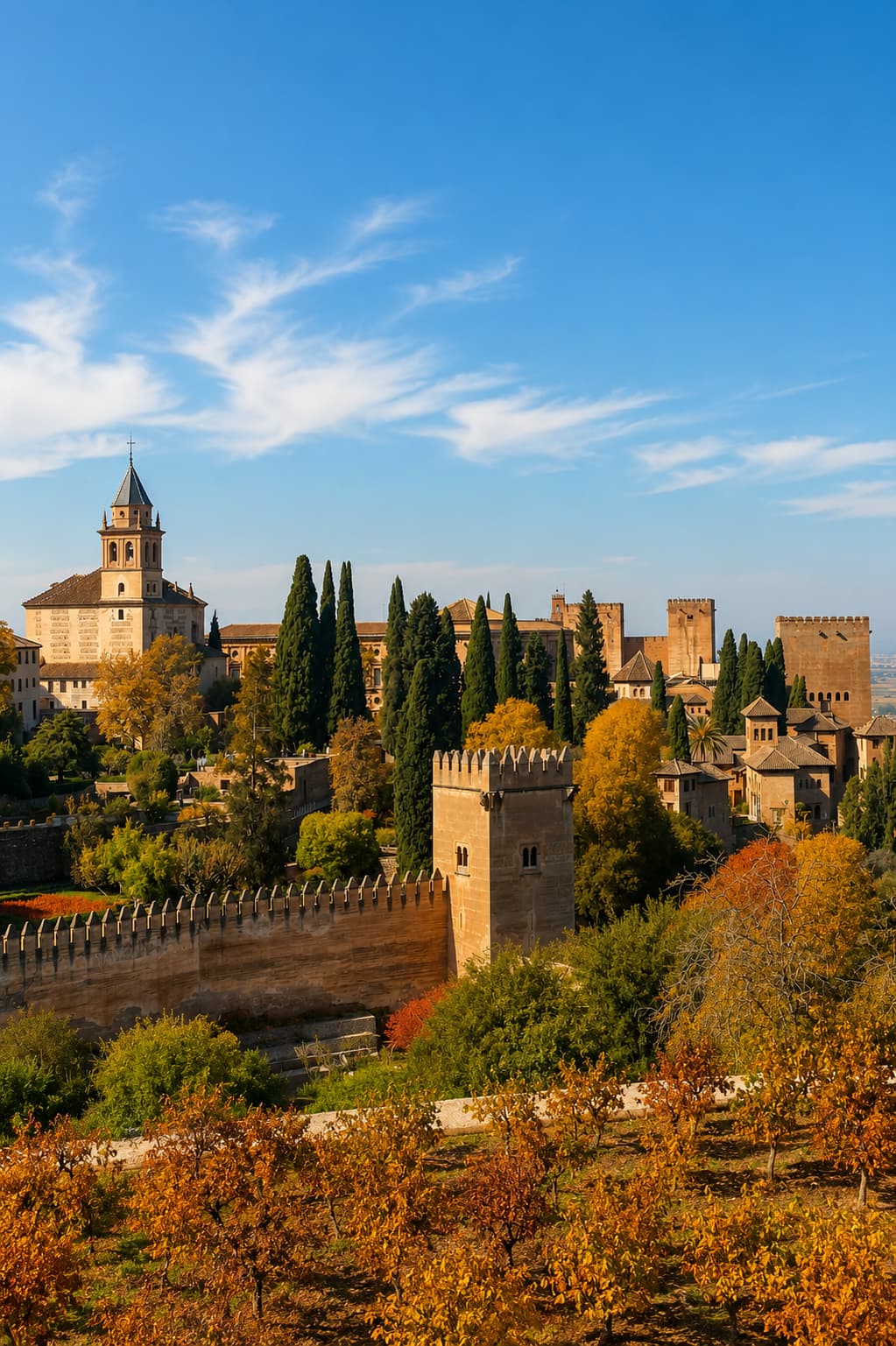
A masterpiece of Moorish architecture and one of Europe’s most visited monuments. The Alhambra is not one building but an entire hilltop complex — gardens, palaces, towers, and a small village — spread across the Sabika hill above Granada with the Sierra Nevada behind it. The Nasrid Palaces are the crown jewel: intricately carved stucco, geometric tilework, and courtyard fountains that have no meaningful equivalent anywhere else in Europe. Critically, the Nasrid Palaces require a timed slot within your general ticket, and if you miss that window there are no exceptions. Book weeks ahead in spring and summer. Arrive at opening and go to the Nasrid Palaces first — everything else can follow the crowds.
Prague & Versailles — Scale Over Everything
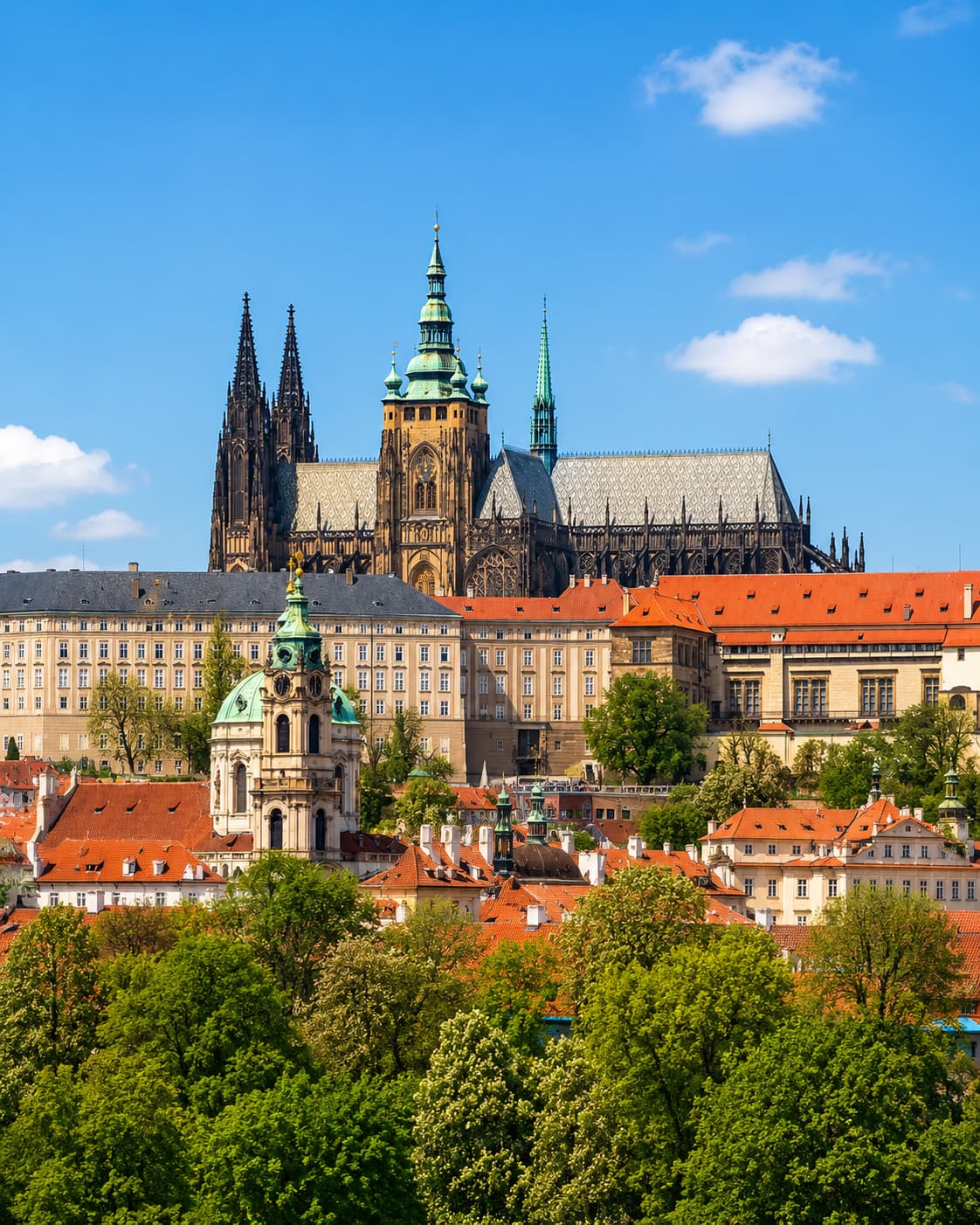
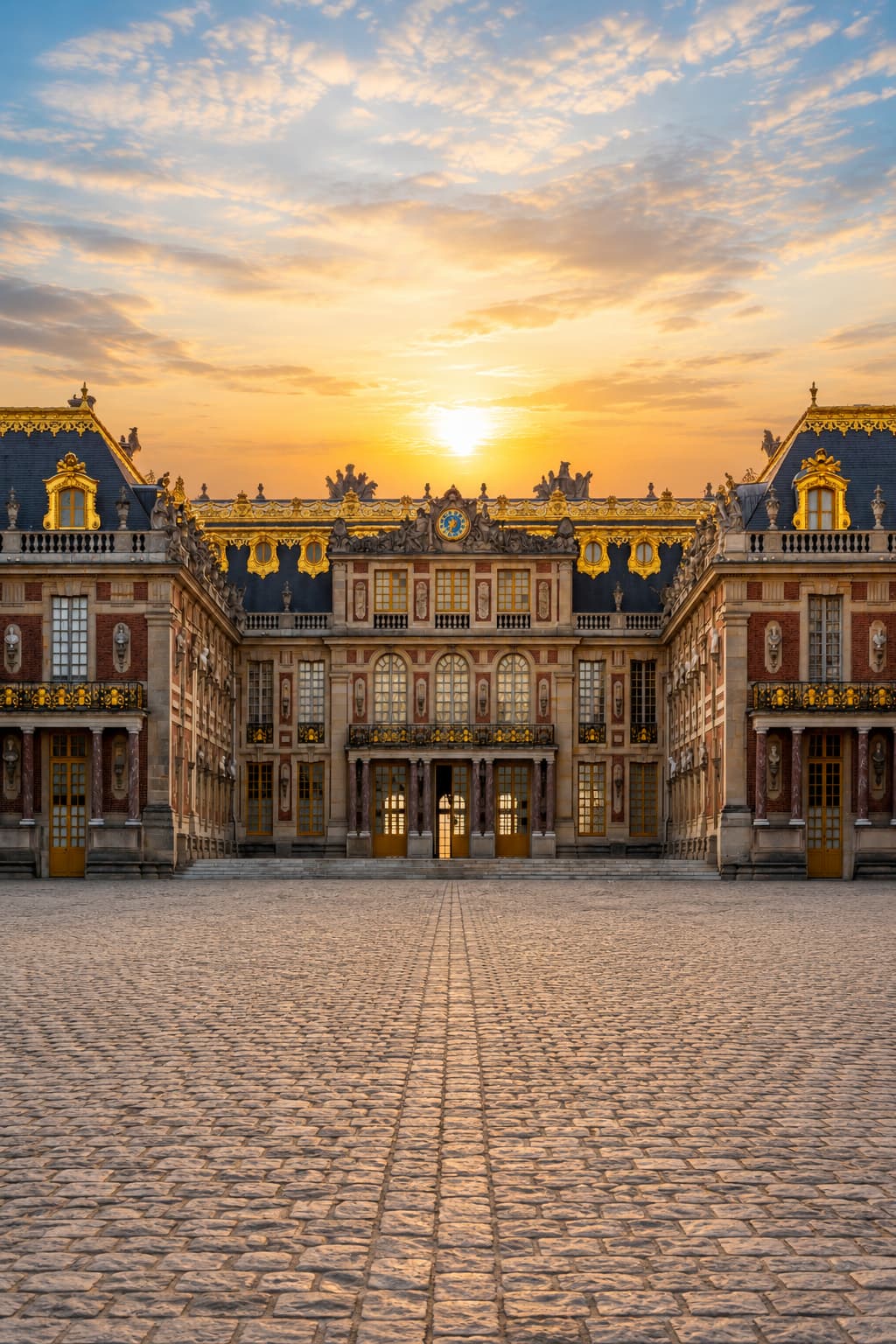
The most visited castle in the world according to data from 1.7 million users — ahead of Edinburgh, Versailles, and Windsor. That statistic surprises some people, but it makes sense when you understand what Prague Castle actually is: not a single structure but an entire district occupying over 70,000 square metres at the heart of the city. The grounds are free to enter and offer one of the best elevated views of Prague available. Anything inside — St Vitus Cathedral, the Old Royal Palace, the Golden Lane — costs money and gets very crowded around midday. Furthermore, arriving before 9am gives a meaningfully different experience. The view from the castle walls at dawn, with the Charles Bridge below and the Vltava catching early light, is hard to beat anywhere in Central Europe.
The most visited palace in Europe with over 8 million visitors annually, and one of the most genuinely overwhelming built environments on the continent. Versailles rewards preparation more than almost any other castle on this list. The Hall of Mirrors — 73 metres long, 357 mirrors, and a ceiling of painted allegories — is extraordinary, but also extremely crowded between 10am and 3pm from April through October. The gardens, meanwhile, are vast enough to absorb almost any volume of visitors: 800 hectares of formal French landscape, fountains, and grand perspectives that stretch to the horizon. Allow a full day. Book the timed Palace entry slot in advance and plan to spend the afternoon in the gardens after the interior crowds thin.
Edinburgh — Scottish Crown Jewel
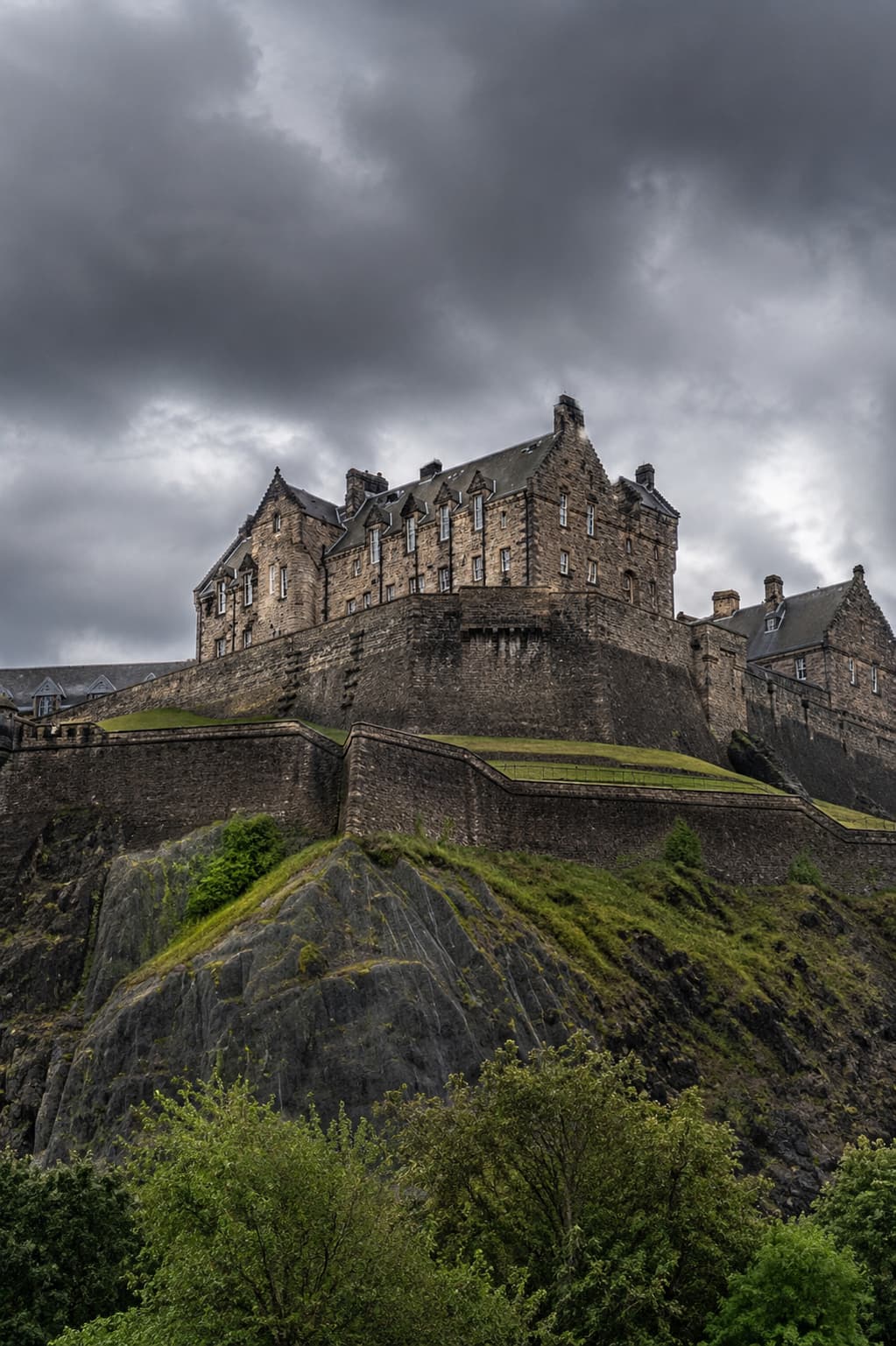
Perched on Castle Rock — an extinct volcanic plug that rises 130 metres above the city — Edinburgh Castle is one of the most dramatically situated fortresses in Europe. The view from below, from Princes Street or the Grassmarket, never quite gets old regardless of how many times you’ve seen it. Inside, it operates more as a military museum collection than a conventional castle tour: the Scottish Crown Jewels, the Stone of Destiny, and a sequence of military exhibits spread across the rock. Arrive before 10am — after that it gets insanely crowded, and the narrow internal paths become uncomfortable in peak season. The esplanade, free and open, is underused by visitors who rush straight to the ticket gate: the views from outside the walls are genuinely excellent.
Three entries on this list require advance booking and will cause genuine problems if you don’t: Neuschwanstein (book at least two weeks ahead in summer), the Alhambra’s Nasrid Palaces (book six to eight weeks ahead in spring and summer — missing the timed slot means the highlight is inaccessible), and Versailles (book a timed Palace entry slot to avoid two-hour queues at peak season). All others can be managed on arrival or with a day’s notice.
06–10 — The Royals & Romantics
The next tier includes active royal residences, a Romantic-era fantasy carved from vivid colour, and the castle that occupies the most theatrical island setting in Europe. Several of these are less famous than the icons above — and consequently, more rewarding to visit.
Windsor & Mont-Saint-Michel — Living History
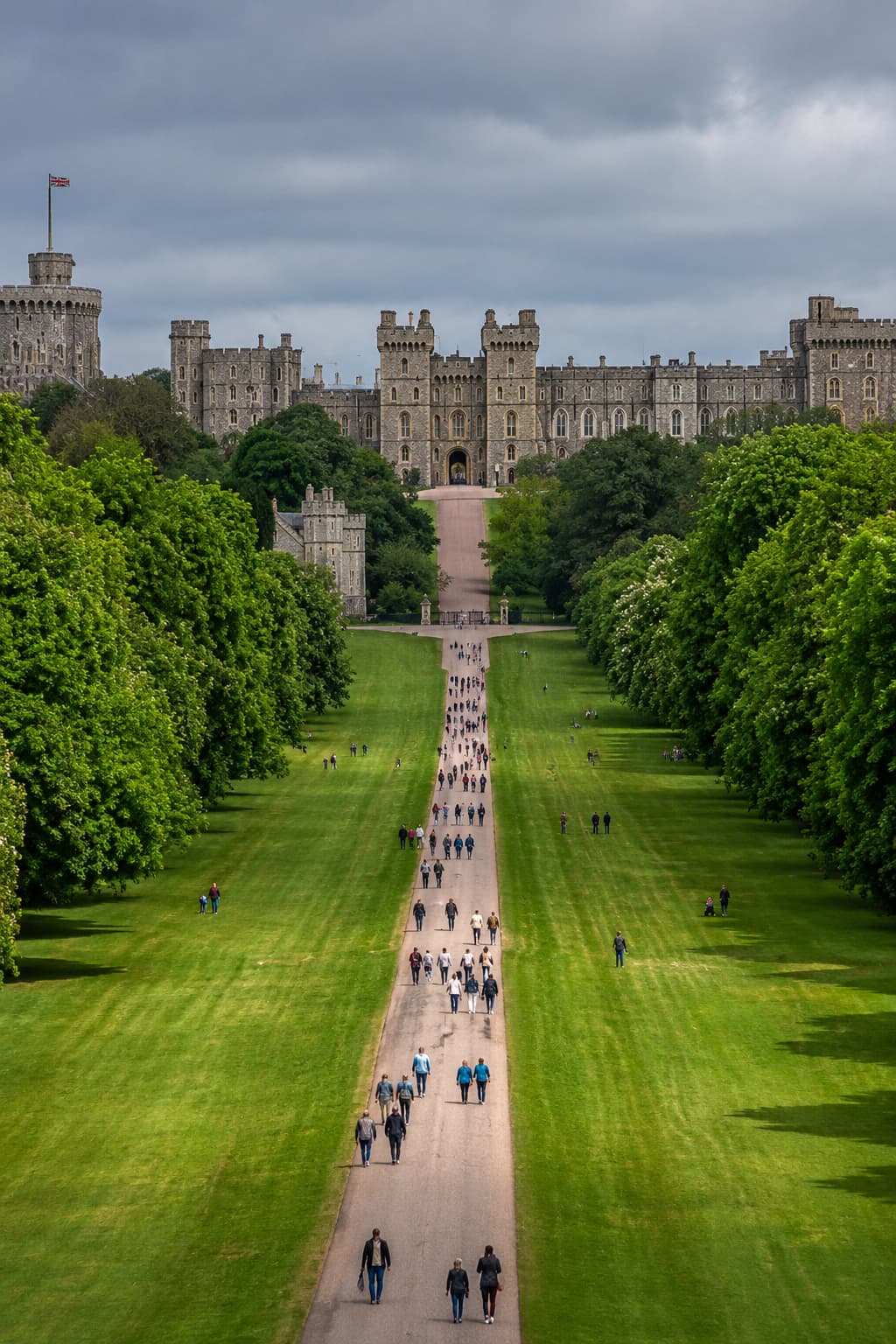
The most visited castle in England and the longest continuously occupied palace in Europe, Windsor has been a royal residence for over 1,000 years. It remains an active home for the British Royal Family, which means parts of it close on short notice with no prior announcement — worth checking before you visit. The State Apartments, St George’s Chapel (one of the finest examples of Gothic architecture in England), and Queen Mary’s Dolls’ House are the highlights. Windsor draws an enormous US audience driven by sustained interest in the royal family, making it the most internationally recognised English castle after the Tower of London. The town around it is attractive and easy to spend a half-day in after the castle visit.
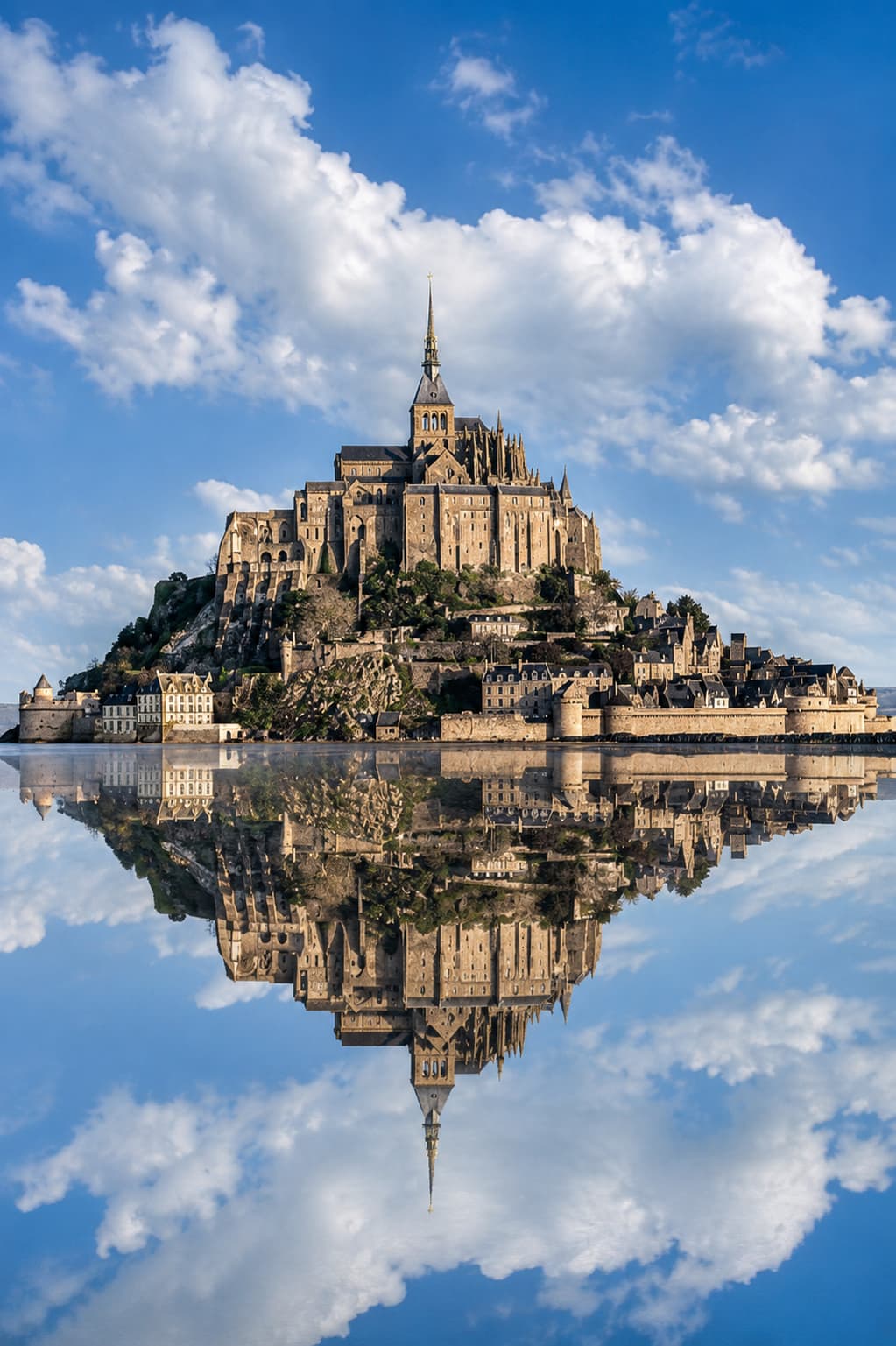
One of the most dramatic island settings in all of Europe, and one of the most-saved travel images on Pinterest globally. At high tide, the tidal island abbey appears to float above the sea — a medieval monastery, village, and fortification occupying a single rocky outcrop in the bay of Normandy. The approach across the causeway at rising tide, with the island growing larger and the water surrounding it, is a genuinely cinematic experience. The medieval abbey at the summit rewards a slow visit — the cloisters, the refectory, and the views from the walls over the bay are all exceptional. Arrive early and leave after most day-trippers have gone: the atmosphere between 8am and 9am is entirely different from noon.
Pena & Segovia — The Romantic Twins
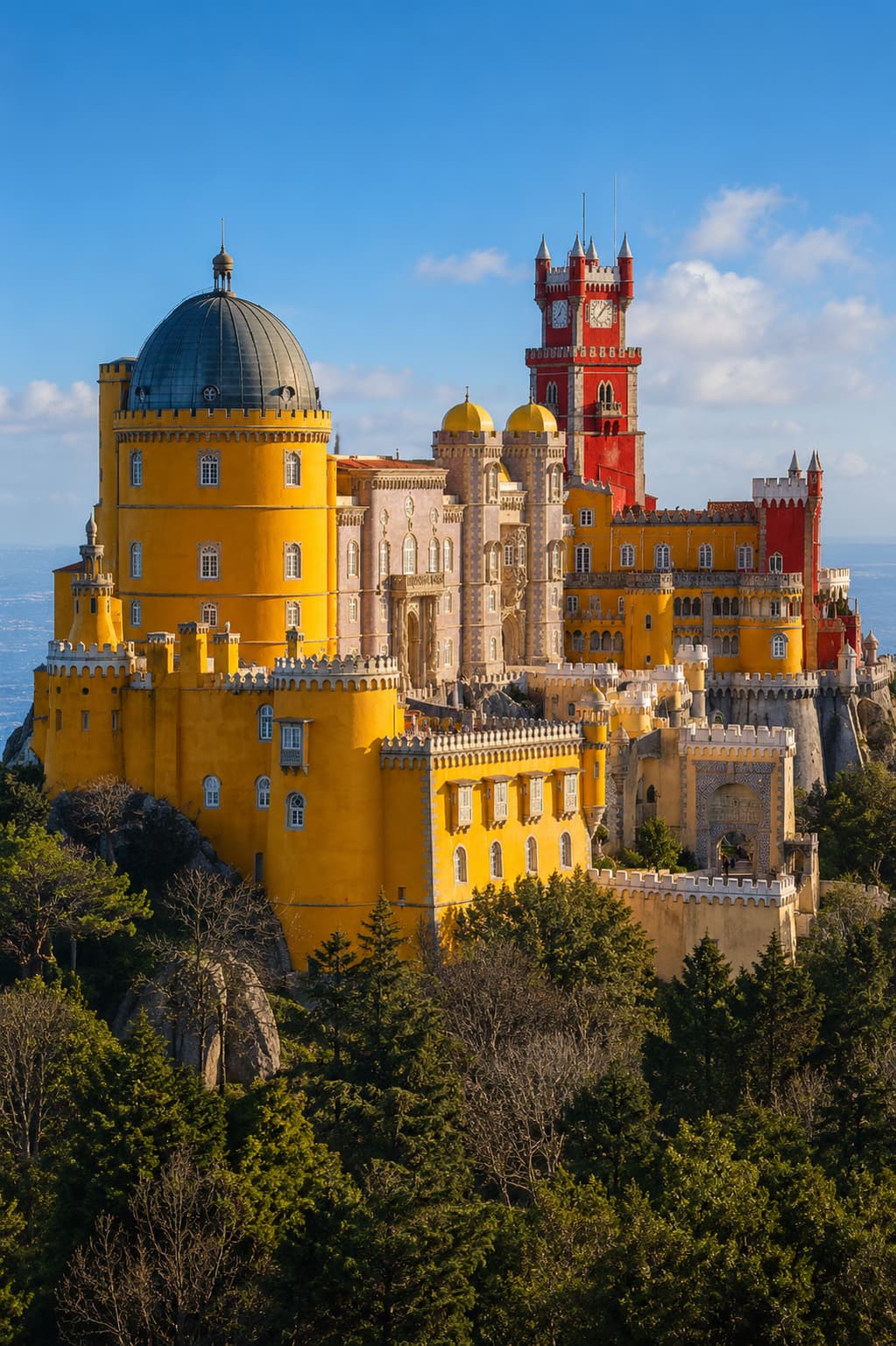
Pena Palace may be the most visually distinctive castle in Europe in terms of colour. Perched on a forested hill above Sintra, it is a UNESCO World Heritage Site built in the Romantic style — a vivid, slightly surreal combination of Neo-Gothic towers, Neo-Manueline archways, and Neo-Moorish domes, painted in ochre, red, and terracotta that makes it visible for miles. It is also very popular: it appears in more Portuguese travel images than almost any other site in the country. Sintra is a 40-minute train ride from Lisbon, making it among the most accessible castle excursions in Europe. Visit on a weekday in October or early November to avoid the worst of the crowds while still catching the palace’s colours in good autumn light.
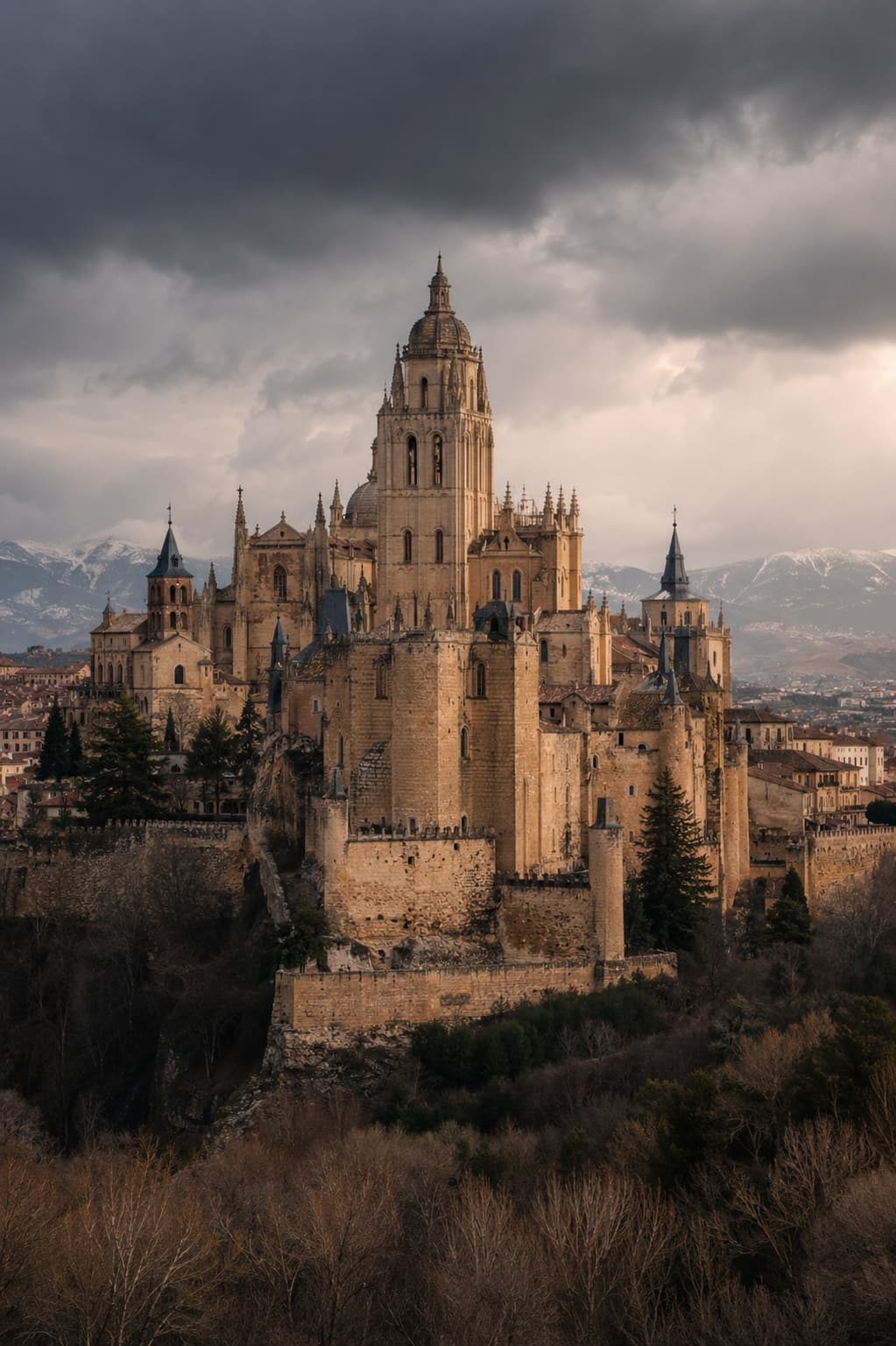
If you are judging castles purely on exterior appearance, Segovia’s Alcázar makes a very strong case for the top position on this list. Rising at the confluence of two rivers with the Gothic spires of Segovia Cathedral behind it, the Alcázar is stunning from every angle — its pointed blue-slate towers and sheer walls inspired Walt Disney’s Snow White Castle, and the resemblance is unmistakable. Segovia is often overlooked by visitors who stop at Toledo or Salamanca without continuing north. However, the combination of the castle, the Roman aqueduct (the best-preserved in Europe), and the cathedral makes Segovia one of the strongest day-trip cases from Madrid — roughly an hour by high-speed train.
Hohenschwangau — Below Neuschwanstein
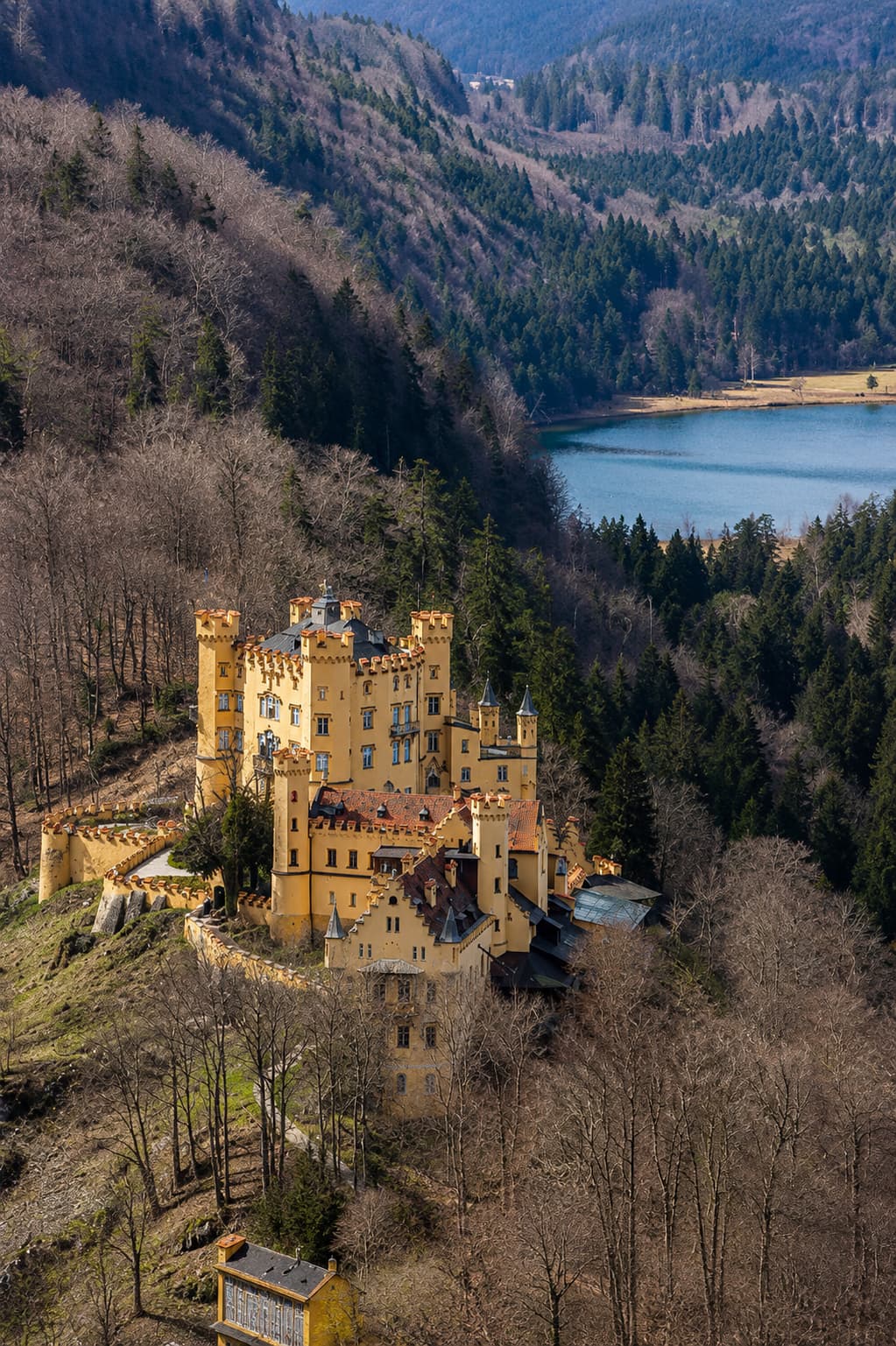
Hohenschwangau sits directly below Neuschwanstein and is almost always searched in tandem with it. Built by Ludwig II’s father, Maximilian II, it is the older and architecturally quieter of the two — a Neo-Gothic yellow castle in a style that predates Neuschwanstein’s dramatic excess. For visitors coming to the area, it is worth including both: the combo ticket runs €31 and the two castles offer complementary experiences — one more intimate and historically rich, one more visually spectacular. The village of Hohenschwangau at their base, with the Alpsee lake nearby, is one of the prettiest settings in Bavaria regardless of the castles. The lake reflection at calm morning water is among the most underrated photographs available in southern Germany.
11–15 — The Hidden Greats
These five are not the first castles that come to mind when someone says “Europe.” Several of them should be. Each one offers something specific that the famous castles don’t — a particular quality of setting, a detail of history, or a visual impact that punches well above its name recognition.
Eilean Donan & Bran — The Ones Pinterest Saved First
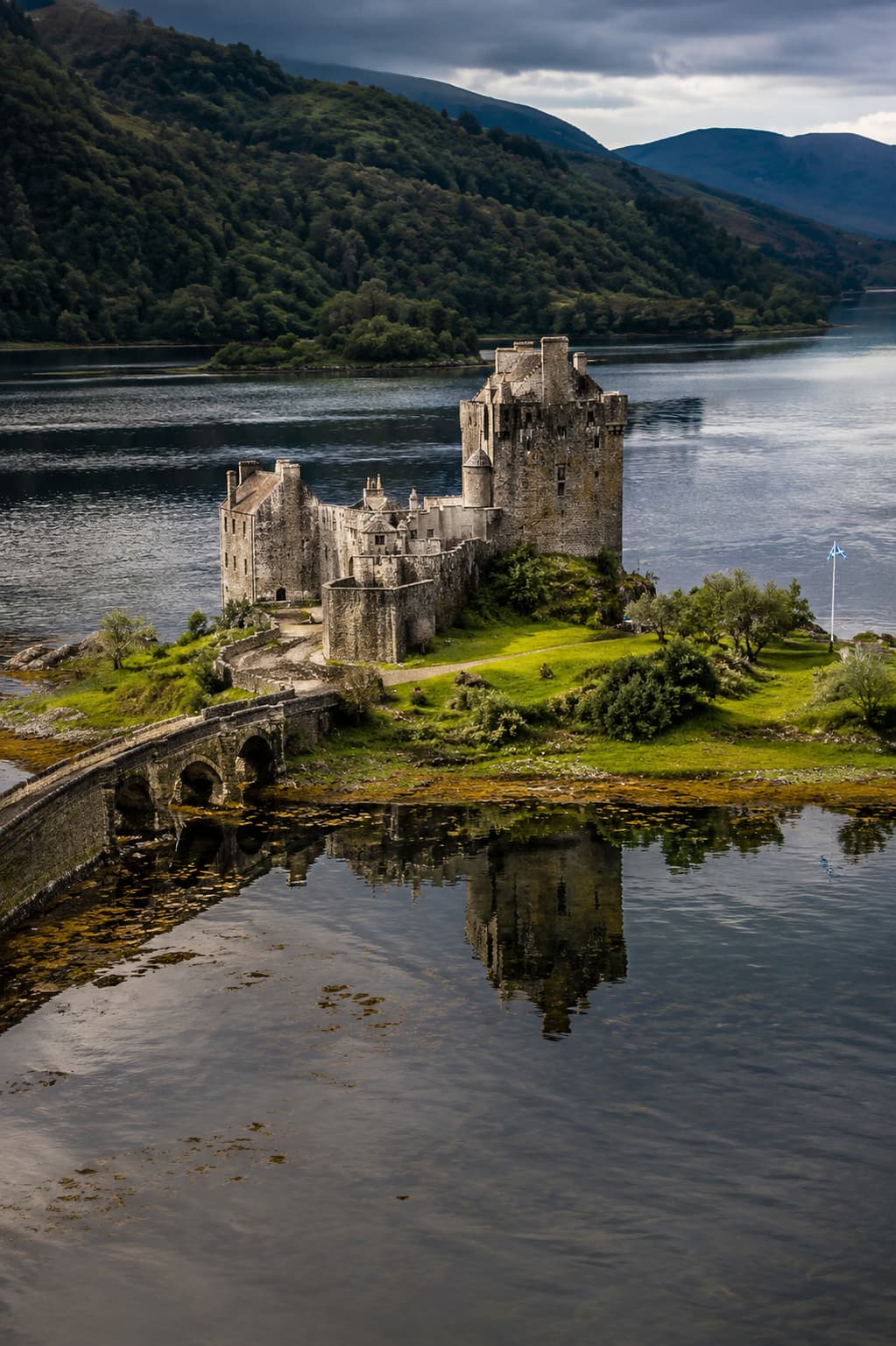
Built on a tiny island where three sea lochs meet — Loch Duich, Loch Long, and Loch Alsh — Eilean Donan is the most saved Scottish castle on Pinterest by a wide margin. The reason is the setting: the castle appears to emerge directly from the water, reflected in the loch, with the Highland mountains behind it. It survived a three-day naval bombardment in 1719 before being blown up with 343 barrels of gunpowder, then reconstructed over 20 years using the original stones. The interior is relatively modern despite the medieval exterior. The drive to reach it, through Glen Shiel and along the shores of Loch Duich, is itself worth the detour — one of the finest road approaches to any building in the UK.
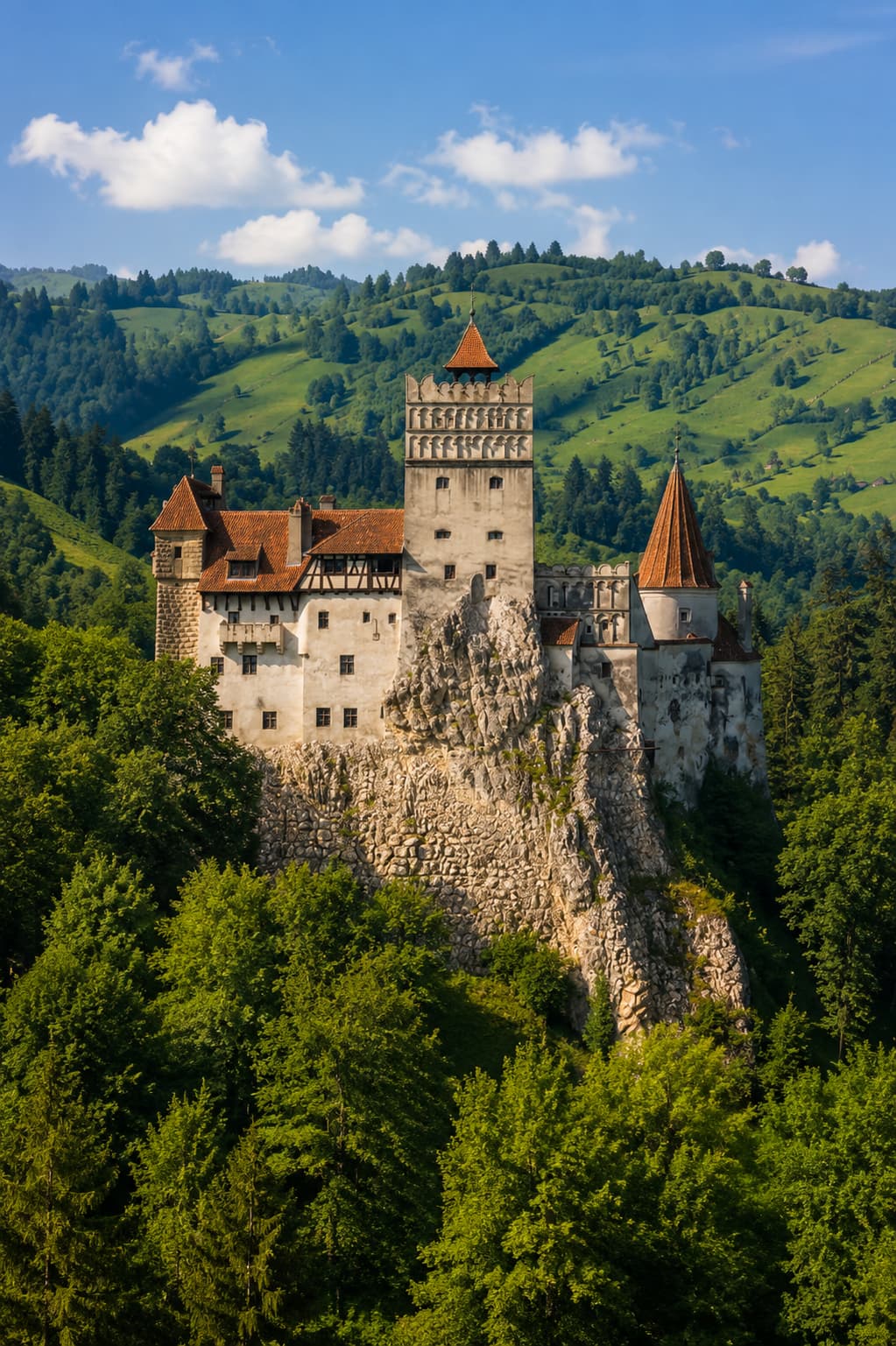
“Dracula’s Castle” is one of the fastest-growing castle searches from the US year-on-year, and the hook drives enormous traffic regardless of the fact that Bram Stoker almost certainly never visited Romania. Bran Castle is nevertheless a genuine medieval fortress: a 14th-century stronghold above the Transylvanian town of Bran, compact and atmospheric in the way eastern European castles tend to be. The museum inside covers both the historical Vlad III connection and the Stoker fiction honestly. Moreover, Bran is a natural gateway to the wider Transylvania circuit: Braşov is 30 kilometres away, Corvin Castle is reachable in two hours, and the drive through the Carpathian foothills between them is one of the better road trip routes in eastern Europe.
Burg Eltz & Chambord — Worth the Detour
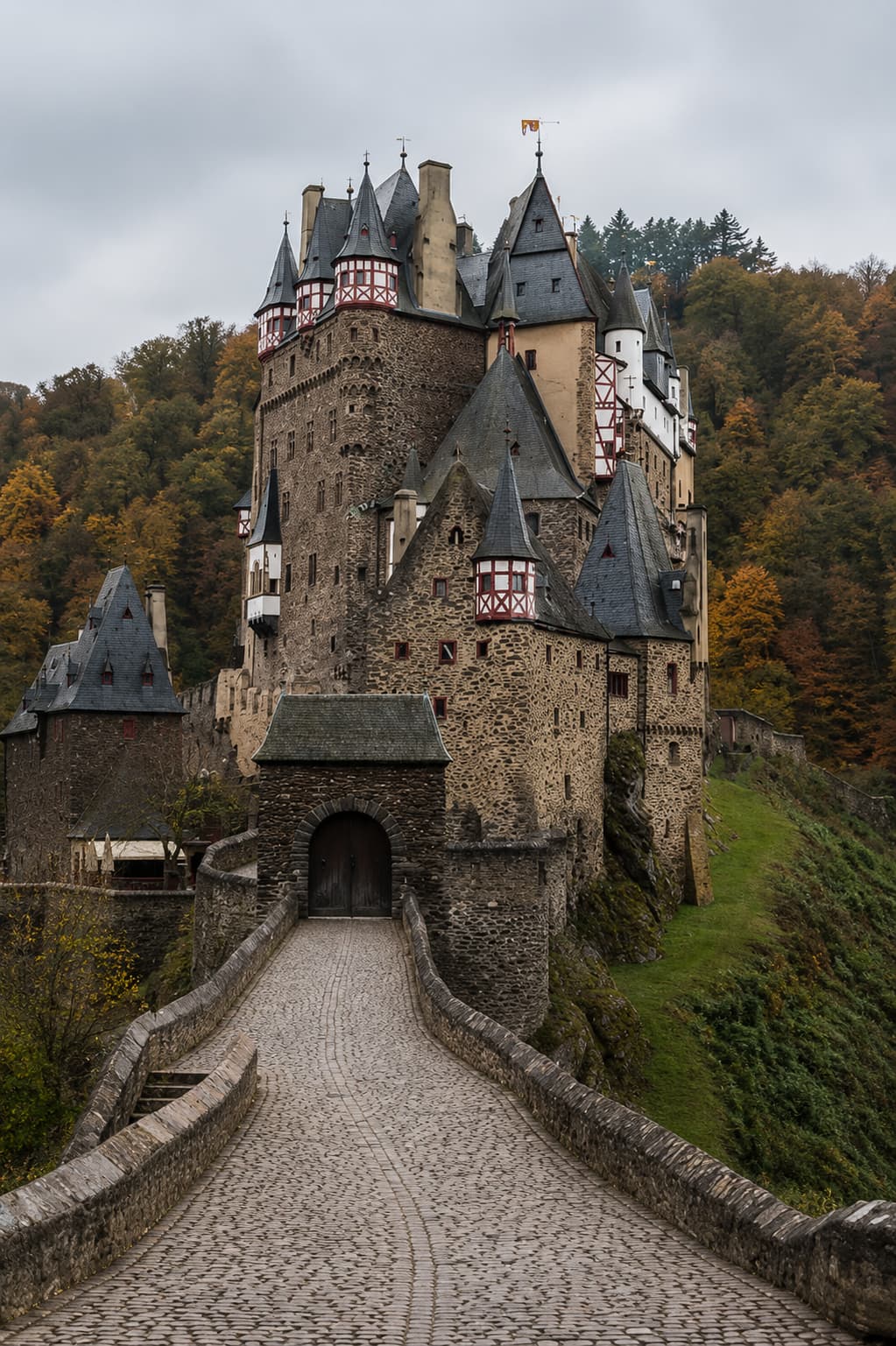
Nestled in a secluded valley in the Moselle region and reachable only on foot or by shuttle from a distant car park, Burg Eltz has recently found international fame — and it is not hard to see why. Remarkably, it has remained in the same family for over 850 years and because it was never destroyed, visitors encounter authentic interiors spanning eight centuries: furniture, weapons, jewellery, and art accumulated across generations rather than reconstructed. Towers from different periods crowd together at odd angles, giving the castle its characteristic appearance — it looks like several buildings attempting to occupy the same rock. The forest setting is exceptional in autumn, and the absence of a large car park directly outside keeps crowds manageable compared to more accessible German castles.
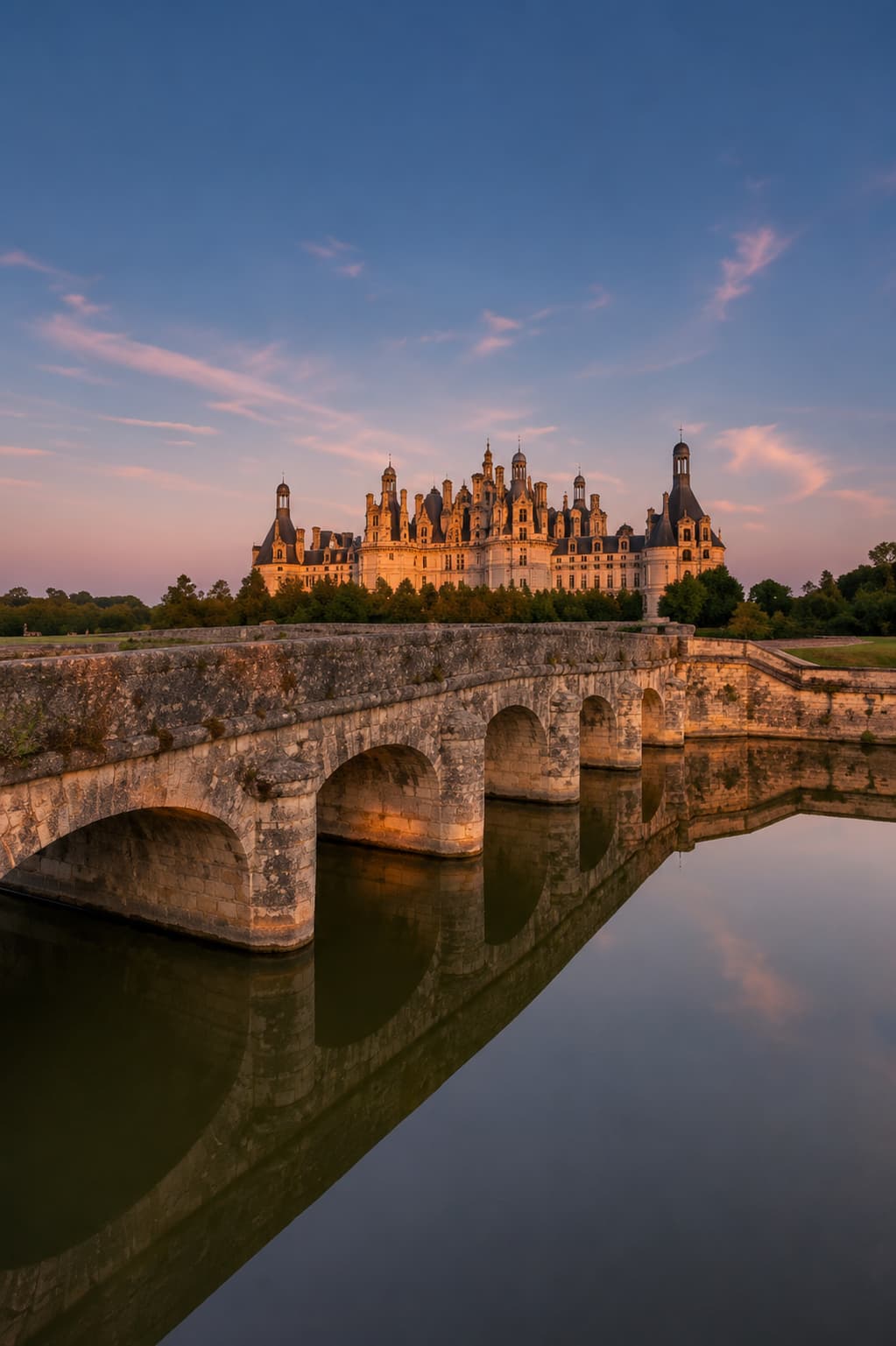
The largest of the Loire Valley châteaux and one of the most architecturally ambitious buildings in Europe: 426 rooms, 282 fireplaces, 77 stairways, and a central double-helix staircase widely attributed to Leonardo da Vinci. The staircase alone — two interlocking spirals that allow people to ascend and descend simultaneously without meeting — is worth the visit. Chambord also has something the other great French châteaux lack: scale that borders on the absurd. It is a building so enormous that it absorbs visitors without feeling crowded even in summer. The estate surrounding it, a vast hunting forest enclosed by the longest wall in France, makes it one of the few castle visits in Europe where the grounds are as interesting as the building itself.
Blarney Castle — Medieval Stronghold
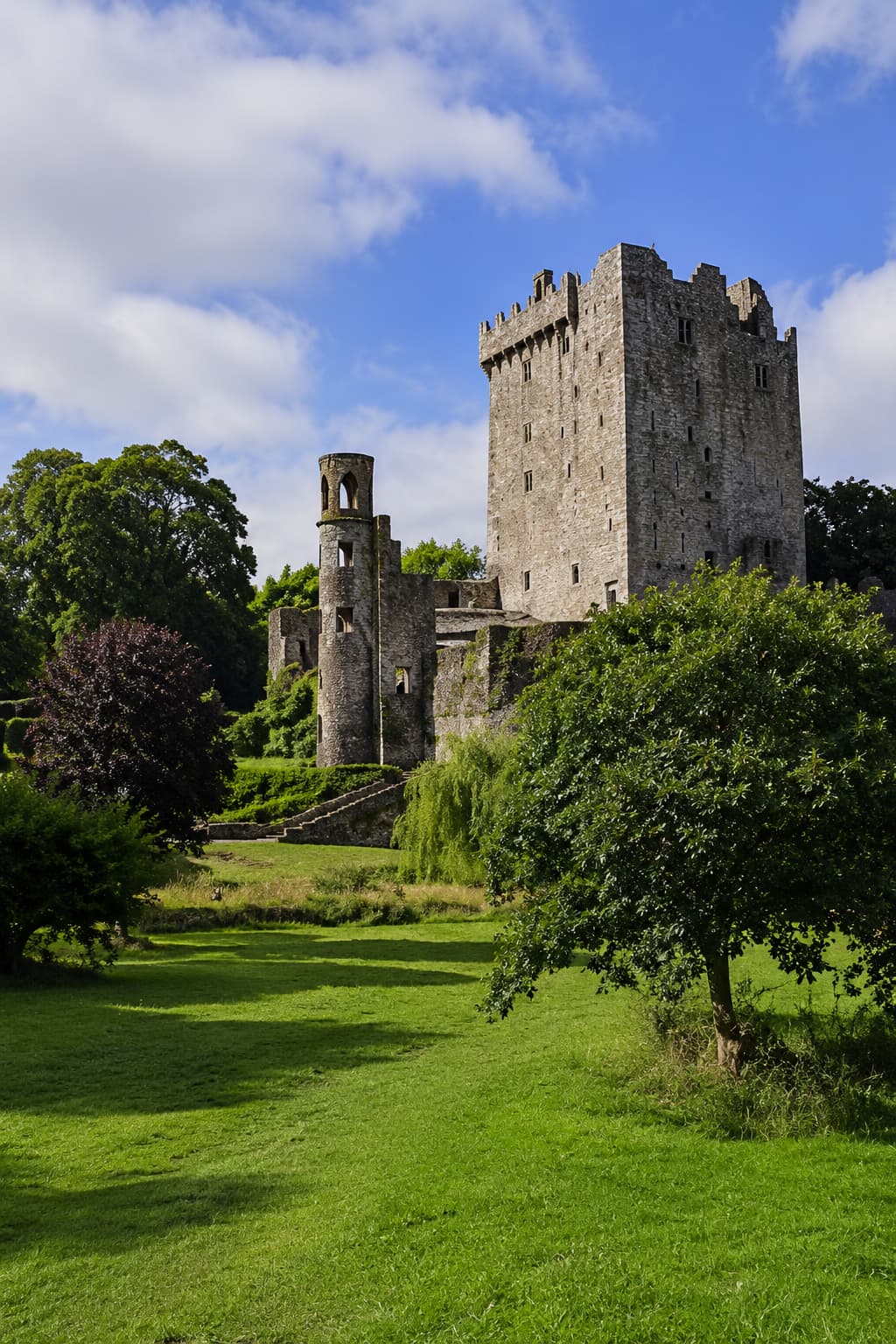
A medieval stronghold set in lush grounds above the River Martin in County Cork, Blarney Castle is one of the most searched Irish travel experiences globally, driven almost entirely by its most famous feature: the Blarney Stone. According to legend, kissing the stone gives the gift of eloquence — a piece of 15th-century folklore that has somehow accumulated enough cultural weight to appear on travel bucket lists worldwide. The stone requires a specific configuration: you lean backwards over the parapet, held by a guide, to kiss the underside of the castle battlements. Beyond the stone, the grounds are genuinely worth an afternoon: the Poison Garden, the Witch’s Kitchen, and the Rock Close druidic garden are all stranger and more interesting than the photographs suggest.
16–20 — The Underdogs
The final five are the ones most worth knowing about. Between them they include the largest Gothic castle in the world, a Guinness World Record holder built directly into a cliff face, and a Romantic fantasy in Slovakia that hosts an annual festival of ghosts. None of them features on most travelers’ lists. All of them should.
Hohenzollern & Malbork — Overlooked at Scale
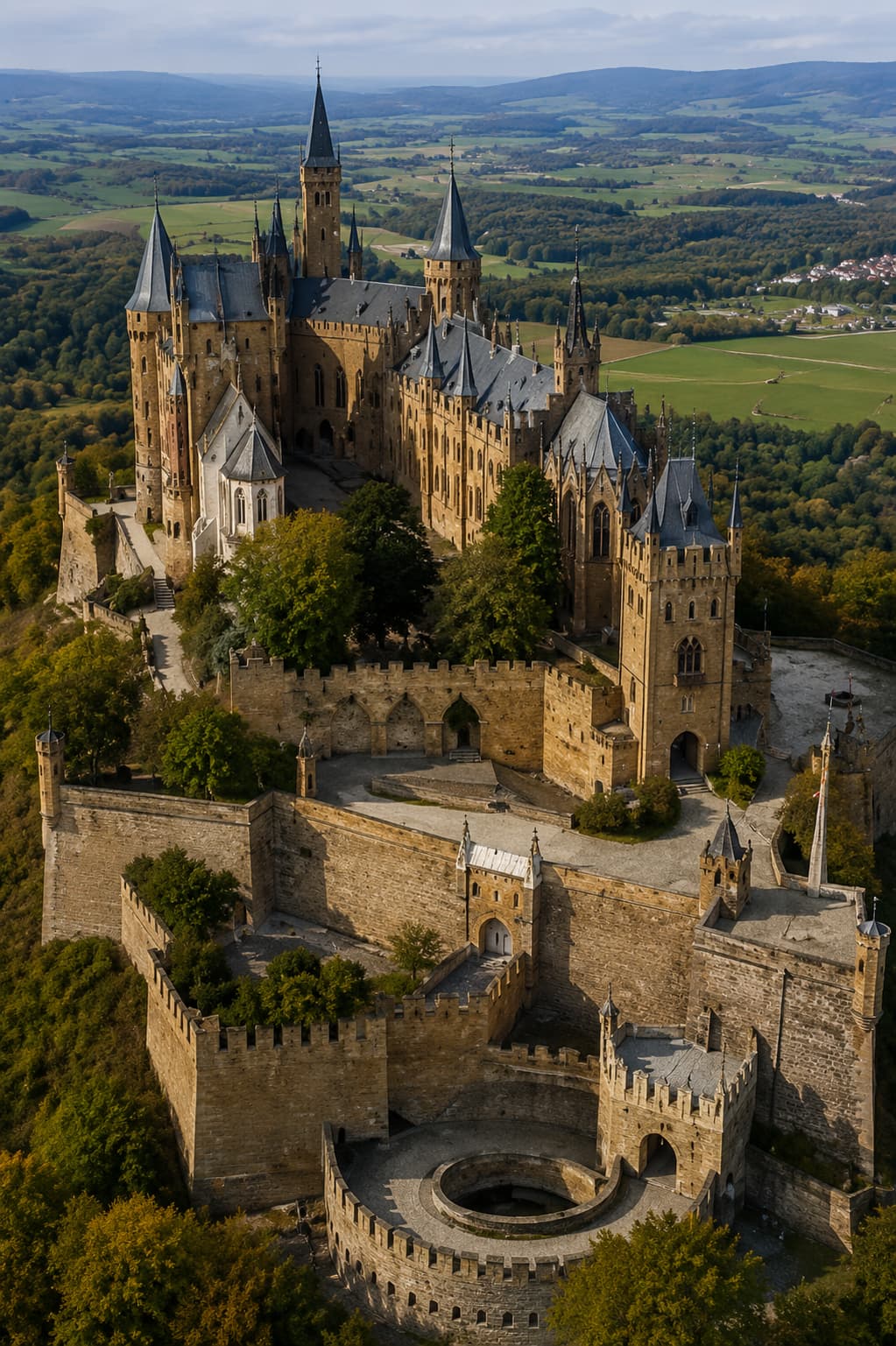
Perched atop Mount Hohenzollern with panoramic views of the Swabian Alps, Hohenzollern is the ancestral seat of the Prussian royal family and houses the Prussian Crown among its collections. It is frequently overshadowed by its Bavarian counterparts and consequently receives a fraction of their visitor numbers despite being arguably as interesting in terms of interior quality and elevated setting. In autumn and winter, when cloud sits below the peak, the castle appears to float above the landscape — a visual that has no equivalent at Neuschwanstein or Hohenschwangau. Worth pairing with a visit to nearby Tübingen for a genuinely excellent southern Germany day out.
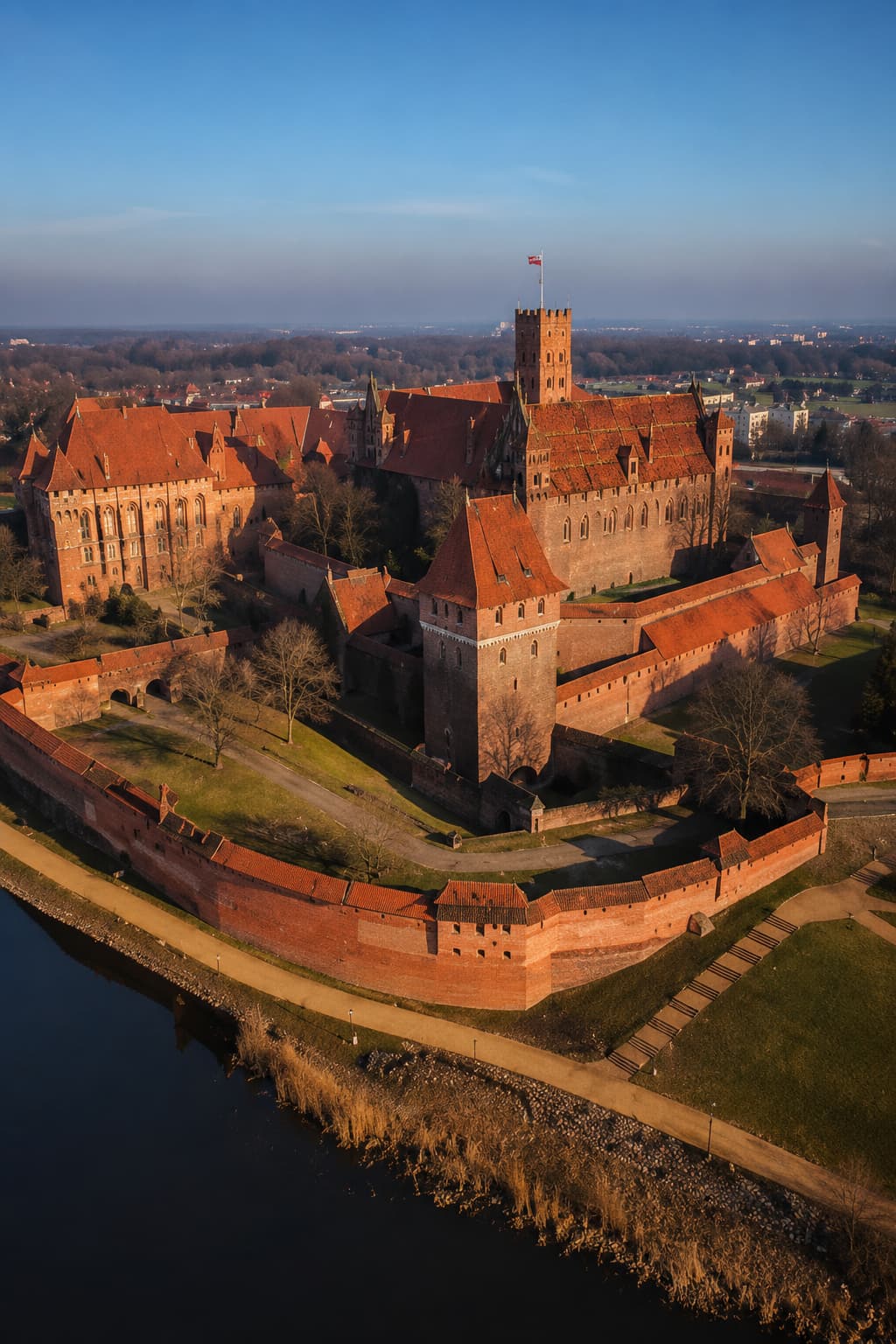
The largest Gothic castle in the world and the largest castle in Poland by surface area, Malbork is a UNESCO World Heritage Site built by the Teutonic Knights and completed in 1406 at 143,000 square metres — a building so large that it genuinely feels like a city unto itself. Three separate castle complexes occupy a single site on the Nogat River: the High Castle, Middle Castle, and Lower Castle, each distinct in period and function. Poland is growing fast in US and UK travel searches as budget airline connections expand, and Malbork sits two hours from Gdańsk — a natural pairing for any northern Poland itinerary. Allow a full day; the scale rewards it in a way that smaller castles simply don’t.
Bojnice & Predjama — Central & Eastern Europe’s Best
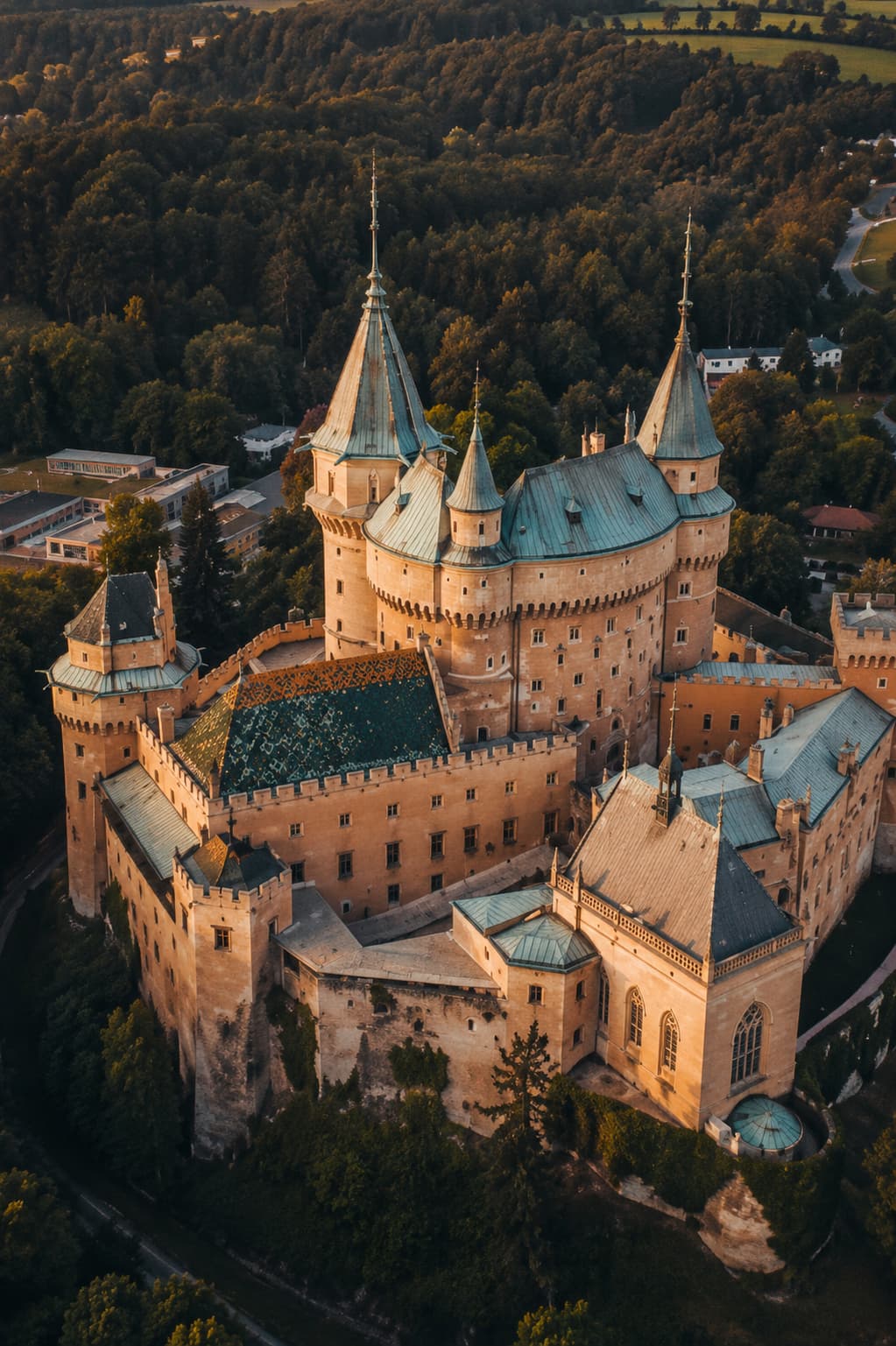
One of the most visited and most photographed castles in central Europe — and almost entirely unknown outside it. Originally a 12th-century wooden fort, Bojnice was gradually transformed across centuries into its current Romantic form: a fairytale silhouette of towers and turrets reflected in its surrounding lake. The interiors span eight centuries of accumulated history, from Romanesque foundations to Gothic halls to Baroque furnishings. It also hosts the International Festival of Ghosts and Spirits each May — three days of theatrical performances, live music, and costumed characters that makes the castle theatrical, eerie, and genuinely unforgettable. Bratislava is two hours away by train, making Bojnice a natural addition to any Slovakia itinerary.
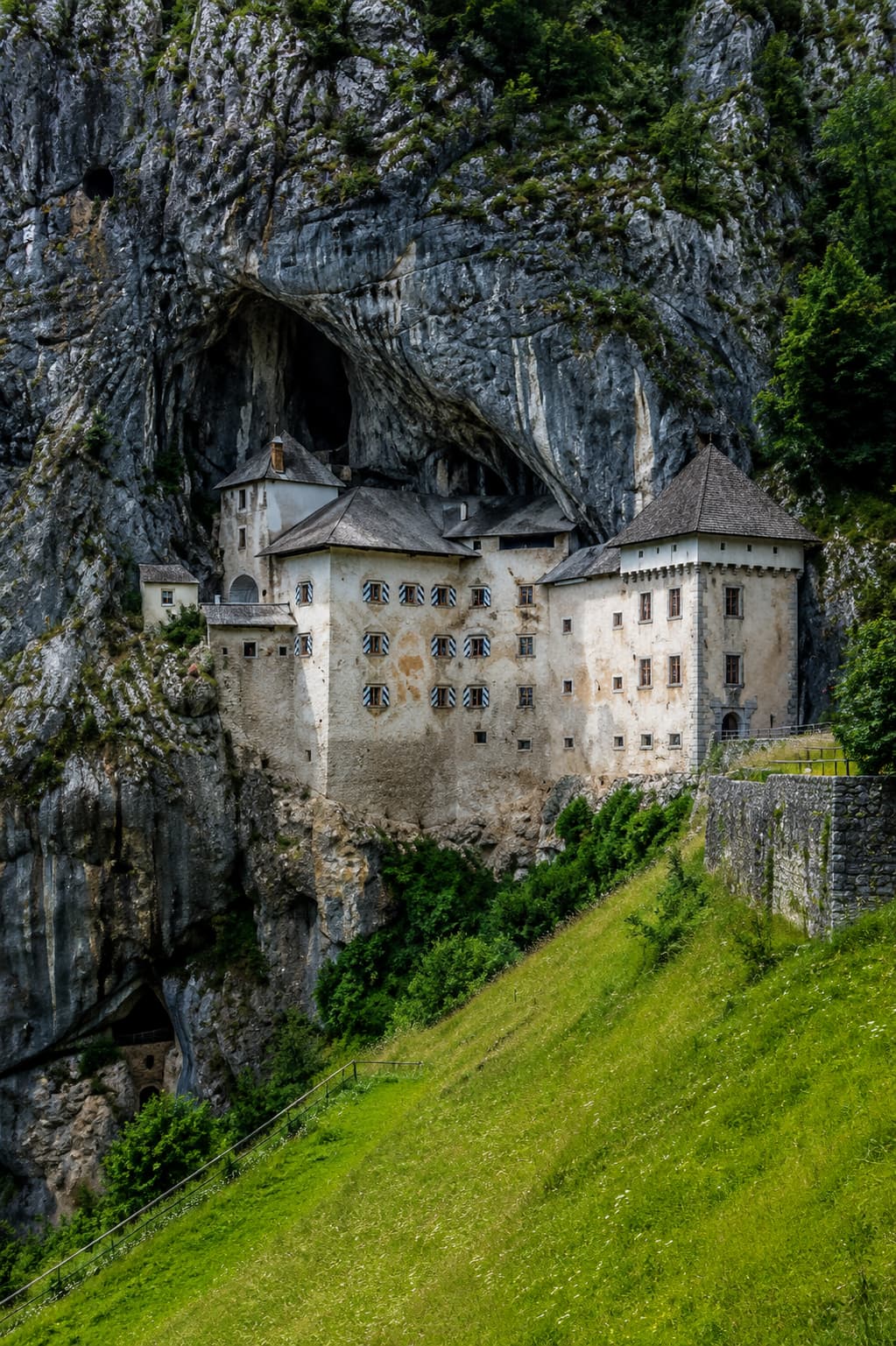
Elected the world’s largest cave castle by the Guinness World Records and, by a significant margin, the entry on this list with the highest visual-impact-to-crowd ratio. Predjama is built into a 123-metre cliff face — not in front of it, not beside it, but inside a cave within it, with the medieval walls filling the cave mouth and the rock overhead forming a natural roof hundreds of metres above. The castle extends back into the cliff through a series of tunnels used historically as escape routes. It sits 9 kilometres from the Postojna Cave system — one of the largest cave systems in the world — making the combination the most unusual single-day visit available in Slovenia. Furthermore, it is the fastest-growing castle in Pinterest saves from the UK and Germany.
Corvin — Transylvania’s Second Best
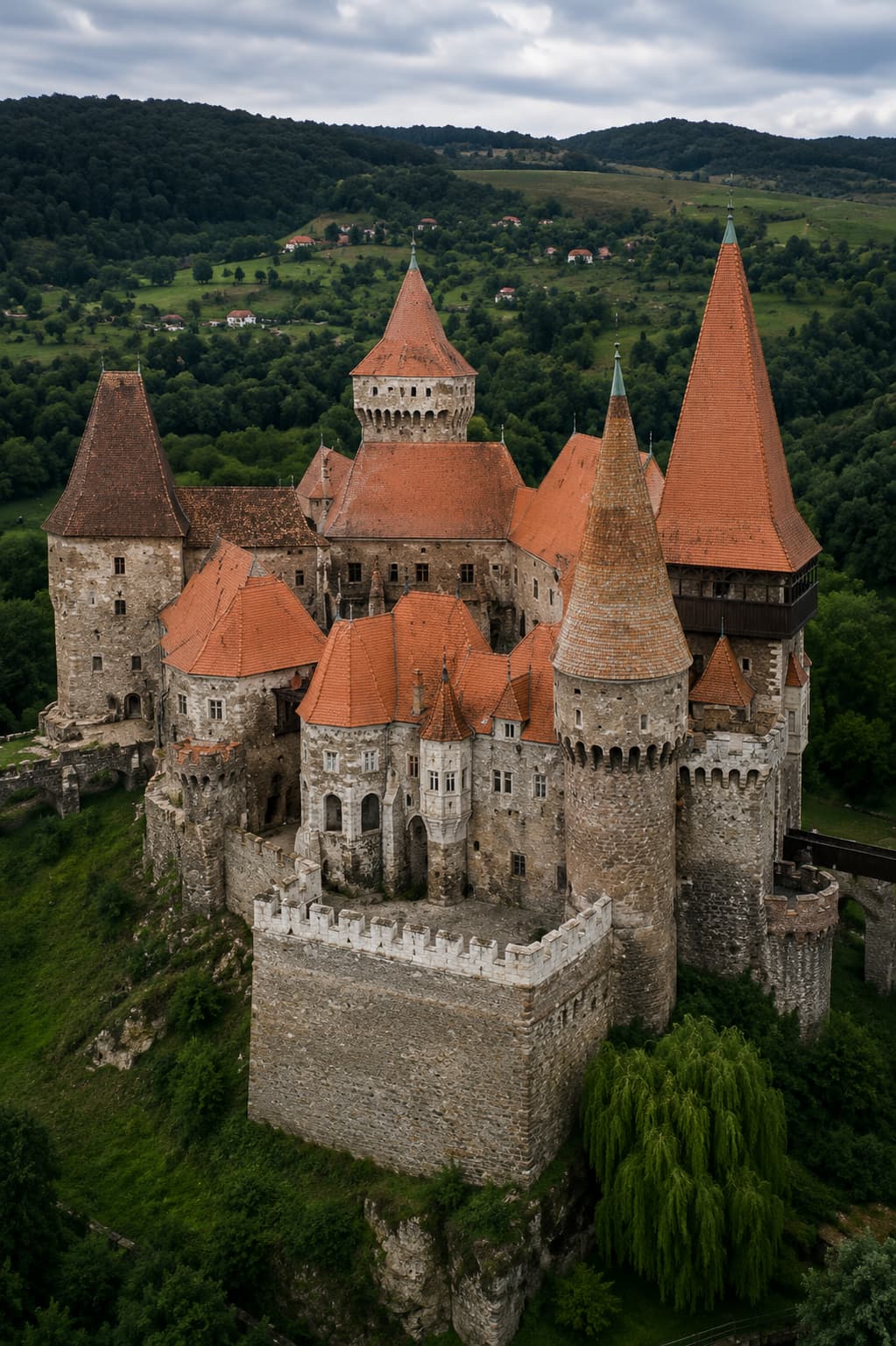
Corvin Castle occupies a different register from Bran — where Bran is compact and atmospheric, Corvin is theatrical on a different scale entirely. Towers rise sharply above the valley, the wooden drawbridge creaks underfoot, and shadows stretch across stone walls that have absorbed 600 years of history. Once home to John Hunyadi, a key figure in the 15th-century defence of Europe against Ottoman invasions, and allegedly the site where Vlad the Impaler was imprisoned for twelve years, Corvin holds historical weight alongside its visual drama. The Gothic and Renaissance architecture is among the finest in eastern Europe. Pairing it with Bran Castle on a Transylvania loop produces one of the strongest two-castle itinerary days available anywhere on the continent.
Practical Planning Notes
When to Visit
The best time to visit European castles varies by location, but a consistent pattern holds across most of them: late April through early June and September through October offer the best combination of manageable crowds, good light, and fully open facilities. July and August bring the largest numbers to every major castle — Neuschwanstein in August is a significant queuing exercise regardless of advance booking. Moreover, shoulder season prices for nearby accommodation are noticeably lower, which matters for destinations like Sintra and Versailles where staying overnight dramatically changes the experience.
Several of the less-visited entries — Burg Eltz, Hohenzollern, and Predjama — are actually more atmospheric in overcast or mist conditions than in clear summer light. For Mont-Saint-Michel specifically, tide timing matters regardless of season: check the tidal schedule before you visit and aim for rising tide on arrival for the most dramatic causeway approach.
Building a Castle Itinerary
The strongest multi-castle trips pair castles that are geographically logical rather than simply thematically similar. Several natural circuits emerge from this list:
| Bavaria Circuit | Neuschwanstein + Hohenschwangau in one day on the combo ticket (€31), with Hohenzollern one hour east for a second day. Base in Munich or Füssen. |
| Andalusia Circuit | Alhambra in Granada as the centrepiece, with Alcázar of Segovia as a Madrid day trip on either end. Both require advance booking at different windows. |
| Transylvania Loop | Bran Castle + Corvin Castle in two days, with Braşov as a base. Four hours driving total. Peles Castle fits naturally between them. |
| Scotland Highlands | Edinburgh Castle first, then a Highland drive via Eilean Donan. The road through Glencoe and along Loch Ness is one of the best drives in the UK. |
| Loire Valley | Chambord as the anchor, Chenonceau 45 minutes away. Two days based in Tours covers both with time for the surrounding villages. |
| Slovenia Day | Predjama Castle + Postojna Cave in a single day trip from Ljubljana. Combined entry available. The most unusual half-day pairing in Europe. |
Photography Tips
Neuschwanstein — Marienbrücke view: Arrive by 7am in summer, before tour groups. Eilean Donan — loch reflection: Dawn only, flat water before 7am in warmer months. Pena Palace: Overcast days produce better colour saturation than direct sun, which washes out the painted facades. Hohenzollern: Check forecasts in autumn and early winter for temperature inversions — the cloud-sea effect transforms the photograph entirely. Malbork: The western river-facing walls catch direct afternoon light between 2pm and 4pm — the best time for the red brick colour.
Budget and Entry Fees
Entry costs across this list range from free (Prague Castle grounds) to around €22 for the most expensive (Hohenzollern). Notably, several of the most rewarding visits — Burg Eltz, Predjama, and Bojnice — cost well under €15 and involve no timed-entry complications. As a general rule, the more famous the castle, the more advance planning the ticket requires. In contrast, the underdogs on this list can almost all be visited on arrival with no queue — which is itself part of the argument for including them.