
Montenegro Road Trip: The Most Scenic Drive in Europe You’ve Never Heard Of
One week in Montenegro — Bay of Kotor, Durmitor’s canyon roads, and an Adriatic coastline that most people drive straight past on their way to Croatia.
Usually, most people driving the Adriatic coast stop at Dubrovnik and turn back. They cross the border into Montenegro, get as far as the Bay of Kotor, take a photograph, and return to Croatia before dark.
In short, a Montenegro road trip takes 7 days, covers ~600km, and passes through three completely distinct landscapes: the Bay of Kotor, Durmitor National Park, and the Tara Canyon.
However, the ones who turn this into a proper Montenegro road trip find something different: a country the size of Wales with three completely distinct landscapes in a single week. First, the Bay of Kotor — arguably the most dramatic coastal scenery in all of Europe. Inland, Durmitor — canyon roads, glacial lakes, and mountain scale that makes the coast feel like a prologue. And Cetinje in between, the old royal capital, quiet and largely ignored by the tourist circuit.
Beyond that, Montenegro has almost zero Pinterest presence as a road trip destination. The roads are good, the country is tiny, and the scenery is extraordinary. Almost nobody from Western travel circles has done this drive and written about it. That window is closing — which is the reason to go now.
01 — Why Montenegro, and Why Now
Usually, the European road trip circuit has a handful of fixed stars — Amalfi, Dolomites, Scottish Highlands, Ring Road — that get discussed endlessly. However, Montenegro doesn’t appear on most of these lists despite having coastal drama that rivals any of them.
What Makes Montenegro Different
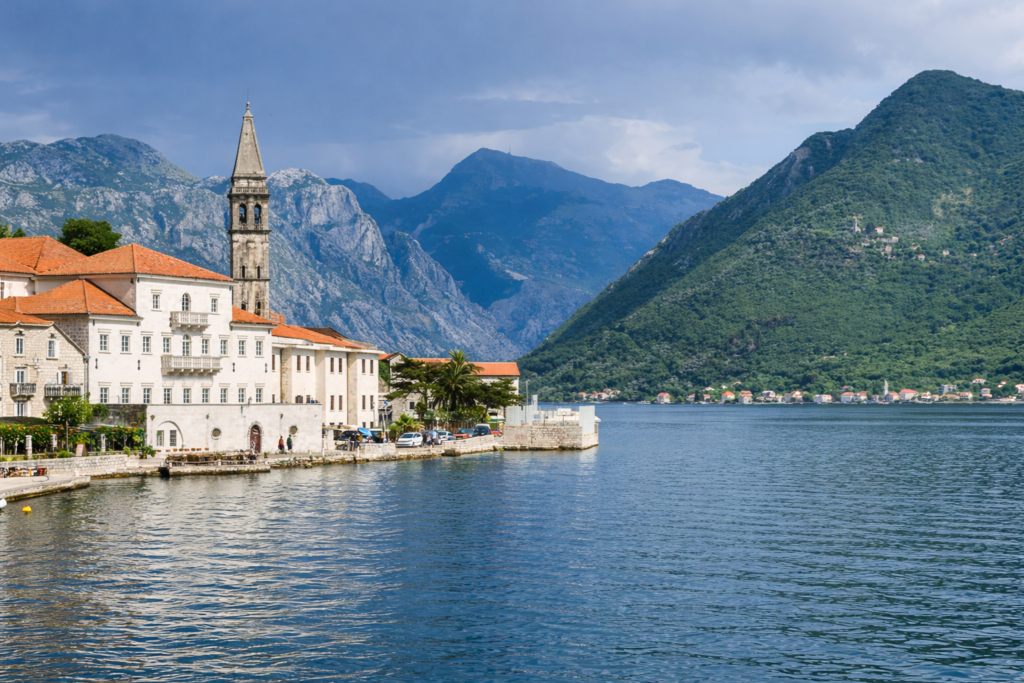
In practice, the Bay of Kotor is a flooded river canyon — technically a gulf, not a fjord, but with the visual drama of one. Grey limestone mountains rise almost vertically from turquoise water, and medieval walled towns perch at the water’s edge. Moreover, the road that rings the bay is one of the most scenic drives in Europe, and in May or September, traffic is light enough that you can pull over anywhere you want.
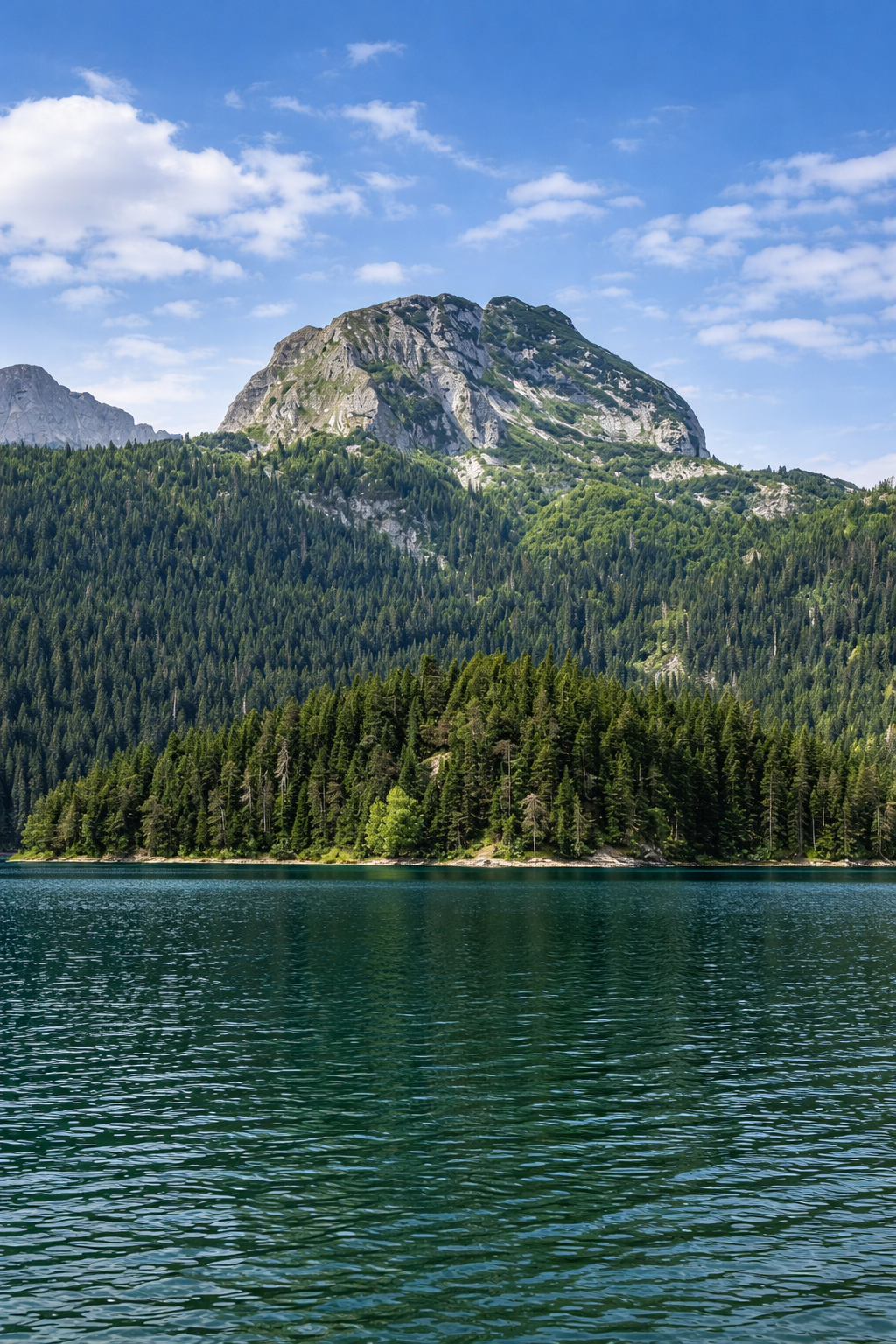
Inland, Durmitor National Park operates at a completely different scale. The Tara Canyon is the deepest canyon in Europe — 1,300 metres from rim to river. Sitting in a bowl of pine forest beneath the park’s highest peaks, the glacial Black Lake is a quiet fifteen-minute walk from Žabljak. Additionally, the road between the coast and Durmitor crosses mountain passes that most Adriatic tourists never see.
Why Now Is the Right Time to Go
Montenegro has the scenery of Croatia at roughly half the cost, a fraction of the tourists, and a road trip loop that fits inside a realistic week. The Bay of Kotor is more dramatic than anything on the Dalmatian Coast. The window before it gets discovered is still open — but accommodation prices and Instagram posts are catching up.
In practice, the infrastructure is there. Roads are paved, accommodation is bookable, and most signage is in English and Cyrillic. What isn’t there yet is the volume of Western travel writing that would tip a place into oversaturation. That absence is the reason this road trip feels like something you found rather than something you were sold.
02 — The Route, Day by Day
In practical terms, this Montenegro road trip runs as a loop starting and ending near the Croatian border — easy to combine with a Dalmatian Coast trip or fly in and out of Tivat Airport (8km from Kotor). Seven days covers the essential stops without rushing any of them.
Days 1–4 — Coast, Mountains and Into Durmitor
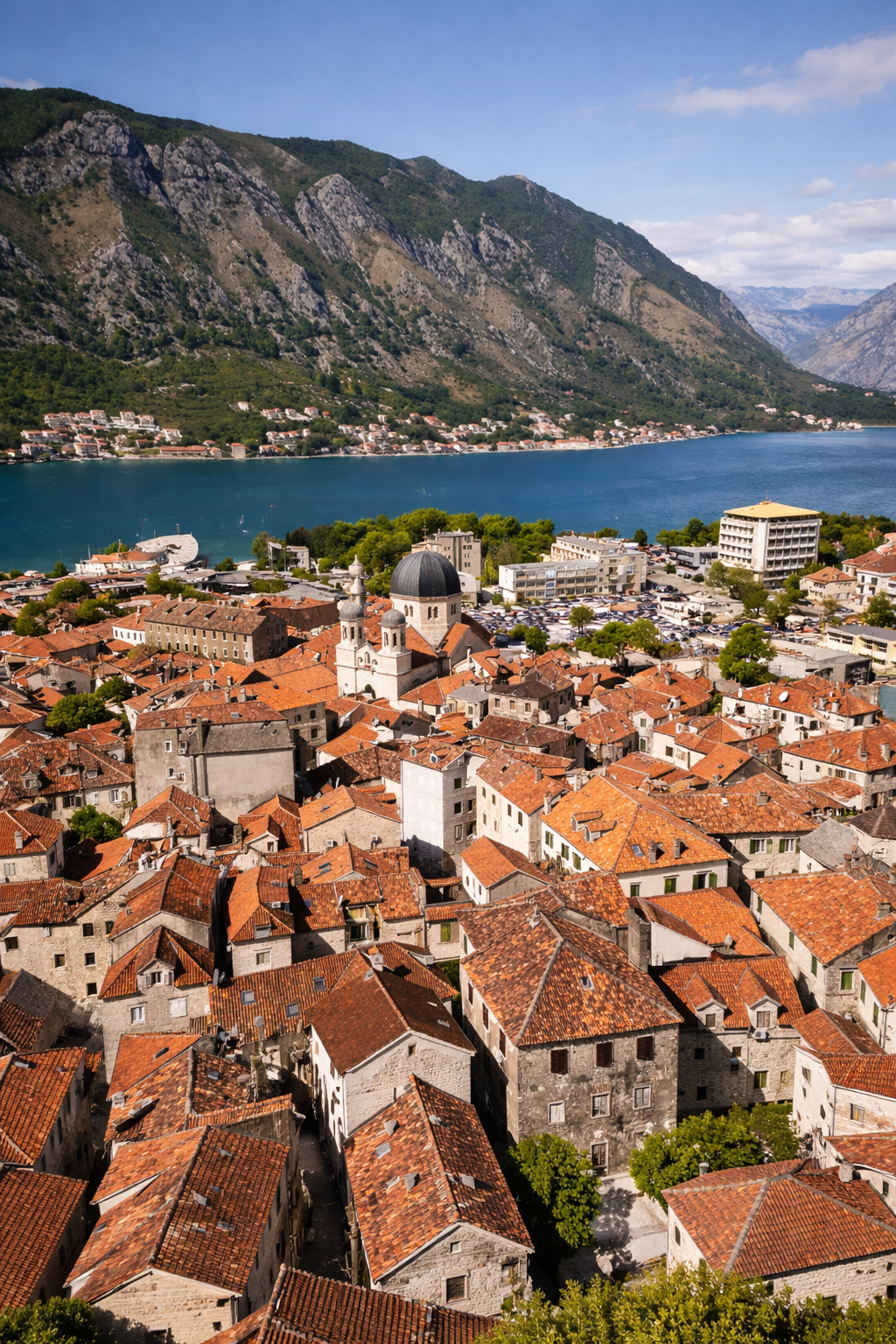
Fly into Tivat or drive from Dubrovnik (1.5hrs). Walk Kotor’s old town before the day trippers arrive, then climb the fortress walls for the bay view. Save the evening for a waterfront dinner.
Historic Town
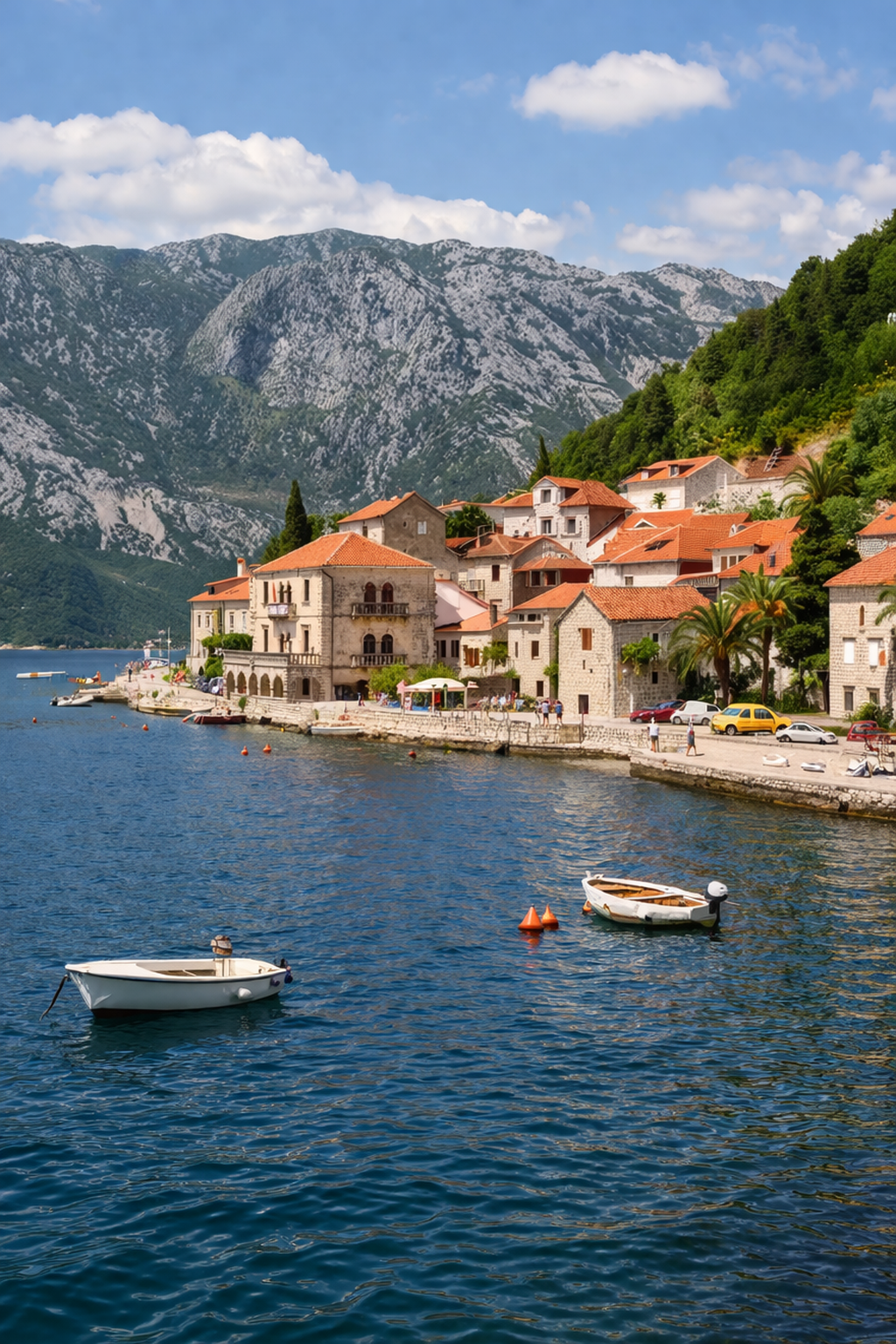
Drive the full bay circuit. Stop at Perast — a tiny baroque town of grand stone palaces facing two small islands. Subsequently, take the boat to Our Lady of the Rocks. Continue to Herceg Novi for the afternoon. This drive is the best in Montenegro.
Coastal Drive
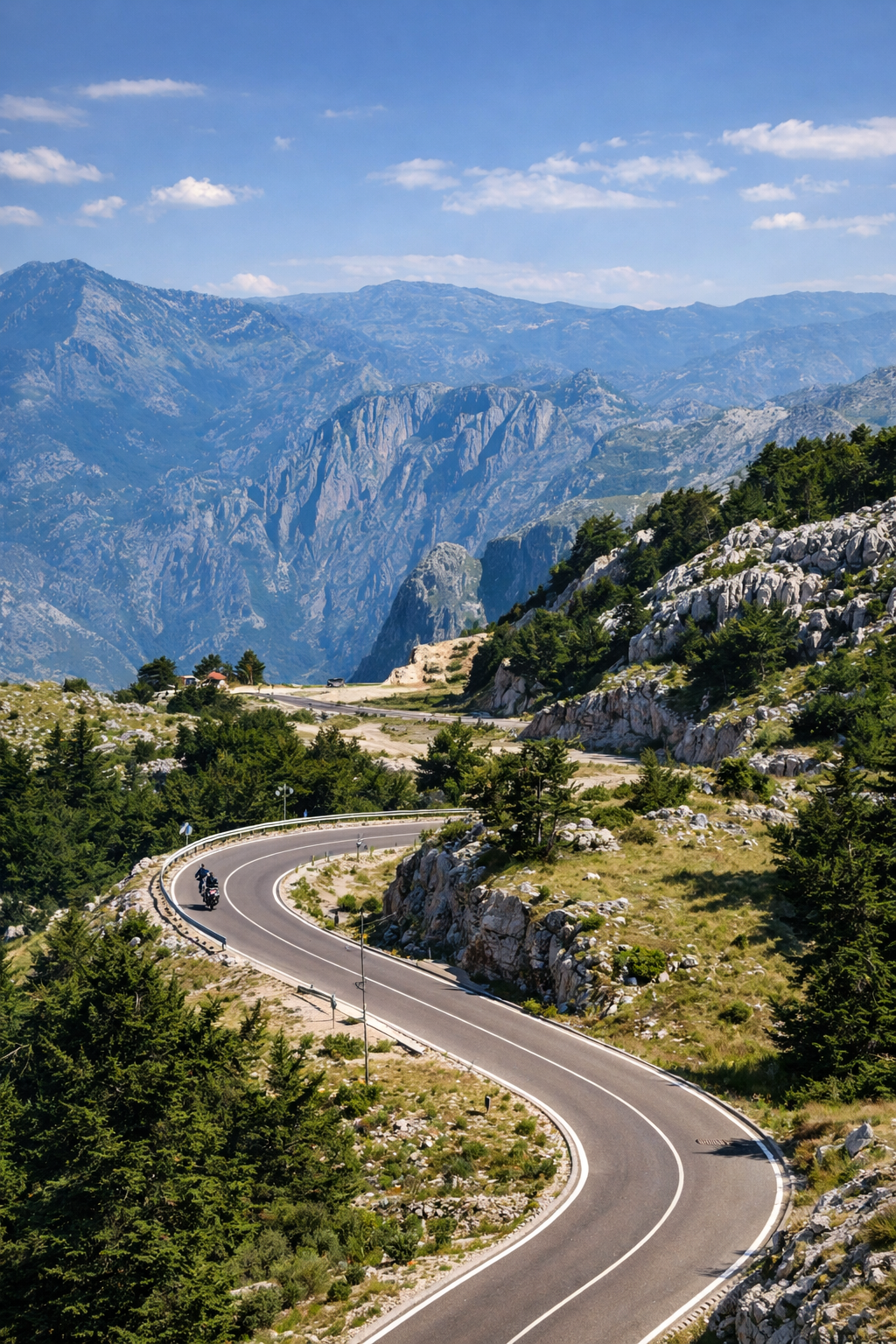
The mountain road from Kotor to Cetinje climbs 25 hairpin bends with increasingly extraordinary views back over the bay. Cetinje was Montenegro’s royal capital — now a quiet town of palaces turned museums and almost no other tourists. Genuinely one of the most overlooked places in the Balkans. That said, if you have a spare day on this leg, Lake Skadar — 45 minutes from Cetinje — is the largest lake in the Balkans and almost entirely uncrowded.
Mountain Drive + History
Three to four hours from the coast, the landscape changes completely. Žabljak sits at 1,450m, and the Black Lake is a fifteen-minute walk from the centre — glacial, still, and surrounded by pine forest beneath the park’s highest peaks.
Mountain Drive
Days 5–7 — Canyon, Coast and Departure
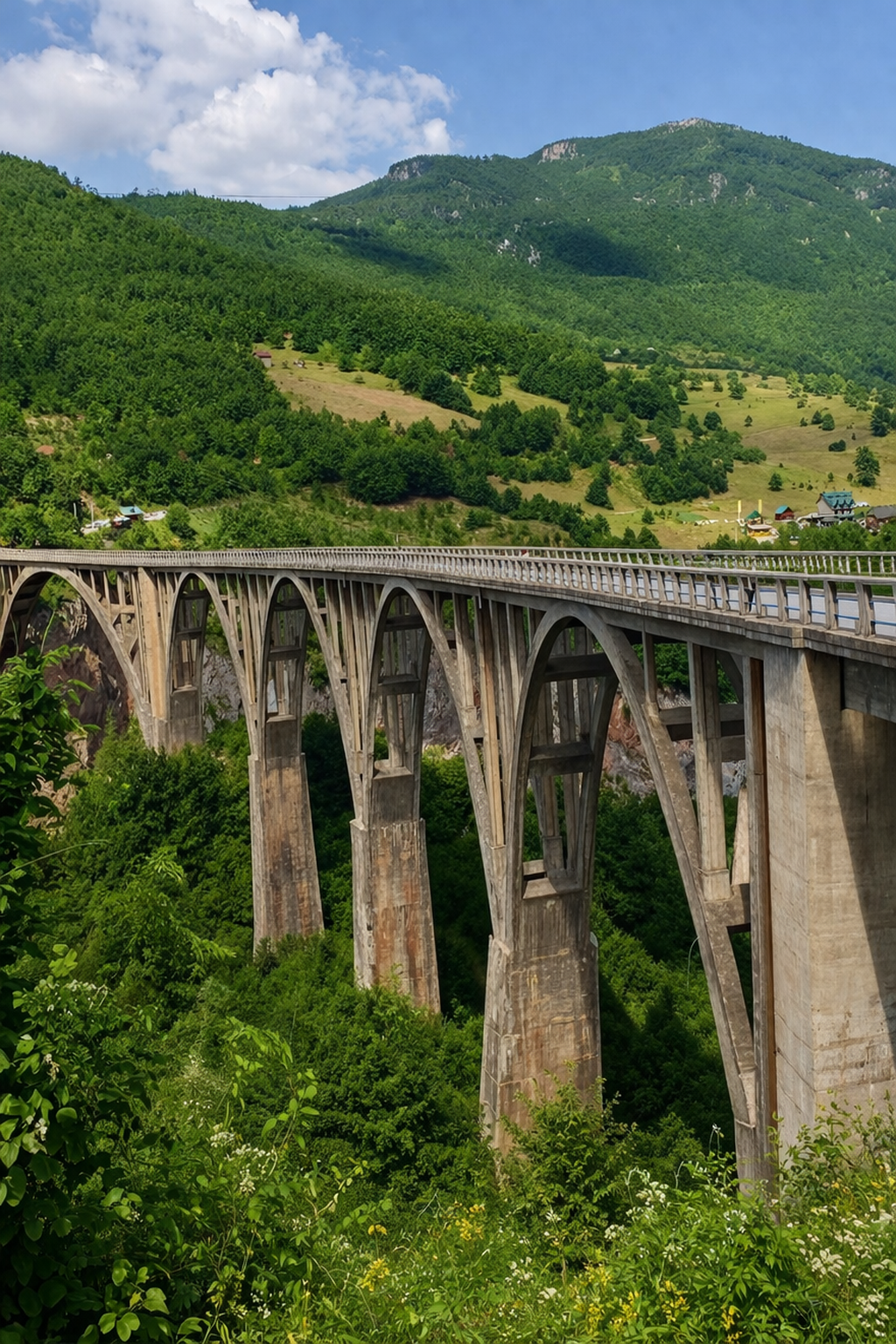
The Tara River Canyon is 1,300m deep — deeper than the Grand Canyon in places. Drive the canyon rim road and stop at viewpoints. In particular, the Đurđevića Tara Bridge crosses the canyon at 172m — one of the most dramatic single moments of the drive.
Canyon Drive
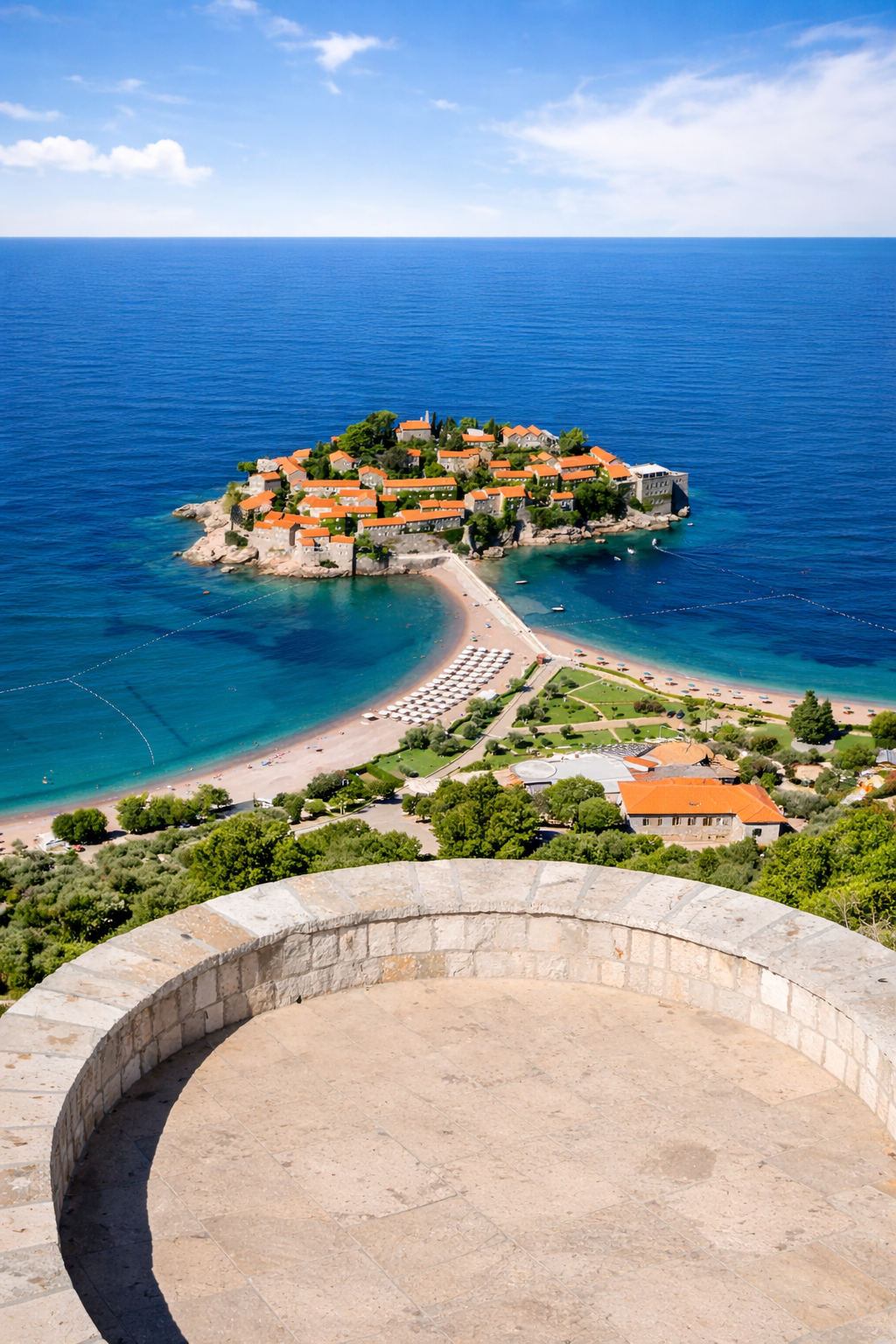
The return drive to the coast takes a different route south through forested mountain valleys. As a result, the scenery stays interesting all the way down. Stop briefly in Budva — a walled coastal town with a good viewpoint over Sveti Stefan from the old town ramparts, worth 30 minutes on the way through. Sveti Stefan itself — a tiny islet connected to the mainland by a causeway — is genuinely extraordinary at sunset.
Coastal Arrival
Return to Kotor for a final morning before departure. The old town at 7am — before the day trips from Dubrovnik arrive — is a different city from the afternoon version. Tivat Airport is consequently just 20 minutes away.
Departure
03 — The Bay of Kotor
In short, few places earn their reputation as quickly as the Bay of Kotor.
Specifically, this is the southernmost fjord-like inlet in Europe: grey limestone mountains falling directly into the sea, a ring of medieval walled towns, and almost no one from Western travel circles who has driven around it slowly.
The Towns Worth Stopping For
A UNESCO World Heritage walled city intact since medieval times. The fortress walls climb 260m up the mountain behind the town. Walk them early morning — the view over the bay from the top is the best in Montenegro.
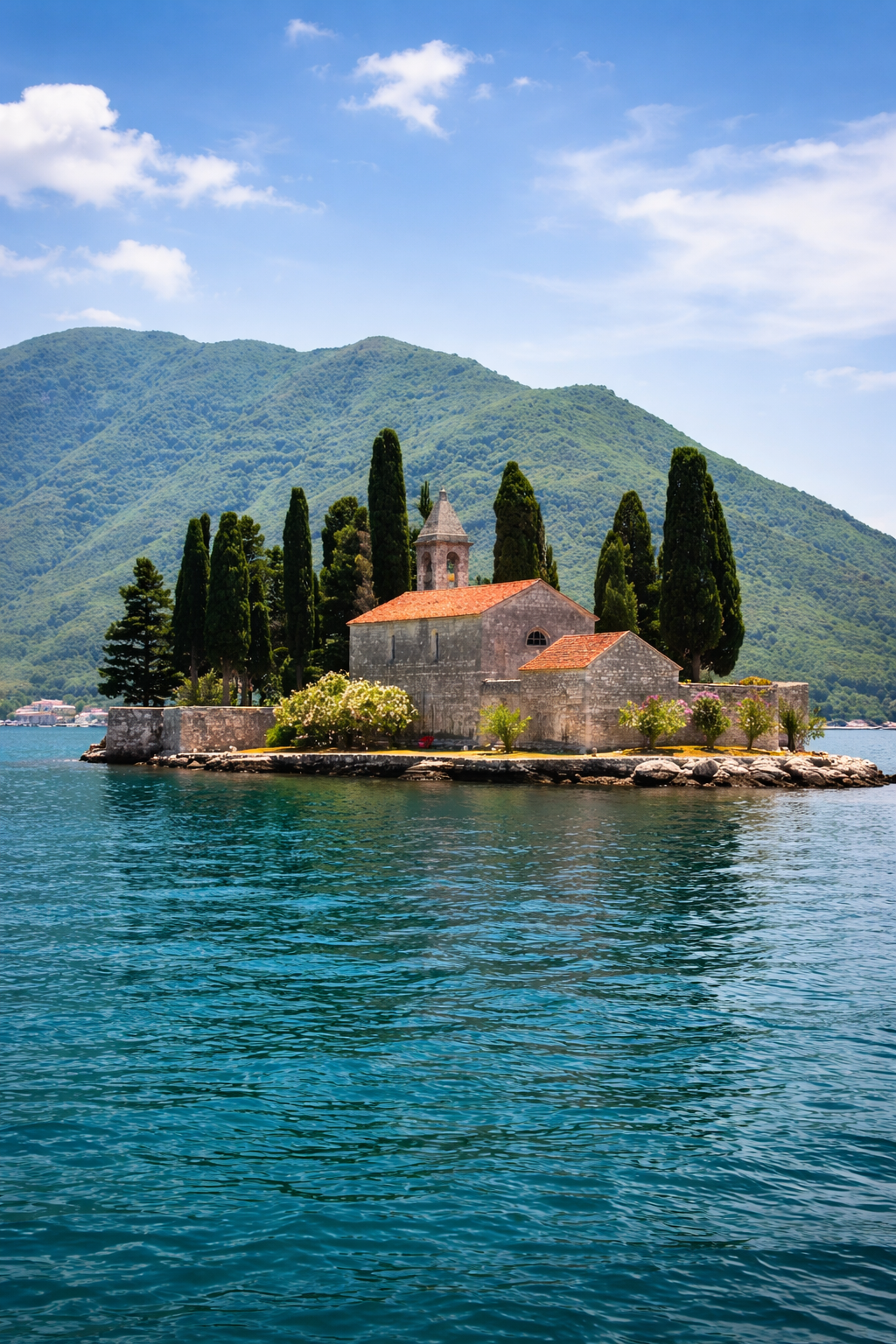
A baroque stone town facing two small islands. The church on Our Lady of the Rocks was built by fishermen dropping stones each time they passed safely. Take the boat (€5 return). The interior is extraordinary — walls entirely covered in 68 oil paintings.
A fortified islet connected to the mainland by a causeway — the most photographed image in Montenegro. The islet itself is now a luxury resort, but the viewpoint above it at sunset is free and worth every minute of the drive.
25 hairpin bends climbing from sea level to 1,000m. The views back over the bay as you climb are extraordinary — each bend reveals a wider, higher perspective. Allow an hour and stop at every pull-off. This drive is reason enough to visit Montenegro.
04 — Durmitor & the Tara Canyon
The inland section is where Montenegro separates itself from any purely coastal comparison. Durmitor National Park is high-mountain landscape — proper alpine scale with glacial lakes, pine forests, and peaks above 2,500m. Moreover, it sits only three hours from the Adriatic coast, which means you can move between two completely different worlds inside a single day’s drive.
What You’ll Actually See
18 glacial lakes, Montenegro’s highest peaks, and a UNESCO World Heritage designation. The Black Lake walk is flat, easy, and takes about 90 minutes. In May, the surrounding mountains still have snow on the upper ridges.
The deepest canyon in Europe — 1,300m from rim to river in places. The canyon road offers viewpoints over the gorge that are genuinely vertiginous. White-water rafting on the Tara is available through operators in Žabljak (May–September).
An arched concrete bridge crossing the Tara Canyon at 172m above the river — built in 1940 and still one of the most dramatic pieces of road infrastructure in Europe. Stand in the middle and look down.
The small mountain town that serves as base for Durmitor — functional, not beautiful, but with good accommodation, restaurants, and hiking equipment hire. Two nights here is the right amount.
The park road is fully open from May through October. Late May and early June are the best weeks — the roads are clear, the glacial lake is fully accessible, and you get alpine wildflowers alongside the lake walks. Avoid July and August if you want the mountain section to yourself.
05 — Montenegro vs Croatia
Montenegro is often framed as an alternative to Croatia. However, the honest comparison is more interesting than that — they’re not the same kind of trip, and the question of which to do depends on what you’re after.
How the Two Destinations Compare
The Case for Choosing Montenegro
Overall, the strongest argument for Montenegro over Croatia is the loop route. Croatia’s Dalmatian Coast is beautiful — nobody is arguing otherwise. But it doesn’t have a loop. Drive the Dalmatian Coast and you go in one direction, then back the same way. Montenegro gives you a circuit that changes landscape three times, and a drive where the interior is as worthwhile as the coast.
On top of that, the cost difference is concrete. A mid-range dinner in Kotor runs €10–14; the equivalent meal in Dubrovnik is closer to €20–28. Accommodation follows the same pattern — a good guesthouse in Montenegro comes in at €45–70/night where Croatia charges €90–140 for comparable quality. Over seven days, that gap compounds. Furthermore, the Montenegro circuit covers coast, mountains and canyon in a single loop — a format the Dalmatian Coast, with its one road and one direction, simply cannot match.
06 — Practical Information
Getting There and Getting Around
| Getting there | Fly into Tivat Airport (TIV) — 8km from Kotor, the most convenient entry point. Podgorica Airport (TGD) has more connections. Alternatively, drive from Dubrovnik (1.5hrs to Kotor). |
| Car hire | Essential — you cannot do this road trip without a car. Hire from Tivat or Podgorica. A standard hatchback handles all routes including Durmitor. Car hire from Tivat runs €25–50/day outside peak season; €35–60/day in July–August. Book in advance for summer. |
| Roads | Coastal roads are good. The Kotor–Cetinje mountain road is well-maintained but narrow — take it slowly. Durmitor roads are paved and manageable in a normal car. |
Budget, Timing and Where to Stay
| Best time to go | May–June and September–October. July and August are peak season — busier and hotter on the coast. Durmitor is accessible May–October. |
| Budget | Montenegro is affordable — cheaper than Croatia by 30–40%. Accommodation €40–80/night mid-range. Meals €8–18. Durmitor park entry: €5/car/day. |
| Accommodation | Book Kotor 2–3 months ahead for summer. Žabljak has guesthouses — no need to book far in advance outside August. Perast has atmospheric small hotels worth considering for night two. |
| Combining with Croatia | Fly into Dubrovnik, drive the Dalmatian Coast to the Montenegro border (2hrs), do the Montenegro loop, return to Dubrovnik. Total trip: 10–12 days. Seamless. |
| Optional extension | If you have a spare day, Lake Skadar — 45 minutes from Cetinje — is the largest lake in the Balkans and almost entirely uncrowded. |
Montenegro is not in the EU or Schengen. If you’re driving a hire car from Croatia into Montenegro, check that your hire contract allows cross-border driving — not all companies permit it without a specific supplement. The border crossing at Debeli Brijeg (on the coast road from Dubrovnik) is the most straightforward.
Planning the Trip
How many days do you need for a Montenegro road trip?
What is the best time to visit Montenegro by car?
Can I do this without a car?
Safety, Bases and Whether It’s Worth It
Is Montenegro safe to travel solo?
What is the best base for exploring Montenegro?
Is Montenegro worth visiting if I’ve already been to Croatia?
Montenegro is still the road trip that most people drive past.
That window is exactly why you should go now.