
25 Things to Do Outside Alone That Actually Feel Good (Not Lonely)
Not “coping with solitude” — these are the outdoor moments that are genuinely better when you’re the only one deciding.
The best things to do outside alone aren’t the ones on the itinerary. This list is for solo travelers specifically — people on a trip who have a few hours to fill entirely on their own terms. What stays with you are the unplanned, unstructured hours: the sunrise walk, the waterfront hour, the slow afternoon in a square you had no reason to sit in.
These are outdoor activities for solo travelers who want to feel present rather than just occupied. Each one is genuinely better when you’re the only one deciding how long to stay — and the full list covers morning through late evening, from active to almost completely still.
Some of these work anywhere; others are travel-specific. All of them, however, share one quality: they require your own company to be enough — and they almost always turn out to be.
01 — Morning: Things to Do Outside Alone Before the Day Starts
The best solo outdoor mornings share one quality: you can leave whenever you want and stay as long as you need. No negotiation.
Not just any rooftop or balcony — find a spot that requires a little effort. The twenty-minute walk before dawn is part of the experience. When you arrive before anyone else, the silence belongs entirely to you.
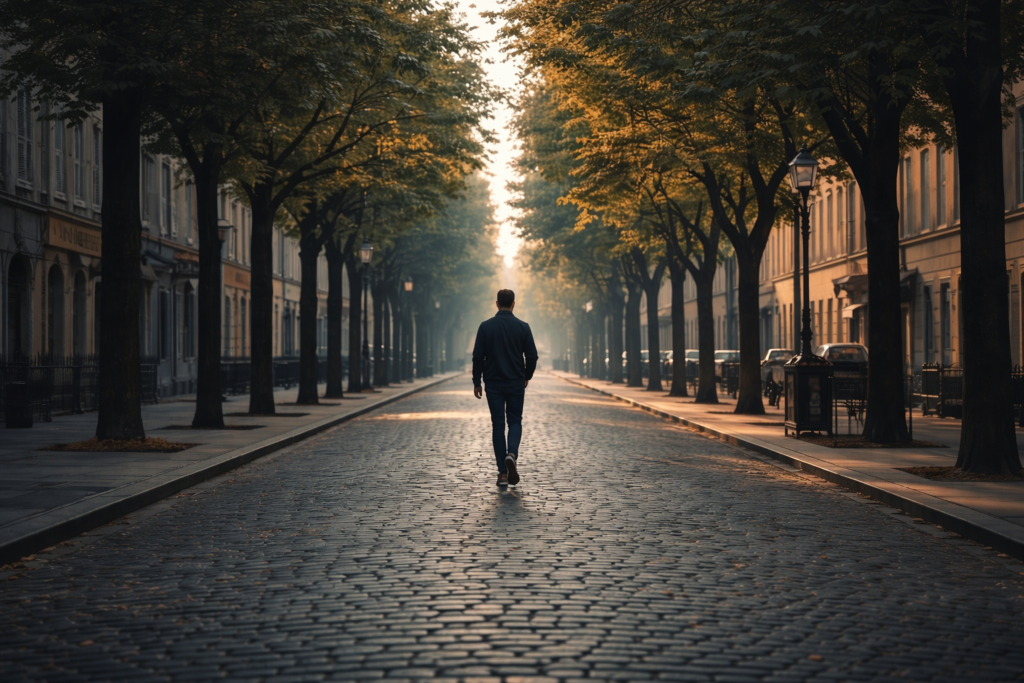
6am in almost any city is a completely different place. Empty streets, the smell of bakeries opening, shop owners setting up. You see the city’s actual texture — not the tourist layer that sits on top of it from 9am onwards.
Set a direction, not a place. Turn when something interests you. The only rule: no map-checking for the first hour. You will get slightly lost. This is the point.
Find somewhere with outdoor seating and nowhere to be. Order coffee. Stay for the second cup. Watch the morning happen around you without participating in it. This is what people mean when they say they learned to slow down.
Most sites worth seeing are empty between 6 and 8am. Fushimi Inari in Kyoto, the Alhambra gardens in early light, a cathedral square before the tour groups. You get the real version of the place, not the crowded reproduction of it.
02 — On the Move
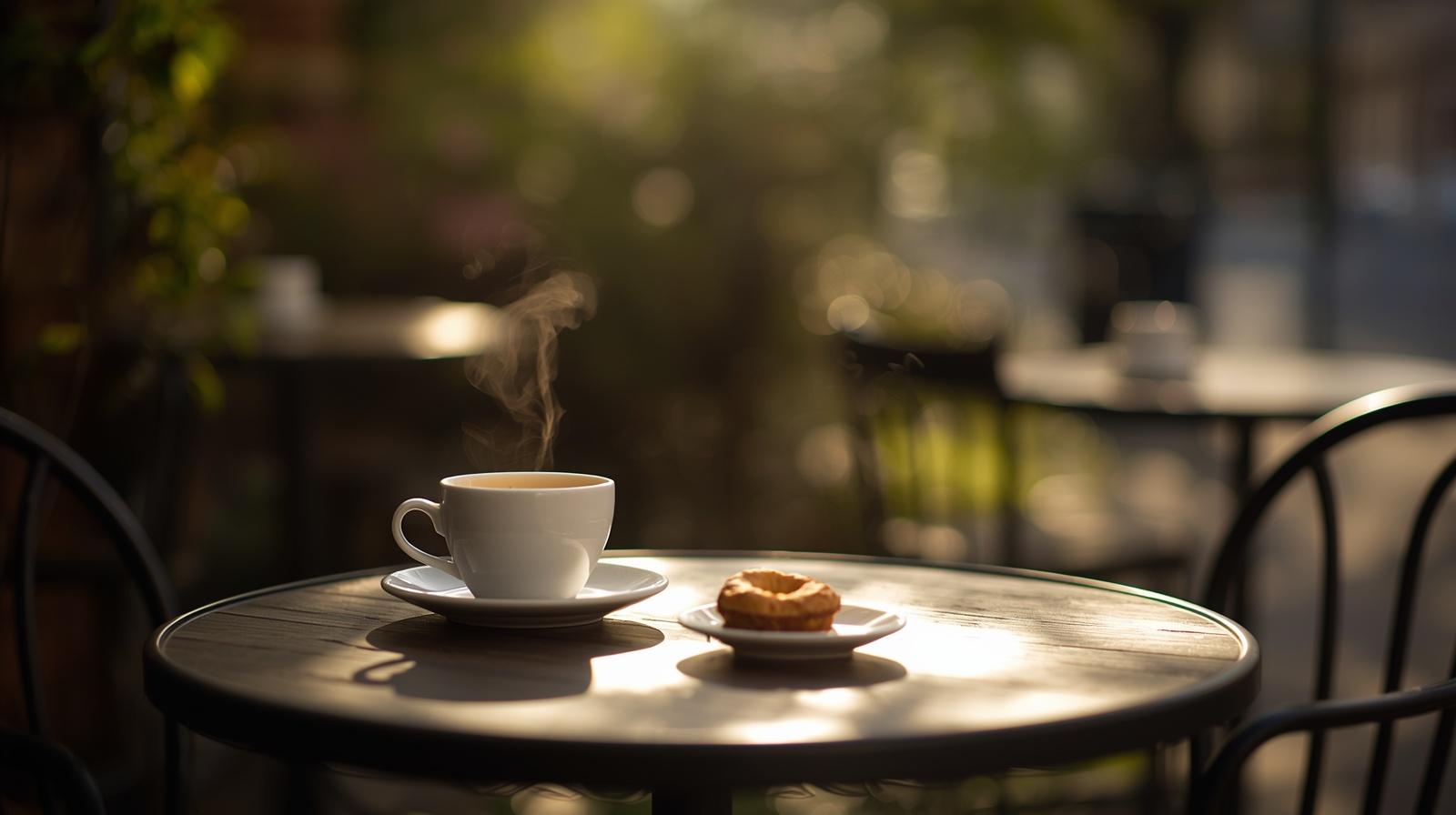
Some of the best solo outdoor experiences are about motion — not rushing, but choosing your own pace and changing it whenever you want.
Rivers, canals, coastal paths — most cities have a waterside cycling route that solo travelers rarely think to use. It covers more distance than walking, requires less attention than driving, and puts you at a pace where things are actually visible.
Pick any bus route you don’t know. Ride it to the end. Walk back however feels right. This is how you find the parts of a city that never appear on any guide — the actual neighbourhoods, the actual rhythm of daily life.
Not a mountain — just something that takes you out of the city and requires enough effort that your mind stops running other things in the background. The last twenty minutes of a good solo hike are almost meditative.
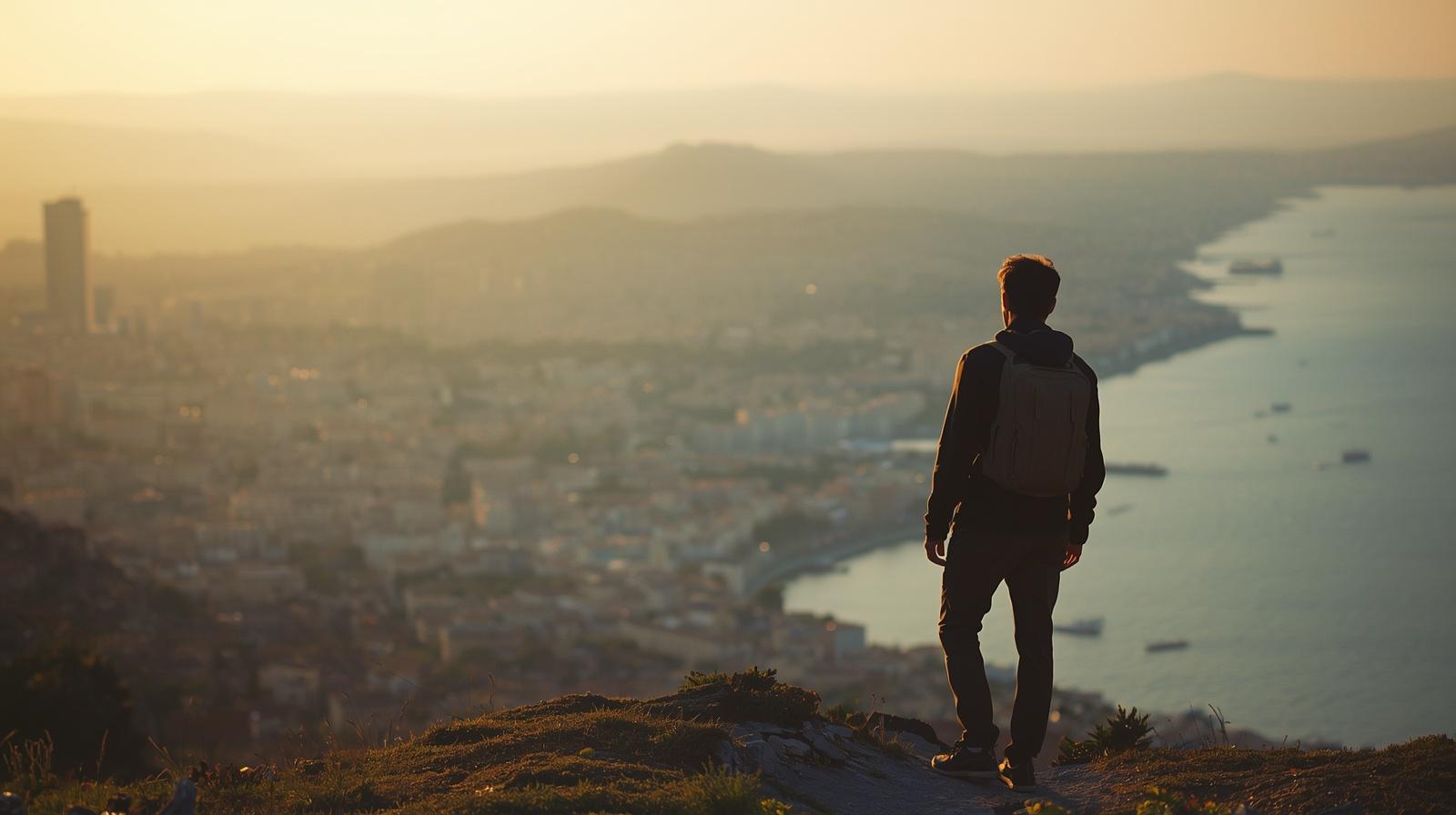
The specific pleasure of a cliff path or coastal walk alone is the combination of physical effort and visual reward. You can stop for as long as you want when the view is good. No one is behind you wanting to keep moving. In places like Seville’s riverbank paths or Granada’s hillside trails, solo walking takes on an unhurried quality that group travel rarely allows.
Revisit a street or square from earlier in the trip but with no goal attached to it. You notice completely different things the second time — the light has changed, you’re less anxious about orientation, and you look up more.
Why Pace Defines What’s Good to Do Outside Alone
The single biggest difference between solo outdoor time that feels good and solo outdoor time that feels aimless: give yourself permission to stop. The trip is not an itinerary to execute — stopping is the point.
03 — By the Water
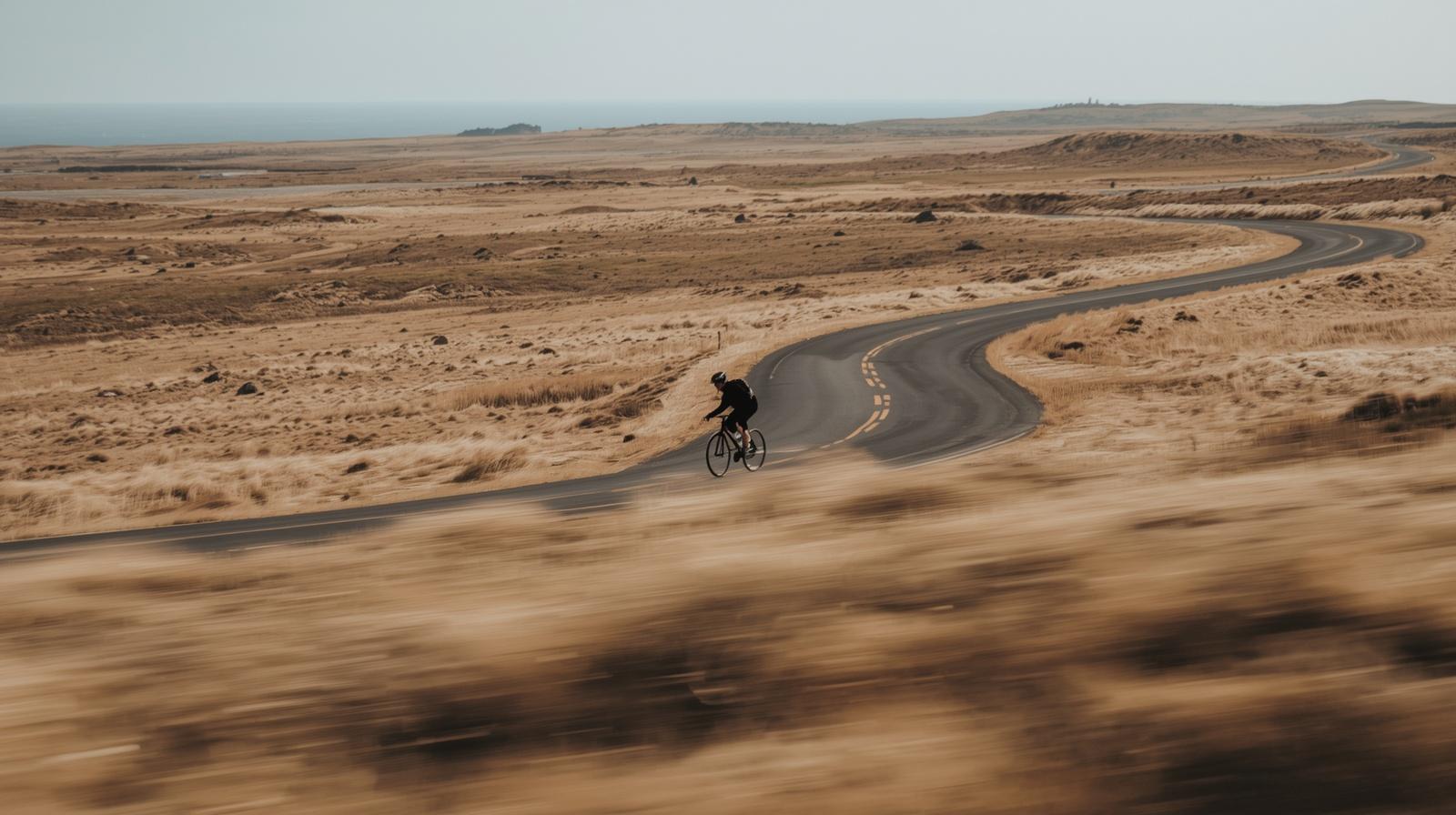
Water and solitude have a specific compatibility. There’s a reason every solo traveler, given free time and a nearby river or sea, tends to end up sitting by it.
A riverbank, a harbour wall, a lake edge. No phone, no book — just the water and however long you decide to stay. This sounds simple because it is. Most solo travelers say they wish they’d done more of it.
Not the main beach. The cove, the rocky platform, the spot a local mentioned — the swim itself is better when you’ve earned the approach. Getting there alone means you’re not managing anyone else’s experience of it. In places like Bali, the best water is almost always a short effort from the obvious spots.
Late afternoon at a harbour, golden hour at a river. This is the kind of thing that sounds passive but actually requires a specific decision to not fill the time with something else. Solo travel makes it easier to make that decision.
The specific pleasure of moving over water without needing to arrive anywhere is one of solo travel’s quieter gifts. Board a local ferry or water bus, take a seat facing outward, and let the route unfold. You can always ride back on the same line.
04 — In the City
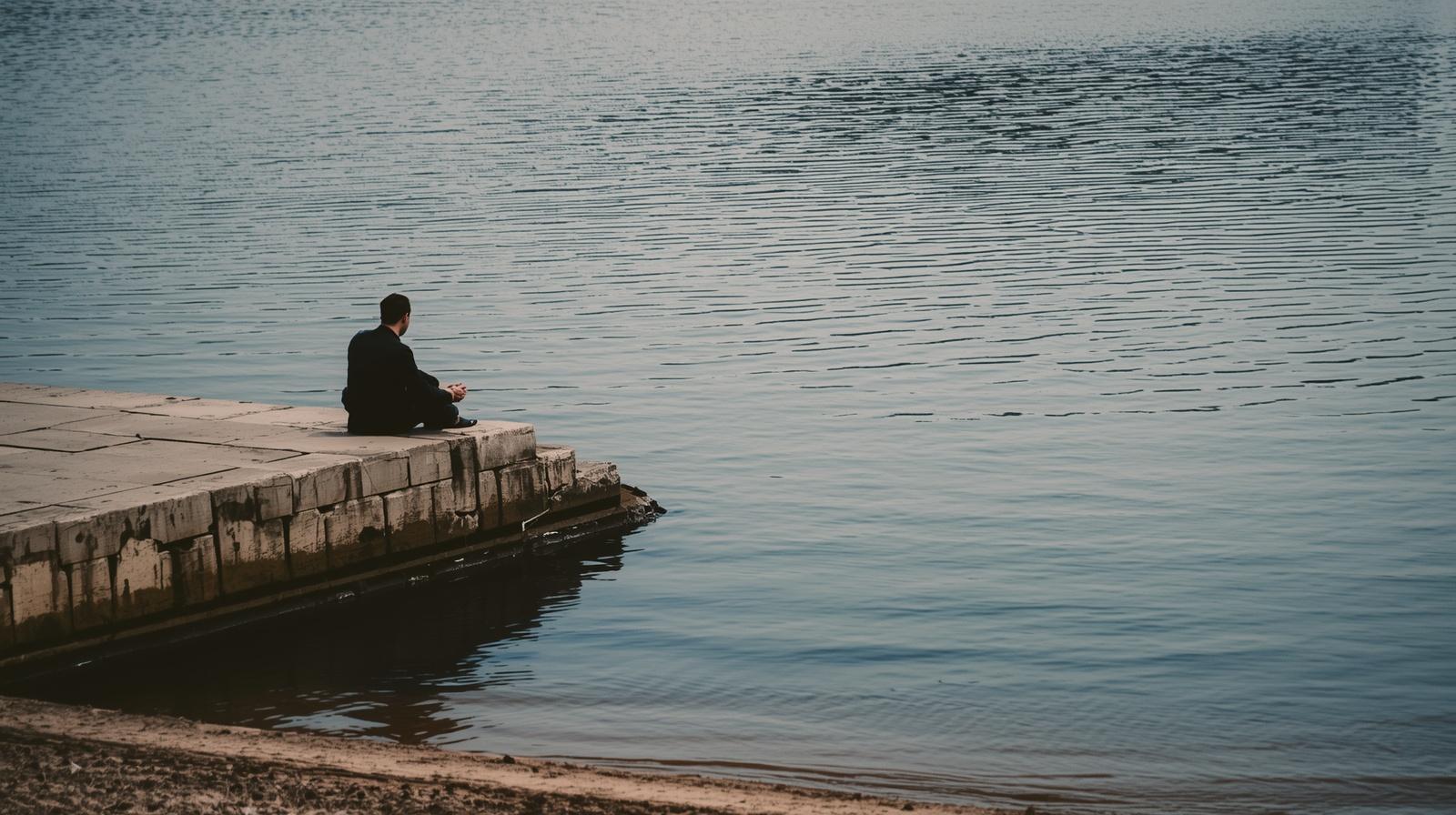
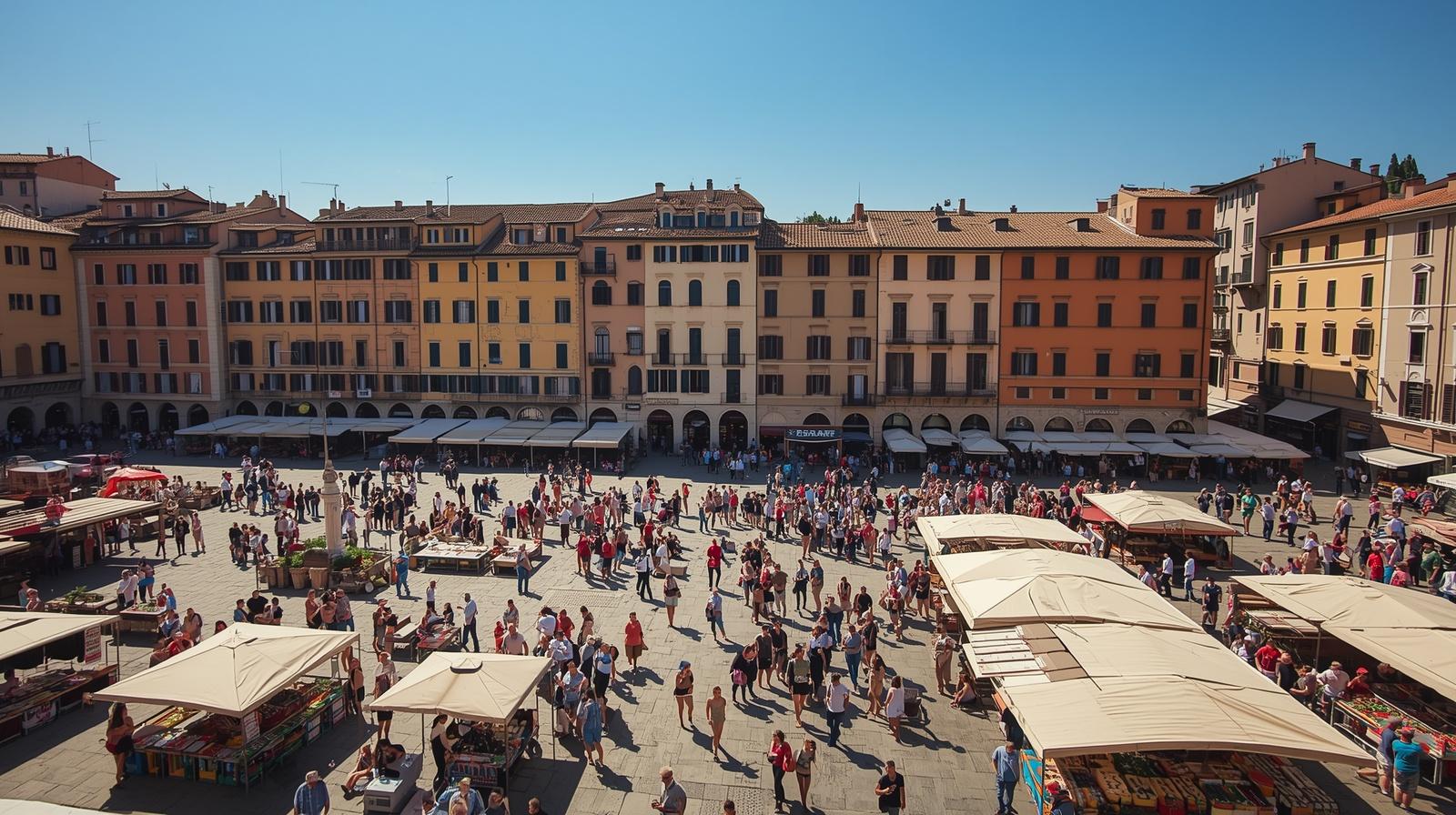
Any public square, any time of day. Find a bench or a café chair and simply observe for an hour. Children, pigeons, locals on lunch breaks, tourists with maps. Cities reveal themselves in their public spaces — and you can only really see it when you’re not moving through.
A market stall, a pavement cart, a counter with no seats. Order whatever the person next to you ordered. Eat without sitting down and without a plan for what comes next. This is one of the genuinely liberating small pleasures of solo travel.
Not the tourist market — the one where locals buy vegetables on a Saturday morning. Spend two hours there. Don’t buy much. Just move through it slowly and pay attention to what’s being sold, what things cost, and how the city sustains itself.
Courtyards, churches, covered markets, archways that lead somewhere. Solo travel gives you full permission to follow curiosity into any open space. Nobody is waiting. Nothing is rushed. This is how you find the places that don’t appear in guides.
Allow yourself to be disoriented for twenty minutes before checking where you are. The city looks completely different when you’re uncertain of your position — you actually look at it instead of following a blue dot across a screen.
05 — Slow Afternoons
The afternoon is where solo trips either find their rhythm or start to feel like a schedule. Among all the things to do outside alone, slow afternoon activities are the ones people most consistently say they wished they’d protected more time for. The trips that feel best are the ones with space built in.
Bring a book. Find shade and a bench. This is not wasted time. It is exactly what slow travel is supposed to feel like, and it is almost impossible to do when traveling with others.
Parks and gardens reward solo visitors specifically — you can stop in front of a single tree for five minutes without social consequence. The pace that makes a garden actually visible is incompatible with group travel.
Start with a plan. Let something you notice redirect it. Allow the afternoon to become something different from what you intended. Solo travel is uniquely good at this — the best hours often start as something else entirely.
Find a high point with a view. Arrive at 4pm. Stay through golden hour. Watch what happens to the city as the light moves across it. This is the kind of slow, attentive looking that solo travel makes possible and group travel almost never does.
The activities that come up most often in solo travel reflections are almost never the famous sites. They’re the unstructured afternoon hours — the viewpoint at 5pm, the market wandered without purpose, the hour spent sitting by a canal. Research on solitude consistently finds that unstructured time alone outdoors — rather than planned sightseeing — is what people report as most restorative and most memorable. The quiet middle of the trip turns out to be what people remember most.
06 — Evening and Late
The evening hours on a solo trip have a quality of their own. The pressure to see things has gone. What’s left is simply being somewhere — and the city at dusk offers a completely different version of itself to the one you walked through at noon.
Three Ways to End the Day Well
Safe cities are extraordinary at night alone. The sensory experience is different — the sounds, the light, the slower pace of people who are out for the evening rather than the day. Night walking as a solo traveler is one of the great quiet pleasures of travel.
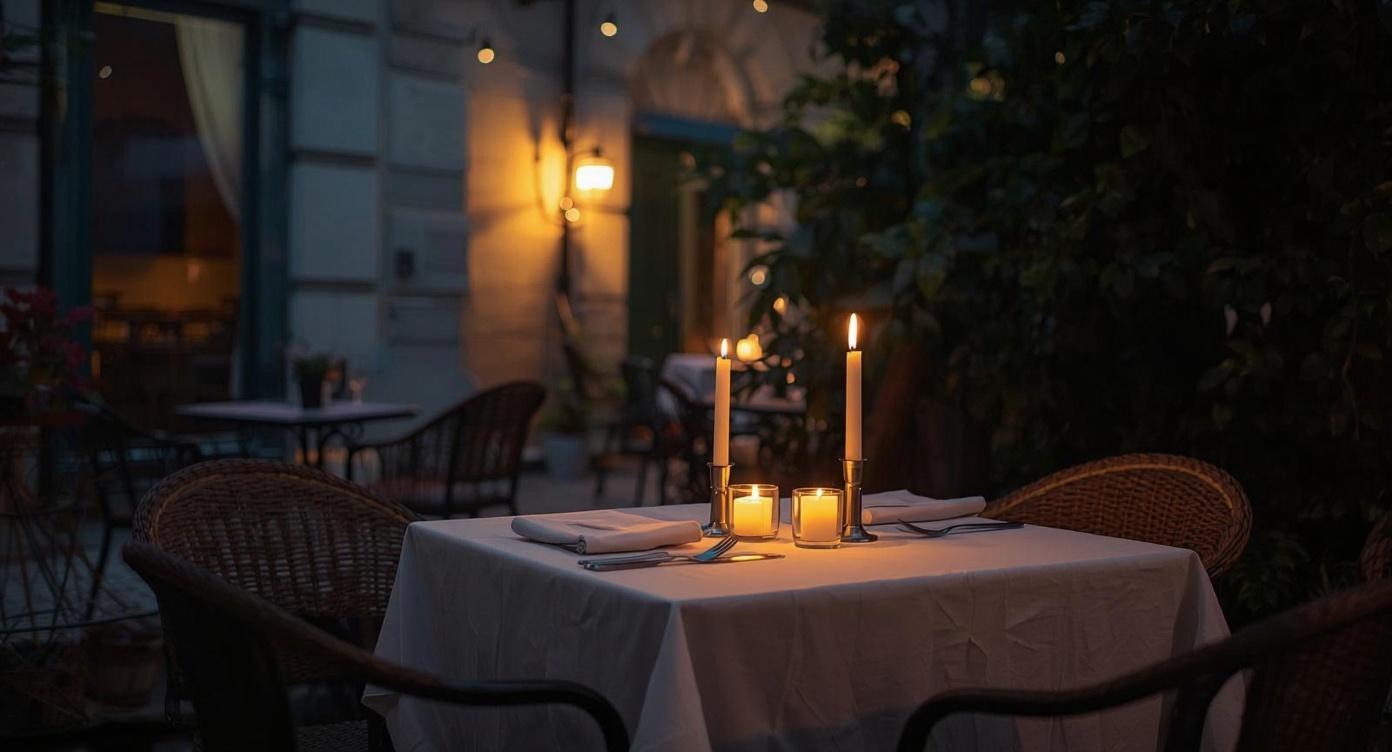
Not a rushed meal — a deliberate one. Find somewhere with outdoor seating and something worth looking at. Order the thing that requires time. Solo dining outdoors at dusk is the kind of experience that makes people understand why solo travel is worth doing.
07 — What All of This Actually Adds Up To
The Thread Through Every Item
The common thread through all 25 of these is the same: the things to do outside alone that stay with you require your own company to be enough. And they almost always turn out to be the parts of a trip that last longest.
Not the famous monuments, not the Instagram viewpoints on the itinerary. Rather, it’s the afternoon you sat somewhere you had no reason to sit, and stayed longer than you planned.
08 — Frequently Asked Questions
On Planning and Getting Started
Where These Work Best
Save this list for your next trip.
Then leave most of it unplanned — and see which ones find you.