

Dubrovnik in Autumn: What Happens to the Walls When the Cruise Ships Leave
October in Dubrovnik is genuinely better than summer — but it doesn’t happen overnight. Here’s the honest version: what changes, what doesn’t, and exactly when the city becomes the place you’ve been picturing.

- Is Dubrovnik in autumn worth it — and is it less crowded?
- Are cruise ships still in Dubrovnik in October?
- Early October vs late October — two different trips
- What the weather is actually like
- Can you still swim in October?
- The best things to do in Dubrovnik in autumn
- What to do on cruise ship days
- FAQ
01 — Is Dubrovnik in autumn worth it — and is it actually less crowded?
Dubrovnik in autumn is meaningfully better than summer — that much is true. The honest answer is that the improvement doesn’t land all at once, and most travel posts describe a version of October that doesn’t exist until the second half of the month. If you’re planning a trip to Croatia in October, knowing exactly which window you’re booking changes everything. (For the country-level picture, the Croatia in October guide covers the full coast — this post is Dubrovnik-specific.)
In August, Dubrovnik operates at a level of saturation that’s difficult to overstate. Cruise ships, domestic tourism, and international visitors compress into a city that wasn’t designed for any of this volume. The Stradun — the main limestone thoroughfare — becomes difficult to walk at pace. The city walls require early starts or long queues. Restaurant waits are routine.
October changes this, but not on a cliff edge. Think of it as a gradient. The first week of October still has cruise traffic. The Stradun still fills between mid-morning and mid-afternoon on ship days. The city walls still reward an early start. What’s gone is the sustained intensity — the feeling that every corner, every café, every viewpoint is competing for the same narrow window. That lifts.
The genuinely quiet Dubrovnik — the one you’ve seen in photographs and decided is worth the flight — arrives in late October. By the last two weeks of the month, you can walk the Stradun on a Tuesday afternoon and have it largely to yourself. That is a real and significant change, and it’s worth being precise about when it arrives rather than claiming October is uniformly calm.
02 — Are cruise ships still in Dubrovnik in October?
This is the real question behind every “is Dubrovnik less crowded in autumn?” search, and it deserves a direct answer: yes, in early October, cruise ships still arrive at Gruž port — sometimes multiple ships per day.
One competing post I read while researching this stated that cruise ships had “stopped running for the season” by October. That is not accurate. The Mediterranean cruise season typically runs through October, and Dubrovnik remains a popular port call well into the month. The ships are generally smaller and fewer than in August, the peak windows are shorter, and the cumulative crowd levels are noticeably lower — but on a day with two ships in port, the Old Town feels busy.
Here is the single most useful piece of planning advice for any Dubrovnik autumn visitor, and not one competing post I’ve found mentions it: the Port of Dubrovnik publishes its cruise ship schedule publicly. You can look up exactly which ships are arriving on your travel dates before you book at the Port of Dubrovnik’s official website. A day with no ships in port is a categorically different experience from a day with two.
Checking that schedule takes five minutes and changes how you plan your whole visit. It’s more useful than any general statement about October crowds.
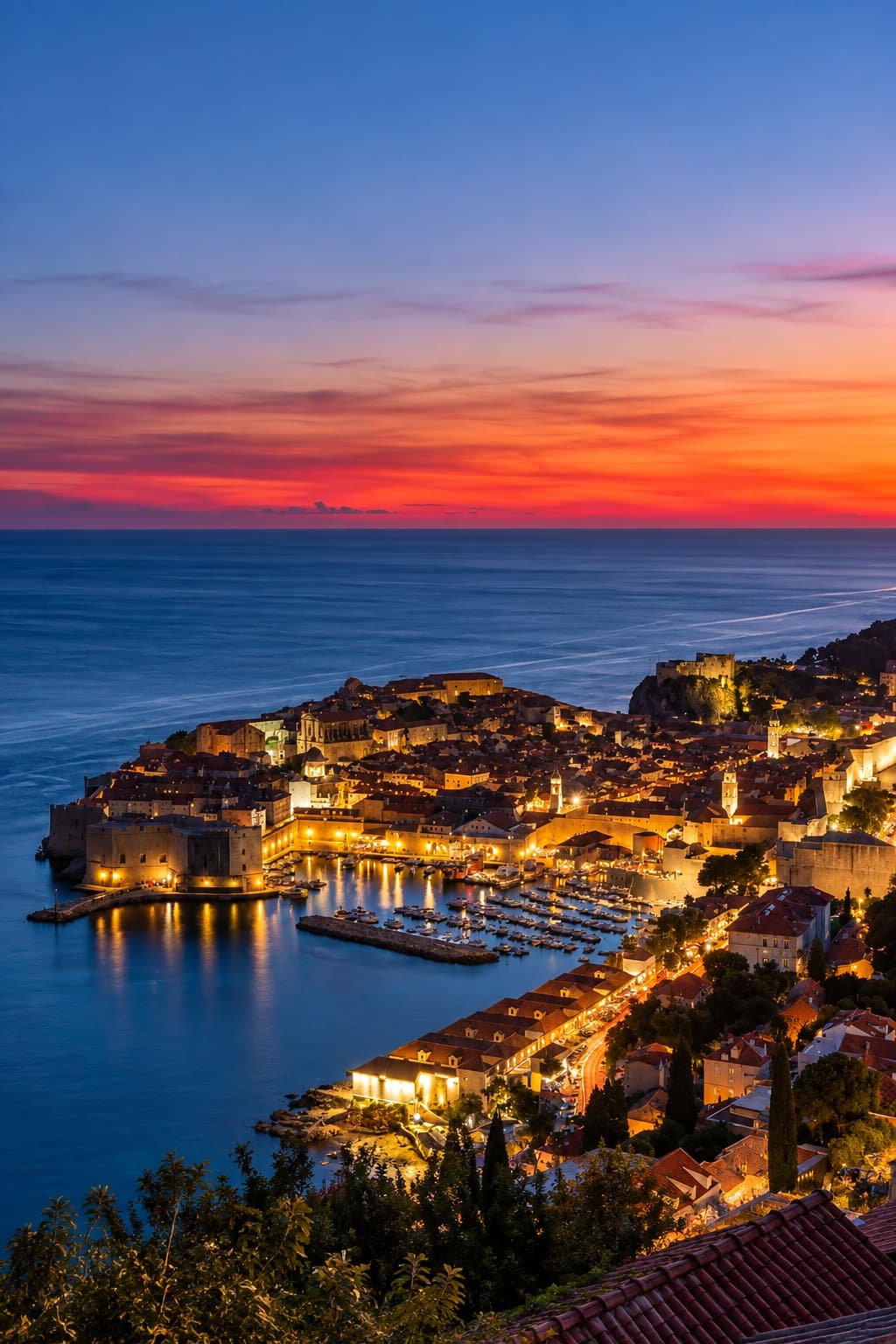
03 — Early October vs late October in Dubrovnik
October in Dubrovnik contains two meaningfully different experiences, and which one you get depends on when you book.
The Adriatic holds around 22°C in early October — swimming is enjoyable rather than aspirational. Most restaurants, tour operators, and boat trips are still fully operational. The Lokrum Island ferry runs. Some cruise ships continue to call at Gruž, particularly in the first week, but crowd levels are below September.
The city walls are manageable but still reward an early start — before 9am for the emptiest experience in the first week, more relaxed from the second week onwards. Daytime temperatures reach 22–25°C. The light is already better than August’s overhead sun — lower angle, warmer tone, longer shadows across the rooftops.
This is the better window for anyone who wants the full Dubrovnik experience: coast, islands, walls, day trips, evening dinners — with meaningfully less intensity than summer.
Cruise traffic drops significantly. The Stradun genuinely quiets — walking it on a weekday afternoon without navigating crowds is not just possible but easy. The city walls can be walked anytime without queue or early-morning strategy.
The sea cools to around 18–19°C. Swimming is possible but marginal — unless you run warm, this is more of a walk-along-the-rocks situation than a lie-on-the-beach situation. Some seasonal restaurants begin closing toward the end of the month. The Lokrum Island ferry is approaching its winter closure — confirm before visiting.
Temperatures range from 17–21°C during the day, with evenings cooling fast. This is the better window for anyone who wants Dubrovnik with room to breathe: the Old Town, the walls, the architecture, the atmosphere — without managing anything.
04 — What the weather is actually like in Dubrovnik in October
Daytime highs run between 20–25°C in the first half of October, dropping to 17–21°C in the second half. It is warm enough during the day to be in a t-shirt, cool enough in the evenings to need a jacket — that temperature gap between noon and 9pm is significant and catches people out.
October is one of Dubrovnik’s rainier months. Expect approximately 100–130mm across the month, typically arriving as showers rather than sustained rain — you’ll have a grey morning and a clear afternoon, or a downpour that clears in an hour. Pack a packable waterproof rather than a heavy raincoat, and you’ll be fine for almost any October day.
The bura wind picks up more frequently from October — a cold, dry, sharp wind from the northeast that sweeps in off the mountains. On the city walls, it’s noticeable. The bura tends to arrive fast, clears quickly, and often leaves behind unusually clear skies and very sharp light. It’s the wind responsible for the quality of October photographs of Dubrovnik — that crystalline blue-sky clarity that summer haze tends to diffuse.

05 — Can you still swim in Dubrovnik in October?
In early October: yes, and it’s genuinely good. The Adriatic around Dubrovnik holds around 22°C in the first half of the month — the kind of temperature that makes swimming comfortable rather than an exercise in willpower.
In late October: 18–19°C. Possible for cold-water tolerant swimmers, borderline for everyone else. It’s not beach weather in any conventional sense, but the rocks and coves around the Old Town remain pleasant to sit at even if you’re not getting in.
The best swimming spots near the Old Town, in order of ease:
The closest beach to the Old Town — five minutes walk from the Pile Gate. Pebble beach with a direct view of the city walls from the water. In October, sun loungers are fewer and the water is calmer. The view swimming outward, looking back at the walls, is the best argument for an early October visit.
About 15 minutes walk east of the Old Town along the clifftop path — quieter than Banje in all seasons, and significantly quieter in October. A small pebble beach below a cliff, accessed by stone steps. No beach clubs, no sun lounger rentals. Feels like Dubrovnik before the crowds found it.
The best late-season swimming option. Lokrum Island’s “Dead Sea” — a sheltered salt lake connected to the Adriatic, with no waves and water that holds warmth longer than open sea. In October it’s practically deserted and swimming here on a still day in mid-October, surrounded by Mediterranean pines, is one of the genuinely quiet pleasures the island offers.
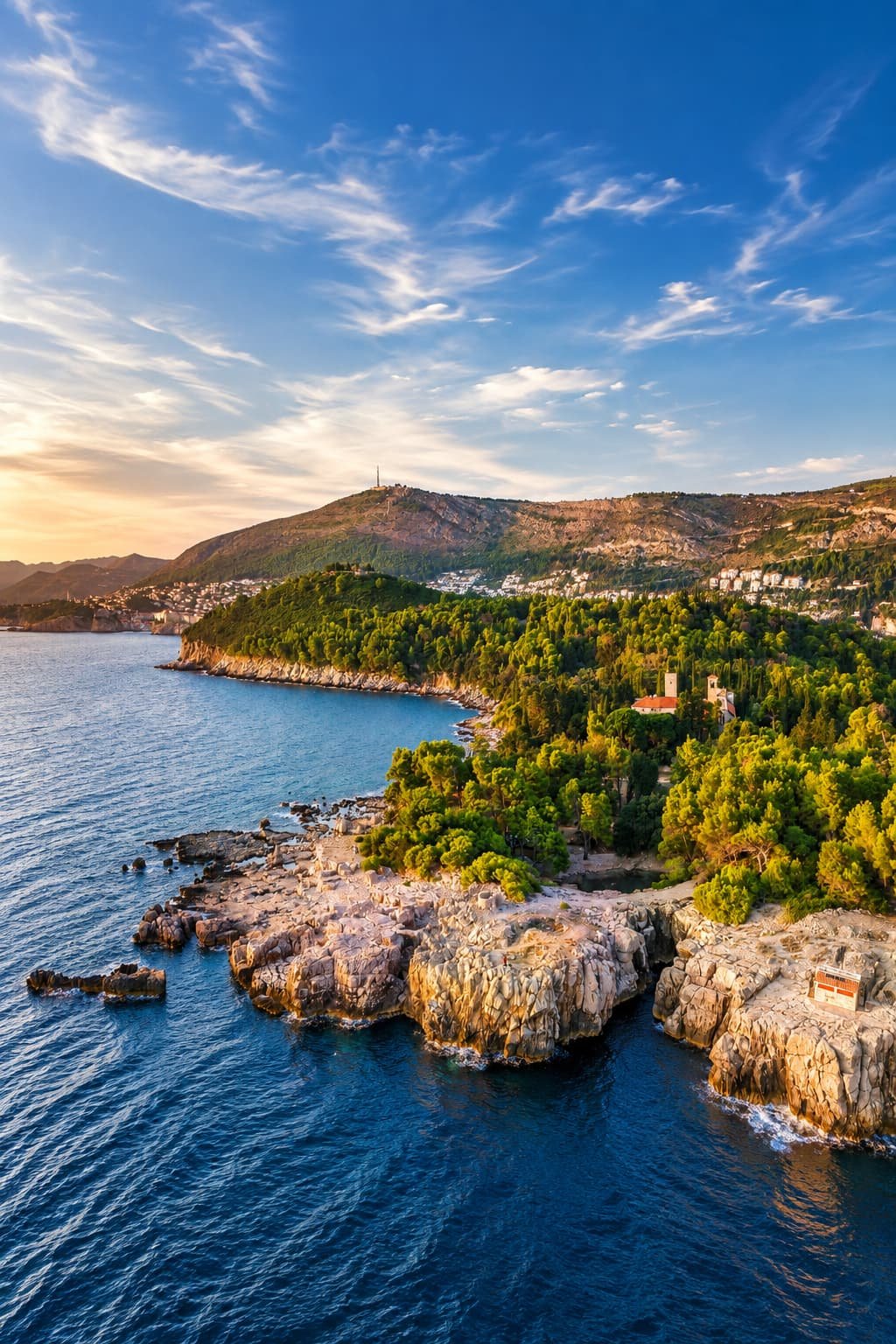
06 — The best things to do in Dubrovnik in autumn
The 2km circuit of Dubrovnik’s city walls costs €35 per adult in 2026 and remains the single essential Dubrovnik experience — a continuous walkway along the top of the medieval fortifications with unobstructed views over the Old Town in one direction and the Adriatic in the other. In autumn the timing strategy shifts by window. In early October, go before 9am — the walls are quietest in the first hour and the light is ideal. By late October, go anytime; the circuit is rarely pressured. The October light — lower sun angle, longer shadows, warmer tone — makes for better photographs than August’s direct overhead sun. There are four wall entrances; the St Luke’s Tower entrance on the Old Harbour side consistently has shorter queues than the main Pile Gate entrance.
A 15-minute ferry ride from the Old Harbour brings you to a forested island with walking paths, a ruined Benedictine monastery, the sheltered Mrtvo More salt lake, and peacocks that wander completely freely between the old stone buildings. October is the strongest argument for visiting Lokrum — the summer crowds are gone, the forest takes on autumn colour, and the island feels like its unhurried self rather than a day-trip destination. The Game of Thrones Iron Throne replica, housed inside the monastery ruins, has no queue. The critical detail: the Lokrum ferry typically closes for winter in late October or early November, and the exact date varies. Confirm at the Old Harbour ferry desk, or check the timetable on the official Lokrum Reserve website before you travel. In autumn this is the one excursion to prioritise.

A four-minute cable car ride from just outside the Pile Gate takes you to 405 metres above the city — a panorama of the entire Old Town, the surrounding Elaphiti Islands, and the full sweep of the Dalmatian coast. In summer, the cable car is a 45-minute queue each way in the heat. In October: you walk on. The terrace at the top is calm, the temperatures up there are noticeably cooler than in the city, and the afternoon light on the terracotta rooftops below is the best reason to go up in the second half of the day rather than the morning. The return ticket costs around €20. It’s the single clearest illustration of what autumn in Dubrovnik actually gives you: the same experience, without the wait.

Day boat trips from the Old Harbour visit Šipan, Lopud, and Koločep — a loose archipelago of small islands north of Dubrovnik where the pace drops to something that feels pre-tourist. Lopud’s Šunj beach is one of the only sandy beaches on the Dalmatian coast, and in October it’s practically empty. Most operators run trips on reduced schedules from October — typically Tuesday, Thursday, and Saturday — and some finish for the season in late October. Check current operator schedules before you arrive, and prioritise this in the first two weeks of the month if you want reliable access.
Cavtat sits 20 kilometres south of Dubrovnik — a small coastal town with a promenade lined with good seafood restaurants, a cypress-covered headland, and the Račić Mausoleum by Croatian sculptor Ivan Meštrović visible on the hilltop above the harbour. In summer, Cavtat absorbs some of Dubrovnik’s overflow and loses a measure of itself in the process. In October it’s genuinely quiet — the restaurants are quieter, the promenade is walkable, and it gives a sense of what the Dalmatian coast was like before it became the Dalmatian coast. The Old Harbour ferry takes around 45 minutes and runs until late October.
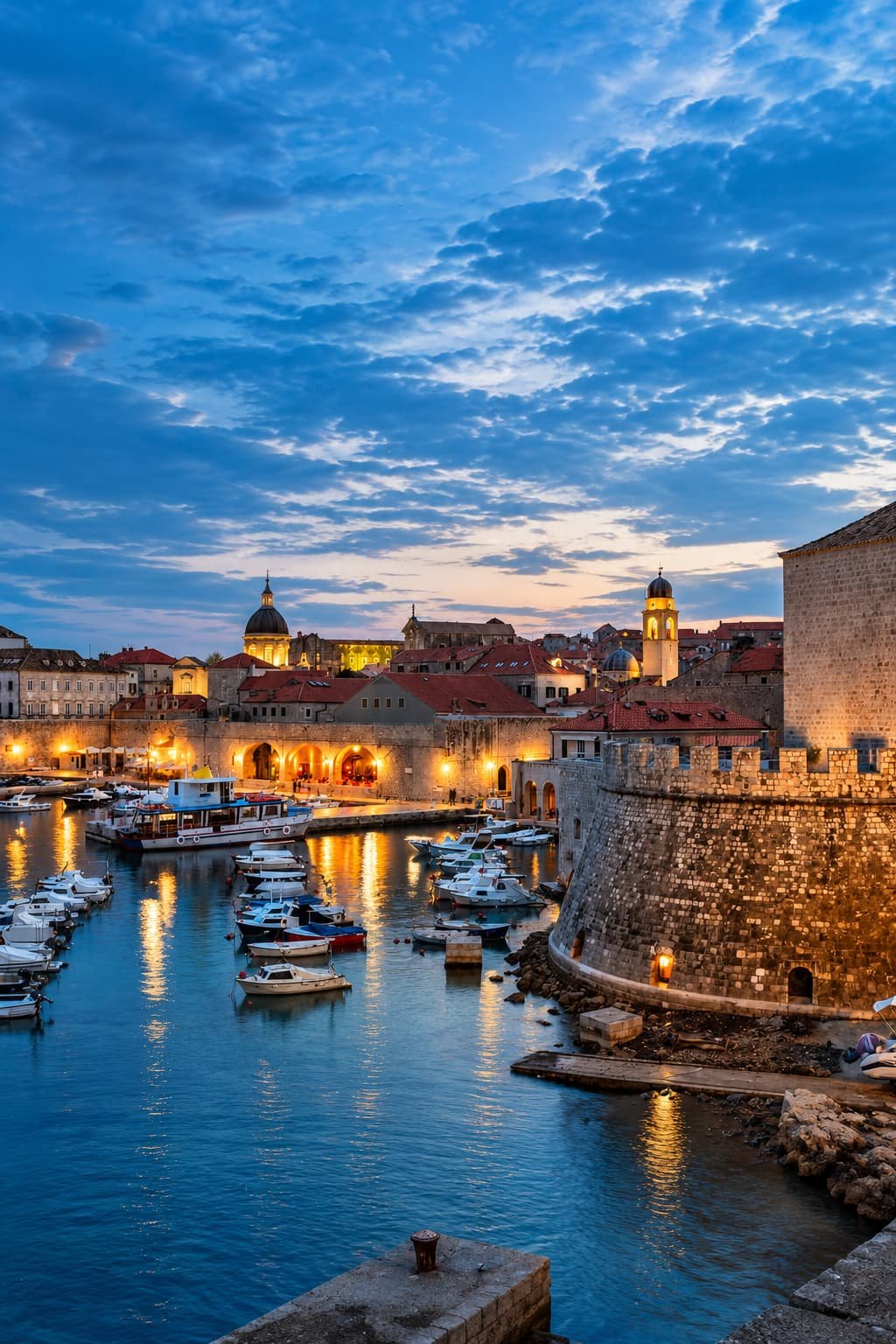
07 — What to do on cruise ship days — the honest workaround
If your dates fall in early October and the cruise schedule shows ships in port, here’s the pattern that makes the day work.
- Check the schedule first — the Port of Dubrovnik publishes its cruise schedule at the Port Authority website. Look up your specific dates before you arrive. Two ships in port is manageable with a plan; four is a different situation.
- Front-load the Old Town — enter at 7am via the Pile Gate, walk the city walls immediately, and be done before 10am. The first two hours of the day are a different Old Town from the 11am version.
- Spend the ship-heavy midday on Lokrum or Srđ — the ferry to Lokrum Island and the cable car to Mount Srđ both operate away from the Stradun crush, and both are better in the middle of the day anyway. The midday sea light for Lokrum swimming in early October is not worth missing.
- Return to the Old Town after 5pm — cruise ship day visitors leave in the afternoon as ships depart. The Stradun at 6pm on a ship day is a quieter, warmer, entirely different experience from the same street at noon.
On days with no ships in port, none of this planning is necessary. You can walk into the Stradun at noon and it feels like yours. That is the particular gift of a date-checked October visit — some days will be busier, some will be genuinely quiet, and knowing which is which in advance is entirely possible.

Dubrovnik in autumn rewards the person who researches a little more carefully than the person who arrives with the brochure version of October.
Check the cruise schedule. Choose your window. The walls look better in October light than they do in any other month.