
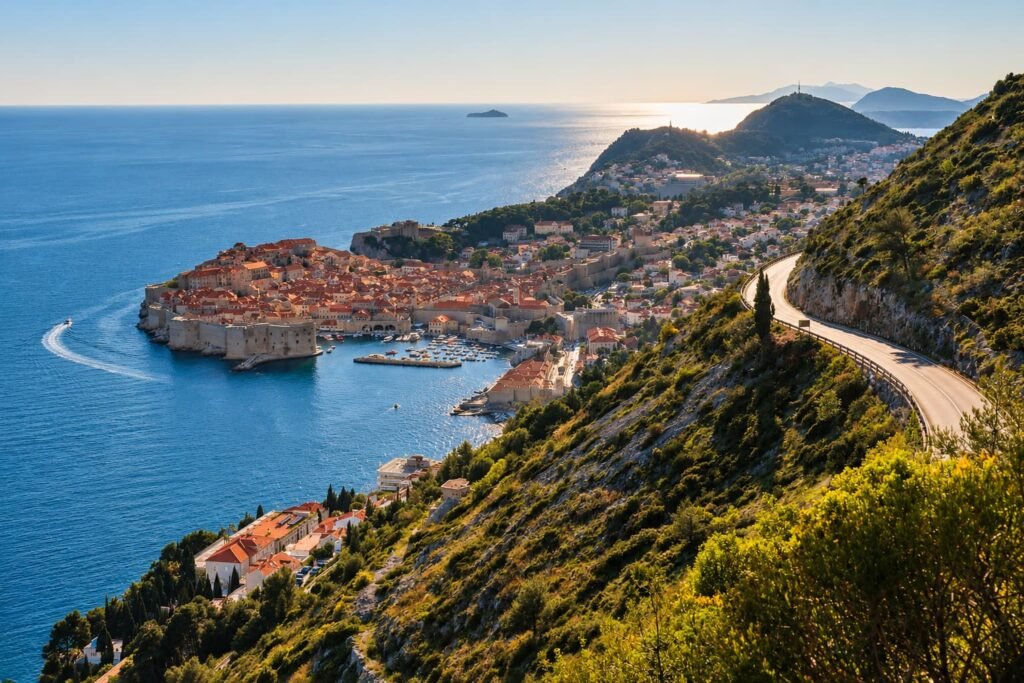
Zagreb to Dubrovnik: The Road Trip Down the Croatian Coast
~600 km, seven days, one seriously good drive — if you’re willing to slow down enough to mean it.
01 — Is This Road Trip Worth Doing — and Who Is It Actually For?
The Zagreb to Dubrovnik road trip is one of the best drives in Europe — but that answer comes with a condition. This route rewards slowness in a way that very few European drives do. Croatia is a country that looks better at 60 km/h on the coast road than it ever does from a motorway, and Plitvice Lakes is the kind of place that genuinely needs half a day, not a rushed two-hour loop before the next stop.
If you have three days, take the bus. The direct service from Zagreb to Dubrovnik costs around €50, runs overnight, and delivers you somewhere you actually want to be. The road trip version isn’t faster or cheaper — it’s a different thing altogether. It’s for people who want to experience the country, not just arrive in it.
Seven days is the number that makes this trip feel earned. Five days is the honest minimum if you’re pressed, and ten days is where it opens up into something genuinely unhurried — enough to add Hvar, slow down in Ston, or take a day completely off somewhere between Split and Dubrovnik.
One practical note worth making early: flying into Zagreb and out of Dubrovnik is the natural shape of this trip, but it comes with a one-way car hire drop-off fee of around €120. That’s not a reason not to do it — it’s worth knowing before you compare one-way versus return fares and assume one is cheaper. Flying in and out of the same city makes the logistics simpler. Whether it makes the trip better is a different question.
02 — How Long Does the Drive Take — and Should You Do It in One Day?
The direct drive from Zagreb to Dubrovnik covers approximately 600 km and takes around six hours on the A1 motorway without stops. You should not do it in one day.
The road trip version of this route exists precisely because the space between Zagreb and Dubrovnik is where Croatia actually is. Plitvice Lakes alone deserves four to five hours if you’re doing it properly. Split deserves at least a full day. Ston — almost universally skipped — deserves an overnight. The motorway version of this drive is a transfer, not a journey.
Five days is the floor: one night in Zagreb, one night near Plitvice, two nights in Split, then drive to Dubrovnik. It works, but you’ll feel the compression. Seven days is right — it gives each stop enough room to breathe. Ten days adds the islands: Hvar on a day trip from Split, the Elaphiti Islands from Dubrovnik, or a night in Korčula if you’re taking it seriously.
03 — The Route: A1 Motorway or the Coastal Road?
The practical answer: use both, for different sections.
The A1 motorway is fast, direct, and efficient — it gets you from Zagreb to Plitvice in two hours and from Plitvice to Split in another two. In July and August it also keeps you out of the coastal traffic that turns the D8 into a test of patience. Budget around €37–40 for Zagreb to Split in tolls; pay by card or cash at the booths.
The D8 Magistrala coastal road is one of the genuinely great drives in Europe. It runs south from Split along the Makarska Riviera, past limestone cliffs dropping straight into a sea that looks artificially blue, through fishing villages that haven’t been fully discovered yet. In peak summer it’s slow — really slow in places. In late September and October it’s quiet enough to enjoy at the pace it deserves.
The recommendation: A1 south to Plitvice, then A1 to Split, then the coastal road from Split down — via Makarska, Ston, and the Pelješac Peninsula, arriving in Dubrovnik via the Pelješac Bridge. This gives you the efficiency of the motorway where you need it, and the coast road for the section south of Split where it earns its reputation.
→
→
→
→
→
04 — The Zagreb to Dubrovnik Road Trip — 7 Days, Stop by Stop
Zagreb — Set the tone before the road begins
Most itineraries treat Zagreb as a transit hub. It isn’t — and arriving with that assumption means you’ll spend the whole trip trying to catch up to somewhere better. The Upper Town deserves two hours minimum: the funicular is a ten-second ride and somehow still worth it, St. Mark’s Church looks exactly like something a child would design, and the Museum of Broken Relationships is one of the most unexpectedly moving places in Europe. Dolac Market is best before 10am. Dinner in the Lower Town, somewhere that doesn’t have an English menu in the window. One night minimum; two if you can afford them.
1 night minimum
Rastoke + Plitvice Lakes — Leave early, stay long
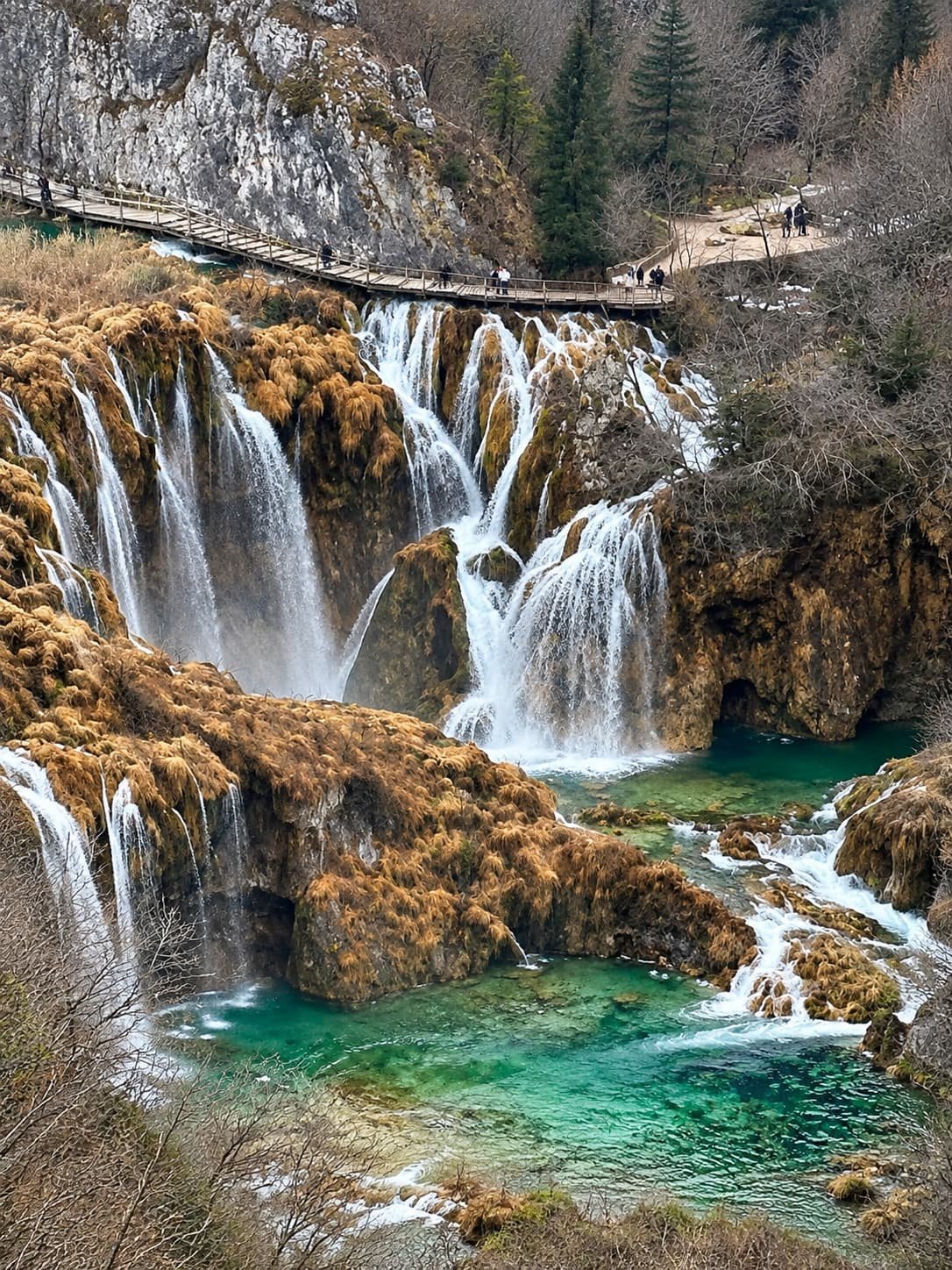
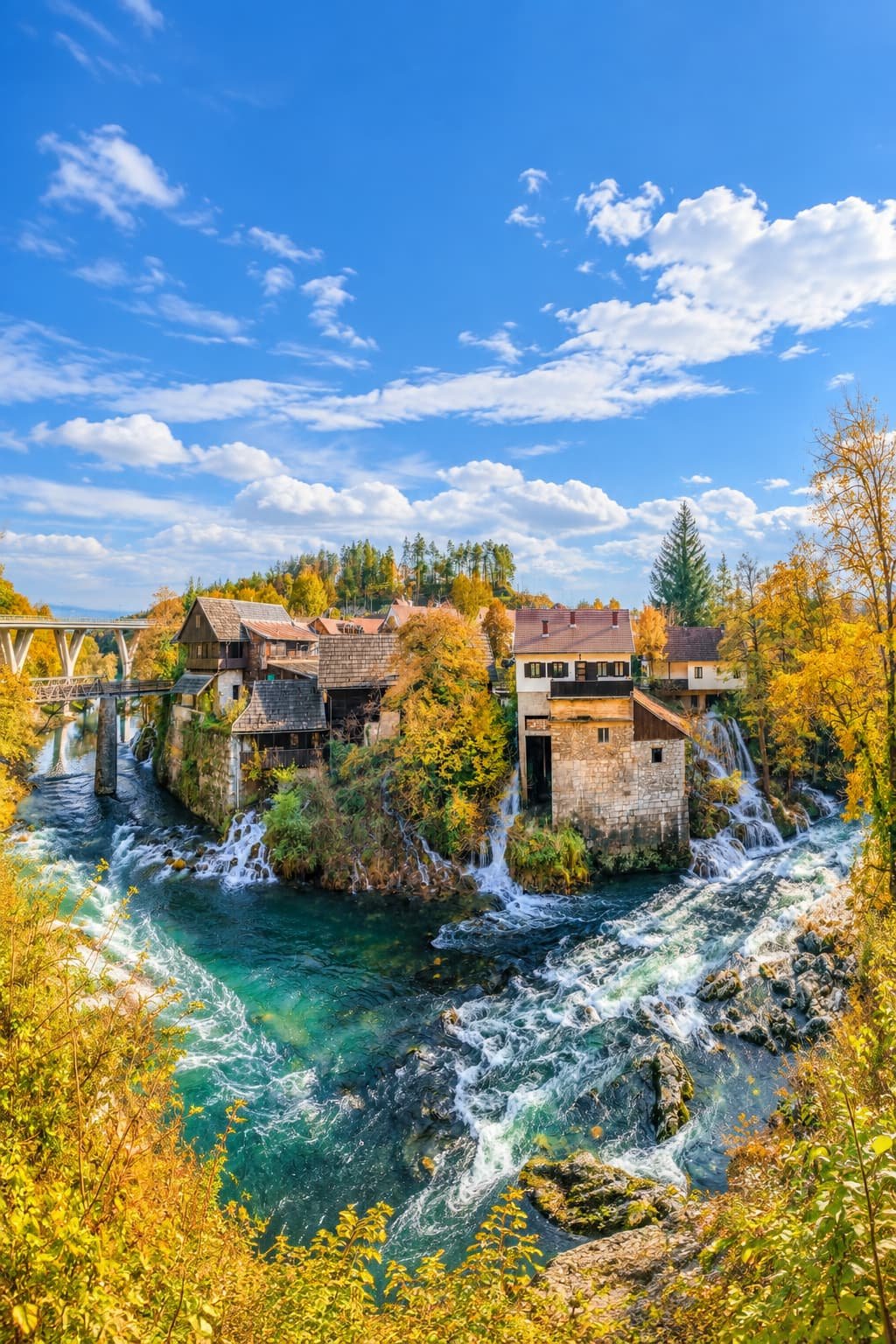
Leave Zagreb by 8am. The drive to Plitvice takes around two hours — south on the A1 to Karlovac, then down the D1. Stop at Rastoke village on the way: thirty minutes, a watermill village where the Slunjčica river tumbles over limestone terraces through old mills still standing. Almost nobody stops here. It costs you nothing and adds something real. Arrive Plitvice by mid-morning — before the afternoon tour groups. Give it four to five hours: the lower lakes, the Veliki Slap waterfall, the upper lakes if your legs allow. October entry costs €23 versus up to €40 in peak summer — current prices and ticket tiers are on the Plitvice Lakes National Park official site. Stay overnight near the park — there are guesthouses in the villages around the entrance. Do not try to drive on to Split today.
1 night near the park
Zadar (optional) + arrival in Split
The drive from Plitvice to Split takes roughly three and a half hours direct, or closer to five with a Zadar stop — which is worth taking. Zadar sits on a Roman peninsula on the coast and has two things worth an hour each: the Sea Organ (waves push air through stone pipes below the promenade, producing a low continuous chord — it sounds better than it reads) and the Roman Forum, which is still just sitting in the middle of the city, used by pigeons and locals with entirely equal casualness. One hour forty minutes is enough. Arrive in Split late afternoon. Walk Diocletian’s Palace at dusk — this is the right time of day for it, when the light drops and the cruise groups have returned to their ships.
Arrive Split — 2 nights
Split — A full day in a city that earns it
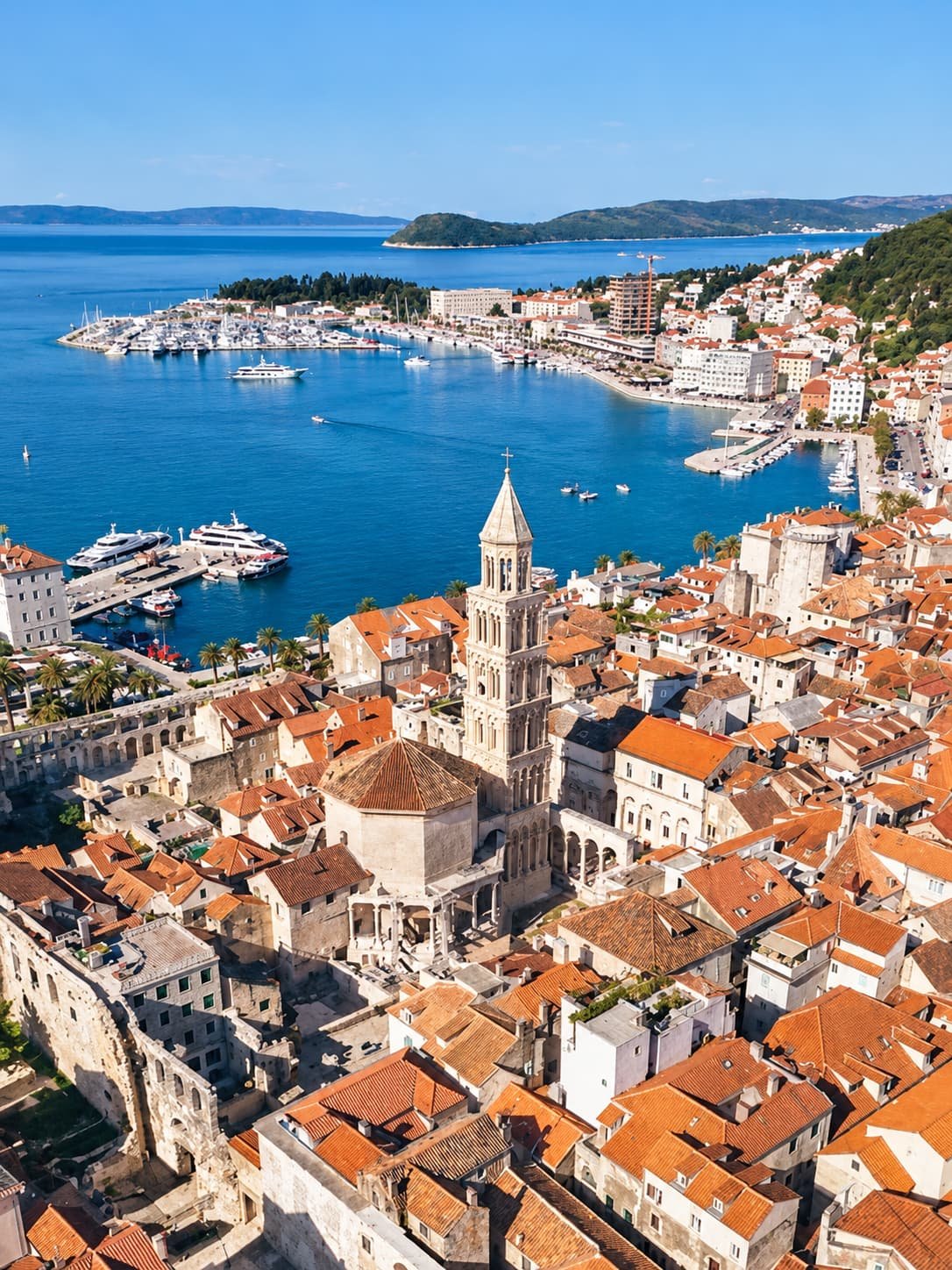
Split earns a full day. Diocletian’s Palace is not a ruin — it’s a working city neighbourhood built inside a Roman emperor’s retirement home, with restaurants and apartments and the odd souvenir stall wedged into 1,700-year-old walls. The Meštrović Gallery sits on the western coast road: Croatian sculptor Ivan Meštrović’s work is extraordinary, and the gallery — his former home and studio — has a particular quietness to it. Marjan Hill for the view costs nothing and needs no photograph to justify it. Optional: Trogir, thirty minutes west, is a UNESCO-listed old town on a small island connected by bridge. For a deeper look at what Split has to offer and how to spend your time there, our full Split guide covers the city properly.
Full day — Split
Coastal drive south — Makarska Riviera to Ston
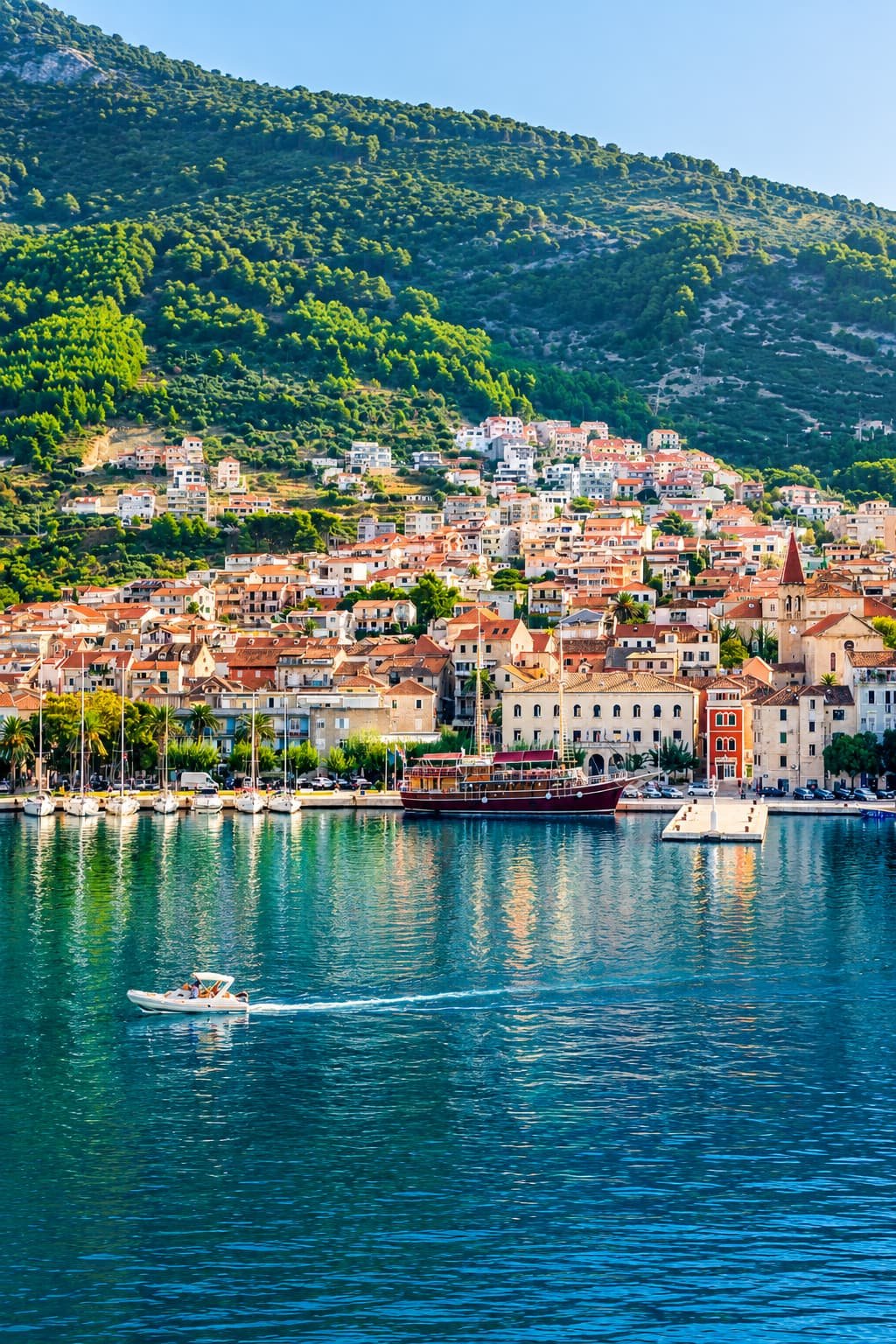
This is where the Magistrala earns its reputation. Leave Split after a slow breakfast and take the D8 south: the road runs between limestone karst hills and the Adriatic for the next 100 kilometres, and in late September the traffic is light enough to actually appreciate it. The Makarska Riviera beaches are worth a brief stop — the shingle coves are genuinely beautiful and a swim here in early October is entirely realistic. Continue south onto the Pelješac Peninsula. Ston, at the peninsula’s base, is where you stay tonight: a medieval town that grew rich on salt, still encircled by Europe’s second-longest city walls after Nanjing (which nobody ever believes), and home to the best oysters in Croatia at Mali Ston, three kilometres away. Almost every itinerary skips Ston. This is a mistake.
1 night — Ston or Mali Ston

Pelješac wine road + arrival in Dubrovnik
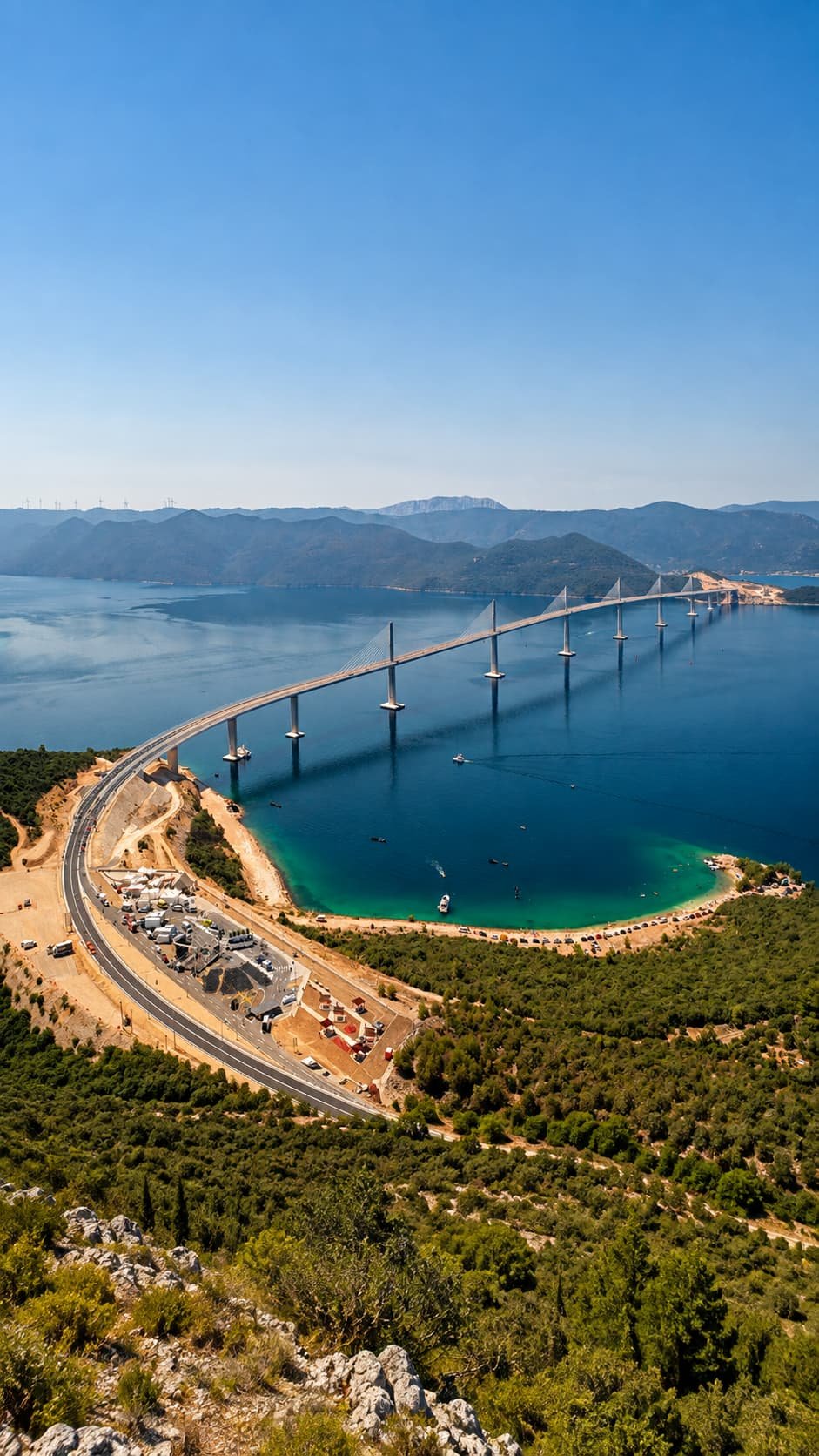
Spend the morning on the Pelješac wine road. The peninsula produces Dingač and Postup — two of Croatia’s finest reds, grown on steep south-facing vineyards above the sea. Several small producers offer tastings; this is not a mass-tourism experience but a quiet morning in a working wine country. By early afternoon, drive south and cross the Pelješac Bridge — toll-free, opened July 2022, and the reason you no longer need to cross into Bosnia to reach Dubrovnik. Arrive Dubrovnik mid-afternoon. Check in before the light drops. The walls at golden hour from the Pile Gate — no ticket required for the view from outside — is the right welcome.
Arrive Dubrovnik
Dubrovnik — Walk the walls before they wake up
Be on the walls at 8am. The cruise ships dock later; before 9am the walls are quiet, the light is good, and you can stop and look at the city without navigating around a tour group. The wall walk is 2 km around the old town perimeter — budget 90 minutes. The Stradun is worth seeing both early (quiet, polished white stone, almost no one) and in the evening (full, loud, still somehow beautiful). The cable car to Mount Srđ is worth the €27 return if you haven’t had enough heights. If you have a second full day, the Elaphiti Islands — three car-free islands northwest of Dubrovnik, reachable by ferry — are one of the quiet joys of arriving with time to spare. Visiting in autumn specifically, Dubrovnik in Autumn goes deeper on what the city is like once the cruise season winds down.
The finish line

05 — Do You Need to Drive Through Bosnia to Get to Dubrovnik?
No — not since July 2022, when the Pelješac Bridge opened and changed the logistics of this drive permanently.
Before July 2022, there was a genuine problem: Croatia’s coast is interrupted by a 9 km strip of Bosnia-Herzegovina known as the Neum Corridor. To drive from Split to Dubrovnik, you had to cross into Bosnia at Neum and back into Croatia — passport checks, unpredictable border wait times (sometimes thirty minutes, sometimes two hours in peak summer), and the requirement that your rental car insurance covered Bosnia-Herzegovina, which many standard policies did not.
The Pelješac Bridge bypasses Neum entirely. It connects the Pelješac Peninsula to the Croatian mainland, spanning 2.4 km across Pelješac Bay. You cross it as part of the coastal drive with no border formalities and no toll. If you’re doing this trip now, the Bosnia crossing is simply not part of the journey.
One exception: if you want to visit Mostar in Bosnia — and it’s a genuinely worthwhile detour, one of the most striking cities in the Balkans — you can add it as a day trip from Dubrovnik or Ston. However, check your rental car contract first. Most major companies allow Bosnia extensions if declared in advance; some charge a small supplement. Ask before you pick up the car, not at the border.
If you plan to cross into Bosnia-Herzegovina for any reason — Mostar, Neum, or otherwise — tell your rental company before collection. Standard insurance typically covers Croatia only. Most companies allow it with advance notice and a small supplement. Arrive at the border without the right documentation and you may be turned back.
06 — Practical Notes: Tolls, Car Hire, Parking, and Timing
- A1 motorway tolls: Zagreb to Split costs approximately €37–40. Pay by card at the booths — contactless works at most. The Plitvice exit costs around €6–8 from Zagreb depending on your entry point.
- Pelješac Bridge: Toll-free. No border crossing. No Bosnia passport required. It’s just a bridge.
- One-way car hire: Drop-off fee is typically around €120 — added automatically by most companies. Factor this into any price comparison between one-way and return fares before assuming one is cheaper.
- Parking in Dubrovnik: Expensive, scarce, and stressful near the Old Town. Park at Ilijina Glavica above the city and walk or take the cable car down. Arriving on a weekday afternoon is easier than a weekend morning in any season. If you’re extending to the islands, check connections on Jadrolinija’s official timetable before booking.
- Plitvice entry prices: €40 in peak summer (June–August), €23 in October. Worth knowing if you have any flexibility on timing. For a full breakdown of what changes coast-to-coast across the month, Croatia in October covers the early vs late month split in detail.
- October driving: The Magistrala is genuinely pleasant in late September and October — light traffic, some smaller coastal restaurants starting to close by late month, but nothing critical before mid-October. Plitvice forest is exceptional for autumn colour. The Croatian National Tourist Board maintains up-to-date regional opening information if you need to verify specific attractions.
Zagreb to Dubrovnik Road Trip Costs and Route Summary
| Route | Zagreb → Plitvice → Split → Ston → Dubrovnik (7 days recommended) |
| Distance | ~600 km total, spread across 7 days |
| Best months | May–June (warm, not yet crowded) · September–October (best value, quiet roads, Plitvice in autumn colour) |
| Car hire | Book 4–6 weeks ahead for summer. One-way drop-off fee ~€120 is standard across most companies. |
| Fuel | Petrol and diesel widely available. Fill up before Plitvice — fewer stations on the D1 south of Karlovac. |
| Dubrovnik parking | Park outside the Old Town and walk in. Do not attempt to drive into the pedestrianised zone. |
| Bosnia crossing | Not required since July 2022 (Pelješac Bridge). Only relevant if you’re deliberately extending into Bosnia for Mostar or similar. |

Drive Time, Stops, and the Bosnia Border
Car Hire, Trip Length, and Driving Without a Car
The motorway gets you to Dubrovnik in six hours. The road trip gets you there in seven days.
Both end at the same walls — but only one of them means anything once you arrive.