
Outlander Filming Locations in Scotland: An Honest Fan’s Guide
Which Outlander filming locations in Scotland genuinely reward the visit, what the screen hides, and how to structure a real fan’s pilgrimage — including the one location that doesn’t exist at all.
Outlander Filming Locations Quick Plan
The Outlander filming locations in Scotland attract thousands of pilgrims every year — fans who have watched the same courtyard, the same stone archway, the same Highland moorland across eight seasons and now want to stand in it. What the guides don’t always tell you is what the screen quietly removed: the roofless interior, the styrofoam stones, the car park that sits forty feet from where Jamie Fraser rode out.
This guide exists for Outlander fans who want the honest version. Scotland’s filming locations are genuinely worth visiting, but they reward different things from what the show suggests. Some locations over-deliver completely — they’re fascinating historic sites in their own right, and the Outlander connection is almost secondary. Others are effectively a photo opportunity in a field. And one of the most central locations in the entire show doesn’t exist as a real place at all.
Here is a practical guide to the locations that actually matter, what each one delivers in person, and how to structure a real trip around them.
- Outlander Filming Locations Quick Plan
- Where Outlander was filmed in Scotland
- The locations that genuinely over-deliver
- The reality checks
- The village locations
- The Edinburgh locations
- Can you do Outlander locations as a day trip from Edinburgh?
- Self-drive or guided tour?
- The best time to visit
- What’s new: Season 8 and Blood of My Blood
- FAQ
01 — Where Was Outlander Filmed in Scotland?
Outlander has filmed across Scotland since 2013, and the production drew on real locations: castles, battlefield sites, historic villages, city closes, and private estates. The show has also changed Scottish tourism in visible ways. For instance, Blackness Castle recorded more than 77,000 visitors in 2024, compared with under 17,000 in 2014. VisitScotland describes the overall impact as “astonishing.” It also notes that Outlander has helped visitors spread across Scotland’s regions and seasons in ways few other productions have managed.
The Main Outlander Location Clusters
However, the locations don’t distribute evenly across the country. They cluster into two main groups, with a handful of outliers in between.
Midhope Castle (Lallybroch), Blackness Castle, Linlithgow Palace, Hopetoun House, and Edinburgh’s Bakehouse Close sit within roughly 30–45 minutes of the city centre. Additionally, Doune Castle — arguably the single best location to visit — is an hour west of Edinburgh in Stirlingshire. This cluster is day-trip territory.
Culloden Battlefield and Clava Cairns (the real Bronze Age stones that inspired Craigh na Dun) both sit close to Inverness, along with Cawdor Castle. These work well as a second Highland trip or as stops on a wider Scotland drive — see the Scotland Itinerary for how to fit them into a broader country loop. For detailed landscape and logistics in this area, the Scottish Highlands guide covers the broader region.
Culross and Falkland, both used as period stand-ins, sit in Fife and are reachable from Edinburgh in around an hour. They work as a half-day extension of the day trip, though they earn their visit as historic villages first and film locations second.
You can cover the Edinburgh cluster — Doune, Midhope, Blackness, Linlithgow, and either Culross or Falkland — in a single long day. The Highlands cluster (Culloden, Clava Cairns) works as a separate trip or an overnight north. Trying to combine both in one day is ambitious and requires an early start from Edinburgh.
02 — Outlander Filming Locations That Genuinely Over-Deliver
These three sites reward the visit independently of the show. In each case, the Outlander connection deepens an experience that would be worth having anyway.
Doune Castle — the audio tour narrated by Jamie
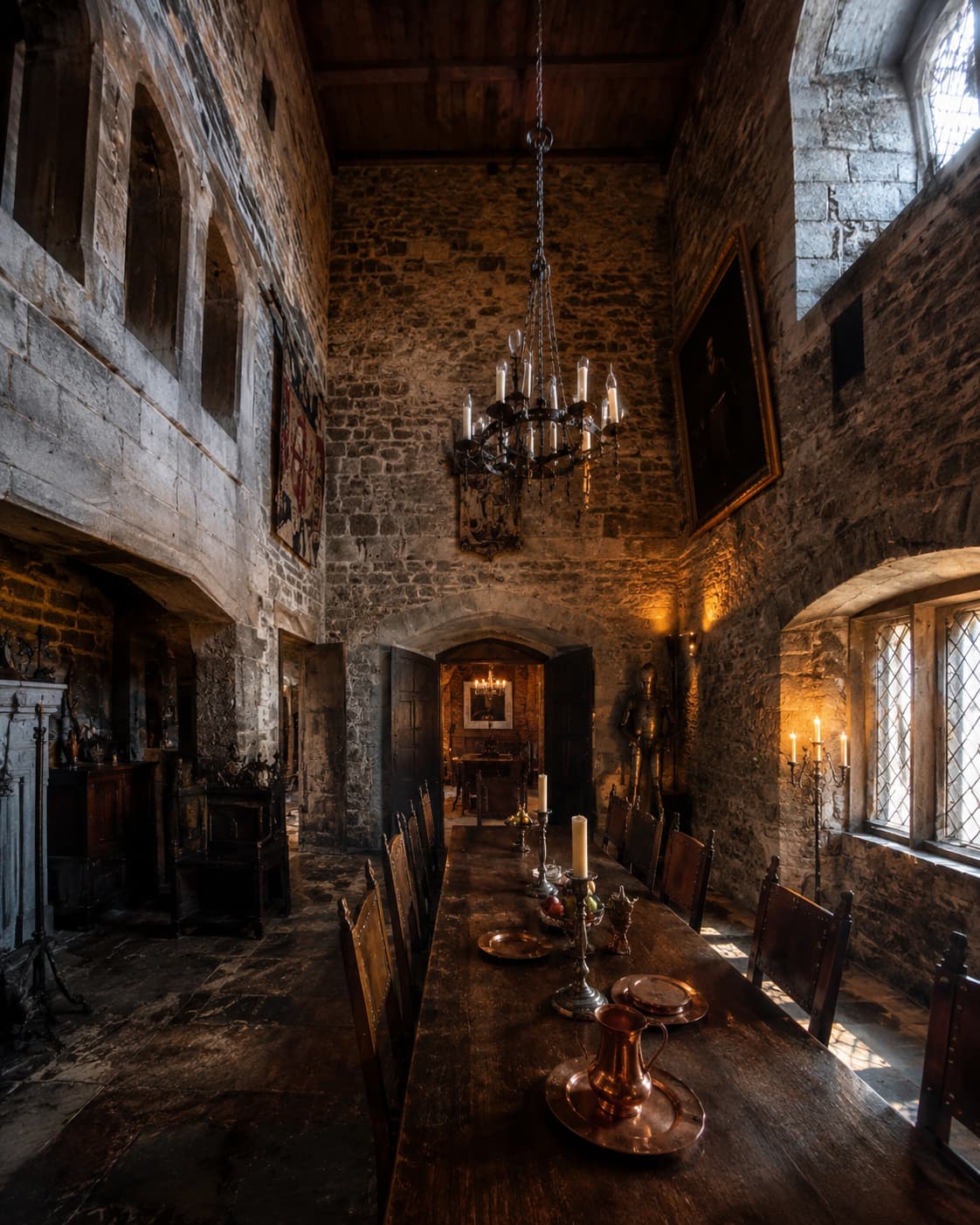
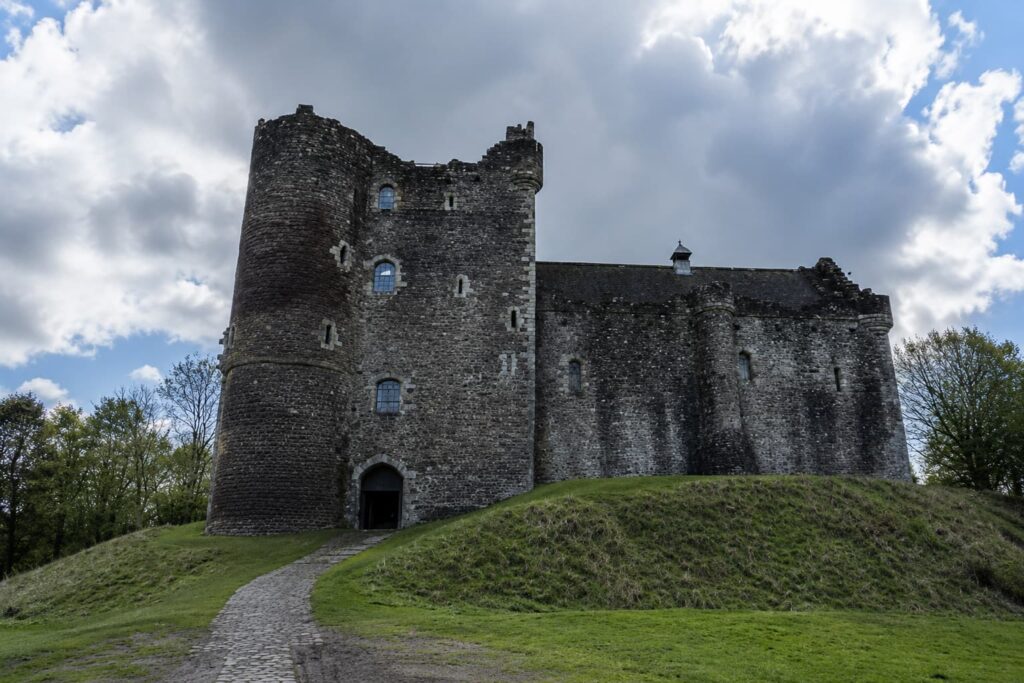
Doune Castle stands in for Castle Leoch, the seat of Clan MacKenzie, and it’s the single strongest Outlander location on the list. Partly this is because Doune is a genuinely exceptional 14th-century castle — one of the best-preserved medieval strongholds in Scotland — and partly it’s because Historic Environment Scotland built a proper audio tour around the Outlander connection, narrated by Sam Heughan in character as Jamie Fraser.
That audio tour is what separates Doune from most film locations. Rather than standing in an empty courtyard trying to remember which scene was filmed where, you hear the story of the castle as it was used on screen, while you’re physically standing in the spaces. Heughan is clearly enjoying himself — it’s not a generic voiceover, and if you’re a fan, it’s a genuine pleasure.
Why Doune Is Worth Visiting Beyond Outlander
Beyond the Outlander angle, Doune has a legitimate claim to fame as the most multi-appeared castle in modern television and film: it stood in for Winterfell in the Game of Thrones pilot episode, appeared in Monty Python and the Holy Grail (multiple scenes), and shows up in Outlaw King. The castle itself is worth an hour regardless of what drew you there. Entry costs around £9 for adults; the castle is managed by Historic Environment Scotland and is open year-round, with seasonal hours.
Additionally, Outlander: Blood of My Blood uses Doune Castle as Castle Leoch, so the franchise continues to keep it active as a filming location.
- Download the audio tour before arriving — the Historic Environment Scotland app lets you play it without relying on castle WiFi
- The castle is in the village of Doune, about 8 miles northwest of Stirling — easily combined with a Stirling Castle visit on the same day
- Arrive early in summer; the car park is small and coach tours arrive from mid-morning
Culloden Battlefield — the one that moves everyone
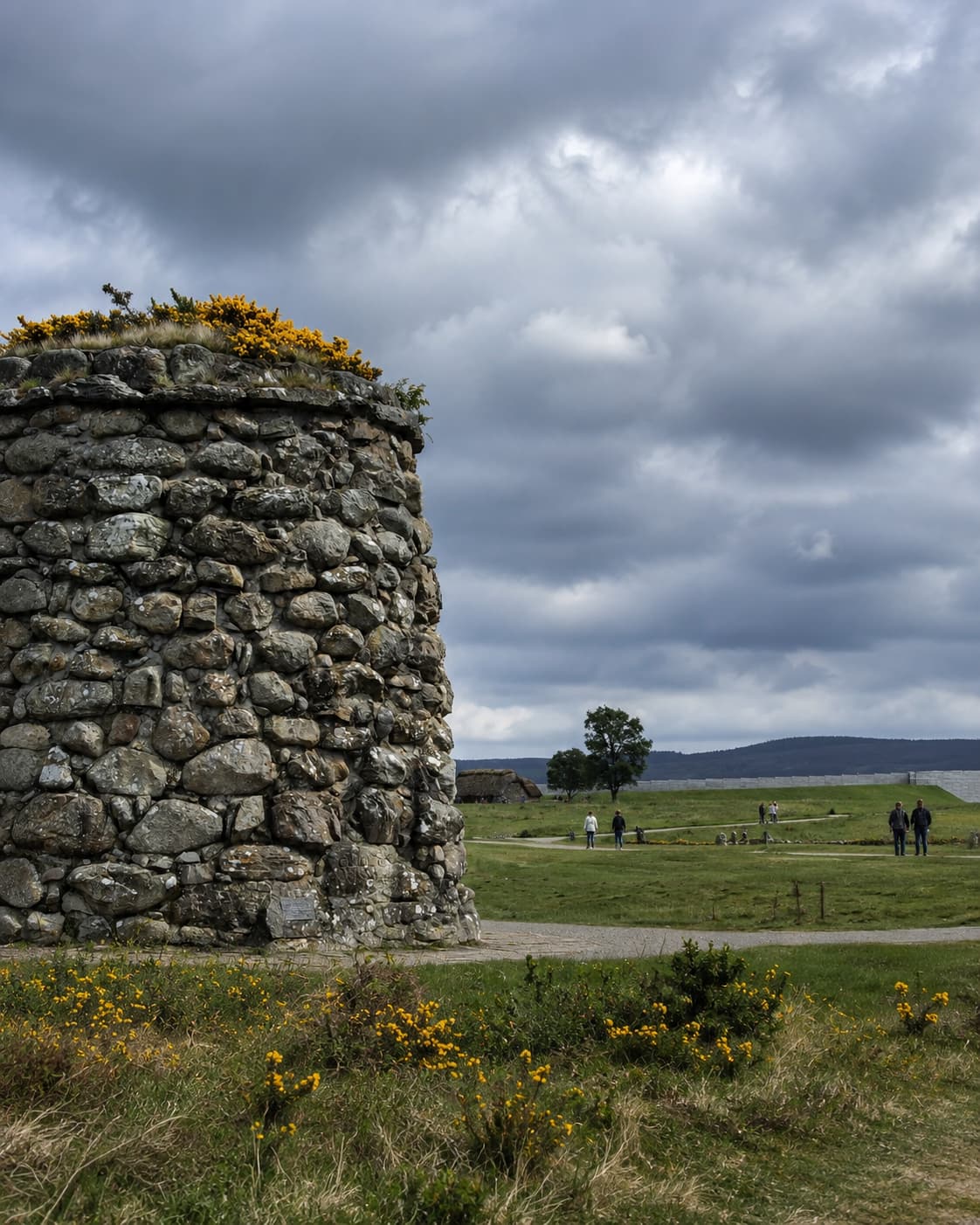
Culloden Battlefield, where the Jacobite rising was crushed in April 1746, appears in Outlander as one of the show’s central emotional locations — the event that shapes the entire story’s stakes. In person, it’s one of the most quietly powerful sites in Scotland, Outlander fan or not.
The National Trust for Scotland visitor centre here is genuinely excellent — immersive, historically rigorous, and not shy about the brutality of what happened. Walking the battlefield takes you past clan grave markers and memorial cairns across open moorland that has been painstakingly restored to look as it did in 1746. On a grey October morning, it’s a place that sits with you afterwards.
For Outlander viewers, Culloden operates differently from other locations on this list. It’s not primarily a film set — you’re not looking for where a camera was positioned. Instead, you’re standing in the real place that the show treats as its defining historical tragedy. That works in either direction: if the show made you curious about the actual history, the NTS centre delivers that history in depth. If you already know the history, the emotional weight the show places on this moor suddenly makes more sense in person.
Culloden sits three miles east of Inverness and pairs naturally with Clava Cairns (below), which is ten minutes’ drive away. Together they make a half-day from Inverness. Entry to the battlefield itself is free; the visitor centre charges around £14 for adults.
Blackness Castle — the ship that never sailed
Blackness Castle stands on a narrow promontory jutting into the Firth of Forth, and its silhouette from the water looks genuinely like a ship. Hence the nickname, and hence its on-screen role as Fort William in Outlander — the garrison where much of Season 1’s tension is centred.
In person, Blackness is more interesting than most viewers expect. The castle is 15th-century, and its position on the Forth is atmospheric in a way that photos don’t quite capture — especially on an overcast day when the water and sky share the same grey. It’s managed by Historic Environment Scotland and entry costs around £7. The visitor numbers tell their own story: the four-fold increase from 16,559 in 2014 to 77,326 in 2024 is almost entirely attributable to the show, and the site is noticeably better-resourced as a result.
Blackness is also well-positioned for a day loop. From Edinburgh, you can drive west along the Forth to Blackness, continue to Midhope Castle on the same estate road network, then loop to Linlithgow Palace — all within a 30–40 minute driving radius. For more on the castles of Scotland as historic sites, the Best Castles in Scotland guide covers these in depth; here, the focus stays on what each delivers on screen and off.
03 — Outlander Locations Reality Checks: What the Screen Hides
This is the section that most Outlander location guides skip. Two of the most emotionally important locations in the show either underwhelm significantly in person or do not exist as real places at all.
Lallybroch / Midhope Castle — a roofless shell, exterior only
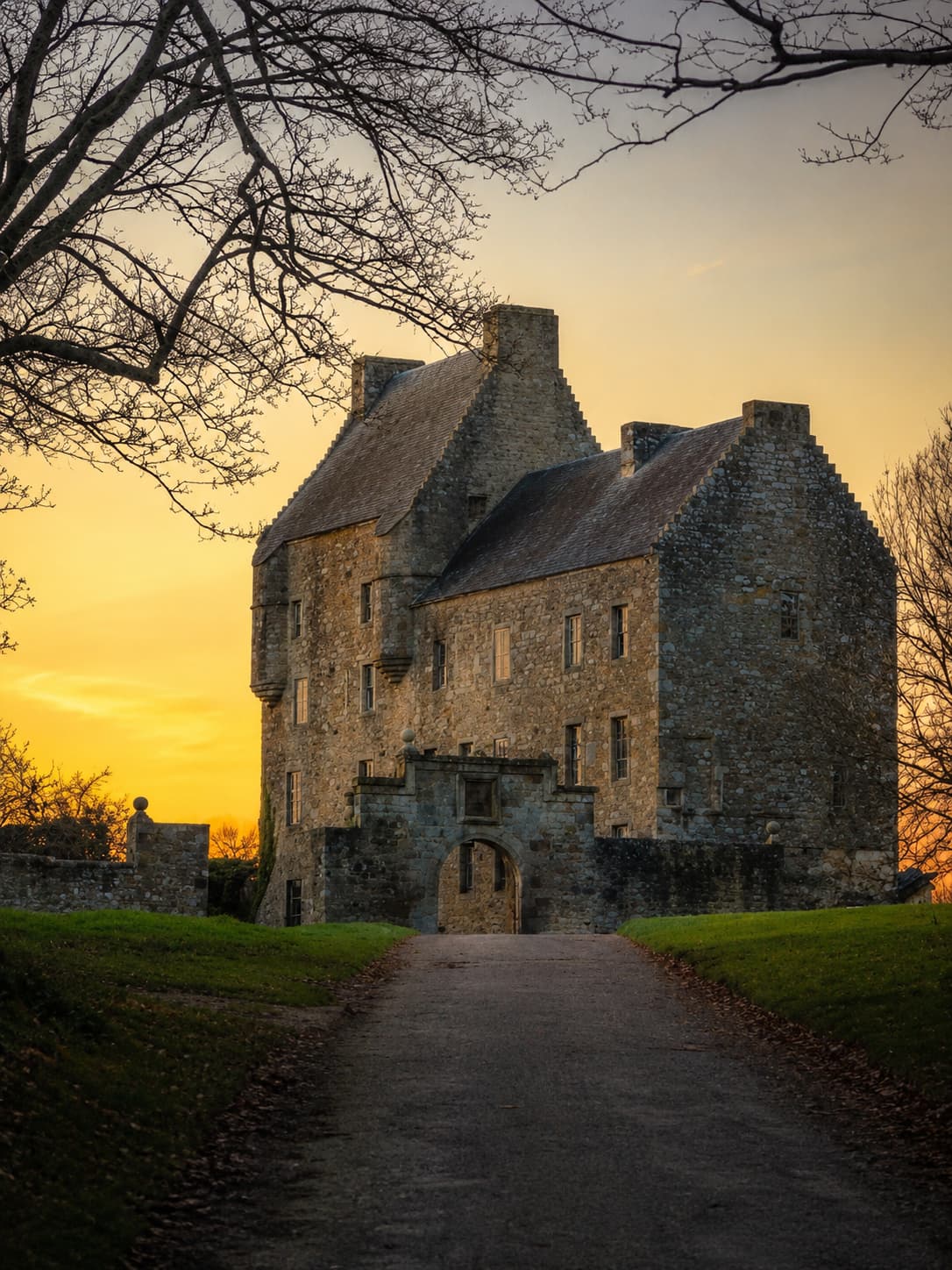
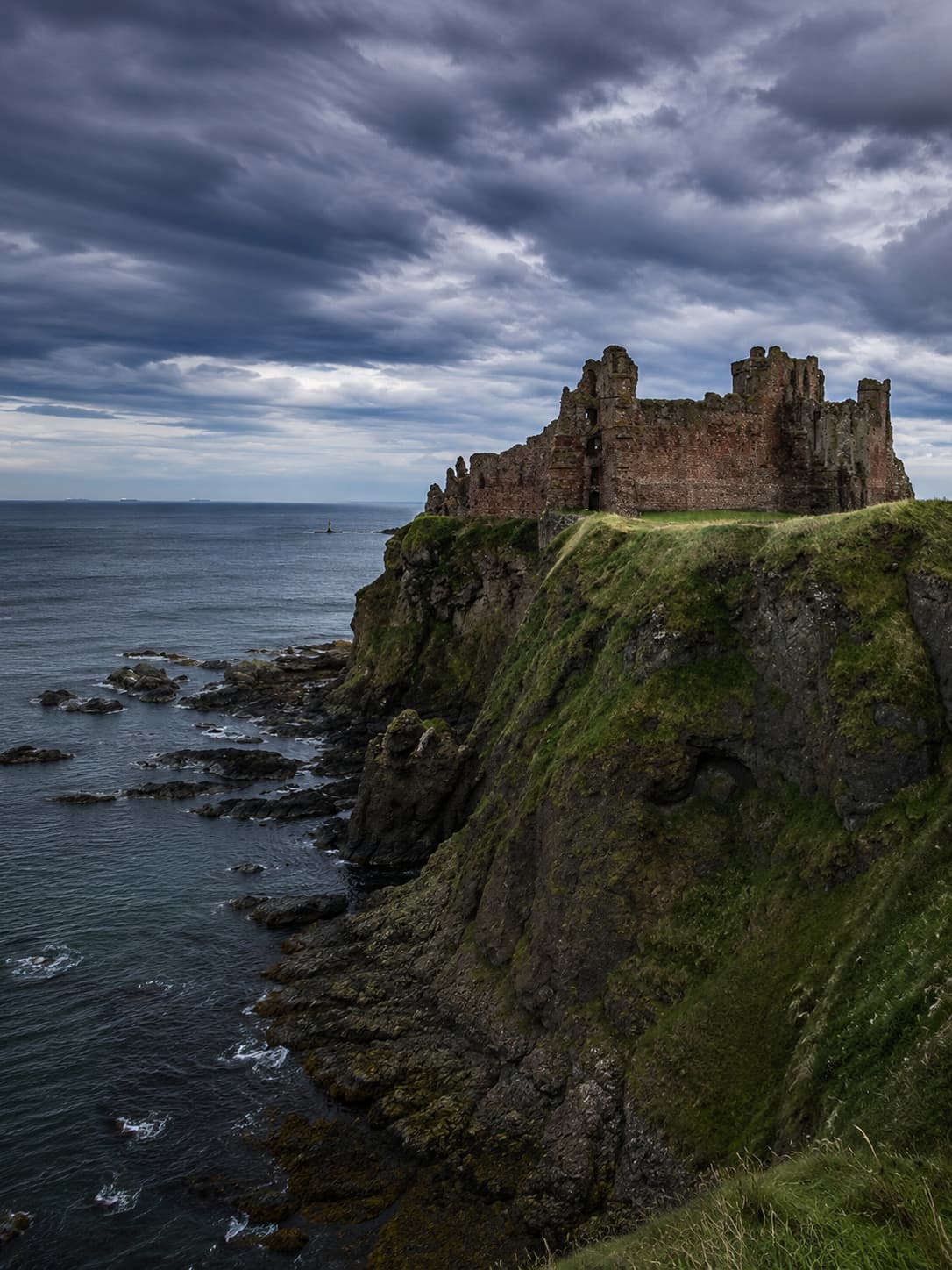
Lallybroch — Jamie Fraser’s ancestral home — is the emotional heart of the early seasons. In real life, it’s Midhope Castle, a 15th-century tower house on the Hopetoun Estate near South Queensferry, about 30 minutes west of Edinburgh. And there is a version of visiting Midhope that is exactly what you’d hope for: the stone archway looks precisely as it does on screen, the courtyard is recognisable, and if you’re a dedicated fan, standing in that archway is the thing you came to Scotland to do.
What to Know Before Visiting Midhope
However, a few things are important to know in advance. First, Midhope’s interior is completely derelict and unsafe — the roof is gone, and filming took place only in the courtyard, on the steps, and around the exterior. What you see on screen as Jamie’s warm, functioning home is set dressing applied to a roofless shell. Second, access requires a paid ticket (around £4 per person as of 2025), and the castle’s own booking site now handles visits — check midhopecastle.com for current dates, as access can be restricted for farming, filming, or estate events. Third, there are no visitor facilities at the castle itself — just the exterior grounds.
None of this makes Midhope not worth visiting if Lallybroch matters to you. It absolutely is. But it helps to arrive with calibrated expectations: you’re visiting a photogenic ruin on a working farm, not a preserved historic house. The photo of the archway is exactly as good as you hope. Everything beyond that is context.
Hopetoun House, the grand Palladian mansion on the same estate, also appeared in Outlander — as the Duke of Sandringham’s residence and for Paris street scenes. It’s a full visitor attraction with interiors open for tours, priced around £13–15. Combining both on the same visit makes the estate trip worthwhile on its own terms, not just as a fan pilgrimage.
Craigh na Dun — the stones that aren’t real (and Clava Cairns instead)
Craigh na Dun is the standing stone circle where Claire travels through time — arguably the single most iconic image of the entire show. Visitors search for it constantly. Unfortunately, Craigh na Dun does not exist. The standing stones were a purpose-built styrofoam set, constructed for filming and not located at any real-world site. There is no field in Scotland where those particular stones stand.
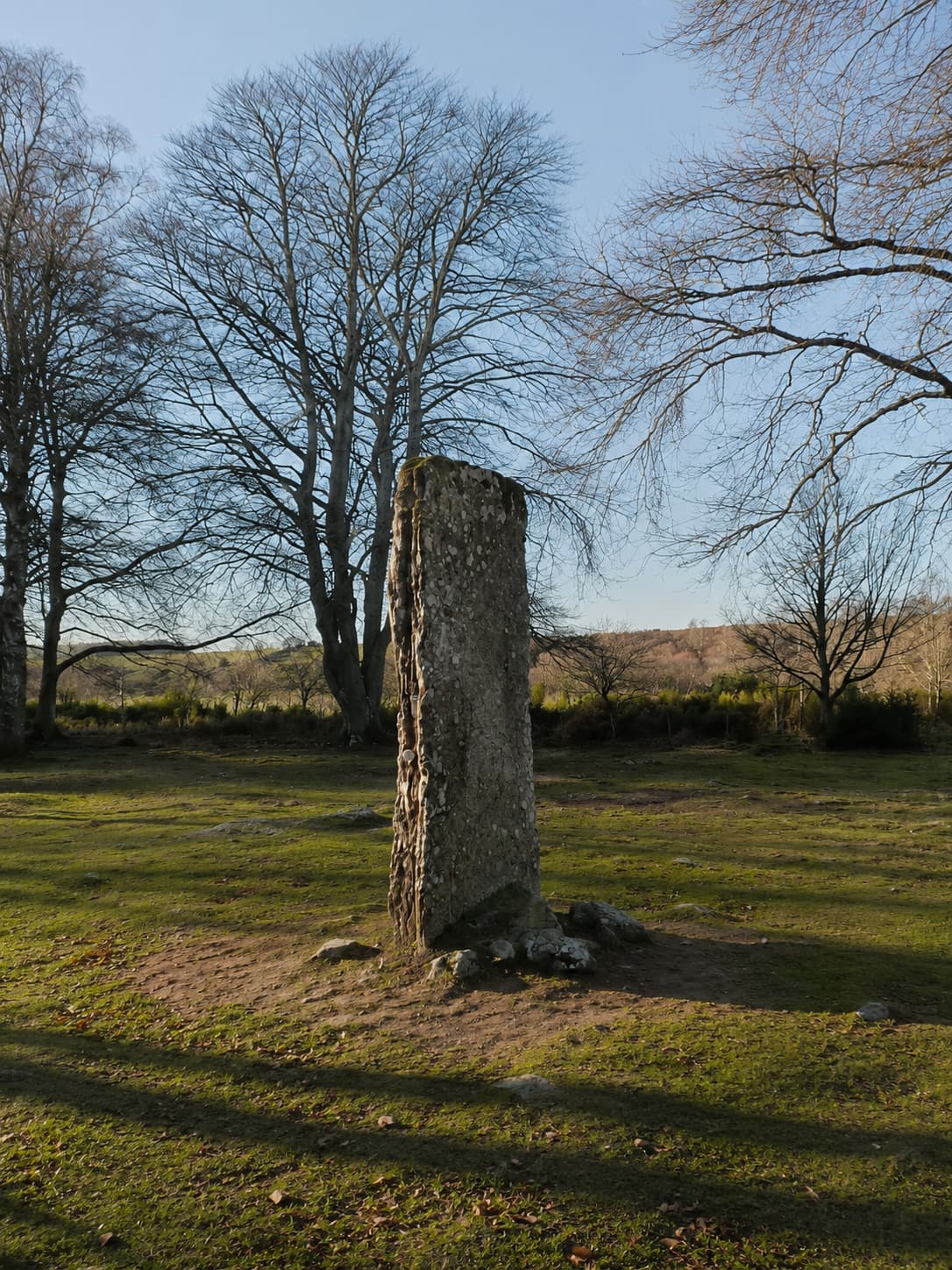
What does exist is Clava Cairns, the real Bronze Age burial monument near Inverness that is widely credited as the inspiration for the show’s stone circle. Clava Cairns is genuinely ancient — the cairns and standing stones here date to around 2000–2500 BCE — and the site has a quiet, genuine atmosphere that a purpose-built film set could never replicate. On an early morning, before the coach tours arrive, it’s one of the more affecting prehistoric sites in Scotland.
Historic Environment Scotland manages Clava Cairns, and visitors can enter for free. It sits about seven miles east of Inverness, in the same direction as Culloden. As a result, the two work naturally as a half-day from Inverness. For fans who want the emotional resonance of the stone circles, Clava is the honest answer. It is the real place the show drew on, and it rewards the visit on its own terms.
04 — The Village Outlander Filming Locations
Two Scottish villages appear repeatedly in Outlander as entirely different places: Culross stands in for Cranesmuir, the village near Castle Leoch, while Falkland in Fife becomes 1940s Inverness — the Scotland Claire leaves behind when she time-travels.
Culross and Falkland — film sites first, genuine villages second
Both are worth visiting, but the honest assessment is that they reward the visit primarily as historic Scottish villages, with the Outlander connection as an additional layer. Culross is a remarkably well-preserved 16th and 17th-century burgh on the Firth of Forth — cobbled streets, yellow-painted townhouses, and a National Trust for Scotland palace at its centre. Falkland is a royal burgh in central Fife, with a 16th-century palace at its centre and a main street that the production team dressed to resemble mid-20th-century Scotland for period scenes.
In terms of what you actually see: the villages look largely as they do on screen, because the production worked with their existing architecture rather than building sets. For that reason, they’re among the more satisfying locations for fans who want to recognise specific shots. However, they don’t offer dedicated Outlander visitor infrastructure — there’s no guided tour of the filming spots, no panels explaining what was filmed where. You’re walking through a living village that happens to have appeared in the show.
Both villages belong primarily to the Fairytale Villages in Scotland guide, where they’re profiled as destinations in their own right. For a dedicated Outlander day trip, they work best as half-afternoon additions after Doune and Blackness — they’re in the same rough geographic arc from Edinburgh.
05 — The Edinburgh Locations
Bakehouse Close — Jamie’s print shop
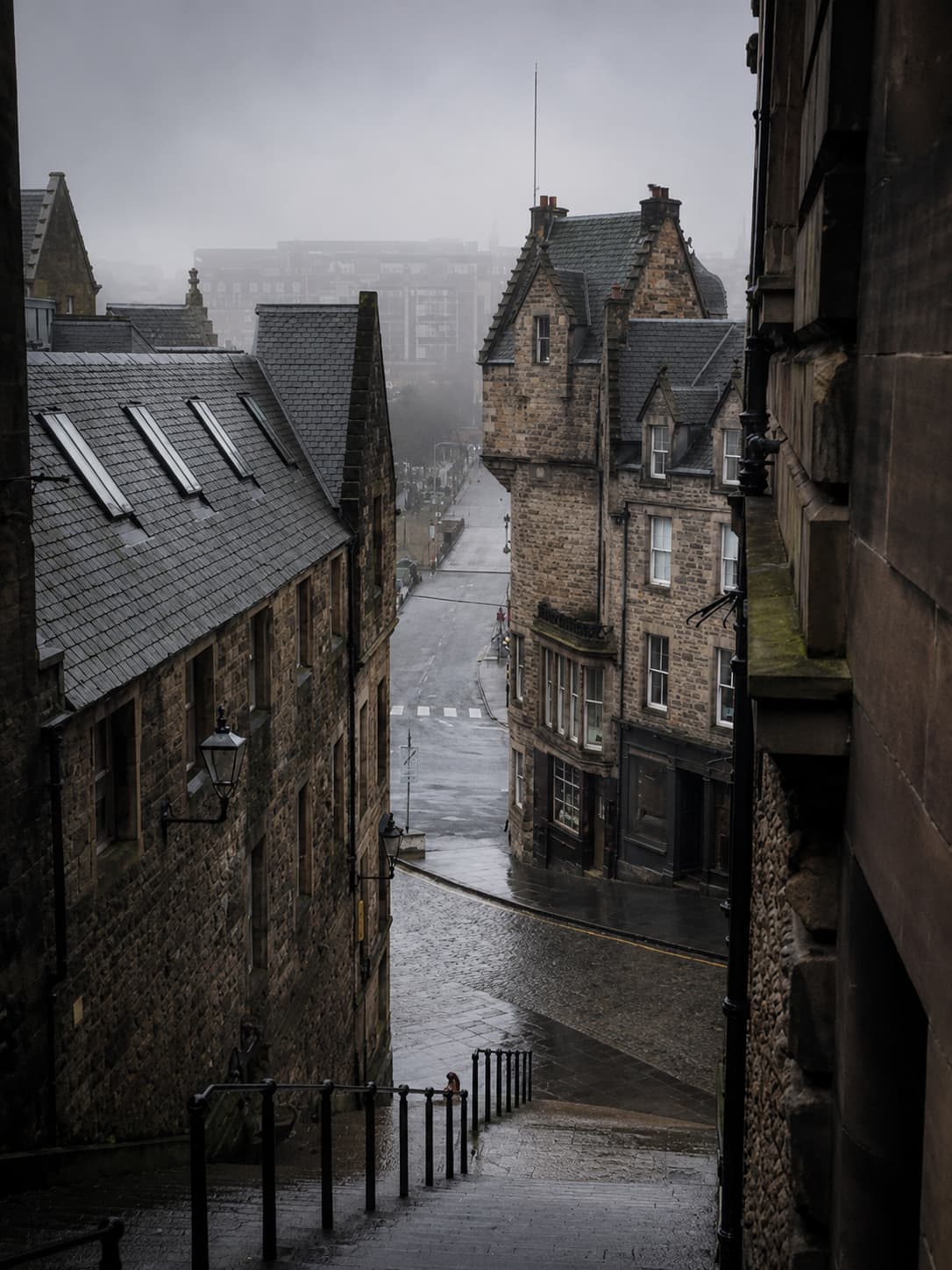
Bakehouse Close, a narrow wynd off Edinburgh’s Canongate, appeared in Season 3 as the Edinburgh print shop where Claire and Jamie reunite. It’s one of the most emotionally significant scenes in the show, and for that reason it draws a steady stream of fans. In reality, the close is one of dozens of such wynds running off the Royal Mile — small, atmospheric, and free to walk into at any time. No entry fee, no Outlander branding. Just a stone passage that happens to have been on screen.
As a stand-alone Outlander excursion, it’s a five-minute stop. That said, combining it with a broader Old Town walk is genuinely worthwhile — the Royal Mile and its closes are worth exploring regardless, and Bakehouse sits a short walk from the Palace of Holyroodhouse and a short walk from the lower Canongate.
Craigmillar Castle and Linlithgow Palace
Craigmillar Castle, on the south-eastern edge of Edinburgh, appears as a French château in Season 2’s Paris storyline — a production decision that says something interesting about how the show uses Scottish stone architecture to stand in for European equivalents. It’s a substantial and atmospherically ruined castle in its own right, quieter than Edinburgh Castle and often overlooked by visitors staying in the city centre. Entry costs around £7.
Linlithgow Palace, midway between Edinburgh and Stirling, appears as Wentworth Prison and as part of the French sequences. The roofless palace — birthplace of Mary Queen of Scots — is impressive on a clear day, particularly the great hall and the courtyard fountain. It fits naturally into the Blackness/Midhope day loop along the Forth, adding another stop without significant detour. Entry around £7; managed by Historic Environment Scotland.
06 — Can You Do Outlander Locations as a Day Trip From Edinburgh?
Yes, and this is how most visitors approach it. A well-structured day from Edinburgh can cover the core cluster efficiently, particularly if you’re self-driving.
Drive west along the Forth to Hopetoun Estate. Book your Midhope ticket in advance at midhopecastle.com. Allow 45 minutes at the castle; add Hopetoun House if you want to see the Duke of Sandringham’s interiors. Check access dates before you go — the castle can close for farming or estate events.
~30 min from Edinburgh
Continue along the Forth to Blackness (Fort William). The castle itself takes about an hour. Linlithgow Palace is 10 minutes’ drive east — add it as an optional stop, especially if you want to stretch the day. Good spot for a packed lunch by the loch.
~10 min from Midhope
Drive north to Doune — about 40 minutes from Blackness. Allow 1.5 hours for the castle with the Sam Heughan audio tour. This is the highlight of the day for most Outlander visitors, so don’t rush it. Return to Edinburgh takes about an hour from Doune.
~40 min from Blackness
If you’re moving efficiently, Culross is roughly between Blackness and Doune and adds about 45 minutes. Falkland is better as a separate half-day. Both are best visited in good weather — these are outdoor, walking destinations.
Between Blackness and Doune
Bakehouse Close and Craigmillar Castle work best as standalone Edinburgh additions — Craigmillar for an afternoon, Bakehouse as part of an Old Town walk. They don’t fit naturally into the Forth day loop because they’re in the opposite direction.
07 — Self-Drive or Guided Tour? The Honest Trade-off
Both options work well for visiting Outlander filming locations in the Edinburgh cluster. The choice depends on what you want from the day.
For most independent travellers, self-driving is the better option for this particular cluster. The distances are manageable, parking at the sites is generally available, and the Historic Environment Scotland audio guides (including Doune’s Sam Heughan tour) provide the narrative that a human guide would otherwise supply. Additionally, Midhope now requires advance booking regardless — so the main logistical advantage of a guided tour (they handle the bookings) is diminished.
Where guided tours add genuine value: for solo travellers without a driving licence or car, and for anyone who wants a more immersive fan experience with commentary that connects the filming history to the show’s storylines. Operators like Rabbie’s and Timberbush both offer Outlander-focused day tours from Edinburgh that are well-reviewed and cover the key cluster sites.
For the Highlands cluster (Culloden, Clava Cairns), day tours from Inverness make particular sense if you don’t have a car — the distances are short but awkward by public transport.
08 — The Best Time to Visit Outlander Filming Locations
The Outlander filming locations are theoretically accessible year-round, but conditions vary significantly by season. For broader timing of a Scotland trip, the Scottish Highlands guide covers the full picture; for Outlander locations specifically, a few considerations are worth noting.
Long days (Edinburgh gets light until 10pm in June), relatively uncrowded sites, and the Forth landscape at its greenest. Midhope in early May, before summer tourism ramps up, is particularly good — the surrounding estate is visually excellent in spring light. Book Doune and Midhope tickets in advance even in shoulder season.
Most sites are genuinely busy in high summer, particularly Doune and Blackness which receive coach tours. Midhope requires advance booking. Culloden receives substantial visitor numbers and the battlefield walk feels more contemplative early morning or evening. That said, summer weather (when it cooperates) makes the sites look their best.
Crowds thin considerably after August. Autumn light in Scotland is extraordinary — lower angles, warmer tones, and the moorland around Culloden takes on a deep amber colour in October that feels precisely right for the show’s emotional register. Prices drop. The sites remain open throughout.
Some sites reduce hours in winter, and Midhope may be closed more frequently due to farming operations. However, the locations are dramatically under-visited in winter, and a frost-covered Blackness Castle or a grey January morning at Clava Cairns carries its own atmosphere. Check each site’s website before planning a winter visit.
09 — What’s New: Season 8 and Blood of My Blood
Outlander’s eighth and final season premiered in March 2026 on Starz, with the series finale airing in May 2026 after 101 episodes and twelve years on screen. The timing gives this moment a particular quality for prospective visitors: the show is complete, the full story is told, and interest in the filming locations remains at a high point. Searches for Outlander Scotland consistently peak in the months after each season, and the finale has sustained a fresh wave of interest from fans visiting Scotland for the first time.
Blood of My Blood and the Future of Outlander Filming Locations
Meanwhile, the franchise continues through Outlander: Blood of My Blood, the prequel series focusing on the parents of Jamie Fraser and Claire Beauchamp. The first season premiered in August 2025 and was renewed for a second season ahead of its debut — with Season 2 scheduled to premiere in September 2026. Filming for the prequel has taken place across Scotland, including at Doune Castle as Castle Leoch, meaning several core Outlander filming locations remain active sets rather than historical film sites. The prequel is expected to sustain Outlander-driven tourism into the late 2020s.
For visitors planning a trip in the second half of 2026, the timing is particularly good: Blood of My Blood Season 2 premieres in September, which typically generates a fresh spike in interest and, consequently, fresh content about filming locations worth adding to your own research.
Best Outlander Locations and Lallybroch
Tickets and Free Outlander Sites
Planning a Self-Drive Outlander Trip
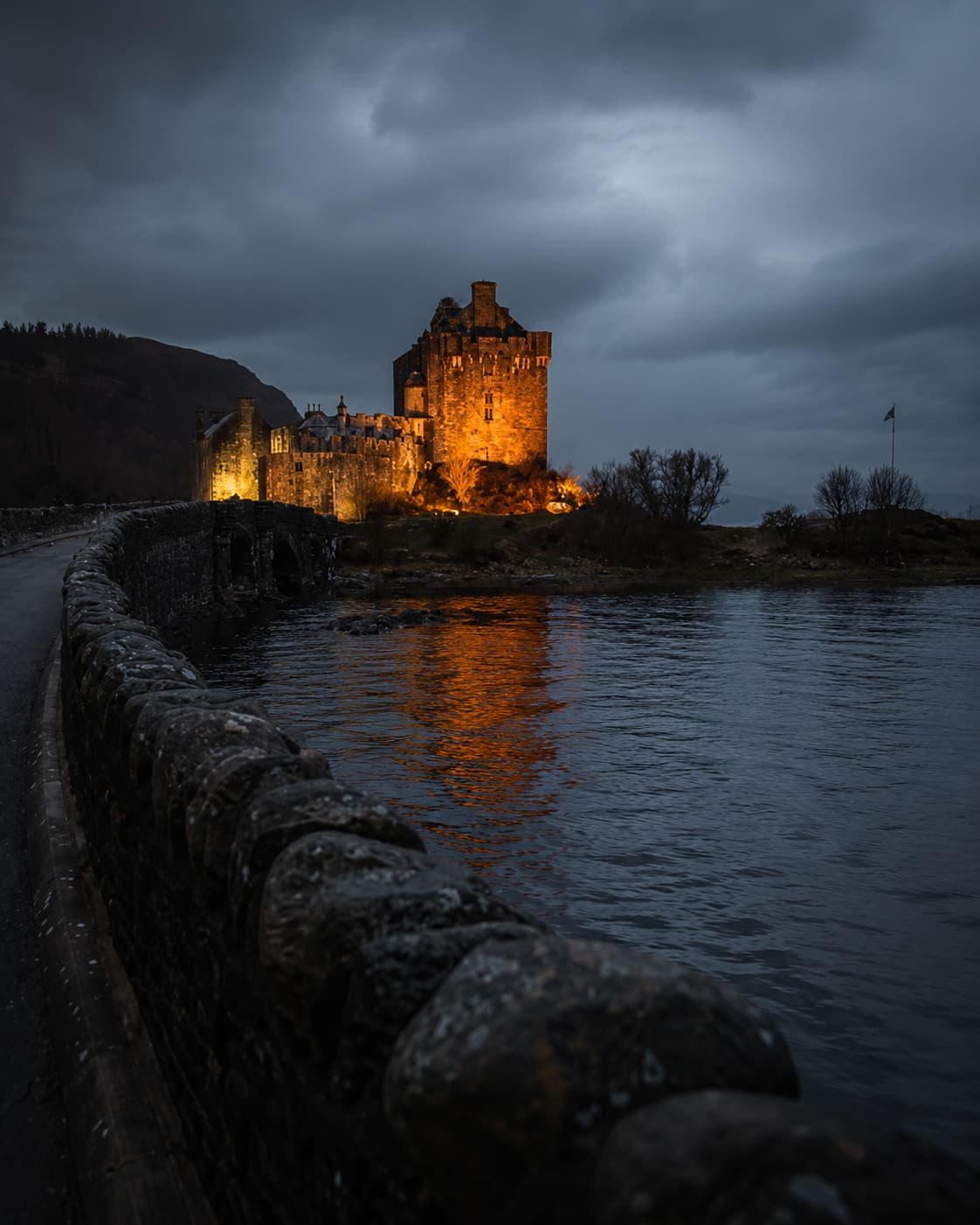
The real Scotland that Outlander drew on is older, quieter, and more complicated than the show lets on.
That’s the version worth visiting — not to confirm what you’ve seen on screen, but to find out what was there before the cameras arrived.