
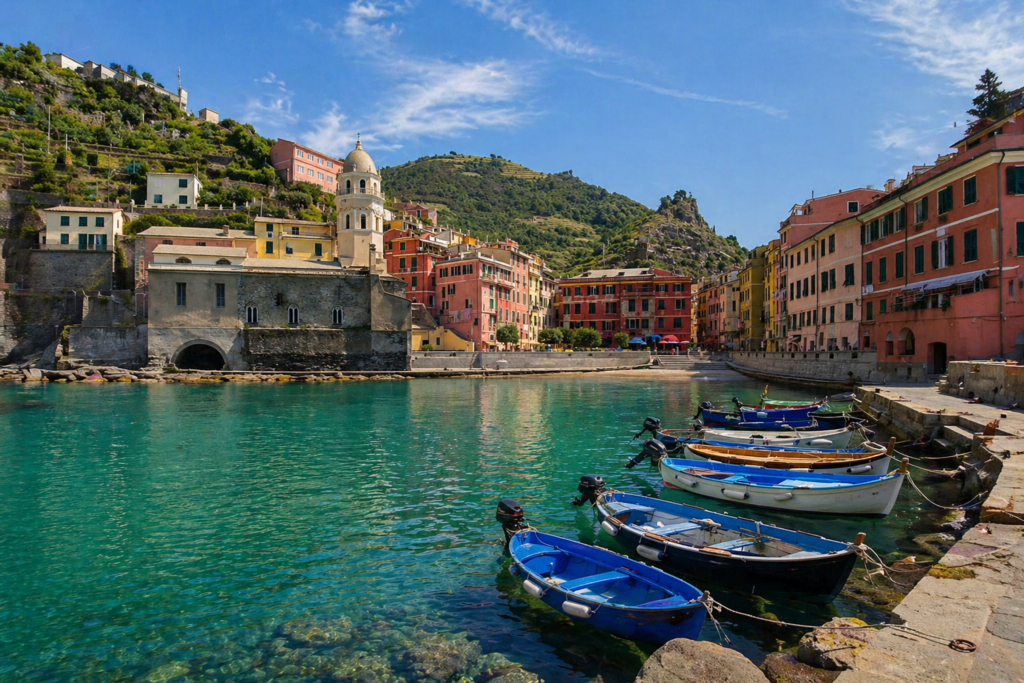
Cinque Terre vs Amalfi Coast: Which Italian Coast Should You Visit?
Two coasts. Both impossibly photogenic, both overcrowded in August, both the answer to someone’s perfect Italy trip. The question is which someone that is — and this guide will tell you honestly.
Every year, millions of people planning an Italy trip arrive at the same question: Cinque Terre or the Amalfi Coast? Both look similar in photographs — pastel houses stacked on vertiginous cliffs above impossibly blue water — and both get recommended with the same breathless enthusiasm by travel magazines that haven’t updated their stock photos since 2015.
The honest answer is that they are genuinely different experiences, and the right one depends almost entirely on what kind of traveller you are. Neither coast is universally better. However, one is better for you specifically, and this guide attempts to make that clear without the usual hedging.
In short: the Amalfi Coast is larger, more dramatic in scale, better for beaches, and closer to Naples, Pompeii, and Capri. Getting around it is a production — buses, ferries, hundreds of stairs, and a coastal road that reduces to a traffic queue by late morning in peak season. Cinque Terre, on the other hand, is smaller, easier to navigate by a significant margin, better for hiking, and slightly cheaper across most categories. Moreover, in the honest assessment of most people who have visited both, it feels more authentically inhabited — villages where people actually live rather than primarily serve.
Both are extremely crowded in July and August. This is not a minor caveat.
01 — Six Dimensions: Amalfi Coast vs Cinque Terre
Six categories actually determine whether you’ll enjoy a coast: ease of getting around, beach quality, hiking, cost, authenticity, and what you can combine it with. The comparison below is direct — neither coast wins every category, and the weighting depends entirely on your priorities.
Complex — bus, ferry, stairs, or car. Narrow road, heavy traffic in summer
Better — 8+ beaches with varying access. Pebble, clear water, dramatic settings
Excellent but harder — Path of the Gods is world-class; access requires effort
Higher overall — Positano is among the most expensive towns in Italy
Mixed — eastern towns (Cetara, Atrani) feel genuine; Positano does not
Outstanding — Naples, Pompeii, Herculaneum, Capri all within reach
Simple — regional train connects all five villages in minutes, no car needed
Limited — Monterosso has the main sandy beach; others are small rocky coves
The primary activity — 120km of trails, Sentiero Azzurro connects all five villages
Lower than Amalfi — still expensive for Italy, but budget travel is more viable
Better — working fishing villages, terraced vineyards, genuinely inhabited feel
Good — Florence (2hrs), La Spezia, Portofino; not the Rome/Pompeii combination
02 — Quick Verdict: Which Coast Is Right for You
Amalfi suits you if beaches and scale are the priority
- Beaches are a priority. The Amalfi Coast has eight distinct beaches ranging from the famous to the entirely wild — Cinque Terre, in contrast, has one proper sandy beach at Monterosso and a handful of small rocky coves.
- You’re combining with Naples, Pompeii, or Capri. The Amalfi Coast sits 30 minutes from Naples by hydrofoil and 20 minutes from Pompeii by car. That combination is unmatched anywhere else in Italy.
- You want scale and grandeur. The Amalfi cliff faces are taller, the towns more spread out, the views more cinematic. Specifically, if you’ve seen the photographs and want that kind of drama at full scale, only the Amalfi Coast delivers it.
- You’re prepared for the logistics. Buses, ferries, water taxis, and several hundred stairs are part of the experience. It is manageable and often rewarding — however, it requires engagement, not just arrival.
- You’re based in southern Italy. If you’re coming from Rome via Naples, the Amalfi Coast is a logical extension. For a northern Italy trip, on the other hand, adding it requires a full transit day each way.
Cinque Terre suits you if hiking and simplicity come first
- Hiking is the point of the trip. The Sentiero Azzurro trail connects all five villages along the cliff, and the wider network covers 120km in total. No coast in Italy — possibly in Europe — offers coastal hiking of this quality at this accessibility.
- You want a car-free, low-stress base. The train connects all five villages in minutes. No driving, no buses on cliff roads, no parking arithmetic. Additionally, you can village-hop all day on a single pass and end somewhere different from where you started.
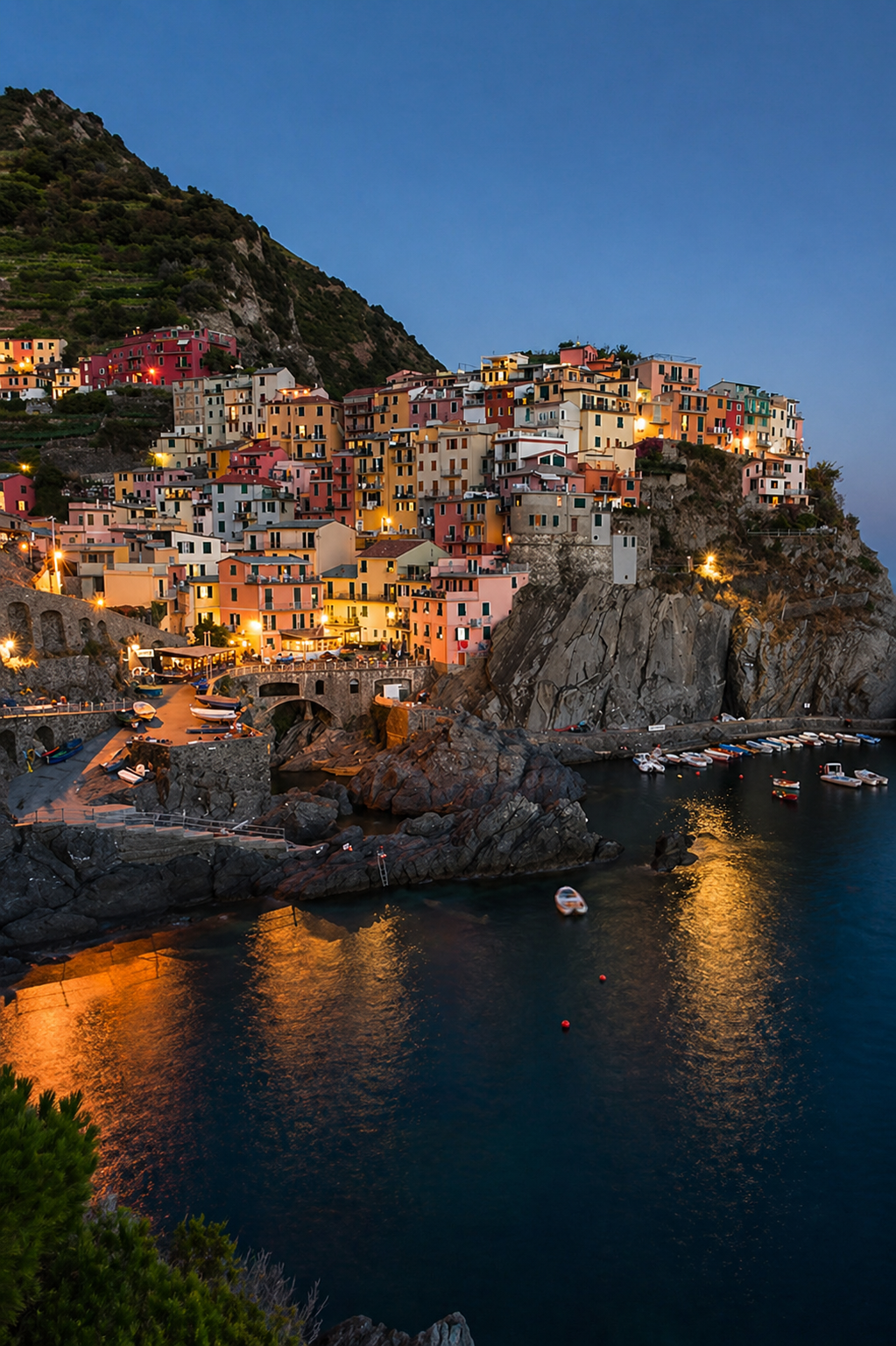
- Authenticity matters to you. Cinque Terre still feels like somewhere people live. The fishing boats in Vernazza’s harbour are working boats. Furthermore, the terraced vineyards above the villages are actively farmed. Positano feels like a stage set for tourism; Manarola, in contrast, feels like a village that became famous.
- You’re combining with Florence, Milan, or Tuscany. Cinque Terre is two hours from Florence by train — a natural pairing for a northern Italy itinerary. The coastal towns are also within easy reach of Portofino and La Spezia.
- Budget is a genuine constraint. A reasonable daily budget in Cinque Terre is achievable in a way it simply isn’t in high-season Positano.
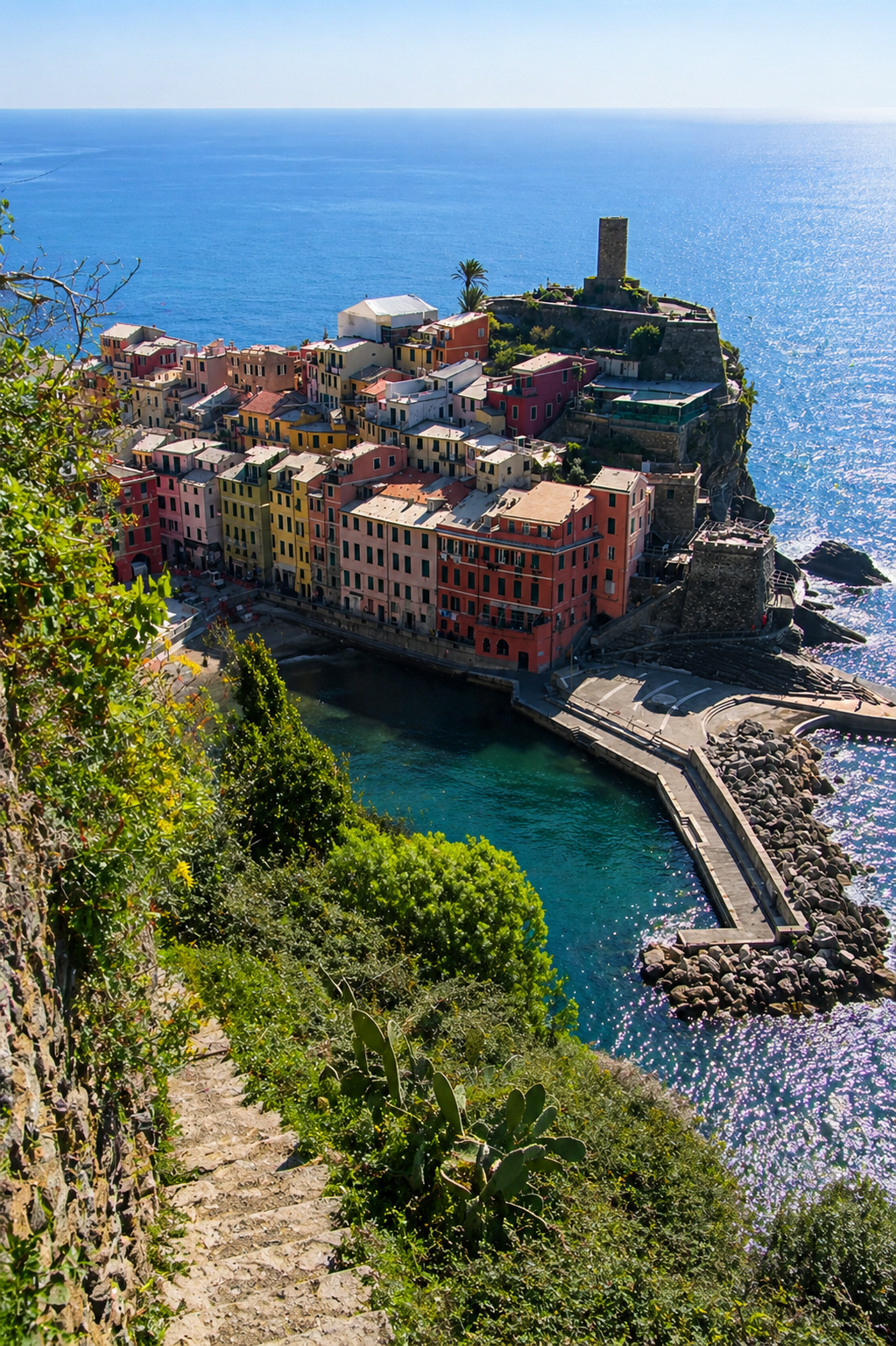
03 — The Amalfi Coast: What It’s Actually Like
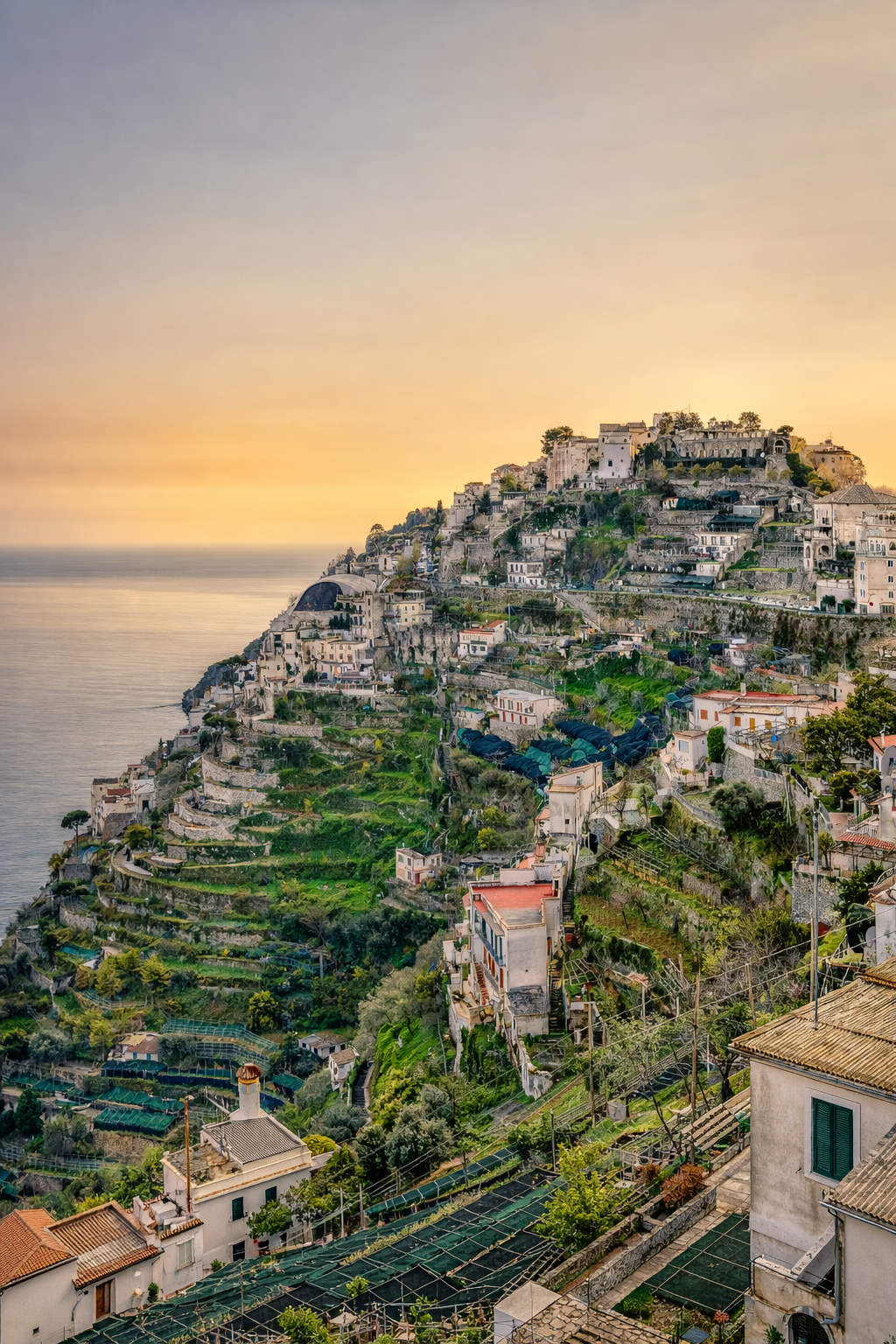
The Amalfi Coast is a 40-kilometre stretch of Campanian coastline running from Positano in the west to Vietri sul Mare in the east, with thirteen distinct towns spread across cliffs that rise up to 1,400 metres above the sea. It has been a UNESCO World Heritage Site since 1997. On top of that, it hosts some of the highest-priced sunbeds in Italy, a coastal road that was never built for modern traffic volumes, and a small number of eastern towns — Cetara, Atrani, Praiano — that are genuinely extraordinary and almost entirely missed by visitors who arrive for Positano and leave.
The version most people experience
The Amalfi Coast most visitors encounter centres on Positano and Amalfi town. Positano is genuinely beautiful — houses in terracotta and pale yellow cascading down the cliff to two small pebble beaches, the dome of Santa Maria Assunta catching the light from every angle. However, in high summer, it is also a place where a pair of sunbeds costs €50–80 and the narrow lanes are so crowded by mid-morning that walking becomes a negotiation. The experience is real; so is the price and the pressure.
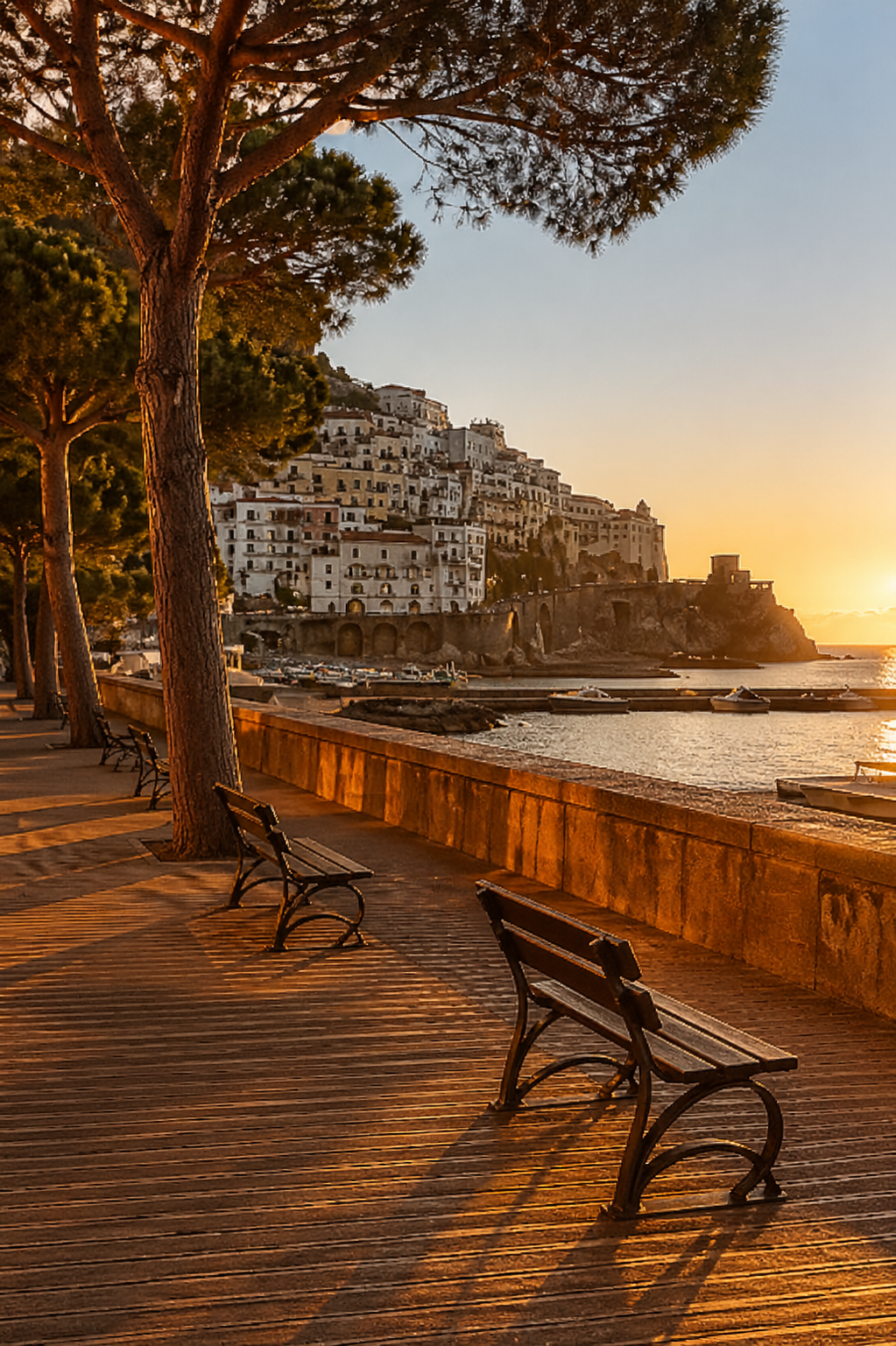
Amalfi town is more manageable — compact, historically significant (it was a tenth-century maritime republic that preceded Venice as a Mediterranean trading power), and built around a cathedral that earns its photography from every angle. In particular, the Chiostro del Paradiso, a twelfth-century cloister of interlaced arches, is one of the finest small architectural spaces on this coastline. Amalfi consequently functions well as a base: central location, ferry connections in both directions, bus access to Ravello above.
The version most people miss
The eastern stretch — Atrani, Cetara, Maiori, Vietri sul Mare — receives a fraction of the visitors that arrive at Positano each morning and contains, arguably, the more honest version of the coast. Atrani is five minutes on foot from Amalfi, technically a separate municipality, genuinely local in character, and priced accordingly. Cetara, furthermore, is a working fishing village where the colatura di alici — a fermented anchovy extract made here since the medieval period — is served over spaghetti in restaurants that still charge restaurant prices rather than tourist prices. These towns do not appear in most itineraries. They should.
The other underrated Amalfi experience is altitude. Ravello, 365 metres above the sea on a promontory above Minori, offers the finest panoramic view on the entire coast from the Terrazza dell’Infinito at Villa Cimbrone. It is, for once, not an overstatement. Moreover, it sits just twenty-five minutes by bus from Amalfi town, significantly quieter than the coastal towns, and entirely different in character — olive trees and garden walls rather than cliff staircases and lido queues.
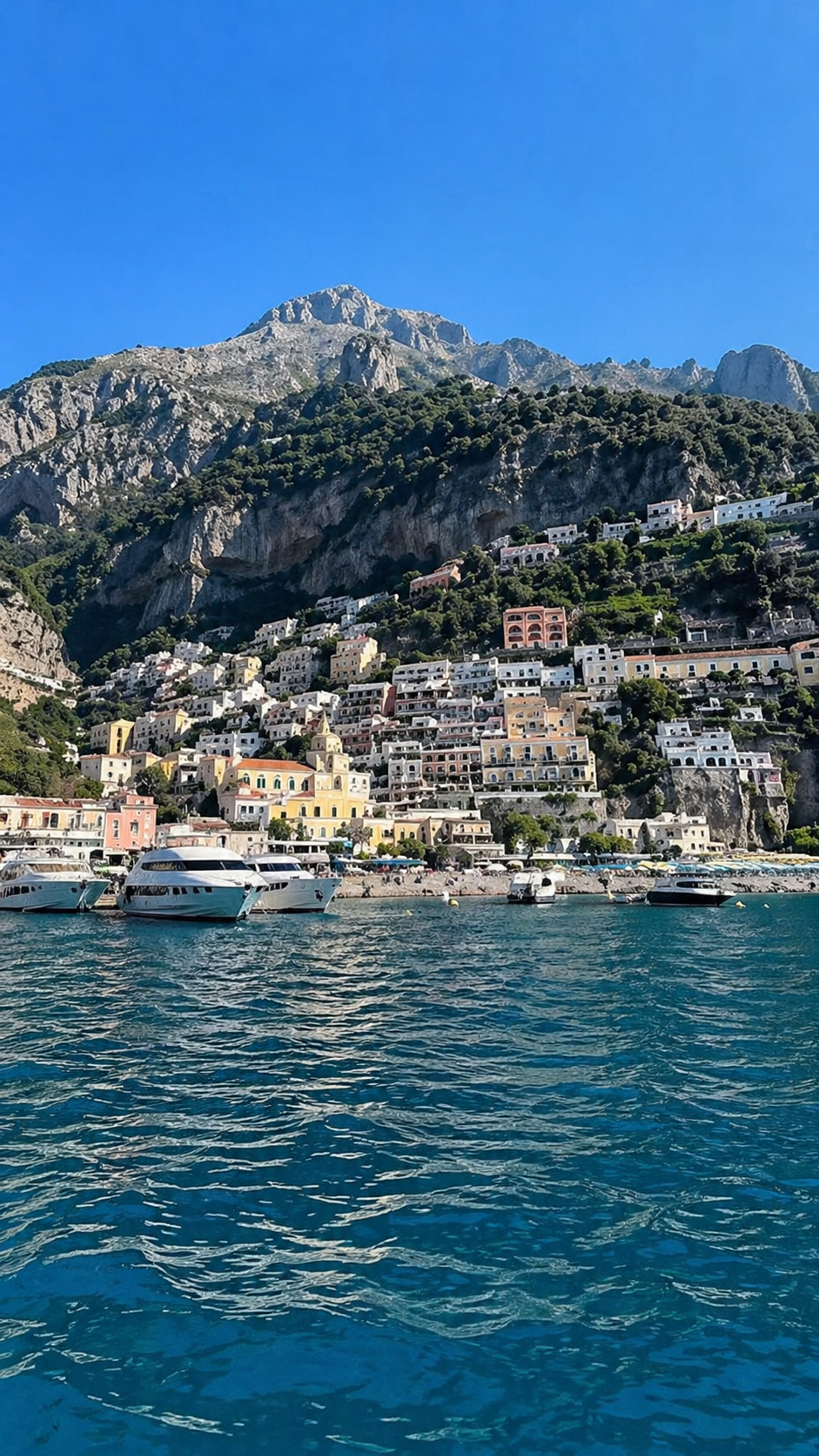
04 — Cinque Terre: What It’s Actually Like
Cinque Terre — literally “Five Lands” — is a national park and UNESCO World Heritage Site covering five villages on the Ligurian coast between La Spezia and Levanto: Riomaggiore, Manarola, Corniglia, Vernazza, and Monterosso al Mare. No cars enter the villages. There is no coastal road. The train connecting them runs along a tunnel cut through the cliff, emerging briefly at each harbour before disappearing again. As a result, it is the most logistically straightforward coastal destination in Italy.
What actually defines the experience
The defining quality of Cinque Terre is that it still feels like somewhere real. Fishing boats in Vernazza’s small harbour are used for fishing. The terraced vineyards above Manarola produce Sciacchetrà, a local passito wine. Residents hang laundry from windows overlooking the sea and sit in doorways in the late afternoon. Consequently, the villages became famous for reasons that still exist when you arrive — the accumulated density of colour and vertical geography and sea light is exactly what it looks like in the photographs, without the photographs having removed its soul.
The five villages each have distinct characters. Vernazza is the most photogenic — its small harbour with the coloured houses stacked above it is the canonical Cinque Terre image — and accordingly the busiest. Manarola offers the best sunset views from the rocks above the village. Corniglia is the only village that doesn’t touch the sea directly, sitting on a rocky promontory 100 metres above it, reached by a long staircase or a shuttle bus. Riomaggiore, in contrast, is the most local in feel. Monterosso is the largest, has the coast’s only genuinely sandy beach, and is the easiest for those who want more conventional amenities.
Hiking is the main event
The Sentiero Azzurro — the Blue Trail — links all five villages along the coastal cliff. Not all sections are always open (rockfall and erosion close stretches periodically), but the network of paths above the villages covers more than 120km in total. The higher trails are generally quieter than the coastal path, and several reward the extra elevation with views that put the villages below into context — terraced gardens, cliff faces, the Ligurian Sea running to the horizon. In other words, if you are visiting Cinque Terre without planning to hike at least one section of trail, you are missing the main reason to come.
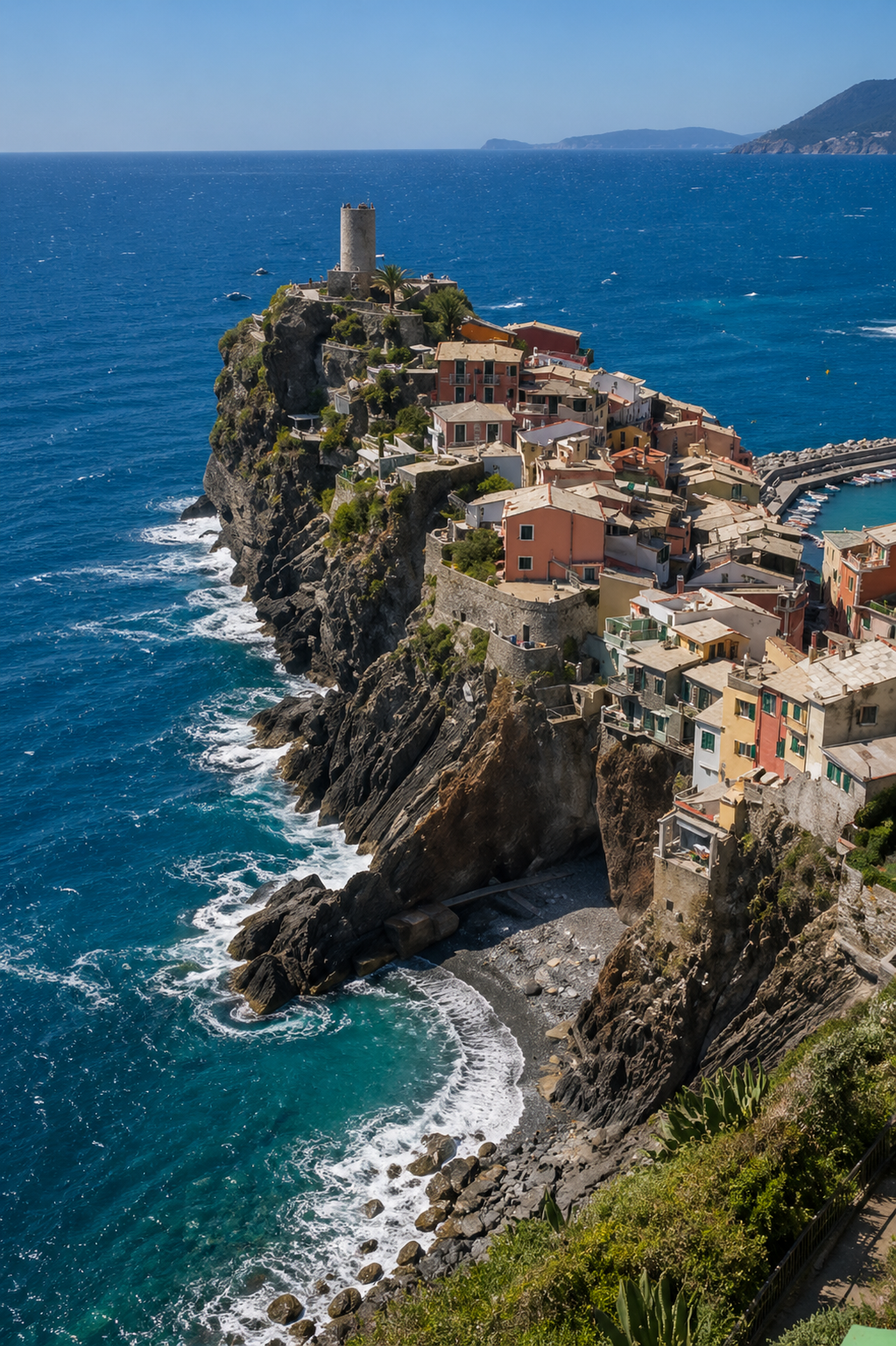
05 — The Real Difference in Crowd Dynamics
Both coasts are described as “crowded in summer.” This is technically accurate and practically meaningless. The type of crowd and the ability to escape it are completely different on each coast — and understanding the difference changes how you plan.
How crowds work on the Amalfi Coast
The Amalfi Coast’s crowd problem concentrates in specific places and specific hours. Positano’s Spiaggia Grande at 11am on a Saturday in August is not a beach — it is an event. The Amalfi town main piazza between 10am and 3pm in July operates at coach-party density. Furthermore, the SS163 coastal road between Positano and Praiano reduces to a 15km/h queue behind SITA buses for most of the day from June through August.
However, the Amalfi Coast is large enough and varied enough that escape is possible. Arriving at Furore, Praiano, or Cetara at the same hour as Positano is heaving gives you something close to solitude. Taking the staircase beaches — Arienzo (300 steps), Fiordo di Furore (200 steps) — deters enough casual visitors that they remain manageable even at peak season. As a result, the coast rewards effort with space in a way Cinque Terre cannot fully replicate.
How crowds work in Cinque Terre
Cinque Terre’s crowd problem is more systemic. The five villages are small — Vernazza’s permanent population is under 900 — and the train infrastructure, while elegant, funnels visitors efficiently into compact spaces. On a peak August day, the coastal trail between Riomaggiore and Manarola has queues. Additionally, the main harbours of Vernazza and Manarola receive cruise-ship day-trippers arriving in waves. The problem is not that Cinque Terre is unpleasant in summer — it is genuinely beautiful at any volume — but that the escape routes are limited.
The higher trails are quieter. The villages at the extremes of the five (Monterosso, Riomaggiore) absorb crowds differently from the photogenic centre. Even so, there is no Cetara equivalent: no village an hour away that most visitors don’t find. In short, if crowd avoidance is a core priority, the Amalfi Coast offers more structural escape options than Cinque Terre does.
For both coasts, the practical solution is the same: May, early June, or September. Water temperatures in May are swimmable by mid-month. September keeps the warmth of summer while cruise ship passenger numbers drop sharply. On the Amalfi Coast specifically, the plate restriction on the SS163 (even/odd alternating, weekends, June–September, 10am–6pm) does not apply in May or June — which means the road is also more driveable. On both coasts, arriving before 9am in high season gives you an entirely different experience from arriving at 11am. The light is better. The lanes are quieter. The photographs are more honest.
06 — Cost Comparison: Accommodation, Food, and Access
Both coasts are expensive by Italian standards. Neither is the budget Italian beach holiday some travel sites imply. The difference between them is how much higher the ceiling gets on the Amalfi Coast, and how viable budget travel remains on Cinque Terre.
Accommodation
In Cinque Terre, a mid-range double room inside one of the five villages runs €100–180 per night in peak season — high by Italian standards, but with hostel dorm beds available from around €30. Staying in nearby La Spezia (9 minutes by train to Riomaggiore) brings the average down considerably. A reasonable apartment for two people, booked in shoulder season, is achievable for €60–100 per night.
On the Amalfi Coast, the range is wider and the ceiling substantially higher. Positano’s famous lido hotels start from around €250–400 per night in peak season and climb steeply from there. That said, the same money spent in Praiano or Cetara seven kilometres away buys a significantly nicer room with a fraction of the crowd. Staying in Salerno or Sorrento and taking ferries into the coast works similarly to the La Spezia approach — meaningful savings with only marginal extra transit time.
Food
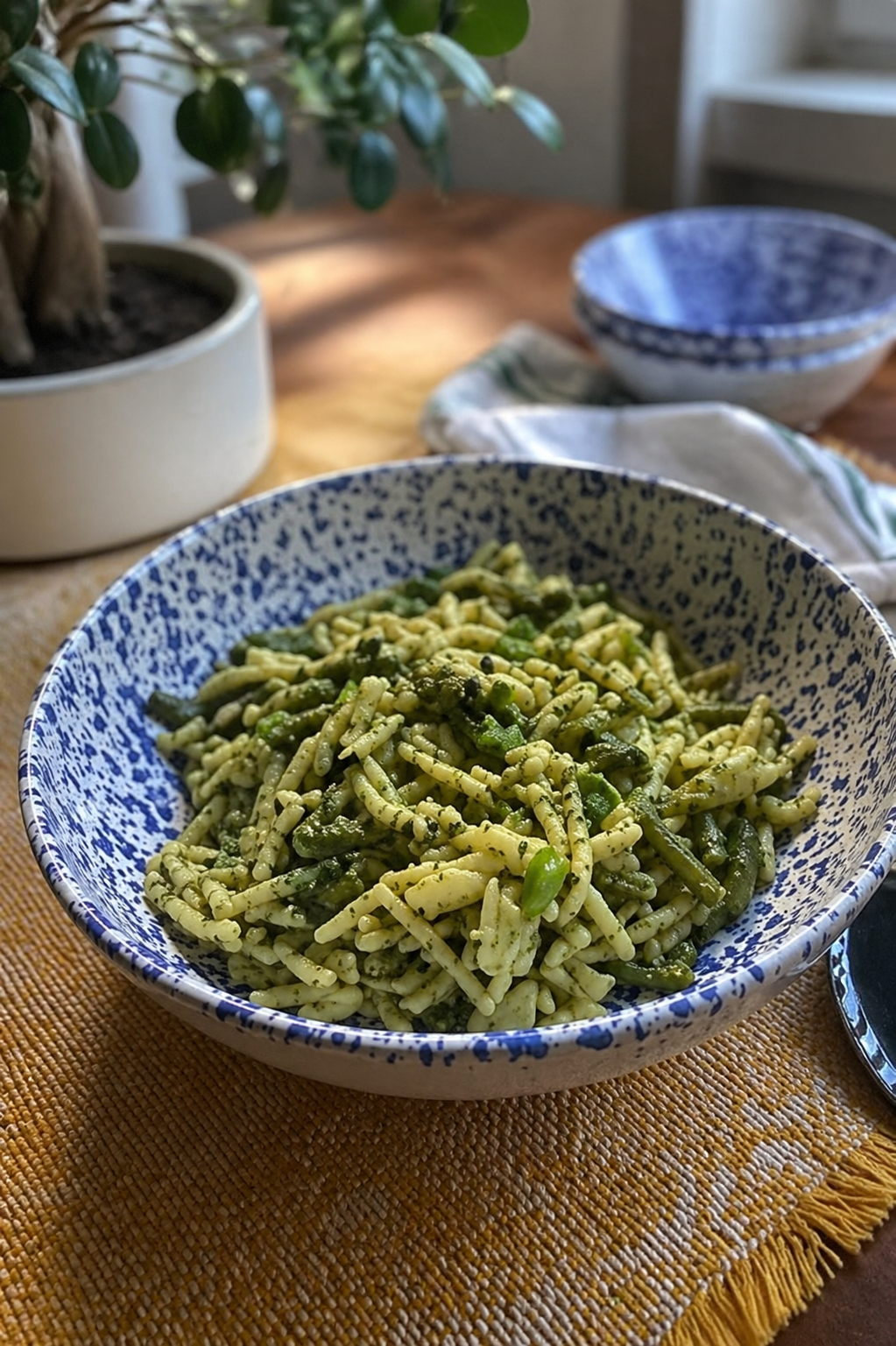
Cinque Terre keeps food costs manageable if you’re willing to eat simply. A fried seafood cone (fritto misto) from a takeaway costs €10–12. A focaccia from a local bakery is €3–5. Sit-down restaurants carry a coperto charge (€2–4 per person), and a full seafood dinner with wine runs €35–55 per person. Furthermore, the pesto here is notable: Ligurian basil pesto is a regional dish, not a garnish, and the quality gap between Cinque Terre pesto and what you get elsewhere in Italy is genuinely significant.
On the Amalfi Coast, the equivalent meal in Positano costs substantially more — a pasta dish in a sea-view restaurant runs €22–35, and the sunbed-and-umbrella fees at lidos (€20–60 per person, per day) add up quickly as a separate line item. The eastern towns, however, behave differently: a full lunch in Cetara including colatura di alici pasta and local wine runs €25–35 per person, which is honest southern Italian restaurant pricing.
Access and transport
Getting into Cinque Terre is straightforward and inexpensive. The Cinque Terre Treno Card — unlimited train travel between villages plus access to the paid hiking trails — costs €19.50–32.50 per day depending on season. Individual train tickets between villages run €5–10. The nearest major airports are Pisa (about 90 minutes by train) and Genoa (60–90 minutes).
The Amalfi Coast is more expensive to navigate. The SITA bus is cheap at around €2.50 per ticket, but ferry tickets from Positano to Amalfi run €8–12, and a private boat transfer can cost €30–80 depending on route and operator. Flying into Naples is easy and well-served — under an hour from the airport to Sorrento. However, the boat tours, parking fees (up to €5 per hour in Positano in peak season), and lido shuttle charges accumulate in a way the Cinque Terre train card does not.
| Accommodation — budget | Cinque Terre: from ~€30 (dorm) / €60–80 (private, La Spezia base) · Amalfi: from ~€60 in Atrani/Cetara; €90+ in Amalfi town; €250+ in Positano |
| Accommodation — mid-range | Cinque Terre: €100–180 in-village peak season · Amalfi: €150–300 depending on town; Positano averages €350+ |
| Daily food — casual | Cinque Terre: €20–35 eating simply (focaccia, takeaway, one sit-down meal) · Amalfi: €25–45 similar approach; higher in Positano/Amalfi town |
| Transport within | Cinque Terre: €19.50–32.50 for day train card · Amalfi: €2.50 per bus ticket; €8–12 per ferry leg; private boat €30–80 |
| Beach costs | Cinque Terre: free public sections at Monterosso; small entry fees for some areas · Amalfi: lido sunbeds €20–60pp/day; Positano peak: up to €250+ |
| Flying in | Cinque Terre: Pisa (90 min) or Genoa (60 min) by train · Amalfi: Naples airport (~75 min to Sorrento), good high-speed rail from Rome |
07 — Practical Notes
Getting to each coast from Rome
The Amalfi Coast is straightforward from Rome: take the high-speed train to Naples (70 minutes from Roma Termini), then a Circumvesuviana train, hydrofoil, or rental car to Sorrento or Salerno and onward to the coast. If you fly into Naples, you’re on the coast within two hours. Consequently, the Amalfi Coast pairs naturally with Rome as part of a southern Italy itinerary.
Cinque Terre from Rome is longer: the high-speed train runs to Florence or La Spezia and then onward — total journey time of approximately 3–4 hours depending on connections. It works better combined with Florence, Tuscany, or a northern Italy circuit than with Rome and the south. Putting both coasts on the same itinerary from Rome requires either significant transit time or a flight.
How long to spend
Three nights in Cinque Terre is the practical minimum to see all five villages and hike at least one trail section without feeling rushed. Four or five nights, on the other hand, allows for a full day on the trails and a day of slower exploration. Two nights works only if you arrive with a clear plan and good timing.
On the Amalfi Coast, the right answer depends on which towns you prioritise. Two nights based in Amalfi town covers the essentials. Three to four nights allows day trips to Ravello, Cetara, and at least one of the harder-to-reach beaches. Five nights with Sorrento or Positano included makes for a full southern Italy coastal stay.
The one non-negotiable for both
On both coasts: book accommodation well in advance if you’re visiting between June and September. The villages are small, the room supply is finite, and the best mid-range options sell out months ahead. La Spezia for Cinque Terre and Salerno for the Amalfi Coast are the reliable fallback bases — both have good train or ferry connections, meaningfully lower prices, and enough character to be worth spending time in regardless.
The photographs make both coasts look like the same decision.
They aren’t. One is a hike. The other is a production. Both are worth it — just for different reasons, and different people.