
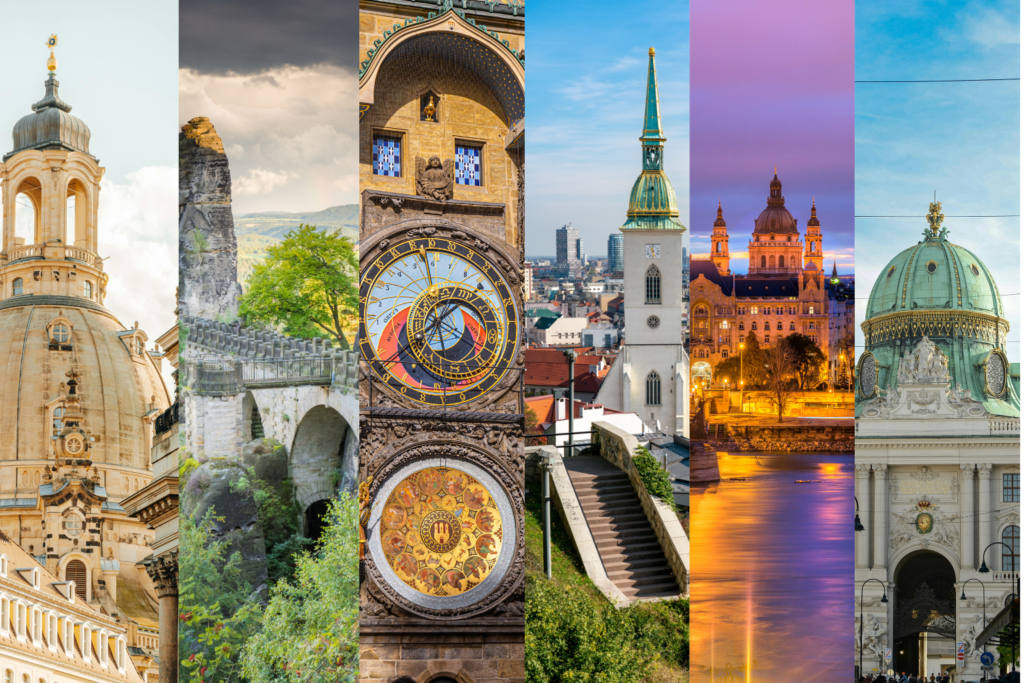
Dresden to Vienna: A 9-Day Central Europe Road Trip That Actually Works
Five cities, one rented car, and a route that follows the logic of the landscape — from Saxon Germany through Bohemia, along the Danube, and into the Habsburg heart of Europe.
About This Trip
This central Europe road trip covers five cities in nine days — Dresden, Prague, Bratislava, Budapest, and Vienna — in one rented car on a loop that starts and ends in Germany. The car left Dresden before the city had properly woken up. Nine days later, it returned to the same car park in the early hours of a Thursday morning, having covered roughly a thousand kilometres and accumulated, somewhere in between, a considerable amount of Central European landscape and history. That, in the broadest terms, is the shape of the trip.
In practice it was four friends, one economy rental, and a route that drew itself along the natural logic of the geography: southeast through the Elbe sandstone formations, southwest into Bohemia, then south along the Danube corridor through Slovakia, Hungary, and Austria, before the long overnight drive back north. No one-way fees. No train back from Vienna. The circle closed cleanly in Dresden.
Nine days felt right in planning and turned out to be almost exactly right in reality — enough for each city to breathe without padding any stop with an extra half-day simply because it was there. Budapest was the one exception: we would have taken a third night there had the itinerary allowed it. Every other allocation held.
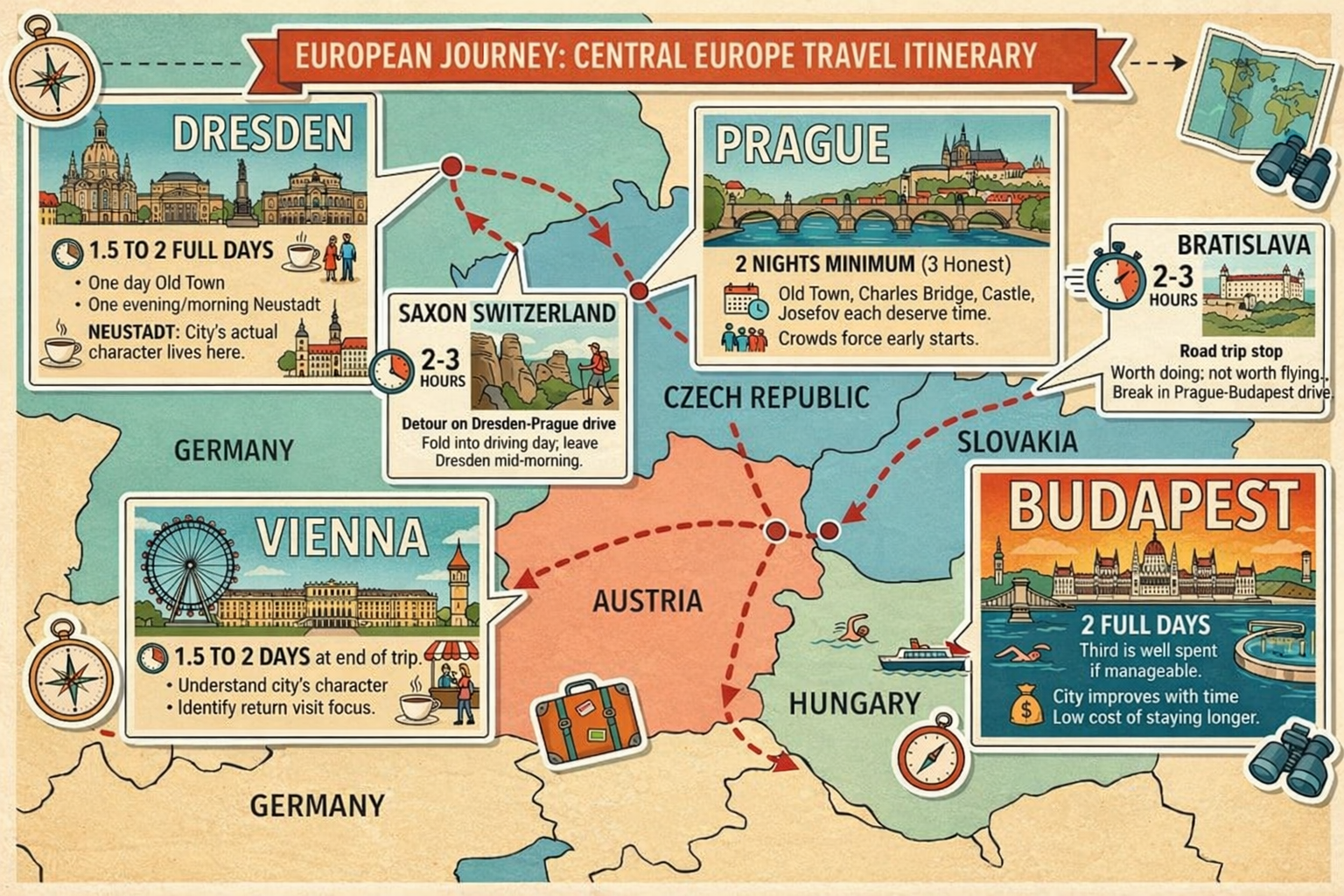
This post is the overview — the day-by-day shape of the trip, what worked and what we would do differently, and the practical information needed to plan your own version. Each city in the series has a dedicated guide with the detail this overview necessarily compresses. The links are throughout.
01 — Why This Central Europe Road Trip Route Works
Central Europe has no shortage of possible itineraries. The version that gets done most often involves flying into Prague, spending three days there, taking a bus or train to Vienna, and flying home. That is a reasonable trip — but it is not what this route is.
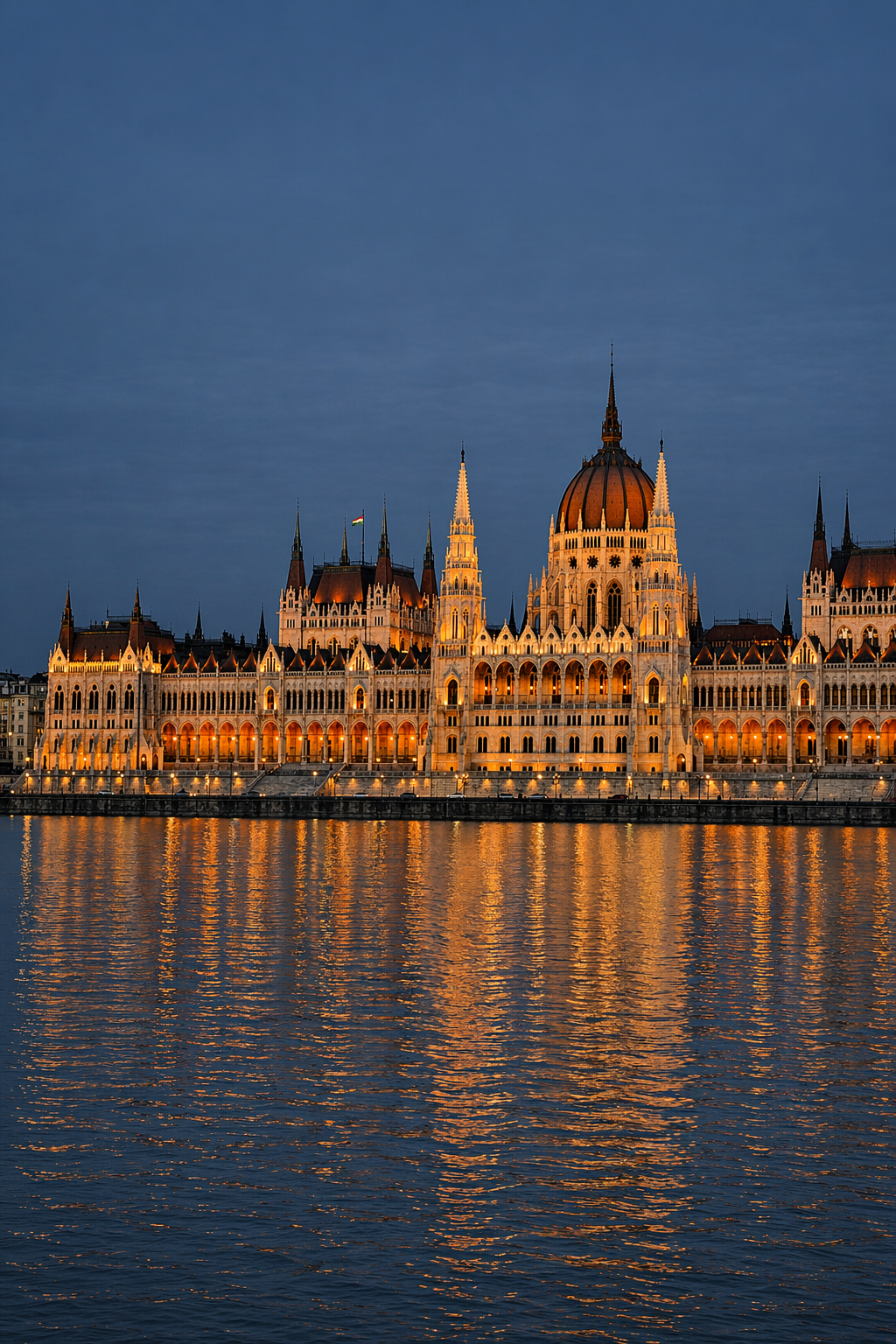
The road trip version adds something the point-to-point version cannot: the in-between. The stretch of national park between Dresden and Prague that most people motor straight past. The Bratislava afternoon that converts a four-hour motorway run into an actual day. The moment on the drive into Budapest at night when the Parliament Building appears across the Danube before you have even parked the car. None of those things happen on a train.
Why Dresden as the start
Dresden is not the obvious beginning — Prague would be, if you were designing this trip for the most familiar audience. However, Dresden earns its position as the anchor city for several specific reasons. It sits at the northern edge of the natural route, which means the journey flows logically southward rather than doubling back on itself. Additionally, it is one of the most underrated cities in Germany — genuinely worth two days rather than a transit night — and treating it as the starting point gives it the attention it deserves rather than none at all.
Flights into Dresden are often cheaper and less congested than flights into Prague, which is worth knowing at the planning stage. Furthermore, the loop structure removes the repositioning problem entirely: no one-way rental fees, no train back from Vienna, no logistical gap to fill at the end of the trip. You arrive, you drive, you return.
The route logic
The full loop covers roughly 1,000km across five countries. No single drive exceeds three hours if Bratislava is used correctly as a midday stop between Prague and Budapest — which is the key structural decision the itinerary makes. Without that stop, Day 5 becomes a slog. With it, the day has a shape.
Dresden → Saxon Switzerland (detour) → Prague → Bratislava (stopover) → Budapest → Vienna → Dresden. Roughly 1,000km total. No single drive over three hours if Bratislava is used as a midday break.
02 — The Full Itinerary, Day by Day
Germany — Days 1–3
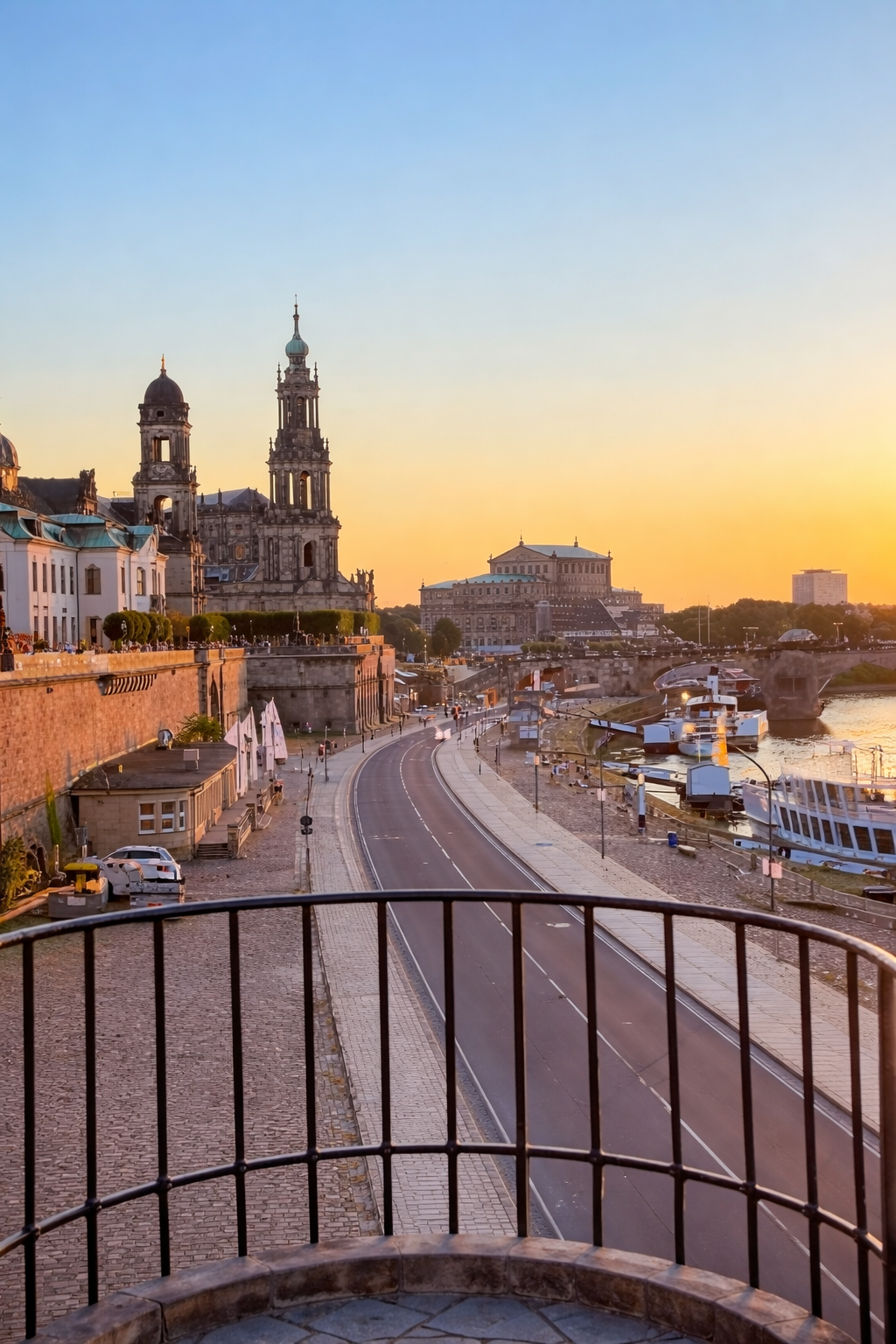
Arrive Dresden mid-morning or at noon. Drop bags, orient toward the Elbe, and resist the urge to immediately fill the afternoon with sights. The first evening belongs to Neustadt — the bar quarter on the north bank of the river, where Dresden’s actual character lives rather than its tourist-facing one. Alaunstraße and Louisenstraße after dark, the Alaunpark if it’s warm enough. The Old Town skyline can wait until morning when the light is better for it.
Arrive · Neustadt · First evening
The full Old Town day. The Zwinger palace complex in the morning — the courtyard is free, the art collections inside are exceptional if you have three hours for them. The Brühlsche Terrasse at golden hour is non-negotiable: one of the finest viewpoints in Central Europe, completely free, and best with the light coming from the west. Walk back across the Augustus Bridge after dark and look at the skyline from the Neustadt side one more time.
Old Town · Zwinger · Golden hour
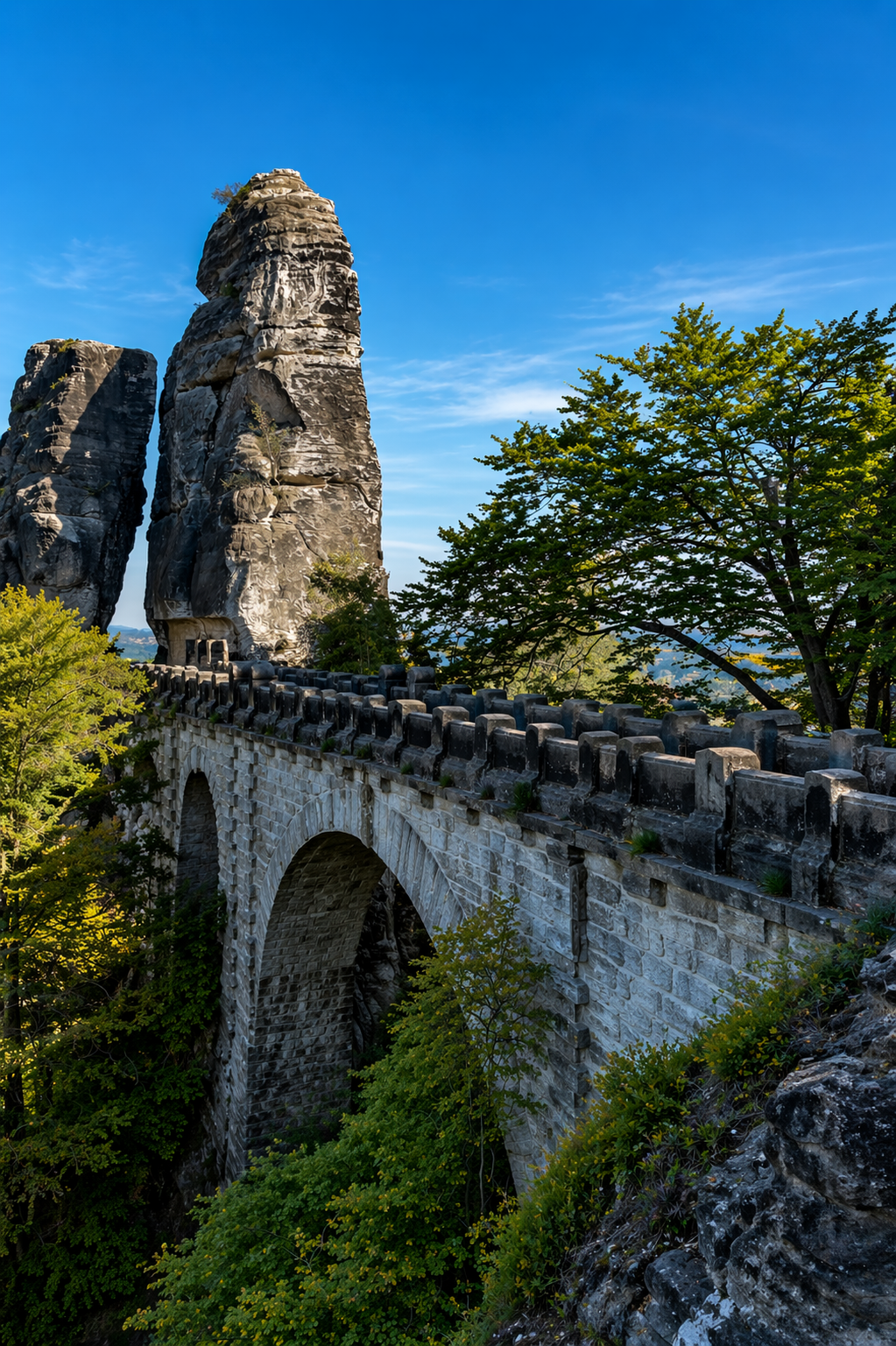
Leave Dresden mid-morning. The Bastei Bridge in Saxon Switzerland National Park is a two-to-three-hour detour — park at the Bastei car park and follow the marked trail to the bridge, 194 metres above the Elbe valley. The sandstone rock formations visible from the bridge are the kind of thing that stops conversation. Back on the road by early afternoon, Prague by late afternoon. The direct motorway takes ninety minutes. The detour takes three and a half hours. Take the detour.
Driving day · Bastei Bridge · Arrive Prague
Bohemia and Slovakia — Days 4–6
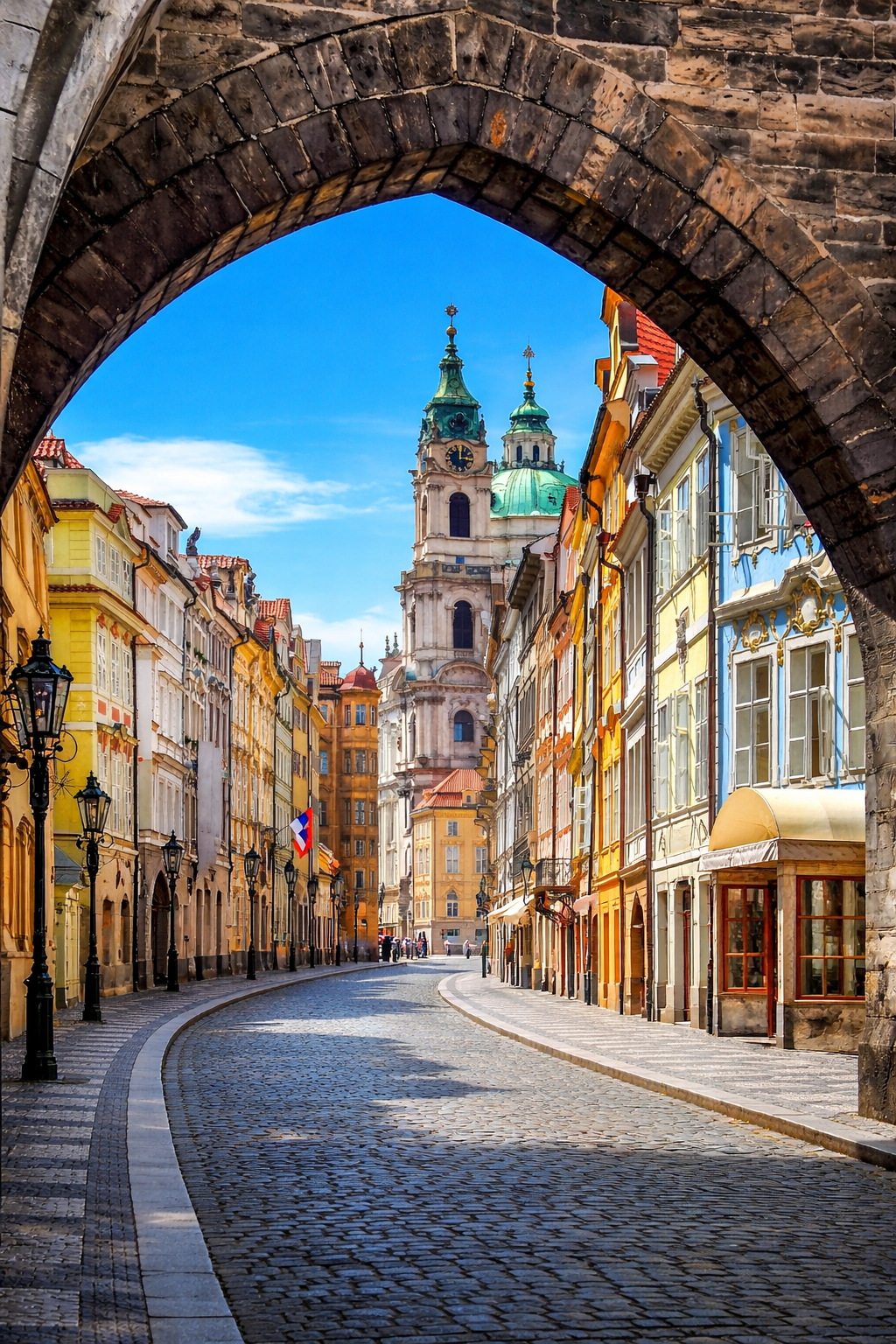
Prague rewards early starts more than almost any other city in Europe. Charles Bridge before 8am is the essential instruction — after that, the crowds arrive and the experience shifts considerably. Morning on the bridge and in Malá Strana, the Jewish Quarter (Josefov) in the mid-morning, Prague Castle and St. Vitus Cathedral in the afternoon. Old Town Square and the Astronomical Clock in the evening, when the day-trippers have thinned and the light is better.
Charles Bridge · Jewish Quarter · Prague Castle
A long but well-shaped day. Morning in Prague — whatever remained from Day 4, or simply a slow breakfast in the Old Town before loading the car. The drive to Bratislava takes around two hours; the city earns two to three hours on foot. Old Town streets, the Michael Gate, the Main Square, the Danube promenade — all of it compact enough to cover comfortably in an afternoon break. Back in the car by 4pm and into Budapest by early evening, the Parliament Building appearing across the Danube before you have parked.
Long driving day · Bratislava stop · Arrive Budapest
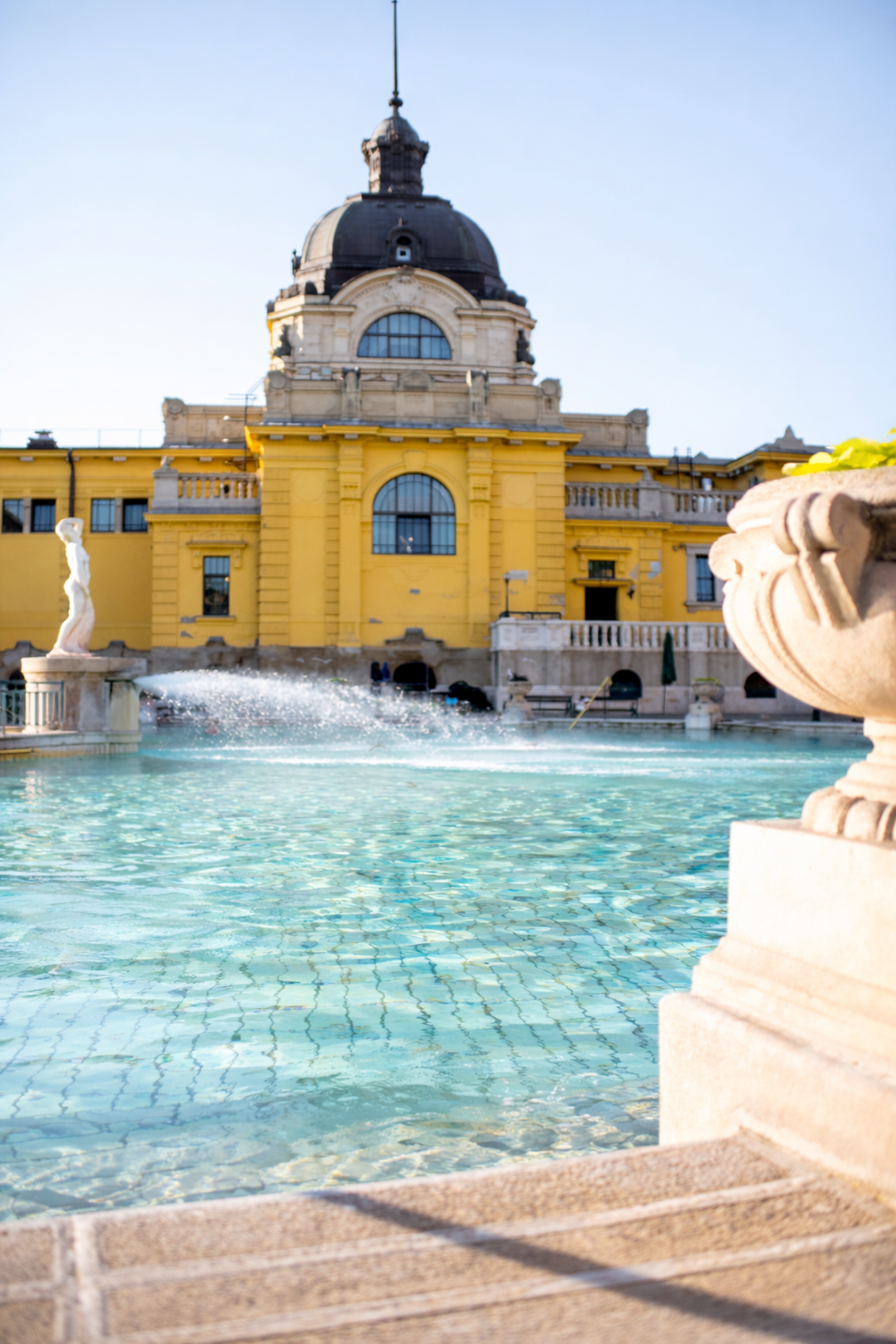
Budapest operates on both sides of the Danube, and a full day should cover both. Morning on the Buda side: Fisherman’s Bastion for the panorama over Pest and the Parliament, Buda Castle and the Castle District streets. Cross the Chain Bridge on foot at midday. Afternoon on the Pest side: the Jewish Quarter, the Great Synagogue, the Central Market Hall. The thermal baths — Széchenyi or Gellért — deserve a dedicated half-day if you can find it, which means either this evening or the morning of Day 7.
Buda Castle · Chain Bridge · Jewish Quarter · Thermal baths
Hungary and Austria — Days 7–9
A final Budapest morning — the Parliament riverfront walk, Széchenyi baths if not yet visited, or a slow coffee on the Pest embankment before the drive. Budapest to Vienna takes around two and a half hours by motorway — the most direct leg on the entire route. Leave in the late afternoon and arrive in Vienna after sunset. The motorway gives you nothing. Then Vienna materialises, lit and composed, and unlike the two capitals that preceded it.
Budapest morning · Driving day · Arrive Vienna
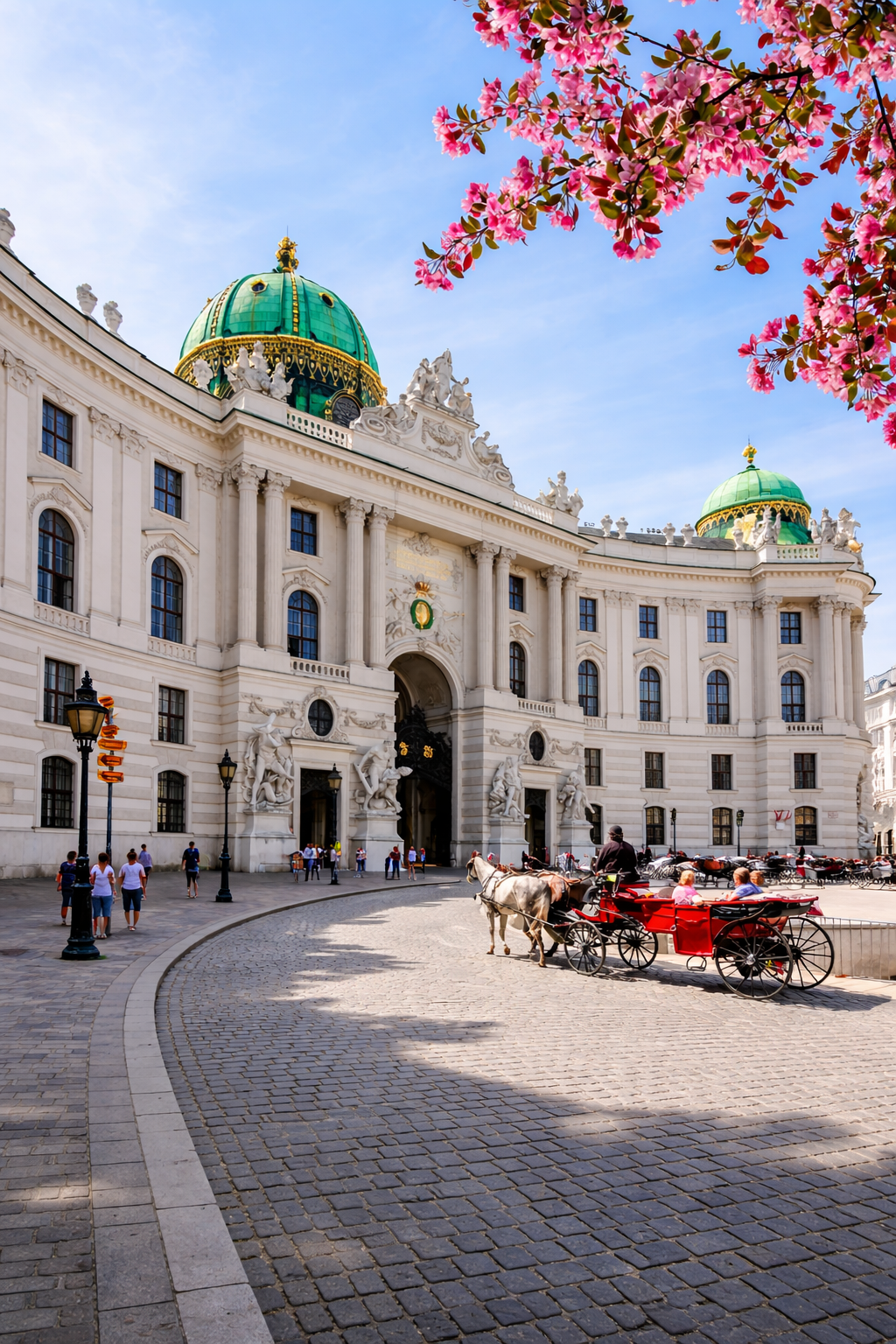
Vienna does not reward rushing, which makes a single full day a precise constraint. Morning: a proper Viennese breakfast at a coffee house, then the Hofburg Palace courtyards and the beginning of the Ringstrasse on foot. Afternoon: Schönbrunn Palace and its gardens — the gardens are free, the palace interior requires a ticket — then back into the centre via the Naschmarkt. Evening: the Ringstrasse lit up, a coffee house for as long as it takes, no agenda.
Hofburg · Schönbrunn · Ringstrasse · Coffee house
A final Vienna half-day — the Kunsthistorisches Museum if you can give it a proper morning, or a return to the Naschmarkt, or one last coffee house until the afternoon. The drive back to Dresden covers around 600km — manageable overnight with two drivers sharing the wheel, arriving in Dresden by early morning in time for a flight home. Alternatively, a night in Prague at the halfway point is the better option for anyone who finds overnight drives unpleasant.
Vienna morning · Long drive · Journey home
03 — What Worked, and What We Would Change
Nine days is the kind of duration that sounds comfortable in planning and reveals itself as tight once you are actually in it — not unpleasantly tight, more like a well-made jacket: fitted, functional, and occasionally reminding you of its shape. These are the honest reflections from the other side of it.
The decisions that earned their place
Saxon Switzerland was the single best decision of the trip. The Bastei detour cost roughly ninety extra minutes on what would otherwise have been a straightforward motorway day, and it added something genuinely irreplaceable — the kind of landscape that stops conversation when you first see it. Everyone in the car said some version of “this was not what I expected.” That reaction does not get old even in retrospect. If you do one thing on the Dresden-to-Prague stretch that is not motorway, make it this.
Bratislava surprised us, as it tends to surprise people who approach it without expectations. Two hours in a pleasant old town is a low bar, and the city clears it comfortably. More importantly, it transformed what would have been a four-hour motorway slog into a day with a middle — which changed how the whole driving day felt. In retrospect, it was not a detour at all. It was the right structure for that particular leg.
Budapest as a base
Staying on the Pest side near the Budapest riverfront gave us the best possible base for two days. The morning view of the Chain Bridge from the embankment — Buda Castle on the hill behind it, the river below — is one of those images that does not require a camera to remember. Additionally, everything was walkable: the Jewish Quarter, the Great Synagogue, the Central Market Hall, the ruin bars in the evenings. Nothing required a taxi.
What we would do differently
Budapest needs a third night. Two nights covers it, but only just — and “only just” is not what a city that good deserves. The thermal baths on their own warrant a half-day, and fitting them into a two-day itinerary alongside both sides of the Danube requires compressions that feel avoidable with one more evening. If the schedule has any flexibility, the extra night goes to Budapest without hesitation.
The overnight drive back from Vienna to Dresden worked — two drivers sharing the wheel, arriving around 5am — but it is a long way to cover in one stretch. A night in Prague at the midpoint is the genuinely better option: cheaper than driving through the night on caffeine, and Prague in the morning is always worth the addition. On a second version of this trip, the overnight leg becomes two days rather than one.
04 — Planning Notes
When to go
April through June and September through October are the right windows for this central Europe road trip.
July and August are possible but require more planning. Prague in midsummer demands earlier starts and more tolerance for crowds on Charles Bridge and in Old Town Square — neither experience is enjoyable at noon in July. Budapest absorbs summer better: the city is large enough that tourist density spreads more thinly. Vienna in summer is entirely manageable, though more expensive.
Booking accommodation in advance
For a group road trip of this shape, booking accommodation before departure is a requirement rather than a precaution. Good central apartments in Prague and Budapest fill early in shoulder and peak season, and prices rise steeply as availability drops. For April through May, four to six weeks in advance is usually sufficient. For summer, allow two to three months.
Why location matters more on this route
Staying central matters more on this trip than on most. Prague without Old Town walking distance is a categorically different city — you spend time and decision-energy on transport rather than simply leaving the apartment and finding yourself somewhere interesting. Similarly, in Budapest, the Pest side near the riverfront is the right base: both sides of the Danube are accessible on foot, and the neighbourhood provides things to do in the evenings without planning them in advance.
Central accommodation costs more per night and recovers it in other ways: shorter walks, no taxis, easier early starts, and the specific pleasure of leaving your building and already being somewhere worth being. On a nine-day itinerary this compressed, that calculation comes out decisively in favour of paying for location.
Car rental and motorway vignettes
Confirm cross-border permissions before booking — most major rental companies allow travel through Germany, Czech Republic, Slovakia, Hungary, and Austria, but this needs to be stated explicitly in the booking rather than assumed. A small additional fee sometimes applies for multiple countries; it is worth paying rather than discovering mid-trip that the rental agreement excludes a country you are already in.
Austria, Czech Republic, and Hungary all require motorway vignettes. Austria’s 10-day digital sticker costs around €10 and can be purchased online before departure or at petrol stations near the border. Czech Republic and Hungary operate similar systems at comparable prices. None of it is complicated — it simply rewards knowing in advance rather than learning about it from a roadside fine.
Currencies along the route
Three currencies cover the full route: Euro for Germany, Slovakia, and Austria; Czech Koruna for Prague; Hungarian Forint for Budapest. The Forint is worth understanding specifically: Budapest is the cheapest city on the trip by a meaningful margin, and the gap between card rates and exchange bureau rates is large enough to matter. Avoid changing money at airports or hotel desks — the rates are consistently poor. A city-centre exchange office or a local ATM withdrawal gives considerably better value.
05 — How the Costs Break Down
One of the best things about this route as a group trip is what four people do to a per-day cost. The car rental, fuel, and accommodation — the three largest line items — divided four ways produces a daily spend that makes Central Europe genuinely affordable rather than just comparatively affordable.
Transport costs
A nine-day economy car rental, booked four to six weeks in advance, typically costs €300–450 in total depending on provider and season. Split four ways, that is €75–110 per person for the entire trip’s transport — considerably less than nine days of train tickets across five countries. Fuel across the full 1,000km loop adds roughly €80–100 in total at current European petrol prices, divided equally between passengers.
Motorway vignettes add a known, fixed cost: approximately €40 total for Austria, Czech Republic, and Hungary combined. No surprises, no negotiation required.
Accommodation costs by city
A well-located central apartment for four people runs differently in each city on this route. Dresden and Prague sit at similar mid-range levels — expect €120–180 per night for a good central apartment, or €30–45 per person. Budapest is noticeably cheaper: the same quality of central accommodation costs €80–130 per night, or €20–32 per person. Vienna is the most expensive city on the route — central apartments for four run €160–220 per night, or €40–55 per person.
Food and drink — the honest picture
Budapest is where the cost difference becomes most visible day-to-day. A full dinner for two with wine at a decent Budapest restaurant costs €25–40 — roughly half what the equivalent meal costs in Vienna. Prague sits in the middle: tourist-area restaurants price accordingly, but the neighbourhoods away from Old Town Square remain genuinely reasonable. Dresden is affordable by German standards, which means similar to Prague or slightly lower.
In Vienna, expect to pay €15–25 per person for a sit-down lunch and €25–40 per person for dinner with drinks. The coffee houses — genuinely among the best in the world — charge €4–7 for a coffee and a slice of Sachertorte, which is one of the better value experiences the city offers.
Entrance fees worth knowing
Many of the strongest moments on this route cost nothing: the Bastei Bridge, the Brühlsche Terrasse, Charles Bridge, the Budapest riverfront, the Ringstrasse on foot. Where entrance fees apply — Prague Castle complex (around €15–20), the Zwinger art collections (€14), Vienna’s Kunsthistorisches Museum (€21) — budget them as individual line items rather than a cumulative daily allowance. Two or three paid sites per city is a reasonable expectation.
| Car rental (total) | €300–450 for 9 days, economy car. Split four ways: €75–110 per person for all transport. |
| Fuel (total) | €80–100 for the full 1,000km loop. Divided four ways across the trip. |
| Motorway vignettes | ~€40 total — Austria (~€10), Czech Republic (~€15), Hungary (~€15). |
| Accommodation per night | Dresden / Prague: €30–45pp. Budapest: €20–32pp. Vienna: €40–55pp. |
| Daily food budget | Budapest: €20–30pp. Prague / Dresden: €25–40pp. Vienna: €35–55pp. |
| Entrance fees | €15–21 per major site. Budget 2–3 paid sites per city. |
A group of four splitting a rented car across nine days often pays less per person for transport and accommodation combined than a solo traveller doing the same route by train and staying in budget hotels. The maths of group road trips, done this way, reliably surprises people when they run the numbers.
06 — The Full Series
Each city and driving day in this itinerary has a dedicated post with the detail this overview compresses. The individual guides go deeper on what to see, where to stay, how to manage crowds, and what each place is actually like across two days rather than what it looks like from the outside.
The Individual City Guides
The Old Town and Neustadt across two days — what each side of the Elbe actually offers, why both are necessary, and what makes Dresden worth the stop rather than the transit.
The Bastei Bridge, the sandstone formations, how to plan the detour, and why the ninety extra minutes is the best decision you will make on this road trip.
Two visits to Prague across different years — honest about what the city is like now, why timing determines everything, and which parts hold up regardless of crowds.
Both sides of the Danube, the thermal baths, the Jewish Quarter, the ruin bars — and why most people who do two nights immediately wish they had booked three.
The Hofburg, Schönbrunn, the Ringstrasse, the coffee houses — how to use two days in Vienna without spending either one on the wrong things.
Frequently Asked
Is 9 days enough for a Central Europe road trip covering Dresden, Prague, Budapest, and Vienna?
How much does a Central Europe road trip like this cost per person?
What is the best starting city for a Central Europe road trip?
Do you need a car for this Central Europe itinerary?
What documents or permits are needed for a multi-country road trip in Central Europe?
What time of year is best for this Central Europe road trip?
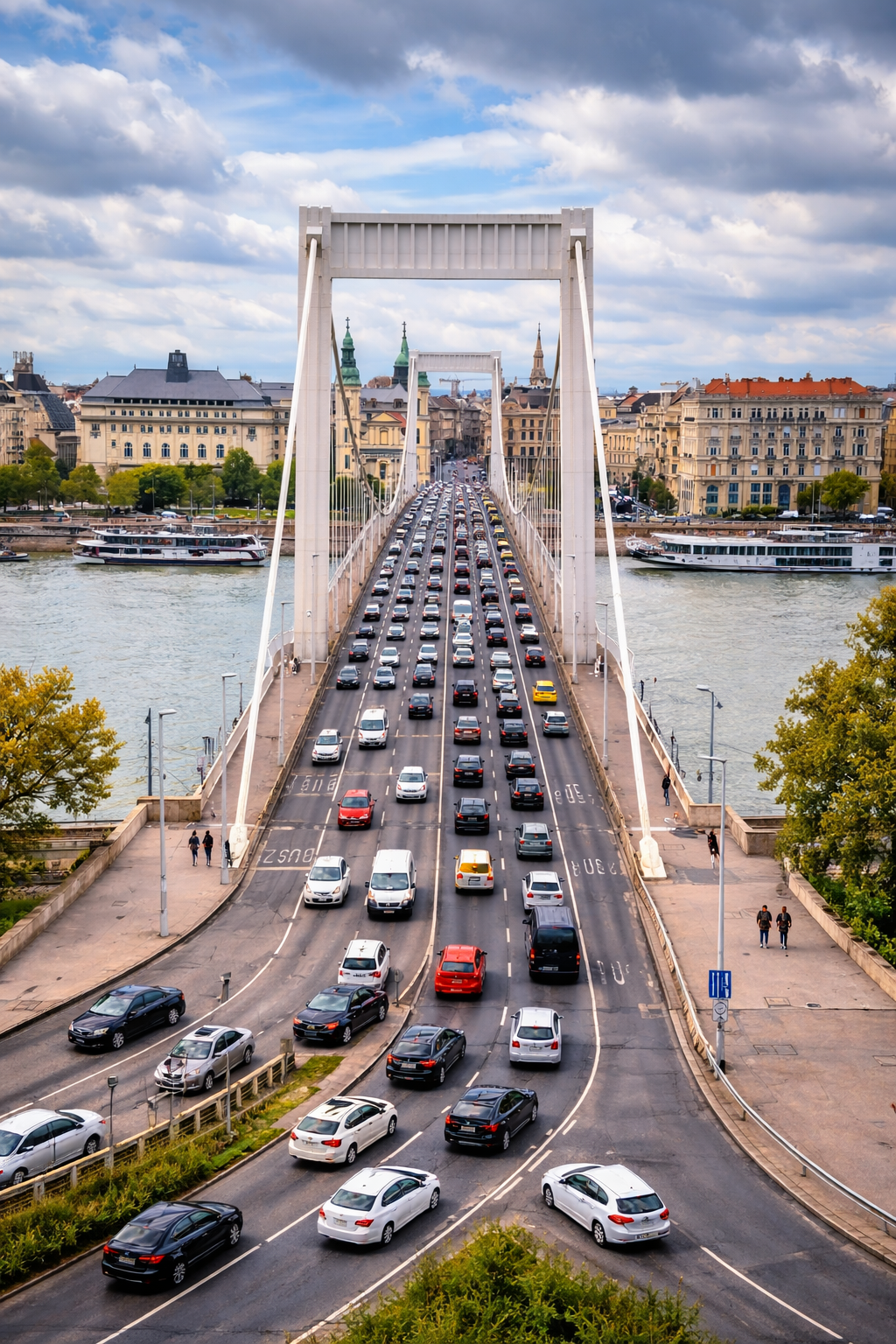
Nine days. Five cities. One car that left Dresden before the city had woken up and returned in the early hours of a Thursday morning, a thousand kilometres later.
The route works because the geography works — and because the spaces between the cities turned out to be worth remembering just as much as the cities themselves.