
Bali in Spring: Why Everyone Is Going Right Now
Green rice terraces. Fewer crowds than peak season. Prices before the summer surge hits. Spring is the Bali window most people miss — here’s why you shouldn’t.
Everyone knows Bali. It has been written about so comprehensively, photographed so relentlessly, and recommended so confidently that it risks sounding like a cliché before you’ve even booked the flight.
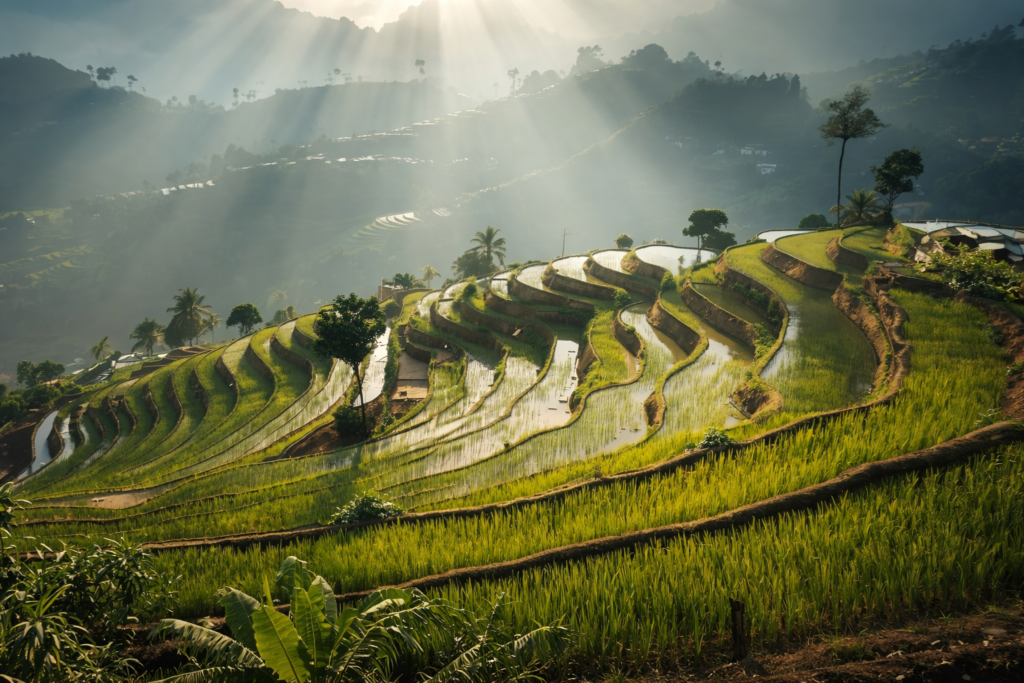
It is not. Bali in spring — specifically the March to May window — is the island at its most genuinely beautiful and most manageable. The rice terraces are deep, luminous green after the rains. The morning light is extraordinary. The summer crowds are still months away. And the prices haven’t hit the surge that turns July and August into a different island entirely. If you’re weighing up spring destinations, Bali consistently outperforms on value, scenery, and ease of travel.
Bali in spring (March–May) offers the best combination of weather, crowd levels, and price of any season — making it the optimal window for first-time and returning visitors alike.
01 — Why Bali in Spring Is Worth Timing Right
Bali attracts visitors year-round, but the distribution is highly uneven. July and August are peak season — full hotels, premium prices, and the most popular spots functioning more like queues than destinations. November through February is the wet season, with reliable afternoon rain and higher humidity.
Spring sits between these two extremes in a way that rewards the traveler who pays attention to timing. April is widely regarded as Bali’s balance month — rain tapers off, humidity drops, and conditions improve across the island without peak-season crowds or prices. Outdoor activities become easier, transport is smoother, and you get more consistency day to day.
Bali’s Rice Terraces in Spring: What to Expect
The rice terraces — Bali’s most photographed landscape — are particularly spectacular in spring. The Tegallalang Rice Terraces are at their most vibrant after the wet season, when steep-valley paddy tiers are full of growing rice and dotted with palm trees — the jungle at its most flourishing.
Better weather than winter, fewer crowds than summer, prices that haven’t peaked, rice terraces that are deep green, and festivals that most visitors never see.
02 — March, April & May: What to Actually Expect
The three spring months offer meaningfully different experiences. Here is an honest breakdown of each.
March & April: Value, Green, and the Sweet Spot
March is Bali’s transition month — rain eases off compared to January and February, crowds stay light, and prices are still reasonable. The island is extraordinarily green from the wet season rains, and waterfalls are at their most powerful. The cultural highlight is Nyepi on March 19 — the Balinese Day of Silence when the entire island shuts down for 24 hours.
Best for: Travelers who want value, greenery, and cultural depth. Not ideal if you need reliable sunshine every day.
April is worth it because nothing is working against you. The weather isn’t sabotaging plans, prices haven’t gone full peak-season, and Bali doesn’t feel overwhelmed yet. The Bali Spirit Festival runs April 22–26 in Ubud — one of the world’s most inspiring yoga, music, and wellness festivals.
Best for: Almost everyone. First-timers, couples, solo travelers, outdoor enthusiasts. If you can only choose one spring month, choose April.
May: Dry Season, Building Crowds
By May, conditions are reliably dry with minimal chance of disruption. A little cooler and drier than April, with similar prices — though the island starts filling up toward the end of the month. The Ubud Food Festival — Indonesia’s leading food event — typically runs in May or June.
Best for: Travelers prioritizing reliable sunshine and outdoor activities. Book slightly earlier as prices creep up through the month.
03 — Key Bali Events in Spring 2026
Spring 2026 is an exceptionally good season for cultural experiences. Three major events fall within the March–May window, each offering something completely different.
The entire island shuts down for 24 hours. No flights, no traffic, no lights, no noise. The night before brings the Ogoh-Ogoh parade — massive demon effigies carried through towns before being destroyed. One of the most extraordinary cultural experiences in Southeast Asia.
Ubud’s world-famous yoga, music, and wellness festival. Five days of workshops, healing ceremonies, world music, and community markets. Draws participants from over 60 countries. Book Ubud accommodation months in advance if your dates overlap. Full details at balispirit.com.
Indonesia’s premier food event — tastings, chef demonstrations, and market stalls showcasing the country’s extraordinary culinary diversity. The best introduction to Indonesian food culture available.
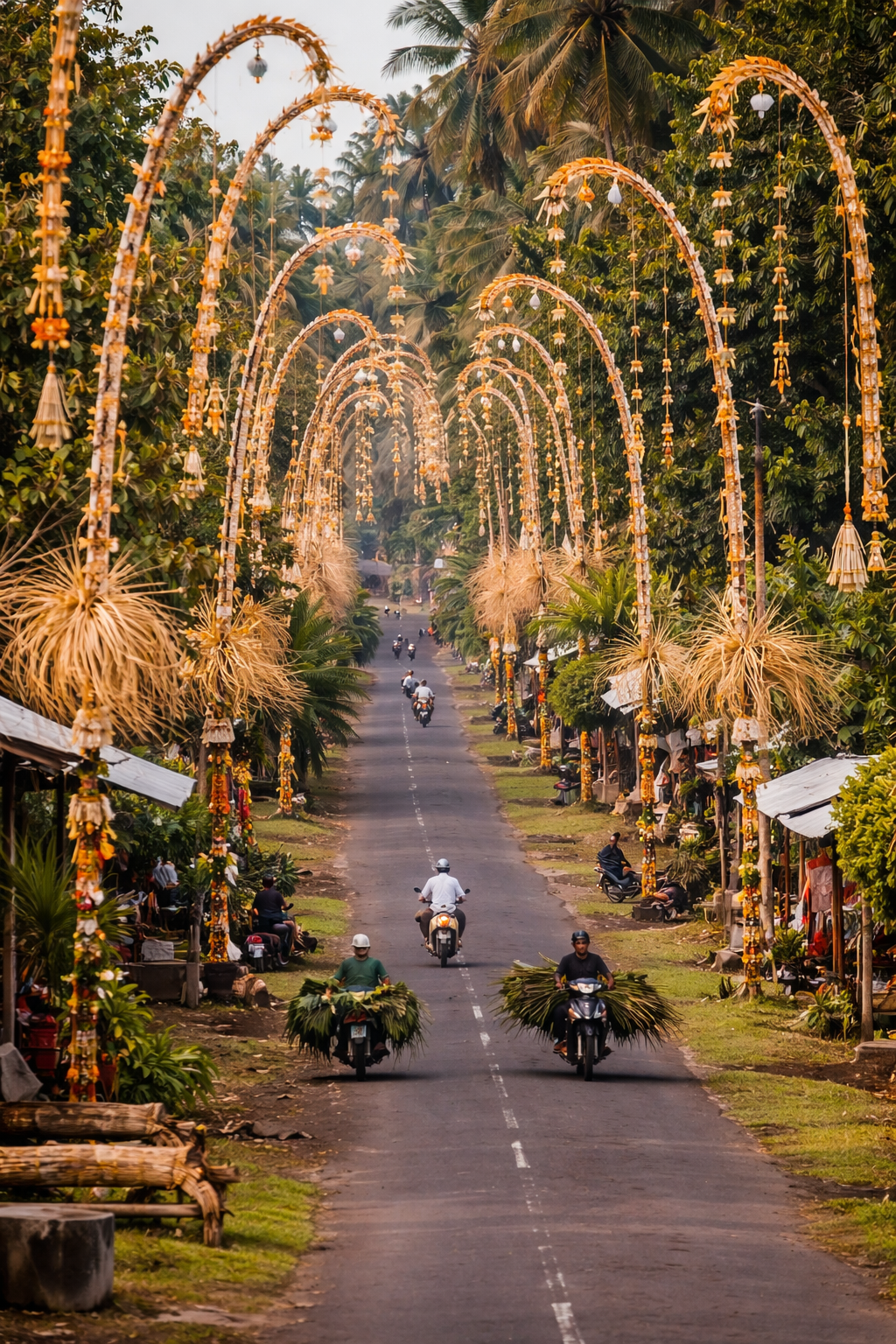
Bali’s most important recurring religious festival. Every village erects tall bamboo penjor poles decorated with offerings. The island transforms visually — a remarkable time to be anywhere outside the tourist areas.
During Nyepi (March 19, 2026), all transportation and international flights are suspended for 24 hours. Tourists must remain in their accommodation. Hotels make special arrangements — most organise private dinners and activities inside the property. Do not schedule a flight in or out of Bali on March 19.
04 — Where Should You Stay in Bali?
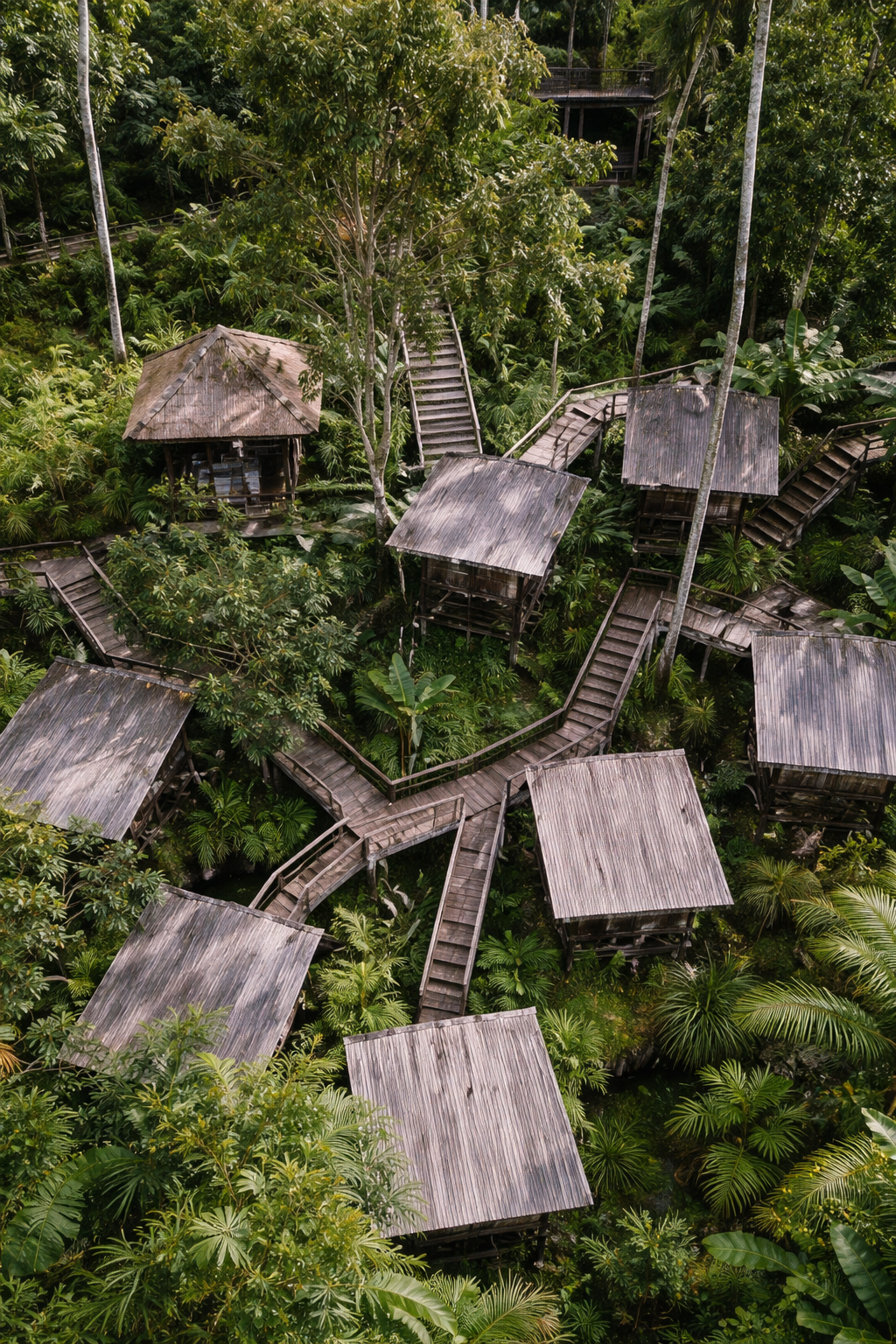
Bali is far larger than it looks on a map and each area has a completely distinct personality. The right base depends entirely on what kind of trip you want.
The South: Coast, Surf, and Social
Inland and the Islands
05 — What to Do in Bali in Spring
Bali’s appeal comes from the accumulation of experiences rather than any single landmark. Here are the ones worth prioritising in the spring window.
Nature & Landscape
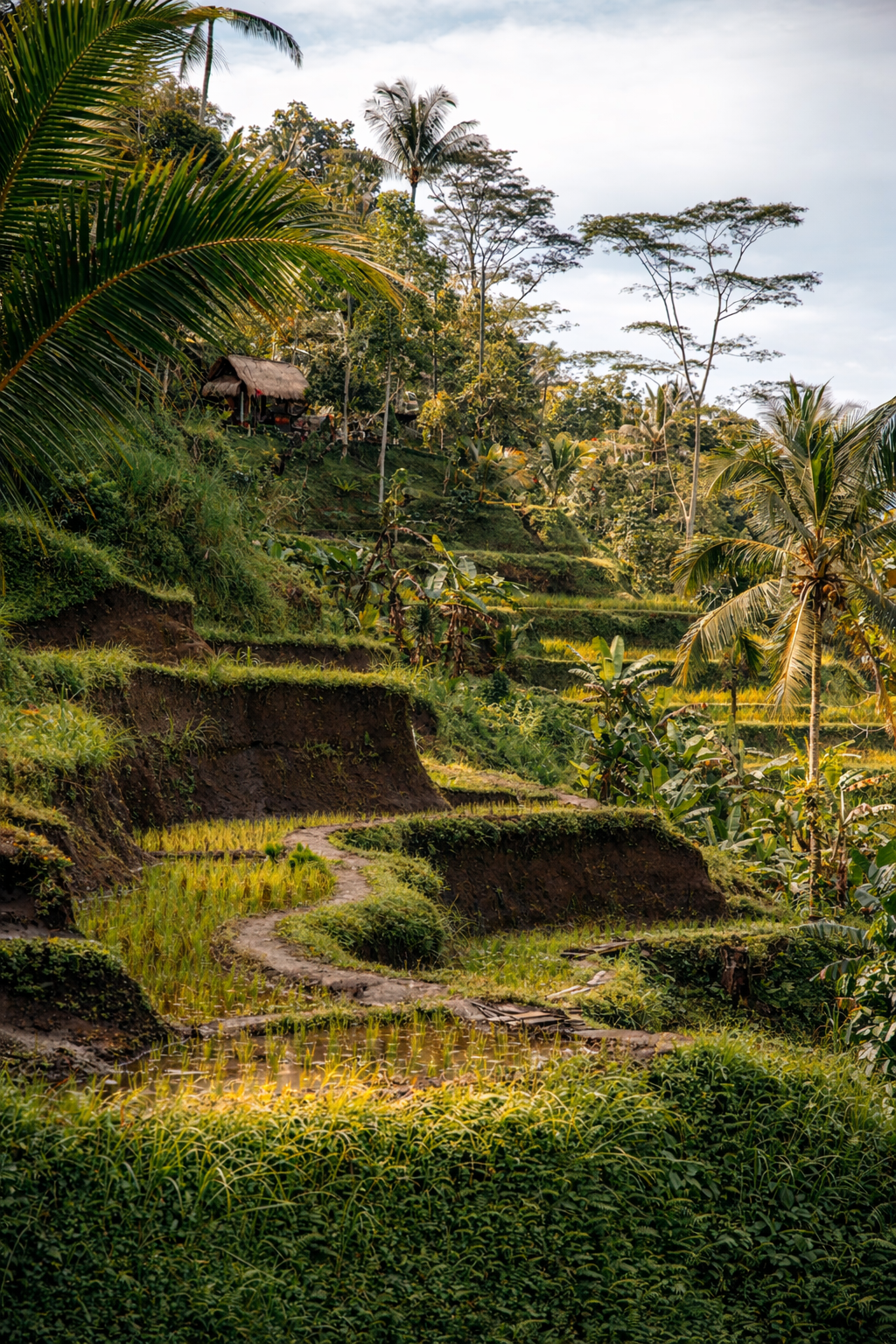
- Tegallalang Rice Terraces at dawn: Walk the terraces before 8am — the light is extraordinary and crowds minimal. Spring green is the most photogenic the terraces get all year
- Mount Batur sunrise trek: A 2-hour hike starting at 2am up an active volcano — arriving at the summit for sunrise over the caldera lake is one of the most memorable experiences in Bali
- Tibumana Waterfall, Ubud: March and April are the best months to see Bali’s waterfalls at their most powerful — charged with wet-season runoff
- Jatiluwih Rice Terraces: A UNESCO World Heritage site — larger and wilder than Tegallalang, two hours from Ubud but extraordinary
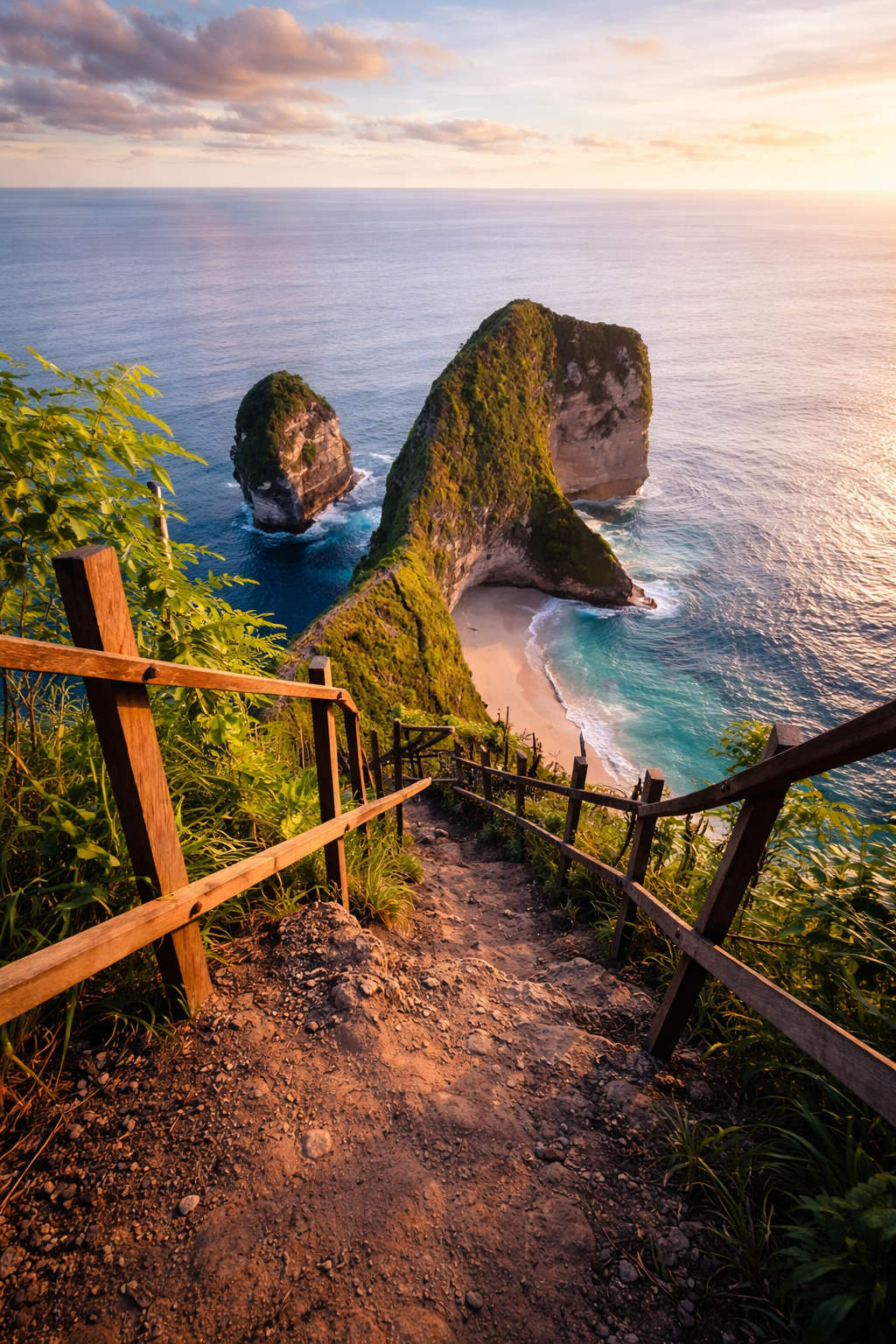
- Nusa Penida — Kelingking Beach: The island’s signature view — a t-rex shaped cliff over a turquoise bay, accessible only on foot down a steep unofficial path
Culture & Temples
- Tirta Empul Temple: A sacred spring water temple in Tampaksiring — one of the most atmospheric and spiritually significant places on the island
- Tanah Lot at sunset: A sea temple on a rock formation in the ocean — genuinely beautiful at dusk when the silhouette appears against the sky
- Uluwatu Temple + Kecak fire dance: The combination of the clifftop temple, ocean views, and the Kecak fire dance at sunset is one of Bali’s most complete cultural experiences
- Ogoh-Ogoh parade (evening of March 18, 2026): Giant demon effigies paraded through every village the night before Nyepi. Free to watch — one of the most visually spectacular cultural events in Bali
Wellness, Markets & Slow Days
- Balinese cooking class, Ubud: Visit a local market in the morning, cook five dishes by noon, eat everything you made — consistently the most-loved day of any Bali trip
- Traditional Balinese massage: In spring, the wellness retreats in Ubud are at their quietest and most bookable
- Bali Spirit Festival (April 22–26): Five days of yoga, dance, world music, healing workshops, and community — one of the most genuinely transformative festivals in Asia
06 — How to Get to Bali and What It Costs
Getting There & Entry Requirements
Airport: Ngurah Rai International Airport (DPS), Denpasar — well connected from most major Asian hubs and direct from many European and Australian cities. Tourist Levy: Pre-pay IDR 150,000 (approximately €9) via the official Love Bali portal before arrival. Visa: Most passport holders get a free visa on arrival (30 days, extendable). Nyepi: Do not book flights on March 19 — the airport closes for 24 hours.
Costs & Budget
Accommodation: Budget from €30/night; mid-range €50–150/night. Transport: Grab rides €1–5; scooter rental from €5/day; private driver full day €40–60. Food: Street food and warungs €2–5; mid-range restaurant €10–20; beach club lunch with drinks €30–60. Activities: Cooking class €30–45; Mount Batur sunrise trek €35–60; Nusa Penida day trip €40–70 including boat.
Getting Around the Island
- Scooter: The default transport — €5–7/day rental. Essential for Uluwatu and Canggu. Not recommended without motorbike experience
- Grab / GoJek: Ride-hailing apps work well in all major areas — cheaper and more reliable than street taxis
- Private driver: Best value for day trips from Ubud to multiple temples or waterfalls — negotiate the day rate, around €40–60
- Traffic warning: Bali’s traffic is genuinely challenging in Canggu and on the road between Seminyak and Ubud — build extra time into any journey
07 — Sample 7-Day Spring Bali Itinerary
| Day | Base | Focus |
|---|---|---|
| Day 1 | Seminyak or Canggu | Arrive, recover, sunset at beach club, gentle first evening |
| Day 2 | Canggu / Seminyak | Surf lesson or rice paddy walk, Tanah Lot at sunset |
| Day 3 | Move to Ubud | Tegallalang Rice Terraces at dawn, Tirta Empul, cooking class afternoon |
| Day 4 | Ubud | Mount Batur sunrise trek (depart 2am), rest afternoon, Ubud market evening |
| Day 5 | Move to Uluwatu | Jatiluwih Rice Terraces en route, arrive Uluwatu, beach club sunset |
| Day 6 | Uluwatu or Nusa Penida | Day trip to Nusa Penida (Kelingking, Angel’s Billabong) or Uluwatu Temple + Kecak dance |
| Day 7 | Flexible | Final beach morning, Seminyak shopping, evening departure or one more night |
Build the Bali Spirit Festival into days 3–5 in Ubud. Accommodation in Ubud fills up significantly during the festival — book 2–3 months in advance.
Costs & Areas
Practicalities
Bali in spring is a different island — quieter than you expected, greener than the photographs suggest, and cheaper than the peak season version everyone talks about.
Go before the crowds arrive and you will understand immediately why people keep coming back.