
Budapest Thermal Baths: Which One to Pick in 2026 (Now That Gellért Is Closed)
A ranked, honest comparison of Széchenyi, Rudas, Lukács and the quieter options — with 2026 prices, the best times to go, and what Gellért’s closure actually changes.
How to Choose a Budapest Thermal Bath in 2026
Budapest thermal baths have had a stranger year than most guides admit. The bath on every Budapest Pinterest board — the Art Nouveau wave pool with the mosaic columns — is Gellért, and it has been closed since October 1, 2025. It will not reopen until at least 2028. That single fact has quietly rewritten every budapest thermal baths guide written before late 2025, which is a problem, because most of what still ranks on Google was written before then too.
So here is the honest version. If you can only visit one, go to Széchenyi on a weekday morning. For the best atmosphere in the city, go to Rudas on a Friday night. If you want the cheapest and most local experience, Lukács beats both. And if you are visiting in winter, as plenty of people searching this are, the cold-air, warm-water contrast at the outdoor pools is the actual reason to come — skipping it would be the real mistake, not picking the “wrong” bath.
01 — Gellért and Király: What’s Closed
Gellért Baths closed on October 1, 2025 for a structural renovation that the operator expects to finish sometime in 2028, though no firm reopening date has been confirmed. The closure covers the entire complex — the indoor pools, the outdoor wave pool, the sauna world, and the Art Nouveau hall that made Gellért the most photographed bath in the city. There is no partial access and no way around it. Consequently, every “best of” list that still ranks Gellért first is working from outdated information.
Király Baths, the smaller 16th-century Ottoman bath on the Buda side, is also closed, with no announced reopening date. Between the two closures, Budapest has gone from six major baths to four, which is exactly why this comparison matters more in 2026 than it did two years ago.

02 — The Short Answer: The Comparison Table
If you read nothing else, read this: these four Budapest thermal baths suit different kinds of visitors, and the differences are bigger than most guides admit.
| Széchenyi | Best for first-timers and photos. Weekday price from 13,200 HUF with a locker. Outdoor pools open daily. Busiest with tour groups from around 11am. |
| Rudas | Best for atmosphere and history. All-zone ticket from roughly 12,000 HUF on weekdays, 15,000 at weekends. Single-gender days in the historic section; Friday and Saturday night bathing from 22:00–03:00. |
| Lukács | Best value and the most local. From 7,000 HUF on weekdays, 8,000 Friday–Sunday. Open daily 7am–7pm, until 10pm on Tuesdays. |
| Veli Bej | The quiet alternative. A capped 80 visitors at a time, non-chlorinated water, 14+ only. Roughly 5,700–7,200 HUF depending on the session. |
03 — Budapest Thermal Baths, Ranked
The big three
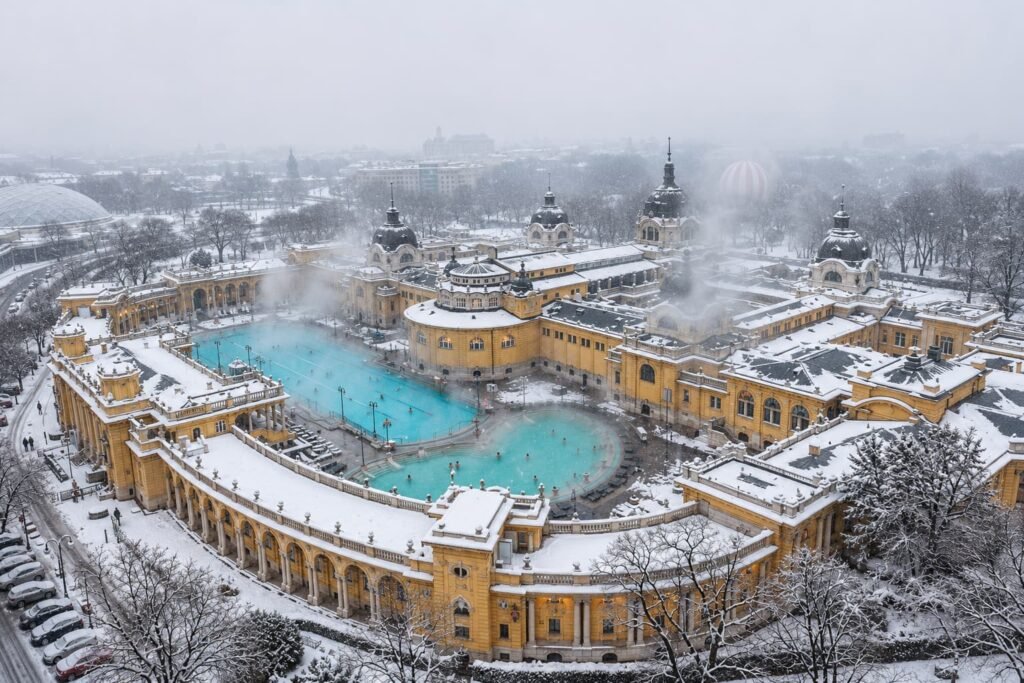
Széchenyi is the neo-Baroque complex in City Park with the yellow facade and the outdoor chess players, and it is now carrying more of Budapest’s bath tourism than any single complex ever has. It has 18 pools in total, three of them outdoors, and it is open daily from early morning until around 8 or 10pm depending on the day. The catch is crowding: tour groups tend to arrive from around 11am, and by early afternoon on a weekend the outdoor pools can feel closer to a public swimming pool than a spa. Verdict: go on a weekday before 10am, or after the groups clear out in the late afternoon.
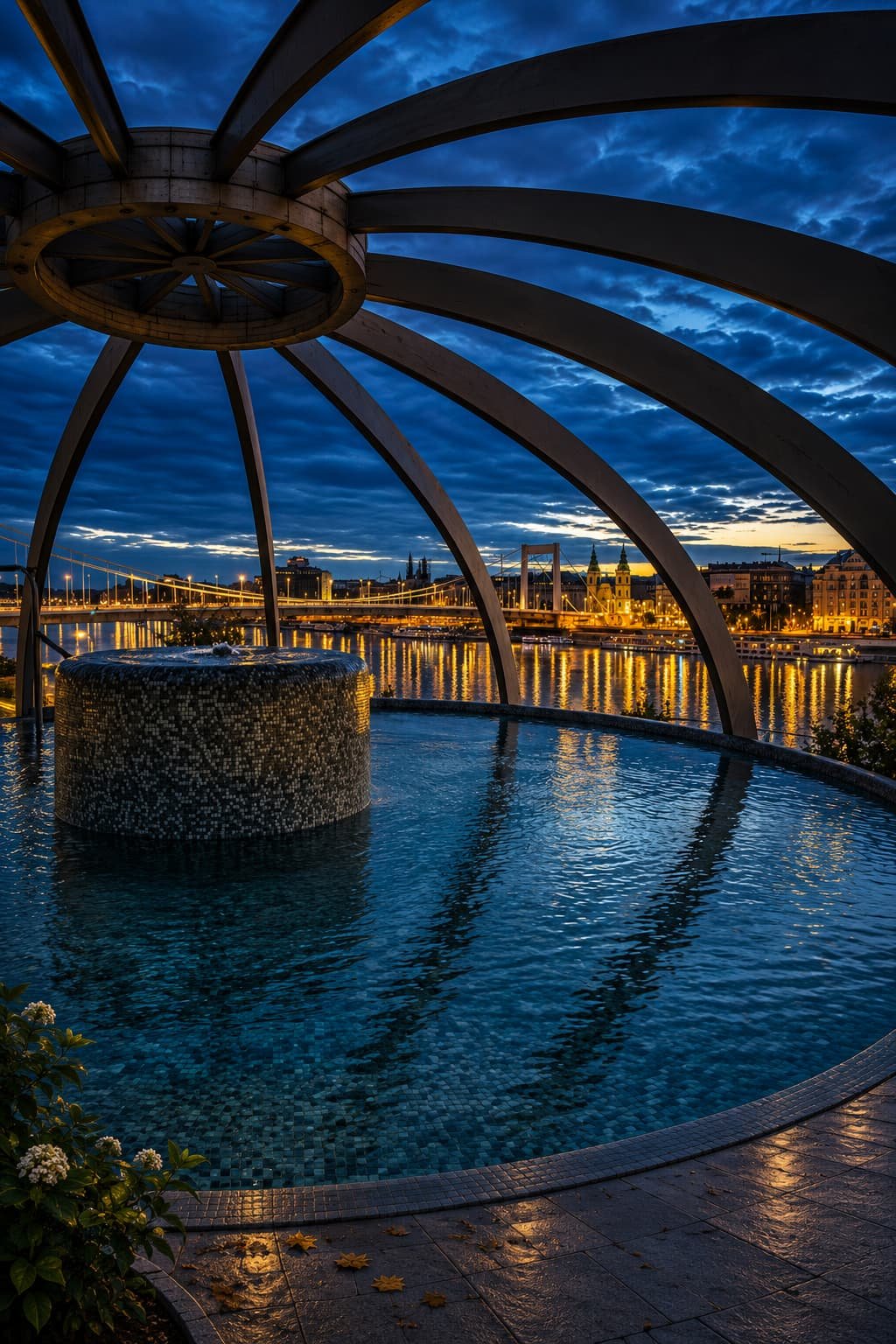
Rudas sits at the foot of Gellért Hill and holds a roughly 460-year-old domed pool hall from the Ottoman period, alongside a modern rooftop pool with Danube views. Since it is also stepping into some of the role Gellért used to play, Rudas has become the closest thing Budapest has to a must-see bath right now. The historic section keeps single-gender bathing days — more on that below — and the weekend night sessions, Friday and Saturday from 10pm to 3am, are the most atmospheric few hours in any Budapest bath. Verdict: go on a Friday night if you want the atmosphere, or a weekday morning if you want the history without a crowd.
Lukács — The Best-Value Budapest Bath
Lukács, on the Buda side near Margaret Bridge, is the cheapest of the three major baths and noticeably less staged. There’s no grand facade and no Instagram queue — just a working medicinal bath with a loyal local crowd, a strong sauna complex, and pools that run cooler to hotter across the complex. It’s open every day from 7am to 7pm, and until 10pm on Tuesdays. Verdict: go here if the point of the trip is the water, not the photo.
The quiet alternatives
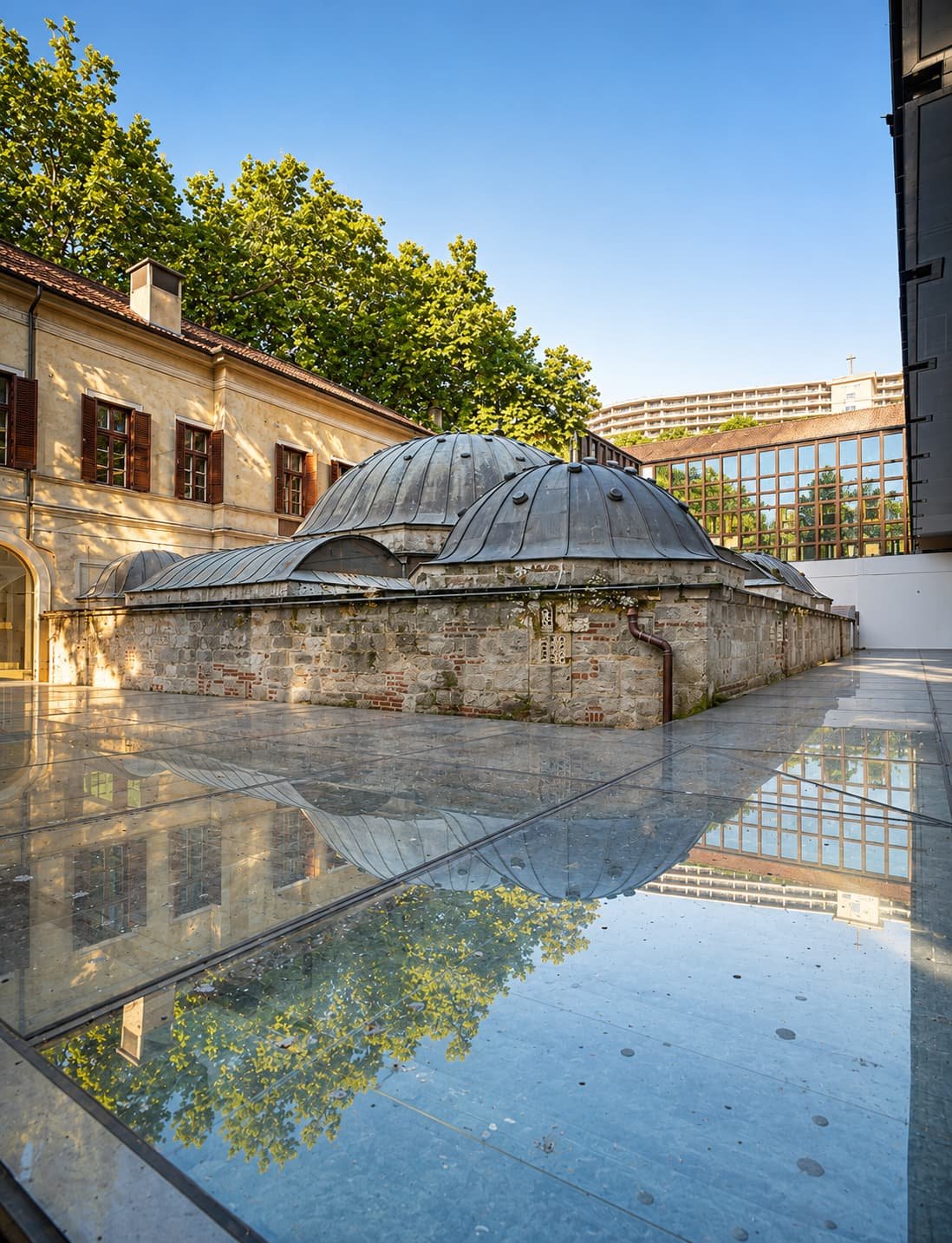
With Gellért and Király both closed, Veli Bej is now one of only two places in Budapest where you can soak in a genuine 16th-century Ottoman domed pool — Rudas is the other. Veli Bej caps attendance at 80 people at once, uses non-chlorinated flow-through water, and sells tickets only on site, which keeps it calmer than anywhere else on this list. It’s a strict 14-plus venue with three-hour sessions, and it closes for its own annual maintenance in August, so check the dates before you build a trip around it.
Dandár, in District IX, is a plain, working-class bath with a thermal pool, a small sauna, and an outdoor pool, at roughly a third of Széchenyi’s price. There’s no locker-versus-cabin choice to make, no tourist crowd to navigate, and nothing built for a photo. If your priority is a real soak on a real budget, this is where to go instead of fighting for space at the big three.
Palatinus, the outdoor lido on Margaret Island, is a summer-only complex with wave pools and slides, and it closes for swimming over winter. It’s worth knowing about for a warm-weather trip, but it has no place in a winter itinerary — skip it between November and April.
Rudas Gender-Day Rules
Rudas is the only Budapest bath that still keeps single-gender bathing days in its historic Turkish section. As of late 2025: Tuesday is women-only all day, Wednesday is men-only all day, and Monday, Thursday and Friday run single-gender from 6am to 11am before switching to mixed bathing. Weekends are mixed all day, and the whole bath goes fully co-ed from around mid-December through January 6 to handle the festive crowds. Rules change, so confirm on the official Rudas website before you plan around a specific day.
04 — Which Bath for Which Visitor
The right bath depends less on who you’ve heard of and more on who you’re traveling with and how much calm you actually want.
Széchenyi, for the scale and the outdoor pools, on a weekday morning before the tour groups arrive.
Rudas on a Friday night, for the rooftop view and the fact that the crowd thins out after dark.
Széchenyi on a weekend afternoon — it’s the one bath built to absorb a group without feeling empty.
Veli Bej or Lukács on a weekday. Neither is built for a crowd, and neither tries to be.
Széchenyi at opening time for the light, or Rudas for the dome and the rooftop skyline.
05 — Budapest Thermal Bath Prices and Tickets for 2026
Prices at Budapest thermal baths rose by roughly 5 percent from January 2026, in line with inflation, and they typically adjust again each year. The figures below are current as of late 2026; always check the official Széchenyi site for the day you’re actually traveling.
Weekday vs weekend pricing
Every major bath charges more on Friday through Sunday than Monday through Thursday, and most add a smaller surcharge again for public holidays. Széchenyi’s locker ticket runs from 13,200 HUF on weekdays to 14,800 at weekends, with a cabin adding roughly 1,000 HUF on top. Rudas runs from around 12,000 HUF on weekdays to 15,000 at weekends for an all-zone ticket, and the Friday or Saturday night session costs about 15,000 HUF on its own. Lukács is the gentlest on the wallet at 7,000 HUF on weekdays and 8,000 Friday through Sunday. Veli Bej sits between 5,700 and 7,200 HUF depending on the time slot, since its pricing runs by session rather than a simple weekday-weekend split.
Locker tickets are always cheaper than cabin tickets, and the difference is really just privacy for changing — the pools themselves are identical either way. Booking online in advance costs roughly the same as paying at the door at most baths, but it does let you skip the ticket queue, which matters at Széchenyi on a weekend.
06 — When to Go: The Crowd Calendar
Timing changes the experience at Budapest thermal baths more than the choice of bath does. The same pool at Széchenyi feels completely different at 8am on a Tuesday than at 2pm on a Saturday.
The best and worst slots
At Széchenyi, arrive at opening or just after for the calmest water and the best light, since tour groups generally start arriving around 11am and the outdoor pools stay busy through mid-afternoon on weekends. Lukács is quietest on weekday afternoons, once the morning regulars have left and before the after-work crowd arrives. Rudas is genuinely a different place depending on the day: a Tuesday or Wednesday morning in the historic section is close to silent, while Friday and Saturday nights are the busiest and most social hours in the building.
Winter specifically rewards a visit to any bath with outdoor pools, since the contrast between the cold air and the 36–38°C water is the actual spectacle — steam rising off the surface while snow sits on the deck chairs around it. That alone is worth building a Budapest winter trip around, regardless of which bath you choose.
07 — Rules, Etiquette and What to Bring
Swimwear is required everywhere in Budapest’s baths — this isn’t a clothing-optional bathing culture, whatever you may have read about Central European spa habits elsewhere. Bring flip-flops for the wet floors, your own towel if you want to avoid a rental fee, and a swim cap only if you plan to use a dedicated lap pool, since the thermal pools themselves don’t require one. Most baths rent caps, towels and swimwear at the counter for a few thousand forints, but packing your own is the easy way to avoid that cost entirely.
Doctors generally recommend limiting time in the hottest pools, particularly above 38°C, and alternating with cooler water or a break outside if you start to feel light-headed. Several of Budapest’s baths, including Lukács and Veli Bej, also set a minimum age of 14, so confirm the age policy before planning a family visit. A waterproof phone pouch is worth the small cost if you want photos, and the baths themselves ask that you don’t photograph other bathers — a rule worth respecting even where it isn’t strictly enforced.
08 — Combining the Baths with a Budapest Trip
None of these baths needs a full day unless you want one. A single bath fits comfortably into an afternoon of a two-day Budapest itinerary, which is the more useful way to think about timing than treating the baths as a trip in themselves.
If you’re visiting over winter, pair a bath visit with Budapest’s Christmas markets — the Advent Bazilika market in front of St Stephen’s Basilica runs from mid-November through New Year’s Day, and the Vörösmarty tér market runs the same window into late December. Our guide to Europe’s best Christmas markets covers both in more depth. Arriving by train from Vienna is straightforward too, and our Vienna in two days guide covers that side of the trip. If you’re still deciding between cities altogether, our Prague vs Budapest comparison is the place to start. Planning further ahead, our guide to where to go in January 2027 covers how Budapest stacks up against other winter-city options.

Prices, Winter Visits and Bath Rules

Gellért will come back eventually, grander than before by every account of the renovation. Until then, Budapest thermal baths haven’t disappeared — the job’s just moved to four others that were always worth a visit on their own terms.