
Canary Islands in Winter: Which Island Is Warmest, and Which One to Pick (7 Islands Ranked)
The Canary Islands in winter promise sun on every island. Here’s which one actually delivers it, which coast to book, and what the brochures leave out.
How to Choose a Canary Island in Winter
The Canary Islands in winter get sold the same way by almost everyone — airlines, hotel chains, glossy listicles promising “eternal spring” — as one undifferentiated patch of guaranteed sunshine off the coast of Africa. That, however, isn’t quite true, and the gap between the pitch and the actual weather is worth understanding before you book a flight.
Overall, daytime temperatures across the archipelago sit in a fairly tight band, typically 18–22°C, whichever island you land on. What separates them in December, January and February isn’t really warmth — it’s sunshine, wind, cloud, and which coast you choose to sleep on. Specifically, the south of Tenerife and Gran Canaria stays noticeably milder after dark than the north, while Lanzarote gets more winter sun than anywhere else in the group. Fuerteventura, in turn, earns its keep on wind, not calm. Meanwhile, two islands — La Palma and El Hierro — are honestly better reasons to visit in almost any season except the one you’re planning for sun.
For this reason, this post ranks all seven islands for a winter trip, coast by coast, with the catch attached to each one — plus the confirmed 2027 Carnival dates, Tenerife’s new Teide access fees, and where the islands’ one attempted tourist tax actually stands. Treat it as the island-by-island answer to the Canary Islands in winter question, not another brochure.
01 — How Warm Are the Canary Islands in Winter, Really?
Every Canary Island sits close enough to the Tropic of Cancer that none of them have a real winter. Daytime highs run 18–22°C on the coast, and lows rarely drop below 10°C even in January. That single number explains why the Canaries out-sell almost every other winter-sun option in Europe — though it also hides real differences once you get specific about coast, month and island.
South Coast vs North Coast
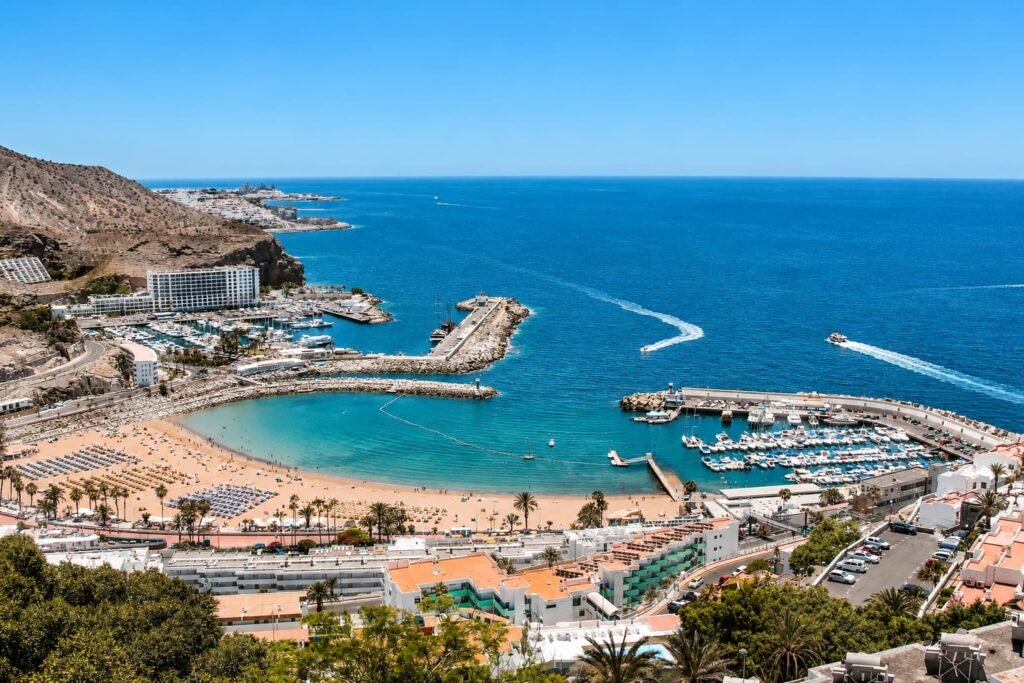
The mountains at the centre of Tenerife and Gran Canaria act like a wall. Clouds roll in off the Atlantic, hit the high ground, and drop their rain on the north side before they ever reach the south. As a result, the southern resort strips — Costa Adeje, Los Cristianos, Maspalomas, Puerto de Mogán — stay drier and sunnier through winter than Santa Cruz, Puerto de la Cruz, or Las Palmas’s own old town on the north coast. In other words, which coast you book usually matters more than which island — arguably the single most useful fact in this entire post.
December vs January vs February
December is the mildest of the three months, helped by sea temperatures still carrying warmth from summer. January, on the other hand, is the coolest on paper, though the difference from December amounts to a degree or two at most. February then starts warming again, aided by longer daylight and, on Tenerife and Gran Canaria, Carnival season. Even so, none of the three swims warm by Caribbean standards — the sea sits at 18–20°C from January through April, comfortable for a quick dip and genuinely cold if you’re used to the tropics. If January cold elsewhere has you weighing other warm options, our where to go in January guide ranks 8 more by real temperatures.
02 — The Warmest Canary Island in Winter: The Quick Answer
If you want the shortest possible answer: book the south coast of Gran Canaria or Tenerife for the mildest evenings, and pick Lanzarote instead if sunshine hours matter more to you than that last half-degree of warmth after dark.
Specifically, Gran Canaria’s south — Maspalomas and Puerto de Mogán — edges out the rest on evening warmth, largely because its dunes and volcanic terrain hold heat longer after sunset than anywhere else in the group. Tenerife’s south, meanwhile, runs a close second, with the added pull of Mount Teide for anyone who wants scenery alongside the beach.
Lanzarote, by contrast, gets more hours of actual sunshine than any other island in January — consistently around 8.5 hours a day — even though its evenings cool slightly faster thanks to a near-constant breeze. Fuerteventura shares that sunshine but adds wind most travellers didn’t ask for. Overall, if a single number has to decide it, go with warmth and pick south Gran Canaria; go with Lanzarote instead when blue sky during the day matters more than that last degree of evening warmth.
03 — The Short Answer: Canary Islands in Winter Compared
For anyone who’d rather skip straight to the comparison, here’s how every Canary Island in winter stacks up, side by side, in short-answer form.
| Rank | Island | Best Coast | Evenings | Sunshine | Wind | Best For | The Catch |
|---|---|---|---|---|---|---|---|
| 1 | Gran Canaria | South (Maspalomas, Mogán) | Warmest | Good | Low–moderate | First-timers, families | Busy resort strip |
| 2 | Tenerife | South (Costa Adeje) | Very warm | Very good | Low–moderate | Teide, Carnival, variety | Built-up south, wetter north |
| 3 | Lanzarote | South/west coast | Mild | Best | Breezy | Sunshine, landscapes | Wind, cooler nights |
| 4 | Fuerteventura | Corralejo, Costa Calma | Mild | Very good | Windiest | Beaches, kitesurfing | Fewest sights, most wind |
| 5 | La Gomera | Hiking island, no resort coast | Cool | Variable | Moderate | Hiking, quiet | Cloud and rain at altitude |
| 6 | La Palma | Interior and west, not a beach base | Cool | Lowest | Moderate | Stargazing, hiking | Wettest island in winter |
| 7 | El Hierro | Remote, no real resort coast | Cool | Lowest | Moderate | Diving, remoteness | Hardest to reach, cloudiest |
04 — The 7 Canary Islands in Winter, Ranked
In particular, here’s the same ranking in full, with the reasoning and the honest catch attached to each island.
01 — Gran Canaria
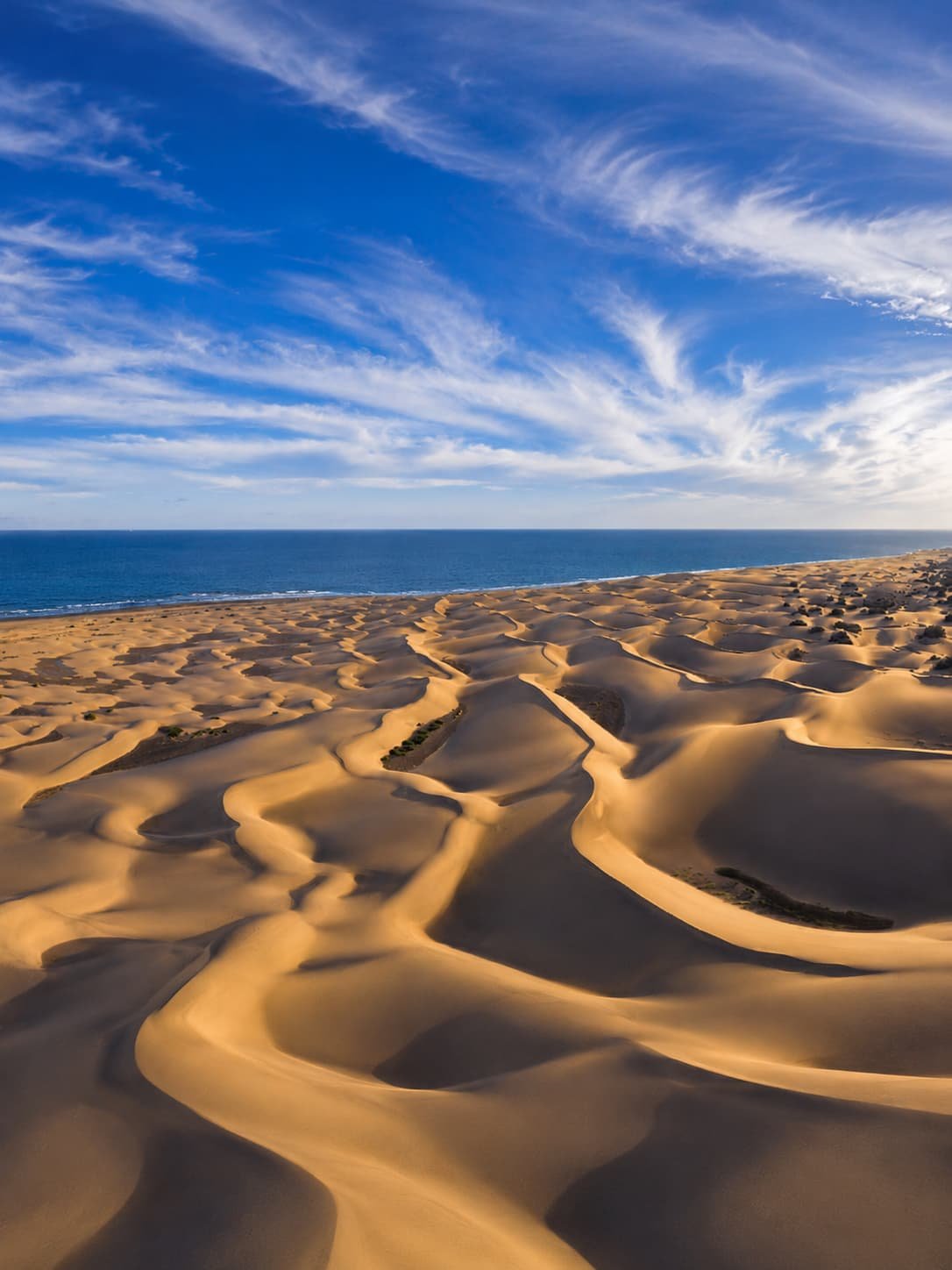
Gran Canaria takes the top spot for one reason: nowhere else in the archipelago holds its warmth into the evening quite like the south coast here. Maspalomas and Puerto de Mogán sit in the lee of the island’s central mountains, and that shelter, combined with the dunes running along Maspalomas beach, keeps the air noticeably milder after dark than the equivalent resort strip on Tenerife.
The appeal goes well beyond the beach, too. Maspalomas’s dunes feel more like a sliver of the Sahara than a seaside resort, and the interior holds genuine mountain scenery within an hour’s drive of the coast. Furthermore, Las Palmas, the island’s capital in the north, offers an actual city with a historic quarter, something neither Costa Adeje nor Puerto de Mogán can claim.
The catch is the one every winter-sun destination eventually runs into: popularity. Maspalomas and Playa del Inglés carry a built-for-tourism feel that some travellers find flattening, with dense resort infrastructure that can swallow a trip if you don’t actively seek out the island’s quieter corners. The north, meanwhile, sits on the wrong side of those sheltering mountains — Las Palmas and the northern coast see considerably more cloud and rain through winter than the south does.
For a first winter visit to the Canaries, south Gran Canaria is still the safest bet on this list. It combines the warmest evenings in the group with enough variety to avoid the one-note feeling that catches up with smaller islands after four or five days.
02 — Tenerife
Tenerife runs a close second, and for plenty of travellers it’s the better pick. The south — Costa Adeje, Los Cristianos, Playa de las Américas — gets nearly as much shelter from the island’s mountains as Gran Canaria’s south does, with sunshine hours that match or beat it across most of the winter.
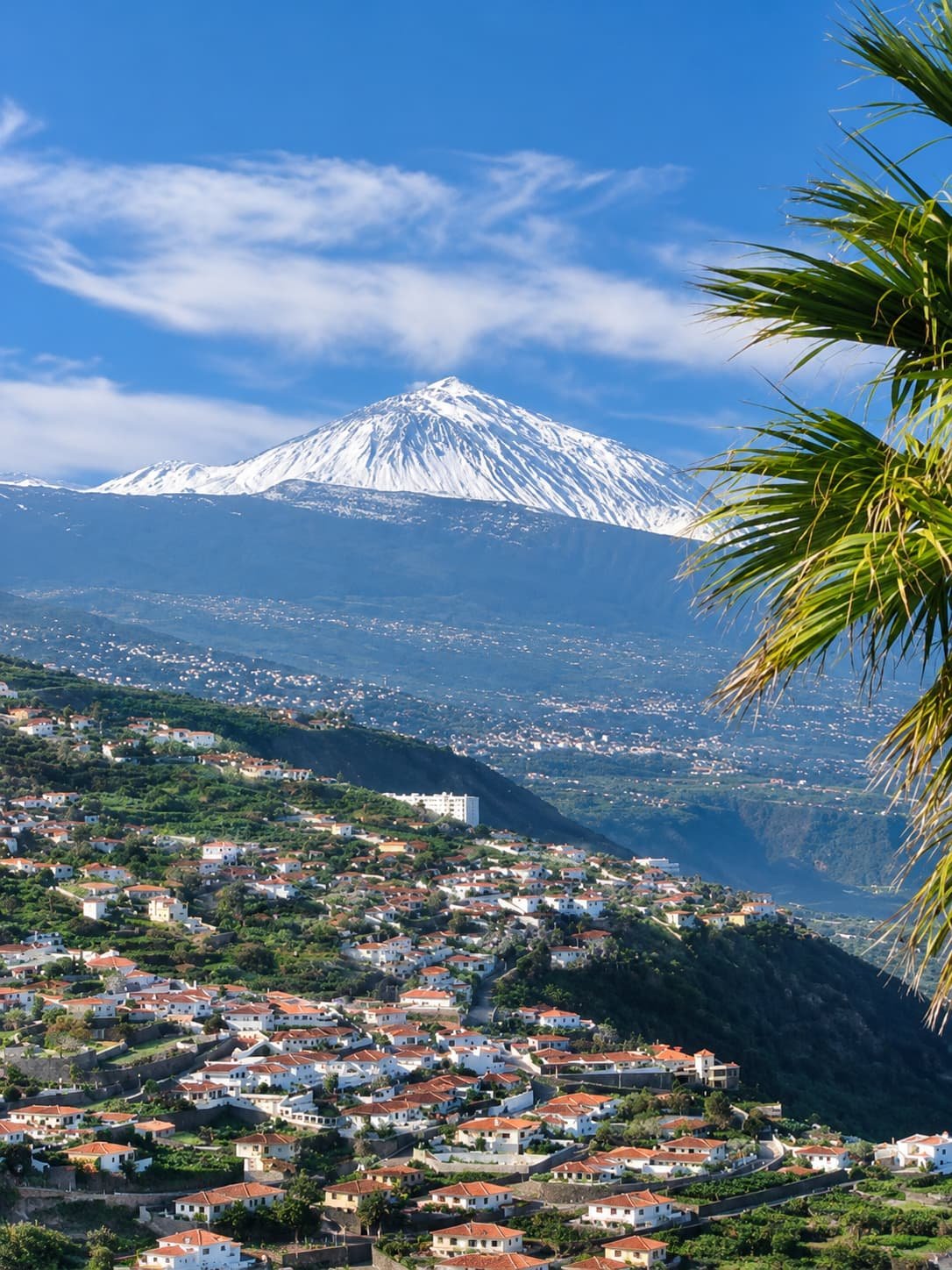
What tips the balance for some visitors is Mount Teide. At 3,715 metres, it’s the highest point in Spain, and its upper slopes often carry snow in winter — a genuinely strange sight from a beach towel an hour’s drive away. Its cable car and national park give Tenerife a day-trip option none of the smaller islands can match, and if your visit lines up with February, Santa Cruz’s Carnival adds a very different reason to be on the island at the same time.
The catch, however, starts with scale. Costa Adeje and Los Cristianos have grown into a near-continuous strip of resorts, and depending on your tolerance for that kind of density, it reads as either convenient or overwhelming. The north — Puerto de la Cruz, Santa Cruz, La Laguna — sits on the rainier, cloudier side of the island, so don’t expect southern weather if you base yourself there. On top of that, Tenerife’s Teide eco-tax, in force since January 2026, now requires a paid, pre-booked permit for the park’s two most popular trails.
None of that displaces Tenerife from a close second place. It simply means the choice between Tenerife and Gran Canaria comes down to whether you want a volcano and a larger island, or a slightly warmer, more compact one.
03 — Lanzarote
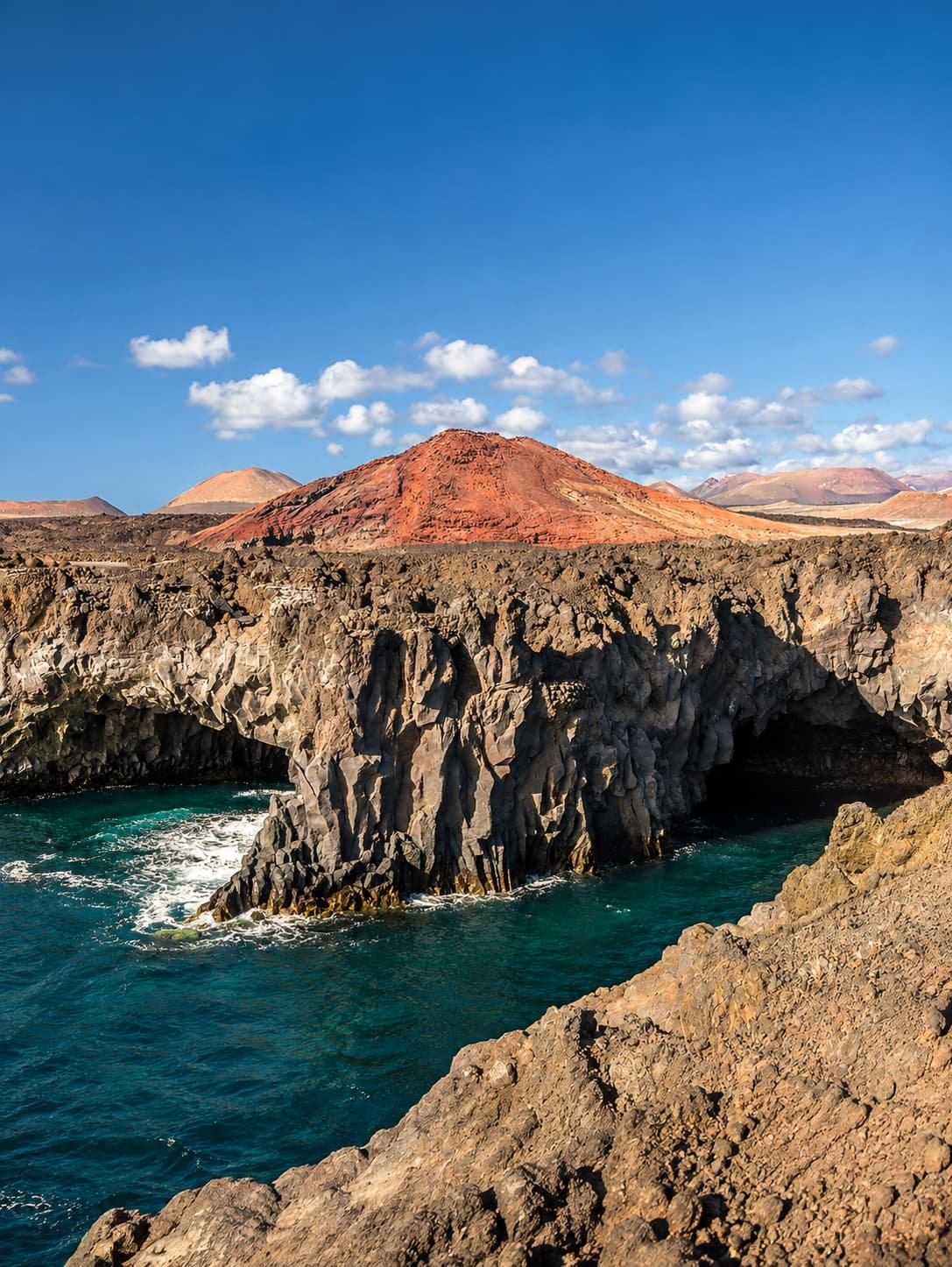
If sunshine hours are the metric that matters most to you, Lanzarote wins outright. The island averages around 8.5 hours of sun a day even in the depths of January, more than any other island in the group, and its volcanic landscape — black lava fields, white-washed low-rise villages, the protected scenery of Timanfaya National Park — gives it a visual identity the bigger islands can’t match.
Lanzarote also benefits from decades of strict building codes that kept high-rise resort development off the island almost entirely. César Manrique, the architect most responsible for that policy, shaped much of the island’s built environment personally, and the result still looks distinctly like itself rather than a generic strip of hotels.
The trade-off, though, is wind. Lanzarote sits more exposed to the trade winds than Tenerife or Gran Canaria, and that breeze — welcome on a hot afternoon — takes the edge off evening warmth more noticeably here than on the sheltered southern coasts of the bigger islands. Consequently, this isn’t the island to pick when warm evenings matter more to you than blue sky during the day.
For travellers who’d rather maximise guaranteed sunshine and don’t mind a cooler breeze once the sun drops, though, Lanzarote is the most reliable bet in the archipelago — and the most visually distinct one, too.
04 — Fuerteventura
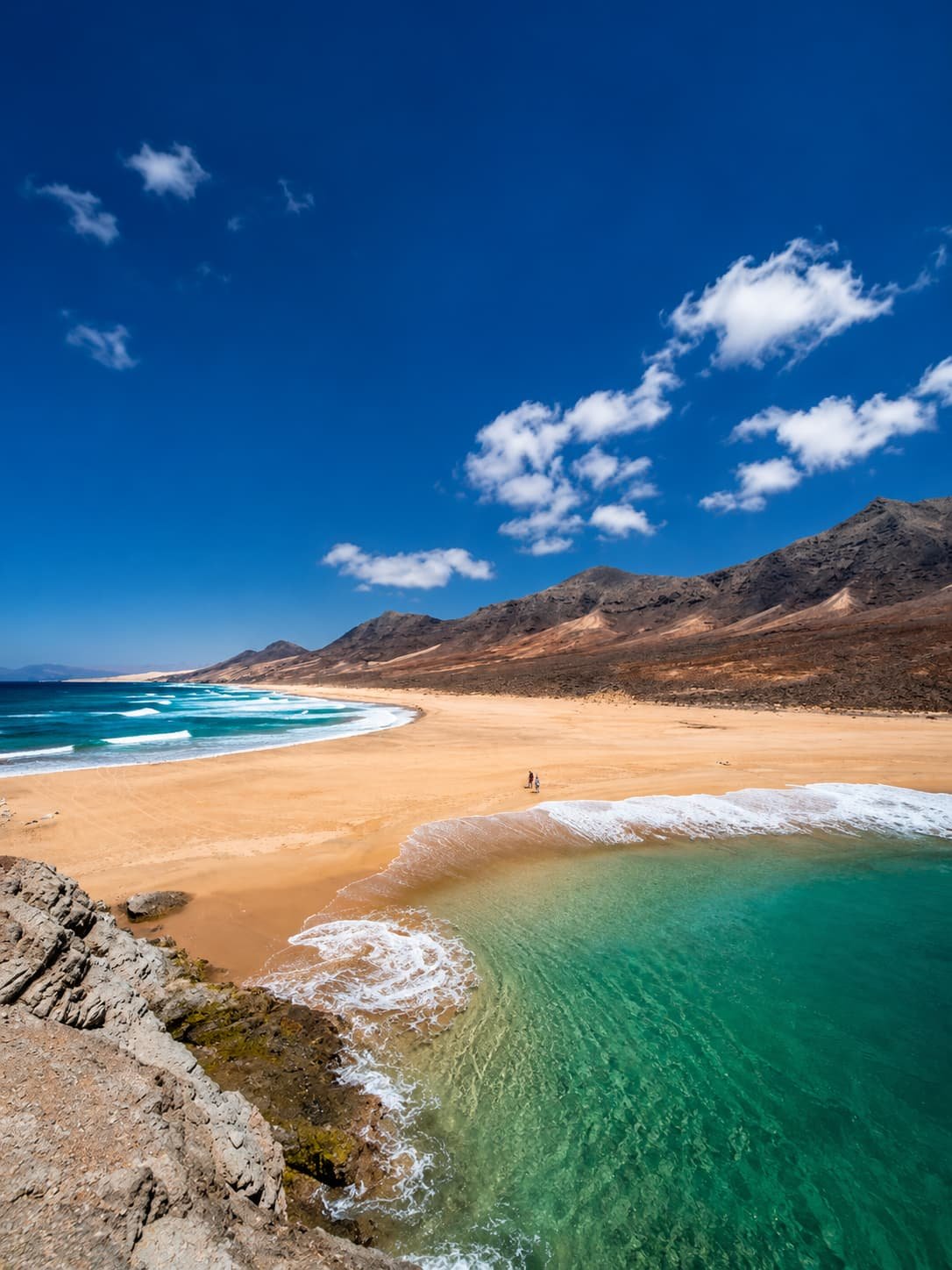
Fuerteventura’s case for a winter trip rests almost entirely on its beaches. The island has more coastline of fine, pale sand than anywhere else in the Canaries, with stretches like Cofete and the dunes near Corralejo that genuinely compete with the Caribbean on looks, if not on water temperature.
That same openness, though, is exactly what makes Fuerteventura the windiest island in the group. The near-constant breeze that shapes its dunes also makes it one of the best winter kitesurfing and windsurfing destinations in Europe — Playa de Sotavento regularly hosts world championship events — but it’s a serious consideration for anyone picturing a still, sunbathing-only kind of trip. Pack accordingly, and don’t expect a calm beach day by default.
Corralejo, in the north, sits closest to the dunes and the ferry to Lanzarote; Costa Calma and Jandía, further south, catch marginally less wind. Beyond the coast, though, there isn’t much competing for your time — Fuerteventura has the fewest standout inland sights of any of the larger islands.
In short, this is the island for wind-sport travellers and committed beach walkers, not for anyone chasing a sheltered, sunbathing-focused winter escape. If that’s your profile, Fuerteventura rewards you more than any other island here; if it isn’t, the wind alone is reason enough to look elsewhere.
05 — La Gomera
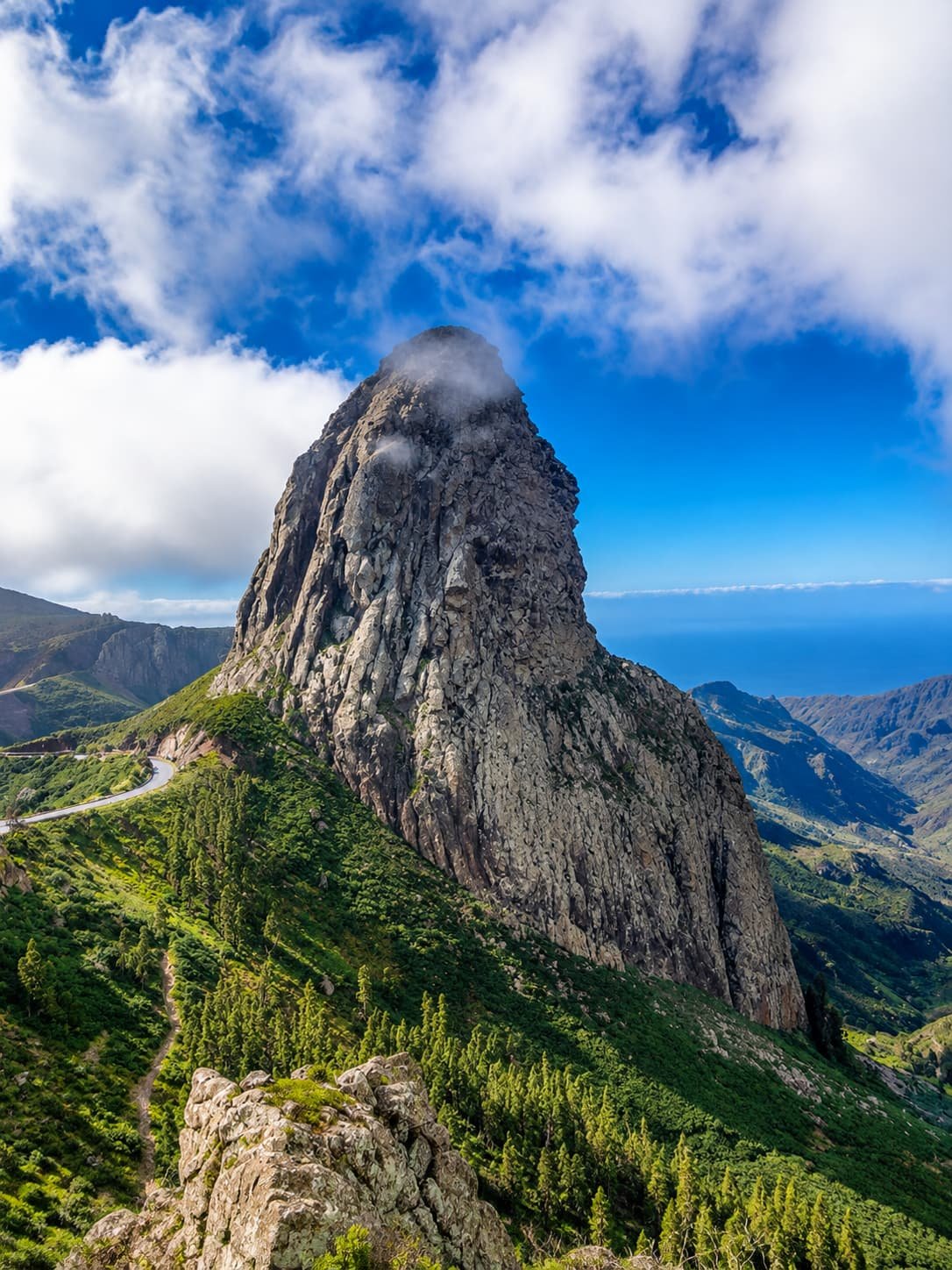
La Gomera is the best hiking island in the Canaries, and winter — cooler and wetter than summer, but far from cold — is a reasonable time to do it. Garajonay National Park, a UNESCO-listed laurel forest covering much of the island’s interior, depends on the cloud and moisture that collects around its high ground, and that same weather pattern makes it one of the greenest, most atmospheric landscapes in the archipelago.
Reaching the island means a ferry from Los Cristianos on Tenerife’s south coast, about 50 minutes by fast ferry, which keeps it free of the large resort infrastructure found elsewhere. San Sebastián de la Gomera, the main town, stays small and genuinely local rather than built for tourism.
The catch is the same cloud and moisture that makes Garajonay worth visiting in the first place. Specifically, the island’s high interior sees considerably more rain than any coastal resort strip in winter, and a run of cloudy days can turn the forest hike into something damper than a sunny Canaries holiday implies. Nightlife, likewise, is close to nonexistent outside peak season.
La Gomera suits a specific traveller: someone who wants trails over tanning, willing to trade a few grey days for genuinely dramatic scenery. It’s rarely anyone’s only Canary Island, but as a two- or three-day add-on to a Tenerife trip, it’s hard to beat.
06 — La Palma
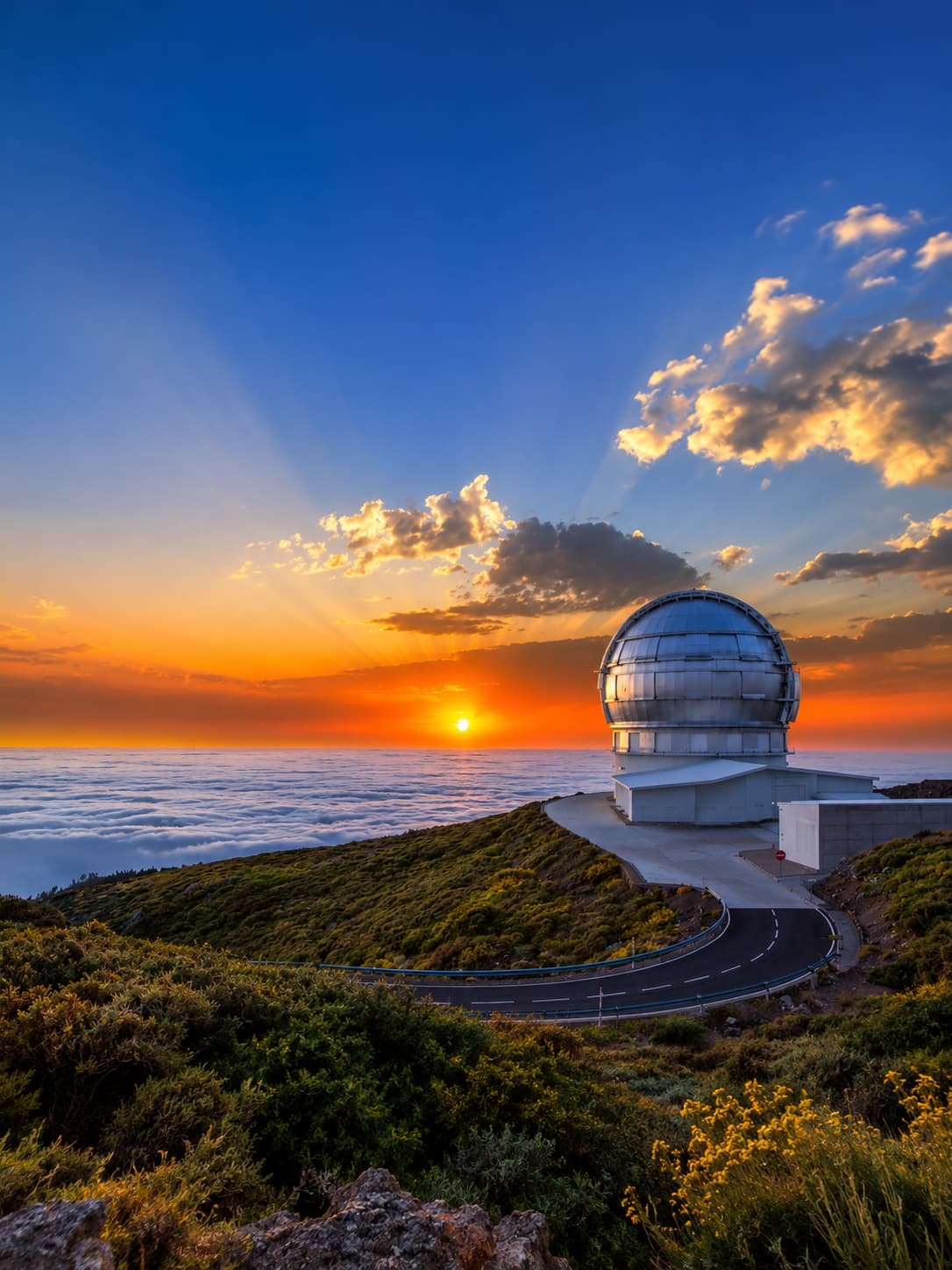
La Palma earns its nickname, La Isla Bonita, honestly. Dark-sky protections across much of the island make it one of the best stargazing destinations in Europe — the Roque de los Muchachos observatory sits above 2,400 metres, clear of most cloud cover — and its hiking network, through laurel forest and volcanic ridgeline, rivals La Gomera’s for scenery.
Winter is also when the island’s volcanic history is most visible. The Tajogaite eruption in 2021 reshaped part of the south-west, and guided tours now run through sections of the affected area, giving a close look at genuinely fresh lava fields. However, the rest of the island — the vast majority of it — was never touched by the eruption and operates exactly as before.
That said, La Palma is also, by a clear margin, the wettest of the seven islands in winter. The same elevation and cloud capture that make its forests so lush work against anyone hoping for a sunny beach holiday. Additionally, the area immediately around the 2021 eruption site remains a controlled zone in places, accessible only with a guide — worth checking current status before building a route around it.
La Palma is worth the detour if dark skies and dramatic, green terrain matter more to you than guaranteed sun; if a sunny beach week is the actual goal, though, it’s one of two islands on this list to skip — see El Hierro, next, for the other.
07 — El Hierro
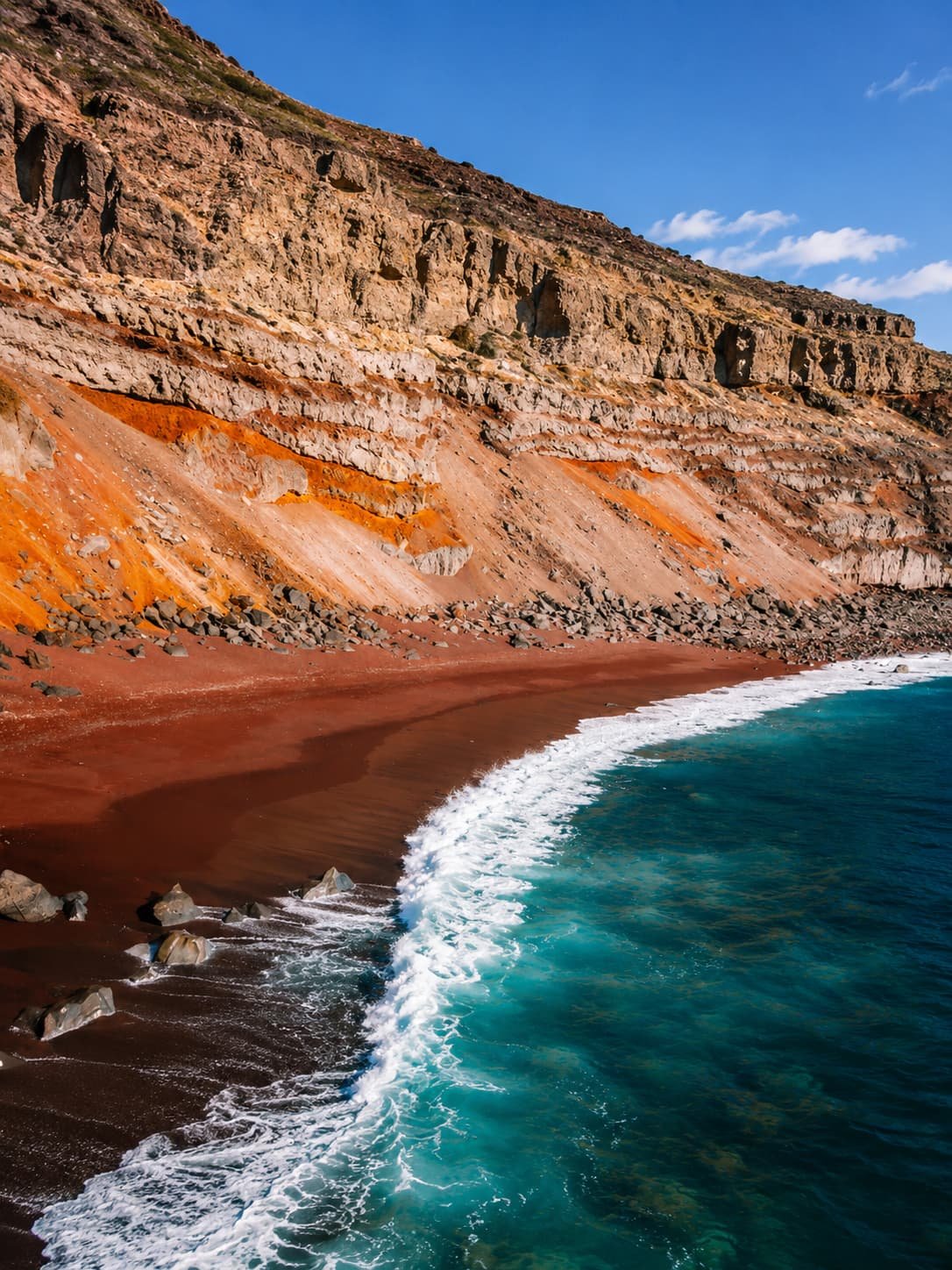
El Hierro is the smallest, most remote, and least visited of the seven main islands, and winter doesn’t flatter it the way it does the southern coasts of Tenerife or Gran Canaria. Cloud cover here runs higher than almost anywhere else in the group, a consequence of the same Atlantic weather systems that soak La Palma and La Gomera.
What the island offers instead of sun is some of the clearest water in the Canaries. The Mar de las Calmas marine reserve on the south-west coast is consistently ranked among Europe’s best diving destinations, with volcanic rock formations and visibility that regularly exceeds 30 metres. Getting there is the real barrier, though — El Hierro has no direct flights from outside the Canaries, so every visit routes through Tenerife first.
El Hierro belongs on this list for honesty’s sake, not as a recommendation for most travellers chasing winter sun. Divers and anyone who specifically wants the quietest, least developed island in the archipelago are the exception — everyone else should pick one of the sunnier six instead.
05 — Which Island for Which Traveller
If the ranking above still leaves you between two or three options, on balance, here’s the same Canary Islands in winter information sorted by what you actually want from the trip.
Gran Canaria’s south. It pairs the warmest evenings in the archipelago with enough variety — dunes, mountains, a real capital city — to avoid feeling one-note after a week.
Lanzarote. Nowhere else in the group averages more hours of winter sun, even if the evenings cool a little faster.
La Gomera in a dry spell, or Tenerife’s Teide if you’d rather combine a serious trail with a beach base.
Fuerteventura, without question — the widest beaches in the group, built for wind rather than against it.
Lanzarote’s smaller towns, away from Playa Blanca and Puerto del Carmen, or La Gomera for something quieter still.
Tenerife plus La Gomera by ferry — the easiest pairing in the archipelago, and a genuine change of pace in under an hour.
06 — Carnival in the Canaries, 2027
If your Canary Islands in winter trip can flex by a couple of weeks, for instance, timing it around Carnival turns a sun holiday into something considerably louder.
Santa Cruz de Tenerife
Tenerife’s Carnival moved later for 2027, which is worth knowing before you book flights around the old dates. The opening gala now falls on 22 January 2027, but the main street Carnival — the part most visitors actually travel for — runs from 19 to 28 February 2027, with the Queen election gala on 17 February and the Coso Apoteosis parade, the event’s biggest, on 23 February, also a local public holiday this year. This year’s theme, “Roma Eterna: El Imperio del Carnaval,” marks 40 years since the format that made the event internationally famous. Overall, it’s considered the second-largest Carnival in the world after Rio’s and by far the biggest in Europe, so expect accommodation in Santa Cruz to book up well ahead of the main week. The official Carnival of Santa Cruz de Tenerife site has the full programme.
Las Palmas de Gran Canaria
Gran Canaria runs its own, separate Carnival in the capital, Las Palmas, from 22 January to 28 February 2027, dedicated this year to the theme “La Música.” The city’s Gran Cabalgata, its largest parade, is expected around 20 February, though exact timings can still shift closer to the event. In addition, the south of the island runs a third, smaller celebration — the Maspalomas Carnival, scheduled for 2–14 March 2027 under the theme “World of Toys,” just after the bigger island-wide events wrap up. If a different carnival energy appeals, our Venice Carnival 2027 guide covers dates, costs and the best days to go.
07 — Costs, Taxes and New Rules for 2026/27
On top of the weather itself, three practical changes affect anyone visiting the Canary Islands in winter, and all three are easy to miss if you’re working from an older guide.
Since 19 January 2026, Tenerife’s Cabildo has charged non-residents an eco-tax to hike two of Teide National Park’s most popular routes — Trail 10 (Telesforo Bravo) and the Montaña Blanca approach to the summit. Fees run up to €25 depending on the route, with Trail 10 costing €15 unguided or €10 with a guide. Tenerife residents and children under 14 enter free, and permits must be booked in advance through the Tenerife ON platform — walking up without one isn’t an option anymore.
Tourist Tax and Winter High-Season Prices
The other headline change, meanwhile, concerns what the Canaries don’t charge. Mogán, in southern Gran Canaria, introduced the archipelago’s first tourist tax — fifteen cents per person, per night — in 2025, and it has had a rough legal life ever since: suspended within a day of launch, reinstated weeks later, and finally ruled illegal by the Canarian Supreme Court in July 2026. The tax is currently frozen, with Mogán’s council considering an appeal, and the regional government has repeatedly declined to introduce an island-wide tourist tax of its own. In short, there is no blanket tourist tax anywhere in the Canary Islands right now, whatever you may have read elsewhere.
Finally, it’s worth noting that winter counts as high season here, unusually for Europe. As a result, prices on flights and hotels peak around Christmas, New Year — see our best places to spend New Year’s Eve for other options that week — and February half-term, running well above what you’d pay for the same rooms in October or May. For more February destinations beyond the Canaries, our where to go in February guide covers 12 more. Budget accordingly rather than assuming “winter” automatically means “cheap.”
08 — Canaries or Madeira for Winter?
The Canaries aren’t the only Atlantic island group selling winter sun, and Madeira is the most obvious alternative. In short, the Canaries are sunnier and drier overall, with the Lanzarote-to-Fuerteventura stretch in particular delivering more guaranteed blue sky than almost anywhere in Madeira manages in January or February. Madeira, on the other hand, is greener and more mountainous, arguably the better hiking destination of the two, with a levada trail network that outclasses anything outside La Gomera or La Palma — at the cost of considerably more winter rain. If sun is the priority, the Canaries win; if dramatic green scenery matters more than guaranteed dry days, though, Madeira is worth a closer look instead — our Madeira travel guide covers it in full.
09 — Getting There
Every main Canary Island has its own airport, and, as a result, flight connections into the Canary Islands in winter are genuinely plentiful from the rest of Europe — this is peak season for the route, not an afterthought.
- From Europe: direct flights run from most major UK, German, and Scandinavian airports into Tenerife South, Gran Canaria, Lanzarote, and Fuerteventura.
- From the US: direct nonstops are limited; most routings connect through Madrid or another European hub first.
- Between islands: fast ferries connect Tenerife to La Gomera, La Palma, and El Hierro, while short regional flights link all seven islands.
- On the ground: a rental car opens up far more of each island than the resort bus network does.
If you’re combining two islands in one trip — Tenerife and La Gomera is the easiest pairing — build at least a half-day buffer around the ferry crossing, since winter swells, admittedly, occasionally delay or cancel sailings.
10 — What to Pack
Pack for mild days and genuinely cool evenings, not for the tropics. Specifically, layers matter more here than almost anywhere else marketed as a winter-sun destination: a light jacket covers most evenings on the southern coasts, while a proper windbreaker earns its place on Lanzarote and Fuerteventura. In addition, anyone heading up to Teide, Garajonay, or Roque de los Muchachos should pack for near-freezing temperatures at altitude, even while the coast sits at a comfortable 20°C. A swimsuit still belongs in the bag, too — the sea is swimmable, if cool — alongside sun protection that a lot of travellers forget to bring for a “winter” trip. For the rest of a European winter packing list, our honest packing list for Europe covers the basics that apply everywhere.
Warmth, Swimming and Which Island to Choose
Sunshine, January, Carnival and Tourist Tax
No island in this group is cold, and none of them is tropical either. The honest version of “Canary Islands in winter” sits somewhere in between — mild, bright, occasionally windy — and that’s still more than most of Europe gets in February.