
Black Forest in Autumn: The Best Places to Go (and When the Foliage Actually Peaks)
A guide to the Black Forest in autumn — seven places worth the drive through the Schwarzwald in October, plus an honest answer to whether November is still worth it.
The Black Forest in autumn is not a warm-glow, soft-light Instagram destination. The mist comes in thick off the ridge. The trails are damp. The light is pewter for most of the morning and golden for about forty minutes in the afternoon if you’re lucky. That’s exactly the point.
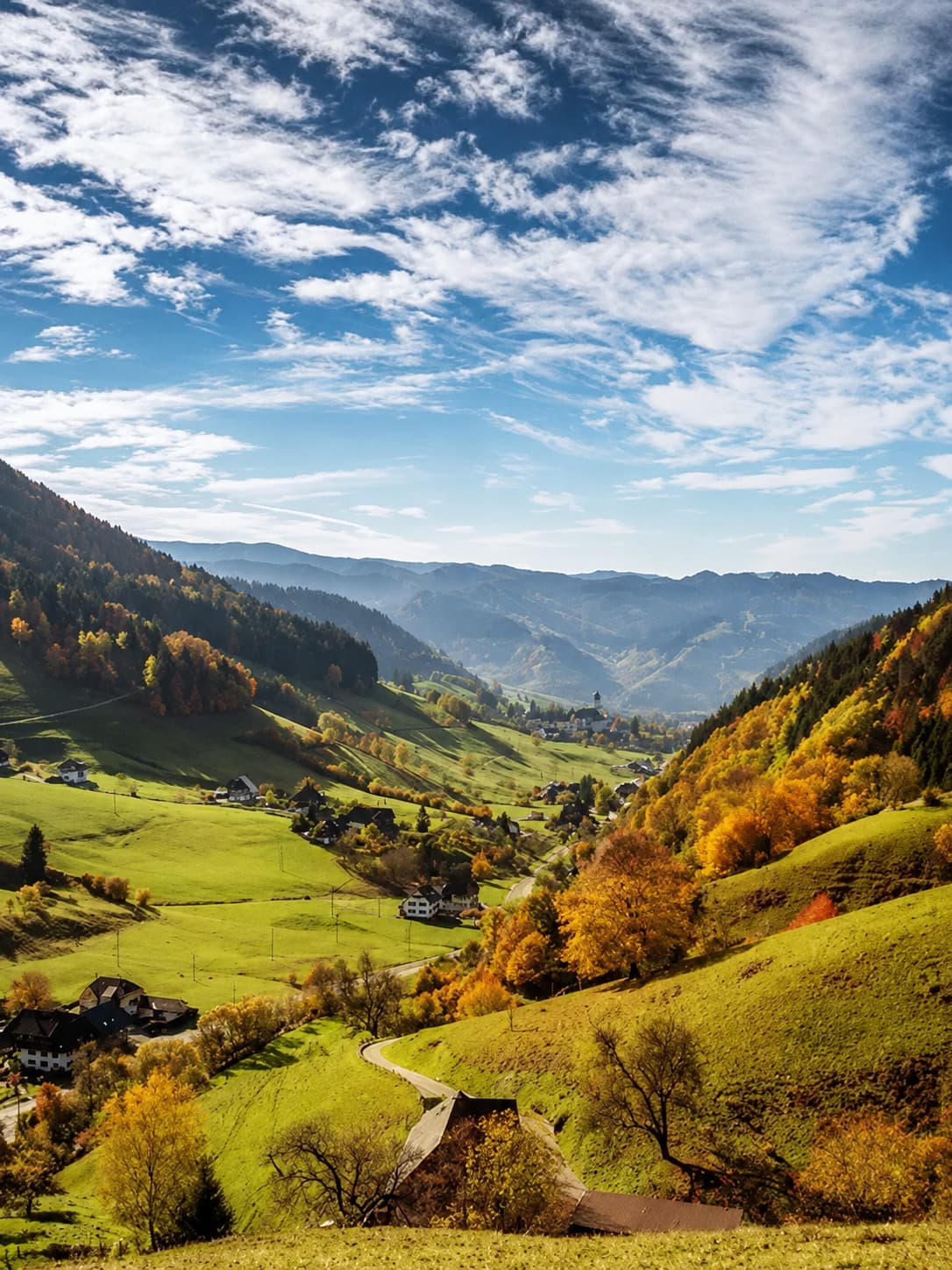
Most people who visit the Black Forest do it in summer — school holidays, Triberg waterfall selfies, cuckoo clock shops — and leave having seen the infrastructure of the place without really seeing it. Come in mid-October and the infrastructure is still there, but the crowds aren’t. What’s left is a 160-kilometre ridge of dense spruce and fir broken by pockets of beech and oak turning amber against the dark green, fog moving through the valleys at altitude, and a wine harvest most visitors don’t know is happening on the western slope below.
The Black Forest in autumn isn’t a highlights reel. It’s a trip for people who find the moodier version of a place more interesting than the sunny one.
Black Forest in Autumn: Quick Planning Notes
01 — Why Autumn Makes the Black Forest Worth the Detour
The Schwarzwald is one of the most visited regions in Germany, but most of that traffic lands in summer. The October version is measurably quieter — accommodation rates drop, the most popular spots like Triberg and Titisee lose their queue, and the hiking trails, which can feel overrun in July, return to something close to solitude.
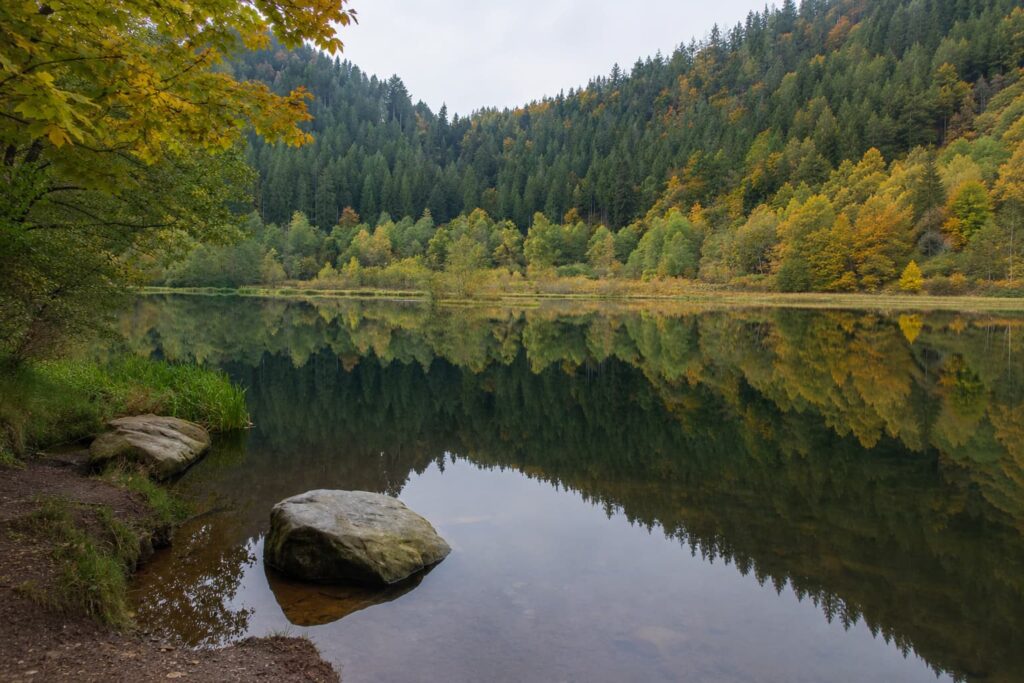
The other thing autumn adds that summer can’t is atmosphere. The Black Forest gets its name from how dark it is — dense conifers, high ridgeline, valley fog — and summer light fights that quality rather than working with it. Autumn light doesn’t fight it. The mist that sits in the valleys in the morning, the amber beech pockets against dark spruce on the Hochstrasse, the pewter surface of the Mummelsee at 9am — these things are only available in October and November, and they’re the honest reason to make the trip.
Add to that the Baden wine harvest happening on the western slope below the forest, largely unknown to English-language visitors, and the Black Forest in autumn becomes a layered trip rather than a single scenic drive.
02 — When Is the Best Time to Visit the Black Forest in Autumn?
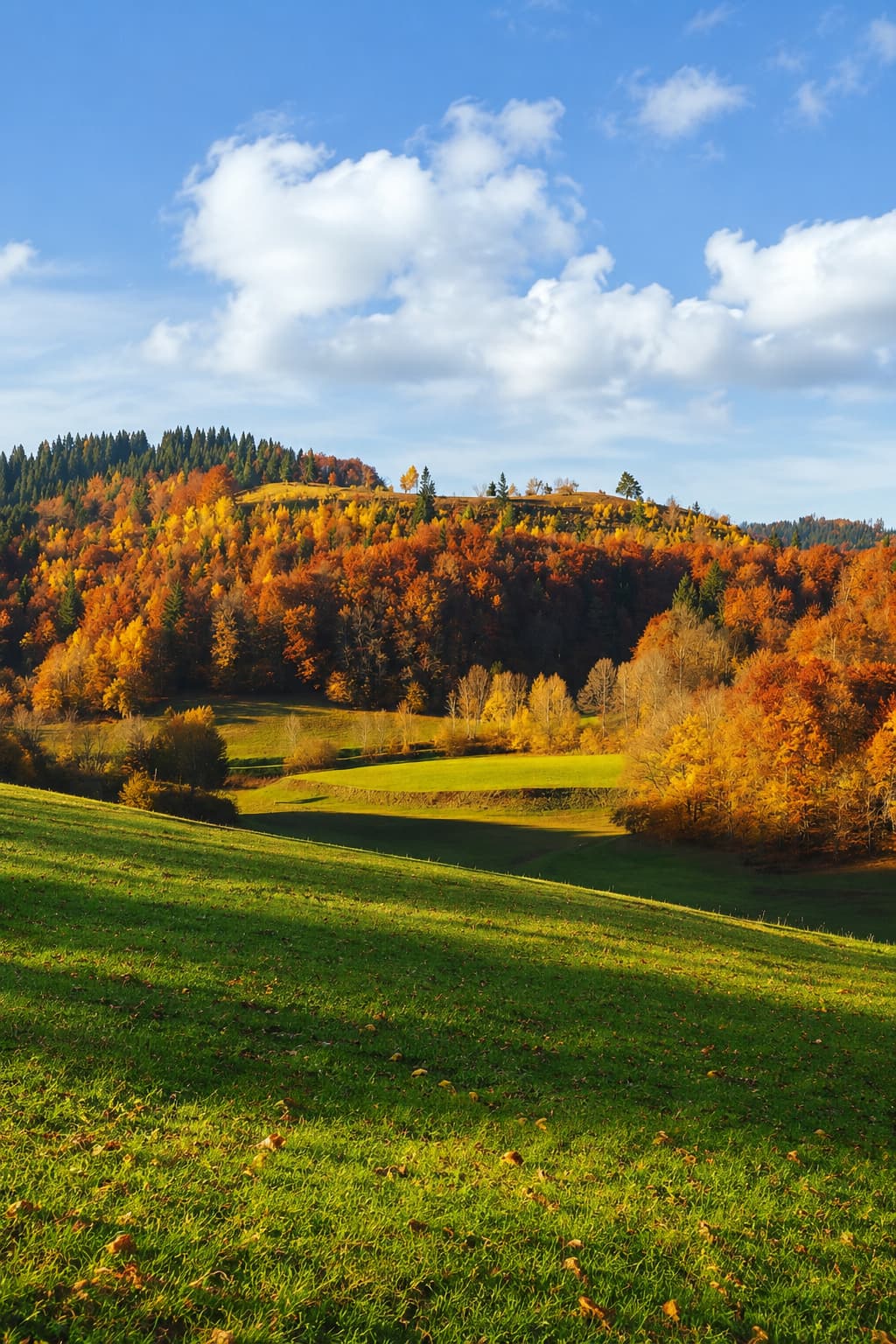
Mid-October to early November is the window. That’s when the deciduous pockets — beech, oak, birch — peak against the dark evergreen backdrop. But it’s worth being honest about what the colour is: the Black Forest is predominantly conifers (spruce, fir, pine), which don’t turn. The autumn foliage comes from the hardwood trees mixed in, particularly along the ridge roads and valley edges. It’s amber and gold, not the red-maple intensity of New England. Manage expectations accordingly, and it remains genuinely beautiful.
Week by week, October breaks down roughly like this:
Wine harvest season in the Baden villages is in full swing. Foliage is beginning to turn at higher altitudes. The best window if you want to combine the Hochstrasse drive with the wine villages below — before the harvest ends and before the leaves peak on the ridge.
The best foliage window, especially for the Hochstrasse drive. Beech and oak at peak colour on the ridgeline. Mummelsee and Titisee reflections at their most atmospheric. This is the week to prioritise if the drive is the primary reason you’re going.
Leaves are dropping but the atmosphere intensifies — more mist, emptier trails, lower prices again. Worth it if you travel well in moody, grey conditions. The Gengenbach advent calendar opens in late November, making this the last good window before it tips into a Christmas market trip.
November beyond the first week is genuinely borderline. Daylight is short, temperatures drop below 5°C at altitude, and many smaller guesthouses close for the season. If November is your only option, focus on the lower-altitude towns — Baden-Baden, Freiburg, Gengenbach — rather than the high ridge road.
03 — The Best Places to Visit in the Black Forest in Autumn
The Schwarzwald Hochstrasse — Germany’s Finest Autumn Drive
The B500 ridge road running south from Baden-Baden to Freudenstadt is not a town or a village — it’s a 60-kilometre drive through the highest section of the northern Black Forest, and in mid-October it earns every cliché written about it. The Mummelsee lake sits roughly mid-route at 1,036 metres: on a clear morning the water is a near-perfect mirror of the amber canopy around it. Higher viewpoints along the route sit above the cloud line, which means you can look out over fog-filled valleys with forest rising above on both sides. Budget a half-day minimum. Drive slowly. The Hochstrasse rewards the person who stops.
Baden-Baden — The Most Civilised Entry Point
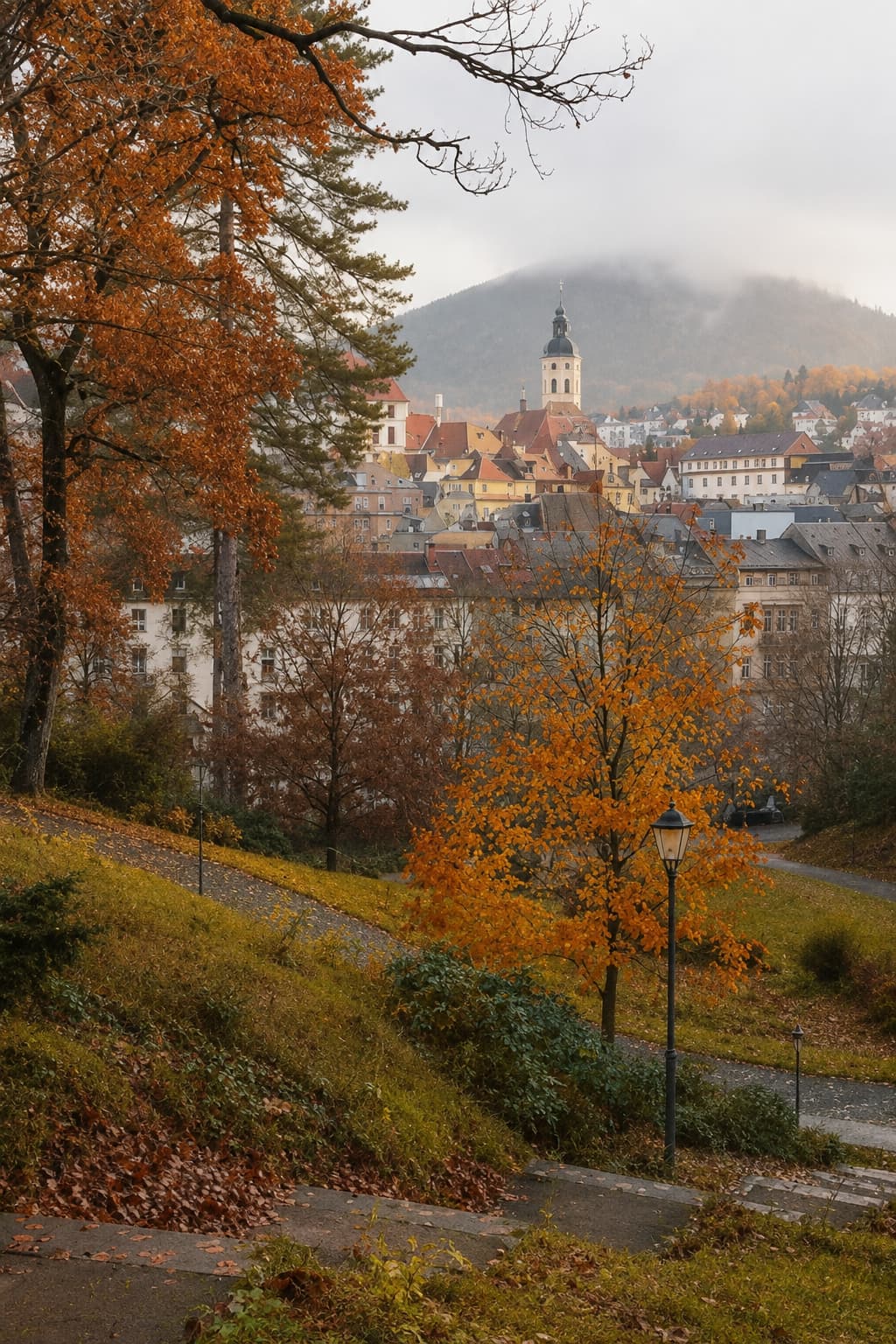
Baden-Baden is where the Black Forest begins for most western visitors, and it’s a genuinely good base — elegant spa town, reasonable food, walkable, and the Lichtentaler Allee park corridor goes full amber in October. The Caracalla or Friedrichsbad thermal baths are the obvious afternoon move when the weather turns, which in October it will. The Baumwipfelpfad treetop walkway at Baiersbronn — about 30 minutes south — is worth the drive: at canopy height the autumn colour surrounds you in a way ground-level hiking doesn’t replicate.
Triberg — Waterfalls, Cuckoo Clocks, Zero Pretence
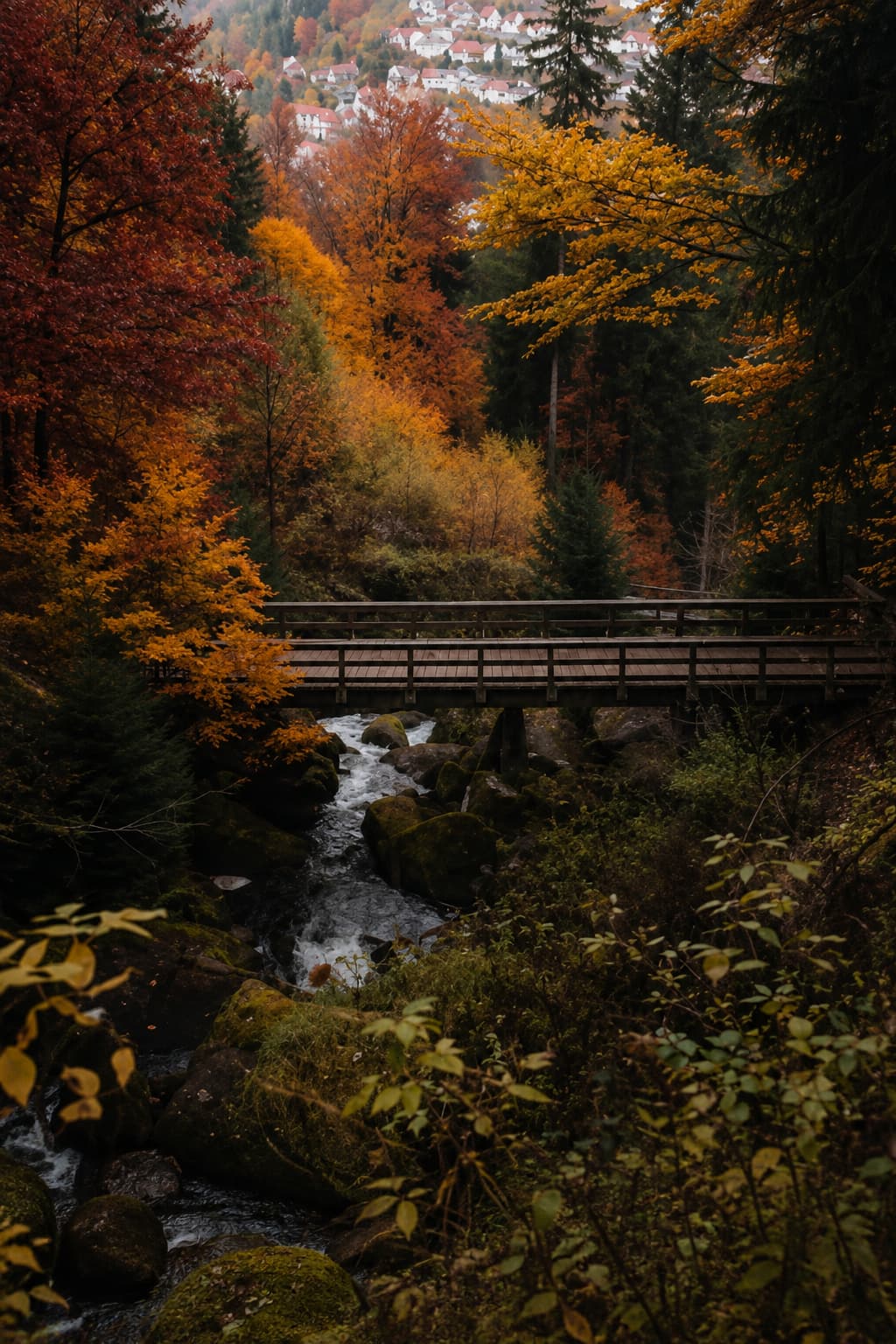
Germany’s highest waterfall is in Triberg, and it looks genuinely better in autumn than in summer — the surrounding beech woodland frames the cascade in amber rather than flat green. The cuckoo clock shops are emphatically kitsch. One hour among them is the correct allocation. What Triberg actually earns is its place mid-route on a south-pointing Hochstrasse drive — it’s a natural stopping point, the waterfall walk takes 45 minutes comfortably, and the absence of summer crowds makes it a different experience in October.
Titisee-Neustadt — The Quiet Lake
The town around Titisee is aggressively tourist-facing and the souvenir shops are inescapable, but the lake itself is the reason to go — and in October it earns it. Glassy reflections of the fir trees bordering the water, morning mist sitting on the surface, almost no boats. It’s a half-hour stop, not a destination in its own right. Go early, do one loop of the lake on foot, leave before the day-tripper buses arrive. The quiet version of Titisee is the only version worth experiencing.
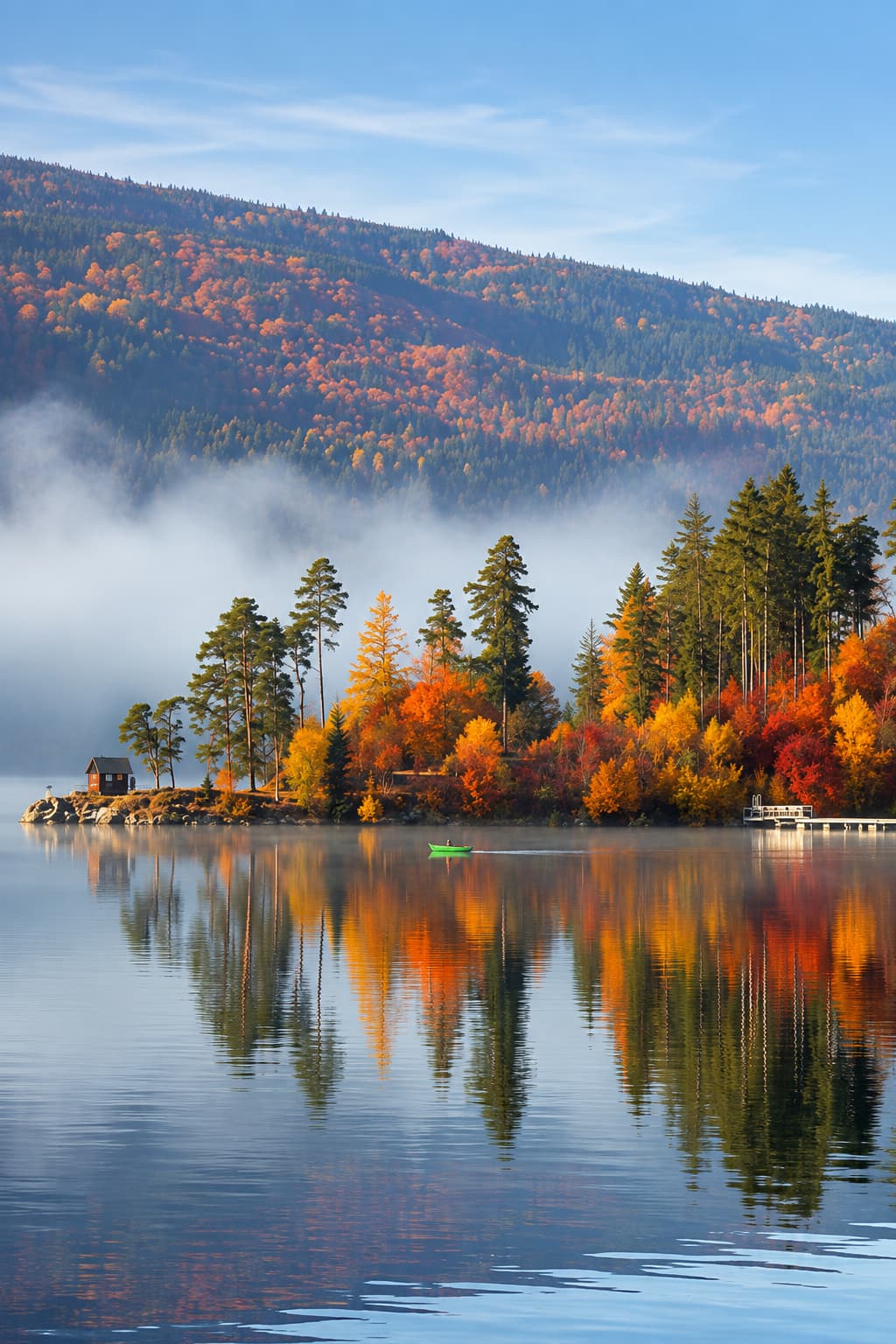
Freiburg — The Sunny Gateway at the Southern End
Known as Germany’s sunniest city, Freiburg sits at the southern edge of the Black Forest with a walkable old town, good food, and a cathedral worth an hour inside. As a base for the southern Black Forest — Titisee, the Feldberg plateau, the wine villages — it’s practical and affordable, with a proper city infrastructure that Baden-Baden’s genteel spa-town format doesn’t always offer. October also marks the start of the autumn markets in the old town. It’s the right base if you’re combining the Black Forest with a wider route through Alsace or the Rhine Valley.
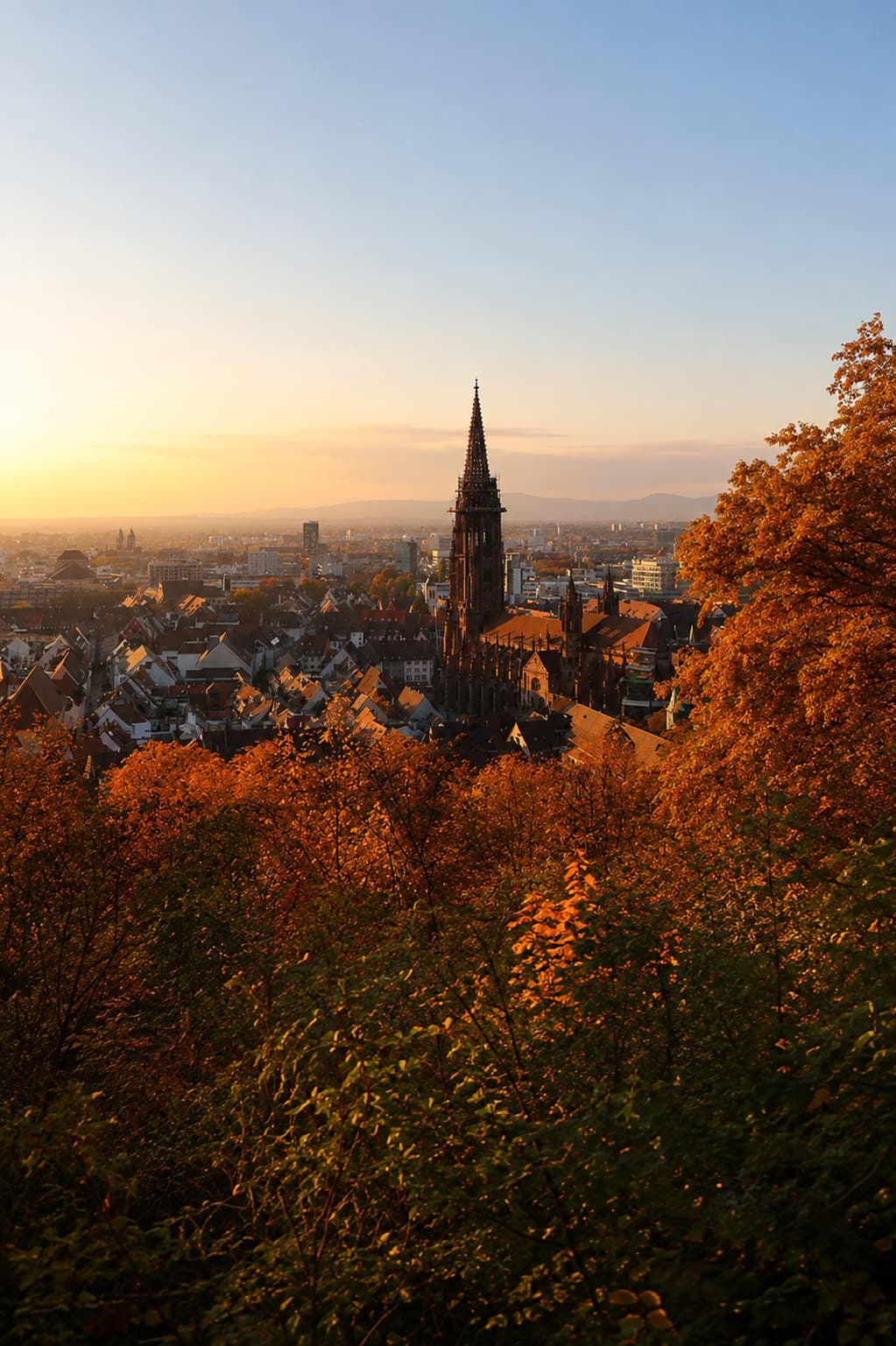
Gengenbach — The Village That Earns the Drive
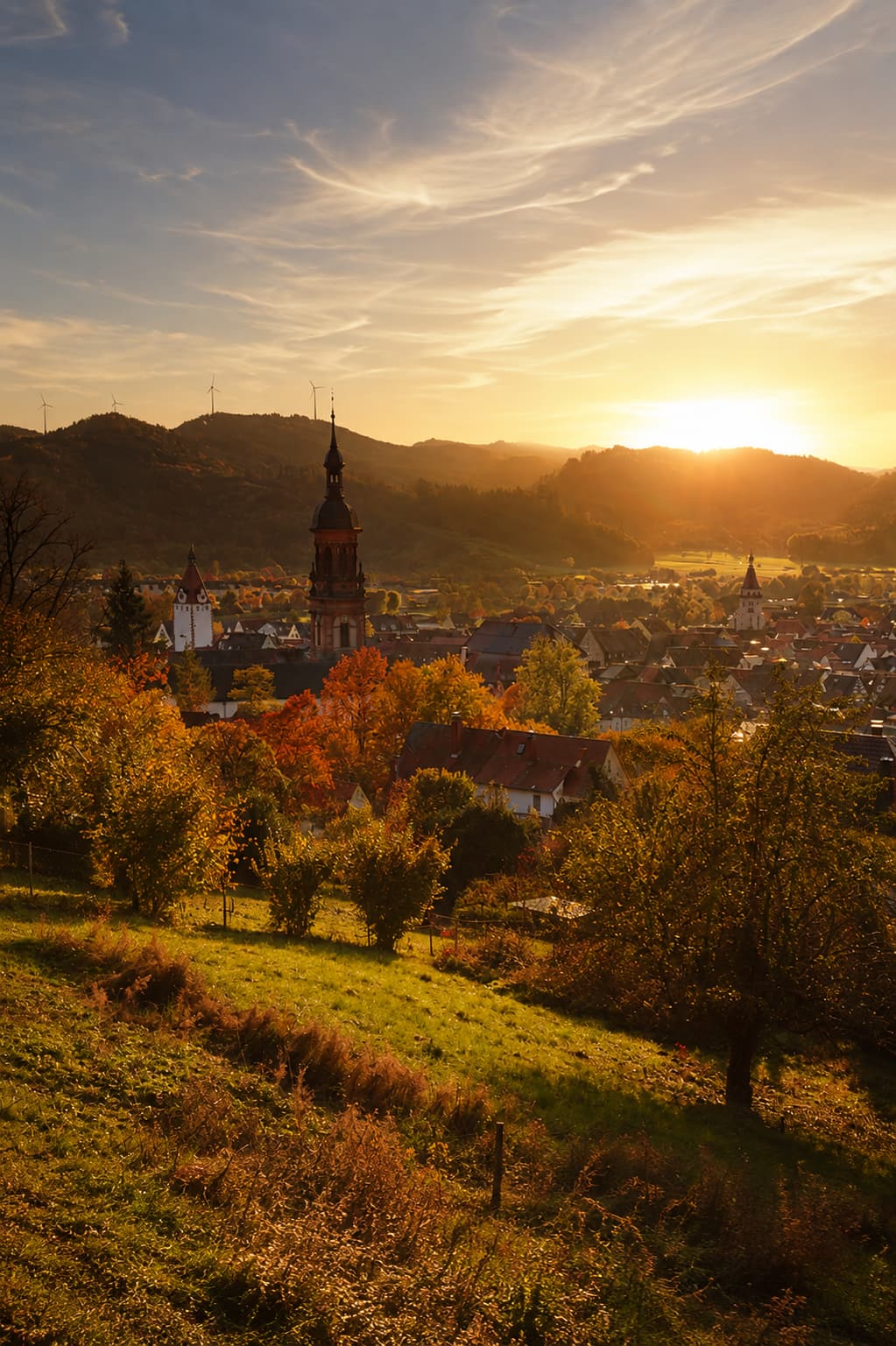
Gengenbach is one of the most complete small towns in Germany and it barely appears in English-language travel content. Half-timbered, fully walled, wine-growing on the slopes directly above, and small enough that you can walk the entire historic centre in 20 minutes without missing anything. Autumn wraps it in exactly the light it deserves — ochre facades against amber vines, the town square without summer crowds. Come in early November and you’re also at the edge of something: Gengenbach runs what’s considered Germany’s most photographed advent calendar, where the windows of the baroque Rathaus open one by one through December. The weeks just before it starts — late October, early November — are the sweet spot before the visitor numbers climb again.
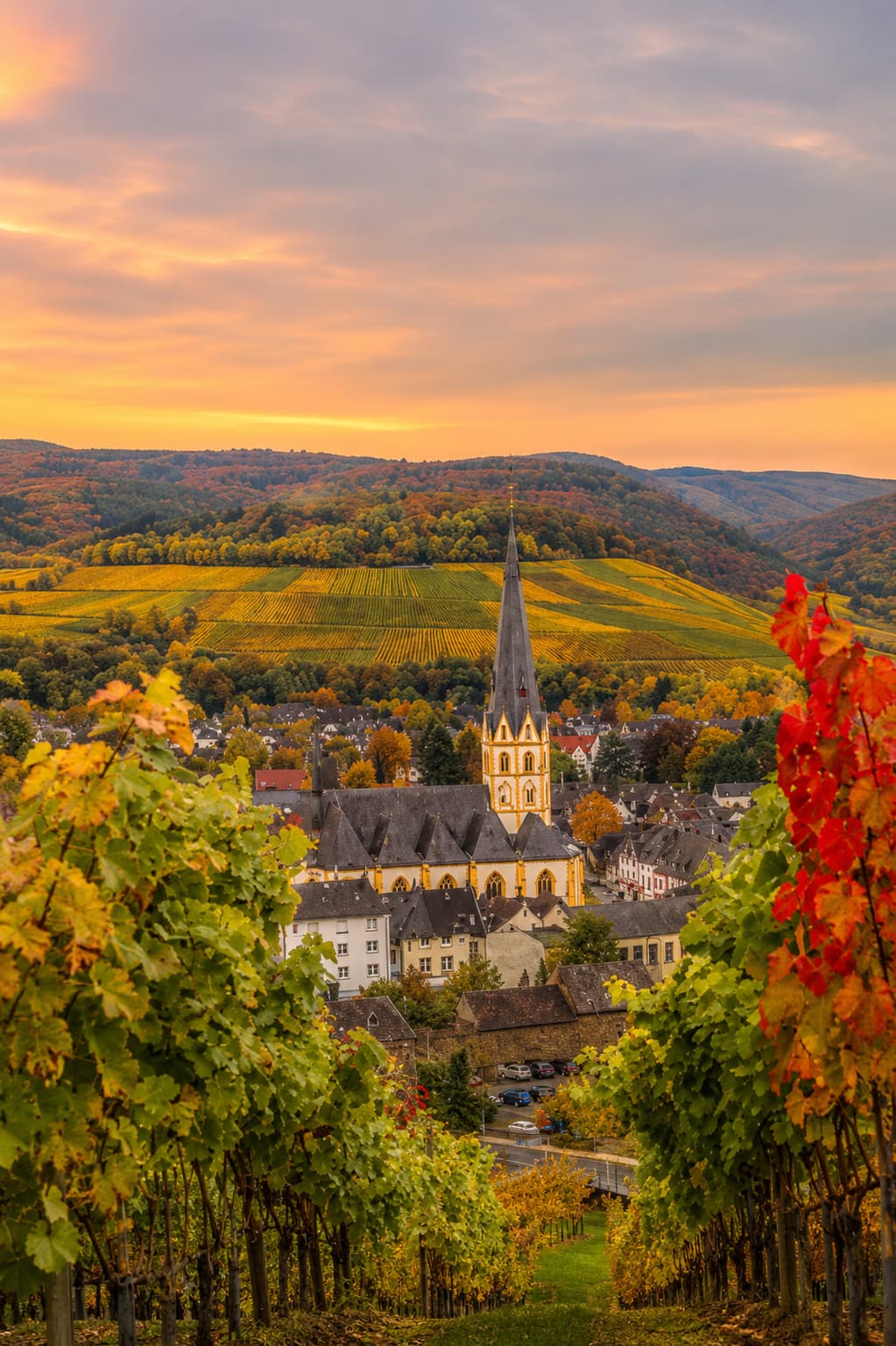
The Baden Wine Villages — The Side of the Black Forest Nobody Talks About
The western slope of the Black Forest — below the ridge, above the Rhine plain — is one of Germany’s warmest wine-growing zones, and in October the Weinlese (grape harvest) is in full swing through villages like Vogtsburg, Ihringen, and Oberrotweil. This is not a tourist circuit. There are no coach parties here and the English-language travel coverage is minimal. What there is: vineyard walks above the Kaiserstuhl, small-production Spätburgunder and Weißburgunder, and guesthouses that serve regional food and local wine without a menu in four languages. Combined with a morning drive along the Hochstrasse above, it makes a full-day loop that covers two completely different faces of the Black Forest. The Baden wine region is one of the least-visited in Germany for non-specialist travellers — and October is easily the best time to see it.
04 — Road Trip Through the Schwarzwald
It’s the format the Black Forest rewards most. The key sights — Hochstrasse ridge road, Mummelsee, Triberg, Titisee — are strung along a loose north-to-south corridor that doesn’t work well without a car. Public transport exists but it runs infrequently between the higher-altitude points, and the Hochstrasse drive itself is the experience — you can’t replicate it from a train window.
The cleanest road trip logic: start in Baden-Baden, drive south along the Hochstrasse (B500), stop at Mummelsee and one or two ridge viewpoints, continue to Triberg, push on to Titisee, end in Freiburg. That’s roughly 130 kilometres without detours and fills two full days at a sensible pace. Add the Baden wine villages as a western loop from Freiburg and you have a third day without backtracking.
→
→
→
→
The Black Forest connects naturally to a wider Central Europe road trip — from Freiburg you’re less than two hours from Strasbourg, three from Basel, and within a day’s drive of the Austrian border. If you’re planning a broader autumn circuit through Germany and Central Europe, the Schwarzwald slots in cleanly at the western end.
05 — What Is the Weather Like in October and November?
October on the ridge runs 8–14°C in the daytime, dropping to 3–7°C at night. At altitude — the Hochstrasse sits between 800 and 1,150 metres — it’s colder than the valley towns by several degrees, and the mist is a near-daily feature in the morning. That’s not a warning, it’s part of the deal. The fog lifting off a valley at 9am from a high viewpoint is the most atmospheric thing the Black Forest does.
Rain is a realistic possibility in October and more likely in November. A waterproof layer is not optional. The mist and overcast sky are not problems to be managed — they’re the character of the place in this season. If you need blue skies to enjoy a landscape, October in the Schwarzwald is not your trip.
November below 1,000 metres — Freiburg, Baden-Baden, Gengenbach — stays more manageable: 5–10°C days, occasional sunshine, and the towns themselves are worth the visit independent of the forest above. The high ridge road becomes genuinely cold and short on daylight, with sunset arriving before 5pm by mid-November. The official Schwarzwald tourism site publishes seasonal event listings and trail conditions if you want to check specifics before you travel.
| October daytime | 8–14°C in the valley towns; 5–10°C on the Hochstrasse ridge |
| October nights | 3–7°C at altitude — bring a proper layer for evenings |
| Rain likelihood | Moderate in October, high in November — pack waterproofs regardless |
| Daylight hours | ~11 hours in early October; ~9 hours by mid-November |
| Mountain huts / guesthouses | Many close after mid-October — book ahead or confirm before driving up |
| Crowds | Significantly lower than summer; popular spots feel half-empty |
06 — How Many Days Do You Need?
Two days is the minimum for a single corridor — enough time to drive the Hochstrasse properly, stop at Mummelsee and Triberg, and reach Titisee or Freiburg without rushing. Four to five days lets you do the full north-to-south route, include the Baden wine villages, spend a morning in Gengenbach, and have one day for nothing in particular, which is the right way to use the Black Forest anyway.
A day trip from Strasbourg or Freiburg is technically possible — Baden-Baden is 90 minutes from Strasbourg — but you’d be covering the infrastructure without the atmosphere. The forest earns its keep when you stay inside it overnight and experience the early morning before the day-trippers arrive.
If you’re drawn to European autumn travel beyond Germany, the Alps in October cover the other major Central European autumn option — a different landscape but a similar seasonal logic. And if you’re building a broader European autumn trip, fall foliage in Europe gives the wider picture of which regions peak when.
November Travel, Transport, and Where to Stay
Autumn Food and Combining the Black Forest With Christmas Markets
The Black Forest in autumn is a trip for the person who doesn’t need to be talked into the weather.
It delivers what it says: mist, colour, emptiness, and one good reason to drive slowly.