
Where to Stay in Wadi Rum: Bubble Tents vs. Traditional Camps (An Honest Guide)
The desert’s only “hotels” are tents. Here’s how to choose between a $300 Martian dome and a $40 Bedouin camp — and whether the bubble is actually worth the money.
How to Choose a Wadi Rum Camp Honestly
If you’ve started researching where to stay in Wadi Rum, you’ve probably noticed the problem already. The entire first page of results is the same gushing “best camps” list, each one certain its handful of properties are the only ones worth booking, none of them willing to answer the question you actually have: is the transparent bubble tent worth three to ten times the price of a normal camp, or is it an expensive prop for a photo?
I’ll answer that directly in this guide. Wadi Rum is one of the few places on earth where the accommodation itself is part of the landscape, so the choice matters more than usual — but it’s also a place where the marketing has run well ahead of the reality. What follows is a decision guide, not a ranked affiliate list: the honest trade-offs between a Martian dome and a traditional Bedouin camp, real 2026 prices, and how to match the right kind of night to the kind of traveller you are.
01 — How Staying in Wadi Rum Actually Works
First, there are no hotels in Wadi Rum in the ordinary sense. The desert is a protected reserve, and nearly all accommodation sits inside the reserve itself — which means camping, in one form or another, is effectively the only way to spend the night. That ranges from a bare mattress under the open sky to an air-conditioned dome with a private bathroom, but the whole spectrum is still, technically, a camp.
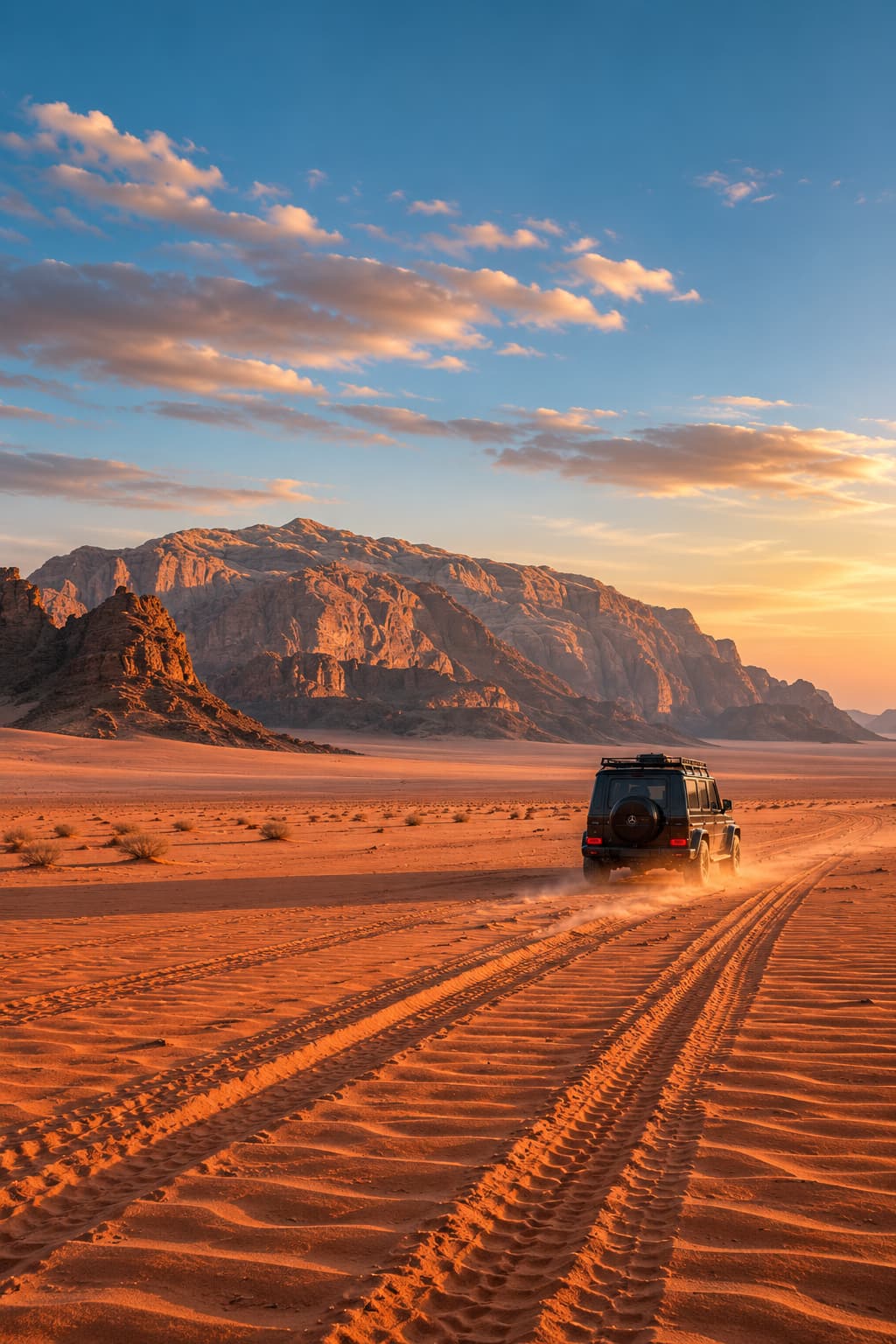
This changes the logistics in a way worth knowing before you book. Generally you can’t drive yourself to your accommodation. Instead, you park near Wadi Rum village or at the visitor centre, and the camp collects you in a 4×4 and drives you out across the sand to wherever they’re pitched. As a result, your camp isn’t just where you sleep — it’s your transport, your dinner, your guide, and usually your jeep tour too. Choosing one is closer to choosing a small tour operator than picking a room.
One more practical reality: the reserve is genuinely remote. There are no shops out in the desert, no ATMs, and no way to nip out for supplies once you’re in. Whatever you want for the evening, you bring with you. That isolation is precisely the point — it’s what makes the silence and the stars what they are — but it’s worth walking in with your eyes open rather than expecting a resort.
02 — Bubble Tent vs. Traditional Bedouin Camp: What Each Is
Before comparing them, it helps to know what you’re actually looking at, because the marketing photos blur the two into one glossy category. In practice these are two quite different nights, at two quite different prices.
Bubble Tents and Martian Domes — What You Get
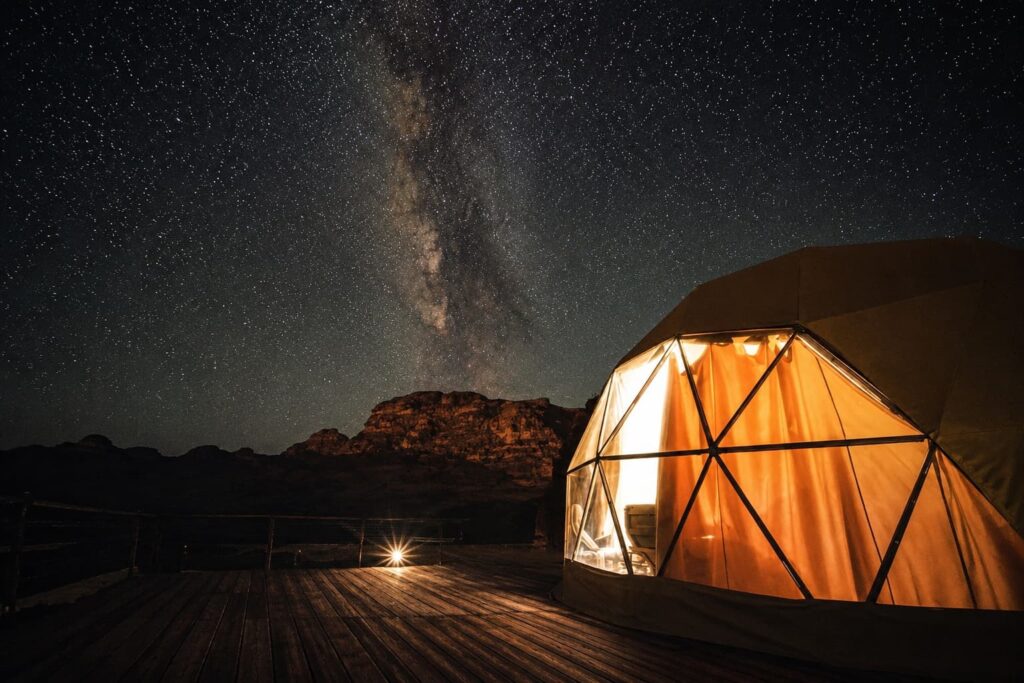
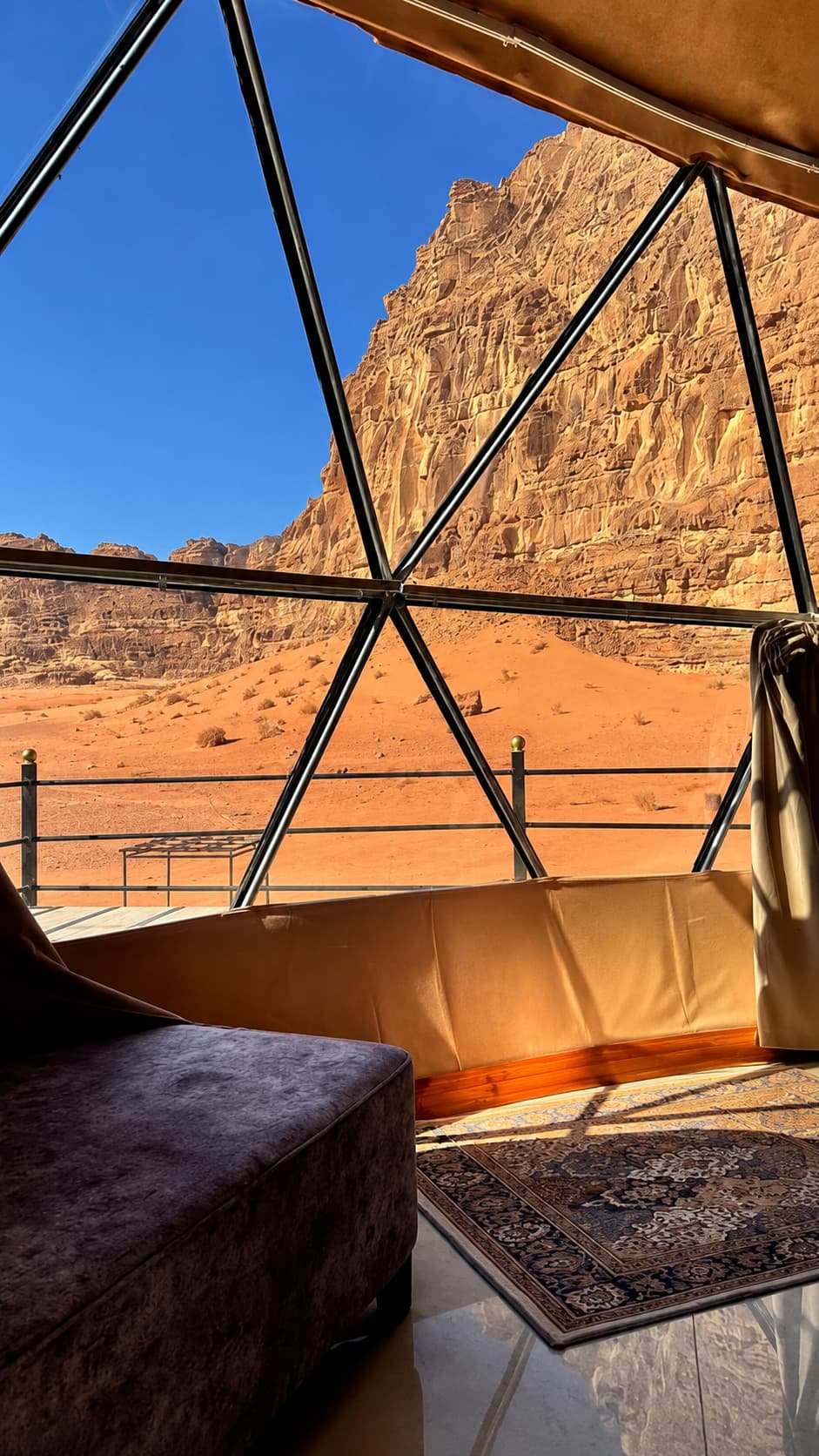
The transparent domes — marketed as “bubble tents,” “Martian domes,” or “star pods” — are the ones flooding your search results. Most feature a clear panel or, better, a fully transparent roof designed so you can watch the sky from bed. Beyond the view, they typically include the comforts a standard tent doesn’t: air conditioning (which matters more than you’d think in summer), heating for cold desert nights, and an en-suite private bathroom with a proper shower. Many add a private terrace, a kettle with tea and coffee, and sometimes a hot tub. In short, this is a hotel room with a see-through ceiling, dropped into the sand.
Traditional Bedouin Camps — What You Get
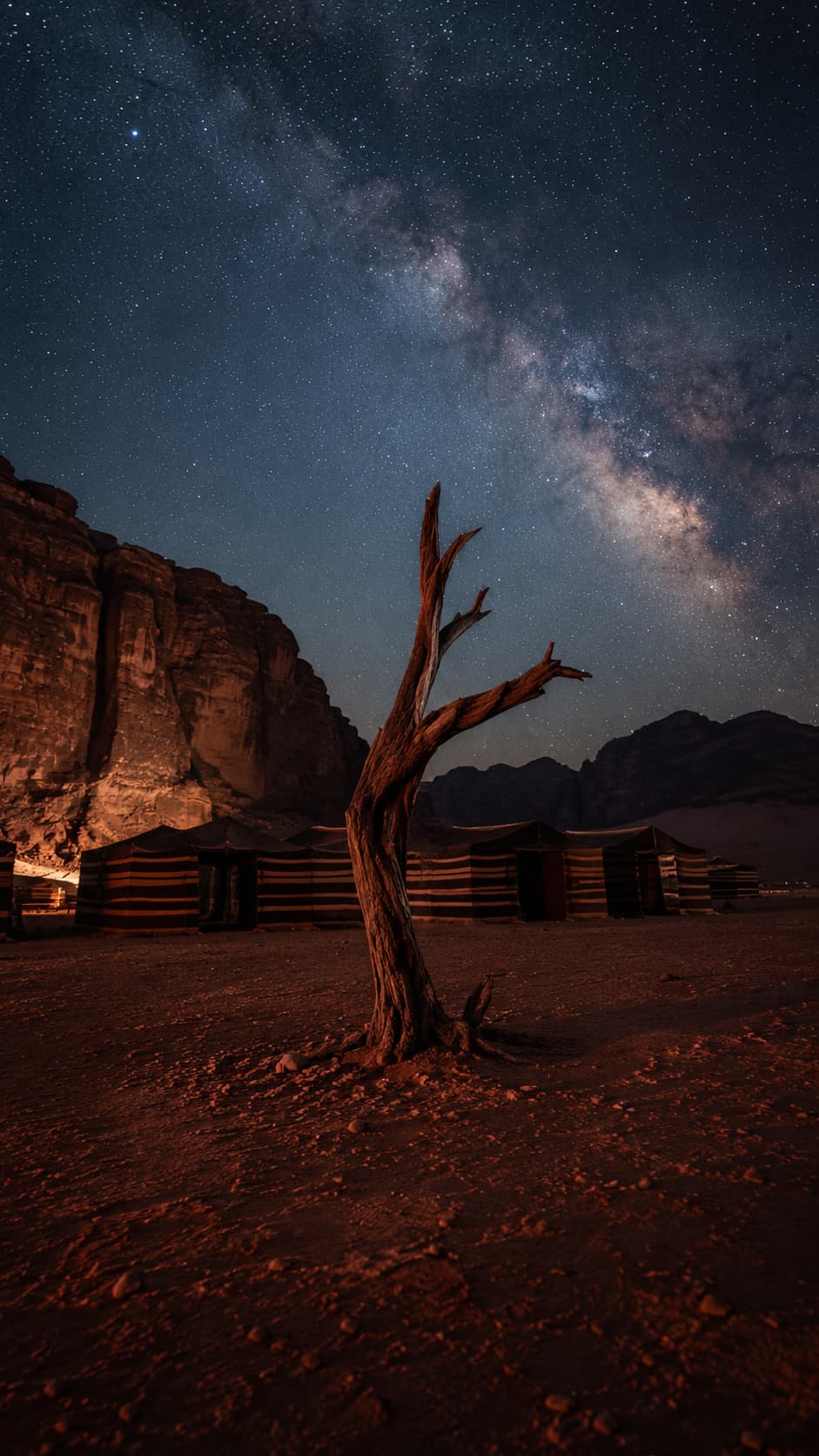
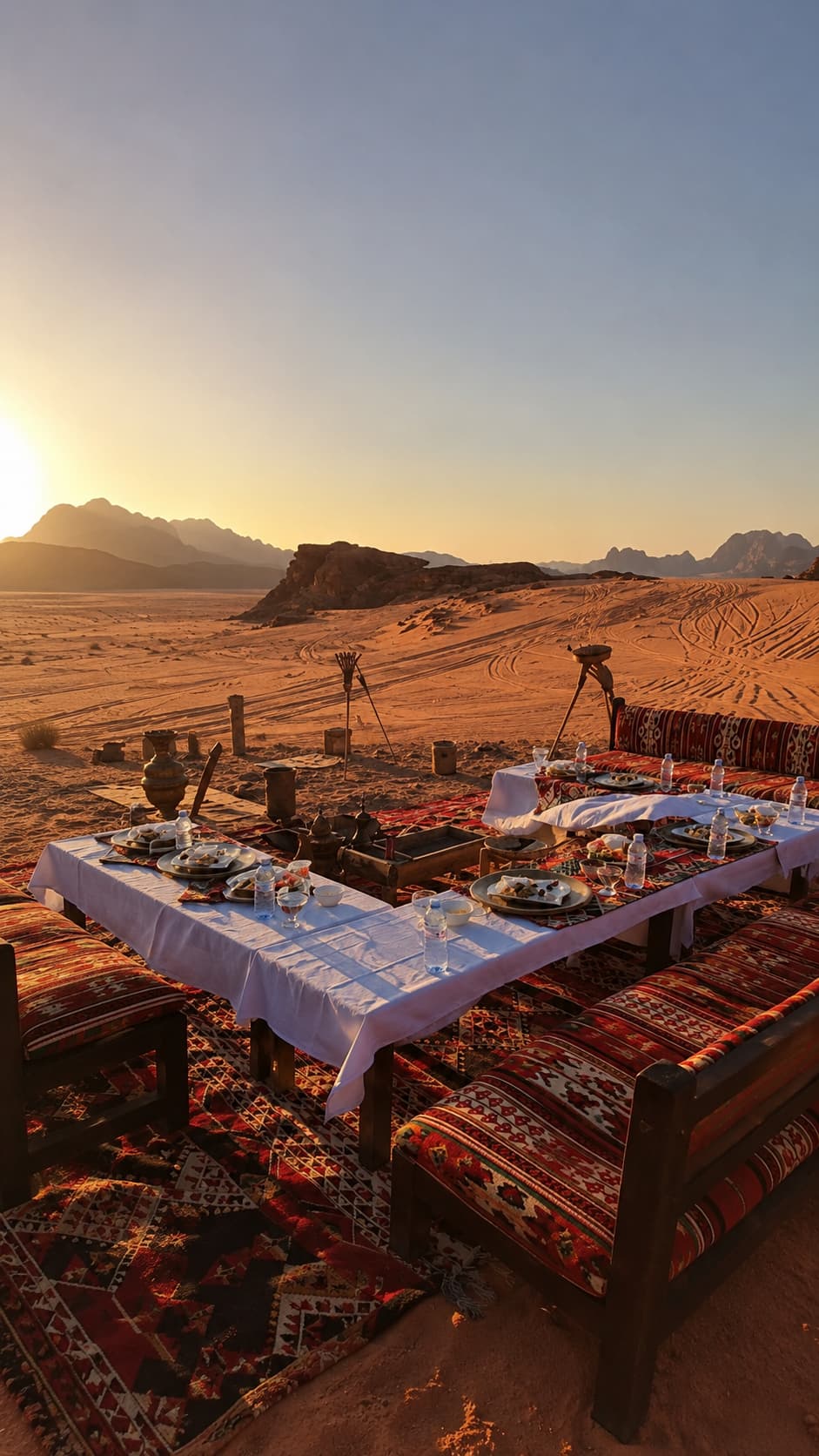
A traditional camp is simpler and, for many travellers, more memorable for it. You get a private tent — a semi-permanent structure, not something you pitch — with a real bed, blankets, and a lock on the door. Bathrooms are usually shared blocks with hot water rather than en-suite, and cooling is often just the desert night doing its work. What you gain instead is atmosphere: a communal tent with a fire, Bedouin tea that never seems to run out, a Zarb dinner cooked underground, and the genuine article of falling asleep in near-total darkness. Moreover, at the budget end, a basic camp can cost a fraction of a dome for arguably the more authentic experience.
Some traditional camps also offer a “sleep under the stars” option — a mattress laid out in the open desert with no tent at all. It’s the most immersive way to spend the night and often the cheapest, though it’s only comfortable in the milder shoulder-season months.
03 — The Honest Side-by-Side
Here’s the comparison laid out plainly. Neither column is the “right” answer — the point is to see clearly what each one trades away, so you can decide which trade-offs you’re happy to make.
Taken together, the split is fairly clean. The dome buys you comfort, privacy of space, and the view from bed; the traditional camp buys you atmosphere, a much lower bill, and — for some people — a truer sense of where you actually are. Notably, the one thing both do equally well is the sky itself, because in Wadi Rum the stars don’t care what you paid.
04 — Are the Bubble Tents Worth It? (The Honest Answer)
This is the question every affiliate list dodges, so here’s a straight answer: it depends on what you’re buying the dome for. If you’re paying for a special night — a honeymoon, an anniversary, a once-in-a-lifetime trip where comfort and the private view genuinely matter to you — then yes, a good dome delivers something real and memorable. The clear roof over your bed is not a gimmick when it works; waking up to the sky is a legitimately lovely thing.
That said, there are honest caveats the photos won’t show you. For one, the “transparent” experience varies enormously — some domes have only a small clear panel at the front rather than a full roof, so read the room description carefully or you’ll pay dome prices for a normal tent with a window. Furthermore, a glass-fronted dome offers very little privacy, and the polished glamping setup can feel a step removed from the desert it sits in. Several travellers come away feeling the experience didn’t quite match the price, or that the “luxury” jeep tour bundled in was ordinary.
The dome is worth it if the comfort and the private view are the point of your trip. If what you actually want is the desert — the silence, the fire, the Bedouin hospitality — a good traditional camp gives you more of that for a fraction of the cost. Neither is wrong. Just don’t pay for the ceiling and then spend the night wishing you were by the fire.
05 — What It Actually Costs to Stay in Wadi Rum
Prices span a wider range than most guides admit, largely because “a camp in Wadi Rum” covers everything from a bare mattress to a design-led suite. As a rough 2026 map, here’s what the tiers actually look like — and crucially, nearly all of them include both dinner and breakfast, which softens the comparison with a normal hotel room.
| Classic Bedouin tent | From around $10–30 per night. A simple private tent, shared bathrooms, communal dinner. The most authentic budget option. |
| Comfortable / “luxury” Bedouin tent | Roughly $50–80. More comfort — often a private or en-suite bathroom, better beds — while keeping the traditional feel. |
| Bubble tent / Martian dome | Typically $185–350, occasionally higher at the top-end camps. AC, private bathroom, clear roof, terrace. Dinner and breakfast included. |
| What’s usually included | Half-board (dinner + breakfast) and the 4×4 transfer from the village. Jeep tours, camel rides, and lunch are usually extra. |
| What’s not | The reserve entrance fee (around 5–7 JD, or free with the Jordan Pass), tours, and anything you want to drink beyond tea, coffee, and water. |
In other words, the gap between a basic tent and a dome is real — often five to ten times — but the dome price is at least buying tangible extras (a private bathroom, climate control, the roof), not just a label. Whether those extras are worth the multiple is the personal call from the section above.
There are no ATMs or card facilities out in the desert. Many camps let you pay the room online in advance, but tours, lunches, and extras are settled in cash on arrival — so bring enough Jordanian dinar with you from Aqaba or Petra.
06 — Which Camp Is Right for You?
Rather than rank camps, it’s more useful to match a type of stay to the kind of traveller you are. The named camps below are simply well-known anchors for each tier — recognisable reference points, not the only good options. Wadi Rum has dozens of small family-run camps, and many unlisted ones are excellent.
Best Wadi Rum Camp for Stargazing or a Special Occasion
If the whole point of the trip is the sky and the setting — and you’re happy to pay for comfort — a dome with a genuine full-transparent roof is the pick. Camps like Sun City Camp (which pioneered the Martian dome concept) and Memories Aicha Luxury Camp are the recognisable names here, with Wadi Rum Bubble Luxotel offering all-bubble stays with hot tubs. Confirm the roof is actually clear, not just a front panel, before you commit.
Best for an Authentic, Budget-Friendly Night
If you’d rather spend your money on the experience than the accommodation, a traditional Bedouin camp is the honest choice — and often the more memorable one. You trade the en-suite and the AC for a fire, a communal dinner, and the real texture of a Bedouin-run camp. Consequently, you’ll also spend a fraction of the dome price. This is the tier where the “sleep under the stars” open-air option lives, too.
Best for Families and Couples
Couples tend to gravitate toward the domes for the privacy and the view, and for a milestone trip that makes sense. Families, on the other hand, are often better served by a comfortable traditional or mid-tier camp with family tents and a communal space where kids can roam — the social, around-the-fire setup suits groups better than a sealed glass pod. Either way, if you’re travelling with anyone who feels the cold, check for heating, because desert nights drop sharply.
07 — How Many Nights Should You Stay in Wadi Rum?
Most camps recommend one night as the minimum and two to properly explore, and having weighed both, that advice holds up. Here’s what each actually gets you, so you can decide where Wadi Rum sits in your wider Jordan plan.
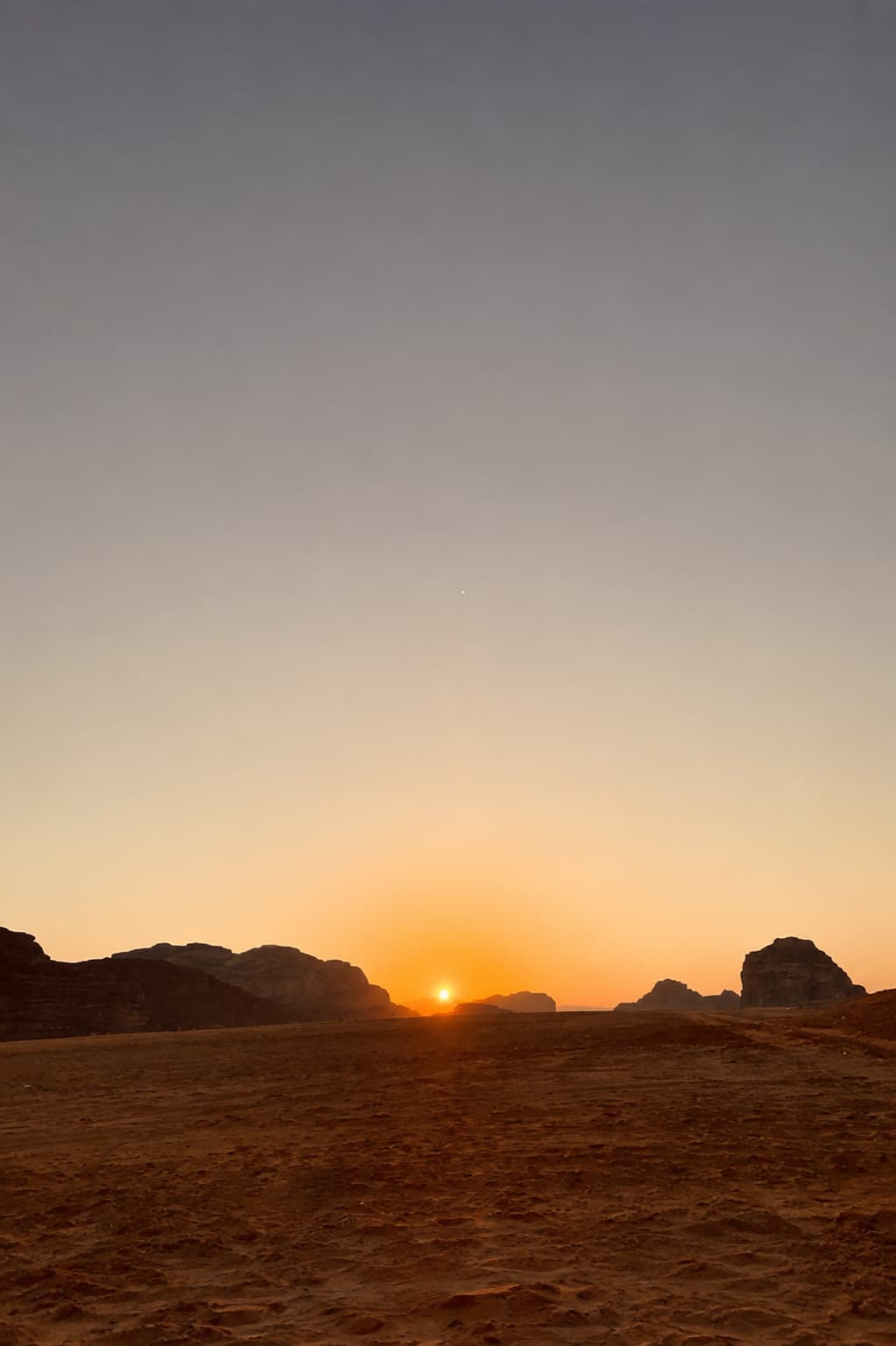
Arrive in the afternoon, take a jeep tour that ends at sunset, eat at camp, sleep under the stars, and do a short camel ride or sunrise the next morning before moving on. It covers the essentials and, for many itineraries, is enough.
A second night lets you acclimatise, slow down, and reach the more remote wild desert beyond the busy red-dune circuit. You get a longer 6–8 hour tour, an unhurried evening, and time to feel the silence rather than tick it off.
If Wadi Rum is one stop in a packed week, one well-planned night genuinely does the job. If the desert is a highlight you’ve been looking forward to, though, the second night is where it stops being a stop and starts being a place. For how it fits the rest of the country, our Jordan 7-day itinerary maps out where the Wadi Rum night sits in the week.
08 — What to Know Before You Book a Wadi Rum Camp
A few practical realities catch first-time visitors off guard. None of them are dealbreakers, but knowing them in advance saves both disappointment and a wasted booking.
Getting to Your Camp
As mentioned earlier, you generally don’t drive to your camp yourself. You’ll be told to meet at the visitor centre (about 6 km before Rum village) or in the village, where your camp’s 4×4 collects you. Confirm the meeting point and your arrival time in advance — late arrivals sometimes incur an extra transfer fee, and the desert has no street signs to find your own way by.
No Alcohol Sold, Patchy Wi-Fi, Remote Everything
Camps in Wadi Rum don’t sell alcohol — the desert is a conservative Bedouin area — but most will let you bring your own and enjoy it discreetly in your tent. If that matters to you, buy it in Aqaba or Petra beforehand and check your specific camp’s policy, since a few forbid it entirely. As for connectivity, Wi-Fi in 2026 usually reaches the communal tent but rarely your room, and the most remote camps have none at all. Treat a night here as a chance to disconnect rather than a place to stay online.
The Booking Tip No One Mentions
Here’s the one detail worth more than any star rating: at many bubble camps, the domes vary widely in what they look out on, and some face the 4×4 parking area rather than open desert. You can pay full dome price and wake up looking at pickup trucks. Therefore, before you book, message the camp and confirm your specific dome faces the sand — not the car park. It’s a thirty-second question that protects the entire reason you’re paying for a dome.
Wadi Rum Camp Facilities and Safety
Stargazing and Getting to Your Camp
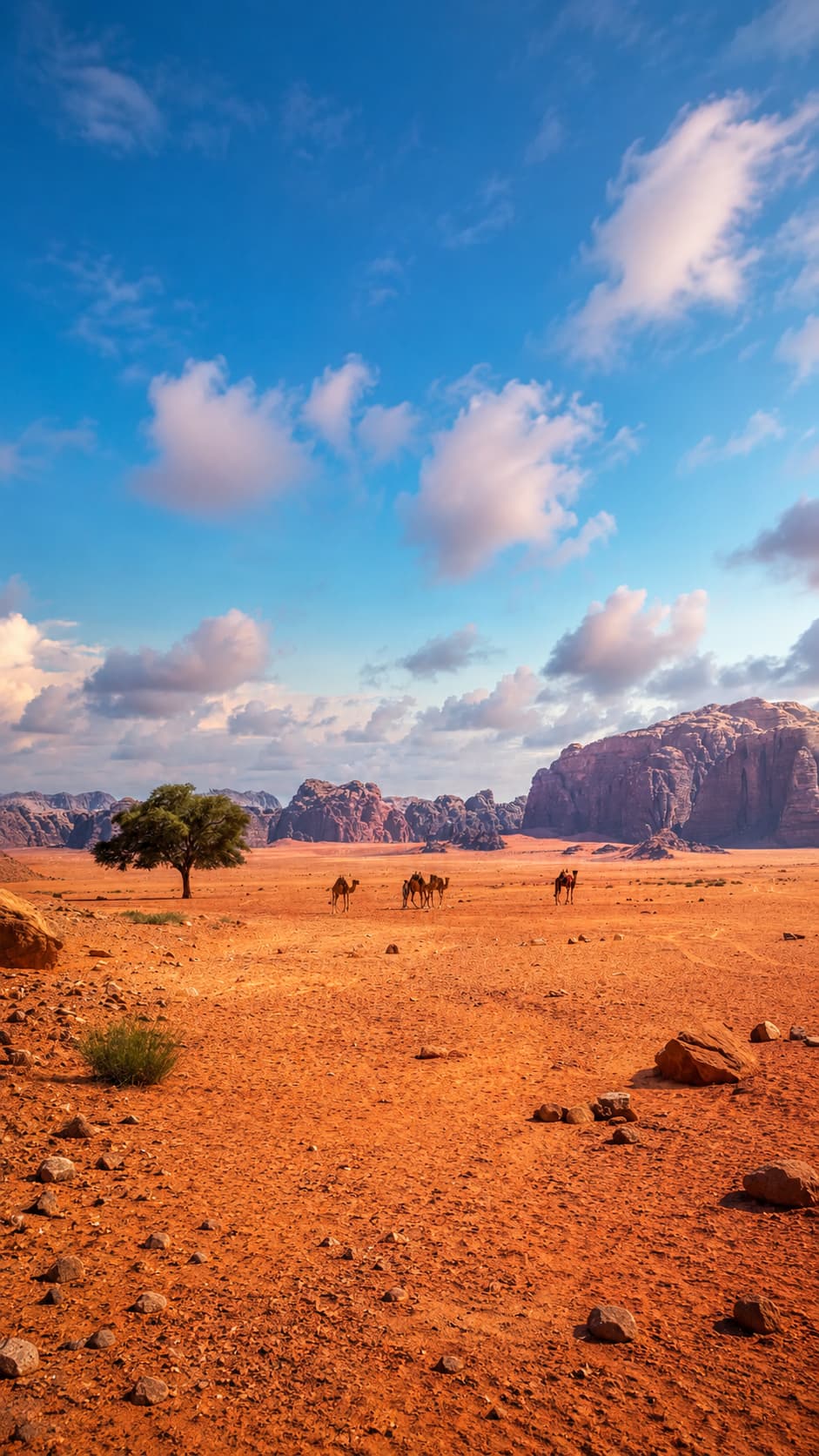
Whichever you choose — the glass dome or the fire and the tea — the desert doesn’t change.
You’ll lie down in the quietest place you’ve ever been, and the sky will do the rest.