
Best Beaches on the Amalfi Coast — and How to Actually Reach Them
Most guides list the famous ones and leave out the part where you’re standing on a highway trying to find the stairs. Here’s what each beach actually takes to get to, and whether it’s worth it.
What to Know Before You Pick a Beach
The best beaches on the Amalfi Coast all share one thing: reaching them requires a decision before you can use them. You’re either descending steps — sometimes two hundred of them, sometimes more — or finding a boat, or paying for a lido that will carry you there by shuttle. Vertically, this coast drops sharply to the sea. Everything between the road and the water is logistics.
Furthermore, even when you get there, almost no beach here is sandy. The famous pictures of Positano’s Spiaggia Grande show pebbles — grey, smooth, and painful without water shoes. The one truly sandy stretch of any real length is at Maiori, and it exists because a catastrophic flood in 1954 destroyed the town and deposited the sediment. Not exactly the origin story the tourist brochures lead with.
None of this is a reason not to go. The water is extraordinary — in June and September, the Tyrrhenian Sea runs warm and a colour that doesn’t quite match any other Mediterranean coast. However, you’ll get more from a day on these beaches if you know exactly what each one involves before you set out.
This guide covers eight Amalfi Coast beaches honestly: how to reach them, what it costs to stay there, how crowded they get, and whether the access is worth the effort. Some are genuinely worth it. Others are better as a photograph than an afternoon. For reference, the Campania Tourism Board and local SITA SUD bus service are your two most useful planning resources before you arrive.
01 — The Beaches: Access, Cost & Honest Verdict
Eight Amalfi Coast beaches, ordered roughly west to east. Water shoes are worth mentioning for every single entry — pack them regardless of which beach you choose.
Spiaggia Grande and Fornillo
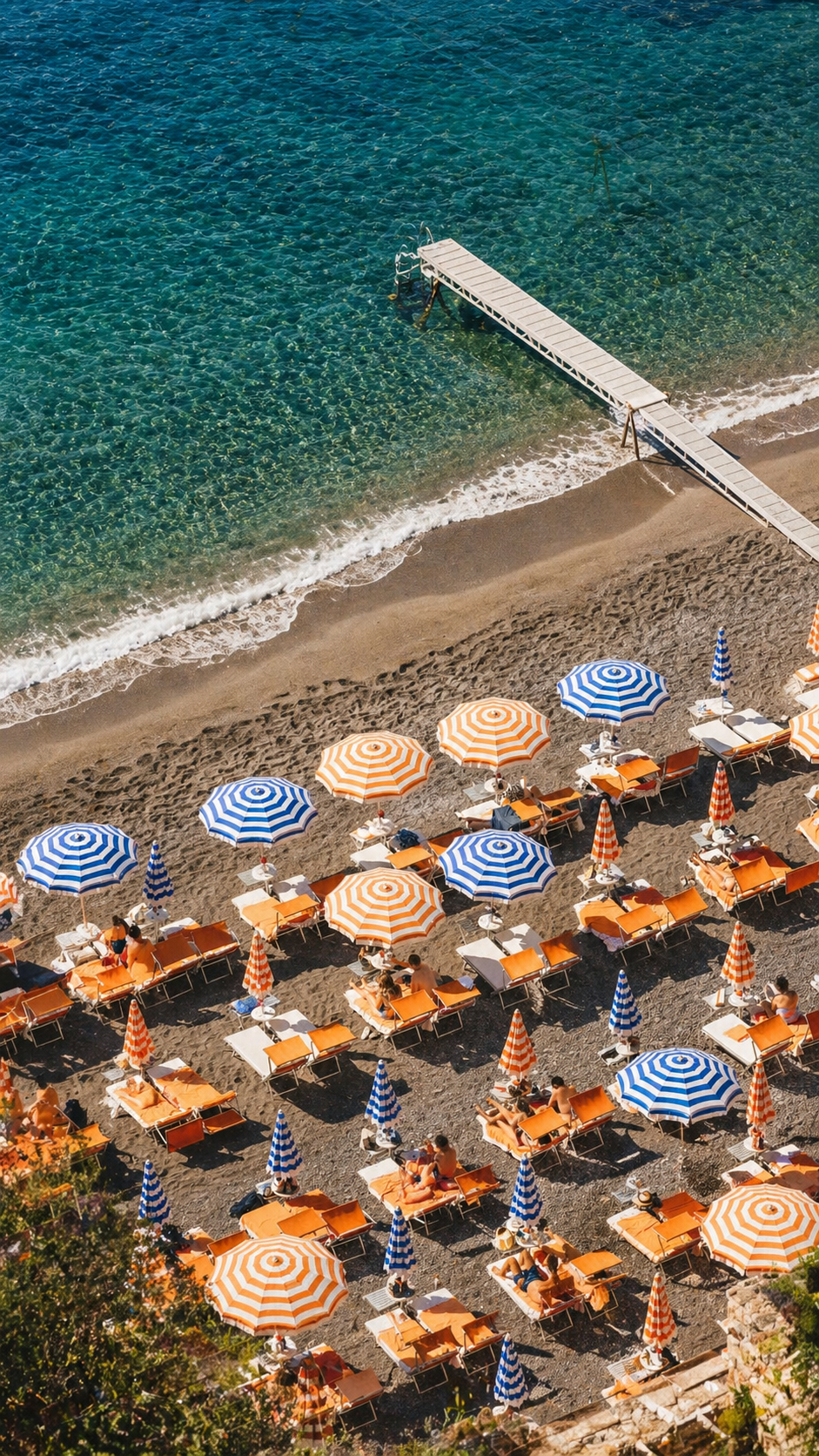
The most photographed beach on the coast and consequently one of the most crowded in summer. Spiaggia Grande sits directly at the foot of Positano’s cascade of pastel buildings, accessible on foot from the town center in a few minutes. Stretching about 300 meters — generous by Amalfi standards — the beach is nonetheless dominated by lido operations (primarily Lido L’Incanto), leaving a relatively small strip of spiaggia libera near the dock. In high season, peak prices run €30–50 per person for a sunbed and umbrella. That famous view is real, and so is the corresponding tourist pressure. Arrive before 9am or after 4pm if you want the atmosphere without the worst of the crowd. Sun dips behind the mountains by mid-afternoon anyway, which makes late starts largely irrelevant.
Ten minutes along the waterfront promenade from Spiaggia Grande, Fornillo has a noticeably different atmosphere — quieter, more local in feeling, with a Saracen watchtower at one end. It is shorter than the main beach, with four lido operations running side by side (Pupetto, Da Ferdinando, Fratelli Grassi, La Marinella) and free zones at each end. Da Ferdinando runs about €30–40 per person depending on season and row. Meanwhile, the free section near Pupetto is one of the more pleasant stretches of public beach in Positano — genuinely usable, not just a gesture. Fornillo faces southwest, which means it keeps sun longer into the afternoon than Spiaggia Grande. Overall, this is the more honest version of the Positano beach day.
Arienzo — The 300 Steps Beach
Arienzo earns its nickname: the “three hundred steps beach.” That’s roughly accurate, and the descent is steep and uneven enough that most visitors who walk it once take the €3–5 shuttle boat back. Arienzo Beach Club operates the paid section, with sunbeds running around €15–20 per person — more affordable than the Spiaggia Grande options. For swimming, it is one of the better beaches in Positano: facing southwest, catching afternoon light longer than anywhere else in town, with calmer water in most conditions. A free section exists and is usable. Worth noting that the boat shuttle is seasonal and runs from Spiaggia Grande’s dock, adding a logistics step. Worthwhile if you want the Positano atmosphere without paying for a front-row seat at the main show.
Marina di Praia, Praiano
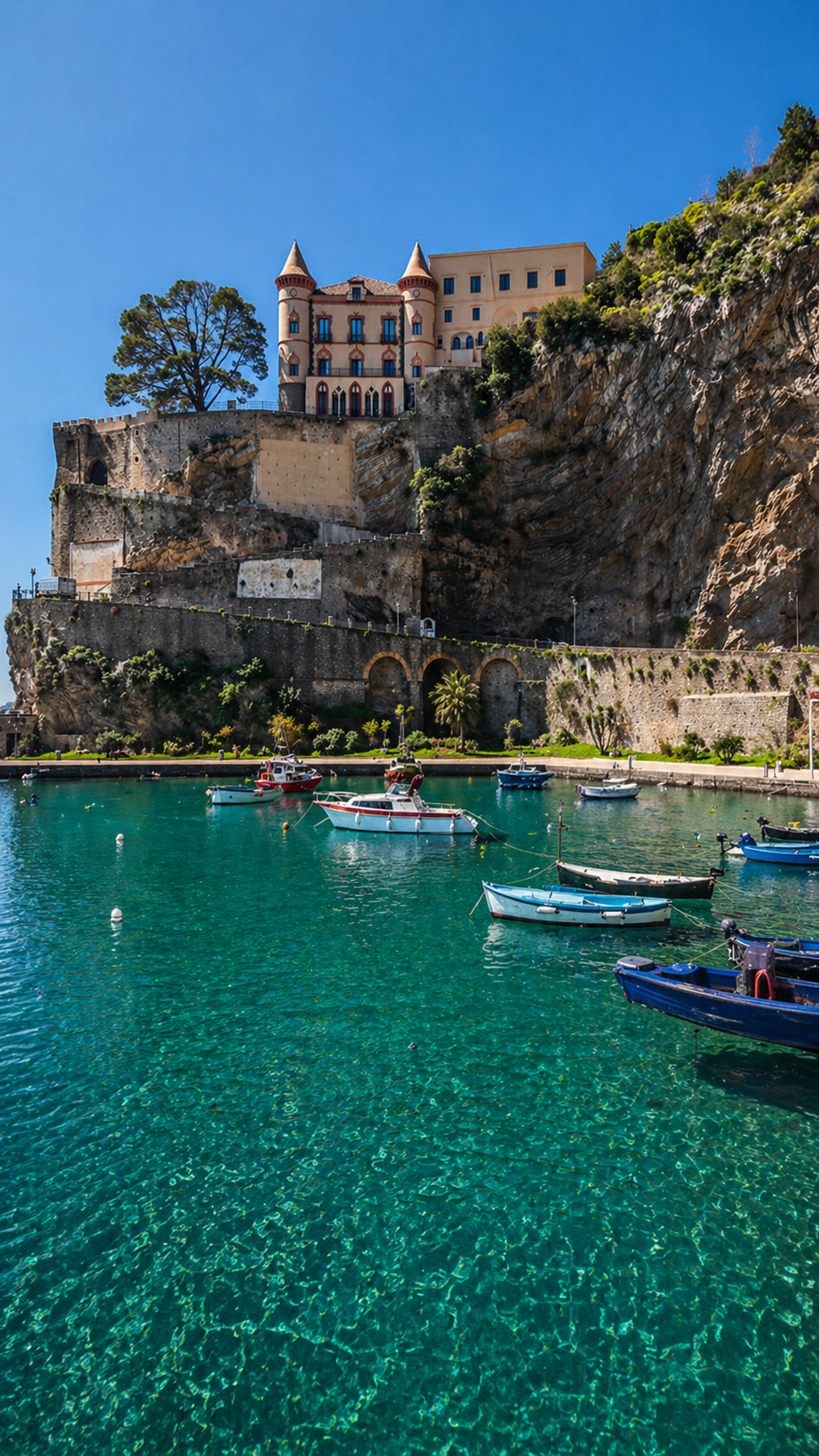
Marina di Praia is a narrow cove between high cliffs and the historic fishing harbour of Praiano — one of the more manageable beaches to reach if you’re arriving by SITA bus. A stop on the SS163 sits directly above, with a signed descent to the beach. By car, limited parking is available along the approach road, though it fills quickly in peak season. The cove itself is compact: mostly pebbles, deep water close in, and several restaurants built into the cliffs including the well-regarded Il Pirata. A mixed lido and free section operates here, with sunbeds running around €20–24 for two chairs for the day — reasonable by Amalfi standards. Light is the main limitation: the cliffs on both sides block sun from early morning and again from mid-afternoon. That said, the cove retains genuine atmosphere — it still feels like a working fishing harbour.
Fiordo di Furore — Overview
The most dramatic beach on the Amalfi Coast — and the subject of its own dedicated section below, because it warrants more than a paragraph. In brief: 25 meters of pebble beach at the base of a gorge, accessed via 200 concrete steps from the coastal road near the Furore Bridge. Free entry. No facilities beyond an occasional seasonal snack cart. Sun clears the cliff walls later in the morning and disappears again earlier than you’d expect in the afternoon. Sunbeds occasionally available for around €15 cash. See the dedicated section for the full access guide.
Amalfi Town — Marina Grande and Atrani
Amalfi’s main beach sits directly in front of the town, with the cathedral visible above and the ferry dock at one end. Additionally, it is the most convenient Amalfi Coast beach to reach: five minutes on foot from the bus stop, no steps involved, full amenities available. The trade-off is that it is very much a tourist beach — loud, busy from mid-morning, and largely occupied by lido chairs with a narrow free strip at each end. Accordingly, it works better as a secondary experience tacked onto a morning in town. From here you can also catch the Cooperativa Sant’Andrea boats out to smaller coves including Duoglio — those boat trips (roughly every 30 minutes in summer, €5–8 each way) are genuinely worth doing if you want a quieter swim without the stair commitment.
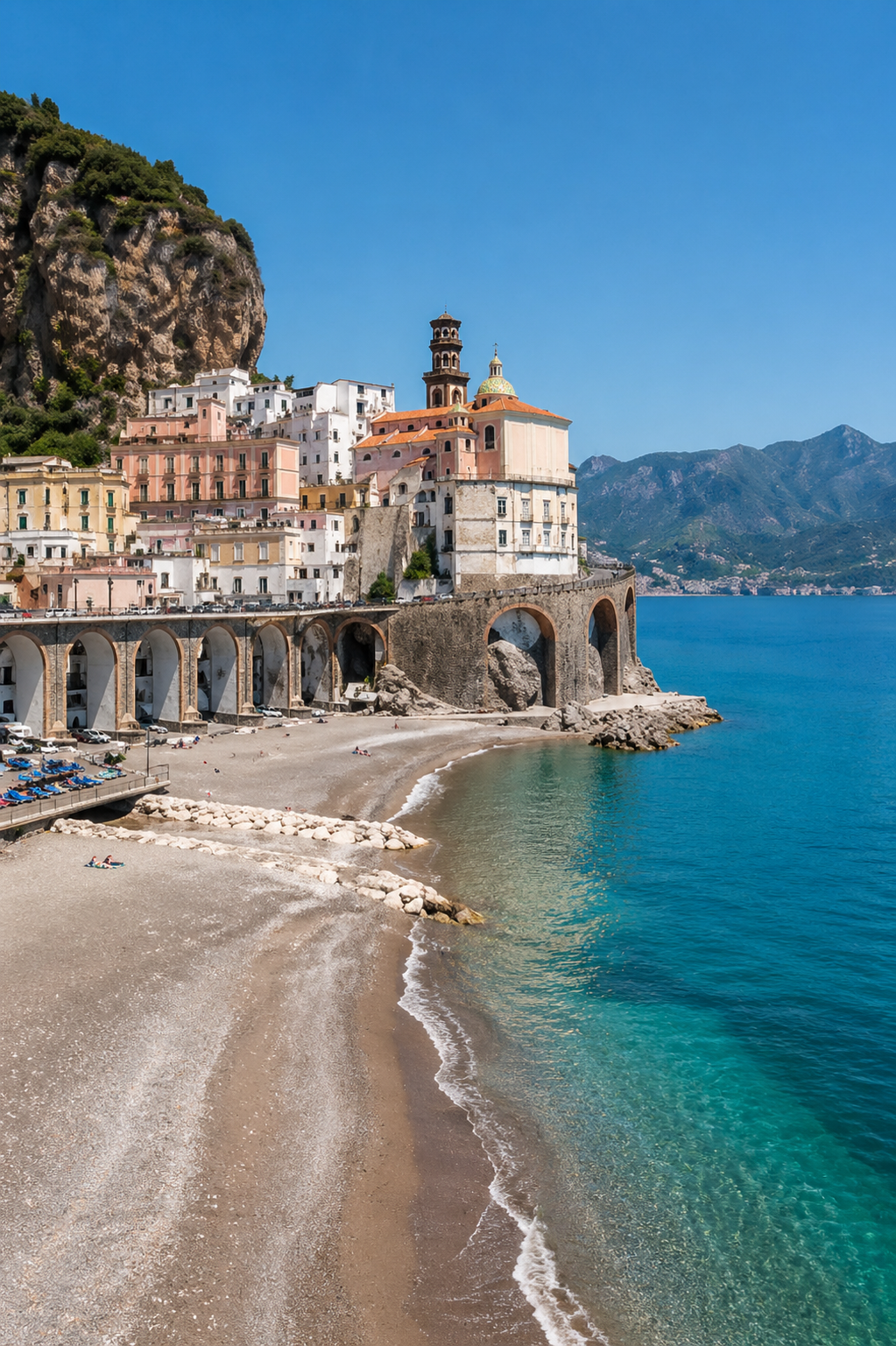
Atrani sits five minutes from Amalfi town — through the pedestrian tunnel, or slightly longer along the coastal path — and is one of the most underused beaches on the coast. The tiny main square opens directly onto the beach, which is sandy-and-rocky and genuinely quieter than its proximity to Amalfi suggests. The beach club here is municipally operated, which keeps pricing more honest than most: sunbeds and umbrellas at rates set by the town administration rather than a private operator. The beach loses sun in the afternoon relatively early, so plan a morning here rather than an all-day session. Nevertheless, Atrani is the answer for anyone who wants the Amalfi Coast atmosphere without the Amalfi price point and crowd level.
The Sandy Exception — Maiori
The closest thing to a conventional beach experience on the Amalfi Coast. Maiori is 930 meters long, almost entirely sandy — an anomaly explained by a 1954 landslide that restructured the coastline — and catches afternoon sun later than anywhere else because the cliffs here are set further back. The town itself is predominantly local, which keeps prices and atmosphere noticeably different from Positano or Amalfi. Bus access is direct from Amalfi (25 minutes, SITA Salerno–Amalfi line) and from Salerno. By car, a large car park sits at the eastern end of the waterfront. Free beach sections exist at either end of the main strand, with sunbeds typically running €10–15 per person. If you’re travelling with children, or want a full sandy beach day without logistics, Maiori is simply the most practical answer on the coast.
02 — Free vs Paid: What the Difference Actually Means
On the Amalfi Coast, the terms “free beach” and “lido” refer to a distinction that is more significant in practice than the language suggests. Understanding it beforehand changes how you plan your day.
What “spiaggia libera” means
Spiaggia libera — literally “free beach” — is the public section where you can lay your towel without paying anything. By Italian law, every beach must maintain some proportion of publicly accessible space. In practice, however, this section is often small, fills quickly in summer, and typically lacks the amenities (showers, changing rooms, sun umbrellas) that a full day in the heat requires. At Spiaggia Grande in Positano, the free section is a relatively narrow strip in the middle of the beach, functional but crowded. Maiori’s free sections at each end of the long strand are considerably more generous. At Fornillo, the free zone near Pupetto ranks among the better public areas on the coast.
Additionally, free beach means bringing everything yourself: shade, food, water. The cliffs here block sun earlier than you expect, and vendors don’t walk the spiaggia libera sections on most beaches. Consequently, a well-stocked bag matters more than it might at a typical Mediterranean resort.
What a lido actually provides
A standard lido reservation typically covers: a sunbed (lettino), an umbrella (ombrellone), and access to changing rooms and showers. Food and drinks are separate. Expect €20–60 per person depending on the beach and row placement — first-row sea-facing spots are always the most expensive. At Positano’s most exclusive lidos, the same pair of sunbeds can reach €250–600. On Atrani or Maiori, the same setup runs €10–20. In most cases, the lido operator will also offer food service, which is convenient but expensive — the pasta here carries a sea-view premium.
Why the lido is often worth it here
The lido option makes more sense than it might initially seem on the Amalfi Coast. Pebbles on most beaches are genuinely uncomfortable without something between you and them. Shade is more valuable here than at sandy beaches because the direct sun is intense and the cliff shadows appear earlier than your body clock expects. Furthermore, shower access matters more when the beach itself is a pebble scramble and you’re heading back to a bus.
The honest middle ground
On most of these beaches, a sensible approach is to use the free section for swimming in the morning when it’s less crowded, then decide by midday whether the lido umbrella is worth paying for. Fornillo and Atrani specifically have free sections comfortable enough that a full day without paying is genuinely viable. Spiaggia Grande in Positano in July, on the other hand, is more of a battle.
03 — Fiordo di Furore: The One Beach Worth the Effort
Most beaches on the Amalfi Coast are either beautiful or accessible. The Fiordo di Furore is both — which is partly why it requires more than a paragraph to explain properly.
What it actually is
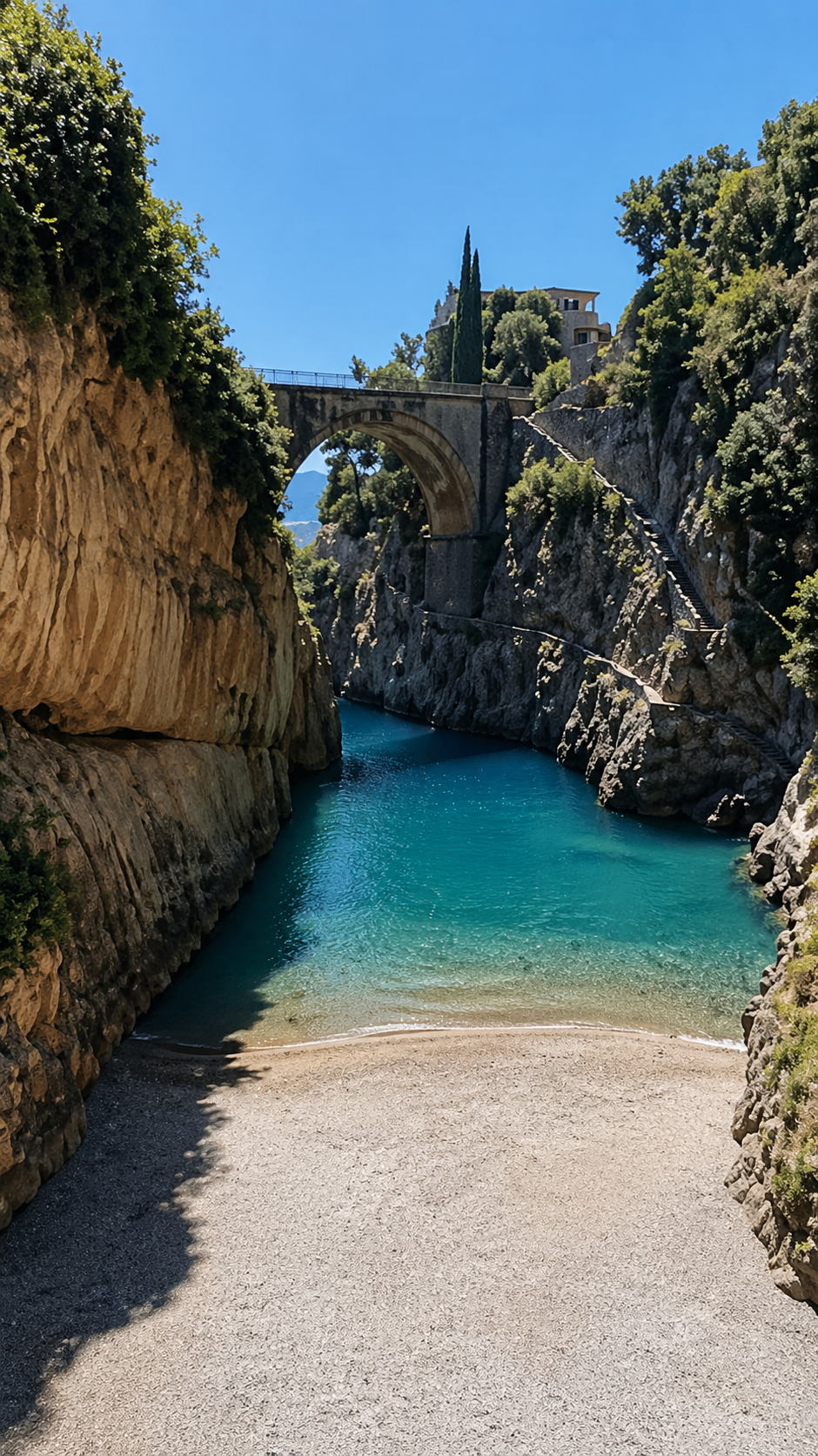
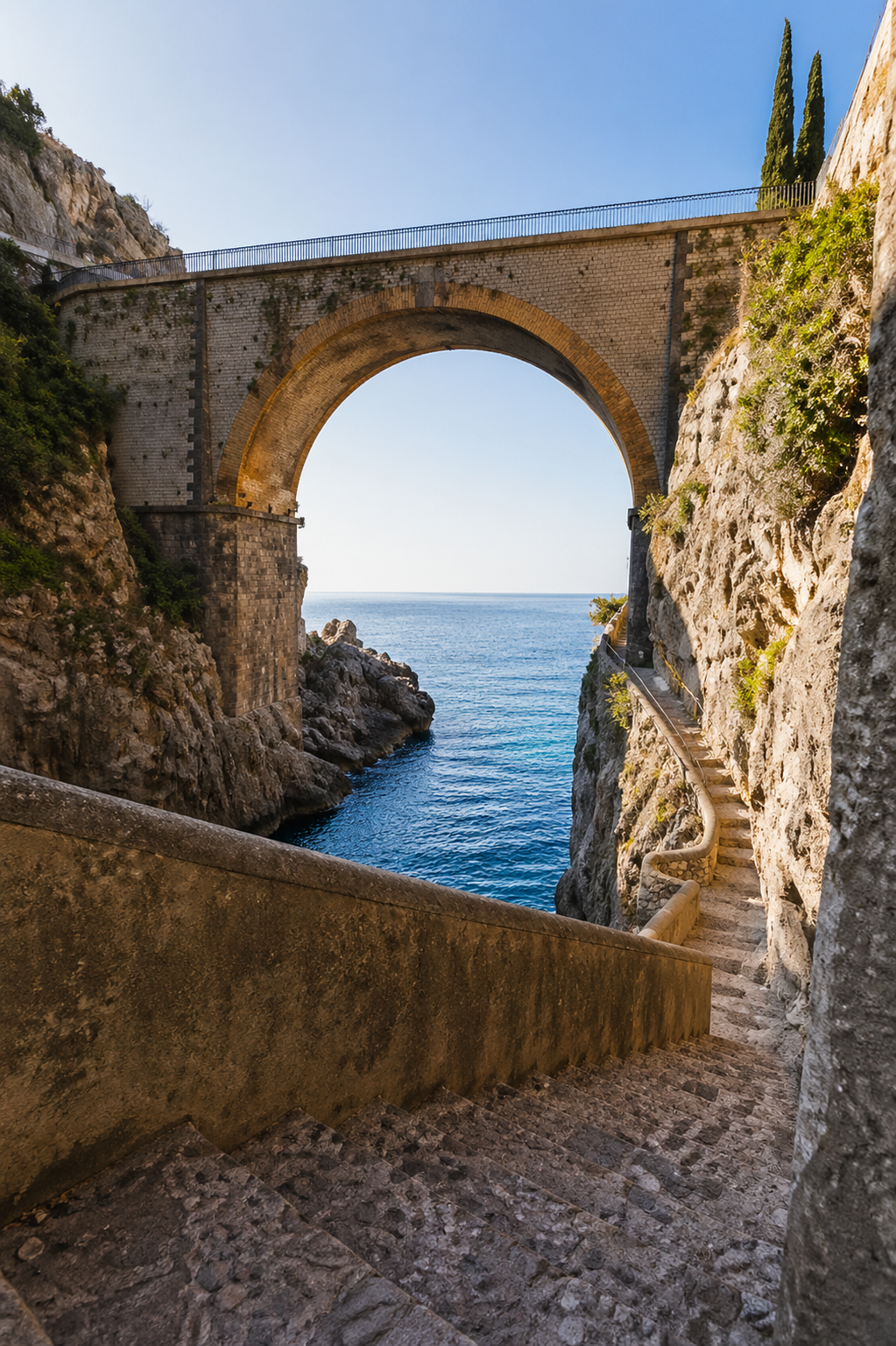
Despite the name, the Fiordo di Furore is not a glacial fjord. Rather, it is a ria — a valley cut over millennia by the Schiato river as it descended from the Monti Lattari mountains to meet the Tyrrhenian Sea. What you get is a narrow gorge with nearly vertical limestone walls, a 30-metre bridge spanning it at the top (carrying the SS163 coastal road), and a 25-metre pebble beach at the bottom. The gorge sits between Praiano and Conca dei Marini, about 6km from Amalfi town.
In July each year, the Maremeeting competition brings professional cliff divers from the Red Bull circuit here — athletes launching themselves from the bridge 30 metres above the water in what is genuinely one of the most cinematic sporting backdrops in Italy. The rest of the year, the bridge belongs to passing buses and the occasional car stopping for the view.
Getting there by bus
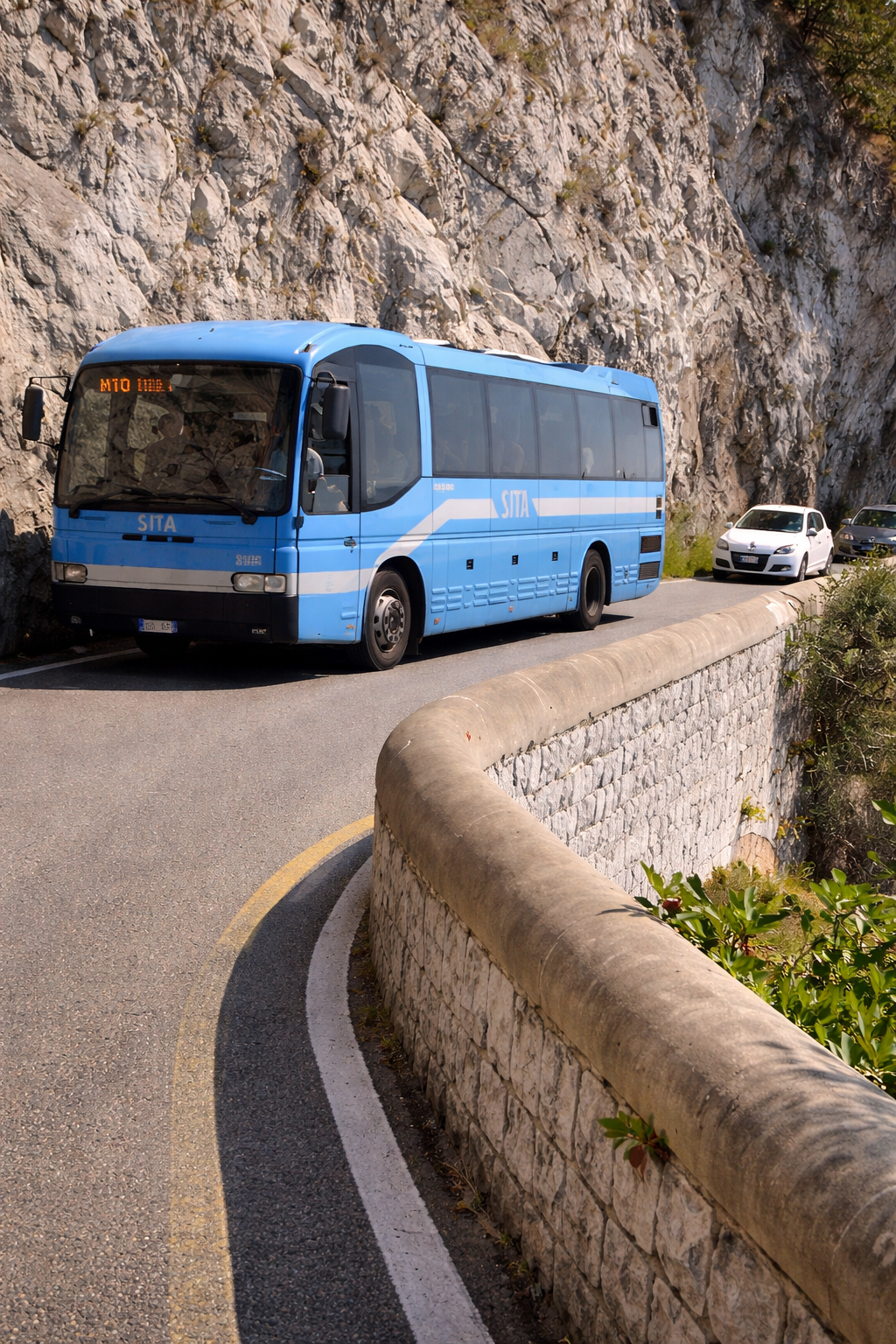
The most reliable and cheapest method is the SITA SUD bus on the Amalfi–Sorrento/Positano line. The bus stops directly at the Furore Bridge on the SS163 — tell the driver “Fiordo di Furore” when you board, as the stop sits between Praiano and Conca dei Marini and is easy to miss. Journey time is about 15–20 minutes from Amalfi, or approximately 30–35 minutes from Positano.
From the bus stop, a signed staircase descends into the gorge — roughly 200 concrete steps. The descent takes about 10–15 minutes at a normal pace. The return, uphill, takes slightly longer and is noticeably more effort in midday heat. Bring water for the climb.
Getting there by car
By car, parking is the genuine problem. A handful of spaces exist along the highway near the bridge, and some limited street parking with blue lines is available near Furore village above. In peak season, however, these fill before mid-morning, and the road is not suitable for stopping or turning around. The bus is a better solution for most people.
The Fiordo di Furore sits between vertical cliff walls, which means the sun only reaches the beach for a limited window each day. Early morning, the gorge is in shade. By around 11am–noon the sun angles in properly, and this window lasts until roughly 4pm when the western cliff cuts it again. Arrive mid-morning for the best combination of light and manageable crowds. Visiting in early morning gives you atmosphere but cold water and shadow.
What it’s like on the beach
The beach itself is 25 meters of grey pebbles — compact enough that a dozen people make it feel occupied. Swimming here is genuinely excellent: cool, deep, and quiet in a way that most Amalfi Coast beaches aren’t. Protected from wind and larger swells by the cliff walls on either side, the water in the gorge is extraordinarily clear and calm.
Facilities are minimal. No permanent beach club, no changing room, and no guaranteed toilet access. Occasionally a seasonal vendor sets up selling water and snacks; occasionally sunbeds appear at around €15 cash. Treat it as a wild swim spot and bring everything you need.
Sound amplifies sharply off the cliffs, which means the atmosphere shifts from serene to chaotic quickly once several groups arrive. Weekday mornings in May, June, or September are the version of this beach that makes the effort feel genuinely worthwhile. A Saturday afternoon in August is a different experience entirely — still beautiful, but shared very tightly.
The Fiordo di Furore has been subject to temporary closures due to rockfall risk on the cliff faces. Before making a special trip, check recent visitor reports or the Comune di Furore’s social pages to confirm it’s open. This applies particularly after heavy rainfall or in early spring before seasonal maintenance has been completed.
04 — Quick Reference Table
| Beach | Nearest Town · Access Method · Crowd Level · Free Section · Sun Until |
| Spiaggia Grande | Positano · Road / short walk · Very high (peak) · Small strip near dock · ~3pm (cliffs) |
| Fornillo | Positano · Coastal path 10 min · Moderate · Good zone near Pupetto · ~4pm (faces SW) |
| Arienzo | Positano · 300 steps or boat · Moderate · Limited · Longest sun on coast (SW facing) |
| Marina di Praia | Praiano · Road / stairs from SS163 · Low–moderate · Mixed free section · ~2pm (cliff shadow) |
| Fiordo di Furore | Furore · 200 stairs from SS163 · Low–moderate · Entirely free · 11am–4pm window only |
| Marina Grande | Amalfi town · Road / walk · High (tourists + ferries) · Narrow strips each end · ~3pm |
| Atrani | Atrani · Road / tunnel walk · Low · Municipal lido + free section · ~2:30pm (east-facing) |
| Maiori | Maiori · Road / flat walk · Moderate (local) · Wide strips at each end · Latest on coast |
05 — Practical Notes
Water shoes
Every single beach in this guide is pebbled — or has enough rock shelf entry that bare feet will be painful and slow you down. A pair of lightweight water shoes (the rubber mesh kind, not sandals) genuinely changes how much you enjoy the swimming. They cost very little, compress flat in a bag, and eliminate the pebble problem entirely. Buy them before the coast, not at one of the tourist shops in Positano where they are overpriced by a factor of two.
Getting between beaches by boat
The Cooperativa Sant’Andrea operates a boat shuttle from Amalfi’s Marina Grande harbour throughout the summer — roughly every 30 minutes, 9am to 5pm — to coves that are otherwise difficult or impossible to reach on foot, including Duoglio beach. The per-trip cost runs €5–8. Combining an Amalfi town morning with a boat excursion to one of the quieter coves makes for a sensible full day without requiring either a lot of steps or a private boat charter.
When to visit the Amalfi Coast beaches
May and late September are the best months for beaches on this coast. Water temperatures are warm enough by mid-May for comfortable swimming, crowds are a fraction of what they are in July and August, and accommodation prices drop noticeably. September keeps the warmth of summer while the cruise ship passenger numbers fall. June is also strong — warm, manageable, and before the peak season pricing fully kicks in.
July and August are busy in a way that changes the character of every beach listed here. Spiaggia Grande in Positano at 11am on a Saturday in August is not a beach day — it is an event. The smaller, harder-to-reach beaches handle this better, which is partly why a place like Arienzo (with its 300-step deterrent) remains relatively pleasant even in peak season.
Sunscreen and the Tyrrhenian sun
The Mediterranean sun at this latitude reflects off the water in a way that catches people who have brought the same sunscreen they use for city days. Factor 30 minimum on the water, reapplied after swimming. The pebble beach also radiates heat upward, which means the effective temperature in the middle of the day sits several degrees warmer than the air temperature suggests. A sun shirt for morning swimming is worth considering.
- Water shoes — non-negotiable, for every beach on this list
- A thick towel or thin foam mat — pebbles telegraph heat upward through thin towels
- At least 1.5 litres of water per person — shops and vendors at most beaches charge tourist prices
- Cash for sunbeds and snacks — several beach clubs here still don’t take cards reliably
- Snacks for the stair beaches — Furore, Arienzo, and Duoglio have no guaranteed food access
- Sunscreen, factor 30 minimum — the sea reflection makes this coast stronger than it seems
- A bag that closes properly — pebbles find their way into everything open
06 — Frequently Asked Questions
What are the best free beaches on the Amalfi Coast?
Which Amalfi Coast beach is easiest to reach without a car?
Is Fiordo di Furore worth visiting on a day trip?
Are there any sandy beaches on the Amalfi Coast?
How crowded do Amalfi Coast beaches get in summer?
What’s the best time of year to swim at the Amalfi Coast?
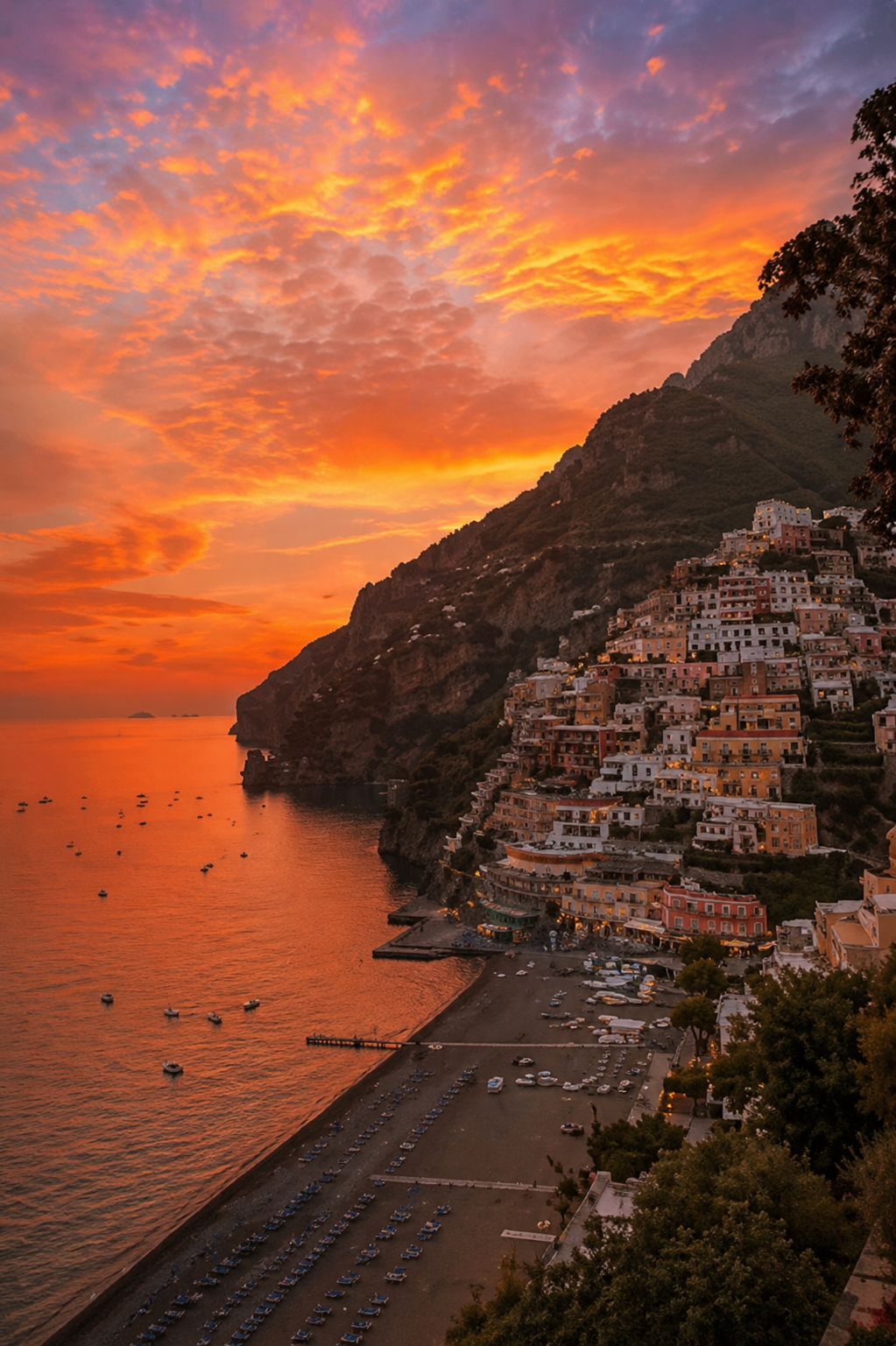
The Amalfi Coast doesn’t make its beaches easy to reach on purpose.
Everything worth swimming in is at the bottom of something steep.