
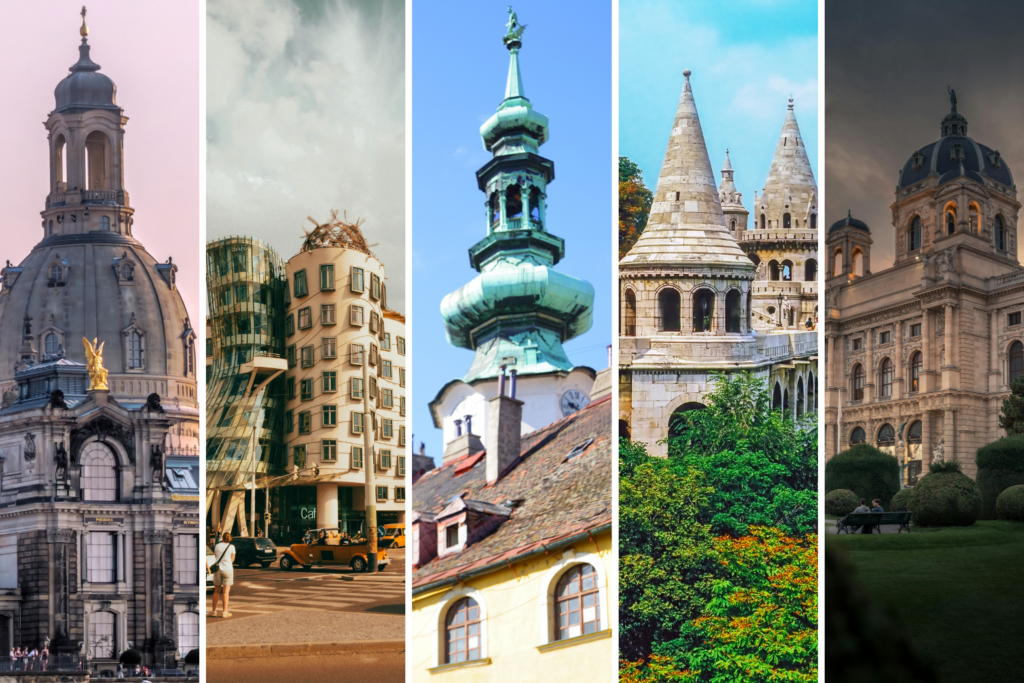
5 Cities in Central Europe Worth a Road Trip (And How to Connect Them in One Week)
Dresden, Prague, Bratislava, Budapest, and Vienna — five capitals linked by road, connected by the Danube, and manageable in nine days without feeling rushed.
The road trip case for Central Europe
There is a version of Central Europe you reach by train: efficient, point-to-point, one city at a time. That version is perfectly good. There is another version you reach by road — one where the journey between cities becomes part of the trip rather than a gap between the interesting parts. This is the road trip version.
Over nine days, we drove a loop through five cities — Dresden, Prague, Bratislava, Budapest, and Vienna — in a single rented car. The route follows a broadly circular path, with Dresden as both start and end point, and the Danube running through the lower half of it connecting Bratislava, Budapest, and Vienna in a rough line. Furthermore, the distances are forgiving: no single drive exceeds three hours without something worth stopping for on the way.
This post is about the five cities themselves — what each one is actually like, how much time each one deserves, and how they connect into a route that works as a coherent whole. If you are deciding whether Central Europe is worth a road trip, or trying to figure out which cities to prioritise, this is the post to start with. The individual city guides in this series go deeper on each stop.
What this post covers
01 — Why Road Trip Central Europe
Most people fly into one Central European city, spend a few days, and fly out again. That is a reasonable way to see Prague or Budapest. It is not, however, a reasonable way to understand how these cities relate to each other — and that relationship is, in many ways, the most interesting thing about the region.
Central Europe is compact in a way that rewards overland travel specifically. The five cities on this route are spread across roughly 1,000 kilometres, but because they sit along natural corridors — river valleys, pre-existing trade routes, the Danube — the connections between them feel logical rather than arbitrary. Additionally, the scenery between them is not simply motorway. Saxon Switzerland sits between Dresden and Prague. The Hungarian plain opens up south of Bratislava. The Vienna Woods begin before the city does.
What a car gives you that a train does not
The train between Prague and Budapest is perfectly comfortable and takes around seven hours. The car takes roughly the same time — but the car can stop in Bratislava for two hours without it costing you a separate ticket or a rescheduled connection. That flexibility matters most at the mid-trip stops: Bratislava, in particular, would be almost impossible to visit properly as a train stopover. By car, it becomes one of the trip’s easiest and most rewarding additions.
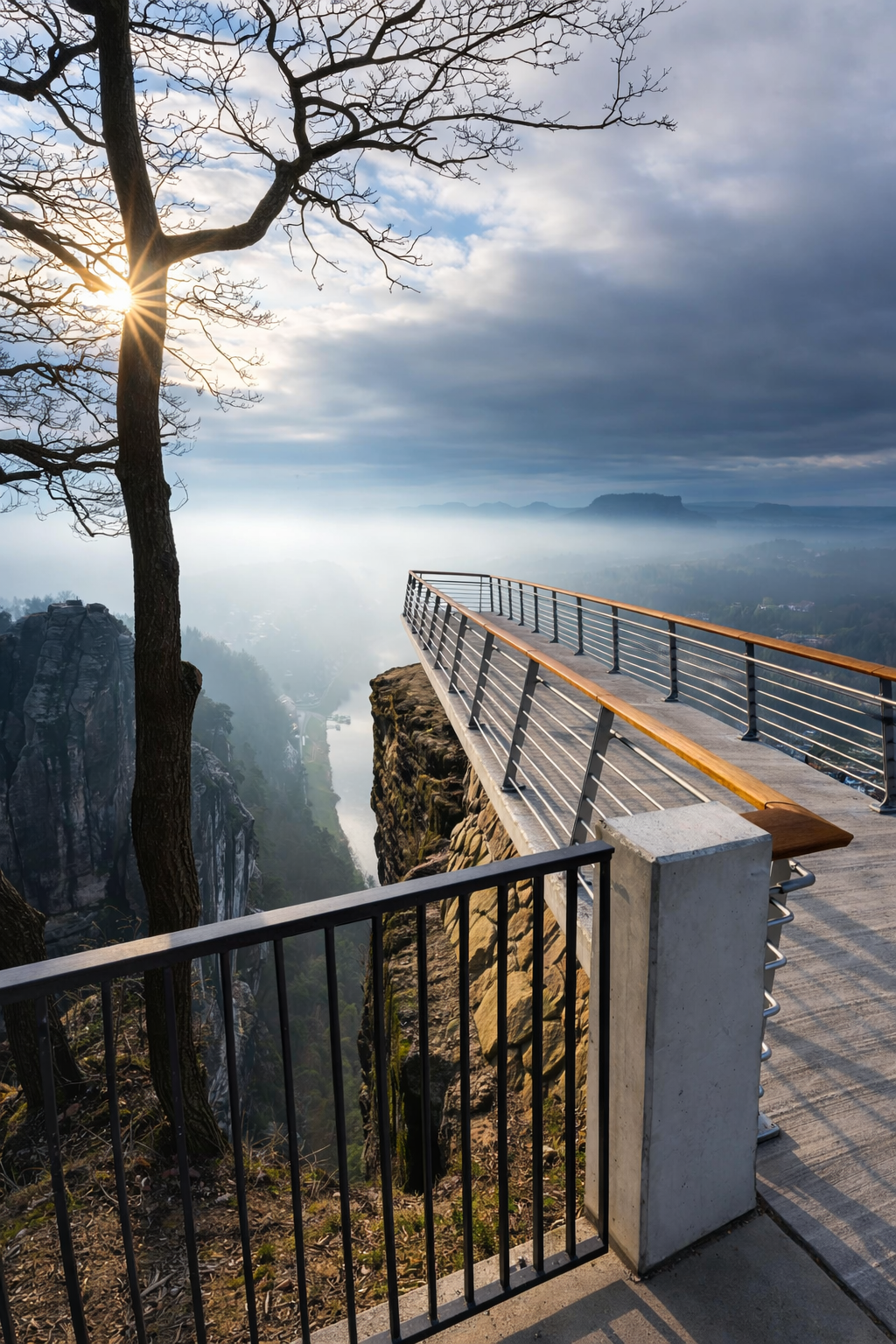
Saxon Switzerland is the clearest example of what the road makes possible. The national park sits forty kilometres from Dresden, slightly off the direct route to Prague, and contains the Bastei Bridge — one of the stranger and more beautiful things in this part of Europe. No train puts you there. The car does, in a two-hour detour that adds very little to the overall driving day and a great deal to the memory of it.
02 — The Five Cities
What follows is an honest summary of each city — what it is actually like, what it rewards, and how much time is sensible to spend there. Each one has a full guide elsewhere in this series for the practical detail.
Dresden
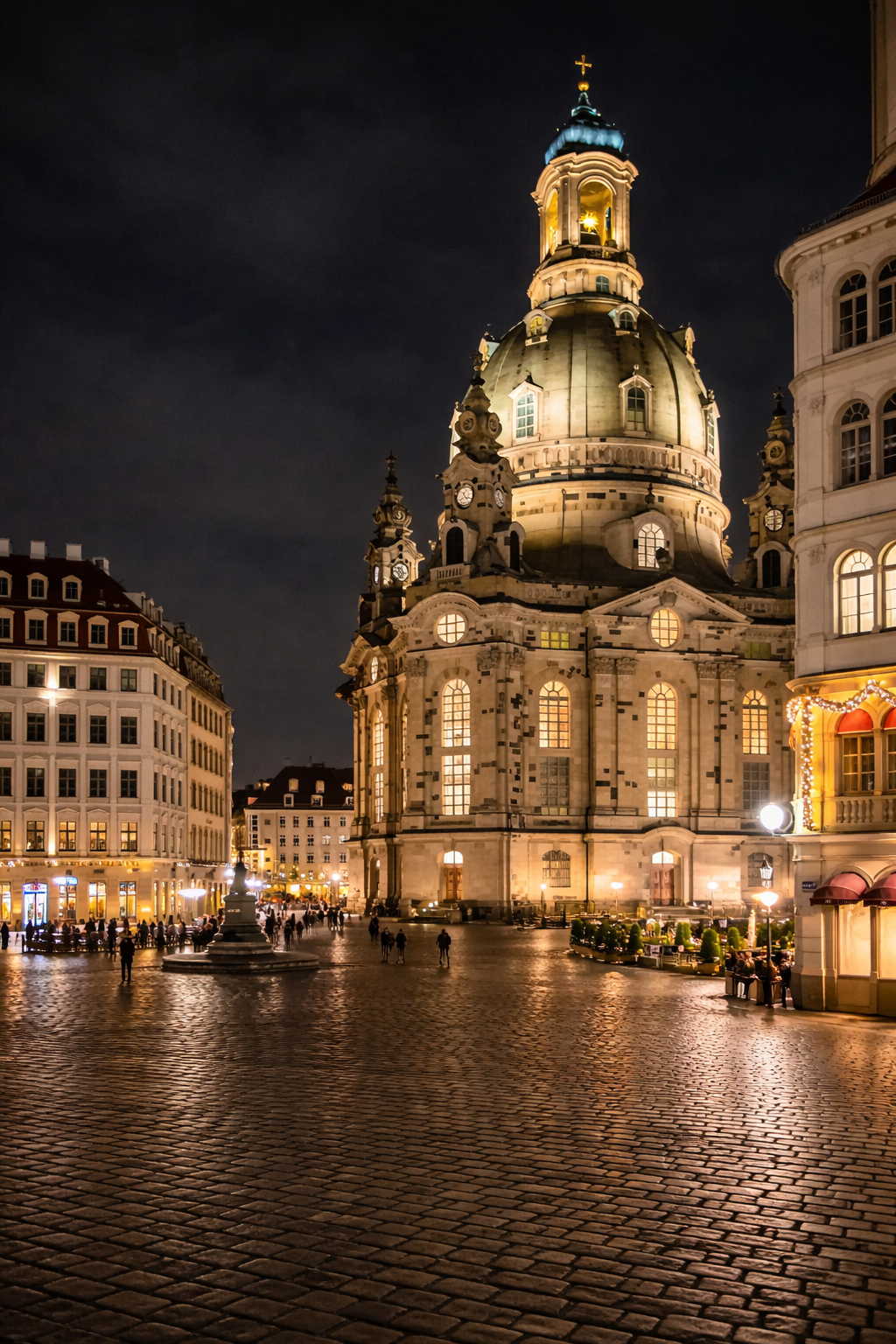
Dresden is where most people’s Central Europe itinerary begins, and where most people underestimate what is there. The city carries the nickname “Florence of the Elbe” — which is the kind of label that tends to set expectations so high they become a liability. What Dresden actually is: a city with a genuinely exceptional Baroque skyline, rebuilt from near-total wartime destruction, with a creative and independent quarter on the north bank of the river that belongs to a completely different register than the historic south.
Two days is the right amount. One day for the Old Town — the Zwinger, the Frauenkirche, the Brühlsche Terrasse at golden hour — and one evening and morning for Neustadt, which is where the city actually lives. The art collections inside the Zwinger complex are world-class and worth the admission if you have half a day to spend inside them. The terrace, meanwhile, is one of the finest viewpoints in Central Europe and costs nothing.
Dresden is also the cheapest city on this route. By German standards it sits well below Munich or Hamburg, and by the standards of the broader itinerary, it gives you the most space to spend money on things worth spending it on.
A Baroque palace complex housing some of Europe’s finest art collections — the Old Masters Picture Gallery being the standout. The courtyard itself is free and worth seeing even without going in.
The reconstructed Protestant church at the heart of the Old Town skyline — destroyed in 1945, rebuilt stone by stone and reopened in 2005. The dome climb gives one of the best city views available.
Dresden: what to see
The elevated promenade running along the Elbe riverbank — Napoleon’s “balcony of Europe.” Worth being here at golden hour, specifically for the light on the water and the skyline behind you.
The outer northern quarter — bars, independent cafés, street art, and the actual social life of Dresden. Different in character from everything in the Old Town and worth an evening.
Saxon Switzerland — The Detour
Technically not a city, but worth including here because it belongs to the route logic in a way that shapes the drive between Dresden and Prague. Saxon Switzerland National Park sits in the Elbe Sandstone Mountains, forty kilometres southeast of Dresden, and contains the Bastei Bridge — a nineteenth-century stone bridge connecting sandstone towers 194 metres above the river valley. It is, in the most direct terms, remarkable.
The detour adds roughly two to three hours to the Dresden-to-Prague driving day — easily absorbed if you leave Dresden mid-morning. There are two ways to reach the Bastei: hike up from the river via a short ferry crossing, or drive directly to the car park near the top. Both work. The hike is better for the experience of arriving; the car park is better if time is short.
Prague
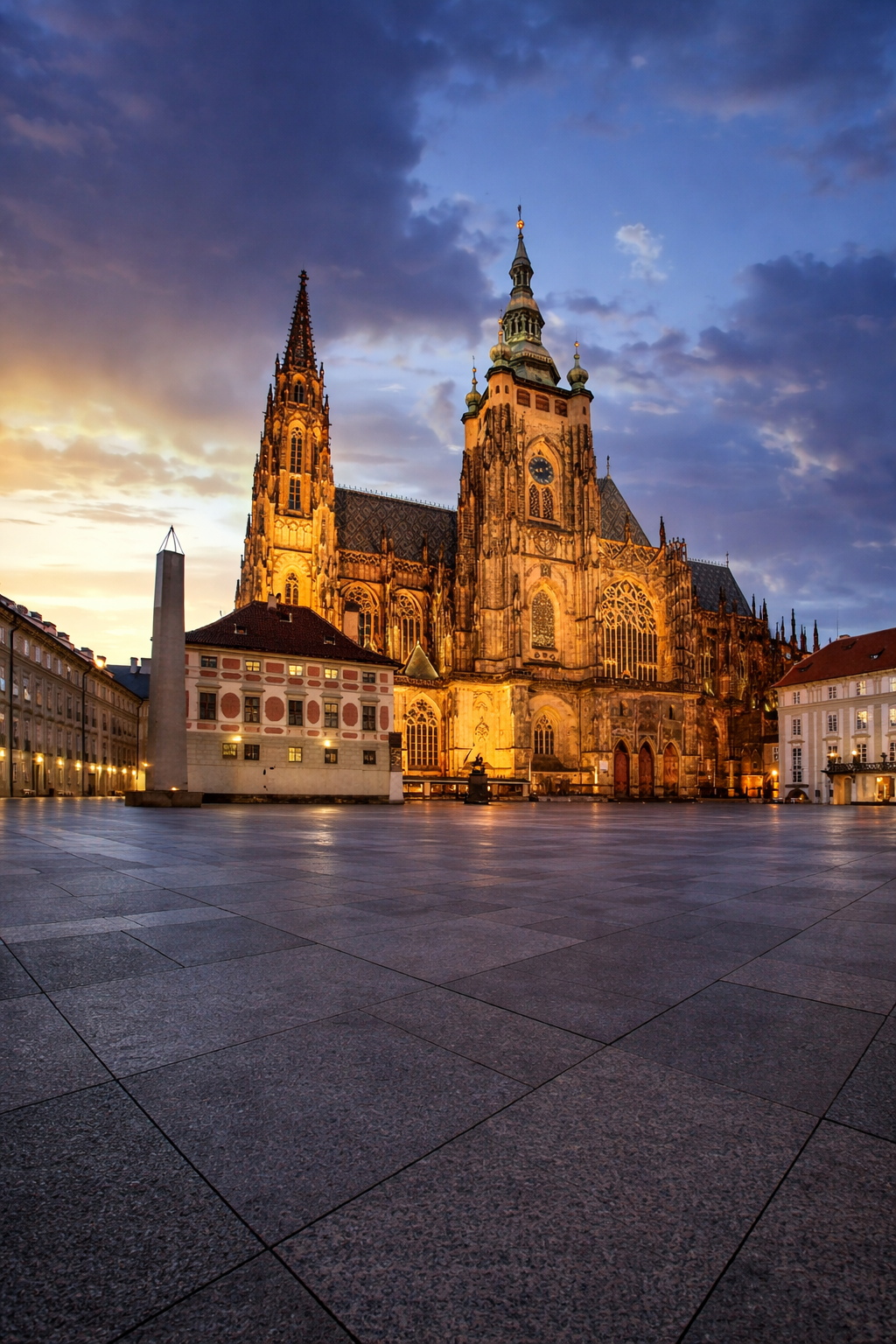
Prague is the city most people have already planned to visit before they start building this itinerary. That is reasonable — the medieval Old Town is extraordinary by any measure, and the castle district across the Vltava gives the city a skyline that belongs in a different era entirely. Consequently, Prague tends to be the anchor around which the rest of the trip organises itself.
What Prague requires more than most cities, however, is timing. By the second visit — in April 2025 — the crowds had returned to the level that makes midday in Old Town Square feel genuinely unpleasant in the warmer months. Charles Bridge between 10am and 4pm in peak season is not the romantic photograph you have seen. Charles Bridge before 8am is a different bridge entirely. The difference between a good trip to Prague and a great one comes down almost entirely to how early you are willing to be out.
Two nights is the minimum. Three is more honest if you want to do both the centre and Prague Castle properly without feeling compressed. The Jewish Quarter — Josefov — warrants a morning on its own, and Petřín Hill is best saved for an afternoon when the light is coming from the west.
Medieval stone bridge lined with Baroque statues connecting the Old Town and Malá Strana. One of Europe’s most photographed bridges — and genuinely worth it at the right time. Before 8am, it’s quiet enough to actually experience.
The largest castle complex in the world by area — more a hilltop city than a single building. St. Vitus Cathedral inside is exceptional. Allow half a day and go early or late in the day.
Prague: what to see
One of the best-preserved historic Jewish quarters in Europe. The Old Jewish Cemetery — layers of graves stacked above each other across centuries — is unlike anything else in the city.
A wooded hillside above Malá Strana with a lookout tower and some of the best elevated views of the city. Less crowded than the castle district and genuinely pleasant on a clear afternoon.
Bratislava
Bratislava is the stopover city — the one most people wonder whether to include at all. The honest answer is: yes, include it, but calibrate your expectations correctly and you will leave glad you did.
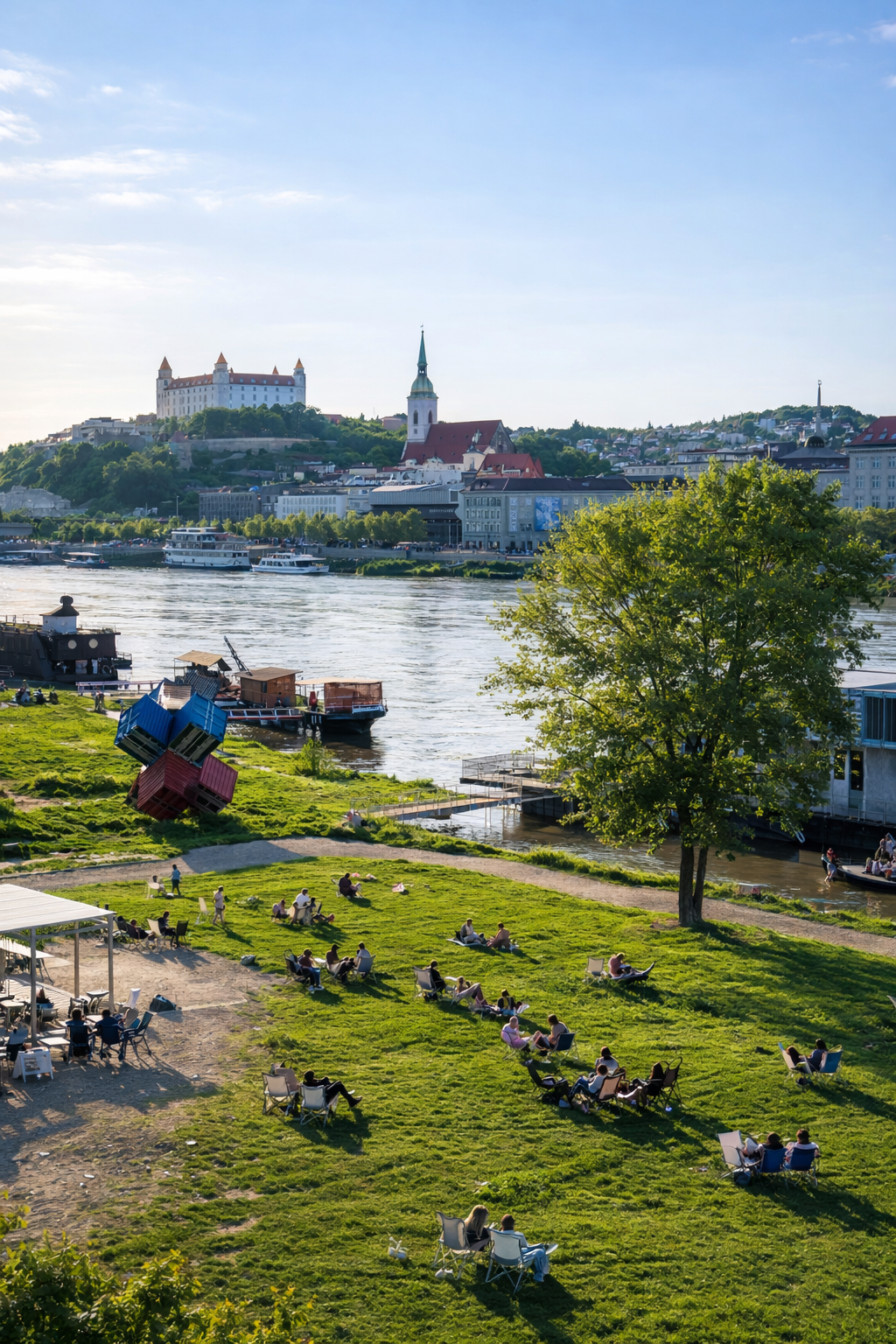
Slovakia’s capital sits almost exactly between Prague and Budapest on the driving route, which means a two-to-three-hour stop costs you almost nothing in overall travel time. Moreover, it breaks up what would otherwise be a four-hour motorway slog in a way that turns a driving day into an actual day. The old town is compact and genuinely pleasant — narrow streets, a hilltop castle visible from most corners of the centre, a Danube riverfront, and a quietness that the other cities on this route have largely lost.
What Bratislava is not is a city worth a standalone weekend trip. It is small — the old town takes around twenty minutes to walk across — and honest about its limitations in a way that you come to appreciate. Two hours here, on a day when you arrive from one capital and leave toward another, is close to perfect.
We did not go up to the castle on this visit. From the old town it looked handsome enough on its hill. In retrospect, it would have added thirty minutes well spent — but two hours is tight, and priorities have to be made. The Michael Gate, the Main Square, and a coffee somewhere on the Danube promenade covered the visit satisfyingly.
Budapest
Budapest was the highlight of the trip. Not the most immediately beautiful city — Prague takes that in the first few hours — but the most alive, the most rewarding to spend time in, and the most honest about giving you value for what you spend there. Furthermore, it is the city that most people in our group talked about most when we got home, which is a more reliable measure than any ranking.
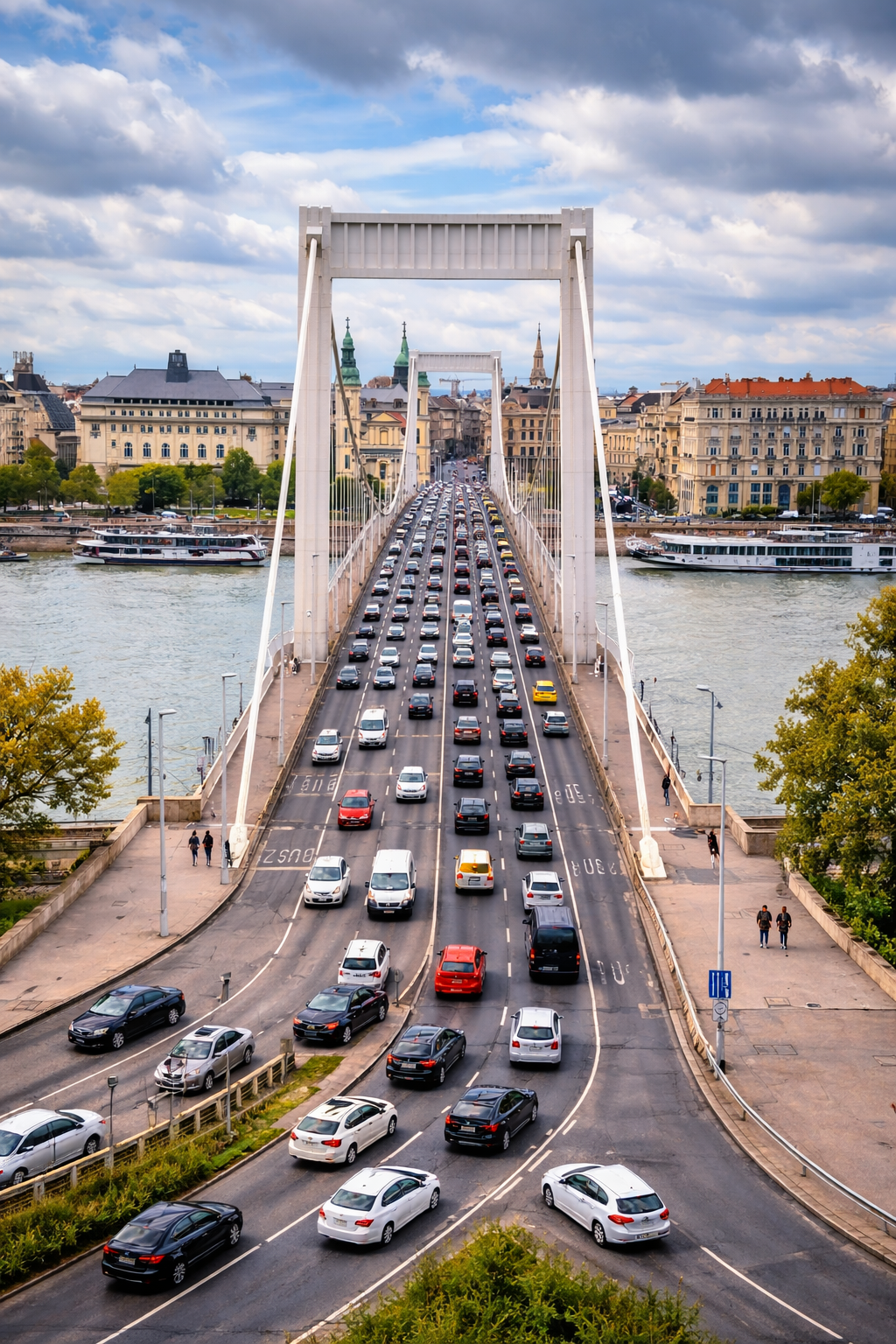
The city is divided by the Danube into Buda on the west and Pest on the east. Buda is older, hillier, and home to the castle district and Fisherman’s Bastion — the best viewpoints over the river and the Pest skyline beyond. Pest is where the city actually lives: Parliament, the Jewish Quarter and its Great Synagogue, the ruin bars in decaying courtyards, the Central Market Hall, and a thermal bath culture that has no real equivalent anywhere else in Europe.
How long to stay and where
Two days covers Budapest adequately. It is, however, one of the few cities on this route where a third day adds real value — not for more sights, but because Budapest improves with time simply spent in it. The city has an energy that takes a day to fully register, and once it does, the temptation to stay longer is genuine.
Staying on the Pest side — specifically near Parliament — gave us immediate access to the riverfront and the morning view of the Chain Bridge from close range, which was worth the location decision alone.
One of the largest and most architecturally elaborate parliament buildings in the world — neo-Gothic, 96 metres tall, and extraordinary when lit up from across the river at night. Both the exterior from the Buda side and the riverfront view at dusk are essential.
A neo-Romanesque terrace on the Buda Castle Hill with seven towers and panoramic views over the Danube and Pest skyline. Early morning or late afternoon — avoid midday crowds. The view across to Parliament from here is one of the best in Budapest.
Budapest: what to see
Budapest has more thermal baths than any other European capital — fed by natural hot springs beneath the city. The Széchenyi or Gellért baths are the most established. Book in advance and allow a full morning or afternoon rather than rushing through.
The VII District holds the Great Synagogue — the largest in Europe — as well as the city’s ruin bar scene, which began in abandoned post-war buildings and has become one of the most distinctive nightlife cultures on the continent. Szimpla Kert is the original.
Vienna
Vienna is the end of the route, and it earns that position. After four days of road-trip momentum — the detour through the rocks, two nights in Prague, the Bratislava afternoon, two nights in Budapest — Vienna arrives as something heavier and more settled. It is a city that does not announce itself. It simply exists, fully formed and entirely sure of itself, and waits for you to adjust your pace to match.
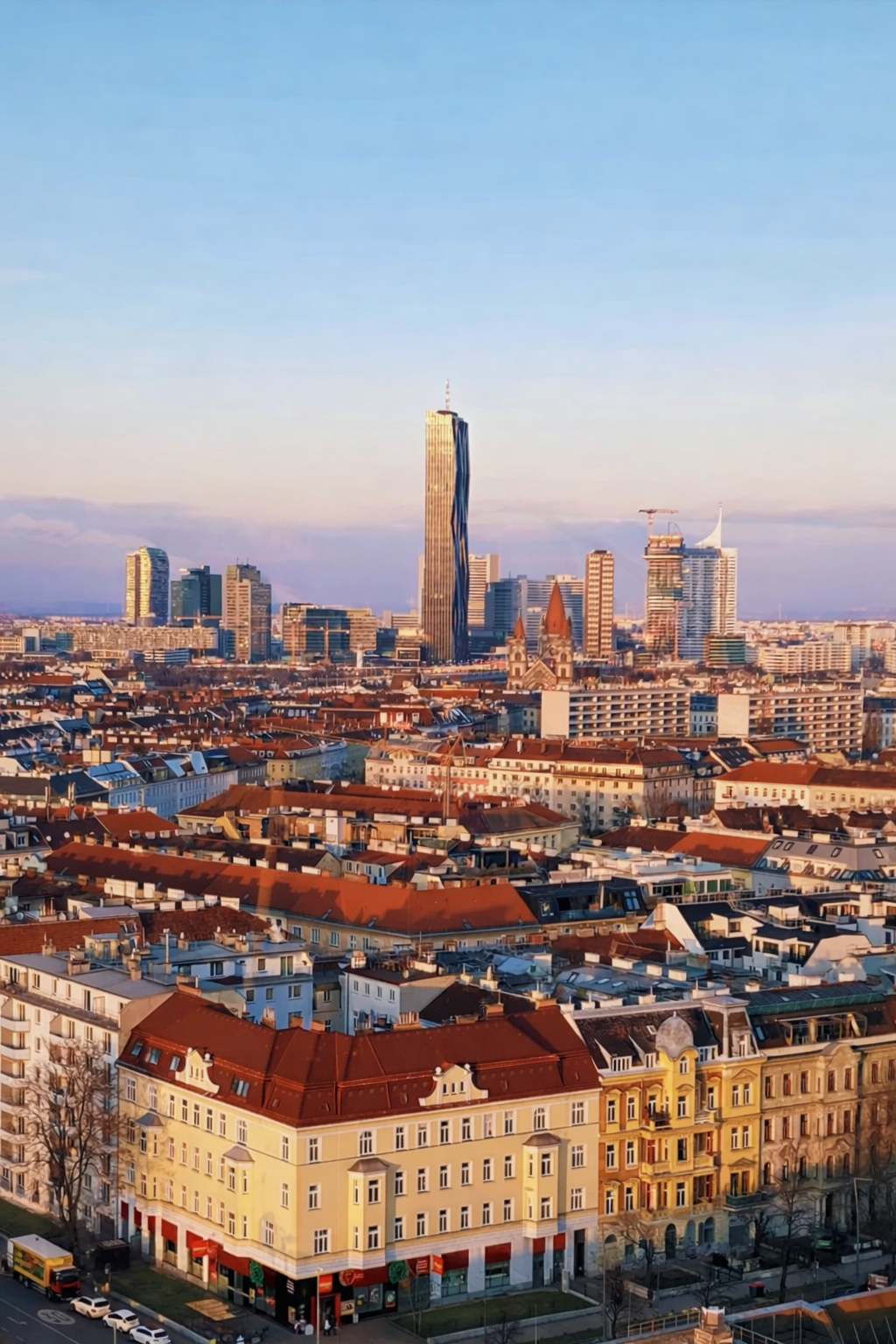
In contrast to Budapest, which reveals itself through energy and street-level life, Vienna operates through grandeur — the Ringstrasse, the Kunsthistorisches Museum, the Naschmarkt, the coffee house culture that expects you to sit for two hours over a single Melange and nobody will ask you to hurry. That quality takes some adjustment at the end of a trip that has been in constant motion. By the second morning, it feels entirely right.
The cost and what time gives you
The budget shifts here. Vienna is noticeably more expensive than anywhere else on the route — closer to Munich or Zurich in cost than to Prague or Budapest. That said, much of what makes the city worthwhile is free or low-cost: the Ringstrasse is a walk, the Naschmarkt is a market, and the coffee house is a cultural institution that charges you roughly €5 for an indefinite stay.
One full day and a morning is what this route gives you in Vienna. It is not enough for the museums — the Kunsthistorisches alone deserves an unhurried half day. However, it is enough to understand why the city warrants a return trip, which may be the more useful thing to take away.
The grand boulevard constructed under Emperor Franz Joseph in the nineteenth century — lined with the Opera, the Kunsthistorisches Museum, the Burgtheater, and the neo-Gothic City Hall. Walking the ring is a free and comprehensive introduction to the city’s imperial scale.
The imperial palace at the heart of the city — a complex of buildings spanning several centuries and housing the Spanish Riding School, the Imperial Apartments, and the Sisi Museum. The courtyards are free to walk through.
Vienna: what to see
The Viennese coffee house — Café Central, Café Landtmann, Café Schwarzenberg — is UNESCO-listed as an intangible cultural heritage. It is not a café in the way most cities use the word. It is closer to a room you are permitted to inhabit for as long as you wish.
One of the great art museums in Europe — Vermeer, Raphael, Caravaggio, Velázquez, Bruegel — inside a purpose-built palace facing the Natural History Museum across Maria-Theresien-Platz. Allow a full morning at minimum.
03 — How to Connect Them
The route works as a loop starting and ending in Dresden, which makes it practical for most travellers: you fly in and out of the same city and need no repositioning. Dresden is well-served by flights from across Europe and has direct rail connections to Berlin for those arriving by train.
The driving days
The longest drive on the route is Budapest to Vienna — roughly two and a half hours on a direct motorway. Every other leg is shorter or contains a natural break. Dresden to Prague via Saxon Switzerland runs around three and a half hours including the detour stop. Prague to Bratislava takes around two hours; Bratislava to Budapest adds another two. The Vienna-to-Dresden return, which we completed overnight, is the one leg that works better as a drive-through than a daytime journey.
Parking in city centres requires some planning. Prague charges for parking near the Old Town and the most central areas restrict private cars; we stayed close enough to use a paid underground garage without difficulty. Budapest similarly has paid zones in central Pest. Vienna is manageable with a city centre garage. None of these logistics is complicated — they simply reward booking accommodation with parking access noted in advance.
04 — How Long Each City Actually Needs
The table below reflects what the trip taught us rather than what felt comfortable to plan in advance. In some cases — Budapest, most clearly — we wished we had more time. In others, the allocation proved right.
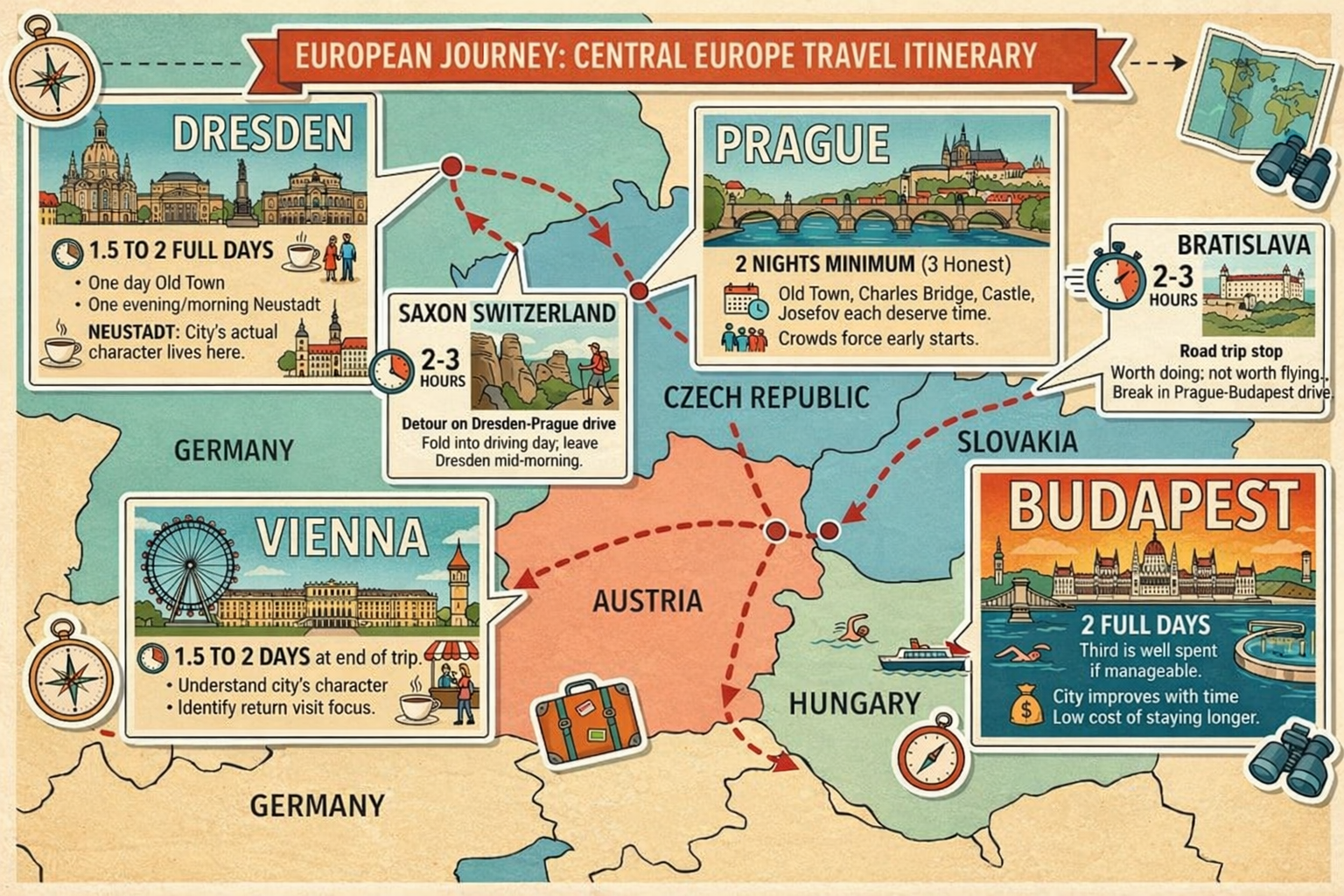
| Dresden | 1.5 to 2 full days — one day Old Town, one evening/morning Neustadt. Don’t short-change Neustadt: it’s where the city’s actual character lives. |
| Saxon Switzerland | 2–3 hours as a detour on the Dresden-to-Prague drive. Not a separate day — fold it into the driving day and leave Dresden mid-morning. |
| Prague | 2 nights minimum — 3 is more honest. Old Town, Charles Bridge, the Castle, and Josefov each deserve time, and crowds force early starts. |
| Bratislava | 2–3 hours as a road trip stop. Worth doing; not worth flying to. Perfect as a break in the Prague-to-Budapest drive. |
| Budapest | 2 full days — a third is well spent if you can manage it. The city improves with time and the cost of staying longer is low. |
| Vienna | 1.5 to 2 days at the end of the trip. Enough to understand the city’s character and identify what to spend more time on during a return visit. |
05 — Practical Notes
Car rental and vignettes
A multi-country road trip through Central Europe requires attention to the rental agreement. Most major rental companies allow cross-border travel between the countries on this route — Germany, Czech Republic, Slovakia, Hungary, and Austria — but you need to confirm this when booking and sometimes pay a small fee for the additional countries.
Additionally, several countries on this route require a motorway vignette — a sticker or electronic registration that permits use of the major roads. Austria and Czech Republic both require them. Hungary does too. Germany does not. The vignettes are inexpensive (Austria’s annual sticker costs around €10 for 10 days) and available at petrol stations near border crossings. However, driving the Austrian motorway without one carries a substantial fine, so this is worth sorting before you cross the border rather than after.
Currencies
Despite covering five countries, you will only need three currencies on this route. Germany and Austria use the Euro. Czech Republic uses the Czech Koruna. Slovakia is in the Eurozone. Hungary uses the Hungarian Forint, which is, by a meaningful margin, the most favourable for the traveller — Budapest is noticeably cheaper than anywhere else on the route, and that gap widens if you use local cash rather than card.
| Germany (Dresden) | Euro (€) |
| Czech Republic (Prague) | Czech Koruna (CZK) — not Euros, despite EU membership |
| Slovakia (Bratislava) | Euro (€) |
| Hungary (Budapest) | Hungarian Forint (HUF) — change at a bureau de change, not at airport or hotel |
| Austria (Vienna) | Euro (€) |
Best time to do this route
April through June and September through October are the right windows. Spring gives you the best conditions across all five cities: manageable crowds in Prague (which has the most to lose from overcrowding), comfortable temperatures for walking, and lower prices than July and August. Autumn delivers similar conditions with the added quality of the light in the afternoons.
Winter and summer: what changes
July and August work but require earlier starts and more patience in Prague particularly. Winter is possible and the Christmas markets in Dresden, Vienna, and Prague are genuinely worth seeing — but factor in reduced daylight hours and the fact that some outdoor sights feel different at 2°C than they do in April.