
Dresden in Two Days: The City Most People Drive Past Without Stopping
Most Central Europe itineraries skip it entirely — and that is a mistake worth correcting. Two days here is enough to understand why the city is called the Florence of the Elbe, and why it is considerably more interesting than that nickname suggests.
First Impressions
We arrived in Dresden around noon on the first day of the trip, dropped bags at the apartment near the Hauptbahnhof, and did what most people do after a morning of travel: nothing productive. The afternoon was slow and deliberate — a walk toward the Elbe to orient ourselves, lunch somewhere without a plan, and then, as the light started to change in the early evening, a decision to cross the river into Neustadt and see what the city looked like from the other side.
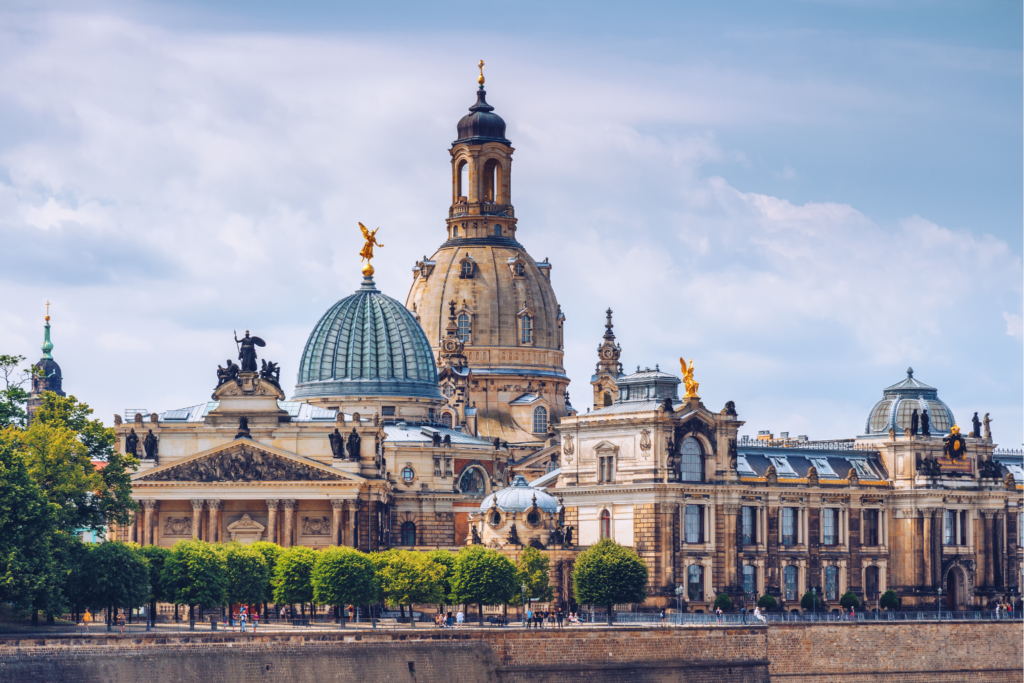
Dresden is a divided city in the most literal sense. The Elbe runs through the middle of it. To the south lies the Old Town — the Baroque skyline, the rebuilt Frauenkirche, the Zwinger, the opera house, all the things that appear in photographs of Dresden. To the north lies Neustadt, which is a different city almost entirely: creative, bohemian, loud on weekend evenings, and considerably more alive in the sense that actual Dresdners use it rather than just passing through it on their way to something historic.
Two days gives you both. That is the right amount of Dresden.
01 — The First Evening: Neustadt
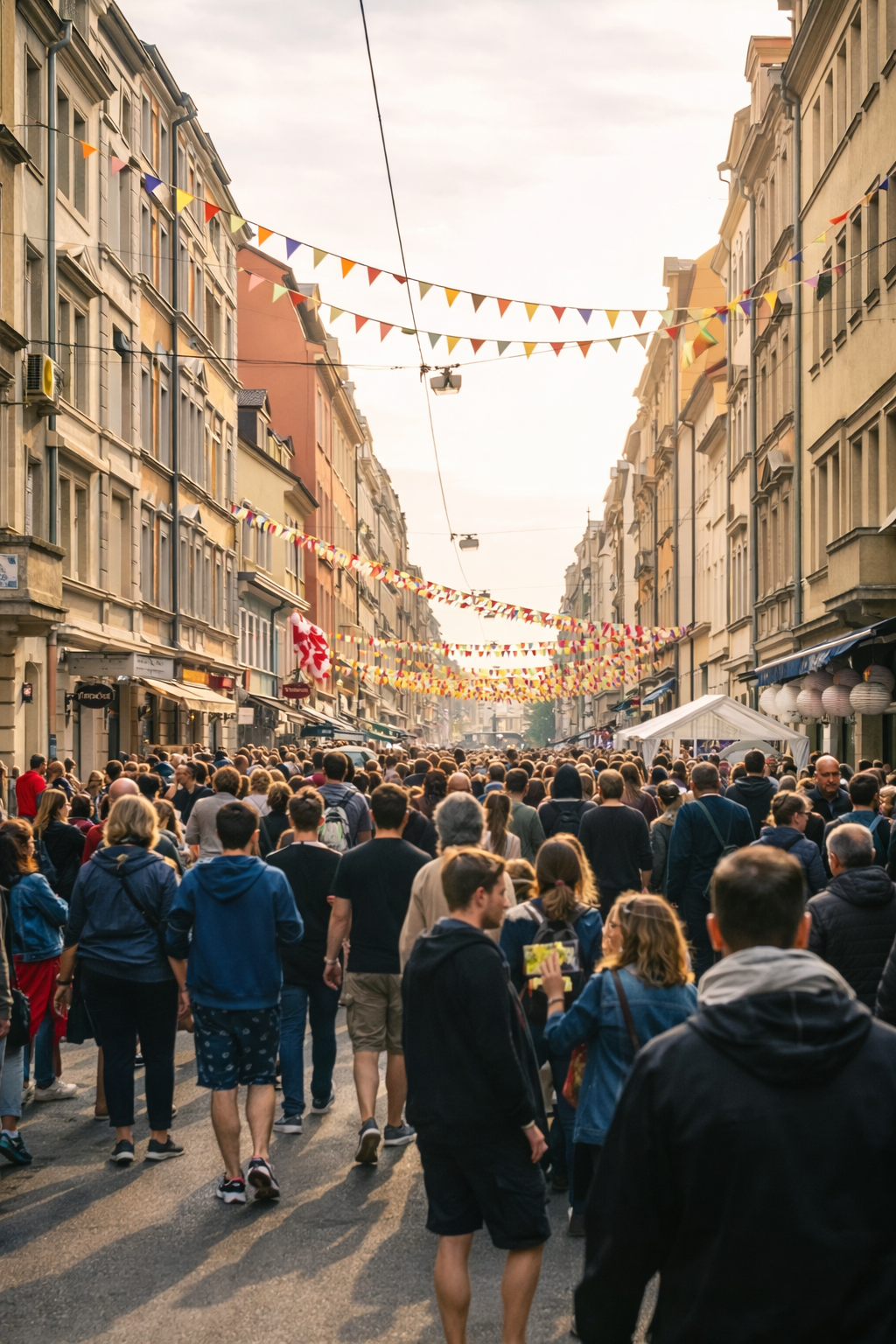
Dresden Neustadt — specifically the Äußere Neustadt, the outer quarter to the north of the river — is one of the liveliest bar districts in Germany, and it does not particularly advertise this fact. There is no central square with terraces and menus in multiple languages. Instead, there is a dense network of streets — Alaunstraße, Louisenstraße, Görlitzer Straße — lined with bars that run from small and candlelit to clubs that open at midnight and do not close until morning.
What the neighbourhood is like
The character of Äußere Neustadt is specific: part East German bohemian, part student quarter, part something that resists categorisation. At street level, Wilhelminian-era buildings from the late 19th century have been colonised by independent bars, tattooed cafés, and art spaces that have settled into them with a naturalness that makes it hard to imagine the neighbourhood looking any other way. Kunsthofpassage, a series of interconnected courtyards decorated with elaborate tiled murals, drainpipes arranged to play music in rain, and animal sculptures, is the most photographed corner of the neighbourhood — worth walking through in either direction.
Alaunpark sits at the centre of it, a large green space that in warmer months fills with people drinking from bottles and playing music, the surrounding streets keeping the same energy late into the night. On the evening we arrived, the park had the specific atmosphere of a neighbourhood where going outside after dark is the primary activity rather than something that happens before or after something else.
Where to drink in Neustadt
The bar scene here is dense enough that walking the streets and stopping at whatever looks right is a legitimate strategy. That said, a few names are worth knowing. Katy’s Garage on Alaunstraße has a beer garden that fills early and stays full. Hebeda’s on Rothenburger Straße is a cosy, candlelit pub with old East German furniture and the relaxed pace of somewhere that expects you to stay for more than one drink. Groove Station runs above the main club Downtown and plays alternative and live music. Moreover, the neighbourhood has enough variety that it accommodates whatever the evening calls for, from an early beer in a garden to a late night that keeps going until the light starts coming back.
Going to Neustadt on the first evening rather than the second was the right call. It gives you the city as it actually functions — busy, informal, local — before the Old Town the next day, which is magnificent but more obviously designed for visitors. Doing it in that order makes Dresden feel less like a museum and more like a city.
02 — The Night Walk on the Elbe
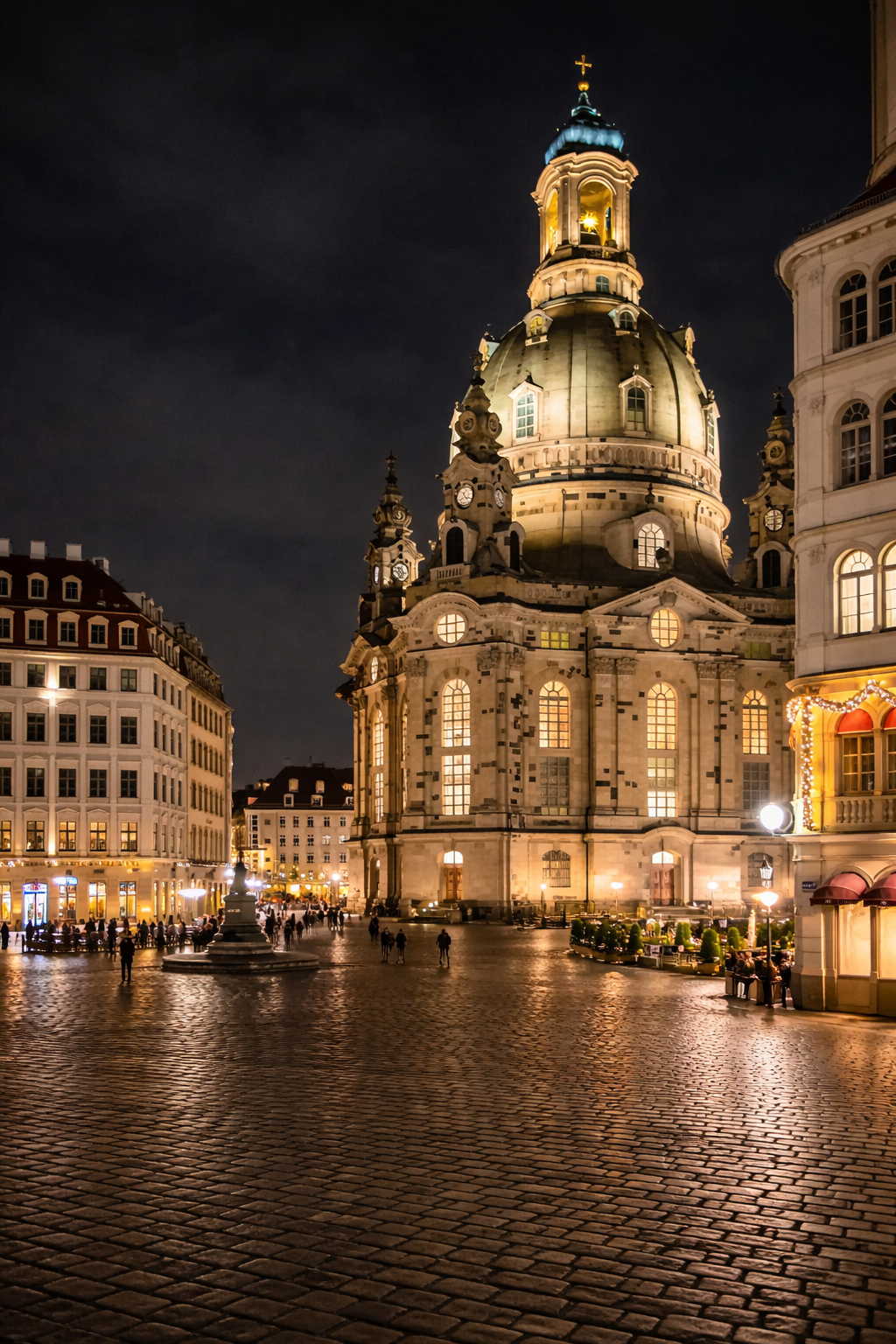
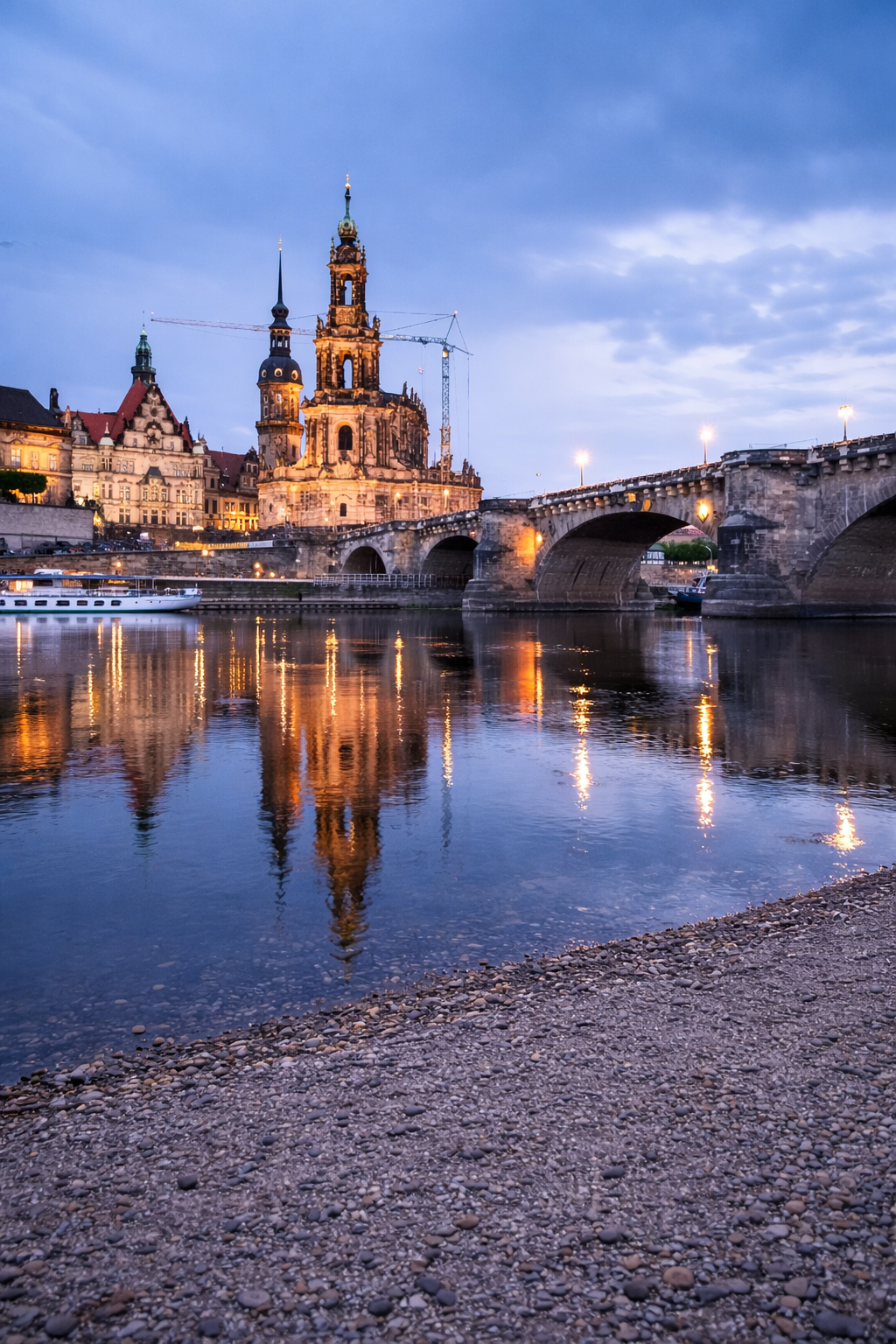
At some point in the evening we walked back across the Augustus Bridge toward the Old Town, and the view that opens up as you cross the river at night is one of those things Dresden does not warn you about in advance. Frauenkirche dome, Hofkirche spire, Residenzschloss tower — all lit from below against a dark sky, and the whole thing reflects loosely in the Elbe below. It is theatrical in the way that only cities built for theatrical effect can be.
An accidental discovery
The Brühlsche Terrasse, the elevated promenade that runs along the river on the Old Town side, is empty at that hour except for a few people sitting at the edge looking across the water. In daylight it is a tourist thoroughfare. At night it belongs to whoever is walking it without a particular destination, and the view it gives — the river in both directions, the Neustadt lights on the far bank, the Old Town architecture rising behind you — is a different, quieter version of the same scene.
How it happened
We did not plan the night walk. It happened because crossing the river was the practical way back to the Hauptbahnhof area. As a result, what might have been a deliberate sightseeing stop became something more accidental and, consequently, more memorable. That is often how the best moments in a city occur — not from the itinerary, but from the route between things on it.
03 — The Old Town: What to See
A city rebuilt from memory
The Dresden Old Town is a reconstruction. February 1945’s bombing raids destroyed roughly 80 percent of the historic centre — the Baroque city that Augustus the Strong had spent decades building into one of the most elaborate royal capitals in Europe was reduced, in two nights, to rubble. What stands today has been rebuilt, painstakingly and over decades, to approximate what was lost. The Frauenkirche, the most visible symbol of this effort, was completed in 2005 — sixty years after its destruction.
Knowing this changes the experience of walking through it. The Old Town is simultaneously genuine and reconstructed: the architecture is historically accurate, the buildings are real, and the stones are new. Some people find this uncanny. In practice, it is more moving than uncanny — a city that chose to rebuild what it had lost rather than replace it with something modern is making a statement about what it considers worth keeping.
The Frauenkirche
The Lutheran cathedral is the most recognisable structure in the skyline — its sandstone dome sits 91 metres above the Neumarkt square and serves as the focal point of the Old Town. Inside, the space is bright and ornate, decorated in the Protestant Baroque style: not the Catholic excess of Vienna or Prague but something more restrained and luminous. Climbing the dome is worth the extra ticket — the lantern at the top gives a 360-degree perspective that takes in the Elbe, the Zwinger, Neustadt on the far bank, and the green hills of Saxon Switzerland on the southern horizon. Allow 30–45 minutes inside, and expect a queue for the dome at midday.
The Semperoper and Theaterplatz
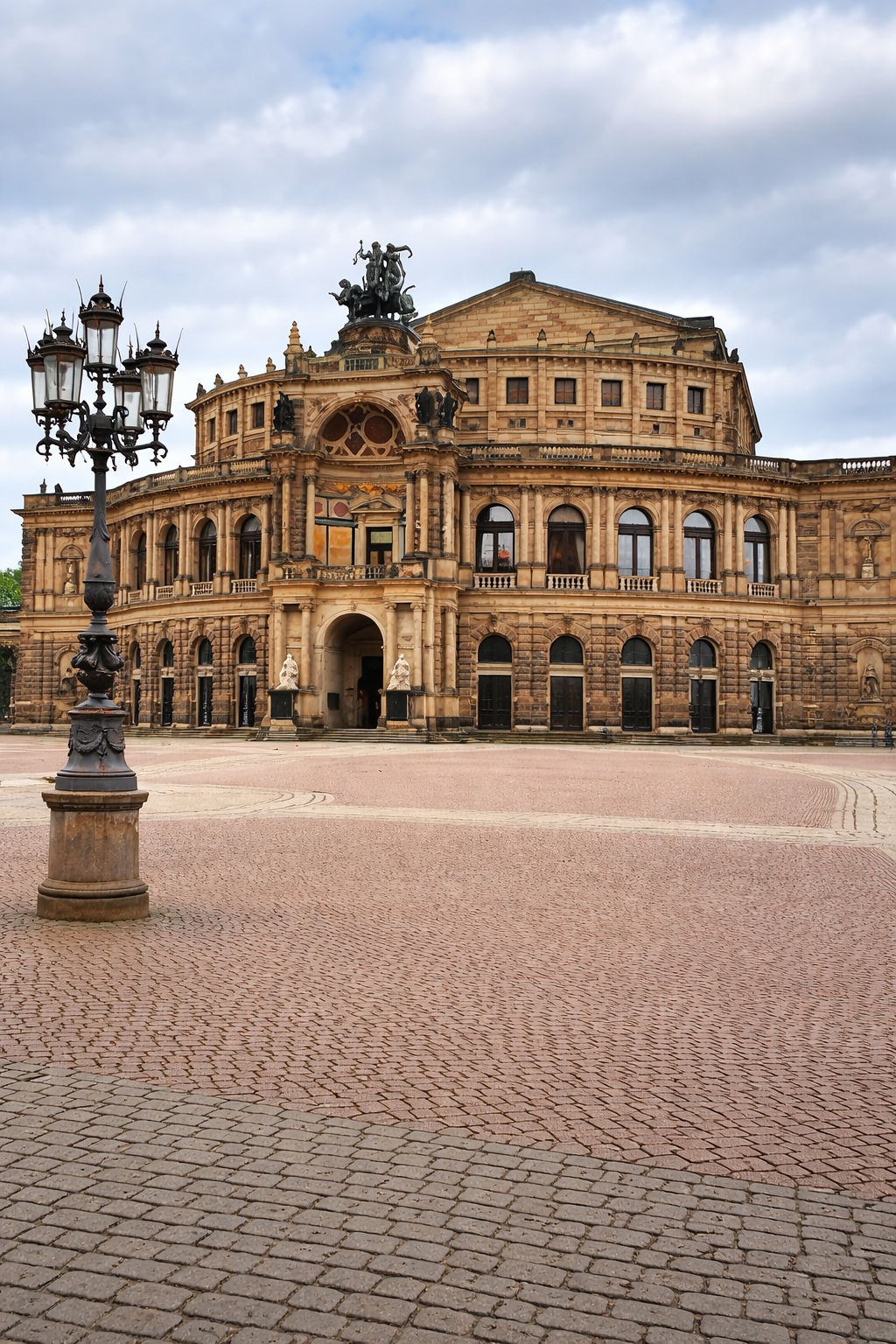
Designed by Gottfried Semper in the Italian Renaissance style, the Semperoper stands on the Theaterplatz beside the Zwinger as one of the most architecturally significant opera houses in Europe. Destroyed in 1945 and reopened in 1985 after a painstaking rebuild, it is best seen from the square itself: the equestrian statue of King Johann at the centre, the opera house on one side, the Hofkirche and Residenzschloss on the other, the Zwinger behind you. Theaterplatz was designed to be stood in and looked at from every angle — it rewards exactly that, and a slow twenty minutes there costs nothing.
Key Sights at a Glance
The sandstone dome cathedral rebuilt after 1945 and completed in 2005. Free entry to the interior; dome climb costs extra and gives the best view in the city. Morning is quietest. The reconstruction is itself the story — the darker original stones are visible within the lighter new ones.
The Baroque palace complex housing the Old Masters Gallery, the Porcelain Collection, and the Mathematical-Physical Cabinet. The courtyard itself is free to enter; museum entry is paid. Raphael’s Sistine Madonna is the Old Masters Gallery’s most famous work. Plan two hours minimum for the palace and collections.
The Italian Renaissance opera house on the Theaterplatz. Guided tours run daily if you want to see the interior. The exterior and the square around it are worth significant time even without a ticket. Check the performance programme before visiting — attending a show here is a different category of experience.
The elevated Elbe promenade running 500 metres along the riverfront above the Old Town. Goethe gave it its nickname — the Balcony of Europe — in the early 19th century, and it has been earning it since. Free, always open, and spectacular at golden hour. Go in the late afternoon.
Also Worth Your Time
The royal palace of the Saxon electors houses the Historic Green Vault — one of the largest treasure chambers in Europe, containing gold, jewels, and ornamental objects assembled by Augustus the Strong. Tickets for the Historic Green Vault sell out quickly and must be booked well in advance online.
The north bank of the Elbe: bohemian, creative, and considerably less manicured than the Old Town. Kunsthofpassage for architecture and courtyard art, Alaunstraße and Louisenstraße for bars, Alaunpark for sitting. Go in the evening. Go more than once if you can.
04 — Inside the Zwinger
The courtyard and the palace
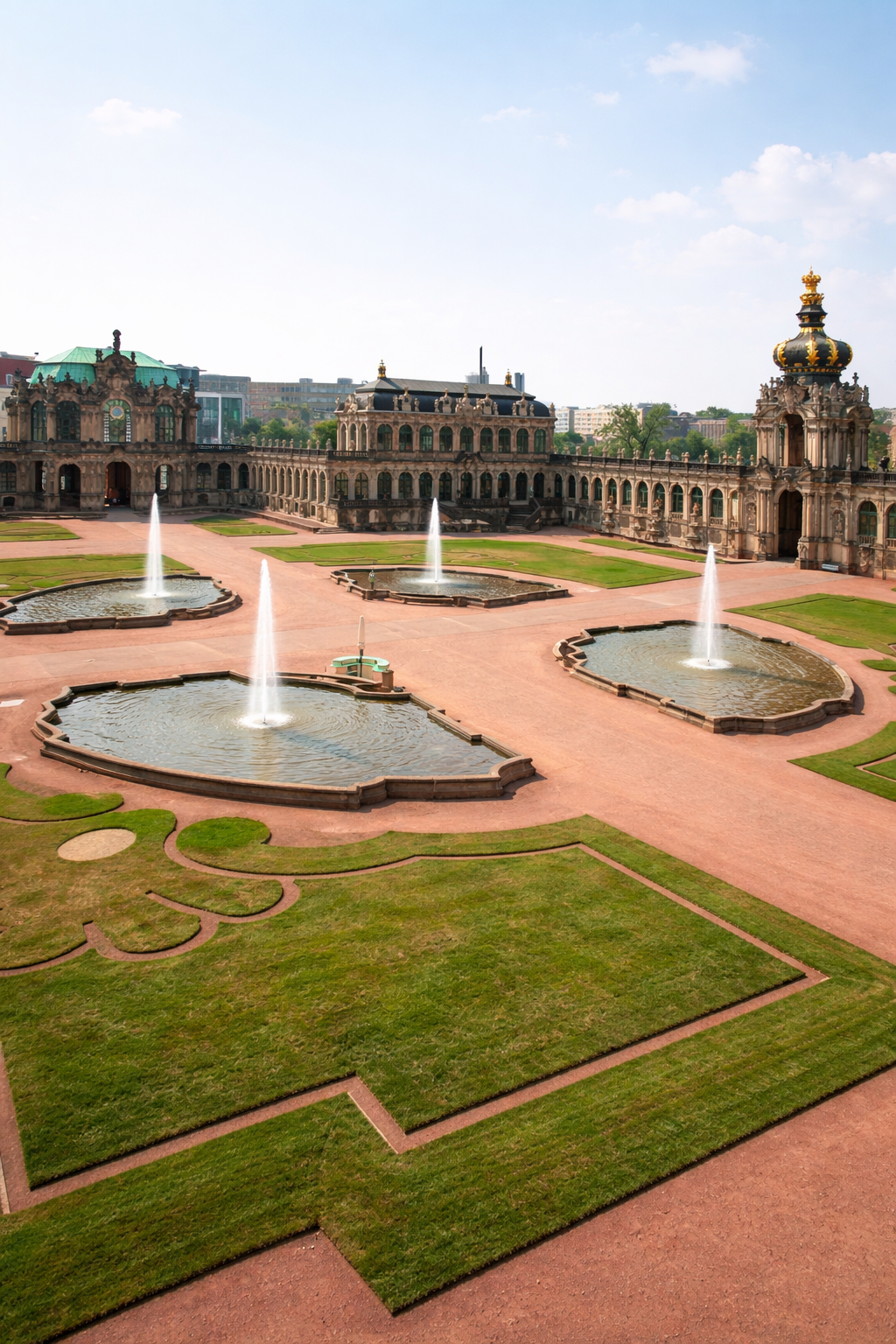
The Zwinger is best understood from the outside first. Enter through the Kronentor — the Crown Gate, topped by a gilded Polish crown — and the Baroque courtyard opens ahead: a vast open space enclosed by ornate galleries and pavilions, with an ornamental pond at the centre and fountains playing in the corners. Matthäus Daniel Pöppelmann designed it between 1710 and 1728 for Augustus the Strong, originally as a setting for court festivities and tournaments. That original purpose — spectacle, excess, the demonstration of power through beauty — remains legible in every carved surface. Consequently, standing in the courtyard feels less like visiting a museum and more like being inside a theatre set that has been running for three centuries.
The Old Masters Gallery
The Semperbau wing along the Elbe side houses the Old Masters Picture Gallery, which ranks among the most significant art collections in Europe. More than 700 paintings from the 15th to 18th centuries occupy its rooms — Italian Renaissance, Dutch and Flemish masters, German paintings, French and Spanish works. Raphael’s Sistine Madonna is the collection’s most famous piece: a large oil painting of the Virgin and Child flanked by Saint Sixtus and Saint Barbara, with the two cherubs at the bottom that have become the most reproduced detail in the collection. Substantially better in person than any reproduction prepares you for, the painting surprises most visitors with its scale — and the quality of light in the room it occupies is handled well.
Also in the collection: Vermeer’s Girl Reading a Letter at an Open Window, Giorgione’s Sleeping Venus, works by Rembrandt, Rubens, Titian, Cranach, and Canaletto — the last of whom painted Dresden’s Baroque skyline before its destruction. Those views of the city now serve as the primary visual record of what was lost. Standing in front of a Canaletto of the Dresden skyline, in Dresden, after walking through the rebuilt version of that skyline, is the kind of moment that visits to art museums occasionally produce and rarely announce in advance.
The Porcelain Collection
Augustus the Strong had an obsession with porcelain that bordered on the compulsive — he famously traded 600 dragoon soldiers to the Prussian king for 151 pieces of Chinese vases. The south wing of the Zwinger houses the result of that obsession: around 20,000 pieces of Chinese, Japanese, and Meissen porcelain, making it one of the largest collections of its kind in the world. Room arrangements feel considered rather than dense, and the Meissen pieces — porcelain first manufactured in Saxony in 1708, using a formula kept secret for decades — are displayed alongside their Chinese inspirations in a way that makes the relationship between the two intelligible.
A combined ticket covers the Old Masters Gallery, the Porcelain Collection, and the Mathematical-Physical Cabinet. Budget two to three hours for a serious visit to the main collections. The courtyard is free to enter at all times and is worth seeing even if you skip the museums. For the Historic Green Vault in the adjacent Residenzschloss — book well in advance online, as timed entry tickets sell out days ahead in peak season.
05 — The Brühlsche Terrasse at Golden Hour
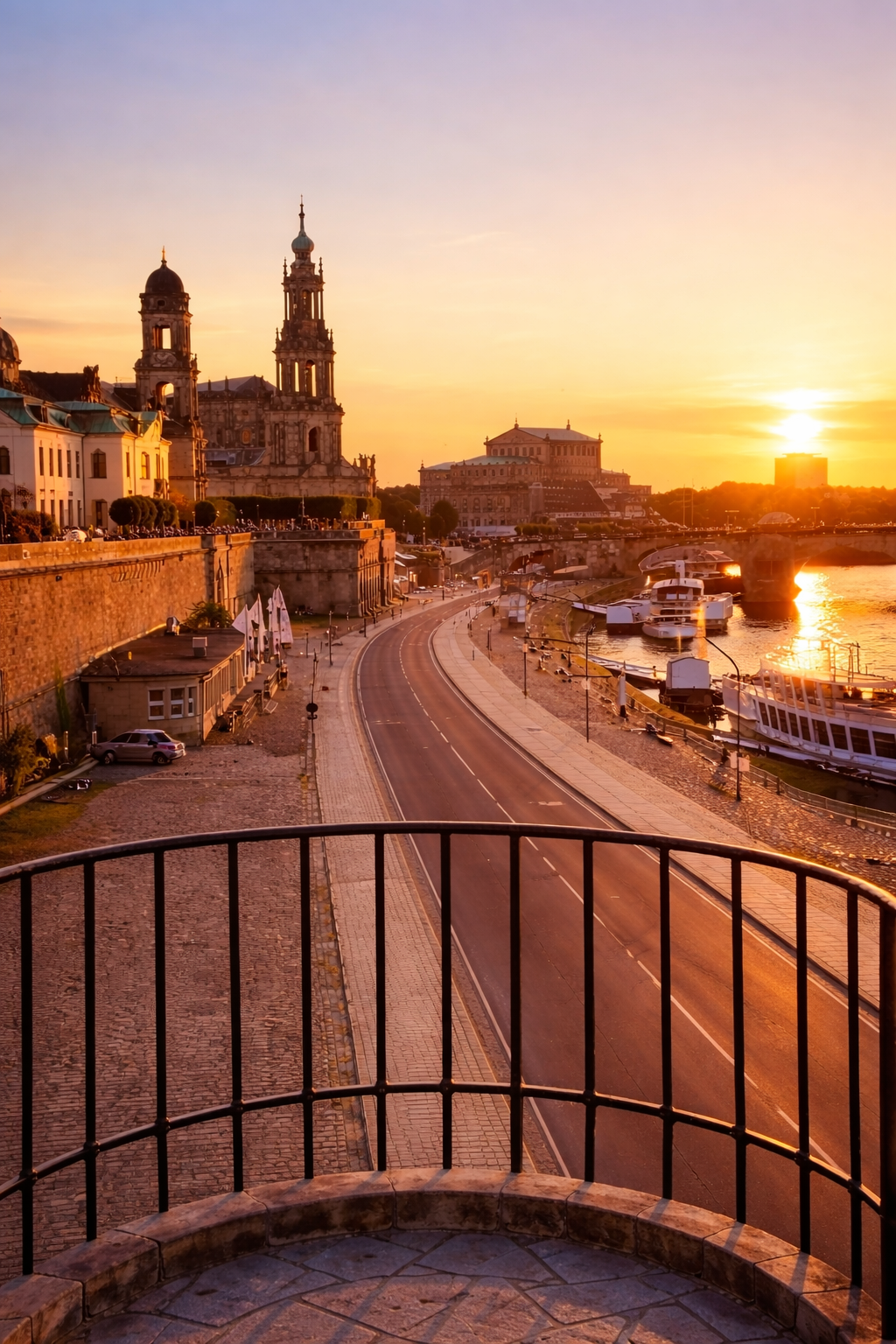
Goethe called it the Balcony of Europe, and the name has stuck for two hundred years. Built originally as part of the city’s 16th-century fortifications, the Brühlsche Terrasse was converted into a garden terrace by Count Brühl in the 18th century and opened to the public in 1814. Running 500 metres from the Augustus Bridge east to the Carola Bridge, it offers the best view in Dresden across the Elbe toward Neustadt.
Arriving at golden hour
We reached the Brühlsche Terrasse in the late afternoon, as the light was beginning its descent toward the kind of quality that makes everything it touches look considered. Access to the terrace is via a wide staircase flanked by four bronze figures representing the seasons, and the view opens at the top of the stairs before you have quite prepared for it. Below, the Elbe stretches wide. Neustadt lies on the far bank, its spires and rooftops catching the horizontal light. The Augustus Bridge curves across the water. Paddle steamers move slowly upstream.
Along the terrace, the buildings of the Old Town rise immediately behind: the Albertinum gallery, the Sächsisches Ständehaus, the Sekundogenitur. Furthermore, the terrace itself has trees, park benches, and a few cafés — but the real reason to be here is the view, and specifically the view in the direction of the river at the hour when the sun is low enough to turn everything amber.
The best spot on the terrace
We spent time at the section closest to the Albertinum, where the terrace gives a clear westward view along the river toward the bridge. In that specific spot, at that specific hour, the light hits the water and the far bank directly from behind you, and the scene requires no editorial adjustment to be extraordinary. It is, without qualification, one of the finest photography spots in Central Europe at that specific time of day.
The stretch near the Albertinum — the large gallery building at the eastern end — gives the best westward view along the river toward the Augustus Bridge and the Neustadt skyline. In the late afternoon, the light hits the water and the far bank directly from behind you. This is the spot. Arrive around 45 minutes before sunset and stay until the light is gone. It costs nothing and is one of the better hours you will spend in Germany.
06 — Practical Notes for Two Days in Dresden
Getting there and getting around
Dresden Hauptbahnhof has direct rail connections from Berlin (2 hours), Prague (2h15), and Frankfurt (4.5 hours). By car from Berlin, the drive takes approximately 2 hours via the A13. From Prague, allow 1h30–2 hours via the A17 and B172 through Saxon Switzerland. Once in the city, the Old Town is walkable from the Hauptbahnhof in 20 minutes. Trams connect the Hauptbahnhof to the Old Town, Neustadt, and the Elbe riverfront — a day ticket covers unlimited travel and costs around €7. The Augustus Bridge is the main pedestrian crossing between Old Town and Neustadt, roughly 10 minutes on foot.
Museums and monuments
| Where to stay | Near the Hauptbahnhof gives easy access to both Old Town and Neustadt. Alternatively, the Neumarkt area in the Old Town puts you within five minutes of the Frauenkirche and Zwinger. Neustadt itself has hostels and budget hotels if the neighbourhood’s energy is the primary draw. |
| Zwinger | Combined ticket for all three collections: €14 adults, €10.50 concessions, under-17 free. The courtyard is free. Allow 2–3 hours for the Old Masters Gallery and Porcelain Collection. Open Tuesday to Sunday; closed Monday. |
| Frauenkirche | Free entry to the church interior. Dome climb: around €8, tickets at the entrance. Book the dome in advance during peak season — queue times can be long at midday. Earliest morning entry is quietest. |
| Historic Green Vault | The jewel treasury in the Residenzschloss — one of Europe’s great treasure chambers. Timed entry tickets must be booked online well in advance; they sell out days ahead in summer. Check the museum website before your trip. |
| Brühlsche Terrasse | Free, always open, no tickets needed. Accessed by the monumental staircase on the Schlossplatz side, or from several points along the Old Town riverside. Go in the late afternoon — the golden hour view westward along the Elbe is the best in the city. |
Neustadt nightlife
The action is concentrated in Äußere Neustadt — Alaunstraße, Louisenstraße, and the streets around Alaunpark. Most bars open from 6–7pm; clubs start around midnight. Bars stay open until 4–5am on weekends. Prices are low by German standards — a beer in Neustadt typically costs half what it would in Munich or Hamburg.
Worth Knowing Before You Go
City Vibe and Safety
Planning and Logistics
We left Dresden on the third morning, driving south toward Pirna and the river and Saxon Switzerland beyond it.
The city had given us two full things: the rebuilt grandeur of the Old Town, and the unbuilt energy of Neustadt. Neither one would have made complete sense without the other.