
Budapest in Two Days: The Honest Guide to a City That Rewards Staying a Little Longer
Two sides of the Danube, a thermal bath culture unlike anything else in Europe, ruin bars built inside crumbling courtyards, and a Parliament building that stops you in your tracks from across the river. Budapest is one of the most rewarding cities in Central Europe — and it is still, remarkably, affordable.
One of the Best Cities in Central Europe
We arrived in Budapest after sunset, driving in from Bratislava on a long day that had already taken us through Prague in the morning. The city appeared gradually — first the lights along the Danube, then the silhouette of the Parliament building from the bridge, then the streets of Pest opening up around us as we found our accommodation near the river.
By the next morning it was clear that Budapest was going to be the highlight of the trip. Not because it was the most beautiful city we visited — though the architecture along the Danube gives it a strong case — but because it was the most alive. Furthermore, the streets had an energy that Prague, for all its medieval grandeur, doesn’t quite replicate. On top of that, everything cost noticeably less than anywhere else we had been, which gives the city a generosity that is hard to separate from how you experience it.
Two full days is the right amount to see Budapest properly without rushing. In fact, it is a city that rewards a third day if you can manage it — not because there are more sights to check off, but because Budapest improves with a little extra time to simply be in it.
01 — The Two Sides of Budapest
Buda and Pest — Two Different Cities in One
Budapest is technically two cities that merged in 1873 — Buda on the west bank of the Danube, Pest on the east — and the distinction still matters when you are planning how to spend your time. Understanding the difference between them shapes the entire visit.
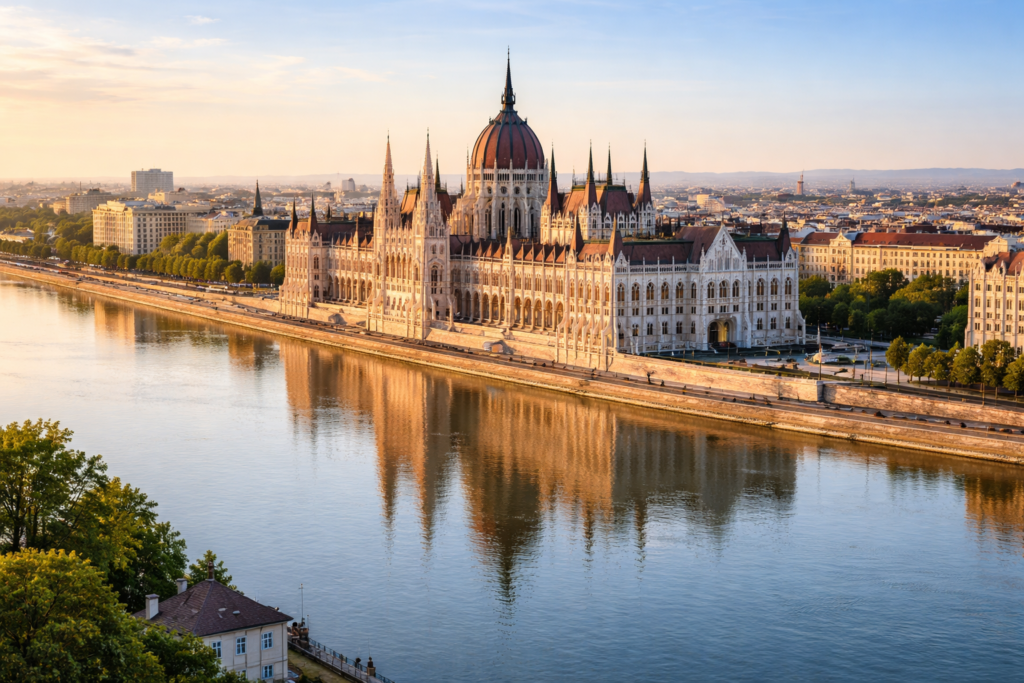
Pest is where most visitors spend most of their time, and for good reason. It is flat, dense, and walkable, with the city’s best restaurants, ruin bars, market halls, and the bulk of the nightlife concentrated within a relatively compact area. The Parliament building, the Jewish Quarter, and the Central Market Hall all sit on the Pest side. Moreover, staying on the Pest side — as we did, close to Parliament — puts everything within comfortable walking distance and eliminates the need for transport for most of the day.
Buda — The Quieter, Higher Side
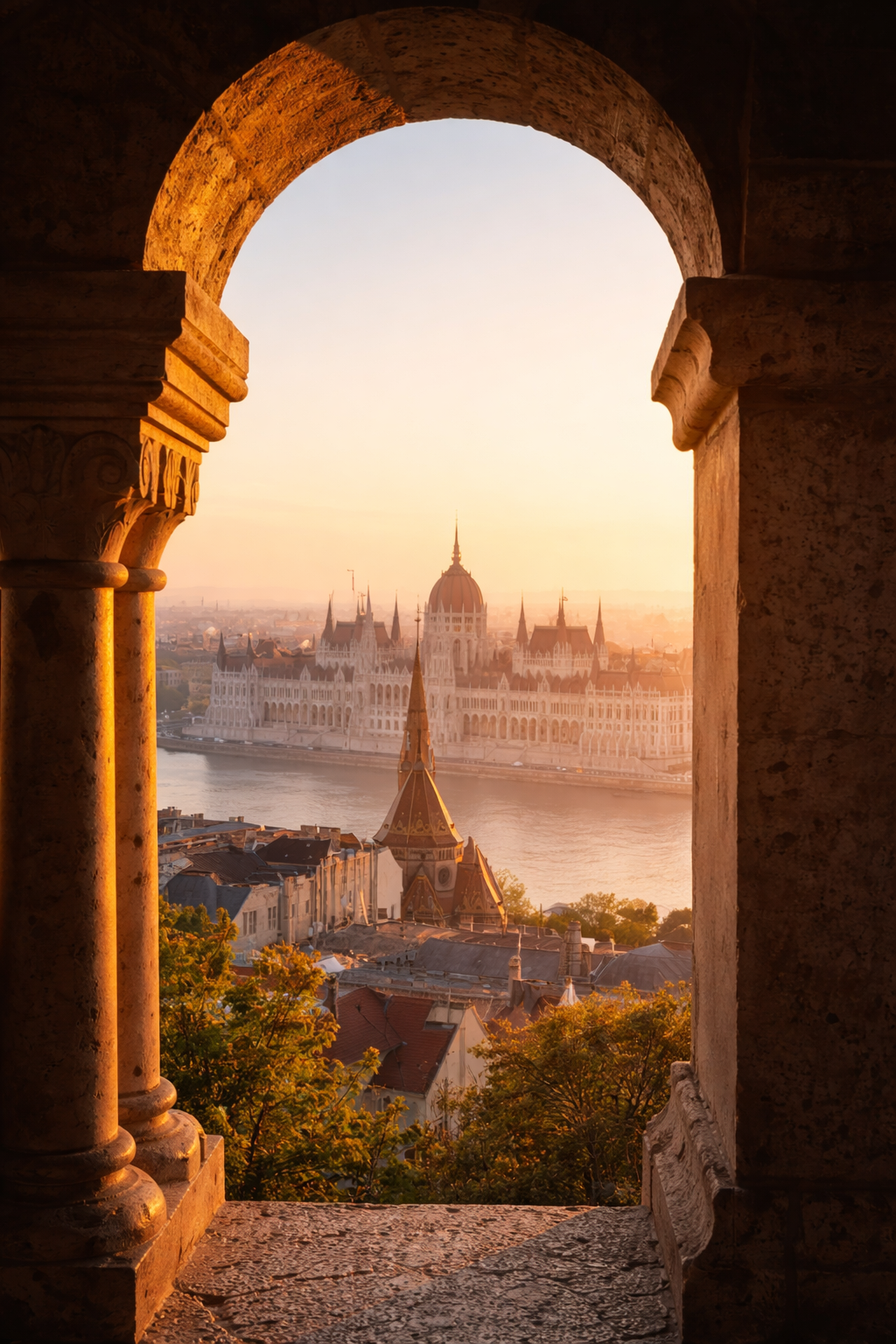
Buda, in contrast, is hilly, quieter, and more residential. The Castle District sits on a ridge above the Danube and contains Buda Castle, Fisherman’s Bastion, and Matthias Church — three of Budapest’s most photographed landmarks. Additionally, the views from the Buda side over the Danube toward Parliament and the Pest skyline are the best panoramic views in the city. Most visitors cross over for a half-day or full morning, then return to Pest for the evening.
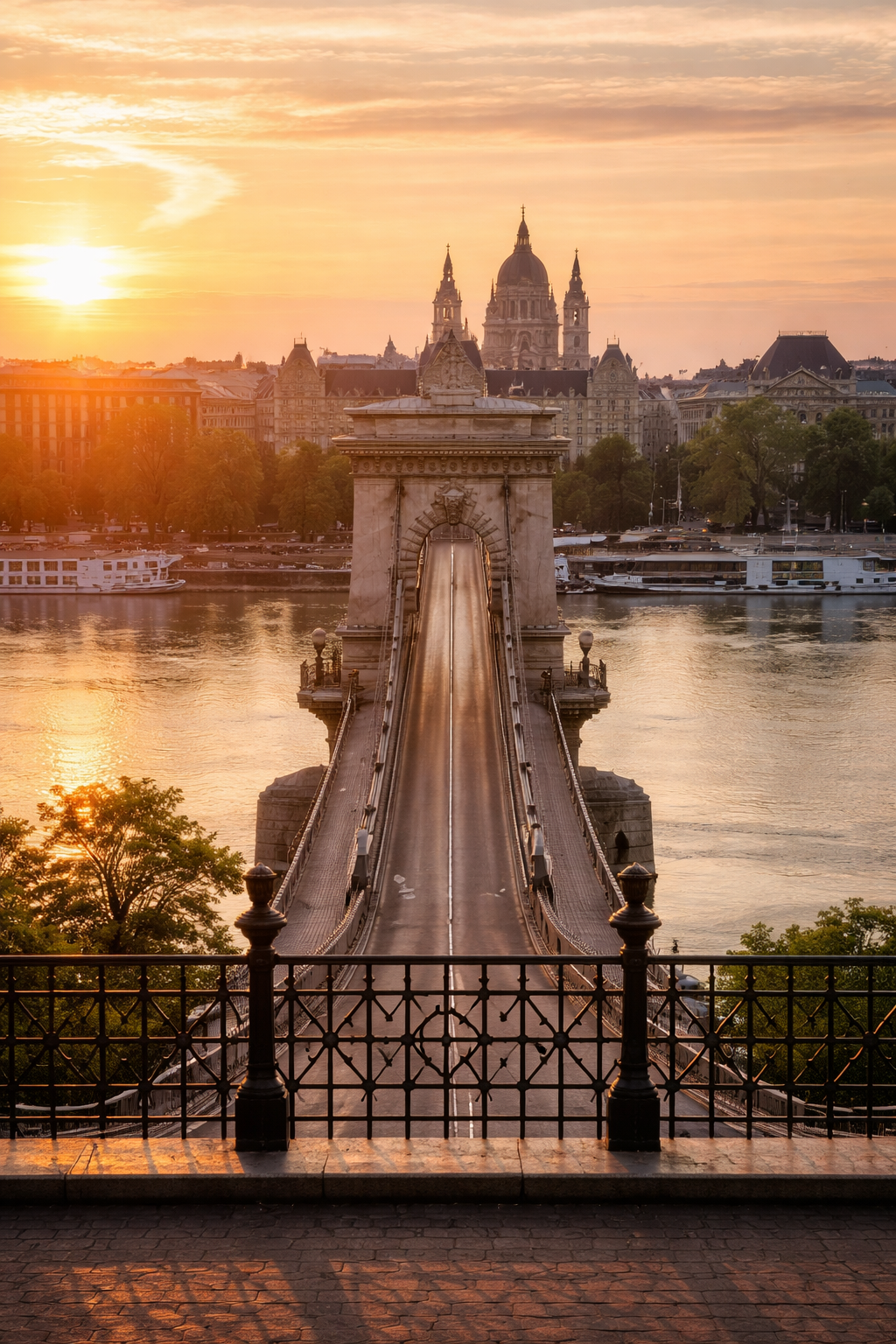
The Chain Bridge connects the two sides at the most central point and is, consequently, worth walking across rather than taking a taxi. The perspective from the middle of the bridge — looking up the river toward the Parliament with Buda Castle on the hill behind you — is one of the genuinely great urban views in Europe.
02 — What to See
The Pest Side — Parliament, Market and the Jewish Quarter
The Hungarian Parliament is one of the most extraordinary buildings in Europe — a neo-Gothic structure running 268 metres along the Danube, completed in 1904, with 691 rooms and a dome that dominates the Pest skyline. Staying near Parliament means you walk past it constantly, which never entirely stops being impressive. Guided tours of the interior are available and worth booking in advance — the Hungarian Crown Jewels are kept inside.
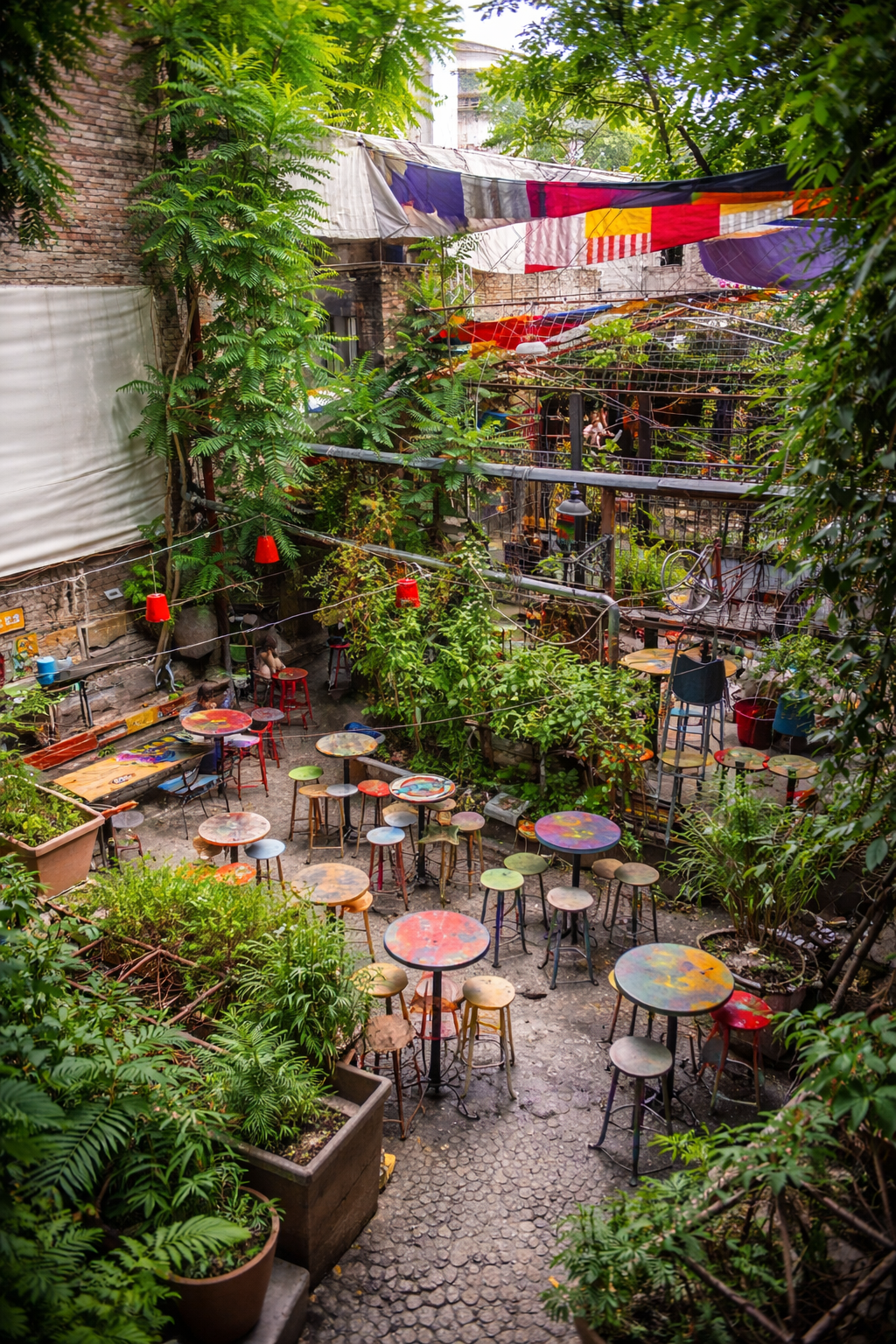
The Dohány Street Synagogue is the largest synagogue in Europe and one of the most beautiful buildings in Budapest — a Moorish Revival structure with twin onion-domed towers that sits at the heart of the historic Jewish Quarter. The surrounding neighbourhood, known as the VII district, is also where Budapest’s famous ruin bar culture developed, and the mix of the historic synagogue, crumbling courtyards turned into bars, and independent restaurants makes this one of the most interesting areas in the city to spend an evening.
The largest and most impressive covered market in Budapest — a vast iron and brick structure built in 1897 with stalls selling Hungarian paprika, sausages, lángos (deep-fried flatbread), pickles, embroidery, and every variety of local produce. The ground floor is the authentic market; the upper floor is more tourist-oriented. Go on a weekday morning for the best atmosphere and the least crowded experience. It is also, practically, one of the cheapest places in the city to eat a proper lunch.
The Buda Side — Castle, Bastion and the View
The Royal Palace complex sitting on Castle Hill above the Danube — a large Baroque building housing the Hungarian National Gallery and the Budapest History Museum. The exterior and the surrounding grounds are free to explore; the museums inside require tickets. The walk up through the Castle District streets is as rewarding as the castle itself — the lanes here are quiet, the architecture is largely intact, and the neighbourhood feels genuinely separate from the energy of Pest below.
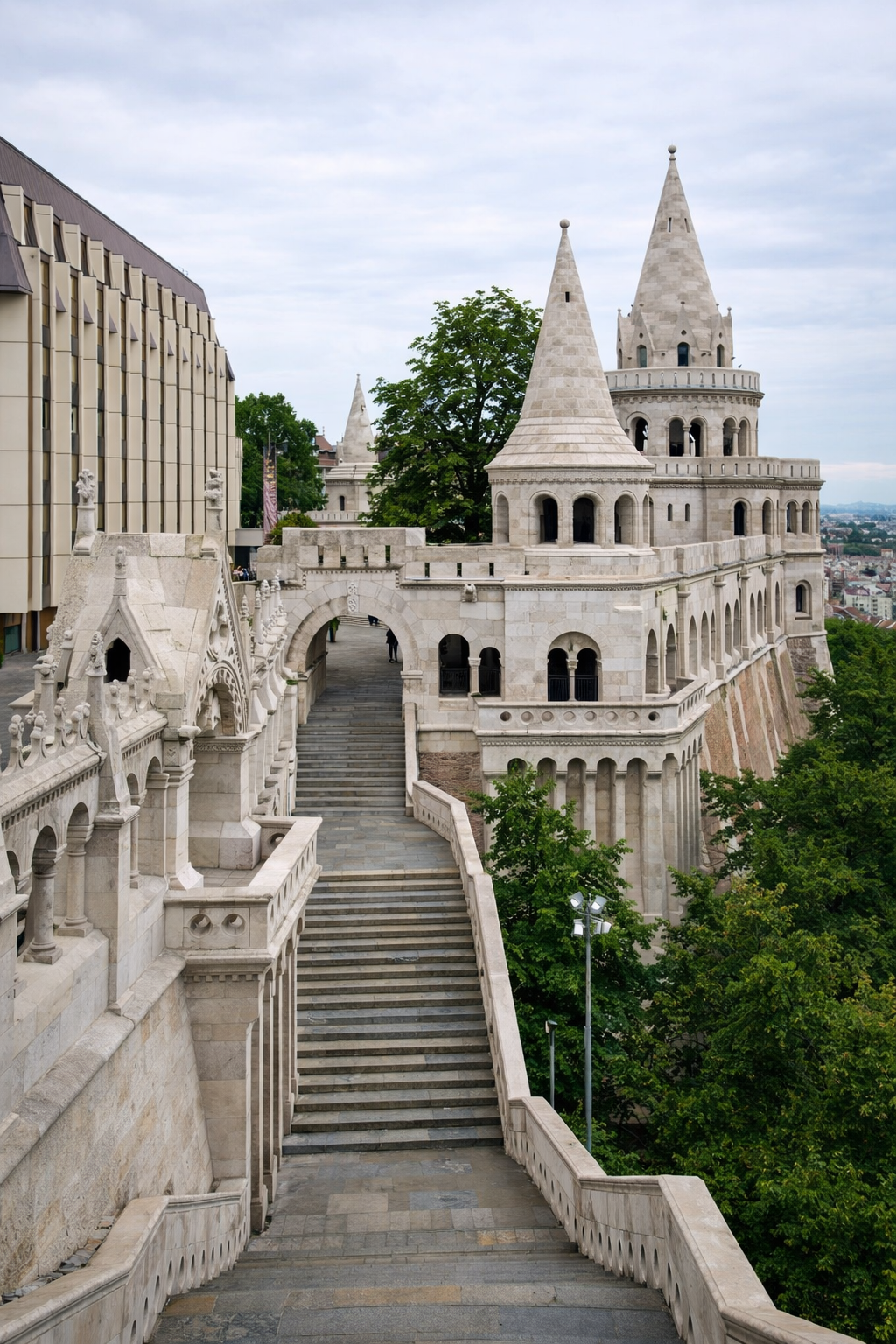
A neo-Romanesque terrace with seven conical towers built in the early twentieth century — primarily as a viewing platform rather than a defensive structure. The view from the upper terrace over the Danube toward Parliament and the Pest skyline is the best in Budapest and worth the entrance fee for the upper level. The lower terrace is free and still offers an excellent panorama. Go early morning or at sunset — the light is extraordinary in both directions and the crowds are thinner than midday.
Budapest’s most iconic bridge — a suspension bridge built in 1849, the first permanent bridge connecting Buda and Pest. Walking across it rather than taking transport is the right decision: the midpoint of the bridge gives you the view up and down the Danube that appears on every photograph of the city, and it is one of those moments that earns its reputation in person. The bridge is well lit at night and the evening walk across is equally rewarding.
03 — The Thermal Baths
Why Budapest’s Bath Culture Is Unlike Anywhere Else
Budapest sits on a remarkable geological feature — over 100 thermal springs beneath the city, producing hot mineral water that has been used for bathing since the Roman period. The Turks developed the bath culture significantly during their occupation of the city in the sixteenth and seventeenth centuries, and the Austro-Hungarian era subsequently added the grand spa palaces that Budapest is now famous for. The result is a bathing culture that is genuinely embedded in daily life in a way that feels entirely different from the tourist spa experience in other cities.
A Social Institution, Not a Luxury Experience
Going to a thermal bath in Budapest is not a luxury activity — it is something locals do regularly, and the atmosphere in the older baths in particular reflects that. You share the pools with retired men playing chess in the water, families on a Sunday afternoon, and travellers who have clearly just discovered why Budapest has a reputation for this. Additionally, the price is remarkably low by European standards — entry to most baths costs the equivalent of €15–20, which in the context of what a spa day costs elsewhere in Europe is almost implausible.
Which Bath to Choose
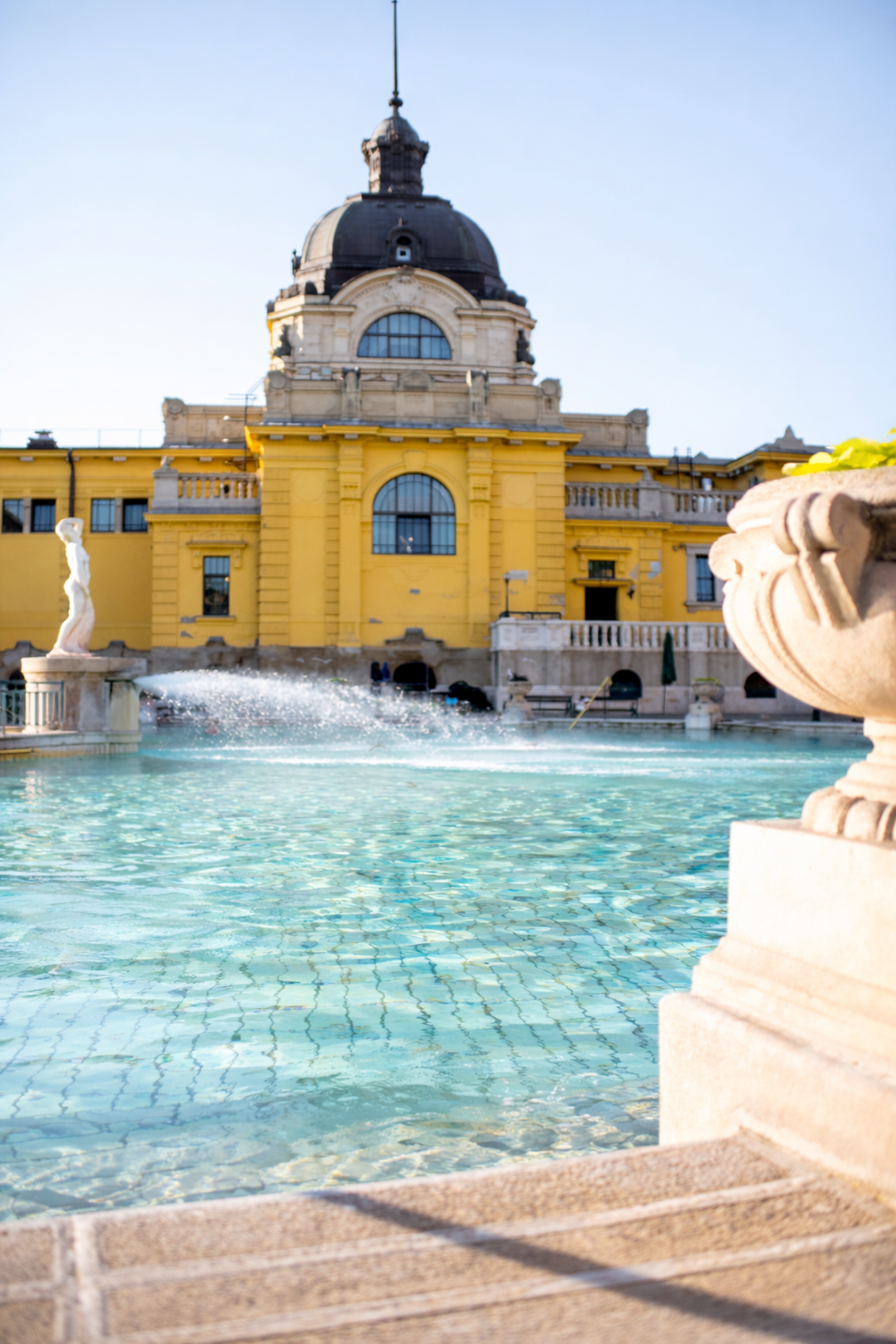
The largest medicinal bath in Europe — a grand yellow neo-Baroque palace in City Park with outdoor pools, indoor thermal pools, and steam rooms. The outdoor pools are where the famous chess-in-the-water photographs are taken. Széchenyi is the most tourist-oriented of the baths, which means it is the easiest to navigate as a first-time visitor. Book tickets in advance during summer and weekends — it fills up. Open year-round; the outdoor pools in cooler weather with steam rising from the surface are an experience in their own right.
A sixteenth-century Turkish bath with an original Ottoman dome and octagonal pool — one of the most architecturally extraordinary bathing experiences in Europe. The thermal section has a genuinely historic atmosphere; the rooftop pool added more recently has views over the Danube. Rudas runs adults-only sessions on certain days — check the schedule before visiting. More atmospheric and less crowded than Széchenyi, but slightly harder to navigate on a first visit.
Bring a swimsuit, flip flops, and a towel — or hire them at the entrance for a small fee. Most baths provide lockers. Book online in advance for Széchenyi, particularly on weekends and in summer. Allow a minimum of two hours — most people stay three to four. Going on a weekday morning is significantly more relaxed than a weekend afternoon.
04 — Two Days in Budapest
Day One — Pest, Parliament and the Jewish Quarter
Start the day at Twentysix on Király utca — a plant-filled café that has become a genuine local institution since opening in 2020. The interior is dense with tropical greenery from floor to ceiling, the coffee is properly made, and the food leans Mediterranean: good pastries, hummus plates, generous shared dishes. It is the kind of place you plan to spend forty minutes in and leave an hour later. From there, walk to the Parliament building early — the riverfront promenade in front of it is best before the tour groups arrive and the morning light on the facade is exceptional.
Subsequently, walk south along the Danube to the Central Market Hall for lunch — lángos at the upstairs stalls is the right call. Spend the afternoon in the VII district: walk the Jewish Quarter, visit the Great Synagogue, and let the evening find you at one of the ruin bars in the surrounding streets. Szimpla Kert is the most famous — go early before it fills completely.
Pest Side
Day Two — Buda Castle, Fisherman’s Bastion and the Thermal Baths
Cross the Chain Bridge on foot to the Buda side and climb to the Castle District — go early, before the tour coaches arrive around 10am. Fisherman’s Bastion for the view, then walk the castle grounds. Return to Pest by early afternoon and spend two to three hours at Széchenyi or Rudas. Book thermal bath tickets in advance — particularly for Széchenyi on any weekend. End the evening with a walk across the Chain Bridge at night when both sides of the city are illuminated.
Buda Side + Thermal Baths
05 — Practical Information
Getting There, Around & What Things Cost
| Getting there | Budapest Ferenc Liszt International Airport (BUD) is well connected from across Europe. By car from Vienna, the drive takes approximately 2.5 hours via the M1 motorway — an Austrian highway vignette is required. From Bratislava, allow 2 hours south on the M15 and M1. From Prague, the drive is 4.5 hours with the Bratislava stopover option along the way. |
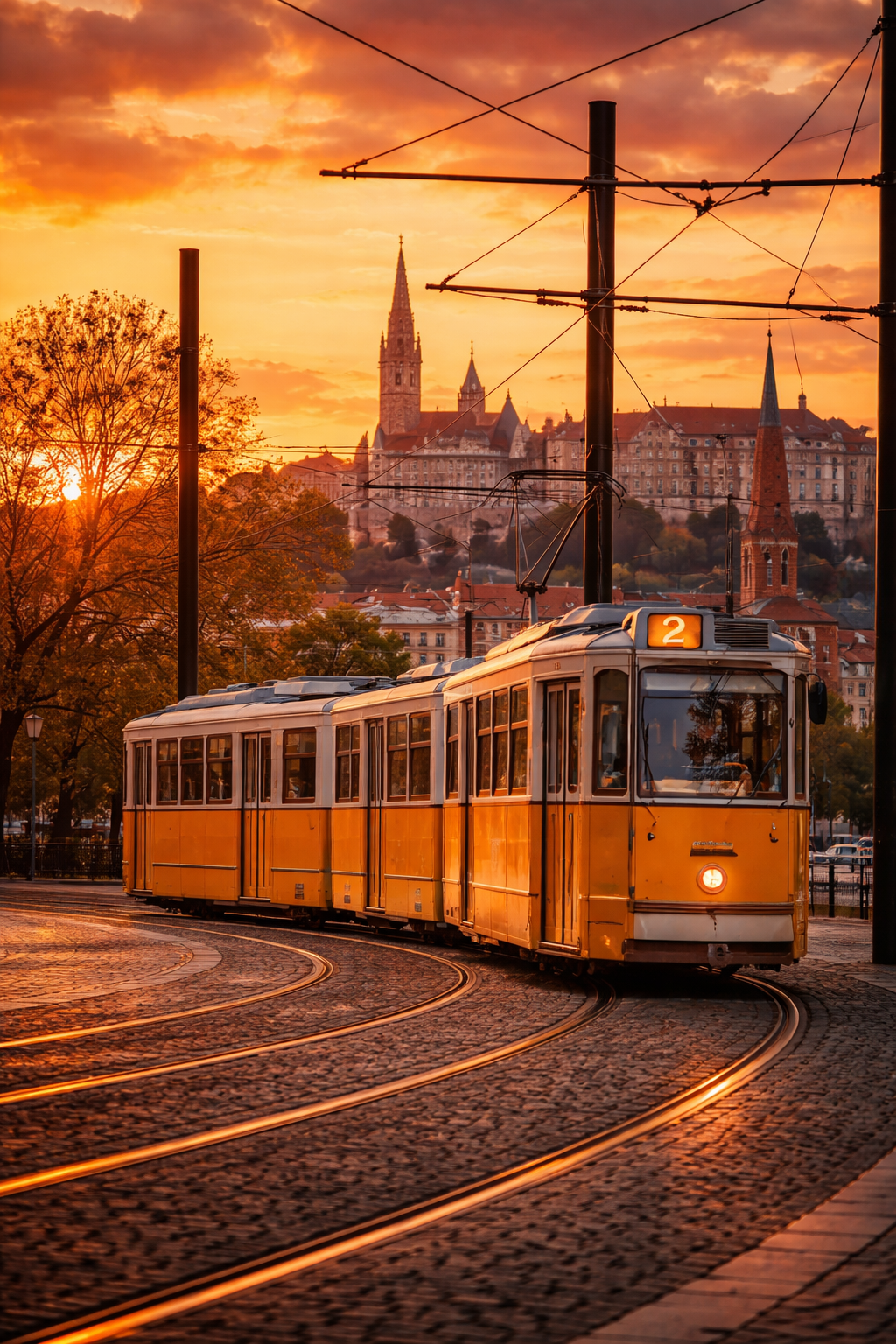
| Getting around | The Pest side is largely walkable for sightseeing. For the Buda side, cross the Chain Bridge on foot or take tram 2 along the Pest riverfront. The metro is fast and cheap — a single ticket costs around €0.70. Buy a 24-hour or 72-hour pass if you plan to use public transport regularly. Taxis and rideshare apps (Bolt is widely used) are affordable by Western European standards. |
| Currency | Hungarian Forint (HUF) — not Euros. The exchange rate makes Budapest feel exceptionally affordable for Western European visitors. Withdraw Forints from a bank ATM on arrival. Avoid exchange kiosks at the airport and tourist areas — rates are poor. Most restaurants and shops accept card payment, but having cash is useful for markets and smaller establishments. |
| Budget | Budapest is one of the most affordable capital cities in Europe. Mid-range accommodation near Parliament: €50–100/night. Restaurant meal: €8–15. Beer: €1.50–3. Thermal bath entry: €15–20. A full day including accommodation, meals, a thermal bath, and evening drinks costs considerably less than the equivalent in Prague or Vienna. |
A Few Things Worth Knowing Before You Go
| Best area to stay | The V district (Inner City) and the VI and VII districts on the Pest side are the most convenient bases — central, walkable, and close to both the Parliament and the Jewish Quarter. Staying near Parliament specifically puts you on the riverfront and within fifteen minutes’ walk of most of the city’s main sights. |
| Ruin bars | The ruin bar scene is concentrated in the VII district around Kazinczy Street and Dob Street. Szimpla Kert is the original and most famous — worth visiting early in the evening before it becomes crowded. The surrounding streets have a dozen alternatives at various scales. The scene is genuinely lively and unlike anything in Prague or Vienna. |
| Twentysix café | Király utca 26, in the heart of Pest. One of the most beautiful café interiors in Budapest — tropical plants covering every wall and ceiling, marble tables, generous Mediterranean food and excellent coffee. A local institution since 2020, not a tourist spot. Go for breakfast or mid-morning; the KAA° cocktail bar in the same space is worth noting for the evening. |
| Safety | Budapest is generally safe for tourists. The main practical concern is the occasional overcharging at tourist-facing restaurants — check menus for prices before sitting down and confirm before ordering anything not listed. Pickpocketing around the main tourist sites follows the standard European pattern — keep valuables secure in crowded areas. |
Planning Your Visit
Getting There & Costs
Buda vs Pest
Budapest is the city that earns the most space in the memory of a Central Europe trip.
Not just for what it looks like — but for how alive it feels, and how little it costs to be part of it.