
Prague Travel Guide: Everything You Need to Know Before You Visit
Charles Bridge at dawn, medieval streets that predate every tourist in them, and a centre so compact you can walk across it in twenty minutes. Prague is not overhyped — it is, however, best understood before you arrive.
Two Visits, One Guide
I have been to Prague twice. The two visits felt different in ways that matter for anyone planning a trip now — and this guide is written from both of them.
The first time, the city revealed itself more easily. Charles Bridge in the early morning had almost nobody on it. The lanes around Old Town Square were navigable at midday. By the second visit — in April 2025 — the crowds had returned in a way that reminded you Prague is one of the most visited cities in Europe, and that timing and arrival time make an outsized difference to the experience.
What hasn’t changed between visits: the quality of the architecture, the density of history in the centre, and the fact that staying close to Old Town — as I did both times — gives you access to the whole city without needing transport for most of it.
01 — When to Go: Season by Season
Prague works year-round but rewards the traveller who understands what each season actually delivers — and what it costs. The difference between April and July is not just temperature. It is a fundamentally different city in terms of crowd density, price, and atmosphere.
Spring: The Honest Best Time
Spring is genuinely the best time to visit Prague. The city is green — the parks around Prague Castle and along the Vltava riverbank are at their most pleasant — and temperatures are comfortable enough for full days of walking without the heat making the cobblestones punishing. Furthermore, the crowds are present but manageable. Charles Bridge at 7am in April belongs to photographers and joggers. By July, that same bridge at 7am is already busy.
Best for: First-time visitors, photographers, anyone who wants to experience the medieval centre without feeling processed through it.
Summer: Beautiful and Overwhelming
Summer Prague is a different city from the one most guide books describe. The Old Town Square functions primarily as a queue for the Astronomical Clock at peak hours. Charles Bridge midday in July is a shoulder-to-shoulder experience. However, summer also brings the best outdoor conditions — riverside terraces, long evenings, outdoor concerts — and the city has enough depth that anyone willing to walk ten minutes beyond the tourist circuit finds a different Prague entirely. Additionally, evenings in summer are genuinely magical when the crowds thin and the stone buildings hold the warmth of the day.
Best for: Travellers who don’t mind crowds, want outdoor dining, or are combining Prague with a wider Central Europe summer trip.
Autumn and Winter: The Quieter Versions
September and October are the most underrated months for Prague — warm enough to walk comfortably, quieter than summer, and with a quality of light in the late afternoon that makes the Baroque facades look extraordinary. December brings the Christmas markets to Old Town Square, which are genuinely beautiful and worth experiencing if you can manage the cold. January and February are the quietest months and the cheapest — suitable for a short city break if winter doesn’t bother you.
Best for: Repeat visitors, budget travellers, anyone who specifically wants Prague without the summer crowd dynamic.
02 — Where to Stay
Prague’s centre is compact enough that staying close to Old Town eliminates any need for transport during the day. Both of my visits were based in or immediately adjacent to the historic centre — and both times, that decision made the city significantly more accessible and enjoyable.
The Three Main Areas
The most central option and the most convenient for first-time visitors. Old Town Square, the Astronomical Clock, Charles Bridge, and the Jewish Quarter are all within a ten-minute walk in any direction. Hotels here command a premium — particularly on weekends and in summer — but the tradeoff in accessibility is significant. Book well in advance for any dates between May and September.
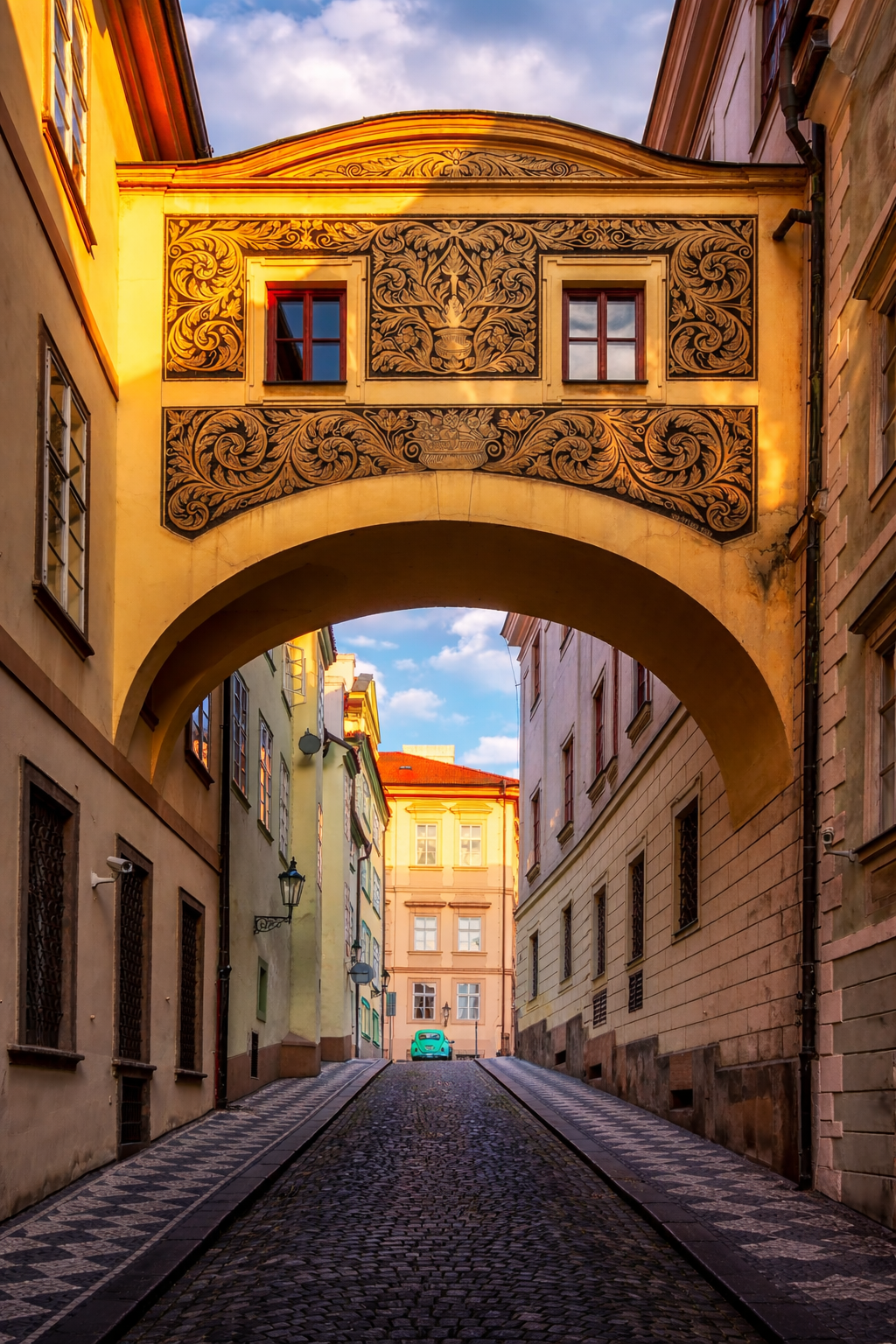
Immediately across Charles Bridge from Old Town, Malá Strana sits at the foot of Prague Castle and is considerably quieter in the evenings. The streets here — narrow, Baroque, slightly uphill — are some of the most beautiful in the city. Staying on this side gives you Prague Castle and Petřín Hill as morning walks before the day visitors arrive. Slightly less convenient for Old Town sights, but the atmosphere compensates.
Further Out but Worth Considering
Immediately southeast of the centre, Vinohrady is a residential neighbourhood of Art Nouveau apartment buildings, independent restaurants, and considerably lower hotel prices than Old Town. It is a twenty-minute walk or two metro stops from the historic centre. Moreover, it feels like a city people actually live in — which Old Town, at its most saturated, occasionally does not. A good choice for longer stays or returning visitors.
A Note on Old Town Logistics
Many Old Town streets are cobblestone and not accessible by car. If arriving by taxi or rideshare, give the nearest landmark rather than your exact address — drivers will know where to drop you. Luggage with wheels does not survive Old Town cobblestones well. A bag with a handle and shoulder strap is significantly more practical for the last few hundred metres.
03 — What to See
Prague’s historic centre is one of the most intact medieval urban landscapes in Europe — largely because the city was not significantly bombed in the Second World War and subsequently avoided the aggressive redevelopment that affected many other Central European cities. The result is a concentration of Gothic, Baroque, and Art Nouveau architecture within walking distance that is genuinely unlike anywhere else on the continent.
The Essential Prague
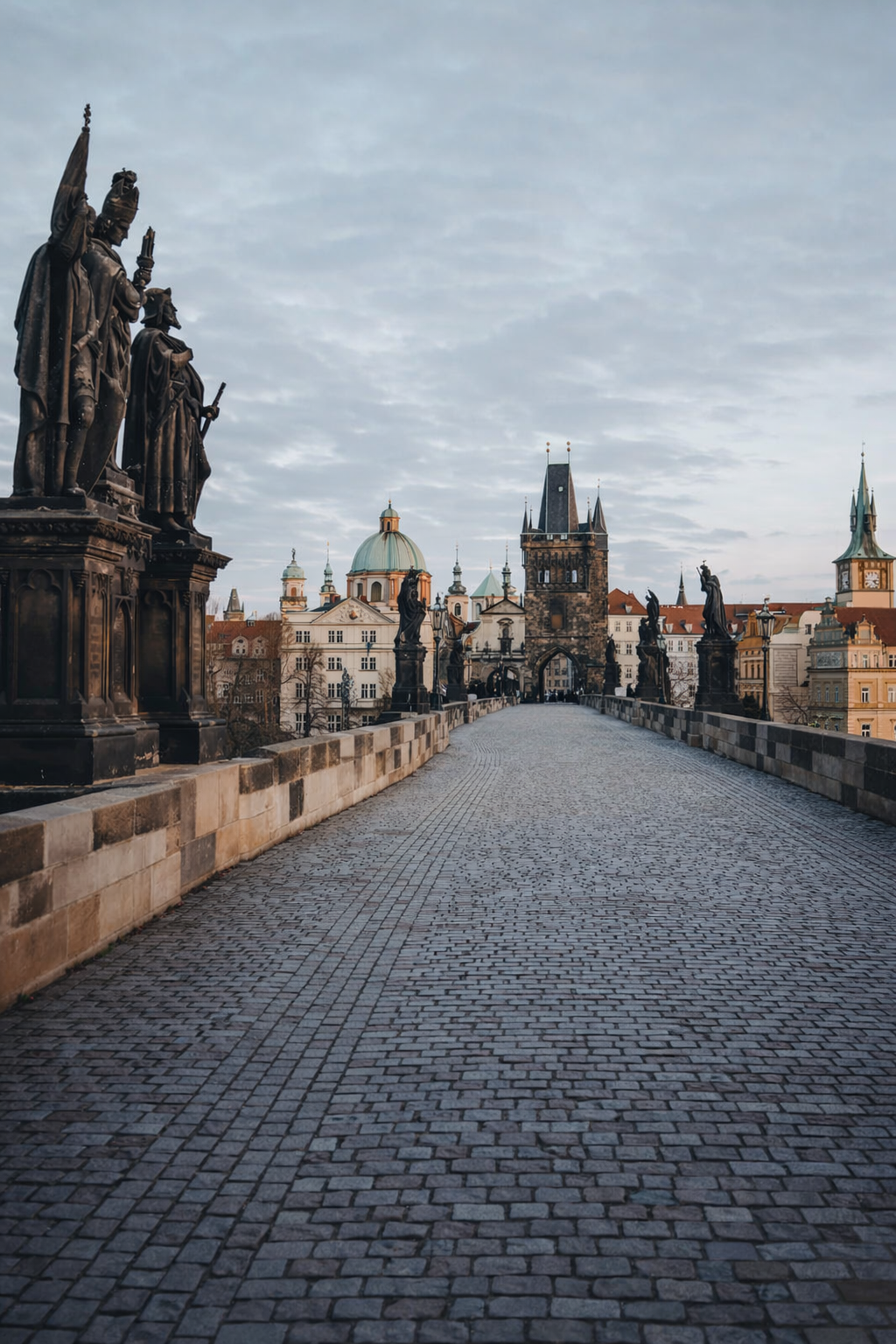
A fourteenth-century stone bridge lined with thirty Baroque statues — one of the most beautiful structures in Europe, and one of the most crowded. The bridge belongs to early risers. At 6 or 7am in spring, with mist on the river and the castle lit behind you, it is exactly what every photograph promises. By 10am, that version is gone.
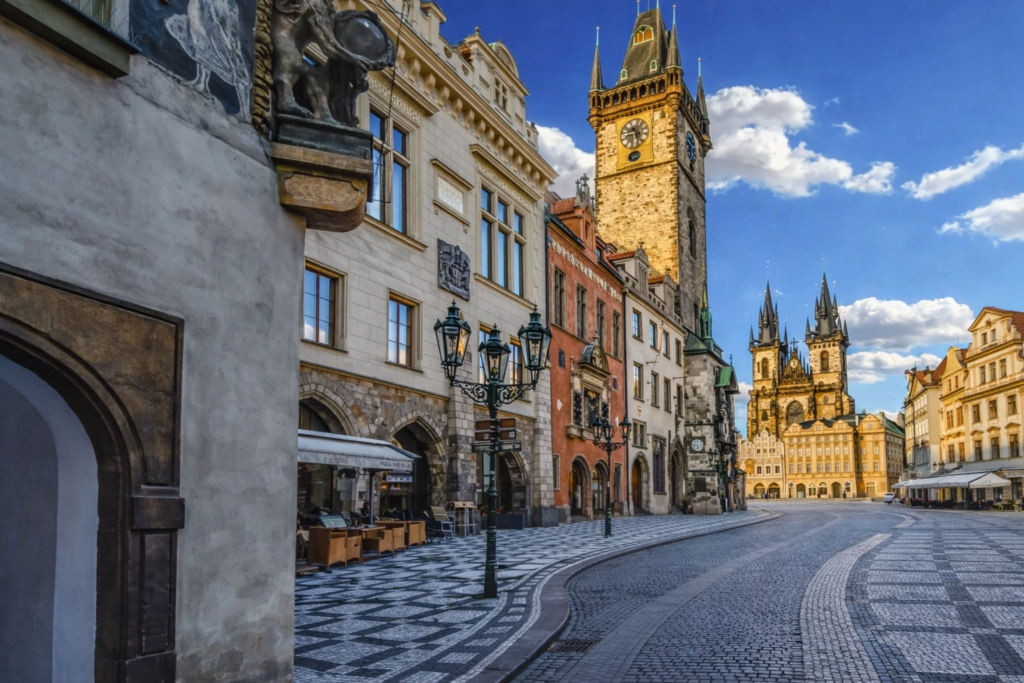
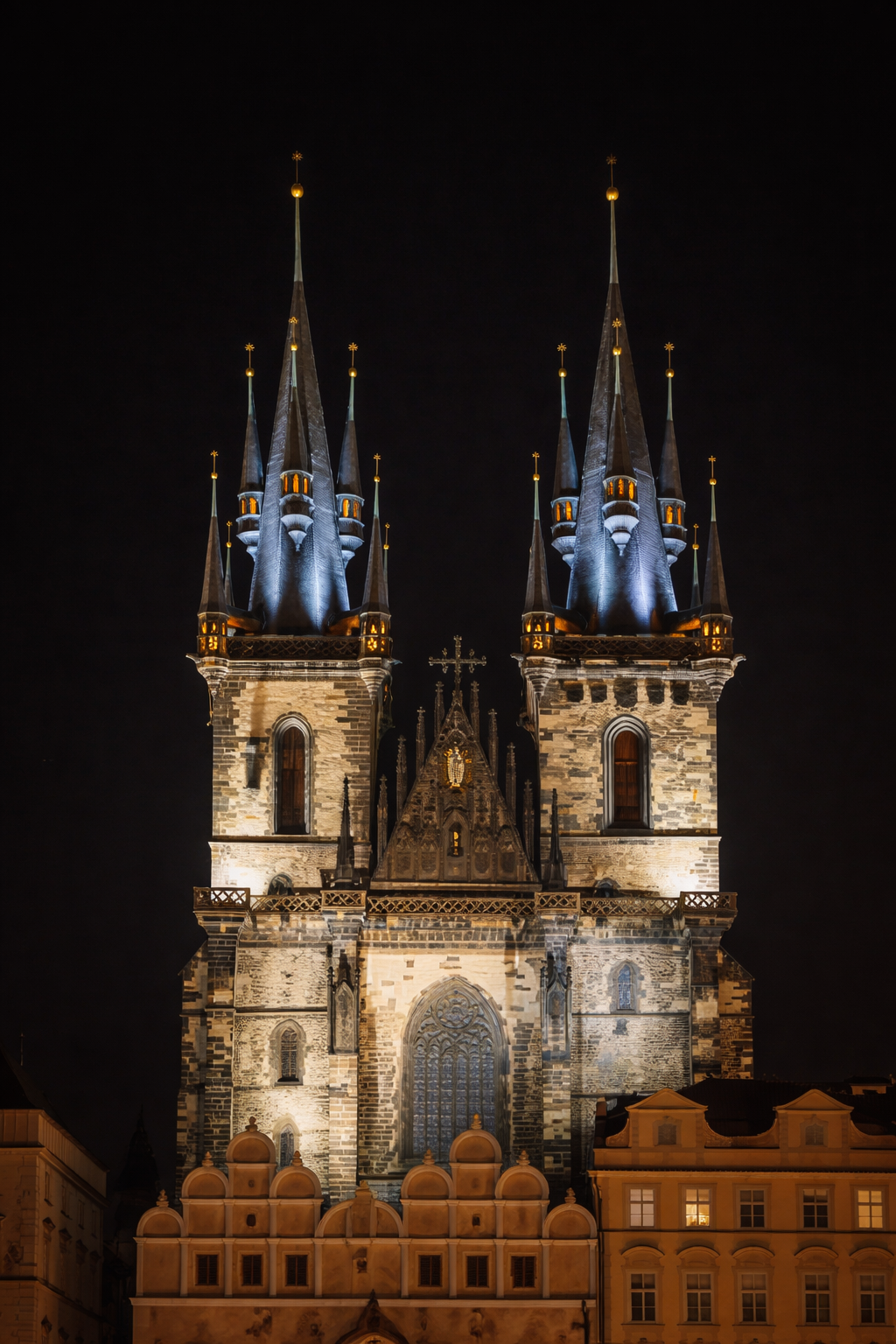
The medieval square surrounded by Gothic and Baroque facades with the twin spires of the Týn Church rising above. The Astronomical Clock performs an hourly procession worth seeing once — not worth planning your day around. The square is best appreciated from the Old Town Hall tower, where the view over the rooftops gives you the scale of the medieval city that is impossible to grasp from street level.
The Castle Side and the Jewish Quarter
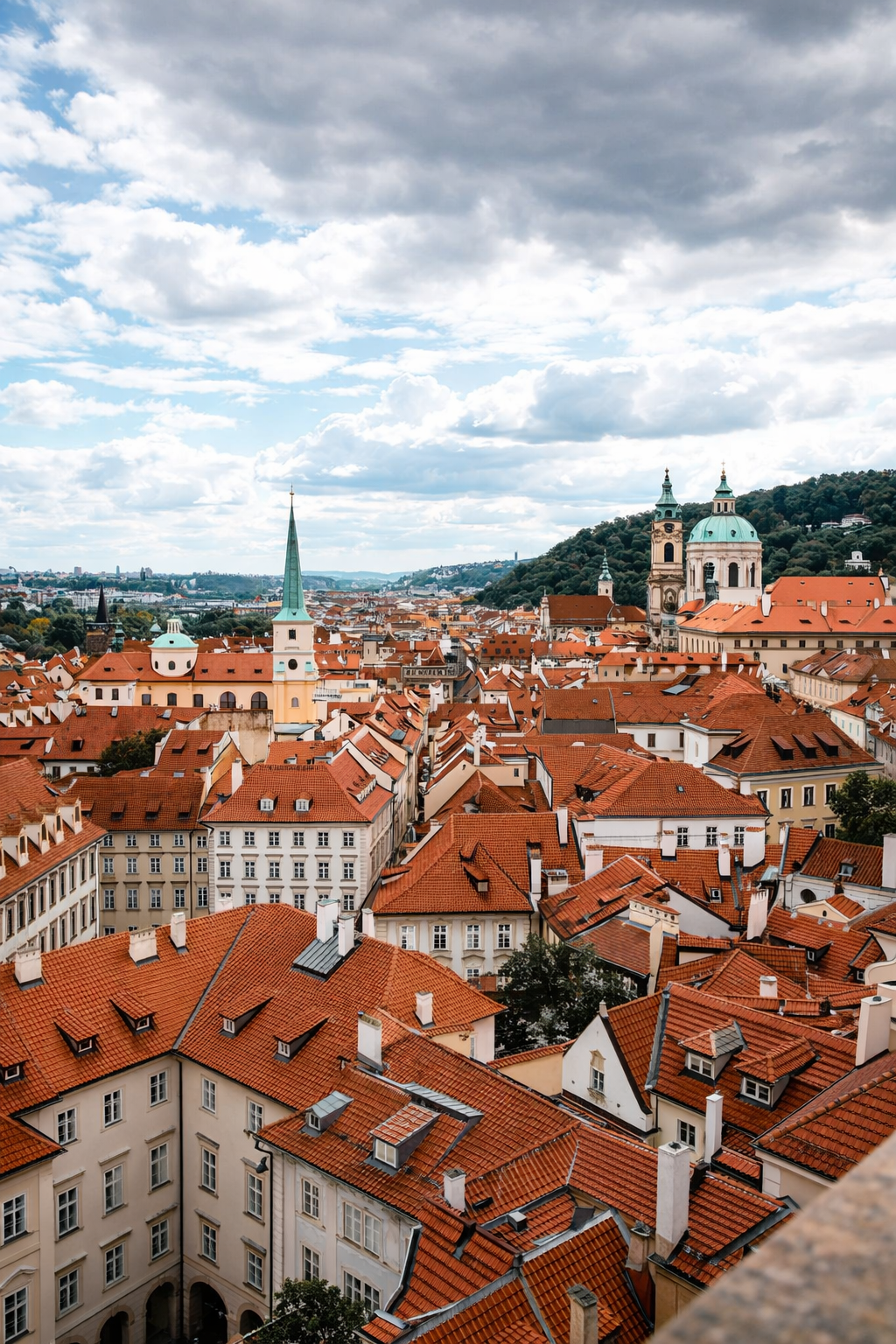
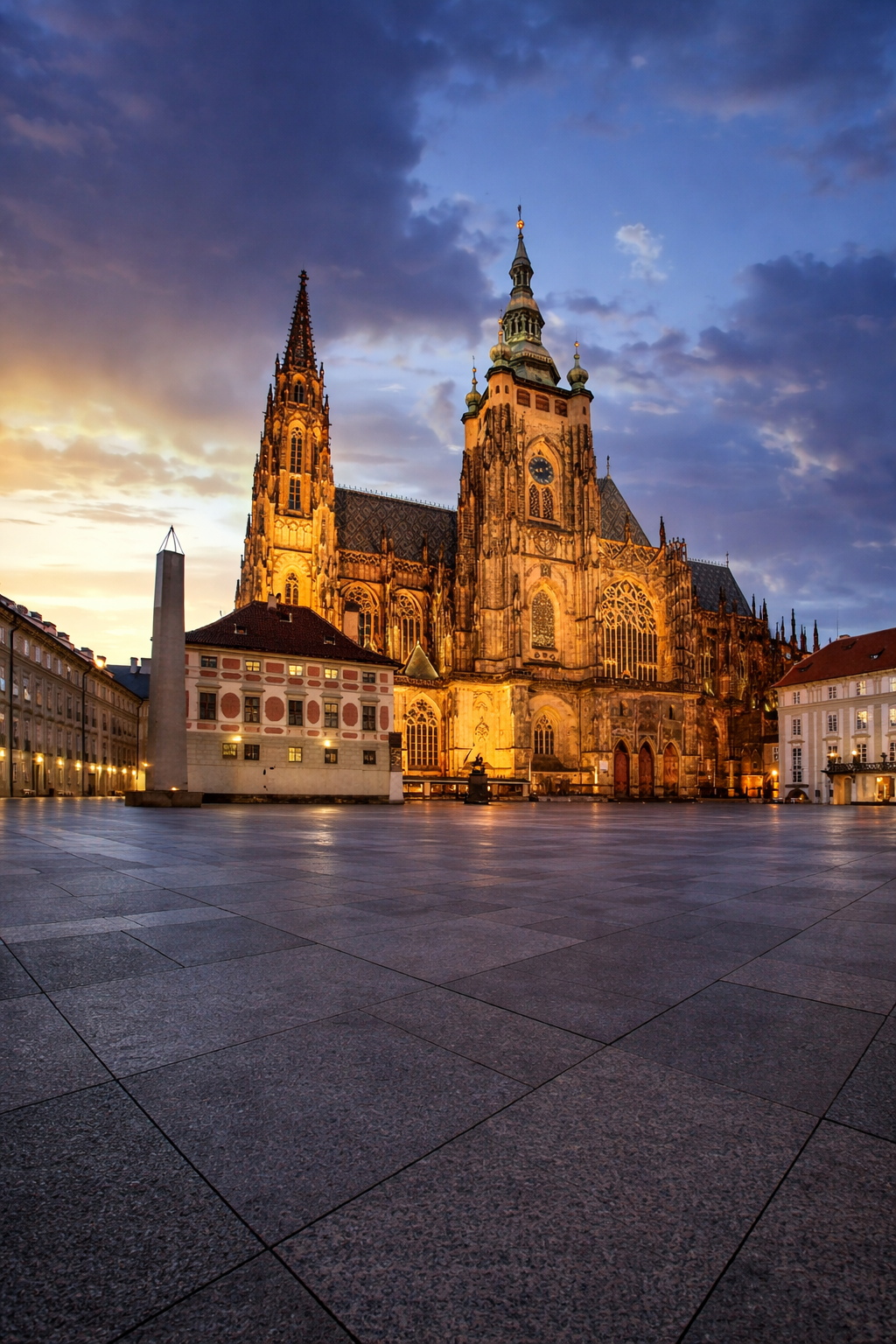
The largest ancient castle complex in the world by area — courtyards, palaces, churches, and gardens along the ridge above Malá Strana. St. Vitus Cathedral is Gothic on a scale that stops most visitors mid-sentence. Castle grounds are free; individual buildings require tickets. Go in the morning before the tour groups arrive. The views from the castle gardens over the red-tiled rooftops are the best in Prague.
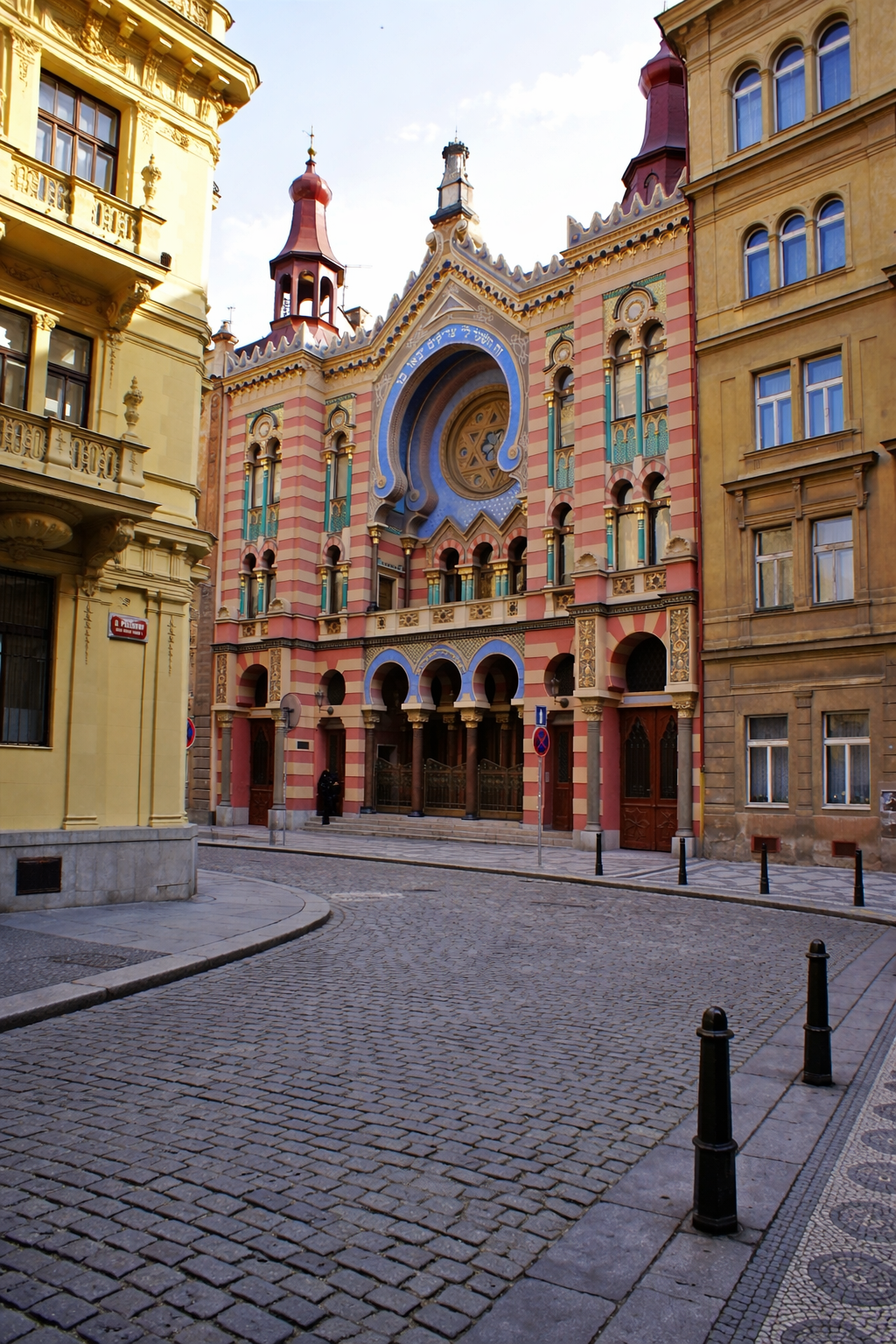
Six synagogues, a town hall, and the Old Jewish Cemetery — one of the most layered sites in Central Europe. The cemetery contains 12,000 visible gravestones stacked twelve layers deep on a remarkably small plot. The Jewish Museum ticket covers most of the quarter and pays for itself. The Art Nouveau architecture of the district is worth exploring beyond the museum sites.
Worth the Walk Further
A forested hill rising from Malá Strana with a funicular railway, a miniature Eiffel Tower with city views, and rose gardens along the paths. In spring, the fruit trees on the hillside bloom and the whole hill turns white and pink. It is fifteen minutes on foot from Charles Bridge and offers a complete change of pace from the stone streets below. Additionally, the views from the observation tower over the castle and city are some of the best available without paying for a rooftop restaurant.
Vinohrady and Žižkov — the neighbourhoods immediately east of the centre — have a concentration of independently owned restaurants, wine bars, and cafés that bear no resemblance to the tourist-facing establishments on Old Town Square. The Žižkov Television Tower, a communist-era structure of considerable aesthetic controversy, has a restaurant and viewing platform with a completely different perspective on the city. Walking fifteen minutes beyond the Astronomical Clock in almost any direction reveals a different and considerably more local Prague.
How Much Has Changed — and Why Timing Now Matters
The first time I was in Prague, I walked Charles Bridge at noon without planning to — it was simply quiet enough that timing didn’t matter. By my second visit in April 2025, that was no longer possible. The lesson: the iconic sights require timing now in a way they didn’t before. Build your first morning around Charles Bridge at dawn. Everything else can be more flexible.
04 — Practical Information
Getting There & Getting Around
| Getting there | Václav Havel Airport (PRG) is well connected from most European cities with both full-service and budget carriers. A taxi or Bolt to the centre takes 25–35 minutes depending on traffic. The airport bus (AE line) connects to the main train station in about 35 minutes. From Germany, the train from Dresden takes around 2.5 hours — one of the most scenic rail approaches in Central Europe. |
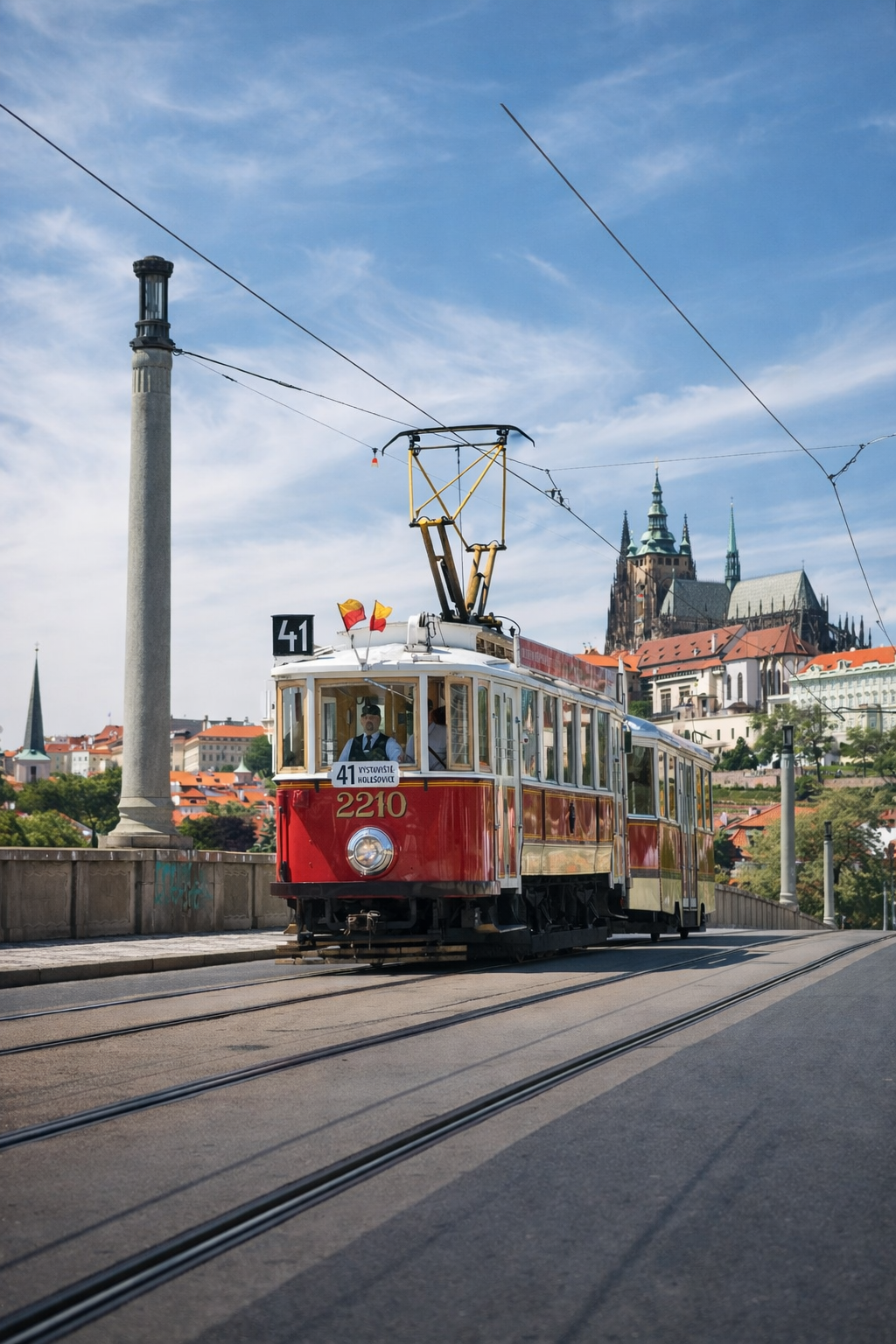
| Getting around | The historic centre is walkable. For longer distances, Prague’s tram network is excellent — tram 22 connects Vinohrady, Old Town, Malá Strana, and Prague Castle in a single route. The metro is fast and clean. Buy a 24-hour or 3-day pass rather than individual tickets if you plan to use public transport regularly. |
Money, Budget & Practical Details
| Currency | Czech Koruna (CZK) — not Euros. While some tourist-facing businesses accept Euros, the exchange rate is unfavourable. Withdraw CZK from an ATM on arrival and use Czech currency throughout. Avoid exchange booths in the airport and around Old Town Square — rates are poor. ATMs at the airport and throughout the city offer better rates. |
| Budget | Prague is significantly cheaper than Western European capitals but has risen considerably in price over the past five years. Mid-range accommodation in Old Town: €80–160/night. Restaurant meal: €12–25. Beer in a local pub: €2–3. Beer in a tourist-facing Old Town bar: €5–8. The price gap between tourist areas and neighbourhood restaurants is one of the largest of any European city — walking ten minutes from the square saves money immediately. |
| Language | Czech is the official language. English is widely spoken in the centre, hotels, and restaurants. Basic Czech phrases are appreciated but not necessary. Menus in tourist areas are universally available in English. |
| Prague Card | The Prague Card offers free entry to over 50 attractions including Prague Castle, the Jewish Museum, and public transport. Worth calculating based on your itinerary — if you plan to visit the castle complex and the Jewish Quarter, it typically pays for itself on day one. |
Transport & Money — What Catches People Out
Punch your tram ticket the moment you board. Inspectors in Prague board without warning and check immediately. A friend travelling with me assumed I had his ticket — an inspector appeared within sixty seconds and issued an on-the-spot fine. Punch it before you sit down, every time.
Don’t change money at Old Town Square kiosks. Rates are significantly worse than bank ATMs. Withdraw Czech Koruna on arrival and use that throughout.
Ignore the free walking tour touts near the Astronomical Clock. They are tip-based and keep you in the tourist circuit. The city is compact enough to navigate independently.
Luggage, Food & Small Things Worth Knowing
Wheeled luggage does not survive Old Town cobblestones. Many streets are inaccessible by car — give your driver the nearest landmark and walk the last stretch with a bag you can carry.
Bread on the table is not free. Prague restaurants add a cover charge for any bread or snack that appears. You can decline it — just say so before it arrives.
05 — How to Spend Your Time: 2 Days and 3 Days
Two full days covers the essential Prague without rushing any of it. Three days allows the city to reveal itself more gradually — and gives you one morning of genuine flexibility. Below is how I would structure both, based on what worked across two visits.
Two Days in Prague
Begin at Charles Bridge no later than 7am — the mist on the river and the castle lit behind you is the version of Prague that justifies the trip. Walk into Old Town as the city wakes up. Spend the late morning in the Jewish Quarter — the Old Jewish Cemetery and the synagogues take two to three hours properly. Afternoon: cross back over the bridge to Malá Strana and walk the quiet lanes before dinner on the Lesser Town side.
Old Town + Jewish Quarter + Malá Strana
Go to Prague Castle in the morning before the tour groups arrive from the city centre — by 9am the courtyards are manageable, by noon they are not. Allow three hours for the castle complex. Subsequently, walk down through Malá Strana to Petřín Hill for the late afternoon. Return to Old Town in the evening when the day visitors have left and the square takes on a completely different character.
Prague Castle + Petřín + Old Town Evening
If You Have Three Days
The third day is for Vinohrady and Žižkov. Walk east from the centre along Náměstí Míru, find a café that isn’t aimed at tourists, spend a morning moving slowly through streets that feel like a real city rather than a preserved exhibit. In the afternoon, the Žižkov Television Tower and its viewing platform give you a perspective on Prague that the castle views don’t — looking back toward the historic centre from outside it. The third day is when Prague stops being a sight and starts being a place.
Planning Your Visit
Where to Stay & What to Expect
Costs, Transport & Logistics
Booking & Tickets
Prague is not a city that needs defending or discovering — it has been found, thoroughly, by most of Europe.
What it rewards is the traveller who arrives early, stays one day longer than planned, and walks ten minutes further than the map suggests.