
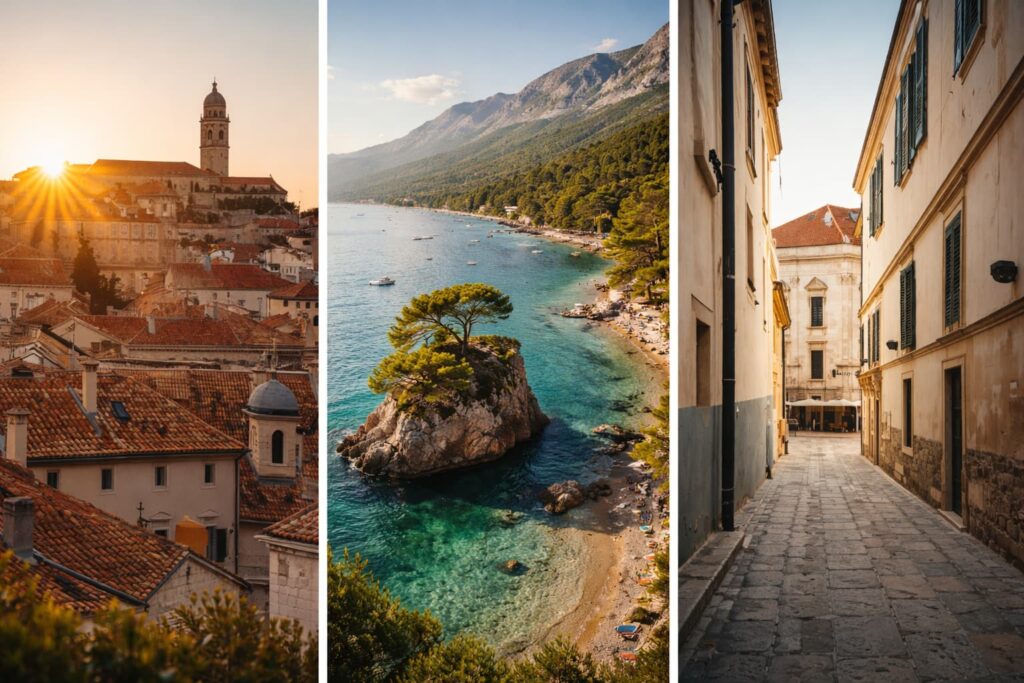
I Drove the Dalmatian Coast: Dubrovnik to Split Road Trip Guide
A slower, more beautiful way to see Croatia — what this coastal drive actually feels like, where to stop, how many days you need, and whether renting a car is worth it.
The Dubrovnik to Split road trip is approximately 230km along the Dalmatian Coast — most travellers allow two days, with an overnight stop on the Makarska Riviera.
The road out of Dubrovnik does not rush you.
It curves along the edge of the Adriatic, just high enough to widen the view without ever taking you too far from the water. Stone houses. Low harbors. Long, quiet stretches of coastline that feel less curated than the postcards suggest. Driving the Dalmatian Coast is not really about distance. It is about how often you decide to stop.
And you will stop more than you meant to. The Dubrovnik to Split road trip covers roughly 230km of Dalmatian coastline — four to five hours of driving that most people wisely stretch across two days.
01 — Why Drive Instead of Taking the Bus?
There are easier ways to move between Dubrovnik and Split. Buses are simple. Transfers are common. Ferries can work depending on the season. However, none of them make room for the coastline itself.
Driving does.
This stretch of Croatia rewards slowness. The road lets you keep some of it.
02 — Dubrovnik to Split: Route Overview
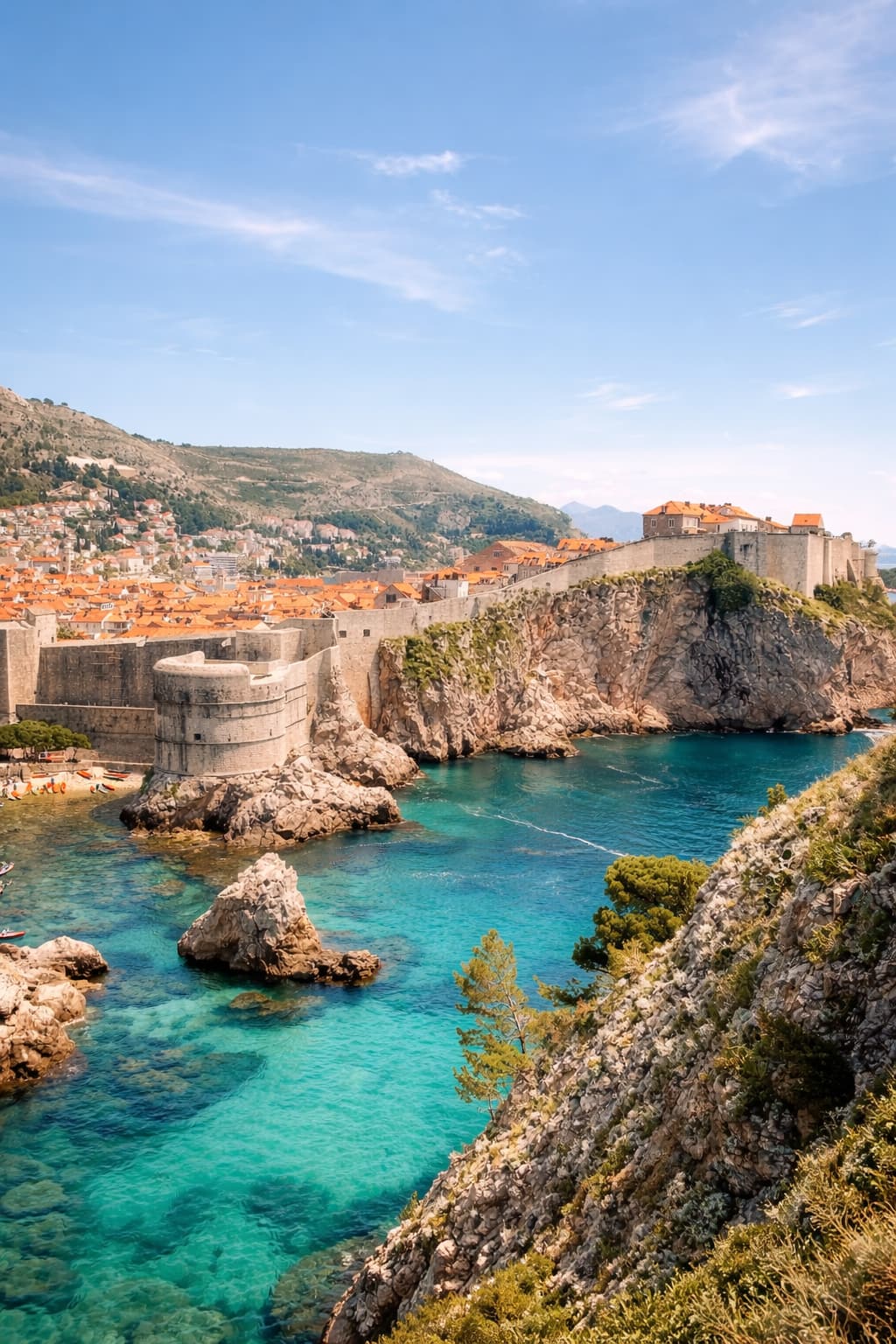
The route follows the D8 coastal road — known locally as the Jadranska magistrala — for most of its length. Since the Pelješac Bridge opened in July 2022, the drive no longer requires passing through Bosnia at Neum, making the route straightforward from start to finish. The main towns along the way — Ston, Makarska, and Omiš — sit at roughly even intervals, which makes natural stopping points easy to plan around.
| Style | Time Needed | What It Feels Like |
|---|---|---|
| Fast | 1 day | Good if you mainly want the drive itself and one or two short stops |
| Balanced | 2 days | The best option for most travelers — enough time to stop properly without rushing |
| Slow | 3 days | Best if you want beaches, detours, quiet lunch stops, and the road to feel like the trip rather than transit |
03 — What the Drive Actually Feels Like
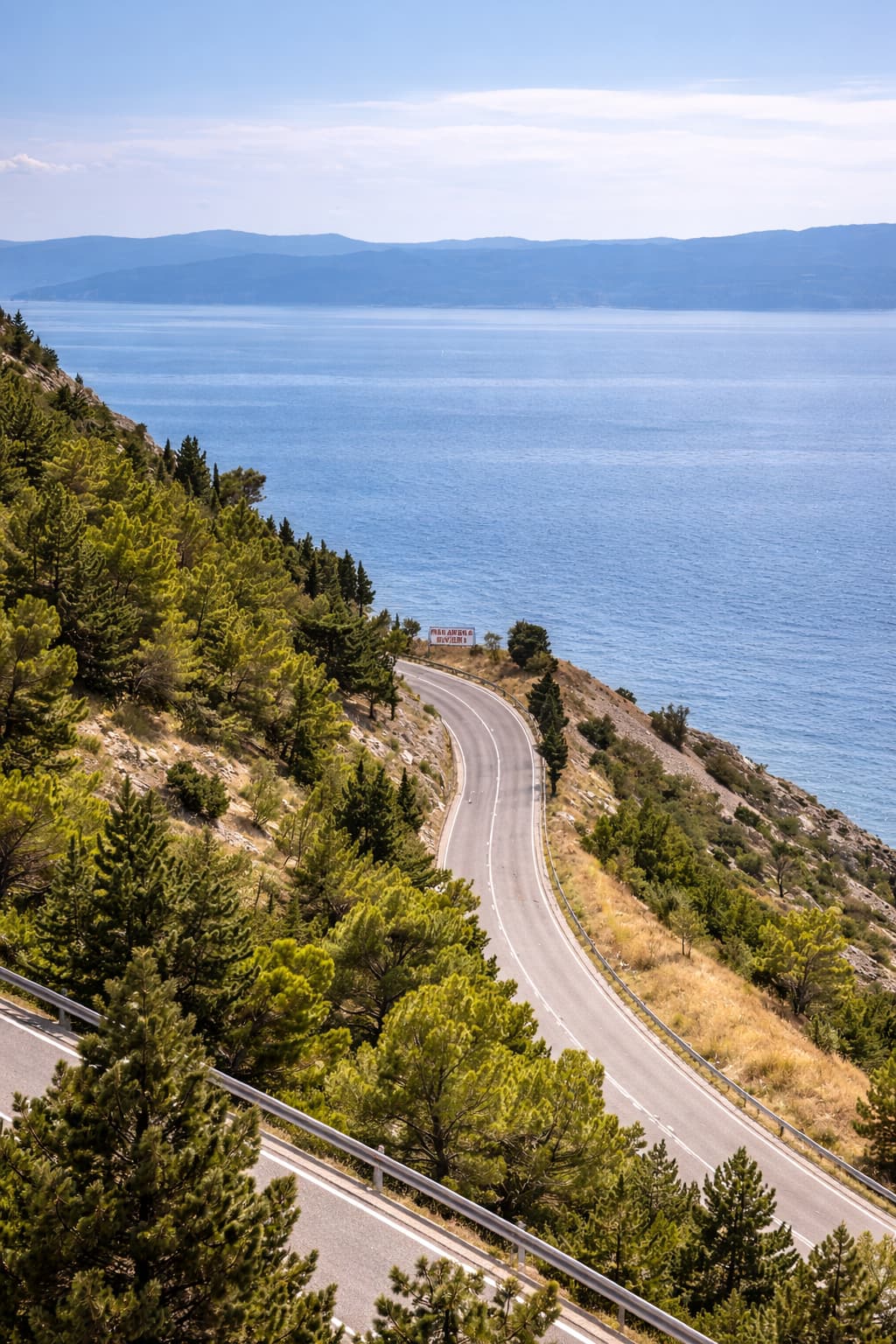
The road stays close enough to the sea that you never fully lose it. Sometimes it climbs just above the coastline and the view opens out into wide blue distance. In other stretches it narrows again and passes stone walls, small church towers, and places that feel less like destinations than brief proofs that people have always lived here.
It is not an aggressively dramatic drive. That is part of why it works. The beauty accumulates, and the road gives you time to register one stretch before offering another.
You begin to notice other things too: how the water shifts color through the day, how the mountains sit behind the coast instead of competing with it, how often a seemingly minor stop turns into half an hour. The Dalmatian Coast stretches over 1,800km including its islands, but the Dubrovnik to Split coastal road (D8) alone offers nearly continuous sea views for most of its 230km.
The route feels calmer than its reputation suggests. The coastline is more varied than you expect from maps alone. The best moments are often the unscheduled ones — a roadside stop, a quieter harbor, a lunch break that runs long.
04 — Best Stops Between Dubrovnik and Split
Ston — The First Slowdown
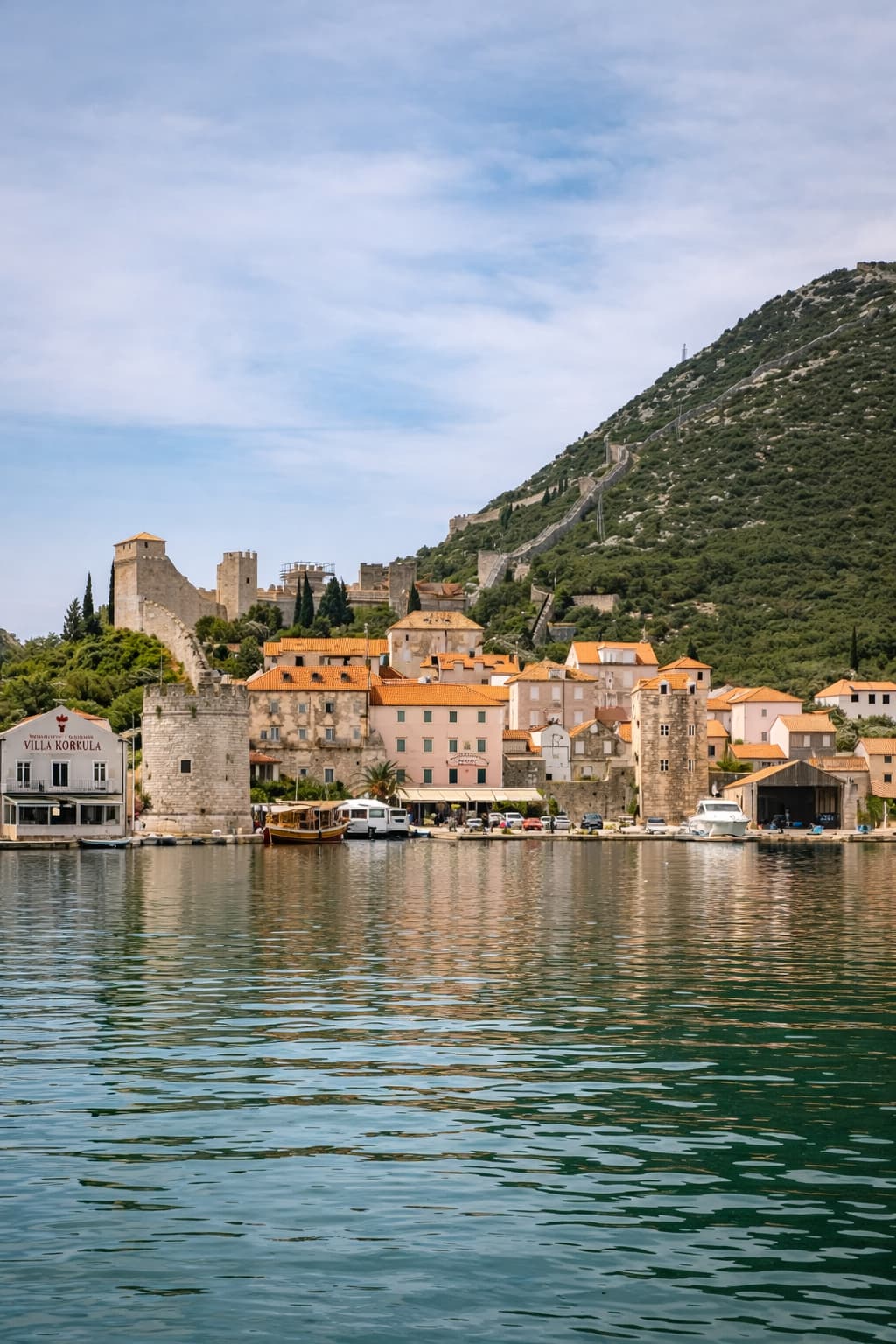
Roughly an hour from Dubrovnik, Ston is where the road starts to feel less like departure and more like arrival. Old stone walls run across the hillside in a way that makes the town feel older than its scale suggests. The nearby oysters and salt pans make it a practical stop as well as a visual one. It does not need an entire day — it just needs enough time to shift your rhythm.
Makarska Riviera — The Coast Opens Up
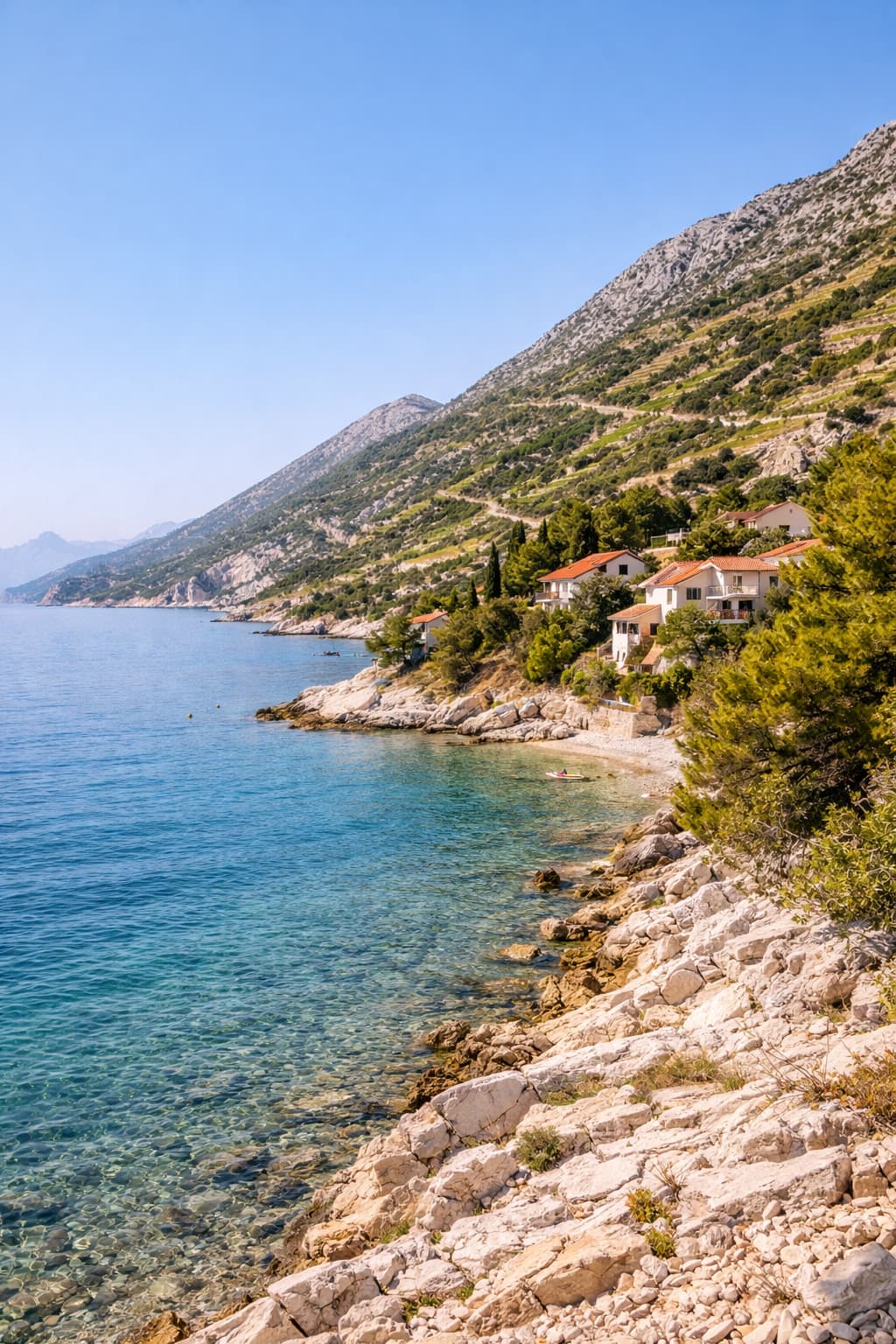
This is where the drive becomes unmistakably summer-shaped. The coastline feels longer here, the water brighter, the mountain backdrop more visible. If the southern part of the drive feels like a gradual introduction, this stretch feels like the route fully arriving in itself. The easiest place on the journey to stop without overplanning — pull in, walk toward the water, stay longer than you meant to.
Omiš — A Different Kind of Coast
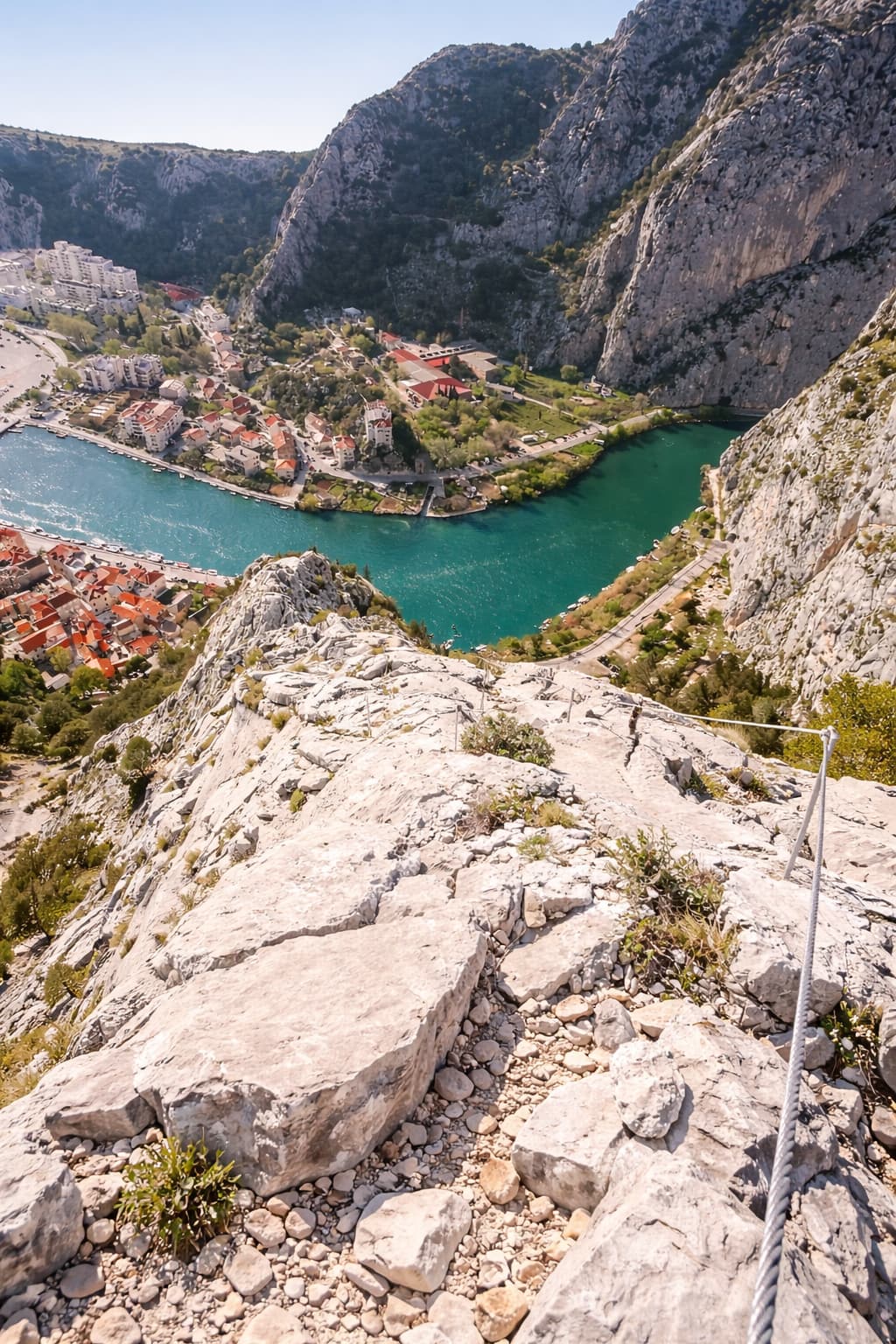
Just before Split, Omiš changes the mood of the trip. The sea is still there, but the landscape tightens around the river and cliffs. It feels more dramatic, more enclosed, and slightly less leisurely in a good way — a final shift before arriving in a larger city. For one last meaningful stop before Split, this is the one to make.
Pelješac Peninsula — Optional Detour
If you have time and want the slower version of this route, the Pelješac Peninsula detour is the one to make. Vineyards, smaller roads, quieter edges of the coast — it trades speed for atmosphere, which is often a good bargain on this part of Croatia.
05 — Is Driving in Croatia Easy?
Yes — easier than many first-time visitors expect on this road trip. The roads are good, signage is clear, and the drive is more manageable than the phrase “coastal road trip” sometimes implies. The route winds, but it does not feel chaotic. The main challenges are not difficulty so much as timing: summer traffic, parking pressure in bigger places, and the temptation to fit too much into one day.
Parking: Dubrovnik and Split are the most likely places to feel tight and expensive. Transmission: if you want an automatic, book early — they go fast in summer. Summer traffic: July and August make the route slower and less spontaneous. Road style: winding in places, but not unusually difficult if you drive calmly. For current road rules and speed limits in Croatia, HAK (the Croatian Automobile Club) publishes updated guidance at hak.hr.
06 — How Many Days Does the Dubrovnik to Split Road Trip Take?
This depends less on mileage than on what kind of trip you want. If the road is only a transfer, one day is enough. If the road is part of why you came, give it at least two.
07 — Where to Stay Overnight
If repeating this route, the advice is straightforward: do not rush straight from Dubrovnik to Split unless time forces it. The strongest overnight stop is somewhere along the Makarska Riviera — enough distance from Dubrovnik to make the next day feel different, enough coastline to justify slowing down, and enough accommodation options to keep the stop practical.
Additionally, if doing the slower version, adding one more night near Omiš or just outside Split keeps the arrival softer and gives the final stretch room to breathe.
Night 1: Makarska Riviera — the strongest midpoint stop on the whole route. Night 2 (optional): Omiš area — for an easier, more gradual final approach into Split.
08 — Best Time to Drive This Route
May, June, and September offer the best balance of warmth, manageable roads, and room for spontaneity. July and August are still beautiful, but the route becomes busier, more expensive, and slightly less forgiving if you like unplanned stops. April is cooler but calmer — often more rewarding for travelers who care more about atmosphere than peak beach weather.
09 — What I’d Do Differently Next Time
One extra night along the coast instead of trying to arrive in Split as efficiently as possible — that is the main thing.
Starting earlier each day also makes a difference. The road feels different in the morning — quieter, less flattened by heat, and more open to unplanned stops. In short, stop more often without waiting for a reason. This route rewards instinct more than optimization.
Some drives are only a way of getting somewhere else.
This one is the trip.