
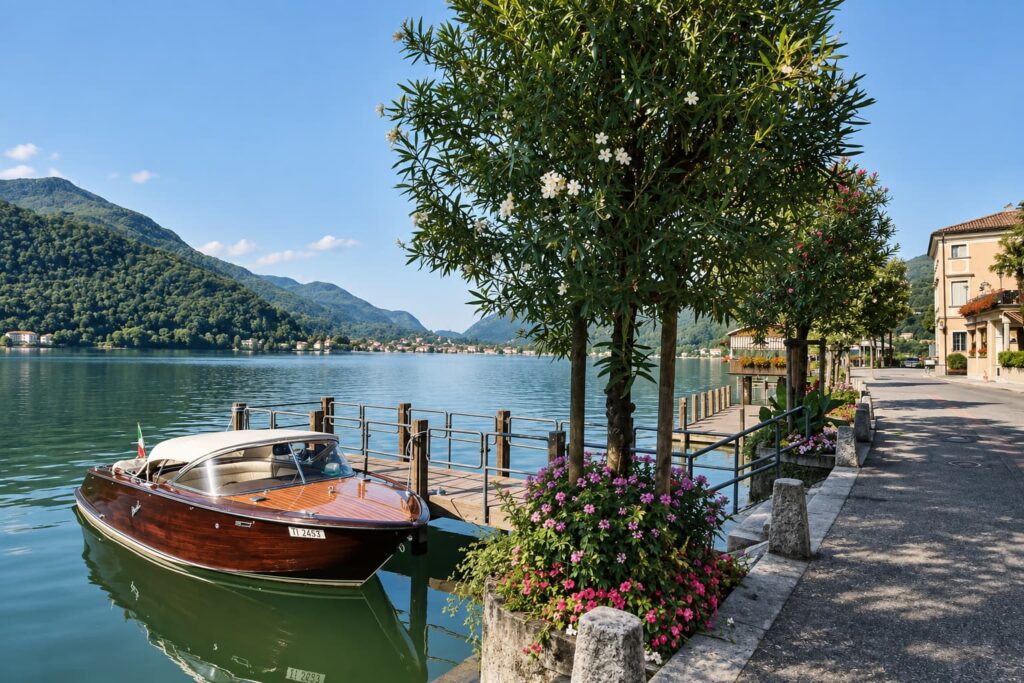
Ticino in Autumn: The Italian Side of Switzerland Nobody Talks About
Palm-lined lakefronts, roasted chestnut smoke in the piazza, and Merlot harvest season — this is Switzerland at its most Italian, its most unhurried, and its least visited in October.
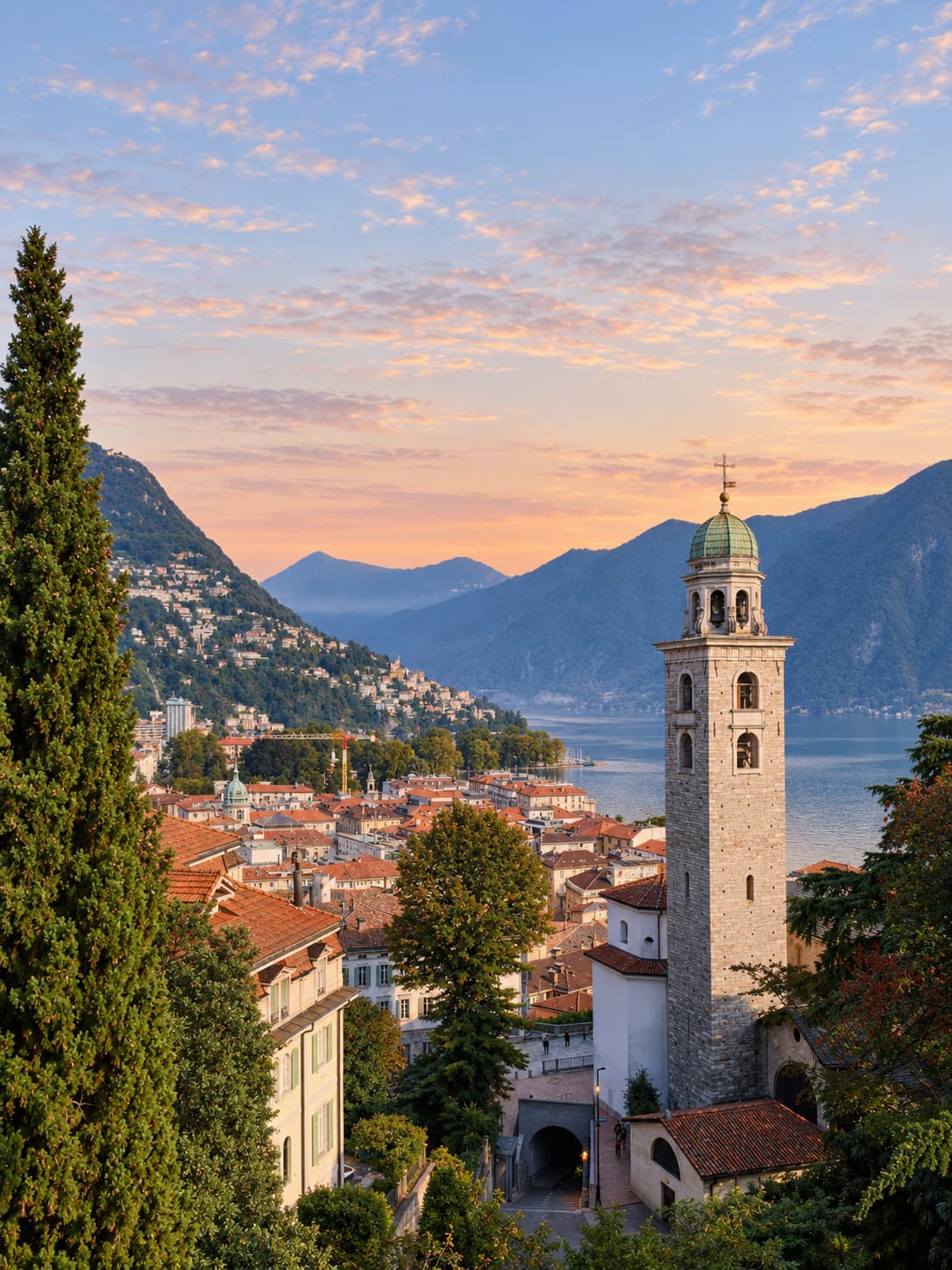
Ticino in autumn is one of Switzerland’s most overlooked seasons in its most overlooked canton — and most visitors never get there. They go to Interlaken, Lucerne, or the Engadin, take the scenic train through mountain passes, eat fondue at altitude, and leave thinking they’ve seen the country. They haven’t seen Ticino, and they’ve missed the best of October.
This is the canton that sits below the Alps rather than inside them. It’s where the Italian language has been spoken for centuries, where the architecture is all terracotta and shuttered windows, and where the lake towns look unmistakably like northern Italy — except the trains run on time and the pavements are swept at dawn. In October, when the chestnut forests turn amber and the Merlot harvest opens the cantina doors, it becomes the single most overlooked autumn destination in Switzerland.
That’s the gap this post is trying to close.
01 — What Makes Ticino Different from the Rest of Switzerland?
Switzerland’s other cantons sit north of the Alps. Ticino sits south of them — a geographic distinction that changes almost everything. The language is Italian, not German. Across the piazzas, you’ll find that particular unhurried quality you recognise from Lombardy or the Veneto, where people sit at outdoor tables because that’s simply how an afternoon works. The food runs on polenta, risotto, and cured meats rather than rösti and raclette.
The geography that shapes Ticino in autumn
The lakes — Lugano, Maggiore, and the smaller Ceresio — sit at just 193 to 271 metres above sea level, which gives the canton a Mediterranean microclimate that runs noticeably warmer than the rest of Switzerland. There are palms on the lakefront. In early October, you can still eat dinner outside in a light jacket. The contrast with Zurich or Bern in the same week can be striking.
And yet: this is still Switzerland. The infrastructure is Swiss, the precision is Swiss, the public transport connects everything without drama. That’s the specific quality that makes visiting here interesting — it gives you the warmth, food culture, and landscape of northern Italy in the same travel radius, without the October crowds that descend on Lake Como or the Italian lakes. For more on planning the wider Swiss season, the Switzerland in autumn guide covers the country’s other regions and how Ticino fits into a broader itinerary.
02 — When Is the Best Time to Visit Ticino in Autumn?
The short answer is October, specifically the first three weeks of it. But the reasoning matters.
September is warm and largely crowd-free — the summer visitors have gone but the season hasn’t tipped into cool yet. The lake is calm, boat services still run full schedules, and the first chestnut vendors begin appearing at village markets in the final week. If you want warmth over atmosphere, September works well.
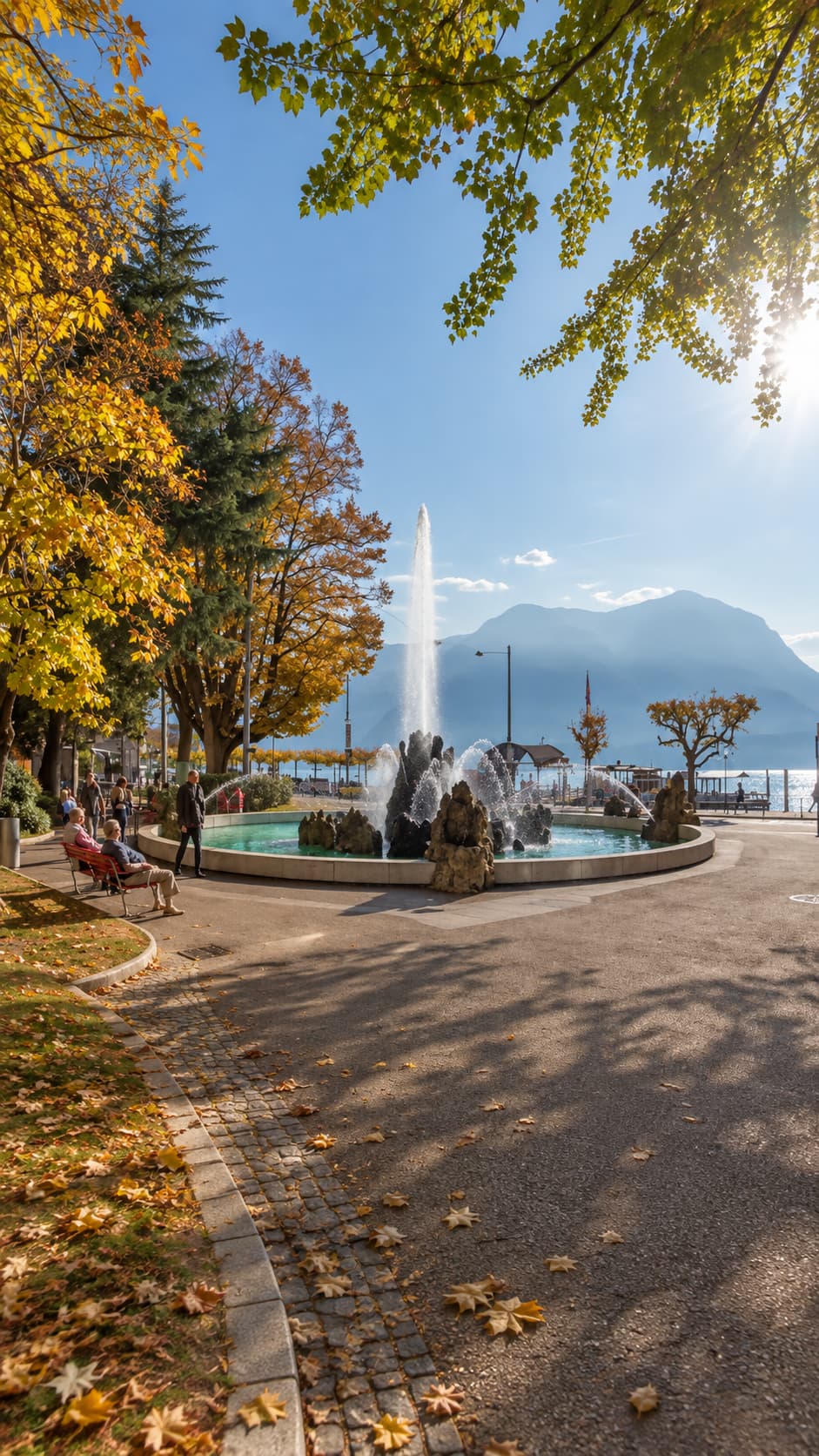
October is the Ticino sweet spot. The Castagnata tradition is in full swing across the canton, the Merlot harvest opens the valley cantinas, the chestnut forests are turning gold, and the lakefronts are genuinely quiet. The Festa d’Autunno in Lugano runs in early October and coincides with the harvest season. This is the month where visiting feels like landing in something specific rather than just extending the summer.
November is an honest no. The lake boat schedules reduce significantly, some mountain services close, and the warmth that defines Ticino’s appeal fades quickly after the last week of October. It becomes a different place. The honest recommendation: plan for mid-September to late October, with the middle two weeks of October as the prime window.
03 — The Best Places to Visit in Ticino in Autumn
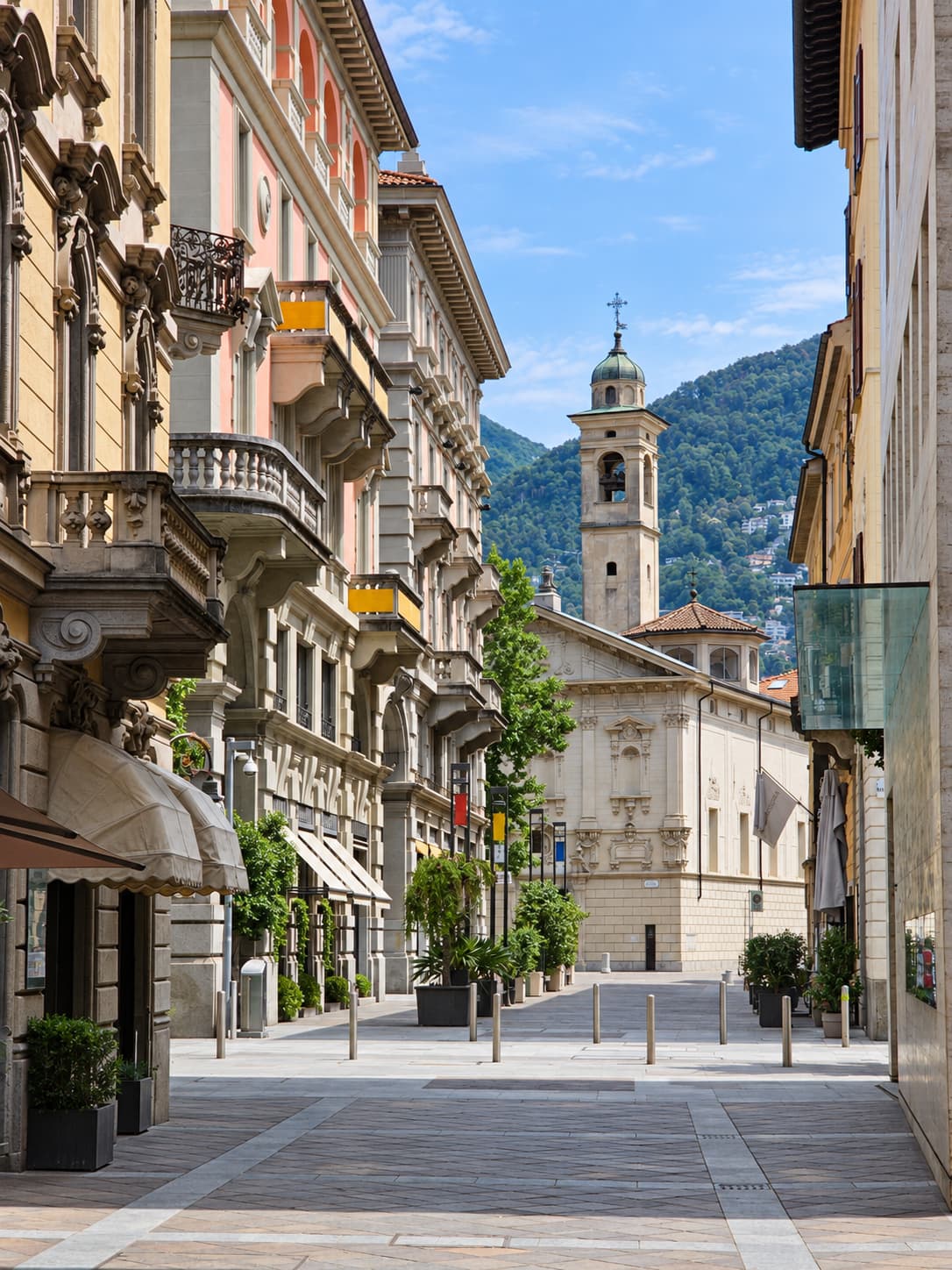
1. Lugano — The City That Takes Its Time
Lugano is Switzerland’s most Italian city, which is a phrase that sounds like a tourism slogan until you’re actually there, sitting at a table in Piazza della Riforma watching the lake through the gap between buildings and genuinely struggling to identify what country you’re in. The piazza fills with chestnut vendors in October. The Monte San Salvatore funicular still runs for views across the city and lake. Boat trips on Lake Lugano continue through the month.
The honest note: Lugano is polished. It’s a wealthy city — Swiss banking and Italian aesthetics have combined into something more manicured than rough-edged. If you’re coming from a week in Lombardy expecting the authentically worn-in character of a real Italian lake town, you may find Lugano slightly pristine. That’s not a criticism; it’s useful information about whether this place is for you.
2. Locarno and Ascona — Lakefront Without the Crowds
Locarno’s Piazza Grande is one of the most genuinely beautiful town squares in Switzerland — a long, open rectangle of arcades and café tables running down to Lake Maggiore, with the Madonna del Sasso sanctuary looking down from the hill above. The funicular to the sanctuary takes four minutes; the footpath up through the old town takes twenty and is worth the extra time. Lake Maggiore boat trips run in October.
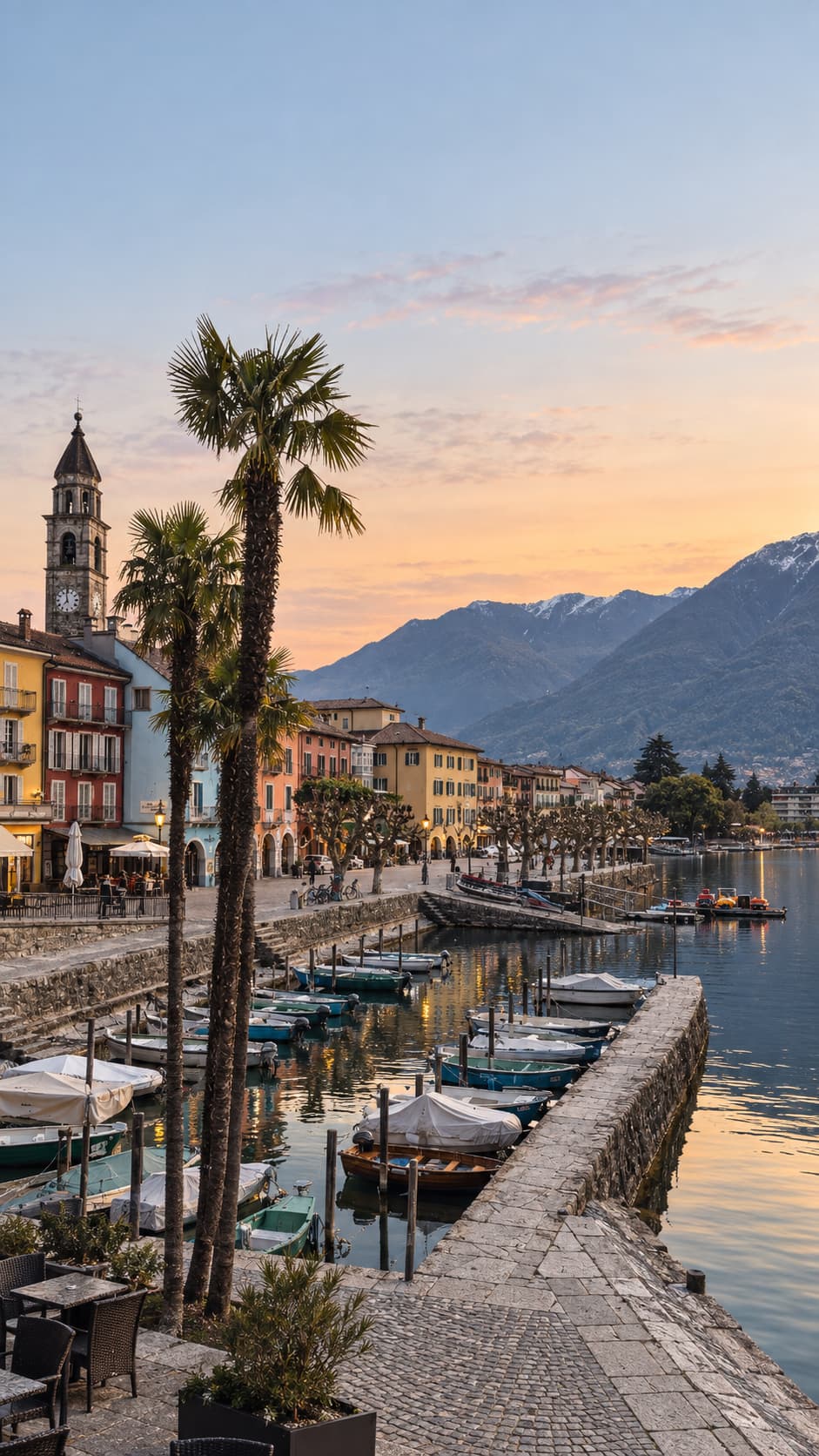
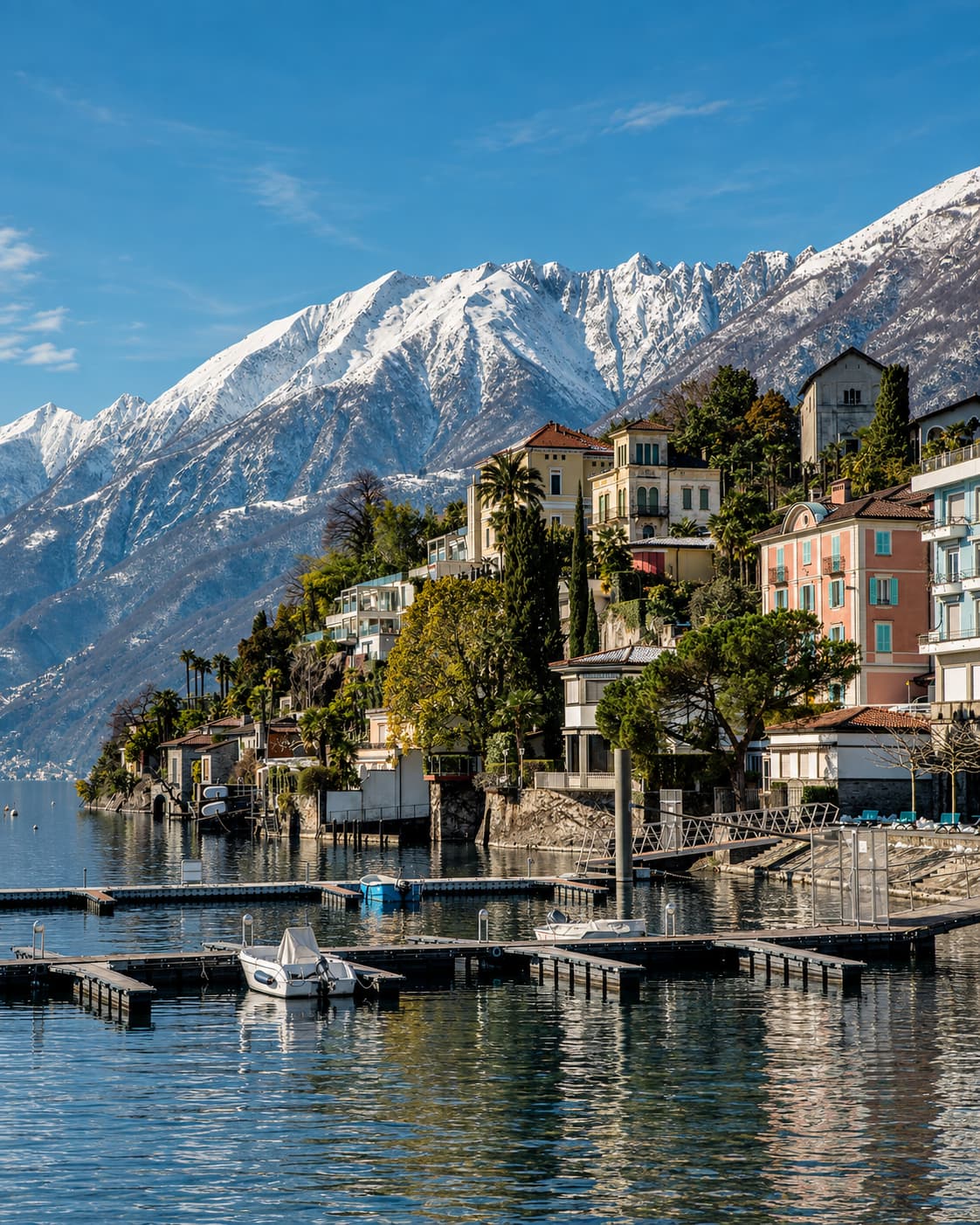
Ascona, a short lakefront walk from Locarno, is the quieter find. It’s a small car-free village on the shore of Lake Maggiore — one of the most aesthetically pleasing places in all of Ticino, and almost entirely absent from English travel content. The autumn light on the water here, specifically in the late afternoon, is the kind of thing you save photographs of for years.
3. Bellinzona — Three Castles Nobody Talks About
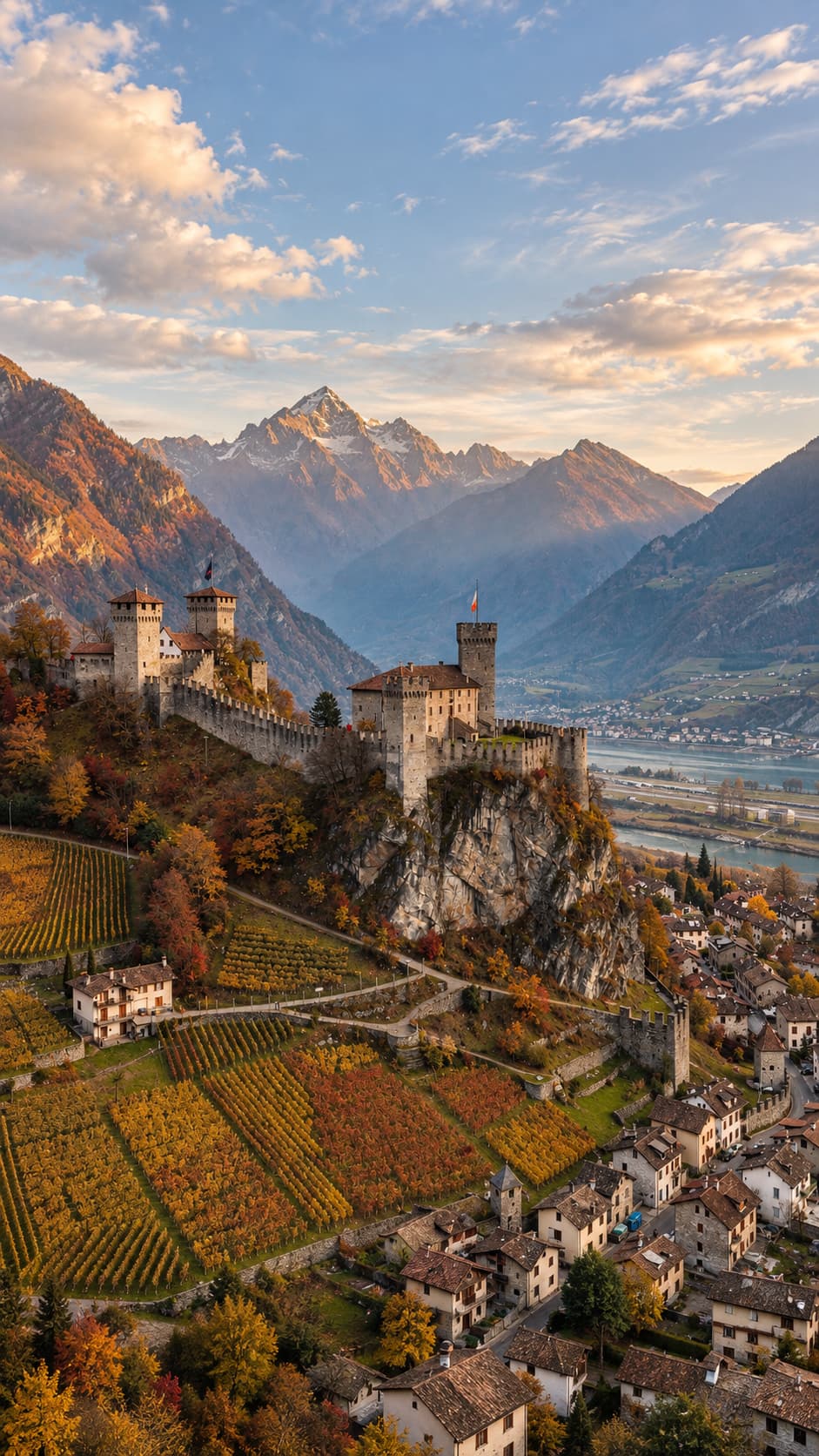
Bellinzona is Ticino’s capital and its most underestimated stop. Three medieval castles — Castelgrande, Montebello, and Sasso Corbaro — rise above the town on successive ridges, forming a UNESCO World Heritage Site that the vast majority of visitors to Switzerland never reach. They are not ruins. They are intact, walkable, and genuinely dramatic against an October sky.
The Saturday market runs below the castle walls, selling local produce, chestnut products, and Merlot from nearby producers. Bellinzona feels less like a resort and more like a real place — which is exactly why it earns a stop. Most Ticino itineraries skip it. That’s their loss and your advantage.
4. Valle Verzasca — The Emerald Valley in Autumn Light
Valle Verzasca is better known for its dam — the one in the James Bond film, where the bungee jump scene was filmed — but the valley itself is the real reason to come. The Verzasca river runs emerald green through dramatic granite gorges, flanked by stone-built villages that haven’t changed character in centuries. The chestnut forests lining the upper valley turn gold in the second and third weeks of October, and the autumn light through the gorge at midday produces the kind of photographs that take a lot of explaining when people ask where you went.
A car makes the valley significantly easier to explore. The bus from Locarno reaches Sonogno at the valley’s end, but the journey takes time and restricts where you can stop. If the Valle Verzasca is a priority, plan the transport accordingly.
5. Valle Maggia — Chestnut Country
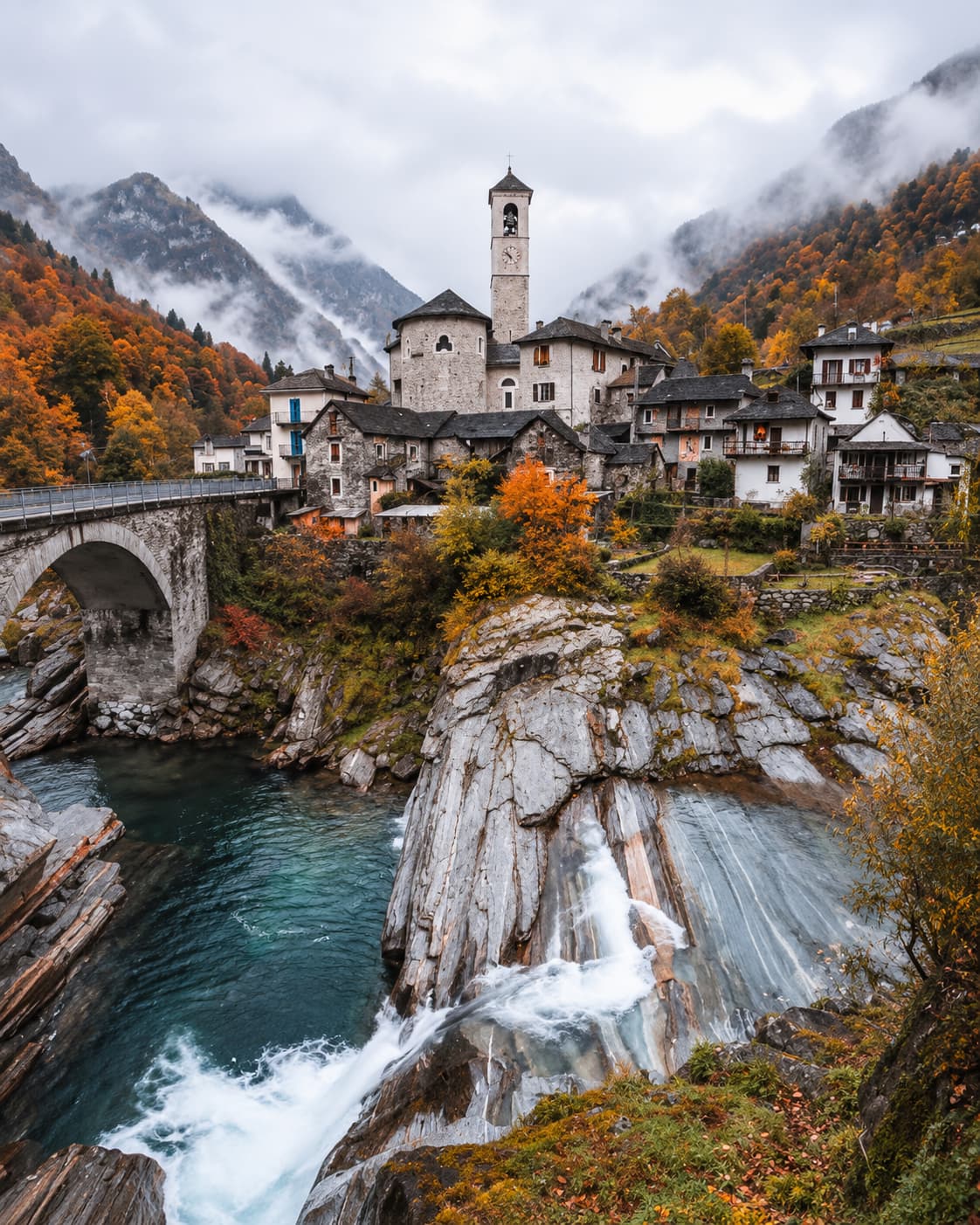
Deeper and quieter than the Verzasca, Valle Maggia is where the Castagnata tradition has its deepest roots. The valley floor runs through traditional stone villages — Cevio, Bignasco, Foroglio — and the forests on the surrounding slopes are working chestnut groves, harvested each October in the same way they have been since the Middle Ages. Harvest festivals in the upper valley villages happen throughout October and are genuinely informal — not staged for tourists, but the kind of local event you happen to walk into and remember for a long time.
For the slow traveller who wants to actually walk through the forest rather than photograph it from a lakeside restaurant, this is the valley to choose.
6. Monte Generoso — The View Into Two Countries
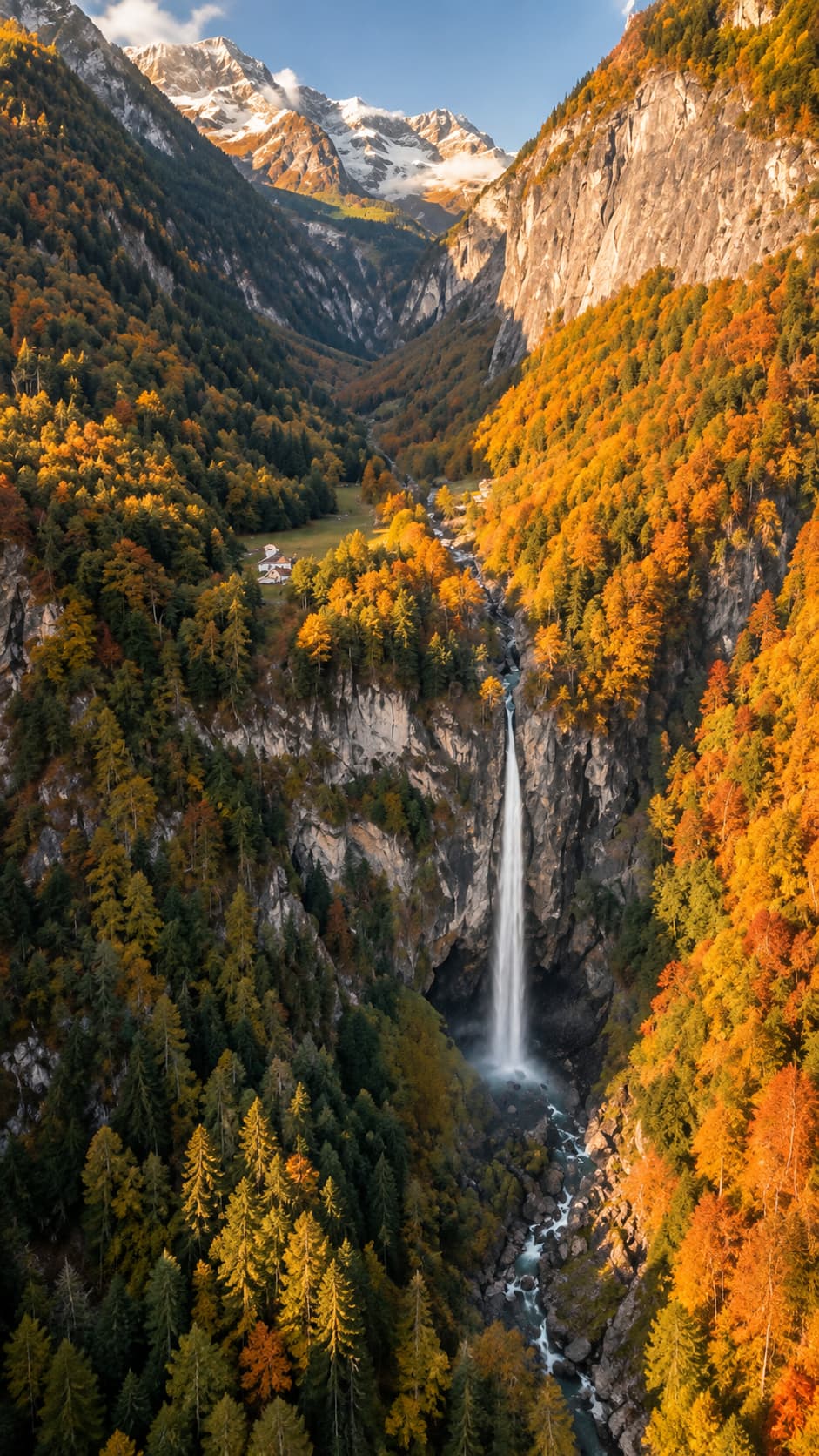
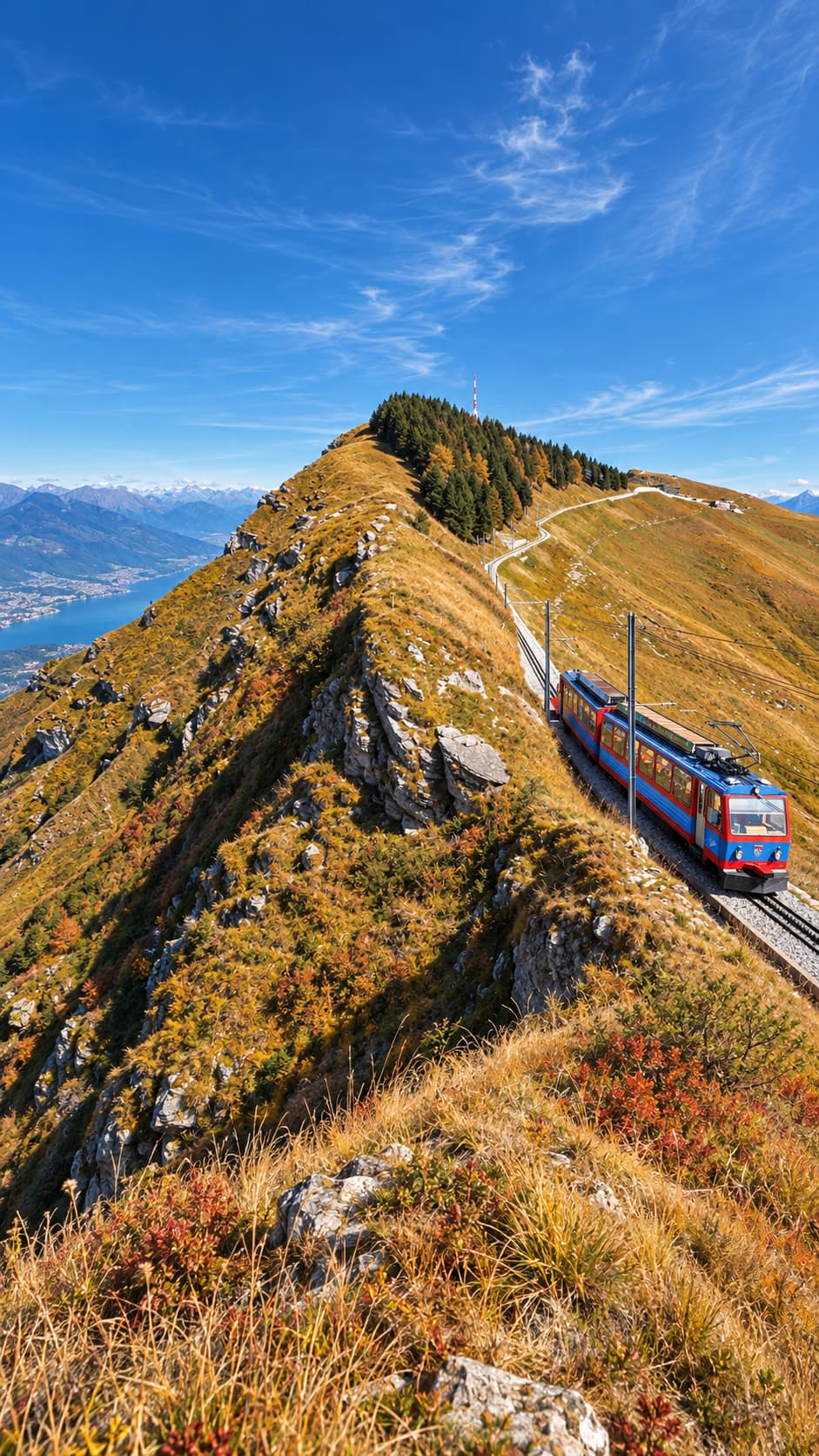
The rack railway from Capolago, on the eastern shore of Lake Lugano, climbs to Monte Generoso’s 1,704-metre summit. At the top: the Mario Botta–designed Fiore di Pietra building, and on a clear October day, views across the Lombard plain into Italy to the south and north to the full sweep of the Alps. It is one of the most dramatic viewpoints in southern Switzerland, almost entirely absent from English travel content. The clear skies of early October, before the valley fog arrives in November, make this the right month to go. More on how to combine this with the wider season in Switzerland in winter without skiing — Ticino’s lake towns make an equally strong case for November onwards once you know where to look.
04 — What Is the Castagnata and Is It Worth Planning Around?
What the Castagnata actually is
The Castagnata is Ticino’s autumn chestnut tradition, and it’s worth understanding what it actually is before deciding how much weight to give it in your planning.
Chestnuts have been harvested in Ticino’s valleys since the Middle Ages — in the forests of Valle Maggia, Valle Verzasca, and the hillsides above the lakes. The nut was a staple food for centuries: dried, ground into flour, cooked into polenta, made into honey. The Castagnata tradition celebrates the harvest throughout October, and it shows up in different forms across the canton. According to Ticino Tourism, the chestnut season typically runs from mid-October through early November across the canton.
Where to Experience the Castagnata in Ticino
In the upper valley villages of Valle Maggia and Valle Verzasca, harvest festivals run through October — informal gatherings at mountain huts and village squares with roasted chestnuts, new wine, and polenta. These are genuine local events, not tourist productions.
The Lugano autumn festival in early October brings chestnut vendors, wine producers, and local food stalls to the Piazza della Riforma. It’s the most accessible version of the tradition for visitors staying in the city.
Throughout October, Ticinese restaurants and grottos (the local trattoria equivalent) put chestnuts on the menu in forms you won’t find elsewhere — chestnut soup, chestnut polenta, chestnut risotto, chestnut cake with local Merlot. Ordering seasonal here actually means something.
Ticino produces over 85% of Switzerland’s Merlot — a fact almost unknown outside the country. October is harvest season in the cantinas of Mendrisio and the Sottoceneri hills. Several estates in the Mendrisio area receive visitors during harvest, and the Ticino Wine Tour at Arogno runs organised visits to a working organic estate above Lugano specifically in October.
Is the Castagnata worth planning around? Yes — if you’re going in October anyway, it will be part of your visit whether you seek it out or not. The chestnut smell in the piazza is ambient, not ticketed. The effort required is simply being in the right canton at the right time.
05 — Is Lugano or Locarno Better for an Autumn Visit?
Polished, cosmopolitan, Swiss-Italian
City stay, lakefront walks, day trips to Monte Generoso
Festa d’Autunno — Piazza della Riforma, early October
Direct trains from Milan and Zurich
More expensive; slightly corporate feel in the centre
Quieter, more intimate, slightly rawer
Slow travel, valley access, the Ascona lakefront
Strong Castagnata presence; gateway to Valle Verzasca and Valle Maggia
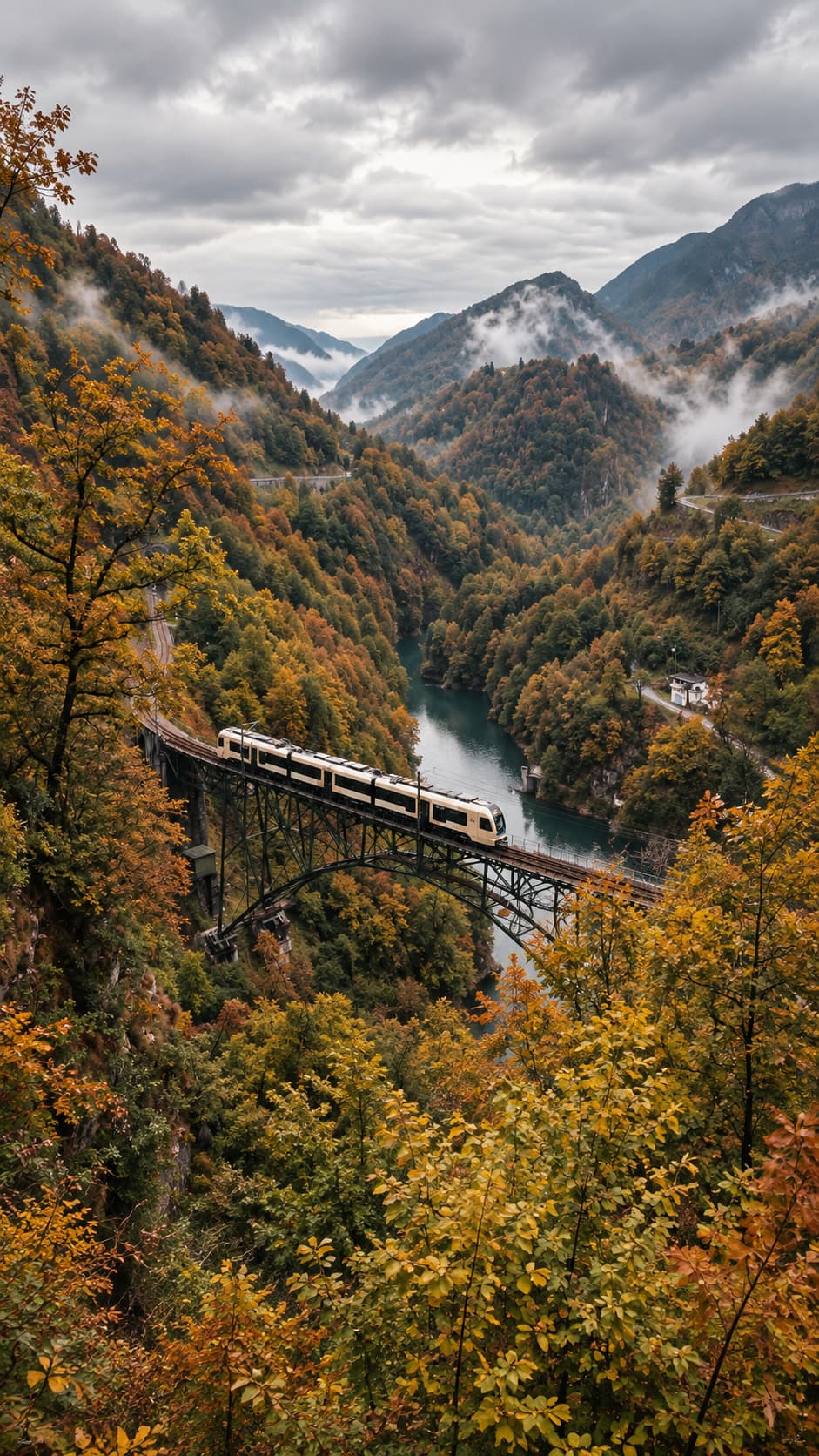
Centovalli Railway to/from Domodossola (Italy)
Smaller city; fewer direct connections
The direct answer: if you have one day, base in Lugano for the ease of access. If you have three or more, Locarno is the better autumn base — it puts you closer to the valleys, the Ascona lakefront, and the Centovalli railway, which is itself a reason to visit. For a five-day trip, stay two nights in each and take the train between them.
06 — What Is the Weather Like in Ticino in October?
The warmth advantage in Ticino in autumn is real and measurable. Lugano in October sees temperatures of 14–18°C — genuinely comfortable — and the surrounding hillsides are turning colour while the Mediterranean climate keeps the lakefront warm enough to eat outside. Ticino has over 2,100 hours of sunshine per year, the highest of any Swiss canton, and that sunshine pattern extends into autumn.
What to pack: a mid-layer for evenings, a waterproof for rain (October can see brief downpours), and lighter layers for warm afternoons. You won’t need heavy winter clothing in the first three weeks of October.
07 — How Many Days Do You Need in Ticino?
By trip length
| 1 day | Lugano only — possible as a day trip from Milan (1.5 hrs by train) or Zurich (2 hrs 45 min). Covers Piazza della Riforma, the lake, and a funicular ride to Monte San Salvatore if time allows. |
| 2 days | Lugano + Locarno/Ascona. Covers the two main lake towns comfortably. One night each or base in one and day-trip to the other. |
| 3 days | Add Bellinzona (easy train connection) and an afternoon in Valle Verzasca. The minimum for feeling like you’ve actually seen Ticino rather than just its lakefronts. |
| 4–5 days | The full loop: Lugano, Locarno, Ascona, Bellinzona, Valle Verzasca, Monte Generoso. Add Valle Maggia on day five for the chestnut valley experience. This is the right amount of time for a slow trip. |
Day trips and getting around
Day trips from Italy: Lugano is 1.5 hours from Milan Centrale by direct train — genuinely feasible for a long day. The journey through the Alps via the Gotthard Base Tunnel is itself worth the fare. From Zurich, Lugano takes around 2 hours 45 minutes. Locarno adds another 45 minutes from Lugano.
A car opens the valleys significantly but isn’t required for the main towns. The Swiss rail and PostBus network covers everything between Lugano, Locarno, Bellinzona, and the valley trailheads. If Valle Maggia or the upper Verzasca is a priority, a car or a pre-planned bus schedule is worth the effort.
If the slow travel rhythm of northern Italy is what you’re drawn to, Ticino gives you a version of that with none of the logistical friction — and in October, without the crowds that make Lake Como and Lake Garda difficult to enjoy.
Planning, Transport, and Crossing Into Italy
Costs, Castagnata, and Ticino vs Northern Italy
09 — More Ticino and Switzerland Travel Guides
Ticino in autumn is the kind of place that rewards the traveller who didn’t expect it.
You go for Switzerland and find Italy. Come for the lakes and you end up finding the valleys. You arrive in October thinking you’re extending the summer and discover you’ve found something better — a season with its own smell, its own festivals, and its own specific quality of light that nobody in the English-language internet has bothered to write about properly. Until now, hopefully.