
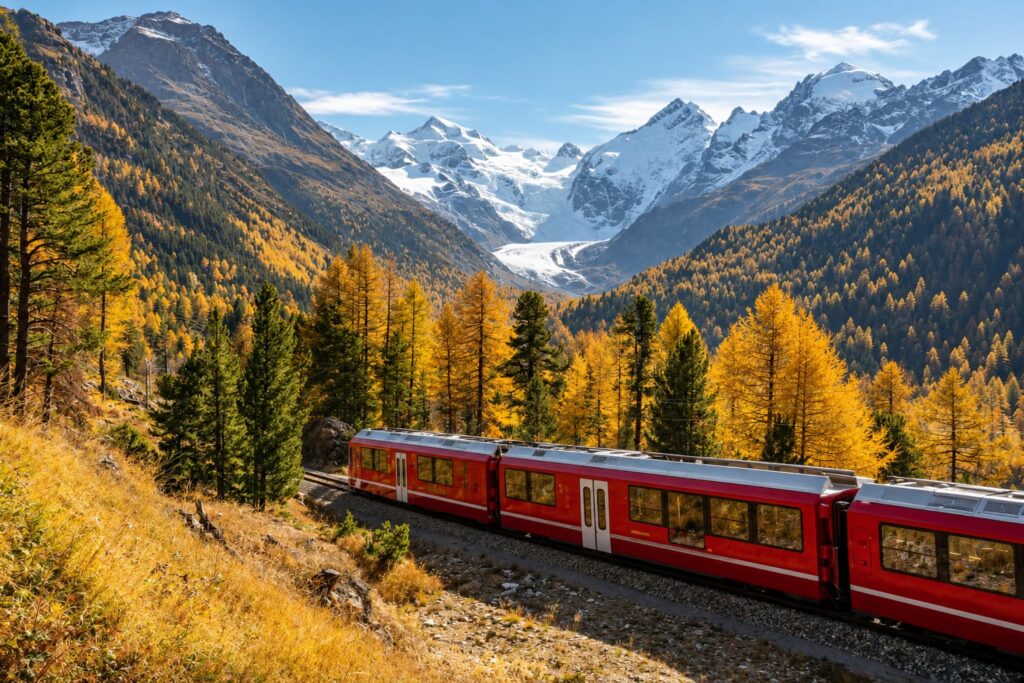
Switzerland in Autumn: The Best Places to Go (and When the Larches Turn Gold)
From the larch forests of Graubünden to the vineyard terraces of Lavaux — this is the honest case for visiting Switzerland in October, when the crowds have left and the mountains stay exactly where you left them.
Why Autumn Changes the Switzerland Experience
Switzerland in autumn is, for most travellers, a version of the country they never consider — not because it requires special access or inside knowledge, but because it exists in October, when the coaches have gone home and the same mountains are still standing. In autumn, Switzerland loses the summer queue and gains something harder to photograph: a certain quality of light, an agricultural calendar that has nothing to do with tourism, and a forest colour that is unlike anything else in European autumn travel.
The larch is the key. Switzerland’s alpine autumn is not the red-and-orange hardwood display of Scotland or New England. It is a yellow-gold so specific, so luminous against dark pine and snow-white peaks, that you would recognise it from a single photograph. The Engadin valley in Graubünden turns this colour in mid-to-late October. Meanwhile, the cattle are descending from the summer pastures, the vineyards above Lake Geneva are at harvest, and accommodation across the country costs a fraction of what it did in July. The mountains, in other words, are still there — and they have the courtesy to be beautiful in a completely different way.
This post covers where to go in Switzerland in autumn, when to go, and which weeks are genuinely worth the trip — by region, with honest notes on what closes and what doesn’t.
- When Is the Best Time to Visit Switzerland in Autumn?
- The Best Places to Visit in Switzerland in Autumn
- What Is the Alpabfahrt and Is It Worth Planning Around?
- Is Hiking Still Possible in Switzerland in October?
- Weather in October and November
- Is Switzerland Worth It in Autumn — and Is It Actually Cheaper?
- How Many Days Do You Need?
- FAQ
01 — When Is the Best Time to Visit Switzerland in Autumn?
Switzerland’s autumn runs from early September through November, but those three months are meaningfully different from each other. The honest answer: October is the sweet spot, and the third week specifically is the closest thing to a guaranteed payoff for the journey.
September — Warm, Transitional, Still Summery in the South
September is technically autumn on the calendar but still behaves like a late summer month in much of Switzerland. Ticino, the Italian-speaking canton in the south, remains warm and Mediterranean through September — lake swimming is still possible, and the chestnut forests are only beginning to turn. In the Alpine regions, meanwhile, September brings crisp mornings and clear skies, and the first vineyard harvests begin in Valais and Lavaux. Facilities are open. Gondolas run. Hotels are still priced closer to peak season — that discount hasn’t fully kicked in yet.
September is worth considering if you want warmth combined with autumn atmosphere. It is, however, the month with the least visual drama — the trees are still largely green, and the foliage show that defines Swiss autumn simply hasn’t started yet.
October — Peak Autumn Colour, the Alpabfahrt, and the Real Shoulder Season
October is, in short, the honest answer to the question of when to go. The larch forests in Graubünden begin turning in early October and reach their yellow-gold peak around the third week of the month. Lower down, mixed woodland across Lucerne, Appenzell, and the Bernese Oberland turns orange and amber through mid-October. Simultaneously, the Alpabfahrt — the cattle descent from Alpine summer pastures — is happening in villages across the country, a tradition with no ticketing, no staging, and no equivalent elsewhere in Europe.
On top of that, accommodation prices have dropped. Mountain railways and cable cars are still running. The viewpoints at Männlichen, Rigi, and Pilatus are accessible without queuing. October, in other words, is Switzerland for thoughtful travellers who don’t need to prove they went in July.
November — Honest Caveats and the Nebelmeer Above Cloud
November is more complicated. Many mountain facilities — cable cars, mountain restaurants, some high-altitude trails — close from the first of November through the ski season. The valleys fill with the Nebelmeer, a “sea of fog” that sits heavy and grey at lower elevations while the peaks above remain clear in brilliant sunshine. For a specific kind of traveller, this is extraordinary: you take the train to 2,000 metres and emerge above the cloud into an October-blue sky while the valley below is invisible. For everyone else, it can feel gloomy and limiting.
In short: if the Nebelmeer appeals to you as a visual experience (and it should — photographs of it look implausible), November has something. If you need accessibility and variety, October is the safer month.
02 — The Best Places to Visit in Switzerland in Autumn
Switzerland is small enough to combine two or three regions in a single trip. These seven destinations each offer something distinct in autumn — choosing between them depends on what you’re actually looking for.
1. Ticino — Switzerland’s Italian South in Autumn
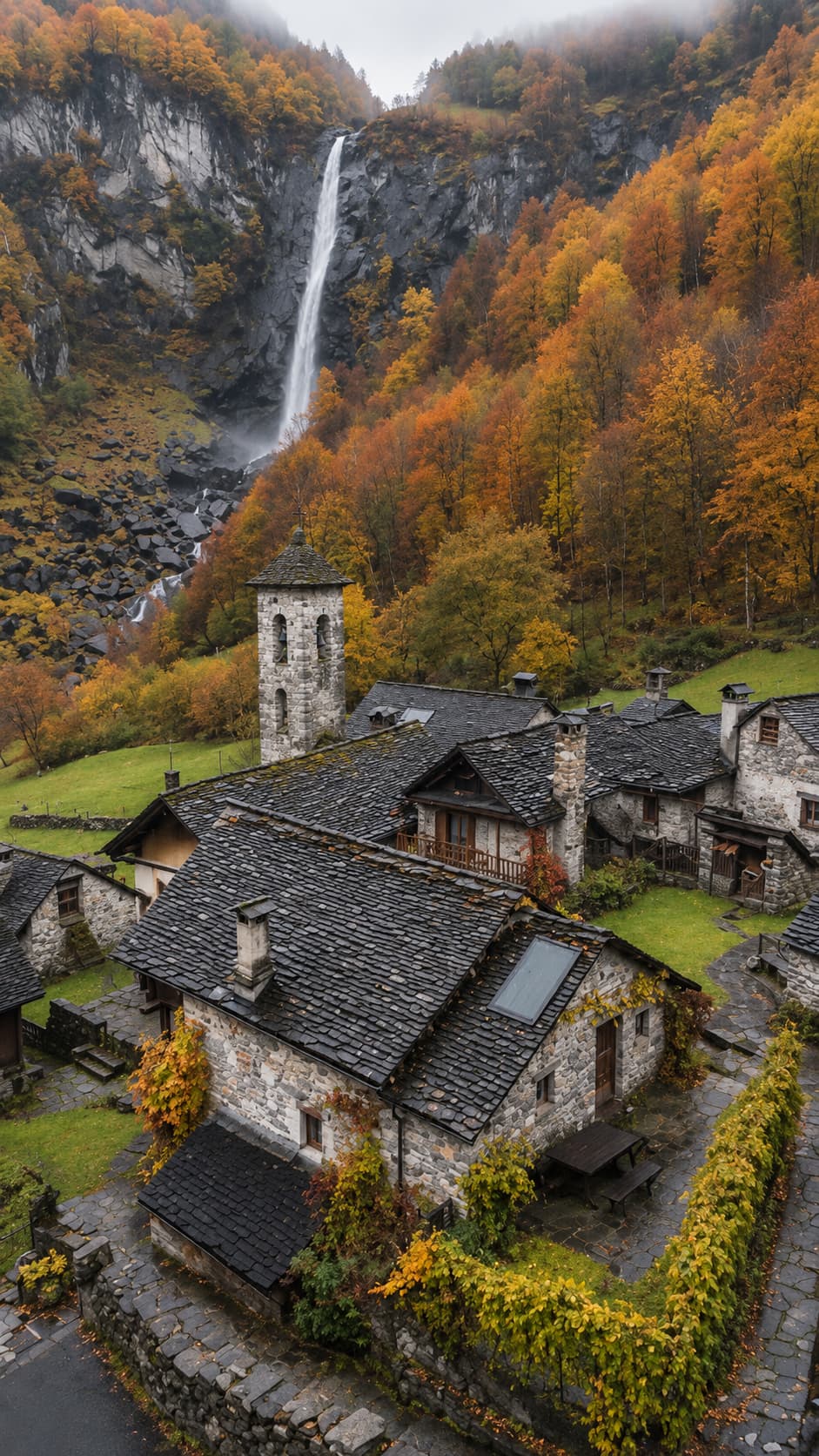
Ticino is the most underrated Swiss autumn destination, and the gap between how good it is and how often it appears in “Switzerland in autumn” posts is significant. The Italian-speaking canton sits south of the Alps, which means it runs warmer and drier than the rest of Switzerland through October — daytime temperatures can reach 18°C when Zurich is already pulling on layers. The chestnut forests turn a deep amber, the lakes (Lugano and Maggiore) hold their colour against the mountains, and the villages feel like northern Italy without the October crowds that northern Italy has started to attract.
Furthermore, Ticino is the region where the foliage appears earliest — the chestnuts begin turning in late September, weeks before the larches in the north. That makes it a strong choice for late September visits when the rest of Switzerland is still waiting. The best weeks are late September through mid-October, after which the weather becomes less reliable. Locarno and Lugano are the obvious bases. For a deeper look at this specific corner, the companion post on Ticino in autumn covers it in full detail.
2. Graubünden — Where the Swiss Alps Turn Gold in Autumn
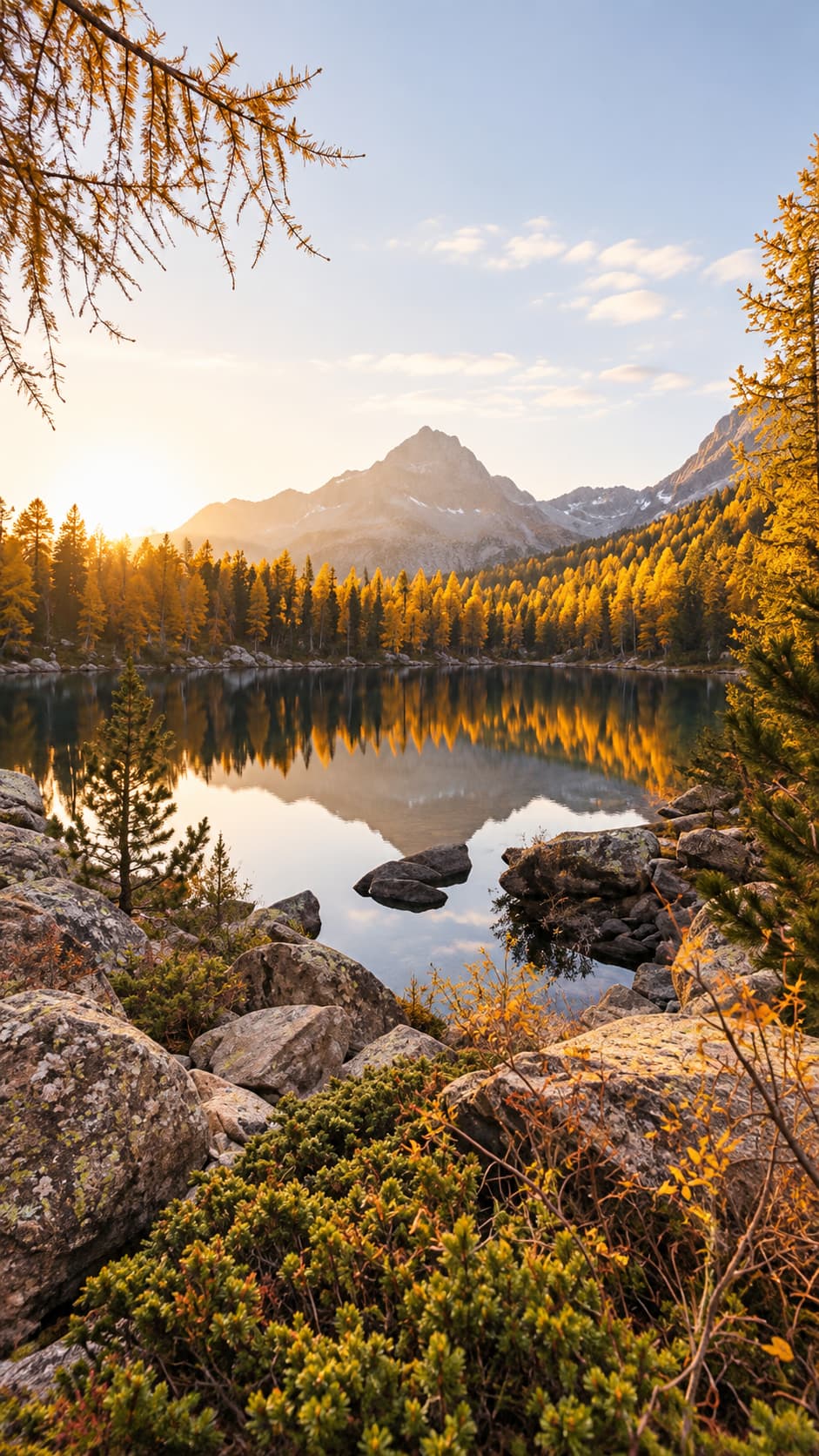
If you’re making one journey specifically to see Swiss autumn colour, Graubünden is the answer. The Engadin valley — running between St. Moritz and the Austrian border — hosts larch forests that turn a yellow-gold so specific and so luminous against the surrounding dark pines and snow peaks that it registers as a distinct visual experience rather than a minor variation on autumn leaves. The colour is unlike what you’d find in France, Scotland, or the Dolomites.
Peak larch colour in the Engadin falls around the third week of October, typically between October 14 and 24, depending on the year and the altitude. Val Mustair, further east near the Italian border, is equally spectacular and, notably, receives a fraction of the St. Moritz visitor numbers. Pontresina is a practical and quiet base — less expensive than St. Moritz, well-connected by rail, and surrounded by larch forest. An honest note: this is Switzerland in its most introverted mode. The villages are quiet, some restaurants are closed between summer and ski season, and the pace of life is deliberately slow. For slow travellers, that is the appeal. For those expecting the summer energy of Grindelwald, it may feel withdrawn.
3. Lucerne & Lake Lucerne — The Most Accessible Autumn Base
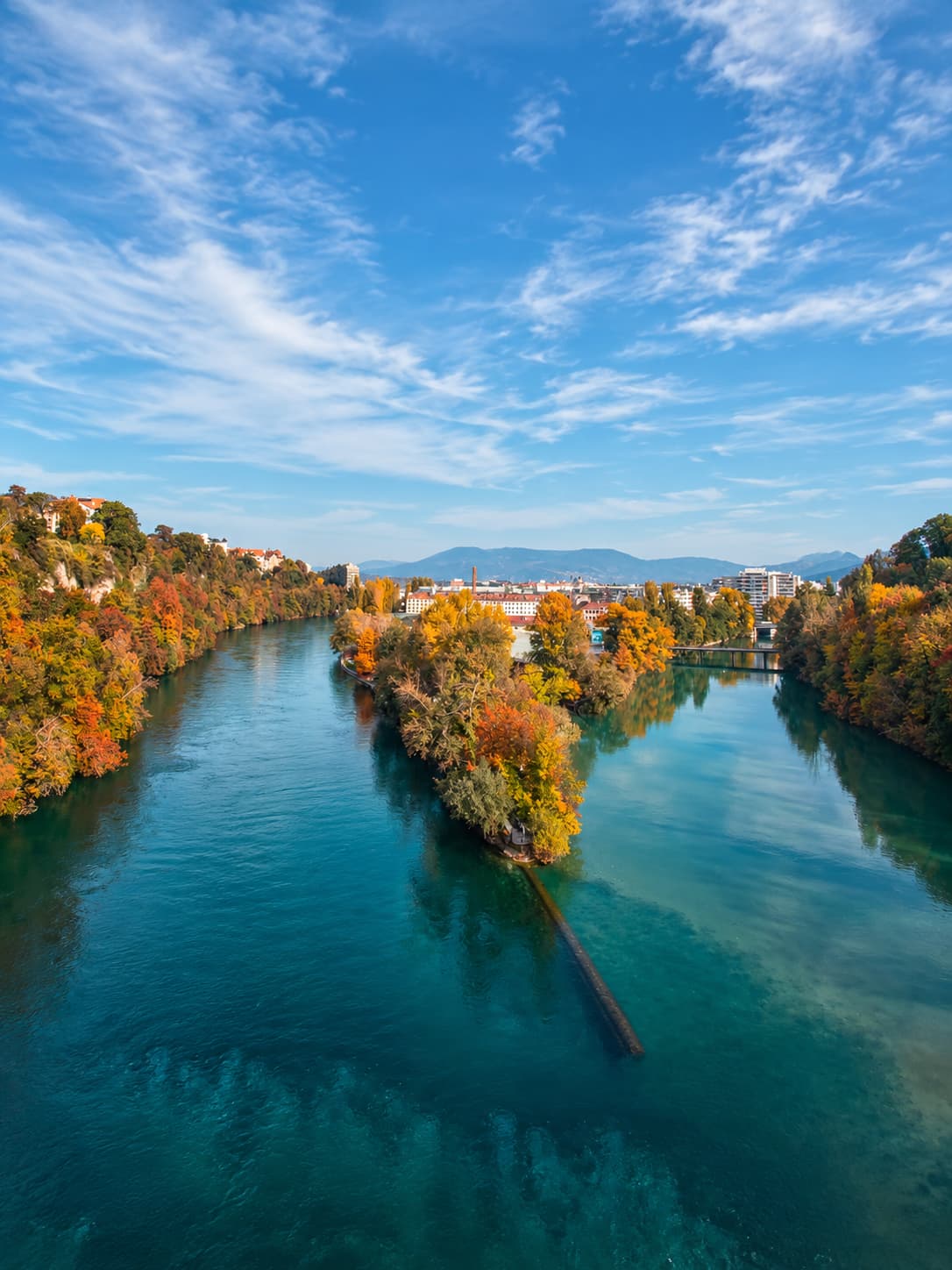
Lucerne is the entry point for first-time visitors to Switzerland in autumn, and with good reason — it is, in practice, the most versatile base on this list. The city itself is compact and walkable — the Chapel Bridge, the old town, the lake reflections — and it serves as the departure point for three of Switzerland’s most iconic mountain railways: Rigi, Pilatus, and Titlis. All three operate through October, and in autumn they offer something summer cannot: the possibility of emerging above a valley fog into clear sunshine, or arriving at the summit to find the kind of photographic conditions that usually only exist in imagination.
Additionally, the lake reflections in autumn light are different from summer. The angle of the sun drops, the colours warm, and the morning clarity before the valley mist builds — typically between 8 and 10am — creates a window of conditions worth planning around. As a base for day trips into the surrounding mountains, Lucerne in October is close to ideal.
4. Bernese Oberland — Autumn Drama Without the Summer Queue
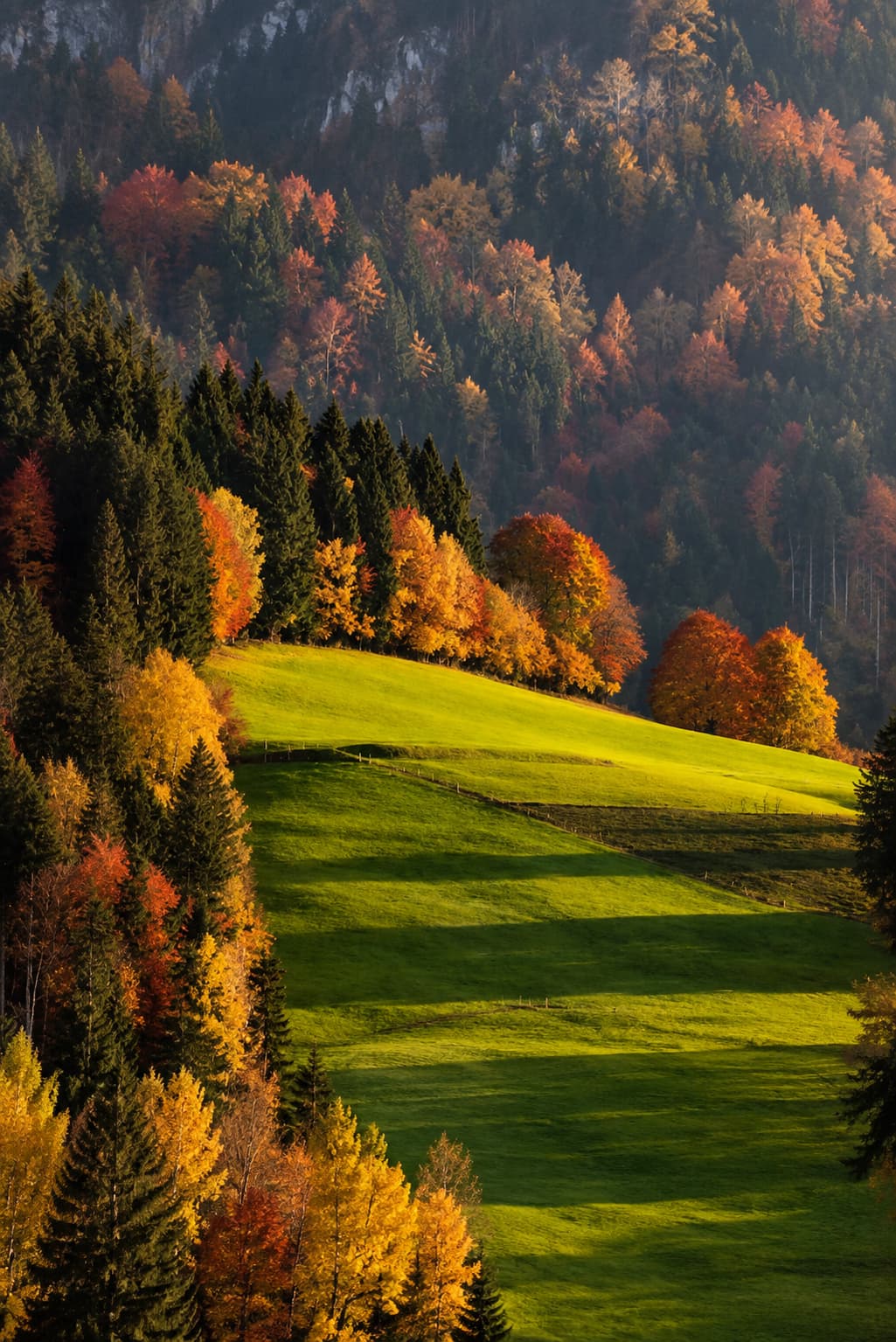
The Bernese Oberland — Lauterbrunnen, Grindelwald, Männlichen, Wengen — is the Switzerland of postcards. In summer, it is extremely crowded. In October, the same landscapes exist in a fundamentally altered atmosphere: the valley floor sits under morning fog while the peaks above — the Eiger, Mönch, and Jungfrau — remain clear and snow-lit. The waterfalls still run. Furthermore, the gondola to Männlichen still operates, and the Männlichen plateau in October can be walked in near-solitude. That walk, from Männlichen down to Grindelwald or across to Kleine Scheidegg, is one of the finest low-to-mid-altitude autumn walks in the Alps.
Accordingly, the Bernese Oberland in autumn is worth prioritising if you’ve visited in summer and found it overwhelming. The substance doesn’t change — the peaks are identical, the valley depths are the same. What changes is the experience of being there, which is less contested and more honest in October.
5. Valais — Wine Harvest and Swiss Alps in Autumn
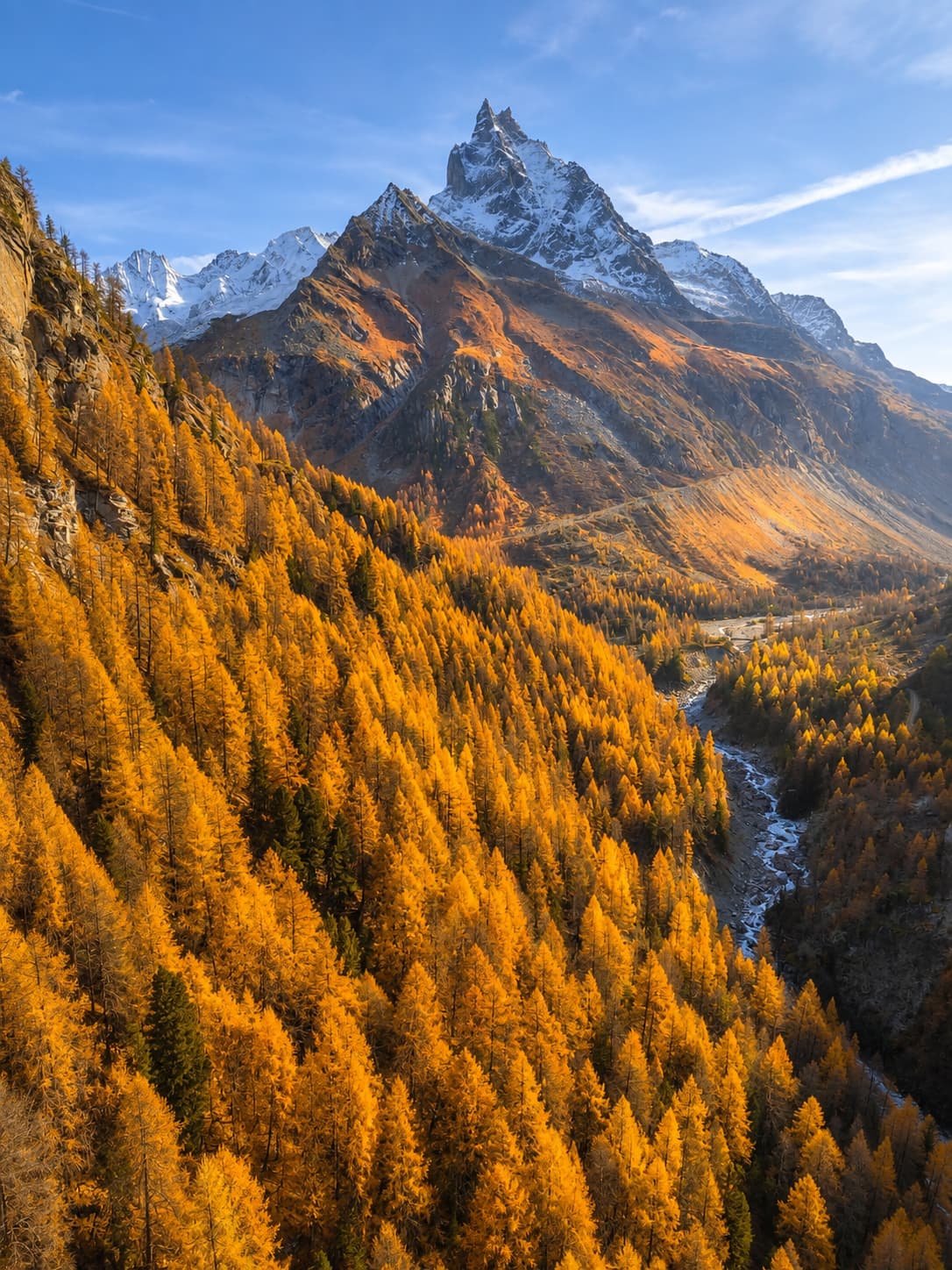
Valais is the canton that contains the Matterhorn, which most visitors use as the sole reason to go. That’s understandable enough — the Matterhorn in autumn light, with snow on its upper flanks and no summer haze in the valley, is as good as it gets. But Valais in autumn is also the wine canton, and the combination of terraced vineyards along the Rhône valley and alpine mountain scenery is something most “Switzerland in autumn” content ignores entirely.
The vendange — grape harvest — runs through September and into early October in Valais, which produces more wine than any other Swiss canton. The vineyards above Sierre, Leuk, and Sion are at harvest colour through October. Meanwhile, Valais villages also hold some of Switzerland’s most traditional Alpabfahrt events — the cattle descents from Alpine pastures — with none of the tourist staging that the more well-known events can develop over time. Overall, an autumn road trip or rail loop through Valais, connecting Zermatt with the vineyard towns and the Rhône valley, is one of the better self-designed itineraries in Switzerland.
6. Lavaux — The Autumn Vineyard Terraces Almost Nobody Writes About
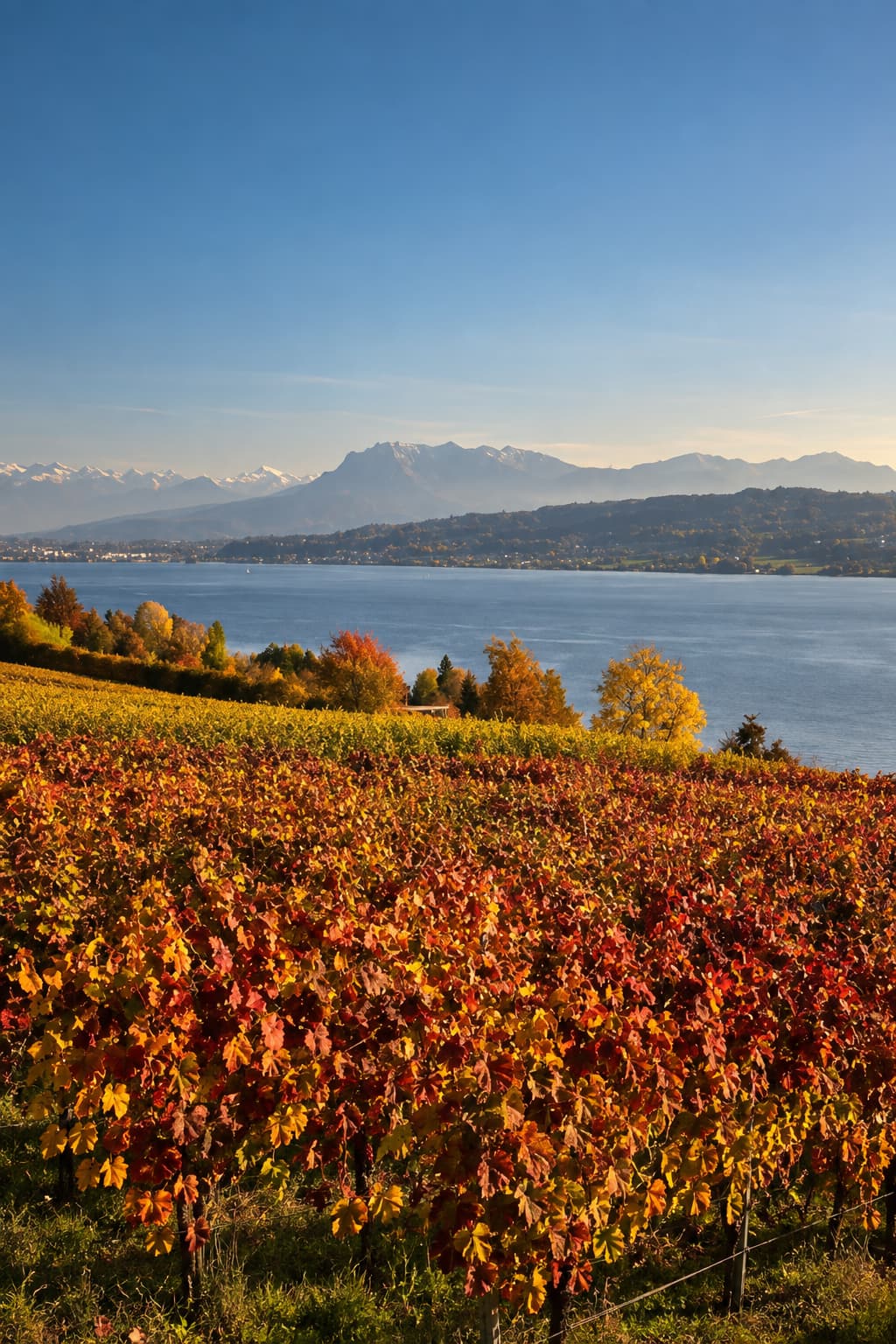
Lavaux might be the single most compelling visual argument for visiting Switzerland in autumn that almost no English-language travel content makes. The UNESCO-listed Lavaux vineyard terraces stretch for 30 kilometres above Lake Geneva between Lausanne and Montreux — stone walls, vine rows, a lake so wide it reads as a sea, and the French Alps visible on the far shore. In autumn, the vines turn gold and rust. The harvest runs through September and October. The walking trails between the vineyard villages — Lutry, Grandvaux, Rivaz, St-Saphorin — are open, mostly flat by Swiss standards, and require no special equipment or fitness level.
Lavaux is a half-day from Geneva or Lausanne by rail, with no need to rent a car. It is also, importantly, the kind of place that does not photograph as well as it exists: you have to be there, walking between the vine rows with the lake below and the Alps across the water, to understand why it’s listed. October is the ideal month — the harvest is finishing, the tourists have thinned, and the light is doing what October light in Switzerland does.
7. Appenzell — Traditional Switzerland Moving at Its Own Pace in Autumn
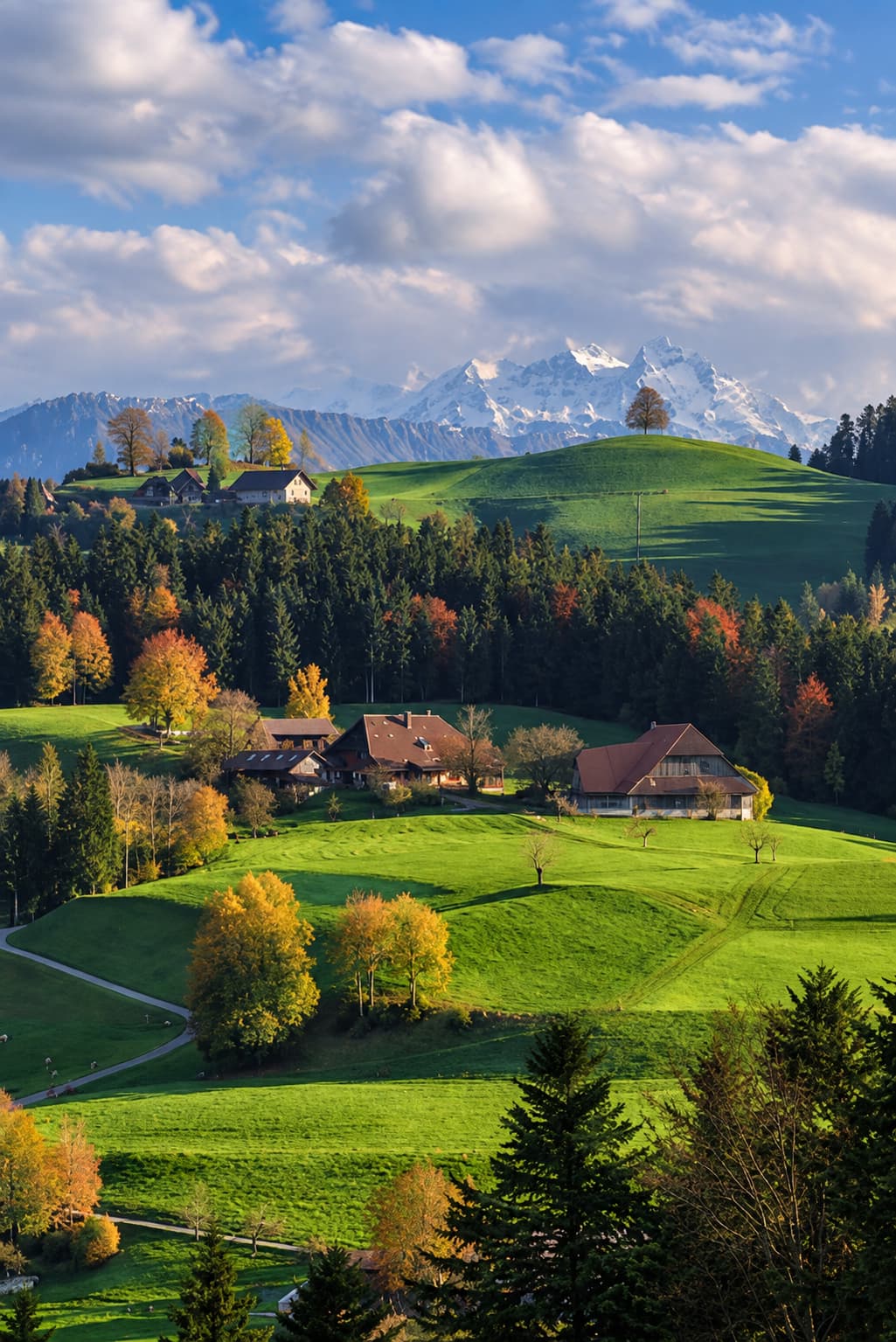
Appenzell is the least known of the seven regions on this list, and in some ways that is its main qualification. The rolling hills of the Appenzell region — technically two half-cantons, Appenzell Innerrhoden and Ausserrhoden — are quieter and less dramatic than the high Alps, but they have a quality of authenticity that the more heavily visited regions have largely lost. The half-timbered buildings and painted facades of Appenzell town are genuinely used by the people who live there, not preserved as background for photographs.
In autumn specifically, Appenzell holds some of Switzerland’s most genuine Alpabfahrt events. The village roads fill with decorated cattle, cowbells resonating off stone walls, farmers in traditional dress walking alongside. There is no stage, no ticket, no official schedule in most cases — you find out when it’s happening by asking locally or checking cantonal agriculture websites. It is worth the research. On top of that, the landscape itself — Säntis mountain, the foothill meadows, the village paths — is exactly the kind of unhurried place that rewards slow travel over a long weekend.
03 — What Is the Alpabfahrt and Is It Worth Planning Around?
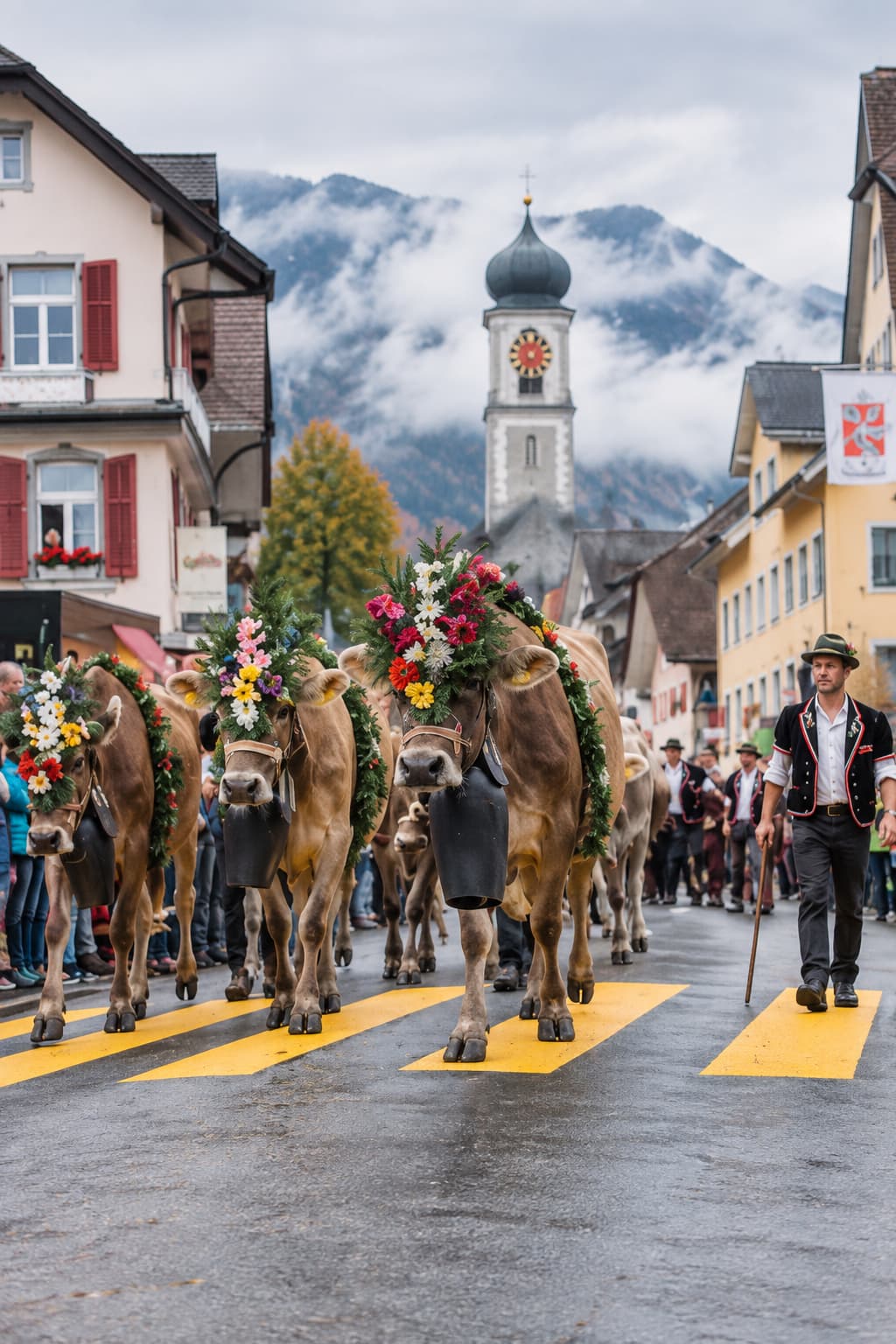
The Alpabfahrt is the seasonal descent of cattle from their Alpine summer pastures to the lower valley farms and stables where they will spend winter. It happens across Switzerland from late September through mid-October — the timing depends on the altitude of the specific pasture and the weather that year, since the cattle move down when conditions require it, not on a fixed calendar date.
What to Expect at an Alpabfahrt
The cattle are decorated for the descent: flower headdresses, large cowbells, sometimes ribbons. Farmers and their families walk alongside them in traditional dress. The procession moves through the village on roads that are briefly closed to traffic — not because an event has been organised, but because that’s simply what the road is used for that morning. In most villages, there’s no admission charge, no viewing stand, no official programme. You find a spot on a wall or a roadside, and the cattle pass close enough to touch.
That lack of staging is also what makes it genuinely moving. This is not a reconstruction of an agricultural tradition for visitors. It is an agricultural tradition that visitors are permitted to watch.
Where and When to Find the Alpabfahrt
The strongest Appenzell events happen in late September and early October. Valais and Graubünden hold Alpabfahrts through October, with the highest-altitude pastures descending latest. The Bernese Oberland, including the Simmental valley, also has strong traditions. There is no single national calendar — the best approach is to check Switzerland Tourism’s event listings or contact the local tourist office in the relevant canton directly. Several cantons post informal schedules on community Facebook pages and cantonal websites rather than English-language tourism platforms, which is why the tradition remains genuinely local.
In short: yes, it is worth planning around, but it requires a small amount of research rather than a ticket purchase. That is precisely the point.
04 — Is Hiking Still Possible in Switzerland in October?
The honest answer is: yes, substantially, with important caveats by altitude and timing. Indeed, Switzerland has an extraordinarily well-maintained trail network, and the lower to mid-altitude trails remain entirely accessible through October and into early November.
What’s Open and What Closes in Autumn
Below approximately 1,500 metres, trails are generally open and well-maintained through the end of October. The Lavaux vineyard paths, the Appenzell rolling-hill routes, the lower Lucerne area walks, and the Bernese Oberland valley walks (Lauterbrunnen, the lower Grindelwald trails) all fall into this category — accessible, well-marked, and enjoyable in autumn conditions.
Above 2,000 metres, the picture changes from mid-October onwards. Snow can arrive at high altitude from the first week of October in any given year. The high-alpine trails that require good weather and summer conditions — including anything above the gondola tops at Männlichen or Pilatus — become unpredictable and sometimes ice-covered by the third week of October. Mountain huts (SAC huts) begin closing from late September, with most shut by mid-October. Consequently, if you plan to combine hiking with hut-to-hut routes, September is significantly more reliable.
Best Switzerland in Autumn Hikes by Region
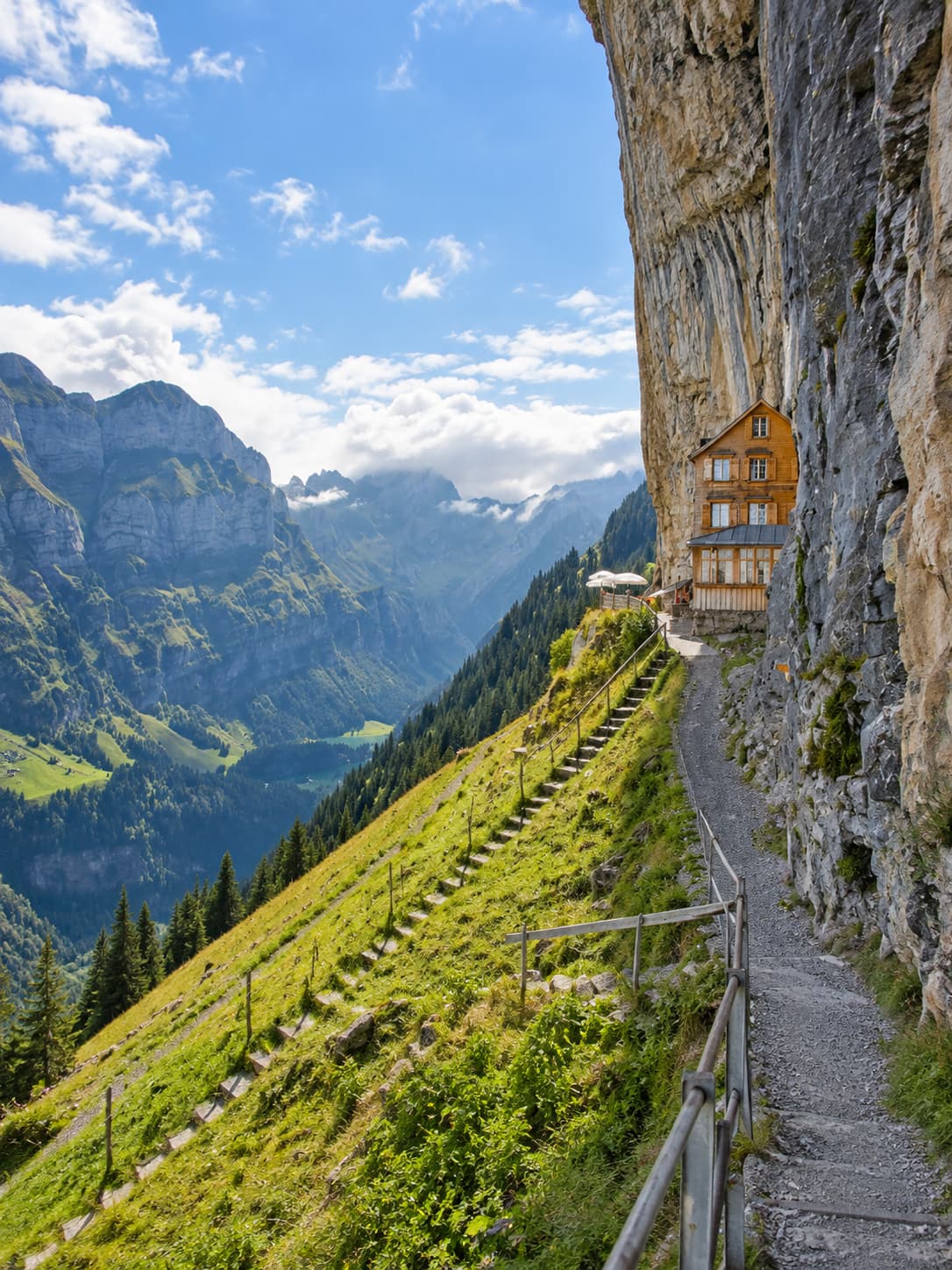
In Graubünden, the Fuxägufer trail in the Engadin — a flat larch forest walk along the En river south of S-chanf — is the best pure foliage hike in Switzerland and accessible without technical equipment. The Bernese Oberland’s Männlichen Panorama Trail (from the Männlichen gondola top station to Kleine Scheidegg) is one of the finest alpine walks in Europe at this altitude, available through mid-October with good conditions. In Appenzell, the circular route from Appenzell town via the Ebenalp ridge — past the famous Äscher cliff guesthouse — offers high-hill views without requiring high-alpine conditions. The Lavaux wine path, as noted above, is essentially a walk between villages with a vineyard backdrop — feasible for anyone in ordinary shoes.
05 — What Is the Weather Like in Switzerland in October and November?
Switzerland’s weather in autumn varies considerably by altitude and region, and any single answer will be misleading. The practical breakdown is as follows.
October by Region
Ticino in October feels like a Mediterranean late summer, with daytime highs of 12–18°C, lower humidity than July, and significantly fewer rainy days than northern Switzerland. Lucerne and the Central Plateau average 8–15°C in October with overcast periods and occasional rain — you need a warm layer and something waterproof, but outdoor activity is entirely comfortable. Alpine regions above 1,500 metres are cold: 2–10°C by day, often below zero at night, and snow above 2,000 metres from mid-October in any given year.
November and the Nebelmeer
November brings the Nebelmeer phenomenon, which deserves its own paragraph because it appears almost nowhere in English-language travel writing and is genuinely one of the more unusual visual experiences available in central Europe. The valleys fill with dense fog — thick, low, completely opaque — while the peaks above remain in clear sunshine. From the valleys, you see nothing but grey. From the mountain summits, you see an unbroken white sea extending in every direction, with peaks emerging from it like islands. The trains still go up. Visibility from the top is perfect. The experience is strange and quietly spectacular.
November in Practice
Practically, November in the valleys is cold, often grey, and increasingly limited in terms of open facilities. Mountain trains still run, and the Nebelmeer experience above cloud is worth the ascent. Below cloud, however, you need to find your pleasure in the towns, the markets, and the covered architecture — not in walking or outdoor colour. If Switzerland in winter without skiing is what you’re planning, the companion post on Switzerland in winter without skiing picks up exactly where this one leaves off.
Packing for the Season
For October: waterproof outer layer, warm mid-layer (fleece or down), hiking boots with grip. For high-altitude walks: gaiters and poles from mid-month. A merino base layer will carry you from Ticino warmth to Graubünden cold without changing your packing. For November: all of the above, plus a proper winter coat for valley evenings.
06 — Is Switzerland Worth Visiting in Autumn — and Is It Actually Cheaper?
Switzerland is expensive. That is not a surprise to anyone planning a trip, and autumn does not change the fundamental equation — it adjusts it by a meaningful degree but does not transform Switzerland into a budget destination. The honest numbers are these: accommodation across Switzerland typically drops 20–30% from its July–August peak prices from late September through October. Popular viewpoints such as Männlichen, Rigi, and Pilatus are accessible with a fraction of summer queuing. The mountain railways cost the same to ride in October as in July.
In practical terms, that 20–30% hotel saving is genuinely significant given Swiss nightly rates — and given that Swiss nightly rates start high, the saving is meaningful in absolute terms. A Grindelwald hotel that runs CHF 280 in August may be CHF 190–210 in October. For a week-long trip, the cumulative saving is real. Additionally, restaurants and local food costs don’t seasonally inflate the way accommodation does — the price of a Zürcher Geschnetzeltes in October is the same as in July. So the autumn saving is concentrated in the accommodation line of your budget, which is often the largest single expense in Switzerland.
On balance: if Switzerland is in your consideration at all, autumn is the correct time for a traveller who values atmosphere over certainty of sunshine, and who doesn’t need beach weather to feel the trip was worth it. The mountains do not care what month it is.
07 — How Many Days Do You Need in Switzerland in Autumn?
Switzerland is small enough that the question of days is really a question of depth versus breadth. The rail network is fast and precise — connections that look long on a map are often 90 minutes by train.
| 3 days | One region only. Lucerne and its mountains, or Graubünden base camp from St. Moritz, or Ticino from Lugano. Don’t try to see multiple cantons in three days — Switzerland rewards staying in one place. |
| 5 days | Two regions connected by train. Ticino and Lucerne work well (Gotthard railway connects them in two hours). Lucerne and Graubünden via the Glacier Express is a classic. Lavaux as a day trip from Geneva adds a half-day without requiring an overnight. |
| 7 days | A north-south or east-west loop. A common structure: fly into Zurich, travel east to Graubünden for larch forests (2 nights), cross to the Bernese Oberland via the Glacier Express (2 nights), then down through Valais to Ticino (2 nights), fly out of Milan Malpensa. Alternatively: Geneva → Lavaux → Lucerne → Appenzell → Zurich. Rail covers all of it without a car. |
Additionally, a note on the Swiss Travel Pass: in autumn, it covers all the mountain railways that are still operating (Rigi, Pilatus, Männlichen gondola), which makes the economics of 5- or 7-day trips considerably more favourable. The pass is worth calculating specifically for your itinerary — on some routes it saves significantly, and on shorter trips it may break even.
November Travel, Packing, and the Swiss Travel Pass
Autumn Colours, Alpabfahrt, Costs, and Christmas Markets
09 — The Honest Case for Going in October
Switzerland in summer is extraordinary, and everyone knows it. The postcards, the photography, the Instagram saves — all of that is accurate, and all of it happens in July with a queue in front of every gondola and a premium on every hotel room. In October, the same mountains are standing in the same place. The train still goes to the summit. At dawn, Lake Lucerne still reflects the peaks. The difference is that the cattle are walking down from the pastures through villages that have nothing to prove to anyone, and the larch forests in the Engadin are doing something that most travellers will never have seen in European autumn travel. The colour is specific, the mood is quiet, and the 30% discount on accommodation is, frankly, a welcome bonus on top of all of it.
October in Switzerland is not a consolation prize for missing summer. Instead, it is a different experience of the same extraordinary place — one that rewards travelling slowly and without agenda.
Switzerland doesn’t require a particular month to be worth going.
October just happens to be the one where it asks the least of you and gives the most back.